“Soap operas and short-wave radio” punch through North Korea’s armour

(Source: GlobalNews.ca)

One of the BBC’s newest radio stations began broadcasting across the Korean peninsula on Tuesday. And the signal was almost immediately jammed by the North Korean government, according to news reports.

[…]But cracks are appearing in the system. InterMedia, a research firm, interviewed defectors from North Korea and found that 48 per cent of them had seen foreign DVDs and 27 per cent had listened to foreign radio, according to a 2013 report.

Defectors aren’t exactly unbiased sources or representative of the North Korean population – they’re people who hated the regime enough to risk their lives fleeing it and who were able to do so – but such surveys are one of the only ways to learn about North Korean television viewing habits.

Some defectors have reported that what they saw in foreign media influenced their decision to leave, according to Williams.

“I think it’s just spreading dissatisfaction, cracking the government’s complete control of information which is one of the central parts of the entire system. If you start to crack away at that then you start to crack away at the system as a whole,” he said.

[…]Although it’s illegal to watch foreign media, many people watch these DVDs or USB sticks filled with movies and South Korean TV shows. South Korean soap operas are popular, said Williams, and are more seditious than romance and melodrama might seem at first glance.

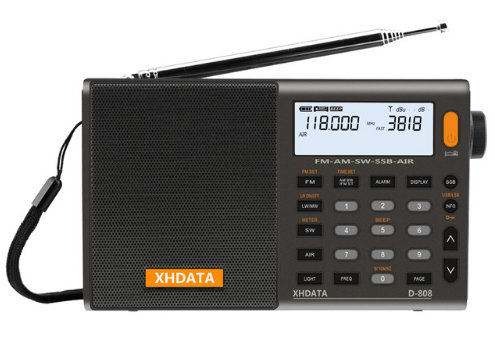
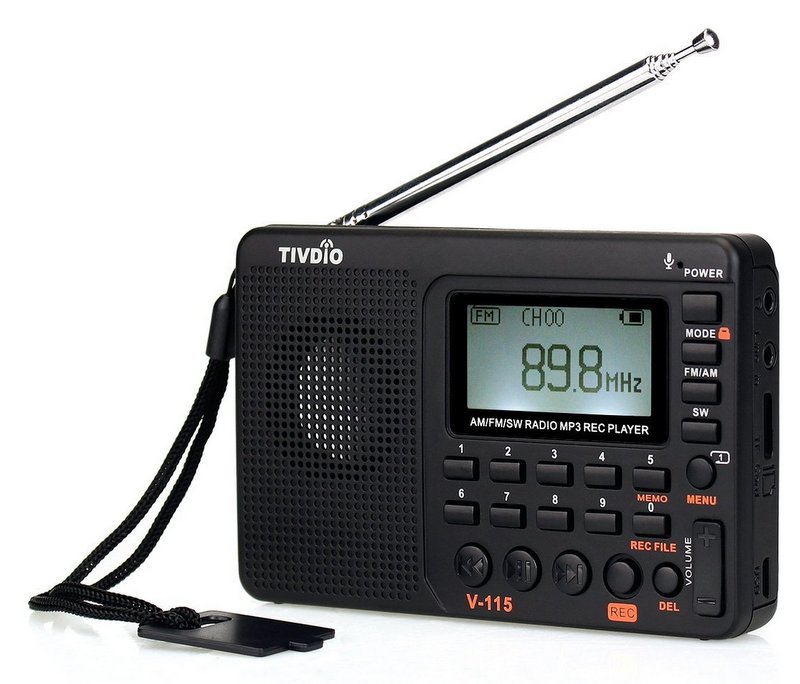
[…]Radios sold in North Korea are modified so they can only tune in to certain frequencies – government-operated North Korean stations, of course. But people do illegally “jailbreak” their radios, says Reporters Without Borders. They can then listen to South Korean stations near the border, or to shortwave foreign broadcasts like the BBC’s and similar ones from Radio Free Asia and Voice of America.

“North Korea does its best to stop the broadcasts coming in but it is the only way that exists at the moment to get current information into the country,” said Williams.[…]

Read this full article at GlobalNews.ca.

BBC reporter discovers radio tuning has become a lost art

Many thanks to SWLing Post contributors, Michael Taniwha and Mark Hirst, who share this link to a video at the BBC where a reporter quickly discovers that many can’t find BBC Radio 1 or even tune a radio.

Click here to view.

It’s hard for a radio enthusiast to believe, but there is little reason for a millennial, for example, to ever tune a portable radio. Many have only ever connected with radio via their smart phone, computer, or other Internet appliance. Tuning, in a sense, is a foreign concept. And the irony is, me for, tuning is the fun part!

Guest Post: Hans reviews the Freeplay Lifeline and Unity self-powered radios

Many thanks to SWLing Post contributor, Hans Johnson, who shares the following guest post:


Irma-induced Radio Reviews

by Hans Johnson

The primary disaster we face here in Naples, Florida, is hurricanes.  Naples had been spared for over a decade until Irma.  So while I had prepared, I had not needed my supplies or equipment for quite some time.  This included the radios.

I went into Irma with two Freeplay solar and windup radios, a Unity and a Lifeline.  I got these radios probably over a decade ago.  As part of some work I was doing with VT Communications (now Babcock), I was involved with a radio project called Sudan Radio Service.

Both of these radios were being given to listeners as part of this project.  I wanted to have a better understanding of what they faced.  I had some conversations with Freeplay in London, explaining who I was and why I wanted these radios.  During a visit, I was able to purchase both sets with the proviso that I not sell them.

I checked them both out at that time with my focus being on shortwave as that is how Sudan Radio Service was then transmitted.  They were ok at picking out the strongest stations but that’s about it.  I never really needed or wanted to use the radios day to day.  And then Irma struck.

We left Naples on Saturday when we received a mandatory evacuation notice.  The storm struck on Sunday and we returned on Monday.

We were spared.  Many lost everything.  Some lost their lives.  We had a lot of trees down and some roof damage, but nothing substantial.  But we had no power.  Water had to be boiled.  Sewage was backing up in places because the lift stations had no power.  The stop lights were out (this was a real danger, many did not treat them as four-way stops and just blew through them.  But you never knew who it would be.)  A curfew was in place.  The cell phone system was in really bad shape.  I could not call or text my brother across town, let alone get access to the Internet via cell.

This link will give you an idea of what we came back to.  I am the guy sawing wood at 1:47.  (Lesson learned, have two chainsaws in case yours blows a gas line):

http://abc7ny.com/weather/watch-josh-einiger-reports-from-naples-florida/2391120/.

I had blown up some air mattresses before the storm so we slept on them on the screened porch.  I saw the Milky Way from Naples for the first time.

We wanted information and also a bit of entertainment.  Television was out of the question.  The HDTV stations are hard to receive with a great antenna and set in the best of times where we live.  So a battery-operated TV would have been a waste.  Radio was the only game in town, so it was time to put the emergency radios in service.

Sudanese Listeners Receive Unity Radios (Source: Lifeline Energy)

Both of these analogue dial sets cover AM, FM, and shortwave.  The Unity covers 3-22 MHz, the Lifeline just goes up to 18.  The former covers the old American AM band and the latter the new one.   The Unity uses a whip antenna and has a fine tuning knob.  The Lifeline has a bendable wire that fits into the carrying handle and came with an alligator clip and a length of wire.

Ideally, one would be listening a set that has been charged via the solar cell or listening with the set in the sun.  The last place I wanted to be was in or near the sun.  Trying to charge the set and then listen to it is difficult in practice.  It seems that the ratio was about one to one.  15 minutes in the sun would get you about 15 minutes of immediate listening.  It doesn’t seem that the batteries will hold a charge for long periods of time.  I could not charge them during the day and expect to turn them on the next morning, which was the peak time of day for radio to be transmitting local information.  The ratio for using the hand-crank was better, but I grew tired of cranking quite quickly.

I was interested in local stations, so shortwave was not a factor.  We only have a few local AM stations in Naples and I could not receive them (Irma knocked off or damaged a number of stations.)  I tried FM.  Even with the antennas retracted, both sets were overwhelmed by the local stations with certain stations bleeding through over much of the dial.  I could receive some strong, local stations.  With the outlet at Marco Island off and the other apparently on reduced power, receiving NPR was out of the question.

Given how many sources of information I was cut off from, my flow was greatly reduced.  My ignorance increased and learning vital information was hit or miss.  A neighbor told me about the boil order.  Passing on information was difficult.  When we got power I wanted to tell my brother, but the only way to inform him was to drive to his house.

One result was that I put these sets away and broke out my old Sony

ICF-7600GR and used it instead.  I guess I could have used it until I ran out of AA batteries.  I had plenty on hand and can easily afford them.  But that is hardly the case in Southern Sudan and many other places.

The Lifeline came with a few stickers on it that I could not read when I got the set.  Now that Goggle translate is so good I can read them.  They say in part:  “Everyone has the right to receive information,”  “Everyone one has the right to search for, receive, and deliver information.”

The real result of the test was a greater appreciation for how good I have it in many ways.  With regards to information, I have many sources and can readily receive it and pass it on.  It increased my respect for services like Sudan Radio Service and how important they are.  But most especially, I have a much greater admiration for listeners using these sets and what is surely their perseverance, patience, and determination to get information.


Many thanks for your field report of the Freeplay Lifeline and Unity, Hans!

I’m happy to hear you had no serious damage post-Irma. So many in the SWLing Post community have been affected by hurricanes this season.

I have never, personally, reviewed either of these Freeplay units–both are now discontinued and have been replaced with other models at Lifeline, I believe. As you state in your post, these radios are only available to humanitarian organizations. Through Ears To Our World, I have considered acquiring Lineline Energy (Freeplay) radios in the past. However, their radios tend to be rather large in size–we tend to go with smaller receivers that can easily fit in suitcases. In the past we’ve been very happy with the Grundig FR200 (Tecsun GR-88). 

The Lifeplayer MP3

Last year, we did purchase a Freeplay Lifeplayer to test. The hand crank charging mechanism is very robust, though quite noisy. The radio is digital, but performance is mediocre and tuning couldn’t be more cumbersome (5 kHz steps, no memories, only a couple of band steps.  Tuning to your favorite station could literally take a couple of minutes, depending on where it is on the band. When you turn off the radio (or it runs out of power) you’ll have to re-tune to the station again. That’s a lot of extra mechanical wear on the encoder. The real utility of the Lifeplayer is the built-in MP3 player and recorder–a brilliant tool for rural schools. Also, it’s robust and can take abuse from kids much better than other consumer radios.

Your main point, though, is spot-on: these radios serve their purpose, but we radio enthusiasts are incredibly fortunate to have much better grade equipment to take us through information backouts.

Thanks again for your review, Hans!

NPR: Amateur Radio Operators Stepped In To Help Communications With Puerto Rico

(Source: NPR via Eric, WD8RIF)

Volunteer HAM operators have set up informal radio networks to connect family and friends with their loved ones in Puerto Rico. NPR’s Kelly McEvers talks to one of those volunteers, Greg Dober.

Click here to listen via NPR.

CNN: “Ham radio operators are saving Puerto Rico”

NASA/NOAA Satellite imagery showing the impact on Puerto Rico’s electrical infrastructure

(Source: CNN)

(CNN)The phone call from the Red Cross came in late Friday night, just as the full scale of Hurricane Maria’s calamity began taking shape.

“We need 50 of your best radio operators to go down to Puerto Rico.”
In the days after the worst storm in three generations hit the American island — and for many more to come — public electrical, land-line and cellular communication systems showed few signs of life. And radio networks used routinely by police officers, power company workers and other first responder still were down.

Yet, a key mode of communication — one not reliant on infrastructure vulnerable to strong winds and flooding — still crackled: the “ham” radio.

Answering the phone that night in Connecticut was the emergency manager for the American Radio Relay League, the group’s CEO said. For more than a century, this group has served as a hub for amateurs licensed to operate the dependable, if archaic, medium known as ham radio and eager to pitch in when disaster strikes.

When the Red Cross made its latest appeal for heroes, these were the people it had in mind.

Continue reading the full article at CNN online…

Amateur radio: “Playing Key Role in Puerto Rico”


(Source: NBC News)

When things went dark and quiet in Puerto Rico, a cadre of amateur radio operators became a lifeline on the island.

About two dozen amateur radio operators on the island helped police and first responders communicate when their radio networks failed completely. Some of the radio operators, or hams traveled on trucks to provide communications to the power company, PREPA.

“It’s a less than ideal solution, but it works and that’s the essence of amateur radio – make it work,” said Tom Gallagher, CEO of the American Radio Relay League, the national association for amateur radio.

Now the ranks of operator are about to get reinforcements.

At the request of the Red Cross, the league planned to send 50 radio operators into Puerto Rico with “enormous” radio gear in water proof containers, their own power supplies, new generators and solar arrays. The crew and equipment were to leave Thursday from Atlanta.

Their job, once set up and in place, will be to be the communication pipeline for the Red Cross Safe and Well program, helping people on the mainland trying to connect with loved ones on the island or get news of their status.

“You can relieve a lot of misery by telling people their relatives are okay,” said Gallagher, whose call sign is NY2RF.[…]

Continue reading the full article at NBC News…

Puerto Rico: This radio station stayed on the air even though it lost its roof

(Source: The Miami Herald)

SAN JUAN
Normally, Rubén Sánchez would not interrupt a live interview with as prominent a newsmaker as Gov. Ricardo Rosselló.

But Wednesday was anything but normal.

Less than an hour after Hurricane Maria plowed into Puerto Rico, Rosselló was updating Spanish-language radio listeners by phone on the Category 4 storm’s destructive path when host Sánchez suddenly interrupted.

The studios of Univision’s WKAQ-AM (580) had become “vulnerable,” Sánchez said, his voice tinged with tension. He and his broadcast colleagues would have to abandon the premises — and fast.

“Stay safe,” Rosselló said, urging them to seek shelter in an internal hallway.

Finding refuge — and a safe place to keep broadcasting — turned out to be complicated. The station and a handful of others became vital listening posts for Puerto Ricans starved of information Wednesday as their electricity went dark and their cellphones silent. Several news outlets continuously reported online, but relatively few people on the island could click.

[…]“A few of the offices exploded,” he said, describing how Maria shattered street-facing office windows and forced itself into the building, in the Guaynabo neighborhood west of San Juan. “It even changed the smell of the environment, and the temperature in WKAQ.”

The on-air staffers scrambled, making their way into the studios of a sister station, WKAQ-FM (104.7), known as KQ-105. But even that proved insufficient. Moments later, News Director Jaime Cosme grabbed the microphone to say they were devising a makeshift studio deeper in the building — a structure that, until Wednesday morning, the station had considered a “bunker.”

Sánchez likened the scene to a grenade blast. “It was a bunker,” Sánchez said. “We could see the sky because the roof blew off.”[…]

Click here to read the full article at The Miami Herald…