Tag Archives: AM Radio

Radio Waves: AM Vehicle Act Passes Committee, iHeart Supports AM, Swan Island and Equatorial Guinea

Radio Waves:  Stories Making Waves in the World of Radio

Welcome to the SWLing Post’s Radio Waves, a collection of links to interesting stories making waves in the world of radio. Enjoy!

Many thanks to SWLing Post contributor Dennis Dura and Tracy Wood for the following tips:


Senate Committee Passes “AM For Every Vehicle Act,” Sends It to Senate Floor (Radio World)

Committee gives the legislation a green light

On Thursday morning, the U.S. Senate Committee on Commerce, Science and Transportation officially passed the AM For Every Vehicle Act on to the Senate floor. The executive session was broadcast live and facilitated by committee chair Sen. Maria Cantwell, a Democrat representing Washington state.

The ranking Republican, Sen. Ted Cruz, supports the measure, saying in a statement that “AM radio is vital to free expression and viewpoint diversity” and “allows Americans, especially conservatives, to communicate their points of view and help free speech flourish.”

The legislation was passed via a voice vote, and, while not every senator’s vote was recorded, the National Association of Broadcasters said Sen. Gary Peters, a Democrat from Michigan, asked that he be recorded as a ‘no.’” Michigan is home to the U.S. automaker industry, which opposes the AM For Every Vehicle Act. The Alliance for Automotive Innovation, which has a base in Michigan, recently said, “Congress has never mandated radio features in vehicles ever before.” It called the bill unnecessary. [Continue reading…]

“iHeart Is Still Focused on AM as a Medium” (Radio World)

Littlejohn and Mullinax describe recent projects to protect and extend its investment

At a time where the viability of the U.S. AM broadcast band has come under the microscope, what’s the prevailing attitude of iHeartMedia and the 250 AM properties it owns and operates?

Continue to invest, says Jeff Littlejohn.

“iHeart is still focused on AM radio as a medium,” said the company’s executive vice president of engineering and systems integration. “We see the importance AM has not only as an entertainment medium, but for news and information.”

Among other things, Littlejohn strongly believes in AM’s importance for emergency weather coverage. Perhaps nowhere is that more evident than in South Florida.

In addition to being an iconic AM signal dating to the 1920s, iHeartMedia’s news/talk 610 WIOD in Miami has received notoriety and awards — including regional recognition from the Associated Press — for its breaking news and weather coverage, notably during Hurricanes Andrew, Katrina and Wilma. [Continue reading…]

Notes about two Spanish language stations (Tracy Wood)

Many thanks to SWLing Post contributor, Tracy Wood, who writes:

I continue to enjoy the blog. Yes, those radio sets that appear in Spanish TV (and in the movies) are great! Lots of Grundigs, Philips, Telefunkens, and national brands.

Here are the two items

(1) Swan Island

At one time this was the home to Radio Swan, the US-funded anti-Castro clandestine radio station on AM and shortwave of the 1960s. Now Honduras wants to convert it to a prison island

https://time.com/6295724/honduras-islas-del-cisne-prison-island/

For more details see: https://en.wikipedia.org/wiki/Radio_Swan

(2) Equatorial Guinea

Thanks to WorldRadioMap for originally posting this audio link [note that this playlist must be downloaded and used with an audio streaming application]: https://rrsatrtmp.tulix.tv/tvgeradio/tvgeradio/playlist.m3u8

Yes. Radio Nacional de Guinea Ecuatorial, Malabo, is now streaming on the Internet. The main language is Spanish but I suspect other languages may be heard. The hosting company (out of Atlanta) handles both their TV and radio streams. The TV channel’s website is https://tvgelive.gq/ but there is no radio-specific website yet.

As a reminder, the country’s other station is commercial – Asonga Radio. It is owned by the president’s son. Audio is at https://asongaradio.com/


Do you enjoy the SWLing Post?

Please consider supporting us via Patreon or our Coffee Fund!

Your support makes articles like this one possible. Thank you!

Radio Waves: What Listeners Like, Renaissance of Radio, WOR in Photographs, DIY Faraday Cage

Radio Waves:  Stories Making Waves in the World of Radio

Welcome to the SWLing Post’s Radio Waves, a collection of links to interesting stories making waves in the world of radio. Enjoy!

Many thanks to SWLing Post contributors Dennis Dura, Mark Erdle, and Jock Elliott for the following tips:


‘It’s what listeners like’: AM radio purveyors on the Palouse hope automakers heed call to keep their medium alive (The Spokesman-Review)

The rolling, green-turning-golden hills just outside Steve Shannon’s studio window at the offices of Inland Northwest Broadcasting north of downtown Moscow aren’t just pretty to look at.

They’re also the reason the AM radio dial remains important in this expansive, rural stretch of the country.

FM broadcasting is based on line-of-sight, but the pesky thing about AM waves is that they pass through anything, Shannon explained. And they reach a monthly audience that’s still more than 82 million strong across the country, most of them in areas just like the Palouse, according to a fall 2022 survey by broadcast tracking company Nielsen.

“People are tuning in to AM because they are listening to content they can’t get anywhere else,” said Shannon, operations manager for the group that is behind six stations on both the AM and FM dial broadcasting in Moscow and Colfax.

The future of the format seemed in jeopardy just a few short weeks ago, when broadcasters convened in Washington D.C. and pushed federal lawmakers to pressure carmakers who were pondering an end to AM receivers in new cars. Electric vehicles, growing in popularity and headed for a likely continued boom, especially with Washington outlawing the sale of new gas-powered cars beginning in 2035, create interference with a signal that can make AM transmissions difficult to hear, according to automakers.

That pressure, which included the introduction of legislation that would have required manufacturers to install AM receivers in new cars, appears to have made the point. In late May, Ford’s chief executive officer announced on social media it had reversed course and would provide the service in all 2024 Ford and Lincoln models after planning to remove it from some models because of higher costs and lack of listeners. [Continue reading…]

The renaissance of AM radio: a confluence of social, regulatory and technical revitalization (Cardinal News)

AM radio, a pioneering force in the world of broadcast communications, has for several decades been an essential medium for disseminating information and entertainment. However, its appeal has been progressively diminishing due to social, regulatory and technical challenges. Nevertheless, this scenario presents an opportunity for a significant revival.

The decline of AM radio can be traced back to significant changes in content, notably the reduction in locally focused programming. Many AM station owners made strategic decisions to move away from content that directly catered to local communities, often replacing local news, events and issue discussions with syndicated programming. These changes left a void of locally relevant content, reducing listeners’ connection with stations.

The Federal Communications Commission’s abolition of the Fairness Doctrine in 1987 exacerbated the situation. This doctrine, which required broadcasters to present contrasting views on controversial issues of public importance, ensured a balanced discourse on the airwaves. Its repeal led to increased broadcasts favoring extreme political views, either heavily liberal or conservative. While this trend may have appealed to specific audience segments, it risked alienating listeners seeking balanced discourse.

Compounding these programming shifts, religious content on the AM band has considerably increased. While serving an essential audience, the sheer volume of these broadcasts reduced the variety and balance of programming, possibly leading potential listeners to turn away. [Continue reading…]

Radio Station WOR in Photographs – 1939 (AWM on YouTube)

In 1939 photographer Ralston B. Collins made a photo album of metro New York radio station WOR. This album is from the J. R. Poppele Collection at the Antique Wireless Museum.

Building a Simple Faraday Cage, by OhioGalt (SurvivalBlog.com)

This article describes the effects of EMP and CME and how to build a simple inexpensive Faraday cage.

Most readers of the SurvivalBlog are aware of the potential damage from either a Coronal Mass Ejection (CME) or an Electromagnetic Pulse (EMP) and the impact on everyday electronics. With an EMP, an electromagnetic pulse is generated at high altitudes from a nuclear explosion damaging sensitive electronics. A CME damages electronics in a similar way with the release of a large solar flare from the sun reaches carrying magnetic fluxes and plasma toward earth. These magnetic fluxes interfere with Earth’s magnetic fields and create current surges in power systems and electronics. As of this writing, there is several C and M class flare activity causing some Amateur Radio blackouts on the lower bands. To follow active solar weather visit Spaceweather.com. [Continue reading…]


Do you enjoy the SWLing Post?

Please consider supporting us via Patreon or our Coffee Fund!

Your support makes articles like this one possible. Thank you!
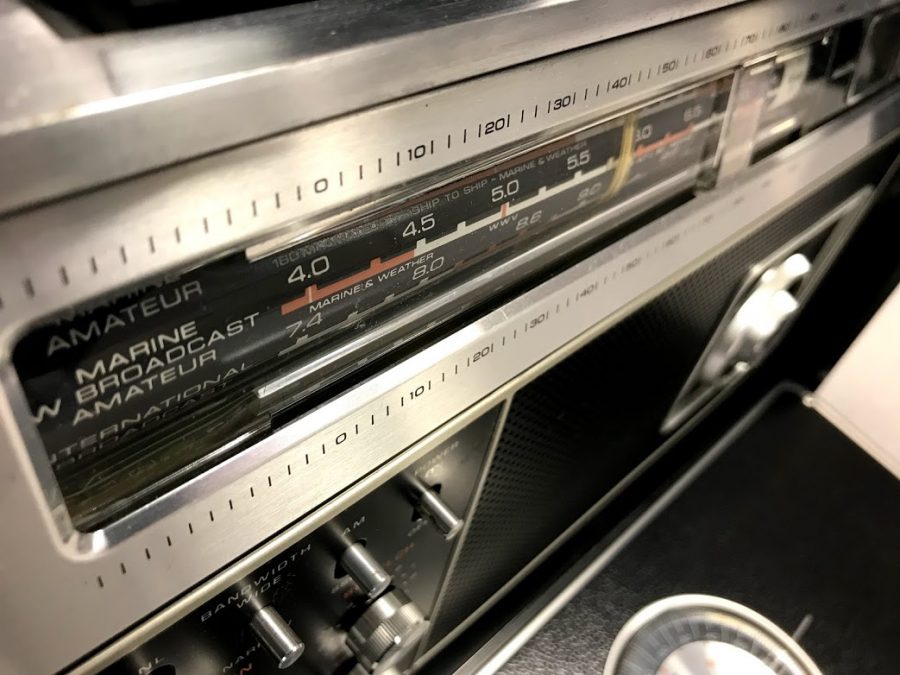
Sometimes simple works . . . really well! Exploring the CCrane EP PRO

By Jock Elliott, KB2GOM

This particular adventure began about three weeks ago with an email from CCrane. “Timeless, Easy to Use with Long Range Radio Reception” the headline read. Further, the accompanying text promised: Comes with needle and dial tuning, one button for power, one button for a bright display light, and has no clock or alarm.  The radio in question was the C.Crane CCRadio-EP PRO.

The “Long Range Radio Reception” initially caught my eye, but the simplicity of an old-fashioned “needle and dial” – what I call “slide rule” – tuning” also appealed to me, so I emailed CCrane, asked them if they would like to send me one for review, which they did, without charge.

While waiting for the EP PRO to arrive, I examined the photos of the EP PRO on the CCrane website, and I noticed something peculiar: a switch on back for choosing between 9 kHz tuning steps and 10 kHz tuning steps. Whaaat?! Why in the world would you need such a thing on a radio with needle and dial tuning?

We’ll get to the answer to that question shortly, but first let’s take a tour of the CCrane EP PRO.

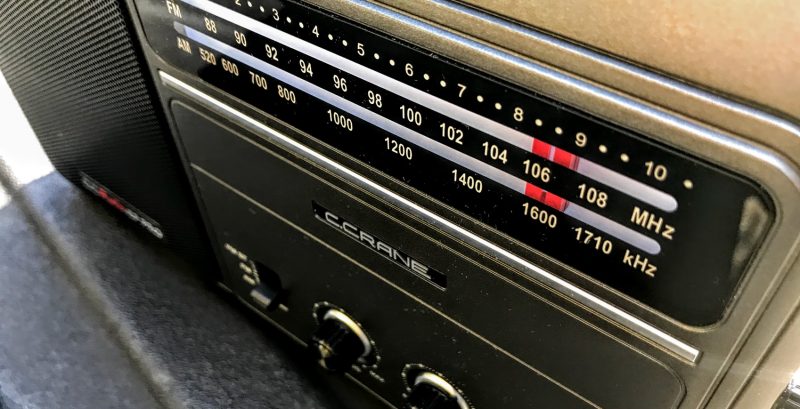
The case is a rectangle with rounded corners that measures 11.4″ W x 7.3″ H (8.4″ H with handle) x 2.75″ D and weighs 4.5 pounds without batteries. Starting on the left front panel, you’ll find a 5-inch speaker. To the right of that, there is the slide rule (needle and dial) tuning setup, with a small red light on the right side that illuminates when a station is found. Below that is a CCrane logo and further below is a switch for selecting AM (520 – 1710 kHz, 10 kHz steps; 522 – 1620 kHz, 9 kHz steps), FM (87.5 – 108 MHz), or FM stereo; a knob for adjusting bass, a knob for adjusting treble, and a knob for choosing between narrow (2.5 kHz) and wide (6 kHz) filter bandwidths.

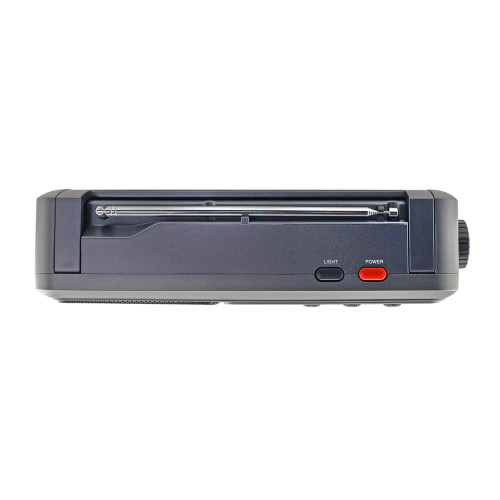
On top of the EP PRO are a red POWER button, a black button for lighting the tuning dial, a flip-up carry handle, and a 36-inch telescoping antenna for FM reception. (Inside the case is a ferrite bar antenna – 12mm x 200mm (7.9″) long with CCrane’s Twin Coil Ferrite® technology.)

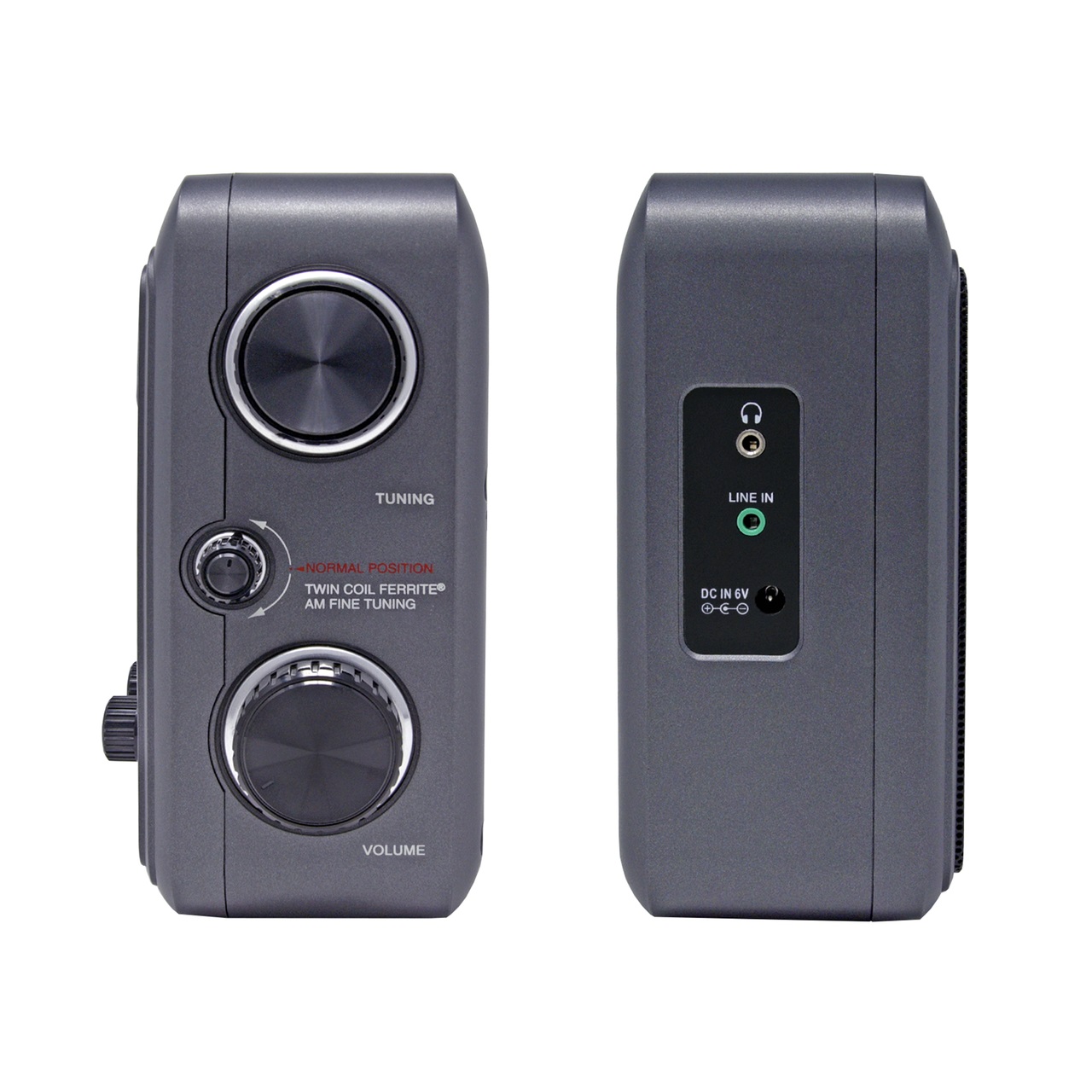
On the right side of the case at top is the tuning knob, below that a knob for fine-tuning the internal antenna for AM reception, and at the bottom a knob for volume. On the left side of the case, you’ll find a 1/8” stereo headphone jack, a line-in jack, and a socket for plugging in an external 6-volt AC adaptor which is provided with the EP PRO.

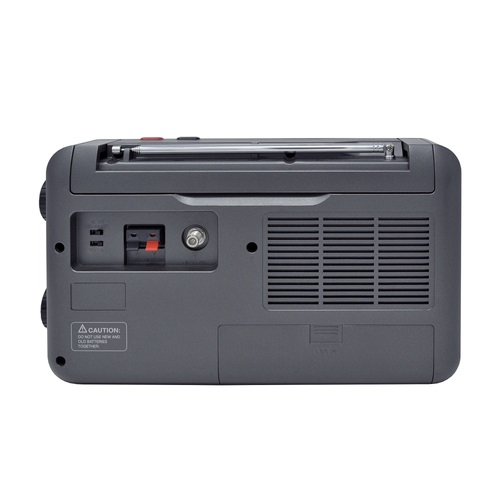
On the back of the radio is a hatch for installing four D-cell batteries (CCrane says it will run for about 175 hours at moderate volume with the dial light off), external antenna connections: spring loaded for AM and “F” connector for FM, a switch for selecting internal or external AM antenna, and the switch for selecting 9 or 10 kHz tuning steps.

That’s it. The EP PRO is almost Zen-like in its simplicity. There are no seek buttons, no automatic storage functions, no memories, no key pad. And there is a darn good reason for that. It turns out that the immediate predecessor of the EP PRO, the CCrane EP, was created by Bob Crane because his mother wanted a very simple radio that was easy to operate. The CCrane EP, a true needle and dial analog radio, was the result.

Bob believed that, besides his mother, there was a market for such a radio, and there was. Unfortunately, after a time, the analog chips necessary to build the CCrane EP became unavailable. As a result, the radio was redesigned internally using modern digital chips (essentially the same as those in CCrane’s model 2E and 3 radios) while keeping it simple and easy to operate. So inside what looks like an old-fashioned analog radio beats the heart of a high-performance digital radio that combines the high sensitivity needed to hear distant stations with excellent selectivity to block signals from the side.

In my view, the EP PRO is great fun to operate. In the predawn hours on a weekend morning with the rain falling softly outside, I started tuning slowly across the AM dial with the EP PRO in my lap. Near the bottom end, a couple of sports mavens were chatting about a pitcher who had a couple of rough two initial outings and then had “settled in.”

A bit further up the dial Dionne Warwick was telling me to “walk on by.” Then I ran into a music station competing with a talk show considering “the Bible, angels, and UFOs.”

Up the dial some more, apparently a good deal on a high performance car could be had at a dealership in Connecticut; then an air quality report for New York City, a female voice delivering a long discourse in French and so on up the dial.

I was impressed at the number of stations that the EP PRO was pulling in, and it brought me back to the simple joy of tuning around to see what’s on the air.

Each time a discernible station appeared, the red tuning LED would light up. As needed, I used the antenna tuning knob and the bandwidth selection switch to tweak the signal. The needle and dial tuning gives an approximate indication of where on the band the radio is tuned, so if you want a positive ID, you need to listen for a station ID or some other clue to the station’s location.

At one point I jumped to the FM dial and found I could easily pick up many FM stations even with the whip antenna collapsed. In all, I am of the opinion that both the AM and FM sides of the receiver are pretty “hot,” and at no time did I find myself wishing for an auxiliary antenna for more signal.  Further, the sound through headphones or the speaker is very pleasant indeed. In my mind, the relatively unadorned exterior of the EP PRO belies its outstanding performance. To stretch an analogy, it’s a nitro-burning funny car in the body of a Honda Civic, and you don’t have to be a genius to drive it.

If you’re looking for a high-performance radio that is easy to use and sounds good through speaker or headphones, the CCRadio EP PRO delivers the goods. For a content DXer like me, the EP PRO encourages me to tune around and discover the magic of radio all over again.

CCRadio-EP Pro Retailers:

Radio Waves: DW Launches “Sudan Now” on Shortwave, Mayor Saves AM Station, Tape Measure Turnstile Antenna, and Where Does AM Go From Here?

Radio Waves:  Stories Making Waves in the World of Radio

Welcome to the SWLing Post’s Radio Waves, a collection of links to interesting stories making waves in the world of radio. Enjoy!

Many thanks to SWLing Post contributors Dennis Dura and David Iurescia for the following tips:


“Sudan Now” – DW Arabic launches new radio program for Sudan (DW)

DW is now broadcasting a 30-minute daily Arabic-language radio program entitled “Sudan Now” on shortwave, Hotbird and SES-5 satellites and via the DW Arabic website.

As an unbiased radio program, “Sudan Now” will provide listeners in the target region with unbiased coverage of current issues in the region and will promote political, social and cultural dialogue through interviews, talk shows and reports.

Given the lack of independent information sources in Sudan and the limited ability of established media to broadcast due to internet outages and ongoing fighting, “Sudan Now” was specifically designed to be broadcast on shortwave and via the Hotbird- and SES-5 satellites. The satellite broadcast enables listeners in the target region to receive the program via their TV sets.

DW Managing Director Programming Dr. Nadja Scholz: “The conflict in Sudan is ongoing and has far-reaching effects on the entire region. It is absolutely necessary to provide the people there with a dedicated program that enables them to access independent, current and in-depth information. With shortwave radio, we further increase our ability to reach as many people as possible.”

Manuela Kasper-Claridge, DW editor-in-chief, said: “The humanitarian situation in Sudan remains catastrophic. There is a lack of everything – including free, independent information. This Arabic-language radio program is therefore urgently needed.”

The program broadcast will begin on Monday, June 26, 2023. It will air daily from Monday to Friday at 2:30 pm (local time, GMT+2) for a duration of thirty minutes. A repeat of the radio program will air daily at 8:30 pm.

“Sudan Now” can be heard in the afternoon on shortwave 15275 kHz/17800 kHz and in the evening on shortwave 15275 kHz/17840 kHz.

In addition, all broadcasts will be available on the DW Arabic website.

AM Matters: This CO Mayor Saved His Town’s Station (Radio Ink)

[…]Radio Ink: When Justin Sasso briefly mentioned KLMR’s story at Hispanic Radio Conference, it piqued the room’s interest. That’s a powerful AM story. How did this come to pass with you both?

Dan: So about a year ago in late July, KLMR was blown off the air from a micro-downburst. The previous owners couldn’t fix it and they were in danger of losing the license. When I saw the building, half the roof was gone and the antenna was dangling in the wind.

I’ve been in the radio business in Colorado for 40 years, with the last 20 in Colorado Springs, but I’ve never owned a radio station. And so when this opportunity came about, I reached out to Kirk. We had talked about possibly buying a company in Lamar previously. He’s not just the mayor, he’s my brother-in-law, but it was great that the mayor wanted to get involved in it too. So we’re off and running.

Radio Ink: For a mayor to step up and say, “This AM station is so important to my community that if nobody else will save it, I will,” is a huge testament to AM radio’s power and value.

Kirk: It’s vital. That’s what I had mentioned to Justin in that meeting about AM. When we look at rural Colorado and the ag market there, there’s a necessity for that. [Continue reading…]

A Quick And Easy Tape Measure Turnstile Antenna For Milsat Snooping (Hackaday)

The number of satellites whizzing by over our heads at any moment is staggering, and growing at a rapid rate as new constellations are launched. But sometimes it’s the old birds that are the most interesting, as is the case with some obsolete but still functional military communications satellites, which thanks to a lack of forethought are largely unsecured and easily exploitable. And all that’s needed to snoop in on them is a cheap ham radio and something like this simple and portable satcom antenna.

As proof of the global nature of the radio hobby, the design in the video below by Brit [Tech Minds] borrows heavily from previous work by Italian ham [Ivo Brugnera (I6IBE)], which itself was adapted to use 3D-printed parts in a German blog post a few years ago. [Continue reading…]

Not just cars: Where does AM radio go from here? (YouTube)

Joe and Jeff Geerling discuss AM radio station ownership, emergency use, rural listeners, and more.


Do you enjoy the SWLing Post?

Please consider supporting us via Patreon or our Coffee Fund!

Your support makes articles like this one possible. Thank you!
Radio Waves: Pirating Putin, Refuge Hosted Radio in South Sudan, Drivers Still Love Radio, and TIS Request

Radio Waves:  Stories Making Waves in the World of Radio

Welcome to the SWLing Post’s Radio Waves, a collection of links to interesting stories making waves in the world of radio. Enjoy!

Many thanks to a number of SWLing Post contributors including John, Andrea, and Dennis Dura for the following tips:


The pirate-radio DJ who took on Putin (The Economist)

Tens of thousands of ordinary Russians are joining the resistance

n a bedsit in Vologda, a Russian city 500 miles north of Moscow, a man sat at a desk surrounded by recording equipment. In his early 60s, tall and thin with long grey hair, glasses and a moustache, he looked like an ageing rock star making a new album. His name was Vladimir Rumyantsev. He lived alone, and his day job was as a stoker, tending a furnace in a factory boiler-room. In the evenings he was the dj of his own pirate-radio station, broadcasting anti-war diatribes against Putin’s “special military operation” in Ukraine.

Rumyantsev set up the station before the war as a hobby. Radio Vovan (a play on a nickname for Vladimir) mainly broadcast music from the Soviet era that he found in online archives. He said he needed a break from oppressive state propaganda. “Some kind of ‘patriotic’ hysteria started on the airwaves, and as the sole occupant of the flat I voted unanimously to ban the broadcasting of federal tv and radio channels in my home. Well, I had to create something of my own to replace it,” he wrote to me. [Continue reading. Note that this article may be behind a paywall from your location…]

In South Sudan, Refugees Train as Radio Hosts to Keep Residents Informed (VOA News)

Jabrallah Tia was a teacher in Sudan in 2011 when a brutal war forced him to flee to a refugee camp in newly established South Sudan. Thirteen years later, Tia is still in a camp but with a new career: journalist.

The Ajuong Thok camp in the Ruweng Administrative Area is home to almost 40,000 refugees and displaced people, most from Sudan. Another influx is expected soon, after a fresh conflict broke out in April.

“It’s terrible now when Sudan has started another war. … We’re expecting more people to come from Sudan, as they’re fleeing the war there,” Tia told VOA in a video interview over Zoom.

He knows what that’s like. Tia had to leave everything behind when he fled his home in South Kordofan state. But he said he has found new meaning in his journalism work. Continue reading

Radio Waves: My Father’s Radio, AM Listenership by State, and Longevity of AM in Cars

Radio Waves:  Stories Making Waves in the World of Radio

Welcome to the SWLing Post’s Radio Waves, a collection of links to interesting stories making waves in the world of radio. Enjoy!

Many thanks to SWLing Post contributors Kim Elliott and Dennis Dura for the following tips:


Opinion: My father may be gone, but ‘our’ radio is still going (LA Times)

My most prized possession was once somebody’s trash.

It’s a blocky, black radio that was manufactured in 1941, the year my father was 12 years old. I snatched it from the county landfill when I was 13, in 1978.

The person who threw it away must have determined they couldn’t fix it, though it seemed they thought someone else might. They had set the radio off to the side of the dumpster, safe in plain view, just in case some industrious person with know-how appeared.

That person was my father, who ran an electronics repair business from our garage. Though at first reluctant to save “that ugly old thing,” he seemed pleased hours later when he entered the kitchen announcing that the radio worked fine and had only needed a tube. For years after this, my father kept that radio on a shelf above his workbench, listening to country singers croon about lonesome truckers.

I like to think of myself as a minimalist, but since my father died in 1994, I’ve carried what I consider to be “our” radio thousands of miles from the Appalachian farm where I grew up, out to Los Angeles, and then many years later back home again. In California, I’d tune our radio to horse races being transmitted from Santa Anita or Hollywood Park while cleaning my kitchen. Or I listened to Paul Harvey, Casey Kasem or evangelists spouting “truths” about Jesus and cars. [Continue reading…]

AM Listenership by State, DMA (Radio World) 

New analysis of AM reach provides market-level insight to listening habits

Following up its recent report on the 141 local markets where at least 20% of the market listens to AM radio, Nielsen has released a deeper look with new data at the state- and DMA-level.

Pierre Bouvard, chief insights officer of the Cumulus Media / Westwood One Audio Active Group, recently posted an analysis of the findings. The data comes from the Fall 2022 survey, but is based on all U.S. radio stations, not just Nielsen subscribers.

Nationwide, 30.9% of radio reach comes from AM stations, representing 82,346,8000 American radio listeners aged 12+ who listen to AM every month. At the state level it ranged from a high of 52.7% in North Dakota to a low of 4.6% in the District of Columbia. In 29 states, the percent of radio reach via AM is greater than 20%. [Continue reading…]

Not All Those AM Listeners Are in Cars, Bozzella Argues (Radio World)

Auto group also says it would take two decades for fleet to turn over and AM to phase out

“Whether or not AM radio is physically installed in vehicles in the future has no bearing on the multiple methods of delivering those emergency communications alerts to the public.”

So writes the president and CEO of the Alliance for Automotive Innovation. John Bozzella used a blog post this past week to summarize the auto industry’s case against a mandate to include AM radio in cars.

It’s simply not necessary, he wrote; and government shouldn’t be propping up a particular technology that’s competing with other communications options, either.

“It’s tempting to take a cheap shot at misplaced government priorities and unnecessary mandates or make light of the whole thing with a jab about laws for hand-crank windows or cassette players,” he writes, calling the legislation a bipartisan solution searching for a problem. [Continue reading…]


Do you enjoy the SWLing Post?

Please consider supporting us via Patreon or our Coffee Fund!

Your support makes articles like this one possible. Thank you!
Radio Waves: Hamvention Attendance Record, WWII Codebook, TuneIn for AM Stations, and 101 Years of Chicago Radio

Radio Waves:  Stories Making Waves in the World of Radio

Welcome to the SWLing Post’s Radio Waves, a collection of links to interesting stories making waves in the world of radio. Enjoy!

Many thanks to SWLing Post contributors Dennis Dura, Ron Chester, and Ulis Fleming for the following tips:


Hamvention 2023 breaks attendance record (WHIO)

XENIA — A new attendance record was set at Hamvention this year.

This year 33,861 people flooded to the Greene County Fairground and Expo Center for the world’s biggest amateur radio show, according to a spokesperson for Hamvention.

The number surpassed the previous record by more than 1,300 people. It’s also more than 2,000 greater than last year’s attendance.

This year’s Hamvention ran May 19-21 and brought in people from across the globe.

“Things went very smoothly due to the dedication and hard work of close to 700 volunteers,” Jim Storms, Hamvention General Manager, said.

Hamvention 2024 is scheduled for May 17-19. [Watch report on WHIO…]

Man’s WW2 codebook unearths St Erth’s ‘best-kept secret’ (BBC)

A retired schoolteacher is shedding light on an “ultra secret” World War Two listening station in Cornwall.

Mike Griffiths unearthed the secret existence of the MI6 outstation in St Erth when his late father, Harry Griffiths, left him his code book.

He has revealed the role his father and others played in providing intelligence for code-breakers at Bletchley Park.

Mr Griffiths said he “couldn’t be prouder” of what his father achieved. Continue reading