Shortwave listening and everything radio including reviews, broadcasting, ham radio, field operation, DXing, maker kits, travel, emergency gear, events, and more
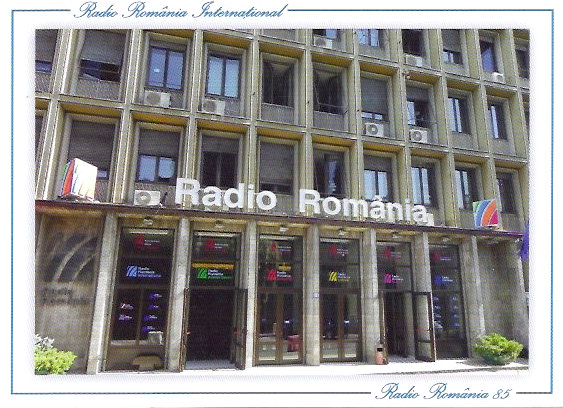
For your listening pleasure: 1.5 hours of Radio Romania International, starting with RRI’s English language service.
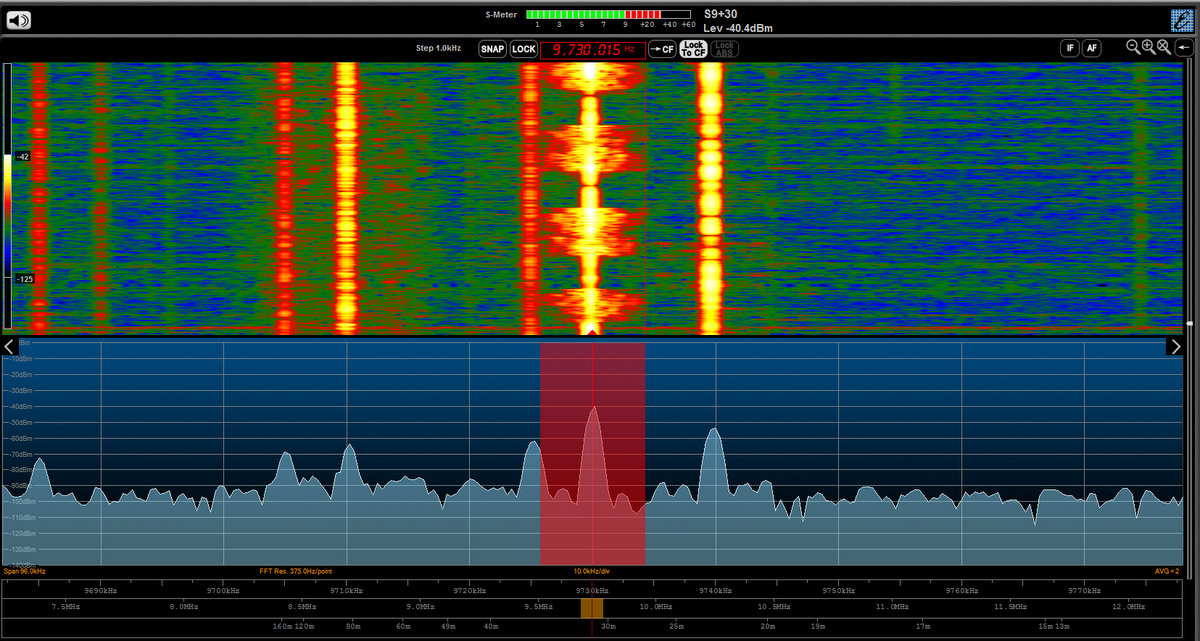
This recording was made on May 25, 2015 starting around 00:00 UTC on 9730 kHz. I used the TitanSDR Pro software defined receiver and skyloop external antenna to make this off-air recording. In truth, this is one of the few remaining broadcasters that targets eastern North America; even a simple portable radio would have sufficed.
As you can see from the screenshot of the Elad spectrum display above, Radio Romania International’s signal was quite strong. Earlier in the day, the FDM-S2 could also easily hear the RRI English service on 11,700 kHz, which was much weaker at my location here in the eastern US.
Thursday night at 00:00 UTC, I was pleased to hear the interval signal of one of my favorite pirate radio stations: Radio Casablanca.
“Rick Blaine” fired up his AM transmitter and pumped out some amazing WWII era music on 6,940 kHz for well over one hour and a half. This is the first time I’ve been able to catch Radio Casablanca in well over a year (click here to listen to previous recordings).
Close your eyes and imagine what it must have been like to hear the great bands of the era over the shortwaves…
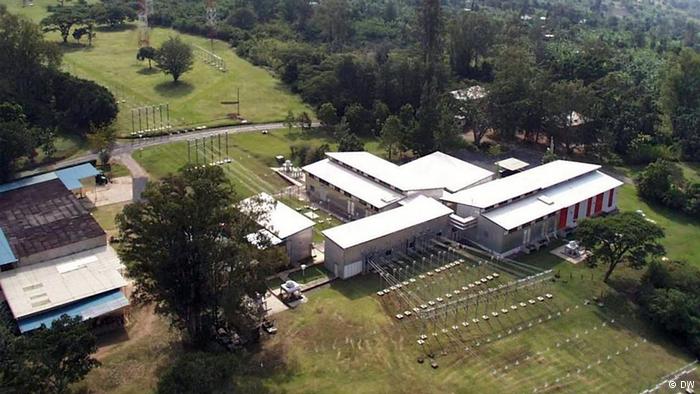
DW’s relay station in Kigali (Source: Deutsche Welle)
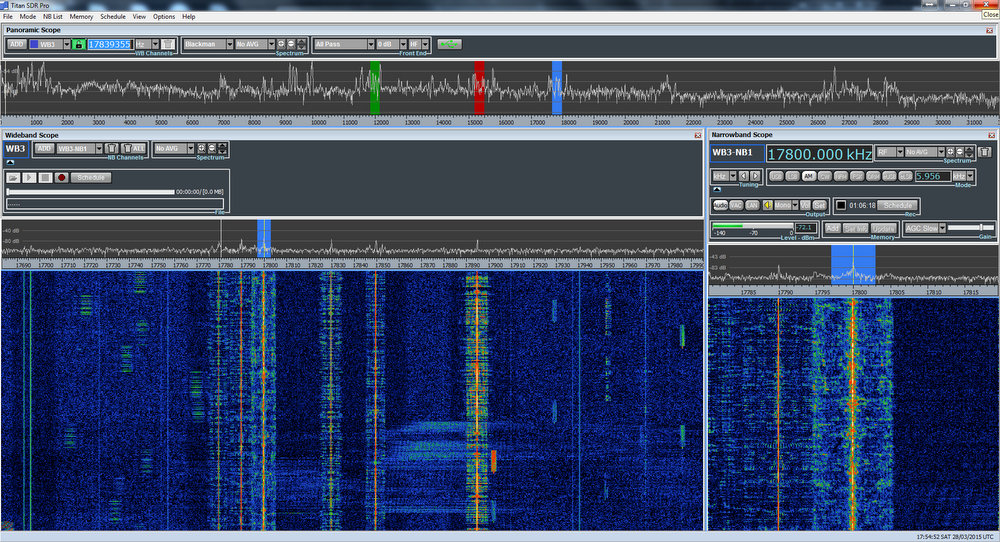
Yesterday, Deutsche Welle transmitted its final broadcast from the Kigali, Rwanda relay station. Since I’ve only had moderate luck hearing the Kigali site the past few days–especially on 31 meters–I fired up the TitanSDR Pro (which is still currently under review) and set it to record all three final afternoon broadcasts from Kigali on 12,005, 15,275 and 17,800 kHz.
As you can see from the screenshot above, Kigali produced a very strong signal on 17,800 kHz. The TitanSDR recorded the full broadcast, starting with one minute of the transmitter tuning, then one hour of DW’s French language service, followed by one hour of DW’s Hausa language service…then the transmitter went silent.
The recording begins around 1659 UTC on March 28, 2015 on 17,800 kHz:
Kigali’s early days
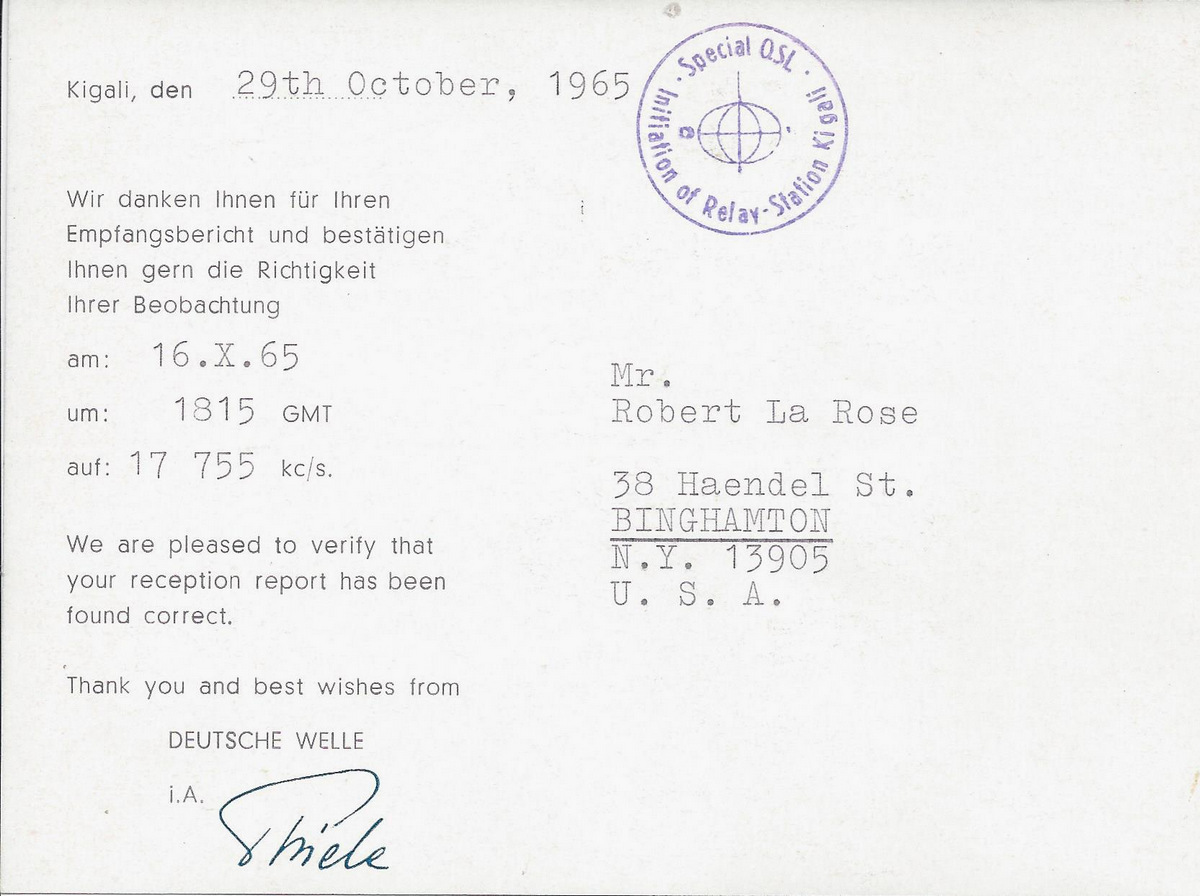
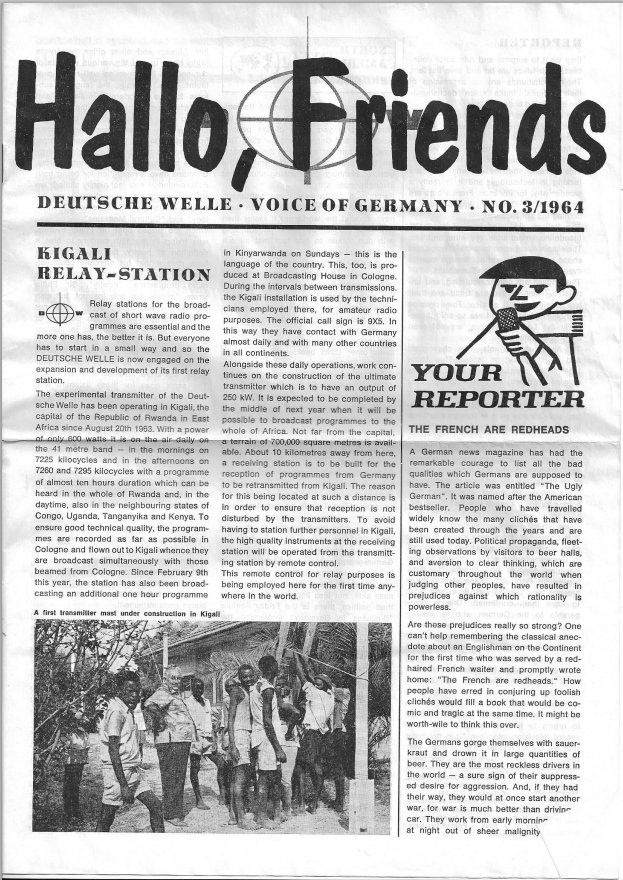
Last week, SWLing Post reader Bob LaRose (W6ACU) sent me the following message and scans:
“Here’s some nostalgia from [when the Kigali relay] opened, 50 years ago!”
Bob then followed this with another email:
“I dug into the “vault” and I found [the] 1964 Third Quarter issue of “Hallo, Friends” from Deutsche Welle that talks about the “new” Kigali station as it was being built. The 1965 issues did not cover the actual inauguration.”
This recording was made on February 2, 2015 on 9395 kHz starting at 1800 UTC. Although Radio Poland formally left the shortwaves in 2013, their service is now relayed by Global 24 Radio.
As I’ve mentioned before, @K7al_L3afta lives in an urban area of Morocco and his shortwave radio listening is plagued with radio interference (RFI). Still, he seems to snag some interesting catches on the shortwaves just like this one which he said he caught by “turning the tuning knob randomly.”
For your listening pleasure: beHAVior Night, a shortwave radio show (relayed by WBCQ) dedicated to showcasing music from the first four decades of the 20th Century.
This show was recorded on 7,490 kHz, starting at 22:00 UTC on February 13, 2015.