RADIO VANUATU CAPITAL DEVELOPMENT WORK BEGINS
With the support of the Government of Vanuatu, the Vanuatu Broadcasting & Television
Corporation (VBTC) has begun work this month on a 942 million vatu (US$8.1m)
infrastructure upgrade to improve radio and free-to-air television service throughout
Vanuatu.
The first phase involves the design, installation and commissioning of a new shortwave (HF)
and medium wave (MF) service for Radio Vanuatu, the country’s public radio service. Costing
for phase one will be in excess of 242 million vatu (US$2.2m) and is funded by the
Government of Vanuatu. Following the improvements to shortwave and medium wave
services, VBTC will also undertake technical work to strengthen the coverage and reliability
of its FM services.
A 10kw MF Nautel transmitter imported out of Canada and a 10kw HF transmitter
manufactured by Hanjin Electronics of South Korea will be installed at VBTC’s major public
service transmission site at Emten Lagoon on Efate. Both transmitters will be commissioned
before the end of 2019.
The second phase, beginning early 2020, will reopen Radio Vanuatu’s medium wave radio
transmission facilities at St Michelle in Luganville on the island of Santo. This will provide AM
service to provinces in the top half of Vanuatu at a cost in excess of 300 million vatu
(US$2.5m).
The third phase will expand the national television free-to-air service, Television Blong
Vanuatu, along with a new digital television service. This final phase will cost an estimated
400 million vatu (US$3.5m).
Prime Minister Charlot Salwai Tabimasmas launched the capital development upgrade at a
special function attended by cabinet ministers, senior members of the public service,
members of the diplomatic corps and members of Vanuatu’s business and non-profit
communities on Friday September 20 in Port Vila before he departed the country to attend
the UN General Assembly in New York.
In his address, the Prime Ministerspoke atlength about the importance to Vanuatu of having
a strong national public radio and television broadcasting service and announced assistance
from Vanuatu’s development partners to help achieve this objective.
The Government of Australia funded the scoping study for the radio upgrade project and is
providing funding support to implement the strategic reform programme of VBTC which the
Prime Minister said is making good progress.
“I’m also happy to announce that the New Zealand Government is keen to support the
second stage of the Radio Vanuatu technical infrastructure upgrade while China is
considering my request to support the upgrade of Television Blong Vanuatu’s technical
infrastructure.”
Meanwhile Kordia New Zealand Limited has been awarded the contract to project manage,
design, install and commission the new radio transmission facilities beginning with the
facilities at Emten Lagoon outside Port Vila.
VBTC Chief Executive Officer, Francis Herman said that “Kordia has extensive experience in
the broadcasting and telecommunications industry in the Pacific, and recently completed a
major project in Samoa for State-owned Radio 2AP funded by the Australian Government”.
“We’ve worked hard with Kordia and a number of other technical experts to investigate the
most efficient and sustainable transmission solution for Vanuatu taking into account the
inclement weather, and the need to keep operating costs affordable.”
The shortwave service, which will be commissioned before the end of this year, will provide
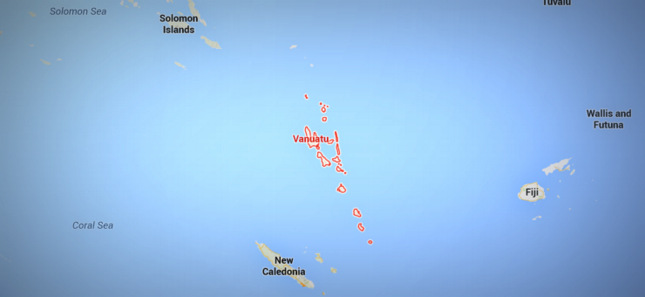
national radio coverage to the 82 islands spread spanning 1,300 kilometres between the
most northern and southern islands.
“Our role as Vanuatu’s national broadcasting service is centered on helping create an
informed public opinion so our people can contribute more effectively to national
development”, Herman added.
“VBTC has struggled to remain relevant over the past decade because its technical
infrastructure was obsolete and badly neglected making it challenging for us to provide an
efficient, reliable, and responsive national radio and television service.”
Alongside the infrastructure upgrade, is an extensive programme to strengthen the technical
capacity of Vanuatu’s broadcast technicians along with a long-term maintenance regime to
expand the life of the equipment.
September 23, 2019