Tag Archives: WRMI

WRMI to showcase digital modes via analog radio

31-meter-Spectrum (Source: VOA Radiogram via Richard Langley)

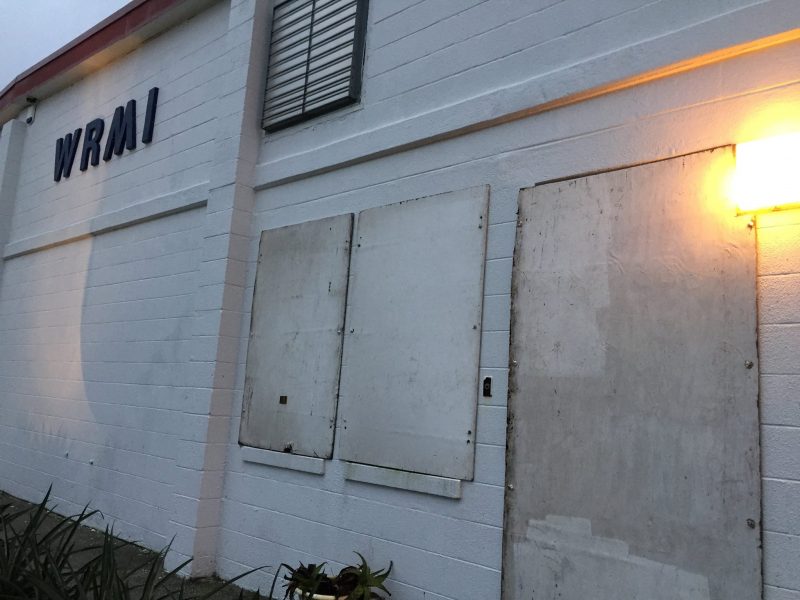
WRMI, Radio Miami International, will showcase digital text and images via analog radio in a half-hour special broadcast to be transmitted nine times (at least), beginning Saturday, 13 August.

The broadcast will mostly be in MFSK32 centered on 1500 Hz. There will also be segments in MFSK64, MFSK32 centered on 2200 Hz, and Olivia 64-2000. The program will include MFSK images, examples of non-Latin alphabets, and an Flmsg transmission. You will also hear “co-channel” music.

To decode the modes on the WRMI broadcast, Fldigi software is recommended. Download it fromhttps://sourceforge.net/projects/fldigi/files/fldigi/ . The main Fldigi website is http://www.w1hkj.com.

And you will use the companion program Flmsg. Download it fromhttps://sourceforge.net/projects/fldigi/files/flmsg/ .

To make Flmsg work with Fldigi, in Fldigi: Configure > Misc > NBEMS > under Reception of flmsg files, select Open with flmsg and Open in browser, and below that indicate where your Flmsg.exe file is located – probably somewhere in Program Files(x86).

For correct decoding of the languages with diacritics, or using non-Latin alphabets, in Fldigi: Configure > Colors & Fonts > RxTx > in the Rx/Tx Character set menu, select UTF-8.

For Fldigi to automatically select the mode and the center audio frequency of the mode, select RxID (upper right of the interface) by left clicking. In newer versions of Fldigi, also right click on RxID and select Passband.

You can decode this WRMI special broadcast as it is broadcast, or from your recording.

TRANSMISSION SCHEDULE

Via WRMI’s transmitters at Okeechobee, Florida, except where noted:

Saturday 13 August 0030-0100 UTC on 7730 kHz (285 degrees azimuth)
Saturday 13 August 0730-0800 UTC on 5850 kHz (315 degrees)
Saturday 13 August 1330-1400 UTC on 11580 kHz (44 degrees)
Saturday 13 August 2200-2230 UTC on 5950 kHz (181 degrees)
Sunday 14 August 0230-0300 UTC on 11580 kHz (44 degrees)
Sunday 14 August 2130-2200 UTC on 15770 kHz (44 degrees)*
Sunday 14 August 2330-2330 UTC on 11580 kHz (44 degrees)*
Monday 15 August 2000-2030 UTC on 6070 kHz* **
Tuesday 16 August 2130-2200 UTC on 15770 kHz (44 degrees)

* Preempts DigiDX, usually heard at this time

** Via Channel 292, Germany

Many of these broadcasts will be heard outside their nominal target areas.

Reception reports to Jeff: info (at) wrmi.net

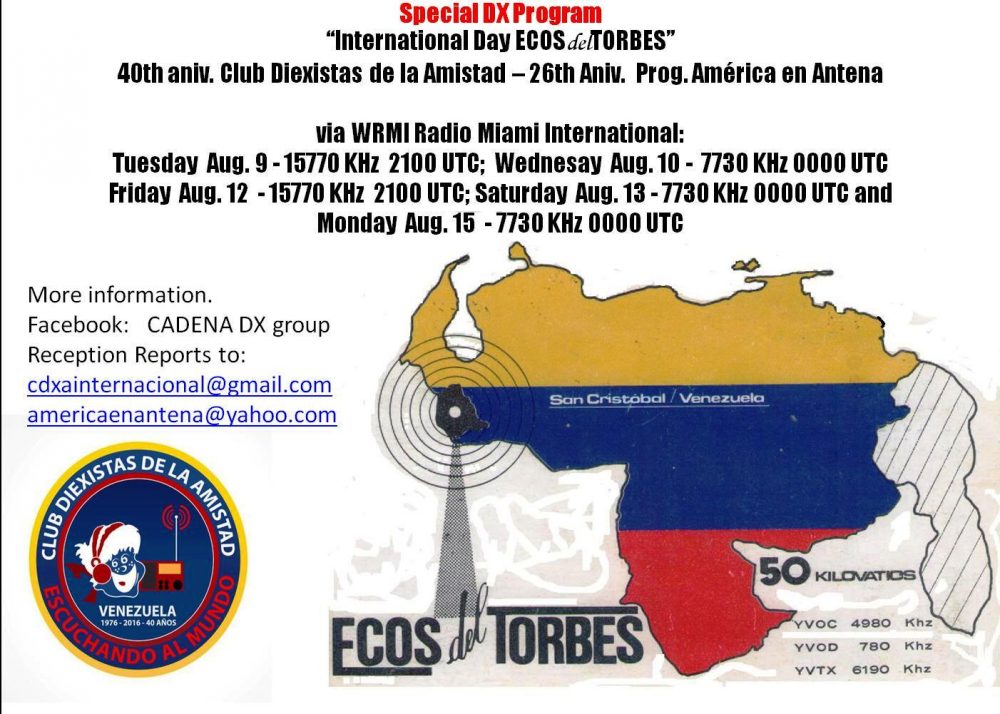
Ecos del Torbes special broadcast August 12 & 15

special program Ecos

Many thanks to SWLing Post reader, Rafael Rodríguez R., who writes with the following announcement from Bogotá, Colombia:

[I would like to announce a] DX program, celebrating “International Day” from Ecos del Torbes (emblematic Venezuelan station) and also the 40th anniversary Club Diexistas de la Amistad and their program América en Antena (celebrating 26th anniversary).

This will be a 30 min. program with reviews about the club, program and station, and historical audio from Ecos del Torbes.

This special program will be verified with a e-QSL

Note that Rafael sent this announcement in July while I was traveling and I missed posting before the August 8 broadcast date. Thankfully, we still have the August 12 and 15 broadcasts! Thanks again for the announcement, Rafael!


Radio Northern Ireland WRMI Broadcast

RNIe!SLnew

Radio Northern Ireland will be broadcasting via WRMI on 9955khz at 0130 UTC on Monday. This is a regular show from Radio Northern Ireland. Jordan Heyburn from Radio Northern Ireland has made changes to his show and he has included a news segment! Jordan said “I decided to include a news segment to bring the news of Northern Ireland to your own home no matter where you are in the world. Not many people hear about Northern Ireland in the news in all corners of the world!  The news brings a full round up of what has been happening in Northern Ireland including events which are happening in Northern Ireland which might interest any listeners” 

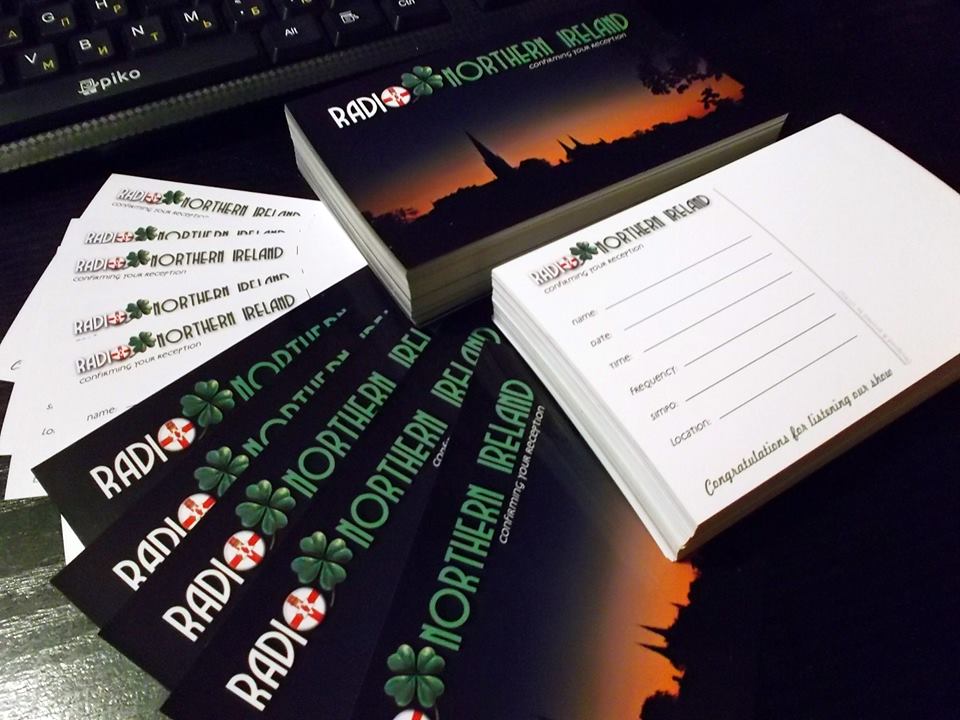
Radio Northern Ireland happily accepts reception reports to the email address [email protected]

They welcome a $2 donation via paypal to their email address if you wish to cover postage for a QSL card by post.


Jordan Heyburn (MI6JVC) is the author of this post and a regular contributor to the SWLing Post. Jordan is an avid shortwave listener, ham radio operator and shortwave presenter/owner of Radio Northern Ireland. Jordan is based in Northern Ireland.

Radio World: The evolution of shortwave radio

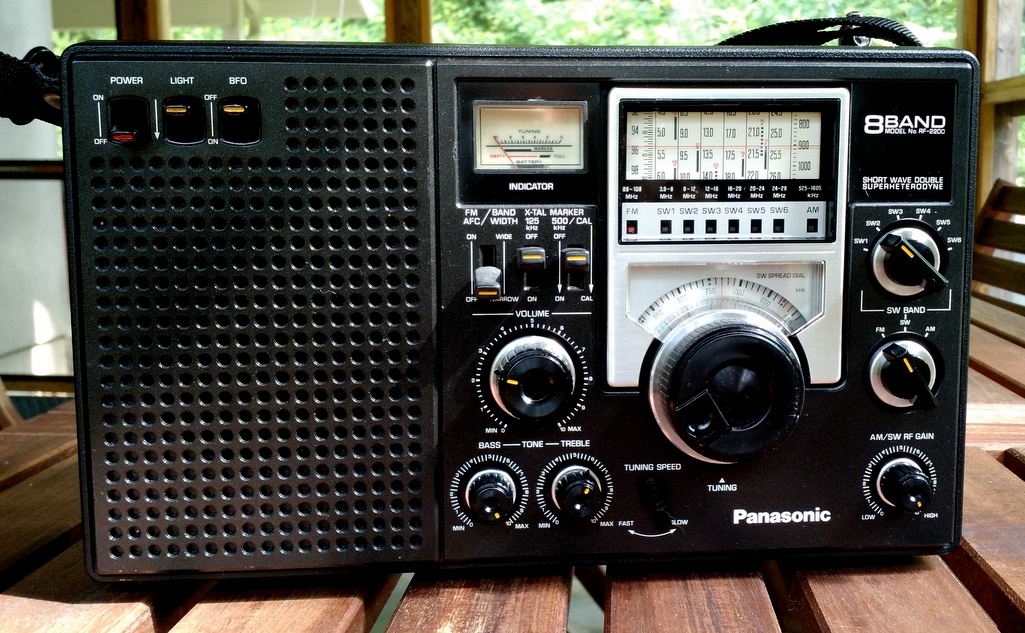
Panasonic-RF-2200-1

Many thanks to SWLing Post contributor, Richard Langley, who shares the following article by James Careless in Radio World Magazine.

The article includes interviews with Andy Sennitt, Kim Andrew Elliott, Nigel Fry,  and even yours truly. The following is a short excerpt taken from the introduction of the article:

(Source: Radio World)

OTTAWA, Ontario — With the advent of radio in the 20th century, the shortwave band (1710–30,000 kHz) soon became a hotbed of long-distance radio broadcasting. Used primarily by state-run international broadcasters, plus ham radio operators and ship-to-shore radio communications, the shortwave band was prized due to its astoundingly broad reach.

That reach was — and is still — made possible by the tendency of ground-based shortwave radio transmissions to bounce off the ionosphere and back to earth; allowing shortwave broadcasts to “hop” repeatedly, increasing a broadcast’s range while minimizing its decay.

[…]At the height of the Cold War, the shortwave bands were packed with content as the Voice of America and West Germany’s Deutsche Welle (Voice of Germany) traded ideological punches with Radio Moscow and East Germany’s Radio Berlin International. This is because analog shortwave radio broadcasting was the only way for both sides to make their political cases cross international borders: There was no satellite TV, let alone any internet.

Read the full, in-depth article on the Radio World website…

This article is well worth reading and one of the more in-depth pieces I’ve seen in a trade publication or news site recently.

I should add that I completely agree with James Careless’ conclusion:

“[T]he research that went into this article suggests that the shortwave band is sufficiently alive to be still evolving.”

The fact is, the shortwave landscape is not what used to be in the Cold War. Many of those big voices have left the scene and, in the process, left the door open to others.

The shortwaves are a dynamic communications space that continues to evolve.

That’s why I keep listening.

Want to read more about the future of shortwave radio? Click here to read Does Shortwave Radio Have a Future?

Radio Northern Ireland this weekend!

rninewqsl

Many thanks to SWLing Post contributor, Jordan Heyburn, who writes:

Radio Northern Ireland is going to be broadcasting to Asia and we hope that the propagation gods will be on our side and take us to Australia and New Zealand. Radio Northern Ireland will be broadcasting via the Shortwave Service in Armenia on Saturday 9th July at 2300 UTC on 17490khz. The show which is being beamed out towards Asia and Australia is a special pre recorded show just for this relay with SSTV at the end of the show in Scottie 2 mode! Have your decoders ready for this!

If you get a reception then why not send us a reception report to [email protected], if you have the correct reception you will be in receipt of a shiny new Radio Northern Ireland QSL. A donation of $2 is preferred to cover postage and this can be sent through paypal to the same email address.

If you wish to hear us on Shortwave at any time we can be found on multiple frequencies which are listed below.

Shortwave Service via Germany – 6005khz 1900 UTC (Saturday)
WRMI – 15770khz 2100 UTC (Saturday)
WRMI – 11580khz 0130 UTC (Sunday)
WRMI – 9955khz 0130 UTC (Monday)

I hope you enjoy the show and let us know where in the world you are listening from!

Best Regards,

Jordan Heyburn

Thanks for the heads-up, Jordan! We’ll be listening!

“The Classics Experience” with Paul Walker this weekend!

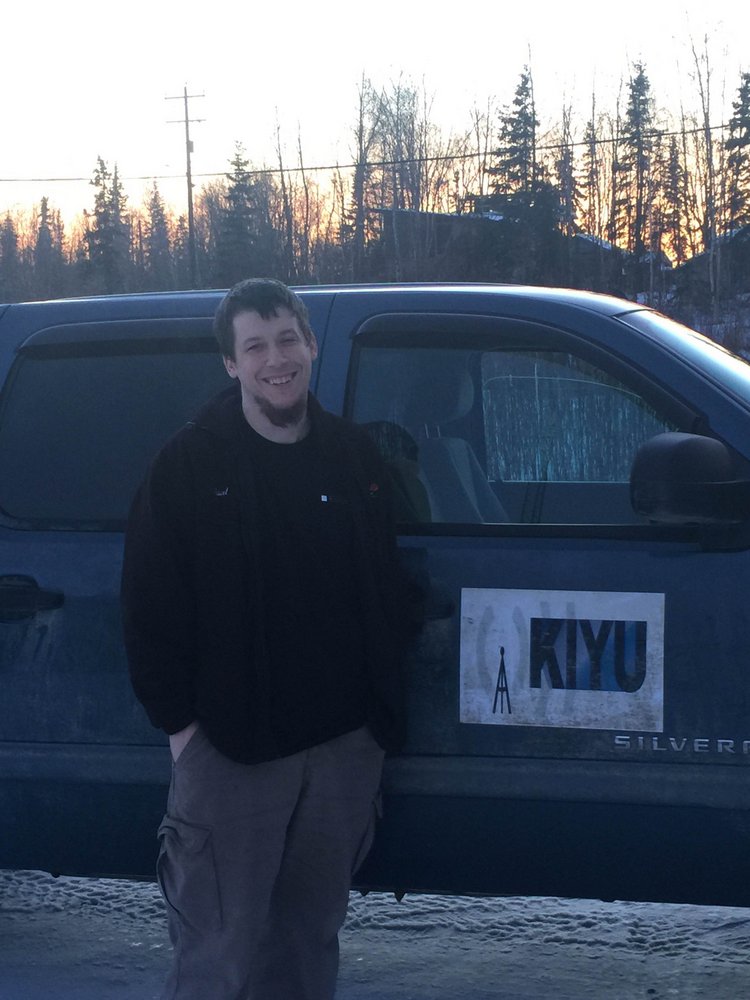
Paul Walker at KIYU Alaska.

Paul Walker at KIYU Alaska.

Many thanks to SWLing Post contributor and broadcaster, Paul Walker, who writes:

The next broadcast of “The Classics Experience” with Paul Walker is rapidly approaching. It’s a 2 hour broadcast of rock and roll music with some country classics scattered in and occasionally a few audio surprises.

The next broadcast schedule looks like this:

WINB 9265khz Saturday June 4th 0230UTC to 0430UTC
WRMI 7570 Saturday June 4th 0400 to 0600UTC

WINB’s principal radiation direction is 242 degrees true or almost due southwest. Looks to cover parts of the Midwest/Southern US pretty well: Kentucky, Tennessee, Alabama, Georgia, Mississippi, Texas and into Mexico. WINB claims “At the long range, the main beam hits Eastern Australia and New Zealand. The rear lobe hits the Mediterranean area of Eastern Europe.”

WRMI’s 7570khz signal beams at a 315 degree azimuth to Vancouver, Canada. It is very listenable, near local like on good nights here in rural Central Alaska.

No appeals for donations, no begging for sponsors, no political or religious rantings and ravings nor any silly personal opinions. I promise. Just good music for the fun of it!

Seriously, I fund the broadcast out of my own pocket about once every 2-3 months just for the heck of it!

Reception reports are only accepted by regular postal mail. $2 appreciated to cover the costs of the QSL cards I had printed up and the postage. Reports can be sent to:

Paul B. Walker, Jr.
PO Box 353
Galena, Alaska 99741 USA

FYI: There are two surprises: I will have text in the MFSK32 format in the second half of the first hour and then a picture in the MFSK32 format in the second half of the second hour.

Thanks, Paul, for putting you good music show on the air! We’ll be listening for “The Classics Experience” this weekend. Note: since the broadcast times are in UTC above, listeners in North America should tune in during the evening on Friday, June 3rd. Compare your local time to UTC.

Paul’s DXing location in Galena, Alaska with sample logs and an update of music broadcast

IMG_0866

Many thanks to SWLing Post contributor, Paul Walker, who shares the image above and the following:

How about a video [from Galena, AK]? Here’s one I shot on the evening of April 15th while DXin’g and apparently logging Radio Bandeirantes 9645 kHz in Brazil:

Looks like a beautiful DX location you’ve got there, Paul. You’ve obviously found ways to mitigate receiver overload from the broadcast station with the number of loggings you’ve been posting as of late.

Indeed, Paul recently forwarded the following sample of logs from this very DXing spot. Paul writes:

Unless otherwise noted, all loggings were from a Tecsun PL-880 with an 80 foot long wire 5 feet up in a tree. My location is Galena, Alaska which is a village of 500 people about 300 miles east of Nome, Alaska and 300 miles west of Fairbanks, Alaska.

Comments questions or thoughts always welcome!

I was able to log Channel Africa broadcasting in French on 15235 kHz, two mornings last week.

This recording was made on Friday April 8, 2015 at 8:45 AM Alaska Daylight Time/1645UTC. I would rate the signal about 6 1/2 out of 10 with good audio, some light fading and no interference.

Audio here:

This recording was made on Wednesday April 6, 2015 at 8:37 AM Alaska Daylight Time/1637UTC. The signal was about a 6 out of 10 with moderate fading, a little more then the recording made on April 8th.

Audio here:

Radio Thailand 9390 kHz

This recording was made on Saturday April 9, 2015 at 10:36 AM Alaska Daylight Time/1836UTC. I would rate the signal about 7 1/2 to 8 out of 10 with good audio, some light fading and no interference.

Audio here:

Voice of Indoneisa 9526 kHz

This recording was made on Saturday April 9, 2015 at 10:36 AM Alaska Daylight Time/1836UTC. I would rate the signal about 4 1/2 out of 10 with ok audio, some light to moderate fading and some interference.

Audio here:

Voice of Vietnam 9625 kHz

This recording was made on Saturday April 9, 2015 at 9:00AM Alaska Daylight Time/1700UTC. I would rate the signal about 4 out of 10 with fair audio, some light to moderate fading and little interference.

Audio here:

All India Radio 11620 kHz

This recording was made on Saturday April 10 , 2015 at 1:29PM Alaska Daylight Time/2129UTC. I would rate the signal about 6 out of 10 with GOOD audio, some light to moderate fading and no interference.

Audio here:

Note: This was by FAR the best reception I’ve ever had of AIR. Their audio is usually pretty piss poor with poor quality and low modulation. Plus, their signal just isn’t that good usually.

I have also logged Voice Of Korea on 2850, 3320, 6100, 6400, 12015, 7220, 11910, 11935, 11735, 15105, 15180, 13760, 13650, 7580, 9650, 9875, 9445, 9665, 9425, 6170 and 3250 kHz.

Radio Algerienne Holy Quran and Radio Saudi are fairly regular visitors here and at times, pretty strong.

6160 kHz via Vancouver is heard several times a week…sometimes just barely, and other times, like a few days ago, nearly like a local.

The upper bands, 15 and 17 MHz seem to do real well here, especially by day, even smack in the middle of the day. I’ve heard RFI and DW via Issoudun right around lunch time in the 15 MHz area of the band.

I get Zanzibar on 11735 kHz from time to time…usually at least at fair levels.

CFRX 6070 is heard just about nightly, sometimes poor and barely audible but many times at least poor to fair and listenable. Now and then it’s pretty strong and listenable.

That is an impressive number of stations you’ve logged. It appears one of your easiest catches is Voice of Korea–I’m not surprised since you’re certainly within their broadcast footprint.

New Music Show and Contest

Many of you know that Paul also hosts an occasional music show via shortwave. Paul recently set times and frequencies for the next show–he notes:

I will be on WRMI, 7570 kHz from 0400-0600UTC Saturday June 2nd, Which is 12 midnight to 2 AM Eastern/9 PM to 11pm Pacific on Friday June 1st.

More oldies and rock n roll music with some country thrown in. I’m working on a CONTEST with some cool radio prizes and even bigger…. I am ironing out the technical details and going to try and do the 2 hot show live from my studio in Galena, Alaska.

My target audience this time with be the West Coast of the US and Canada. I expected the Midwestern US to get a good signal from the 315 degree beam towards Vancouver, Canada as it has to pass over the Midwest to get to the West Coast.

Contest details and QSL information to be released before the show!

I’ll plan to re-post this announcement, with any updates, closer to the broadcast date of June 2, 2016.

Thanks again, Paul, for sharing some of your radio world!