Monthly Archives: June 2025

Carlos’ Illustrated Radio Listening Report and Recording of CNN Radio Argentina (June 10, 2025)

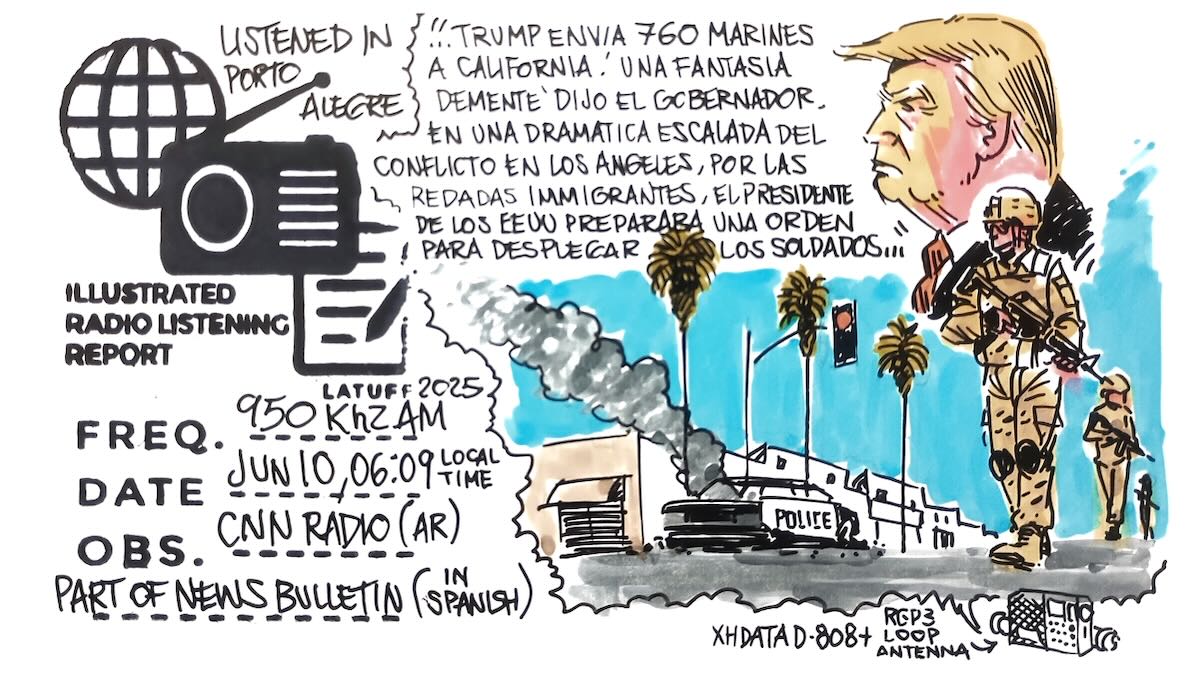
Many thanks to SWLing Post contributor and noted political cartoonist, Carlos Latuff, who shares the following illustrated radio listening report of a recent CNN Radio broadcast.


Carlos notes:

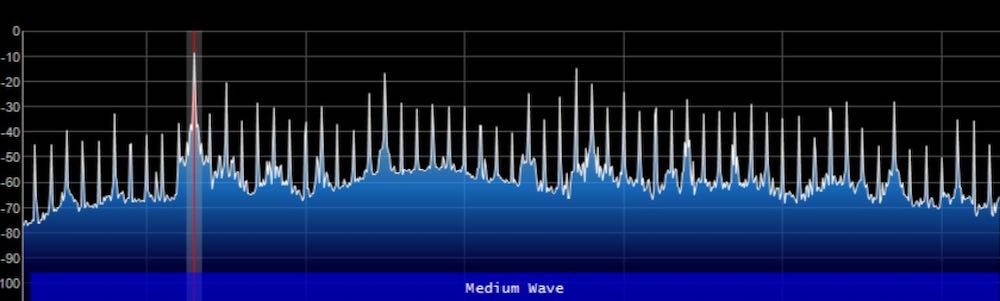
Trump deploys Marines to Los Angeles, CNN Radio, Argentina, 950 kHz AM

Part of CNN Radio (Argentina) news bulletin (in Spanish) about Donald Trump deploying Marines to Los Angeles amid immigration protests. Listened in Porto Alegre, Brazil, on a Xhdata D-808 receiver.

“Trump is sending 760 marines to California. ‘An insane fantasy’, said the governor. In a dramatic escalation of the conflict in Los Angeles over protests against immigration raids, the US president was preparing an order to deploy the soldiers. They will join the 2,000 troops called up from the National Guard. The protests have been going on for four days. An Australian journalist was wounded in the leg by a rubber bullet fired by troops.”

Click here to view on YouTube.

Orbiting outer space via shortwave

Greetings to all SWLing Post community, we are off in orbit again on those shortwaves of ours, bringing you a couple of interesting shows to hopefully pique your imagination.

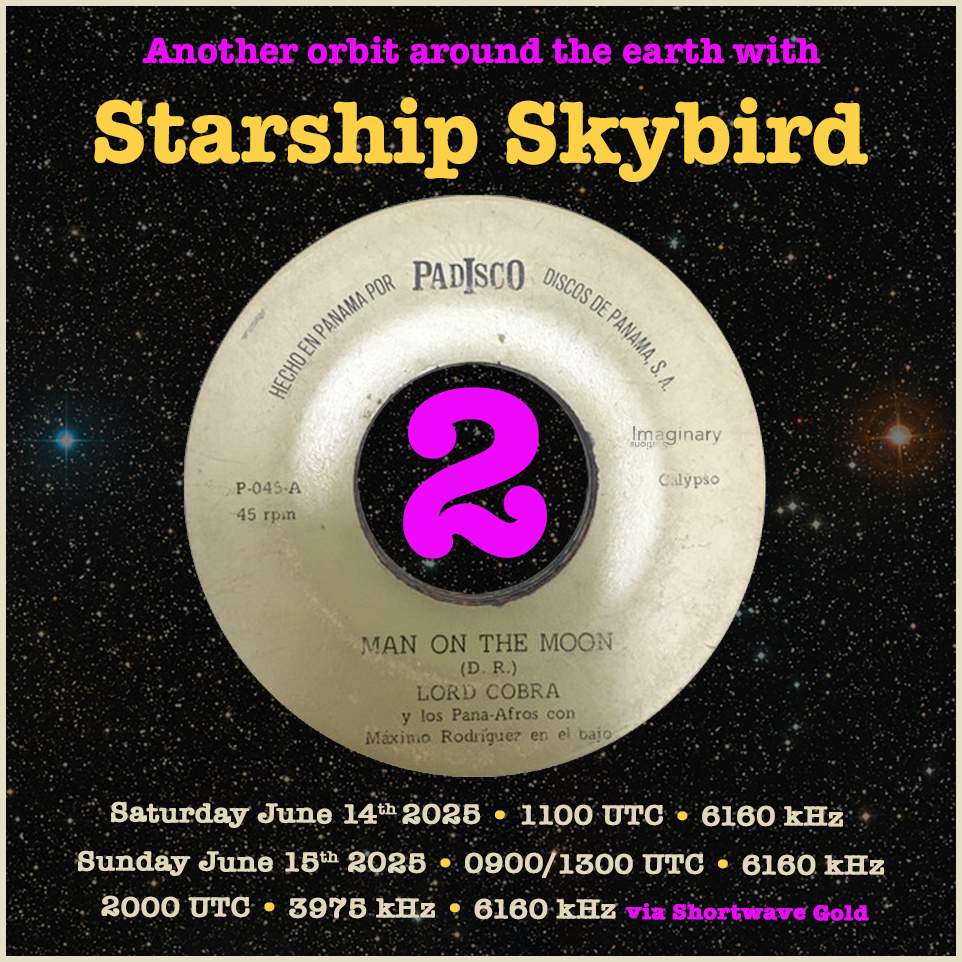
The first Imaginary Stations offering is on Saturday 14th June 2025 at 1100 hrs UTC on 6160 kHz and then again on Sunday 15th June 2025 at 0900/1300 hrs UTC on 6160 kHz and at 2000 UTC on 3975 kHz and 6160 kHz (via the services of Shortwave Gold) and it’s the second episode of Starship Skybird.

Like our first episode do expect more sounds from space, tunes from across the cosmos and if all goes well, we’ll have a reknowned astronomer on hand to give us a live commentary on what they can see in the night sky from the station’s roof (subject to weather and atmospheric conditions of course). Tune in that shortwave radio and join us reaching for the stars and beyond!

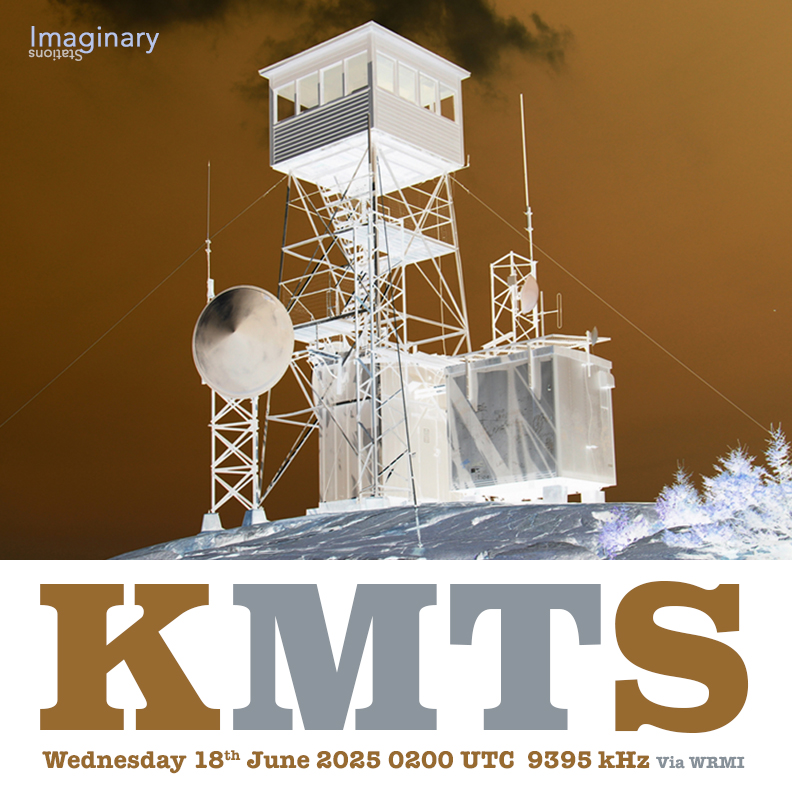
On Wednesday 18th June 2025 via WRMI  at 0200 UTC we bring you some audio excitement with the Kearsarge Mountain Transmission Service, KMTS. Expect some strange and wonderful music and sounds from the radio spectrum. 

More on Starship Skybird here:

For more information on all our shows, please write to [email protected] and check out our old shows at our Mixcloud page here.

FastRadioBurst 23

“Helene, Milton exposed need to protect AM radio”

Many thanks to SWLing Post contributor Dennis Dura, who shares this article from the Ponte Vedra Recorder highlighting how Hurricane Helene has exposed the critical need to protect AM radio as a vital emergency communication tool: https://www.pontevedrarecorder.com/stories/helene-milton-exposed-need-to-protect-am-radio,129870

Amateur Radio Resources for Visiting Hams at the 24 Hours of Le Mans

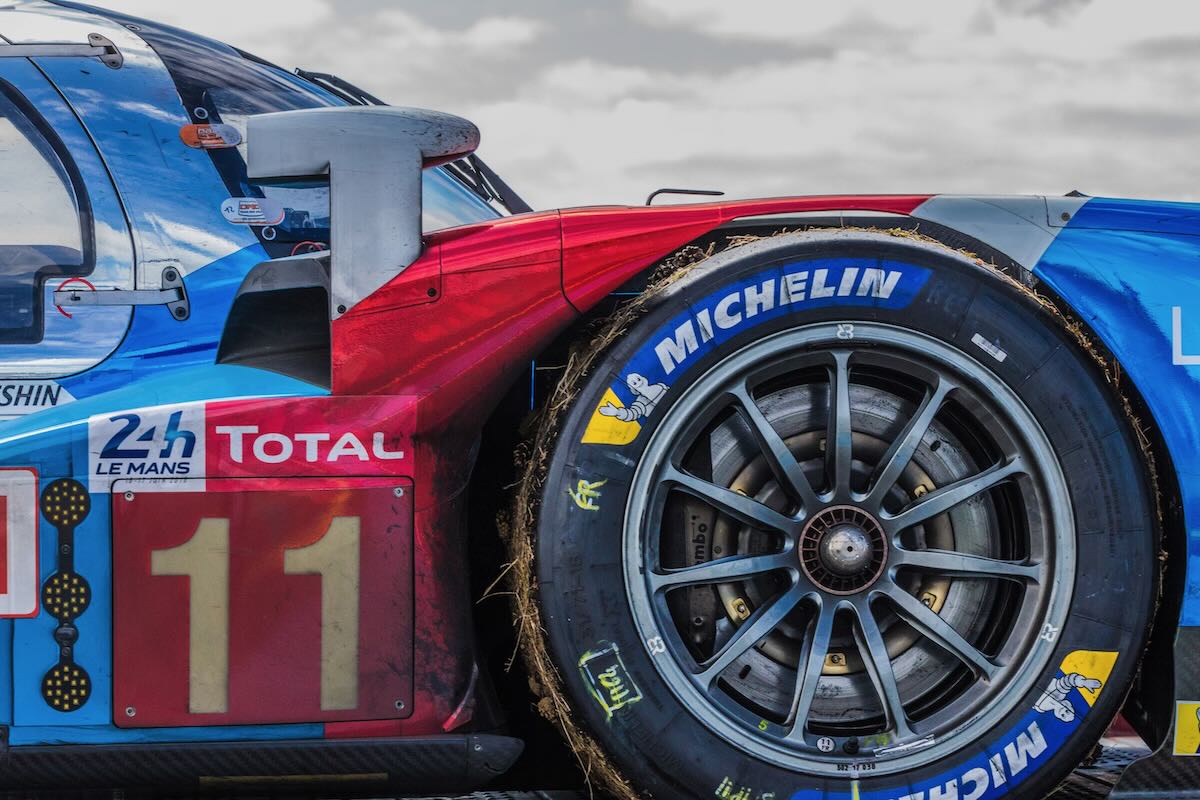
Photo by lamnatheshark via Unsplash

Many thanks to SWLing Post contributor, Paul Jamet, who shares this information for anyone visiting the 24 Hours of Le Mans this year:

Visiting HAM Operators at the 24 Hours of Le Mans: Repeaters and Networks Available

As the world-renowned 24 Hours of Le Mans takes place, we warmly welcome all amateur radio operators (HAMs) visiting the Sarthe region. Whether you’re here to experience the race live or just passing through, several radio communication options are available to help you stay connected and exchange with fellow operators.

Available Repeaters Around Le Mans

    • F5ZGG: This DMR (Digital Mobile Radio) repeater provides digital connectivity throughout the Le Mans area. Ideal for operators using digital equipment, it ensures reliable coverage across the region.
    • F1ZMP: Located at the Le Mans Radio Club, this analog VHF/FM repeater is accessible to all operators with standard analog equipment. It serves as a key local contact point.
    • RRF VHF Repeater: Operating on 145.300 MHz with a CTCSS tone of 103.5 Hz, this repeater links to the French Repeater Network (RRF), enabling conversations with operators across France and beyond through IP gateways.

Meshtastic Network Active in the Area

In addition to traditional repeaters, the Le Mans region features several active Meshtastic nodes — a mesh radio system using ISM bands (433 MHz and 868 MHz) in long_fast mode.

Meshtastic uses LoRa modules to send text messages fully off-grid, with no reliance on cellular or Wi-Fi networks. It’s particularly useful in crowded areas like paddocks or rural zones, for close-range communication, field tests, or tactical use.

Operators who are curious or equipped are encouraged to activate their modules and join the local network. Some nodes are fixed, while others are mobile — carried on vehicles or backpacks.

We warmly encourage you to make the most of your visit by connecting with local HAMs, sharing your passion, discovering the region’s radio infrastructure, and maybe trying out new technologies like Meshtastic.

Enjoy the race, happy DXing, and we look forward to hearing you on the airwaves!

“VOA Museum exhibit honors Dusty Rhodes, Jim LaBarbara, TV Kiese – WVXU”

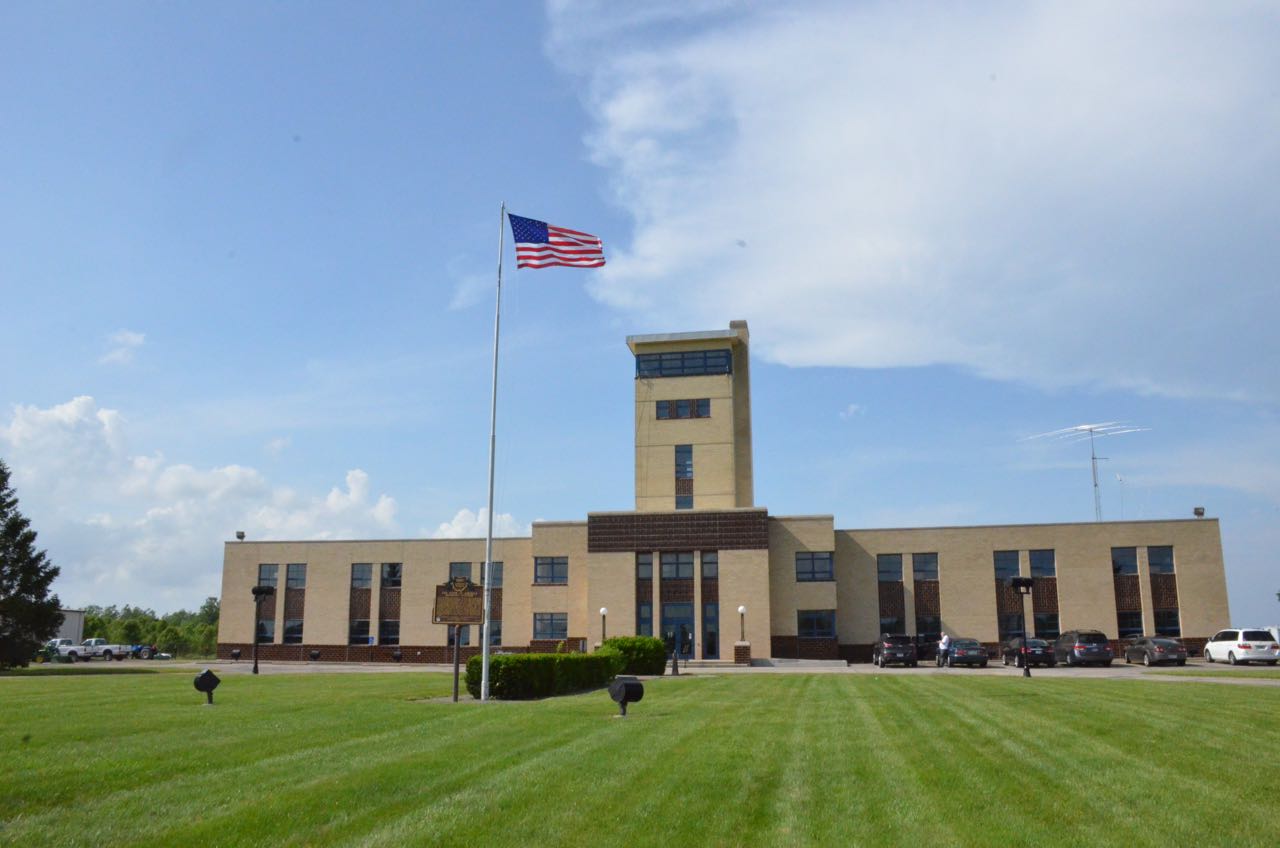
Many thanks to SWLing Post contributor David, who shares a link to a piece from WVXU about a new exhibit at the Voice of America Museum in West Chester, Ohio.

The exhibit highlights the legacy of Dusty Rhodes, Jim LaBarbara, and TV Kiese—three local broadcasting legends whose voices helped shape the airwaves in Cincinnati and beyond. As the VOA Museum continues to preserve and celebrate the power of radio, this exhibit offers a unique glimpse into regional broadcast history and the personalities who made it memorable.

Read the full article here: VOA Museum exhibit honors Dusty Rhodes, Jim LaBarbara, TV Kiese – WVXU

New SDR Recordings from Peru and Brazil Now Available via Don Moore

Our good friend and longtime contributor Don Moore has just updated his extensive SDR recordings archive with new files from his recent travels in South America. These latest recordings—captured in Peru (February) and southern Brazil (May)—are now available to explore and download.

Don writes:

I have a webpage where most of the SDR recordings from my travels are available for download. I just added files made in Peru in February and in the far south of Brazil in May. This archive is mostly medium wave. I hope they give other DXers a chance to hear what the dial sounds like in other parts of the world. They could also be useful as a way to compare possible IDs, ads, and other programming with what you hear in your own DXing.

You can browse and download the recordings directly via Don’s archive here:

https://www.donmooredxer.com/logs/loglinks.html

Many thanks, Don, for sharing these with the SWLing Post community!

Bob’s Radio Corner: Tuning Single-Letter Cluster Beacons

Source: Better Shortwave Reception, William I. Orr, W6SAI, Radio Publications Inc., Wilton, CT, 1st Edition, p. 25, 1957.

Tuning Single-Letter Cluster Beacons

by Bob Colegrove

Part of the allure of shortwave listening for me has always been vicarious visits to “those faraway places with the strange-soundin’ names.”  After one has logged several big-time broadcasters, one begins to look for new challenges.  Most of the so-called “utility” content which once occupied the space between the broadcasters and hams is now a vast open desert interrupted only with an occasional digital buzzsaw, a wide-band CODAR experiment, or some RTTY.  But now and then you come across a signal that grabs your interest.  In this case it happens to be a group of signals referred to as the Russian single-letter beacons.  A good introduction to these beacons is here

https://en.wikipedia.org/wiki/Letter_beacon

and here

https://www.hfunderground.com/wiki/Letter_beacon.

After many years, there is still some speculation as to the history, purpose and power of the single-letter beacons.  Rather than repeat what has already been said, this posting focuses on my technique for monitoring a subset of these beacons called “cluster beacons.”  They are called that because they are grouped close together, just 100 Hz apart, at ten different locations across the shortwave spectrum.  A good tabular summary is at https://priyom.org/military-stations/russia/single-letter-beacons.  Some stations may not currently be broadcasting or may be on at selected times.

These stations will neither captivate you with content or readily QSL.  They are all continuous wave (CW) and are thus heard by turning on your radio’s beat frequency oscillator (BFO) or selectable sideband (SSB) detector.  I am Morse-code-challenged – always have been.  Fortunately, these stations all broadcast their single letter dits and dahs repeatedly and slowly.  Having relatively low power, the challenge here on the East Coast of North America is just to pick them up through the band noise.  Some nights are better, some not so good.

For purposes of this posting, I have focused on the stations around 7508 kHz.  This seems to be the best cluster, at least at the current time and location.  “D” is invariably the strongest and most consistent, with “P,” “S,” “C,” and “A” fading in and out at different times depending on the propagation.

To tune through the cluster, first tighten up your selectivity as narrow as possible – 500 Hz if you have it.  Use the fine-tuning control – 10 Hz if you have it.  The best way to catch these beacons is to sneak up on them.

  • Approach upward from the low side of the cluster using USB, start tuning around 7508.3; or
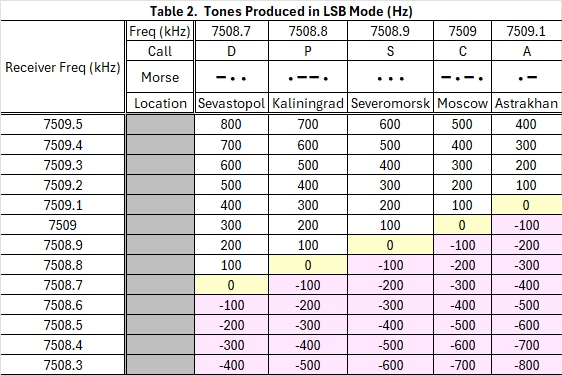
  • Approach downward from the high side of the cluster using LSB, start tuning around 7509.5.
  • Try tuning in both USB and LSB to determine the better reception of the signal you are trying to hear.

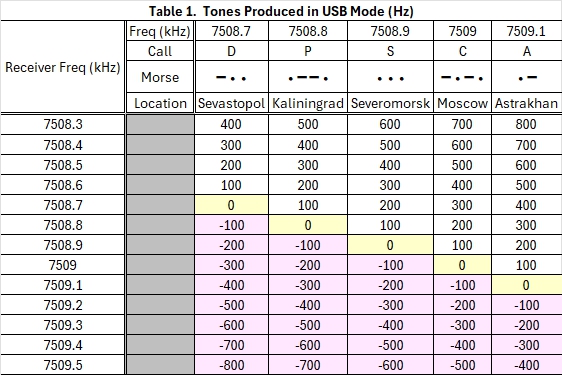
Depending on which signals are audible, you may hear two or three making it through the 500 Hz filter at the same time, each with a different pitch.  The beacons will change pitch as you approach, going from a high pitch heterodyne to a lower pitch.  When you reach zero beat with a station you will be directly on its frequency.  Zero-beating a strong signal may help you hear a weaker one.  Tables 1 and 2 show how this works for USB and LSB respectively.  They indicate the heterodyne tone you will hear as you tune towards or away from each signal.

The negative value tones in the tables may not be heard if you are using a radio with selectable sideband (SSB).  If your radio has a traditional BFO, you will hear a tone at either side of zero beat.  In the tables, interpret the negative numbers for their absolute value, for example, |-100 Hz| = 100 Hz.

As part of the challenge for the 7508 kHz cluster, you may have to contend with interference from WRNO, 7505 kHz.  When you finish this challenge, try it again on the 10781 kHz cluster.
Good DXing.