Author Archives: Thomas

Cricket – Muve ZTE Score: Our pick for a portable wi-fi radio, on sale at BestBuy

The Goal Zero Rock Out Portable Speaker and Cricket Muve ZTE Score

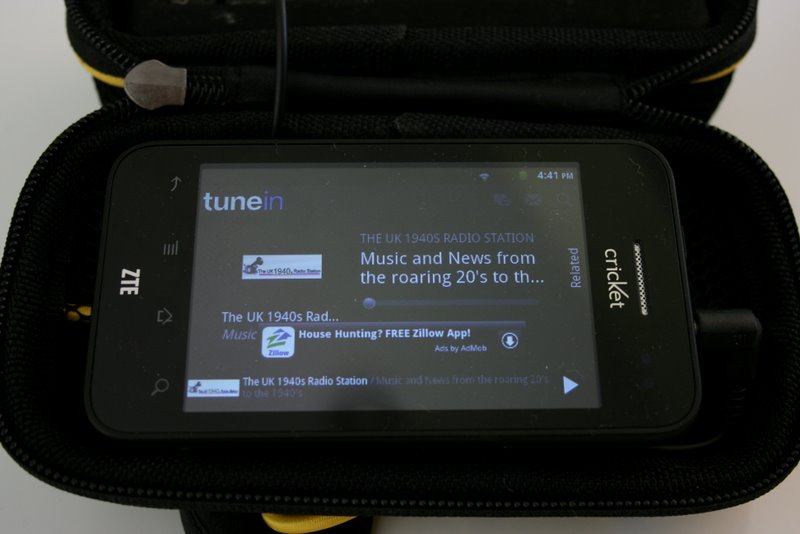
In our two-part series on Internet radio–Rethinking Internet Radio Part 1 and Part 2–we pointed out a very affordable and effective option for listening to internet radio: the Cricket Muve ZTE Score no-contract Android phone combined with the TuneIn radio app. Immediately after posting the article, the price of the Cricket phone increased to $79.99. For those of you who have been waiting for the price to drop again, you’re in luck. They are available at many BestBuy locations for $39.99–an excellent price.

It appears this promotion is good through May 5th. Click here for details.

Read our review of the Cricket Muve ZTE Score as a wi-fi radio here.


Shortwave offers “the most physical resistance to interdiction of any medium available to international broadcasting”

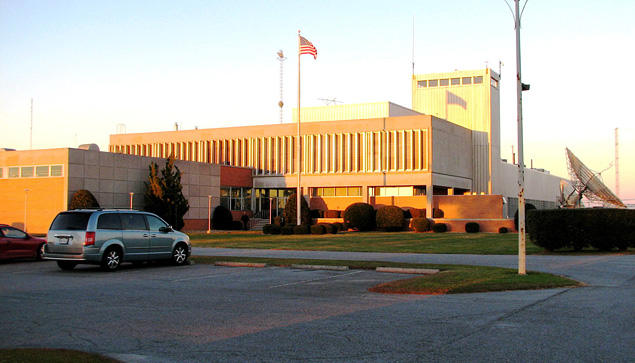
VOA transmitter site in Greenville, NC

Edward R. Murrow transmitting station site in Greenville, NC

I recently read the following comments by Kim Andrew Elliott regarding the Broadcasting Board of Governors’ strategic move away from shortwave radio. I think Kim is spot-on:

As a shortwave listener for nearly a half-century, I am saddened to see the reduction of shortwave broadcasting, especially by US international broadcasters. As an international broadcasting audience research analyst, however, I see much data showing a decline in the number of of people owning and and listening to shortwave radios. Even in rural areas, audiences are moving to FM radio, television, and mobile phones.

US international broadcasting should employ, if possible, the media preferred by its target audiences. If access to those media are denied in the target country, then the use of more robust but less popular media is necessary. Shortwave can be jammed, but it still offers the most physical resistance to interdiction of any medium available to international broadcasting. New digital modes allow text to be transmitted very efficiently via shortwave, requiring much less power than needed for voice. Shortwave could therefore be an alternative means of delivery when the internet is blocked. (On the subject of internet blocking, see previous posts re Iran and China.)

For future emergencies, when the internet, mobile networks, cable television, and other popular forms of communication will be disrupted, the United States should maintain an interagency global network of shortwave transmitters. These can be used by US international broadcasting to reach key target countries, by the State Department to reach Americans abroad and for public diplomacy tasks, and by the military for information operations and other purposes. The output of each agency would remain separate. Their functions would not be intermingled. The shortwave transmitter network would operate as a common carrier.

No doubt that shortwave radio listenership is on the decline. Still, as we point out so often, many around the world still rely on the medium. Indeed, should those of us who regularly use the internet ever experience a regional/national internet blackout or other potential communications disaster, shortwave radio would be a reliable communications medium of last resort.

Broadcasters (like RCI) should not dispose of their broadcasting infrastructure during cuts.  Kim’s suggestion of an “inter-agency global network of shortwave transmitters” is a worthy option.

Update: Bonito 1102S RadioJet has FCC approval

Screenshot of the RadioJet GUI - click to enlarge

I just received the word from Dennis at Bonito.

The Bonito 1102S RadioJet SDR (software defined receiver) now has FCC approval.  This means that the RadioJet will be available for purchase in the US.

We will be reviewing the RadioJet in the near future.  I, for one, can’t wait–especially after reading Fenu’s review. If it has Perseus performance at a much lower price point, this could be a very competitive receiver.

Want updates? Follow our tag: RadioJet

Andy Sennitt: Looking back at 30 years of Media Network

RNW headquarters in Hilversum, Netherlands (photo coutesty: RNW)

Media Network, which covered international broadcasting developments at Radio Netherlands, recently ended a 30-year run on RNW. In a series of four articles, Andy Sennitt mentions some of the highlights, and then looks ahead to how international broadcasting might develop in the next ten years.

Part 1 is now available on RNW’s website. Part 2 will be published on May 1st 2012. This read is definitely worth your time.

Pirate Radio Recordings: Radio Strange – Outpost No. 7

QSL from Radio Strange – Outpost No. 7 (click to enlarge)

Saturday night, after listening to some Voice of Greece Jazz, I happened upon Radio Strange – Outpost No. 7. This pirate deserves some recognition for the station’s homage to retro 8-bit & spacey sounds. I couldn’t tell if I was listening to an NES game soundtrack or an episode of Lost In Space. There’s even a Beatles song thrown in the mix…with a twist. Good fun.

Here’s the recording I made of the full 16 minute broadcast on 6925 kHz at approx. 00:15 UTC on Saturday, April 21:

BBG Watch: Ashe seeks comments on U.S. international broadcasting

This is a great opportunity to communicate directly with a BBG member who wants your input regarding upcoming changes to US international broadcasting:

(Source: BBG Watch)

Often referred to as a senior Republican member of the Broadcasting Board of Governors (BBG), Ambassador Victor Ashe has invited the public, including BBG employees and contractors, to send comments to his personal email address, Send an e-mail to BBG member Victor Ashe, on the controversial plan to merge BBG-managed Radio Free Asia (RFA), Radio Free Europe/Radio Liberty (RFE/RL), and Middle East Broadcasting Networks (MBN) into a single administrative unit.

Ashe has become a champion of transparency and raising employee morale at the federal agency which oversees U.S. international broadcasting. He is one of nine members serving on the bipartisan Board. In the absence of Michael Lynton, the BBG’s interim presiding governor, the meeting in Miami was presided over by Governor Dennis Mulhaupt. Governor Dana Perino was also absent. Both Lynton and Perino have a poor attendance record at BBG meetings. Lynton is a Democrat. Mulhaupt and Perino are Republicans.

While the open meeting of the Board on Friday at the headquarters of Radio and TV Marti in Miami, Florida, was chaired by Governor Mulhaupt, Governors Victor Ashe and Michael Meehan clearly dominated the discussion. On-demand video and audio from the meeting is available on the BBG official website.

Ashe called attention to a number of unresolved issues in the proposal to merge the publicly funded surrogate broadcasters who get their grants from Congress through the BBG. He expressed concerns about the lack of information on the selection and the authority of the CEO for the new merged entity. Ashe warned that rushing to implement the plan in its current form may damage U.S. international broadcasting and said that he would oppose the idea of selecting a CEO for the proposed entity as early as next month.

[…]Ashe also announced that Edward R. Murrow’s only son, Charles Casey Murrow, will participate in the the rededication ceremony at the BBG Edward R. Murrow Transmitting Station in Greenville, North Carolina, in honor of the renowned broadcaster and director of the USIA (1961-1964) and in recognition of World Press Freedom Day. Ashe and Congressman Walter Jones (R – NC) also plan to attend the event. The BBG and IBB executive staff wanted to close down the facility, but Ashe insisted that the only remaining shortwave transmitting station on U.S. territory remain open.

During the meeting in Miami, BBG governors also stressed the importance of U.S. broadcasting to Latin America, but it is not clear what they plan to do about their FY 2013 budget proposal to eliminate several positions in the Voice of America Spanish Service. There was no mention at the open meeting about the FY 2013 budget proposal to eliminate dozens of VOA newsroom and English broadcasting positions and cuts and reductions in other VOA programs, including VOA Georgian, Turkish, and Greek broadcasts.

Read the full article at the BBG Watch website.

2+ Hours of Voice of Greece Jazz

If you need a little jazz music in your life today, you’re in luck. Saturday, I recorded over 2 hours of jazz programming from Voice of Greece (see update below) on 9,420 kHz starting around 20:00 UTC on a Microtelecom Perseus. Propagation was good, and other than an occasional static crash, fidelity excellent for the SW bands.

You can listen via the player below, or simply download the MP3 by clicking here.

UPDATE: Once again, this long stretch of music with VOG was due to a strike. SWLing Post reader, Christos, comments below:

Another strike-day of ERT, so another non-stop recording for you. On Saturday they played jazz and on Sunday they continued with Greek music. Doing an exception this time, because of the coming general elections on 6th of May, they provided short news bulletins every hour, along with the usual announcements “we are on strike for our rights”. I enjoyed the same program from local FM. It was the only program transmitted from all national networks in both FM and medium waves. I visited the ERT Radio House, (Radiomegaron), the day before your recording was made, to attend a concert and I took a photo of a banner of VOG, in Greek.

Christos kindly sent me the following ERT image with the Voice of Greece in Greek: