Author Archives: Thomas

My Icom IC-705 is inbound…sharing my predictions

I was contacted by Universal Radio yesterday afternoon with  a tracking number for my Icom IC-705. It will arrive by Monday evening.

A number of SWLing Post readers in the US and UK have notified me that their IC-705s have also been shipped and a few have even been received already.

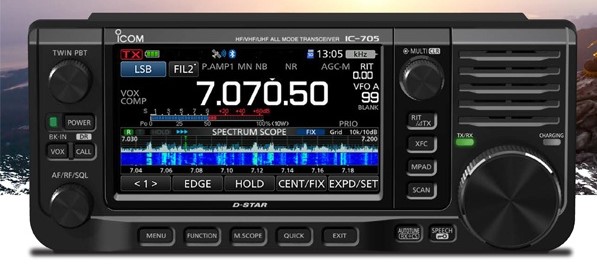
I’m really looking forward to checking out the IC-705. The preliminary reviews (overviews, really) have been pretty positive. I found the IC-7300 to be a fabulous rig and the IC-705 smacks of the ‘7300. The ‘705 even includes more features than the ‘7300 (multi-mode VHF/UHF, D-Star, Wifi, and built-in GPS to name a few) although lacks an internal tuner.

I’ve received more questions about IC-705 and the TX-500 than I have any other radios this year. Both, in many senses, are ground-breaking in their features, (and in the case of the TX-500) form-factor and build.

If I’m being honest, I was more excited about the TX-500 because it simply suits my field operating style better (my full TX-500 review will be in the Oct 2020 issue of TSM).

Since I haven’t received the IC-705 yet and haven’t read any truly detailed reviews or comparisons, I’m going to do something I’ve never done before and share a few of my personal predictions.

Predictions
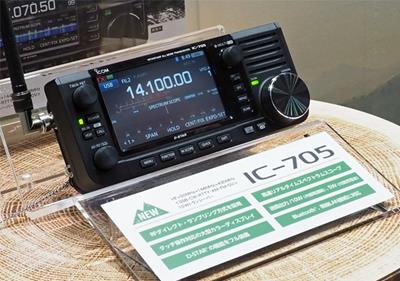
I’m human and can’t help but form a few expectations/opinions prior to a thorough rig evaluation. That and, having owned a number of their products, I’m very familiar with Icom as a company. I’ll probably regret this later, but here goes…

I suspect:

  • I’ll like the touch screen display more than I think I will. I’m not a big fan of color backlit displays in field radios. I prefer simple high-contrast LCD displays that are readable in full sunlight. I’m hoping Icom will have optimized the IC-705 display for reading outdoors.
  • I’ll be able to operate the radio without referring to the manual because I’m so familiar with the IC-7300.
  • I’ll really miss having a built-in ATU on a rig in this price class. Feels like a missed opportunity, however seeing the inside of the IC-705, there really isn’t a lot of spare room. With that said, I plan to review the mAT-705 ATU compact external tuner and hope it’ll pair nicely.
  • I’ll be disappointed with the amount of run time I’ll get from a fully-charged BP-272 battery pack. I really hope I’m wrong about this one. Icom did some serious engineering on the IC-705 to lower the amount of current needed in receive. We’ll see if that paid off and if it can compare, for example, to the run time I get from the rechargeable battery pack in my Elecraft KX2.
  • I’ll be very pleased with some of its features like CW and Voice memory keying for POTA and SOTA activations.
  • I’ll still find D-Star complicated to use even though, hypothetically, the IC-705 can connect directly to D-Star via WiFi. I hope I stand corrected on this point.
  • I’ll struggle to find the perfect padded pack to house the radio. I’m a bit of a pack geek/snob and don’t really like the Icom LC-192 backpack. I’ve no intention to order it even though it’s designed to work with the radio. So while this doesn’t apply to 99% of my readers, it’s a big deal in my world. 🙂 I’m sure I’ll sort out a solution.
  • I’ll feel some buyer’s remorse when, in 6 months, the IC-705 price drops a couple hundred dollars. That’s okay. I see it as taking a bullet for my readers (and, let’s face it, I love new radio gear). Plus, I’m banking on the notion that the IC-705 will make for a capable QRP EME transceiver.
  • I’ll love the built-in digital recorder for making off-air shortwave broadcast recordings (although I do fear I’ll find the AM audio filter too narrow).

Again, these are completely off-the-top-of-my-head predictions and based on no hands-on time with th IC-705. Next week, I’ll start to see how many of these predictions are correct and how many I totally missed.

I can tell you this: I’m not sure I want to see the invoice from Universal Radio. It includes the IC-705, two Yaesu FT-60R HTs, and some Anderson PowerPole connectors! Although I’ve had the IC-705 on order for ages, I added the HTs and connectors at the last moment because they don’t seem very pricey when you’re already at the $1300 US mark, right–? (Shhhh! The FT-60Rs are a gift for my daughters who take their Technician test this weekend!)

How about you? Do you have an IC-705 on order? What are your predictions and thoughts? Please comment!
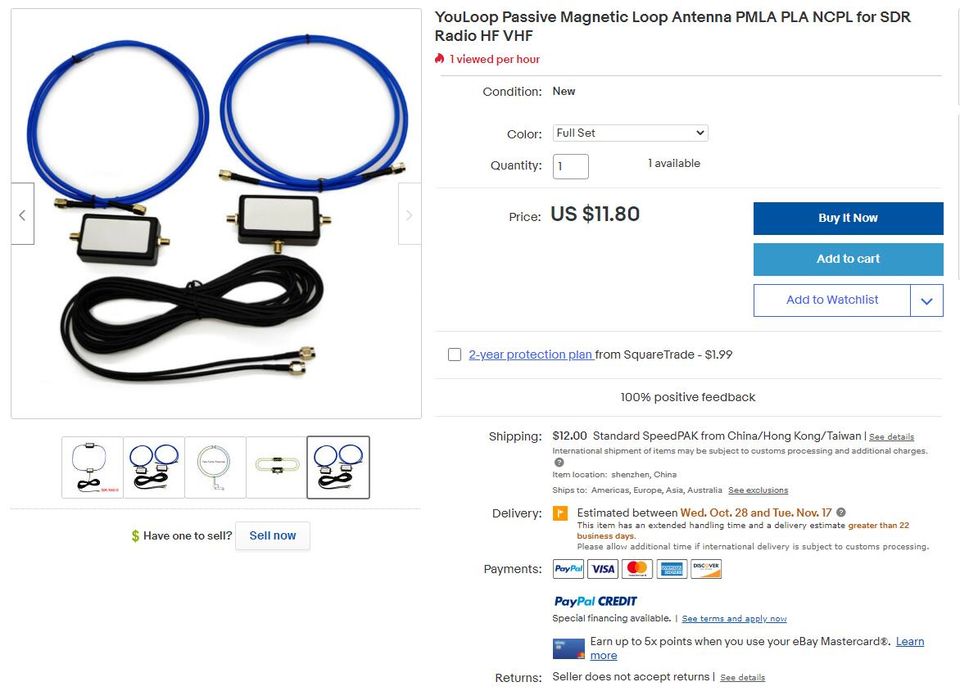

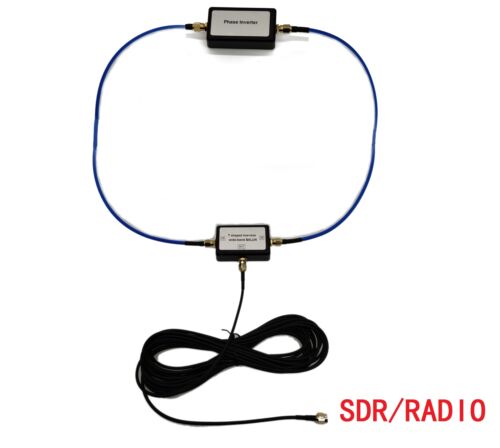
Majority of YouLoops listed on eBay are not an Airspy product

Many thanks to SWLing Post contributor, Chris Smolinski, who shared the screen shot above of a “YouLoop” being sold by a vendor on eBay.

While the Airspy YouLoop is based on a public domain noise-cancelling passive loop design that dates back decades (a.k.a. the Moebius loop antenna) buyers should note that many of the “YouLoop” antennas on eBay are not manufactured by Airspy. The product titles are misleading in this regard:

The RTL-SDR Blog does sell the original Airspy YouLoops on eBay for $34.95 shipped (and, as you can see above, they seem to pop up first in the search results).

Many of the other loops being marketed as “YouLoops” on eBay cost around $23.00-25.00 shipped. About $10 less, but there’s no guarantee the toroid windings, for example, will have the same specs as the original YouLoop.

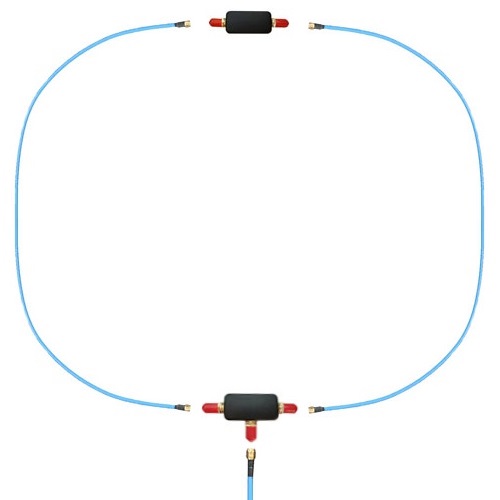
It’s easy to spot the YouLoop copies because the cross over and toroid enclosures are much larger than those of the authentic AirSpy YouLoop:

Compared with the Airspy YouLoop:

Airspy doesn’t own a patent for the YouLoop (indeed, they even suggest homebrewing one) so this isn’t a clone. Rather, buyers should simply be aware that, as far as I know, the only authentic new YouLoops are being sold on eBay by the RTL-SDR blog.

An HF “Renaissance”: Militaries reinvests in shortwave communications

Many thanks to SWLing Post contributors Michael Guerin and Dennis Dura who share the following story from C4ISR.net (my comments follow excerpt):

LONDON — Special operations commands across Europe are ramping up their capabilities with high-frequency communications to ensure connectivity on the battlefield. Leaders there are turning to high frequency communications as a way to optimize properties that provide a low probability of interception and detection.

Special forces in France, Germany, Poland and Ukraine continue to receive high-frequency, or HF, systems as a way to diversify communications plans, industry sources confirmed to C4ISRNET.

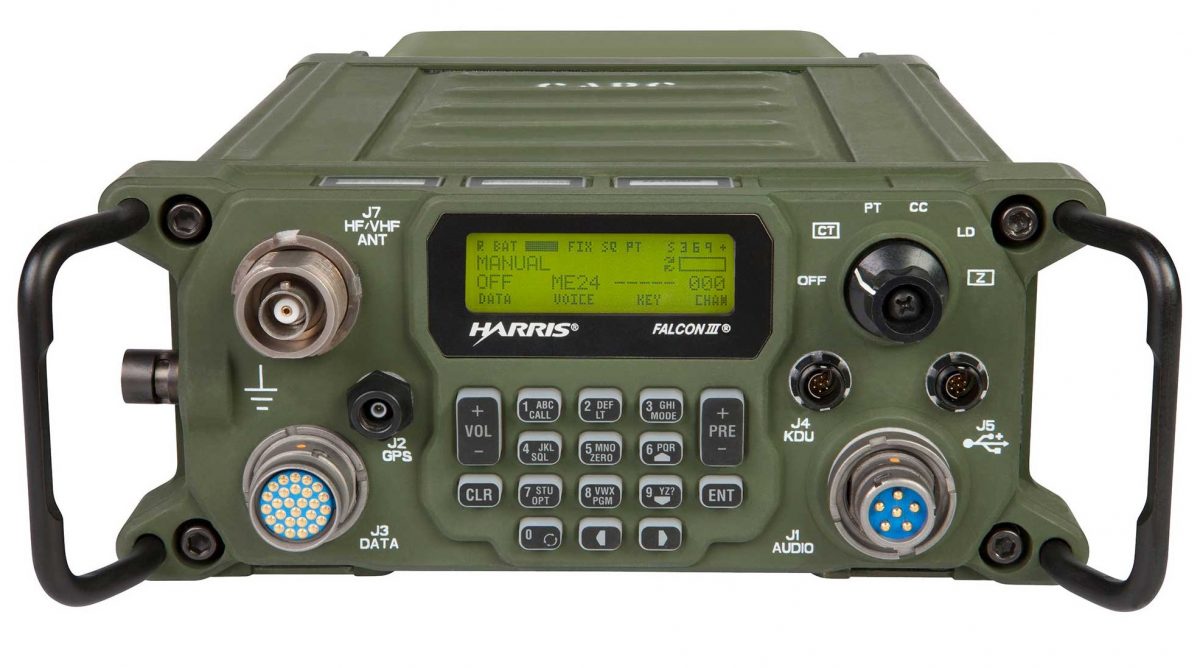
Some special operations organizations have selected L3Harris’ AN/PRC-160(V), industry sources said.

Enhancements in HF come at a time when NATO members and partner forces are suffering from a disruption of satellite communications, particularly along the alliance’s eastern flank where Russian armed forces continue to conduct electronic warfare.

In an online presentation to the Association of Old Crows on Aug. 6, Paul Denisowski, product management engineer at Rohde and Schwarz North America, described how communications satellites are vulnerable to antisatellite systems as well as ground-, air- and space-based “kill vehicles.”

“China, Russia and the U.S. have all carried out ASAT tests and many other countries are developing ASAT capabilities,” Denisowski said, using an acronym for anti-satellite. To boost resilience, some commands are turning to high-frequency communications.

During the presentations “Lost Art of HF” and the “Rebirth of Shortwave in a Digital World,” Denisowski explained that HF is making a comeback in local and global communications. This renaissance comes as the result of improvements in a range of fields, including antenna design, digital modulation schemes and improved understanding of propagation.

The market is also helped by reductions in size, weight and power requirements as well as the introduction of wideband data, enhanced encryption algorithms and interoperability with legacy HF sets, he said.

“This means end users are now benefiting from easier-to-use and cheaper solutions featuring improved data performance, audio quality, availability and operation. And because of a lack of infrastructure, HF is less expensive and relatively robust, although solar events may temporarily disrupt HF communications,” he said. Specific upgrades include “Adaptive HF,” which comprises automatic selection of frequency and the establishment of communication through automatic link establishment, or ALE, technology.

The latest technology of its type — 4G ALE — is capable of supporting wideband HF communications, or WBHF for short, providing end users with the ability to “negotiate bandwidth, modulation type, error correction and the number of sub-carriers,” Denisowski explained.

“ALE selects frequencies using link quality analysis, which allows it to listen and determine if a channel is in use and adapt if conditions change,” he said.

He added that HF can now support data rates up to 240 kilobytes per second on a 48-kilohertz channel, particularly useful for more robust communications in hostile environments.

“WBHF has already [been] used in military trials. It’s a technology which is most definitely here and now,” Denisowski said.

[…]The report explained how the U.S. Army and European NATO partners explored such scenarios during a series of joint exercises in 2019 and 2020. “A new need arrives for alternative communication skills, justified through the increasing vulnerability from SATCOM jamming as well as the potential failure of SATCOM as a result of attacks on spacecraft or through the use of anti-satellite surface-to-air missiles,” the report’s author, Jan Pätzold, told C4ISRNET. “The development of alternative skills is important to reduce dependence on SATCOM.”

According to Pätzold, so-called Skywave HF, which bounces signals off the ionosphere, enables beyond line-of-sight communications across “thousands of kilometers” without requirements. HF communications is also ideally suited to supporting local network coverage. “This offers advantages over SATCOM in urban areas, but also in mountainous areas or far north latitudes where no line of sight to existing satellites is possible,” Pätzold said

Click here to read the full story at C4ISR.net.


My comment: What’s old is new again

As I’ve said in previous posts:

The shortwaves–which is to say, the high-frequency portion of the radio spectrum–will never disappear, even though international broadcasters may eventually fade into history. I often think of the shortwave spectrum as a global resource that will always be here, even if we humans are not. But on a brighter note, I expect the shortwave spectrum will be used for centuries to come, as we implement various technologies that find ways to make use of the medium.

HF communications require so little infrastructure to be effective. It’s a global communications medium that carries messages and data at the speed of light with no regard for national borders. Sure, there are reliability issues with HF propagation, but even amateur radio enthusiasts employ weak-signal digital modes that almost seem to defy propagation. I’m certain with the backing of the military, even more robust digital modes will be used (above and beyond ALE).

Even the business world sees opportunity. Case in point: we’ve seen stock traders set up point-to-point HF communications to edge out their competitors who rely on fiber optics.

HF systems are more durable and easier to harden to endure times of intense space weather events that affect our sat networks as well.

But then again, I’m preaching to the choir.

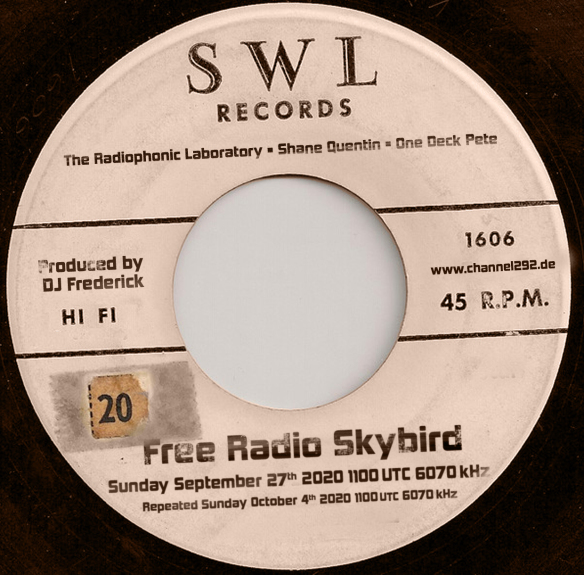
Free Radio Skybird: Septeber 27 & October 4, 2020

(Source: Pete Madtone)

Some news about the next transmission of DJ Frederick’s Free Radio Skybird on Sunday 27th September at 1100 UTC (12 Noon UK time) on 6070 kHz shortwave via Channel 292 (and repeated the week after.) Next week’s show features DJ FrederickJustin Patrick Moore’s Radiophonic Laboratory and Shane Quentin with more of that Radio Reflexology and our very own One Deck Pete with “Tunes to cheer you up” series. 49 metres on a Sunday afternoon is once again where it’s all at! If you haven’t got a suitable radio it can also be heard on the SDR link on their site here.Also on Sunday 27th September 2020 (and repeated the week after) at 1800 UTC (7pm UK time) on 3955 kHz via Channel 292 is the final transmission of Radio Lavalamp for a while. The ultimate programme of the year will feature One Deck Pete with his The Purple Nucleus of Creation 003 mix. Tune in to “Your ethereal shortwave music station” on 3955 kHz or using this link here when the time is right! #Freeradioskybird #Radiolavalamp #shortwavesnotdead #Funwithashortwaveradio

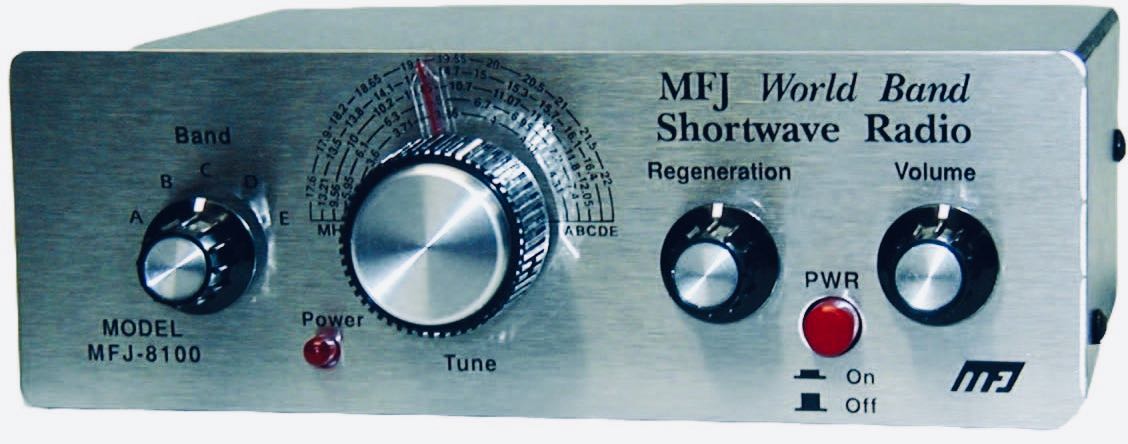
We have a winner! The MFJ-8100K shortwave receiver kit giveaway

Congratulations to SWLing Post reader, Audrius Simkunas from Lithuania, who was chosen at random from the comments on our contest post!

Many thanks to the kind folks at MFJ Enterprises who donated this prize and shipping that is worth well over $100! There aren’t many manufacturers and retailers who would agree to ship anywhere in the world.

What a response!

We had 165 comments/entries at 16:00 UTC yesterday when the contest ended. At that time we had a random number generator pull the comment number which lead us to Audrius.

Not only is that an impressive number of comments, but I absolutely loved reading about your favorite kits. What an amazing radio nostalgia trip!

Let’s do this again…and soon

This was a lot of fun, so we’re going to do more of these giveaways. If you have any ideas about a theme, contact me. While I enjoy making more challenging contests from time to time, I also love posting contests that are accessible to everyone regardless of their radio experience.

Thanks again, MFJ! And congratulations, Audrius!

University of Brasilia and the Ministry of Science, Technology and Innovation to experiment with 2.5 kW DRM transmitter

(Source: DRM Consortium)

A new era begins for Brazilian radio broadcasting with the arrival and installation of a first shortwave digital radio DRM transmitter developed and manufactured in the city of Porto Alegre by BT Transmitters. The transmitter will be sited at the public broadcaster (EBC) Rodeador Park, near the capital Brasilia, to be connected to one of the huge HF antennas of EBC (National Amazon Radio is transmitted from there).

The equipment (a transmitter of 2.5 kW) will be tested on an experimental and scientific basis with the help of the University of Brasilia (UnB) and the Ministry of Science, Technology and Innovation.

The National Radio of the Amazon broadcasts from Brasilia especially to the Northern, Amazonian region of Brazil. The signal will be also available in the neighbouring countries to the north of Brazil. This is primarily a domestic shortwave digital project aimed at the Amazon where about 7 million riverside and indigenous people live. They are far from any other means of communication as there is no mobile phone or internet coverage.

Rafael Diniz, the Chair of the DRM Brazilian Platform, thinks that: “Shortwave digital radio (DRM) for the Amazon region will ensure a new level of communication and information as Nacional’s programming is both popular and educational. It brings audio and much more at low energy cost to whole communities there. With the adoption of digital radio, one of the major problems, that of poor sound quality affecting at times shortwave, will end. Listeners will be able to enjoy DRM broadcasts in short wave with a quality similar to that of a local FM station together with textual and visual multimedia content.”

“This is a huge step forward, says Ruxandra Obreja, DRM Consortium Chair, “not just for Brazil but for the whole of Latin America. When everything else fails or does not exist, DRM will provide information, education, emergency warning and entertainment at reduced energy costs.”

Click here to read this article at the DRM Consortium website.

As a side note, I do hope the DRM Consortium or the University of Brasilia and the Ministry of Science, Technology and Innovation somehow make DRM receivers available to the “7 million riverside and indigenous people” they hope will eventually benefit from their broadcasts. At this point, however, this sounds more like a university experiment similar to those conducted at the Budapest University of Technology in Hungary.