Author Archives: Thomas

The Xiegu G90 as a shortwave broadcast band receiver

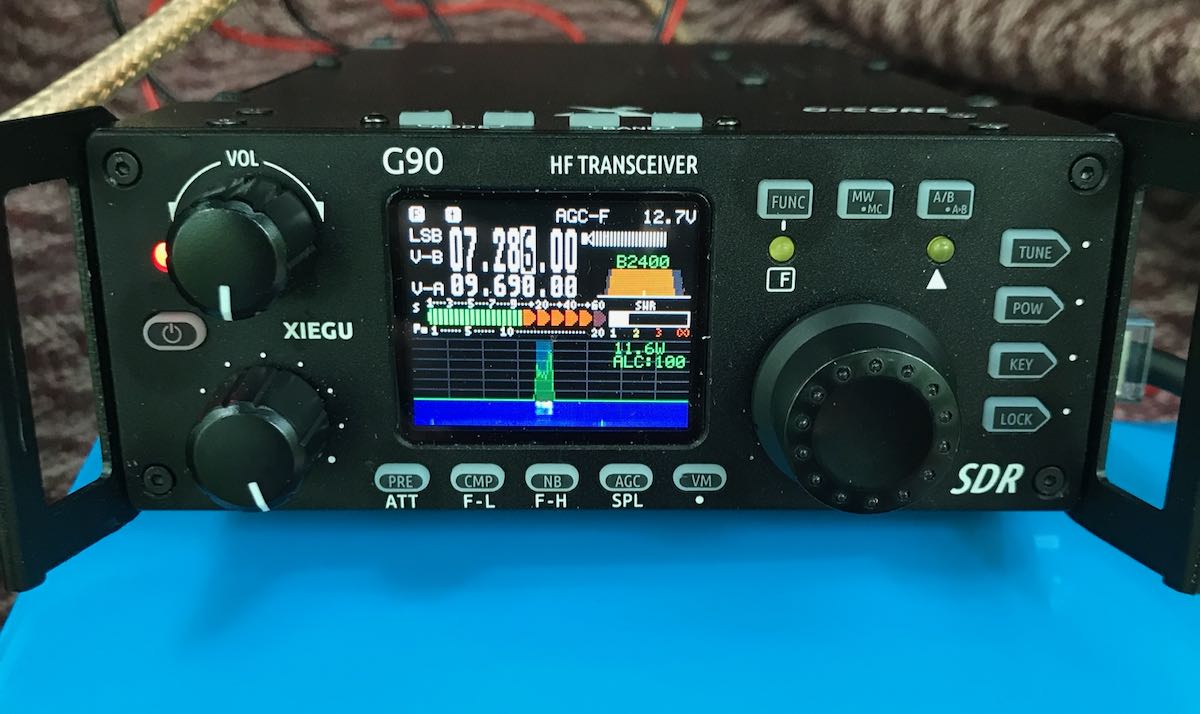
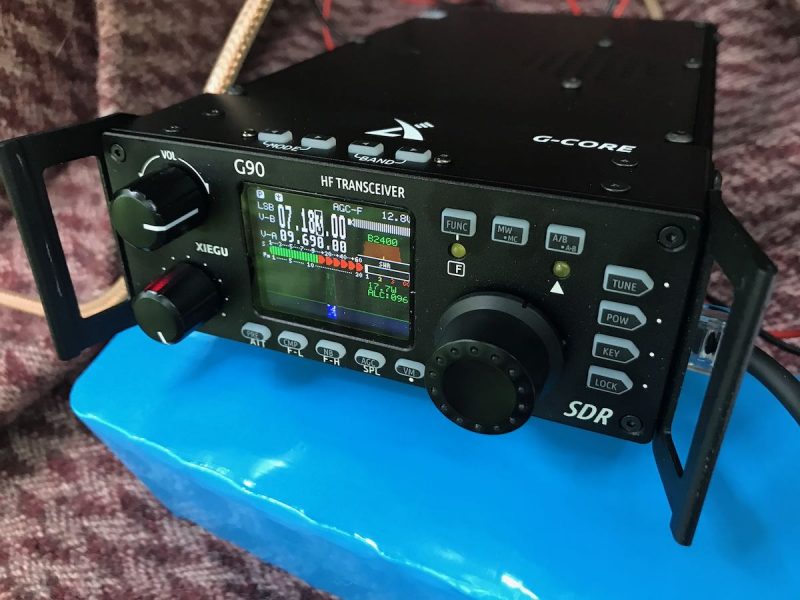
After publishing a couple of posts about the Xiegu G90 QRP transceiver, I’ve gotten a number of inquiries from readers asking about the G90’s ability to receive AM broadcasts. Although I’ll address this in detail in my upcoming TSM review, I thought I’d also share a few notes with you.

One of the main reasons I decided to review the Xiegu G90 is I found so little information out there about how well the general coverage receiver worked for HF broadcast listening.  The G90 has a frequency range of 0.5-30 MHz (SSB, CW, and AM), but I couldn’t find a specification showing the maximum width of the AM filter. I had seen a few display photos with the AM filter width indicated as 5.4 kHz–that’s not terribly wide, but workable.
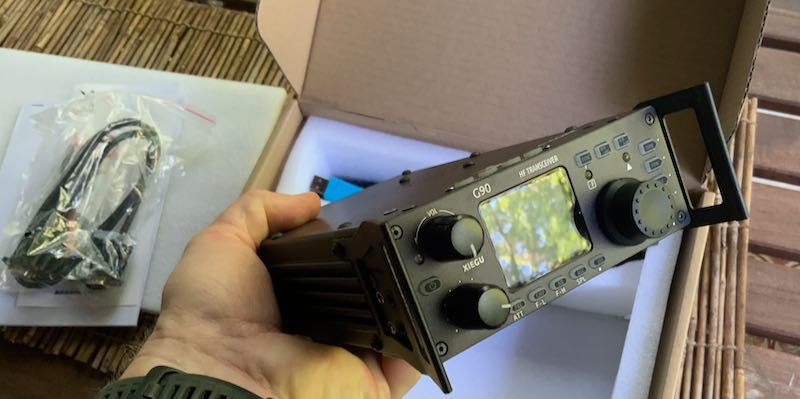
Only moments after opening the box and putting the G90 on the air, I tuned to the Voice of Greece (9,420 kHz) and learned how to change the bandwidth.  I was very pleased to find that in AM mode, the indicated filter width is actually half the actual width. This means, the G90’s AM filter can actually be widened to 10.8 kHz–brilliant!

In addition, the bandwidth adjustment is variable, meaning you’re not locked into pre-determined, stepped bandwidths as with so many other transceivers.

In this short video, I widen the AM filter while tuned to the Voice of Greece:

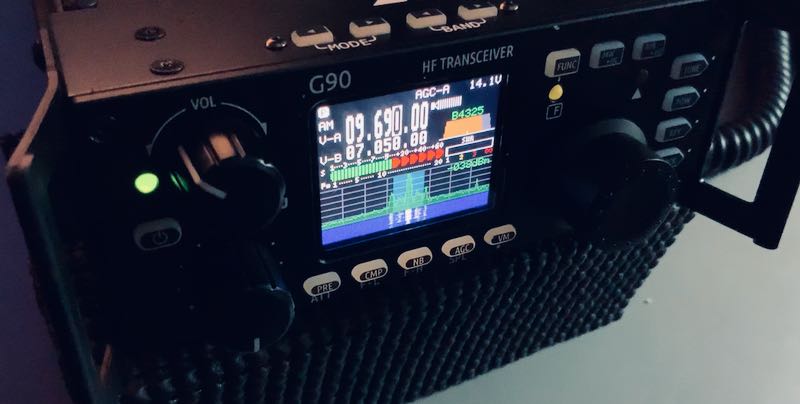
Here’s another video of the G90 tuned to Radio Exterior de España on 9,690 kHz. Although the REE transmitter is located across the Atlantic Ocean in Spain, they sound like a local here in North Carolina:

Overall, I’ve been very pleased with the G90 on the HF bands.

Of course, there’s no synchronous detector (although users have requested this in a future firmware version) and there’s no notch filter as of yet. While I expect Xiegu may consider adding a notch filter, I doubt they’ll ever add a sync detector as this rig is primarily aimed at QRP ham radio operation. Of course, I could be wrong.

I also haven’t found a way to completely disable the transmitter or set the power level to zero watts. It’s quite possible I simply haven’t discovered the appropriate setting for this yet.  Disabling the transmitter adds an extra level of protection when I use receive-only amplified mag loop antennas, for example. Also, some G90 owners may purchase the rig for listening purposes only and would rather not accidentally key the transmitter or engage the ATU.

Retailers

I purchased my Xiegu G90 from MFJ Enterprises because I wanted to support a US retailer. There are a number of other G90 distributors across the globe. Here’s a short selection:

I’m sure there are many other G90 retailers across the globe.  Before placing an order, I would suggest you double-check availability as some retailers are on back-order.

Post Readers: Have you used the Xiegu G90 on the broadcast bands? Please comment with your thoughts!
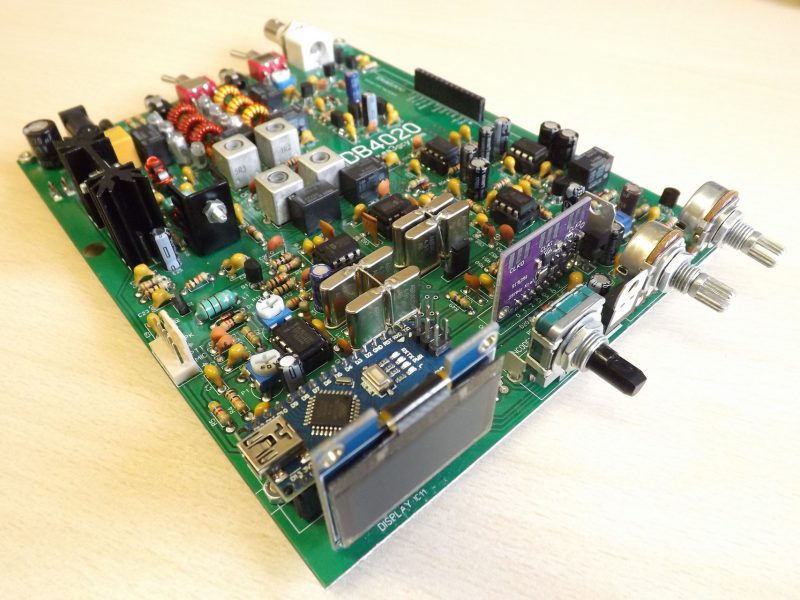
Frank recommends the DB4020 QRP transceiver kit by EA3GCY

Many thanks to SWLing Post contributor, Frank (ON6UU), who writes:

As so many, I enjoy reading your posts on the SWLing Post, very clear and understandable written with eye for details. I just did a “read-again” of the QCX+ article and thought that maybe you also would be interested in another European kit, namely the DB4020 by Javier Solans of QRP HAMRADIO KITS in Spain.

The DB4020 is a 2 band kit enabling you to do 40 and 20 meters, SSB and CW. The SSB part of the kit can be obtained for 150€ (169$), Print is a beautiful doubled sided silkscreen with enough space to mount all parts without problems. Some SMD parts are factory installed by Javier, all other parts are normal parts that can be soldered by anyone who knows how to hold a soldering iron. The CW part is an additional module which needs to be plugged into the main board. There will also be a CW filter available soon.

For more information please see : https://www.qrphamradiokits.com/transceivers/db4020-dual-band-ssb/#cc-m-product-12710260049

I’m building the kit at the moment and enjoy every minute of it. I’m not related or don’t have any benefit in sending you this mail, only want to draw some attention to a great kit and super friendly owner who goes the extra mile to have happy customers.

Have a great day

Thank you for the tip, Frank–and I’m glad you enjoy the SWLing Post! EA3GCY’s kit does look very nice indeed. We would love to see your photos once the kit is complete! It looks like a kit I’d certainly love building!

Click here to check out the DB4020 QRP Kit at QRPHamRadioKits.com.

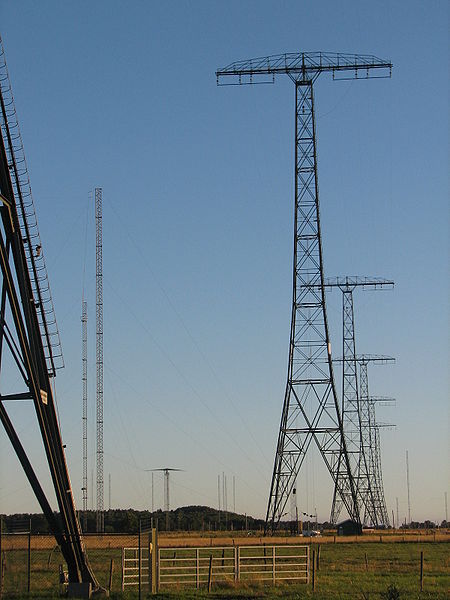
Grimeton Radio / SAQ Transmission on Sunday, July 5, 2020

(Source: SAQ via Mike Terry)

The annual transmission on Alexanderson Day with the Alexanderson Alternator on VLF 17.2 kHz with the call sign SAQ will take place Sunday, July 5th, 2020.

Two transmissions are scheduled as follows:

Startup and tuning at 10:30 (08:30 UTC) with a transmission of a message at 11:00 (09:00 UTC).

Startup and tuning at 13:30 (11:30 UTC) with a transmission of a message at 14:00 (12:00 UTC)

Watch both transmission events live on our YouTube Channel.

QSL-reports to SAQ (please no E-mails) are kindly received via:

  • Reception report form
  • or via: SM bureau
  • or direct by postal mail to:

Alexander Association
Radiostationen
Grimeton 72
SE-432 98 GRIMETON
S W E D E N

The Amateur Radio Station with the call “SK6SAQ” will be QRV on the following frequencies:

  • 7.035 kHz CW or
  • 14.035 kHz CW or
  • 3.755 kHz SSB

QSL-reports to SK6SAQ are kindly received via:

  • Email to [email protected]
  • or via: SM bureau
  • or direct by postal mail (see address above)

Two stations will be on the air most of the time.

Due to the Corona pandemic, there will be no visitors to the radio station and there will be no visitor activities. Instead you can watch both transmission events live on our YouTube Channel. The association will try to carry out the two broadcasts to the world from the old Alexanderson alternator SAQ with minimal staffing in place.

World Heritage Grimeton Radio station and The Alexander Association

For further details, se grimeton.org or alexander.n.se

https://alexander.n.se/alexanderson-day-2020/?lang=en

Help Jim identify this mystery shortwave “time signal” station

Many thanks to SWLing Post contributor, Jim Meirose, who recently logged a mystery signal and is asking for our help to identify it. Jim notes that it sounds much like a time signal and can be found on 4,806 kHz.

Jim lives in the north east US and is receiving the station each morning between about 5:00 – 8:00 EDT (9:00 – 12:00 UTC). He shares the following video:

Based on Jim’s description, I thought this might even be a local noise, but after hearing the audio and since the signal is following morning propagation, I’m guessing the source could be in Europe or possibly regions further east–?

SWLing Post community: Can you help ID this station? Please comment!

Alan Roe’s updated A20 season guide to music on shortwave (v 4)

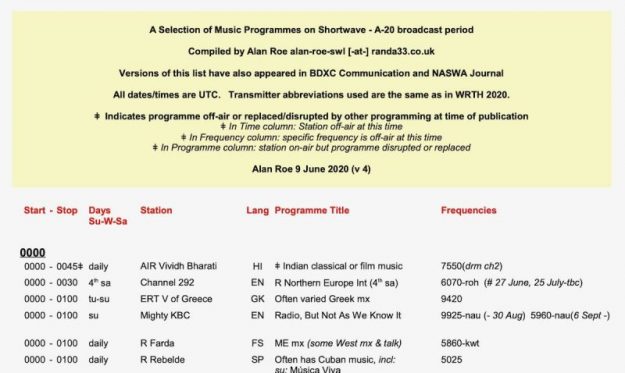
Many thanks to SWLing Post contributor, Alan Roe, who shares his latest update to his A20 season guide to music on shortwave and notes:

I attach an updated copy of my “Music Programmes on Shortwave” PDF file (version 4) for the current A-20 broadcast season which I hope you will find of interest.

This will probably be the last update for this broadcast season. Look for the new edition for the B-20 season in early December (or earlier if I’m able!).

In the meantime however, as always, I appreciate any updates or corrections.

Click here to download a PDF copy of Alan Roe’s Music on Shortwave A20.

Alan, thanks so much for keeping this brilliant guide updated each broadcast season and for sharing it here with the community!

Taking the Xiegu G90 on an impromptu Parks On The Air (POTA) activation

Yesterday, I was in my hometown helping my parents with a few projects. Around noon, I realized that I had a good four hour window of free time–a true rarity these days!

I had two fully-packed go bags in the car: one with my trusty Elecraft KX2, and one with my recently acquired Xiegu G90.  On the heels of a successful POTA activation this weekend, I was itching to activate a new POTA site.

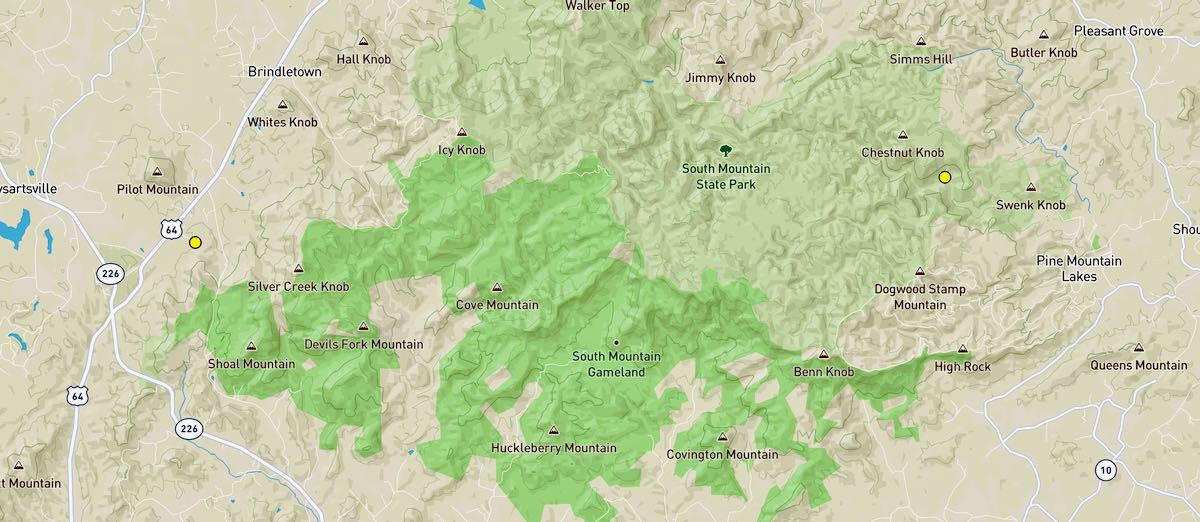
I did a quick check of the POTA site map and decided a trip to the South Mountains State Park (K-2753) was in order. The park was a nice 30 minute drive on back roads, so why not?

I posted a quick announcement on the POTA website, and jumped in the car.

When I arrived at the park, I noted an excellent, easily accessible picnic site with a nearby tree to hang my EFT Trail-Friendly antenna. Since I hadn’t been to this park in many years, I continued driving to check out other potential POTA sites.

In the main parking lot, I spotted a ham radio operator’s car with a prominent callsign on the back window and a POTA bumper sticker. I couldn’t see their operating site from the parking lot and since we’re all trying to social distance these days, I didn’t bother searching for them to introduce myself.

While it’s certainly allowed to have two activators running a park at the same time, I really didn’t want to impose and certainly didn’t want to cause any QRM by operating on the same meter band.

Contingency plan

I had a “Plan B” in mind in case the park wasn’t accessible.  On the west side of South Mountains State Park there was another POTA site: the South Mountains State Game Land (K-6952). I started driving in that direction, then used Google Maps to help me locate the entry road. Turns out, it was an additional 35 minutes of driving! Still, it was a beautiful day so no complaints from me.

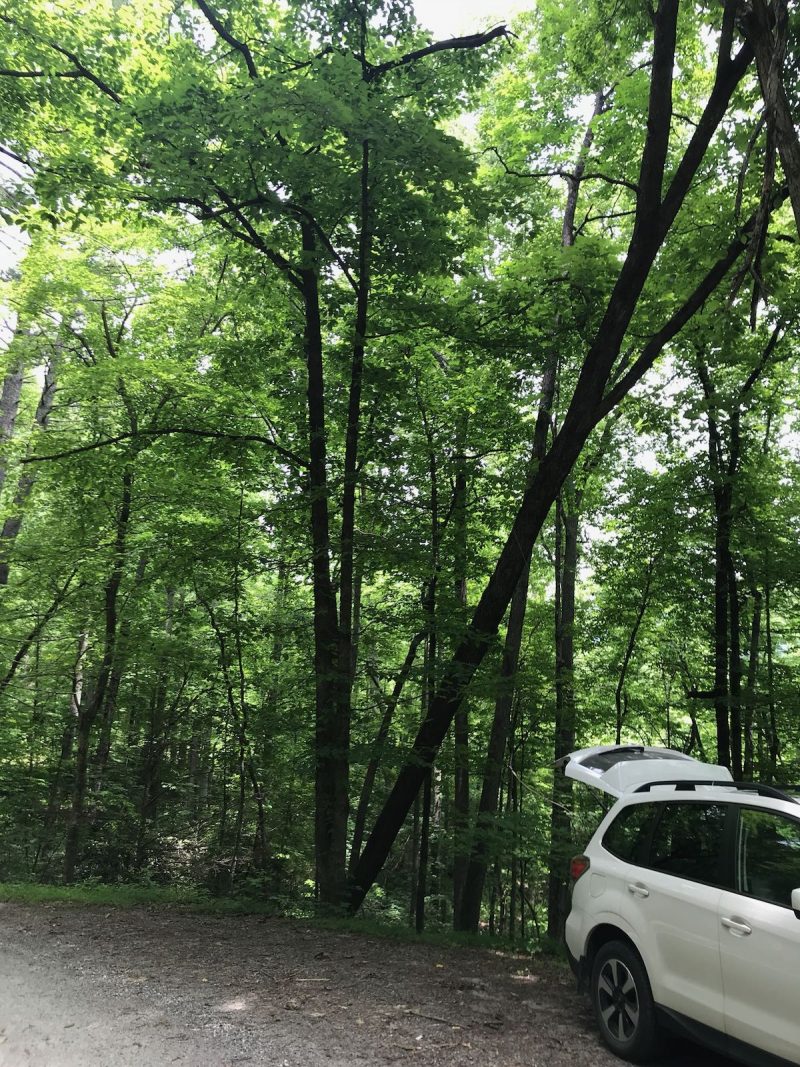
The road was typical of game land roads: gravel and washed out in places. I had to ford one creek. My Subaru had no problem doing this, of course. (I actually love off-roading, so secretly I hoped the road would be more challenging!)

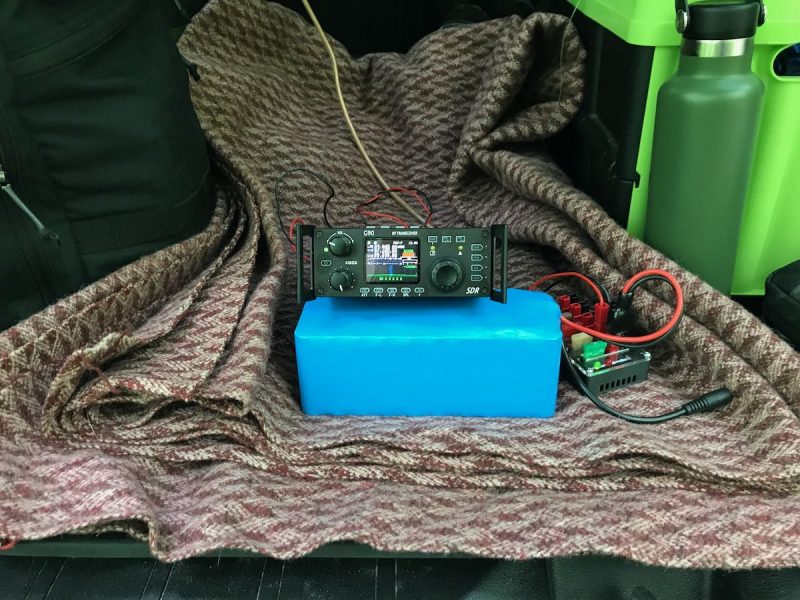
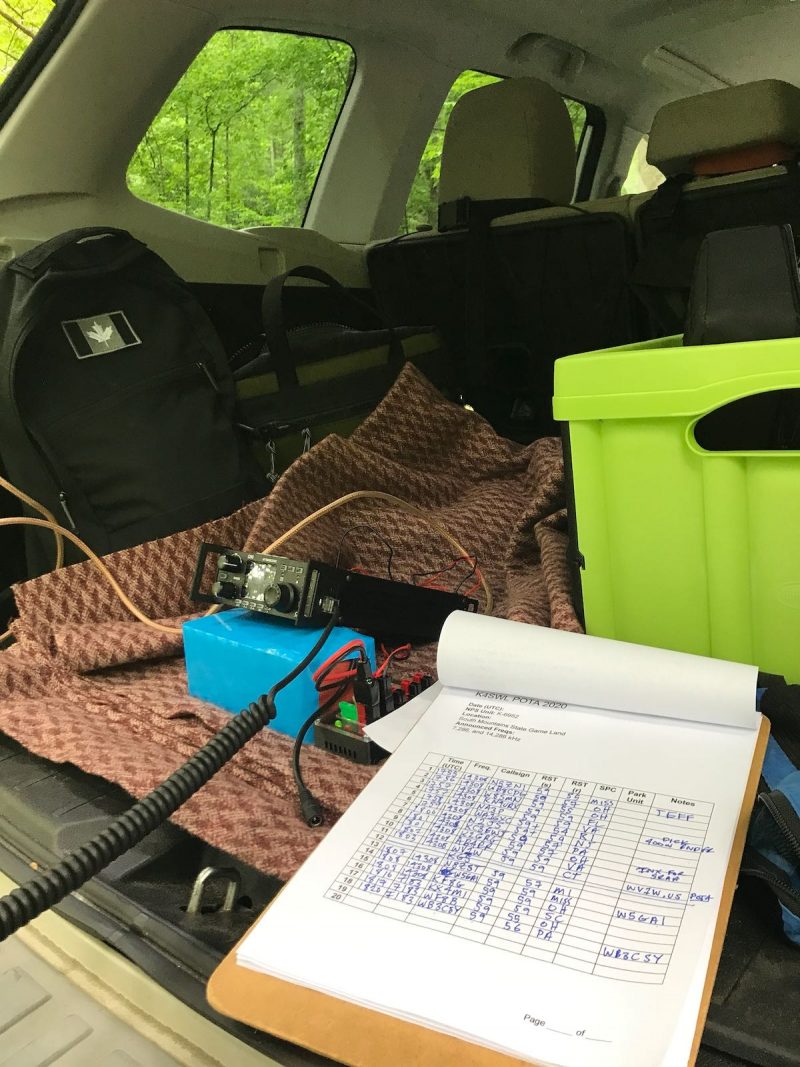
About four miles in, I found a pull-off that was big enough for my car and had an ideal tree to hang the antenna. I backed into the site, opened the hatch on the Subaru, and used the trunk/boot as my radio table.

Within ten minutes I had the G90 on the air.

I started calling CQ on the 40 meter band and thanks to buddies Mike (K8RAT) and Vlado (N3CZ) I was spotted on the POTA website.

Although there was a fair amount of QRN on 40 meters, now that the G90 has an RF Gain control (with latest firmware v 1.74), I could easily mitigate it.

I worked a number of stations on 40, then decided to move up to 20 meters.

I was very impressed with the response on 20 meters as well. Fading (QSB) was very deep, however, so I kept contacts brief. At times, stations would call me, I’d give them a 59 report, and when they’d reply I could barely hear them (and vise-versa). It took a little patience and good timing, but I believe I worked everyone who called me.

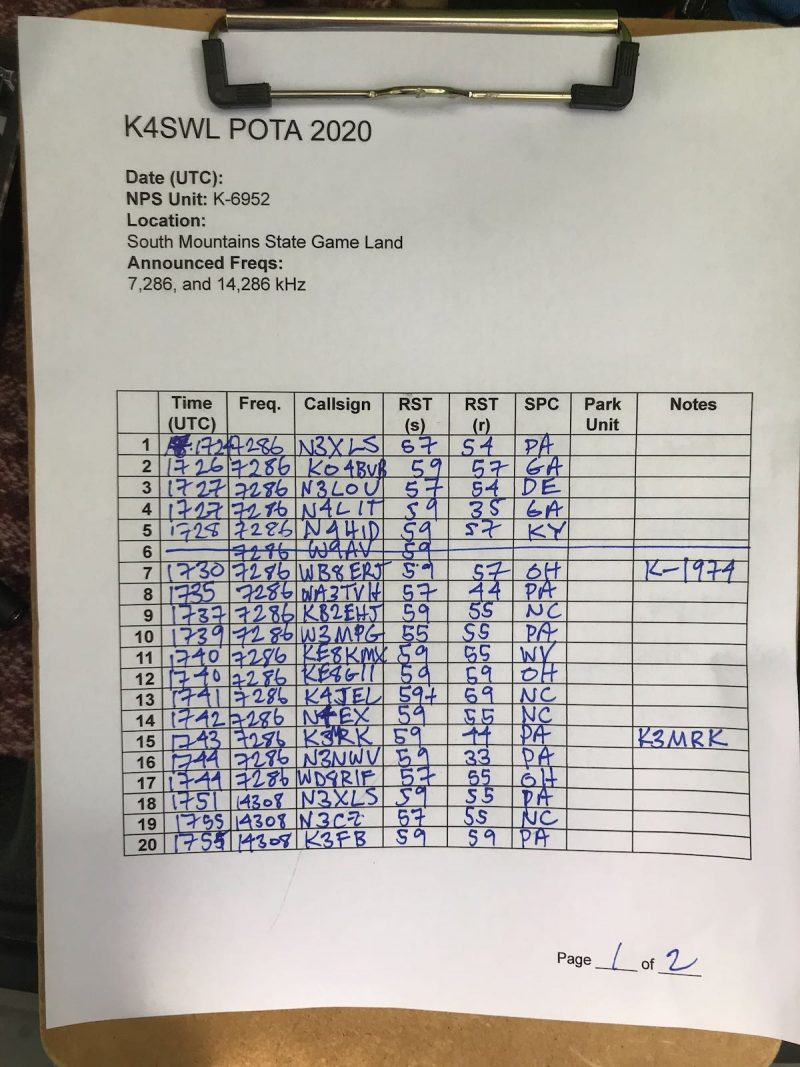
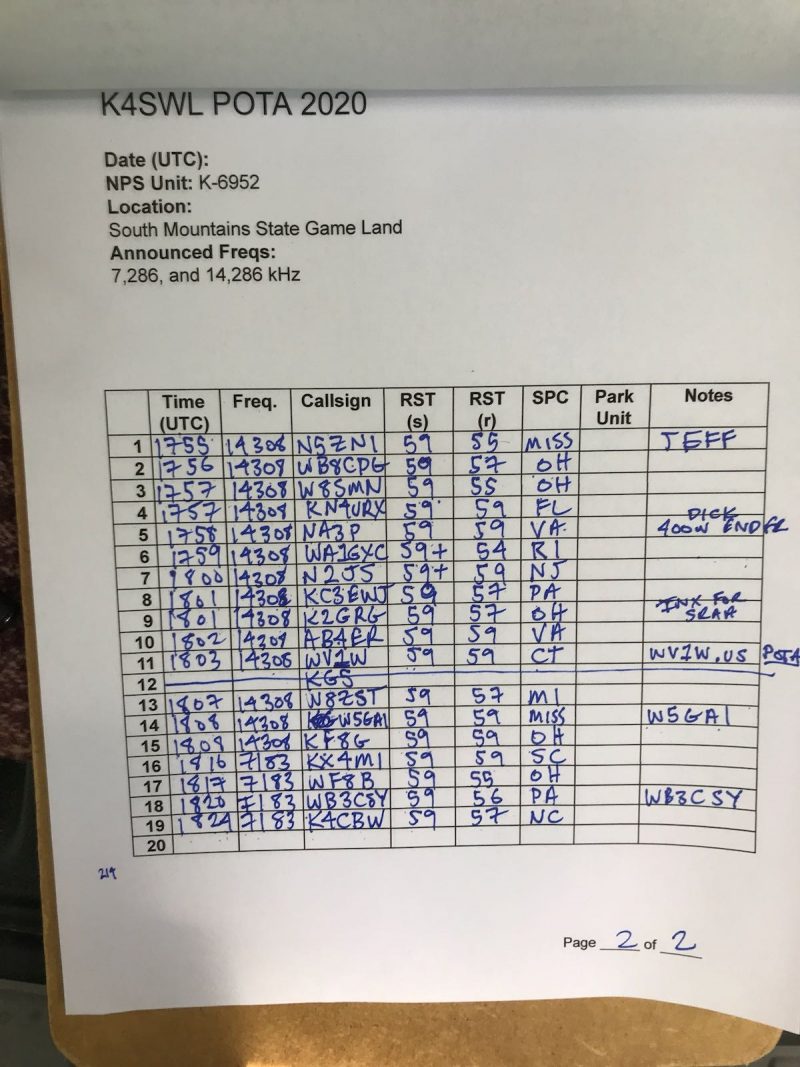
In the end, I had a total of 27 contact in the log with about one hour of operating. Here are my log sheets:

After transmitting steadily for an hour at a full 20 watts, the G90 body was pretty warm to the touch, but it had operated flawlessly.

A great field radio

The G90 is a gem of a transceiver and has some features that make it ideal for field use.

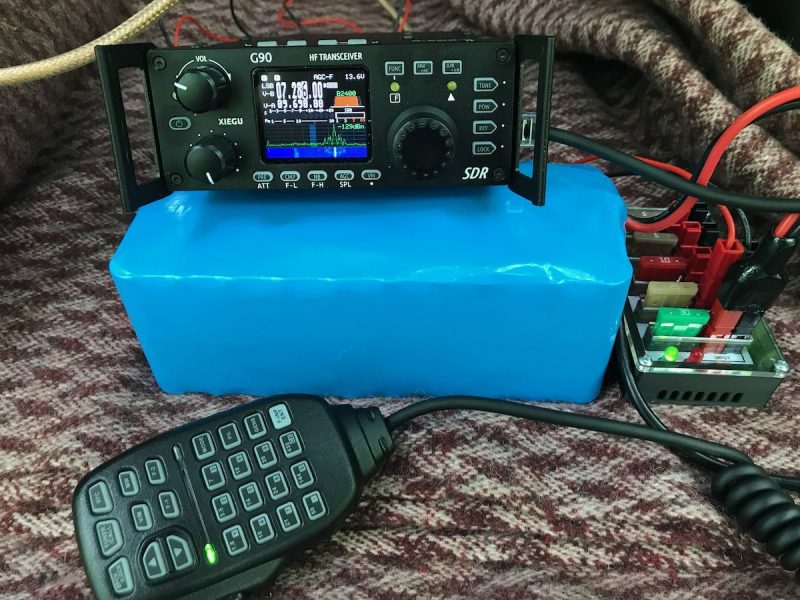
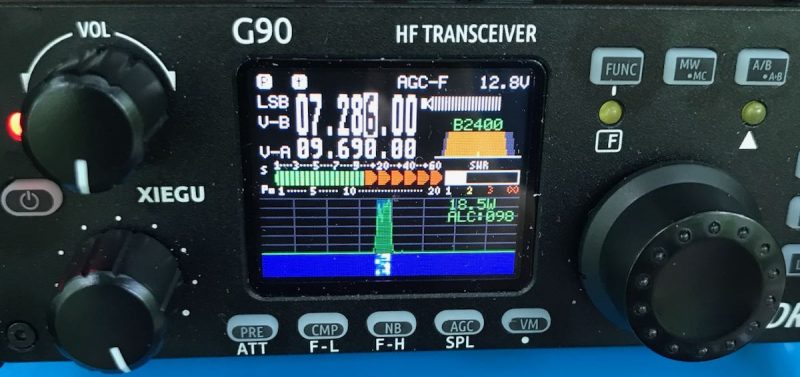
For one thing, I love being able to keep track of my battery voltage on the display:

Also, the G90 has excellent selectivity. On both 40 and 20 meters, at times I could see adjacent stations on the spectrum display that would have bled over and created QRM on less robust receivers.

I also like the ability to control all of the major transceiver functions without  having to dive into an embedded menu. Adjusting the filter, RF gain, attenuator, and pre-amp, for example, is super easy.

I love the spectrum display, too. In the field, it’s nice to be able to find an open frequency by simply watching the display for a minute or so before calling QRL or CQ. It also allows me to see when folks are tuning up nearby to make contact with me.

Although I’ve been using a resonant antenna in the field, the G90 has a very capable built-in ATU.  Back home, I’ve used it and have been very impressed with its ability to find good matches. Yesterday, for fun, I was even able to get it to tune up the EFT Trail Friendly antenna on 80 meters! I doubt it would be efficient, but the ATU did find a 2:1 match.

The only two features I feel like the G90 is missing are a notch filter (both manual and auto) and a voice keyer. I’m sure a notch filter could be added in a future firmware update (others have been asking for this as well), but I doubt a voice keyer could be added as easily. In truth, the voice keyer is a bit of a luxury, but it’s a feature I use without fail on my KX2 since park and summit activations often require constant CQ calls. Being able to record a CQ and have the radio automatically send it allows the op to drink water, eat lunch, and relax between contacts.

This is a lot of radio for $450 US shipped. I’ve also learned that the G90 has a very active community of users via this Groups.io email list.

I had planned to sell the Xiegu G90 after my upcoming review in The Spectrum Monitor. I must admit: this transceiver is growing on me. It might be hard to let go of it.


Do you enjoy the SWLing Post?

Please consider supporting us via Patreon or our Coffee Fund!

Your support makes articles like this one possible. Thank you!

Is there such a thing as “too close” when requesting a QSL–?

Many thanks to SWLing Post contributor, Dziugas, who recently contacted me with the following question:

Hello,

I have a question – what is the legit distance to ask for a QSL card? As a Lithuanian, I have sent (and succeeded) with requests to Hungarian, Czech and Estonian stations. But would it be fine according to DX etiquette to send QSL requests for local/national FM stations? It would be nice to get a collection from them as well.

Thanks

Thank you for sharing your question, Dziugas. I hope that readers will comment with their input, but I’ll share with you how I feel about the matter.

I personally believe if you’re sending an honest, courteous, and detailed report, you can request a QSL from any station. The station could be in your neighborhood for that matter.

Include the basics!

It is very important, however, that you include some basic information in each listener report. Obviously, you’re already doing this Dziugas, but for the record–and others reading this post–I always include:

  • When and where I heard the station (date and time in UTC)
  • The broadcast frequency (important too for national broadcasters that use local relays)
  • Details about the broadcast from my own informed listening:
    • Including specifics about the topic being discussed
    • Noting any names of presenters or interviewees
    • Noting music titles (you can use your phone or an app like Sound Hound to help you ID)
    • Noting times I heard details (time stamps)
  • A signal report–I always use the SINPO code/system. Of course, with local stations, this might not be as necessary, but I’d still give them an idea of their signal quality.
  • How I heard them, giving them details about my receiver and antenna. If it’s an online station, I’ll also let them know if I’ve listened to their stream before (although, I base the QSL on my over-the-air listening–not online listening)

If I’m making a request by email, I’ll often include an MP3 recording, too.

For a more thorough overview though, check out Fred Osteman’s guide to reporting and QSLing at DXing.com.

Frankly, I think it’s a good idea to request QSLs from local and regional stations because these may actually be some of your most cherished QSLs in the future.

Also, keep your expectations in check. You may find it very difficult to get an actual QSL card from broadcasters today–typically, only international broadcasters still send these. I would also send your request via the post if you want a letter or paper reply.  Even then, it can be quite challenging to get a reply these days, but go for it and know that when you send a request, you’re representing radio listeners and DXers everywhere, so be a top-shelf diplomat!

With all this said, it sounds like you’re already doing all the right stuff, so I say go for those local QSLs!

Post readers: Please comment with your thoughts and suggestions!