Shortwave listening and everything radio including reviews, broadcasting, ham radio, field operation, DXing, maker kits, travel, emergency gear, events, and more
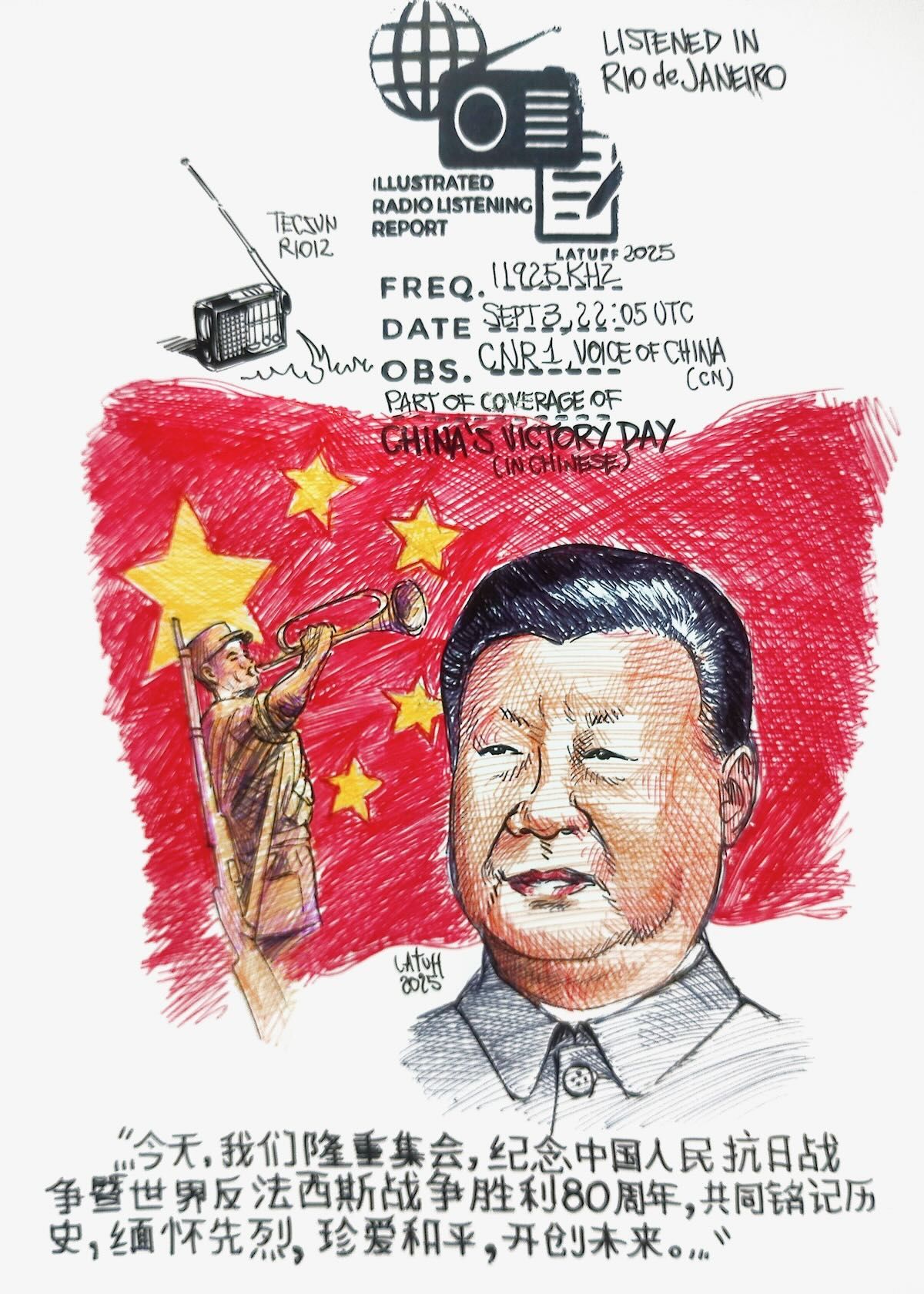
Xi Jinping: Speech at the Commemoration of the 80th Anniversary of the Victory of the Chinese People’s War of Resistance Against Japanese Aggression and the World Anti-Fascist War, CNR 1, 11925 kHz
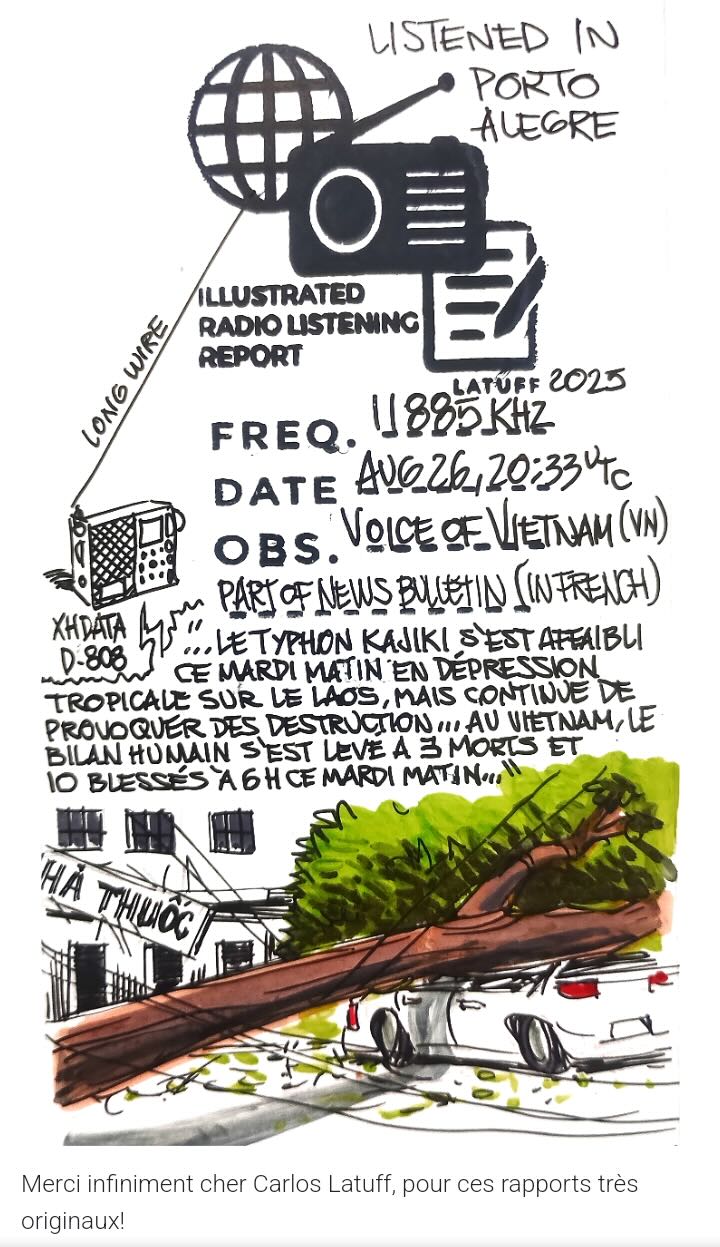
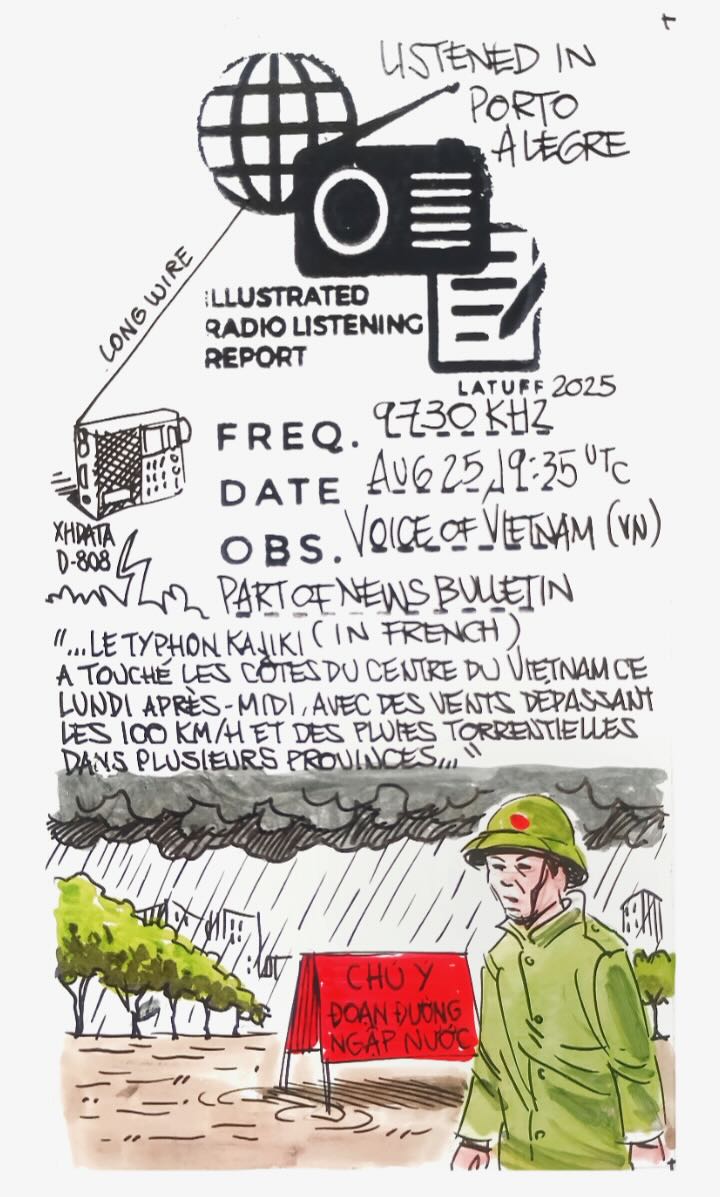
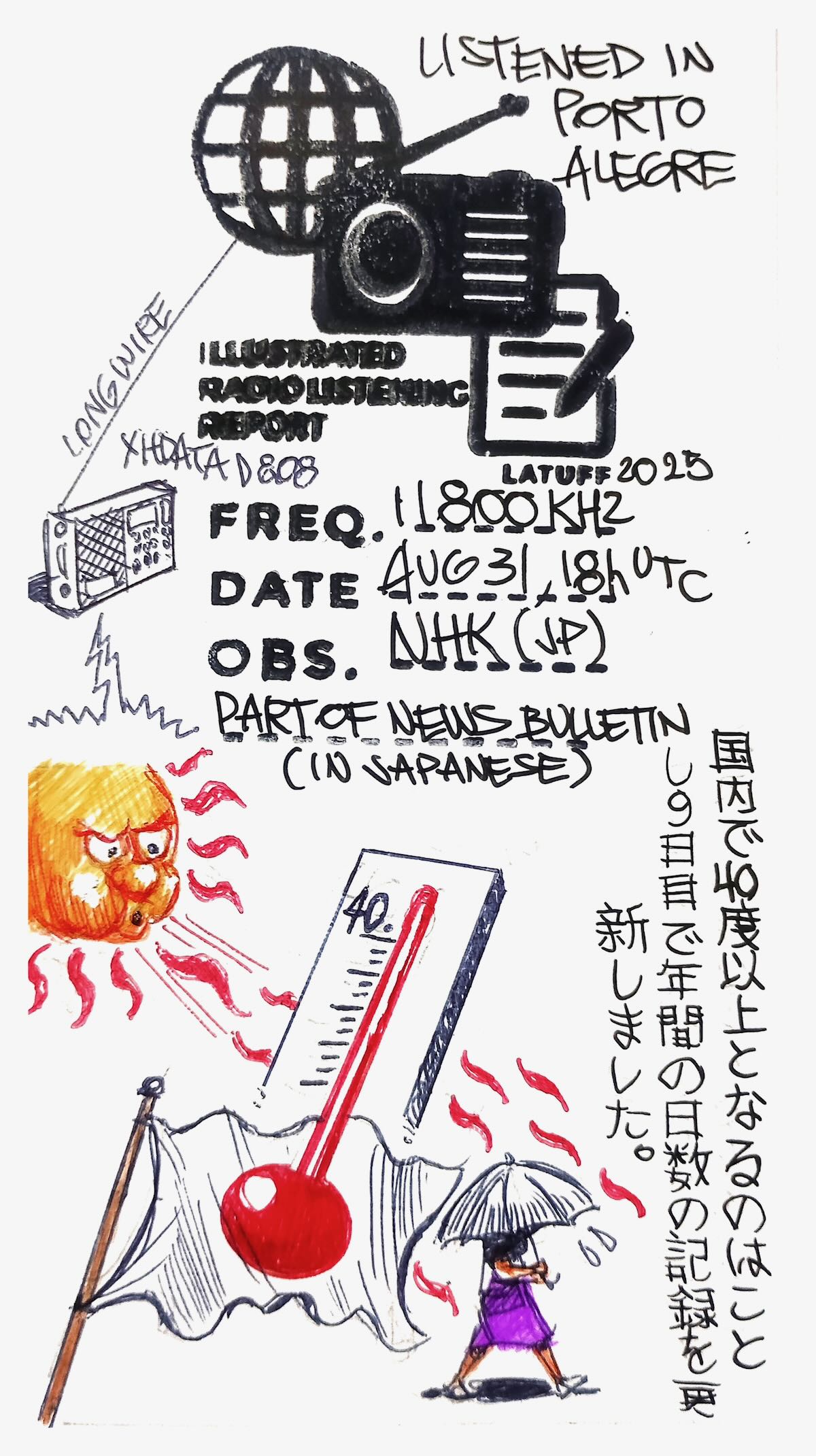
I’m happy to share with you and all our friends at the SWLing Post the feedback I received from the French-language department of Voice of Vietnam radio, which published the illustrated radio listening reports when Typhoon Kajiki hit Vietnam in August.
Well done, Carlos! Your illustrated listening reports are truly a treasure and we look forward to each one you share. It’s no surprise that VoV loves them too!
Many thanks to SWLing Post contributor Giuseppe Morlè, who writes:
Dear Thomas and Friends,
I’m Giuseppe Morlè (IZ0GZW) from Formia, in central Italy on the Tyrrhenian Sea.
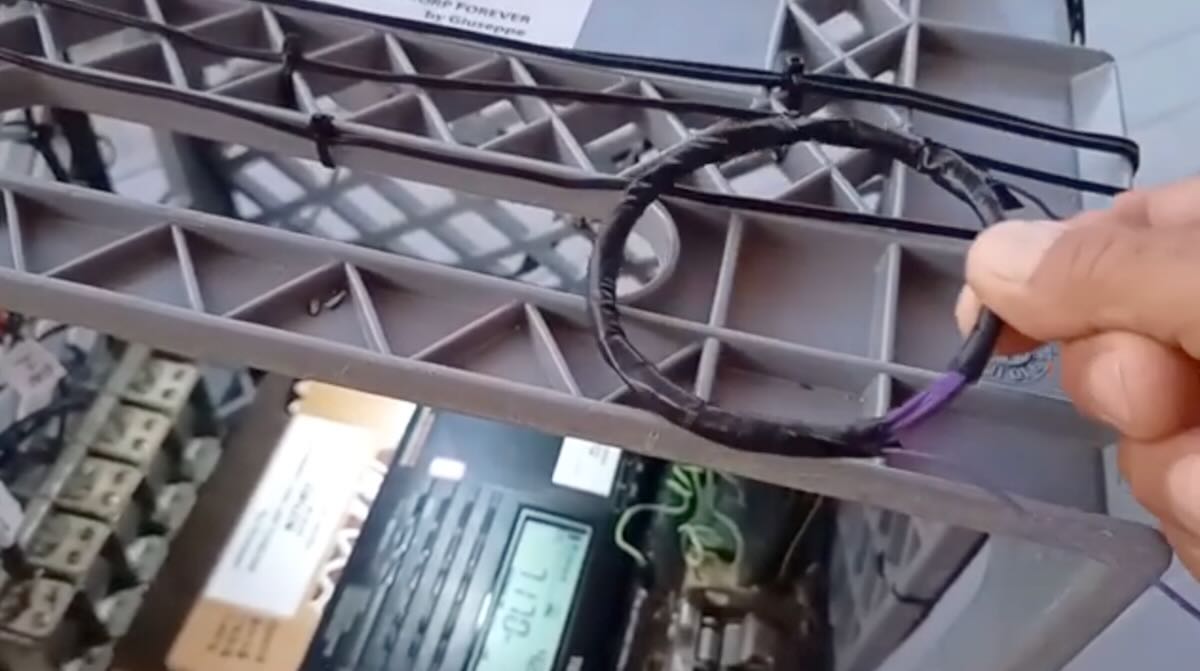
This time I wanted to experiment by combining three different antennas that interact with one another through induction. In the video, you’ll see the Milk Box Loop, the SW/MW Tablet, and the Wire Coil all working together to capture very faint 40-meter signals from W2V in North Carolina and ZL3CHE in New Zealand.
This experiment is especially promising as we move into the fall season, when nighttime listening on 40 meters becomes even more interesting.
I’ll continue testing with this fun, simple, and free antenna. You can see more in this video:
Thank you all, and happy listening!
—Giuseppe (IZ0GZW)
Thank you so much for sharing another one of your antenna experiments and impressive results, Giuseppe!
“This was the ninth day this year that temperatures have reached 40 degrees Celsius or higher in Japan, breaking the record for the most days in a year.”
Many thanks to SWLing Post contributor Dan Greenall, who shares the following guest post:
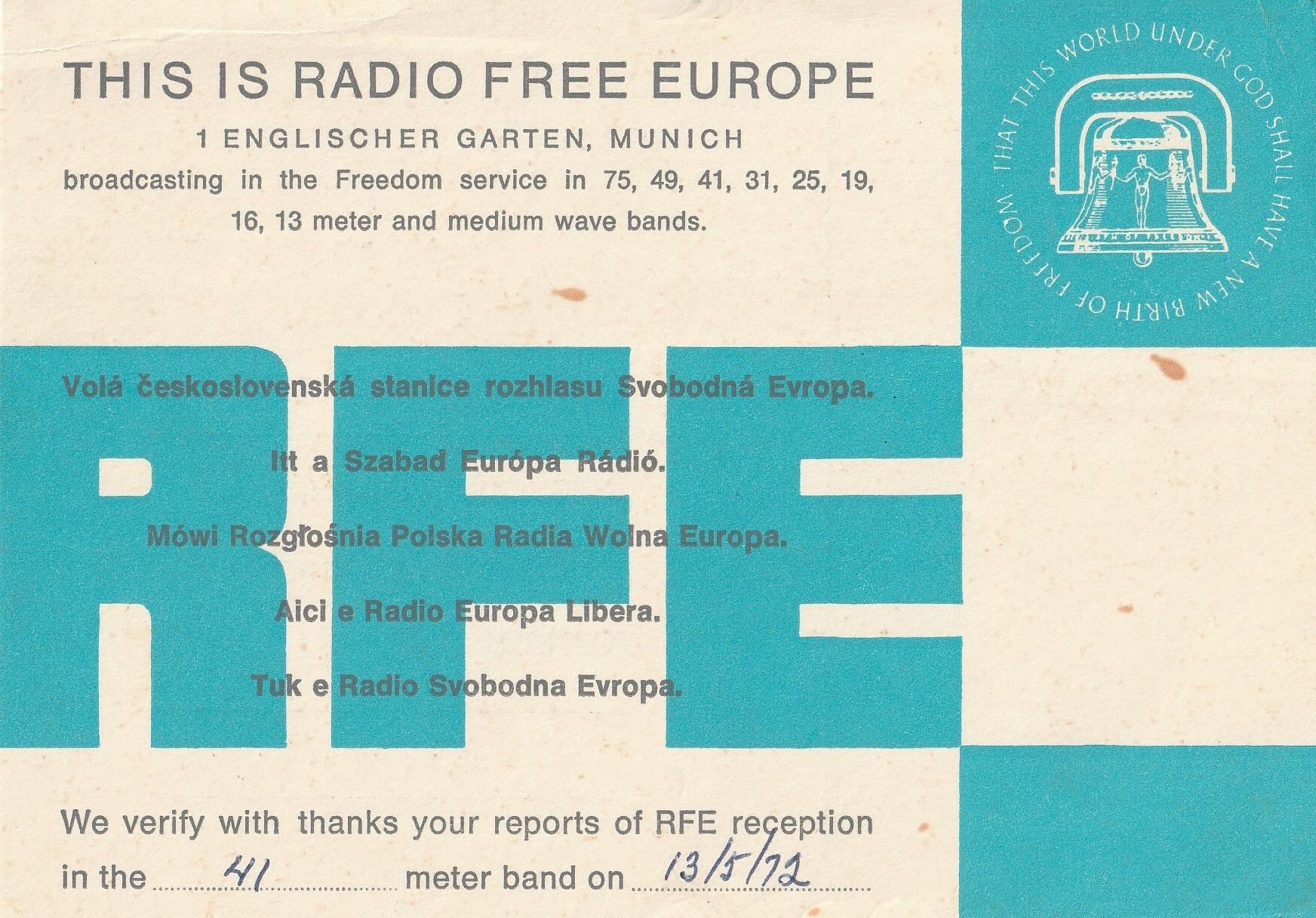
Europe on shortwave in the 1970’s
by Dan Greenall
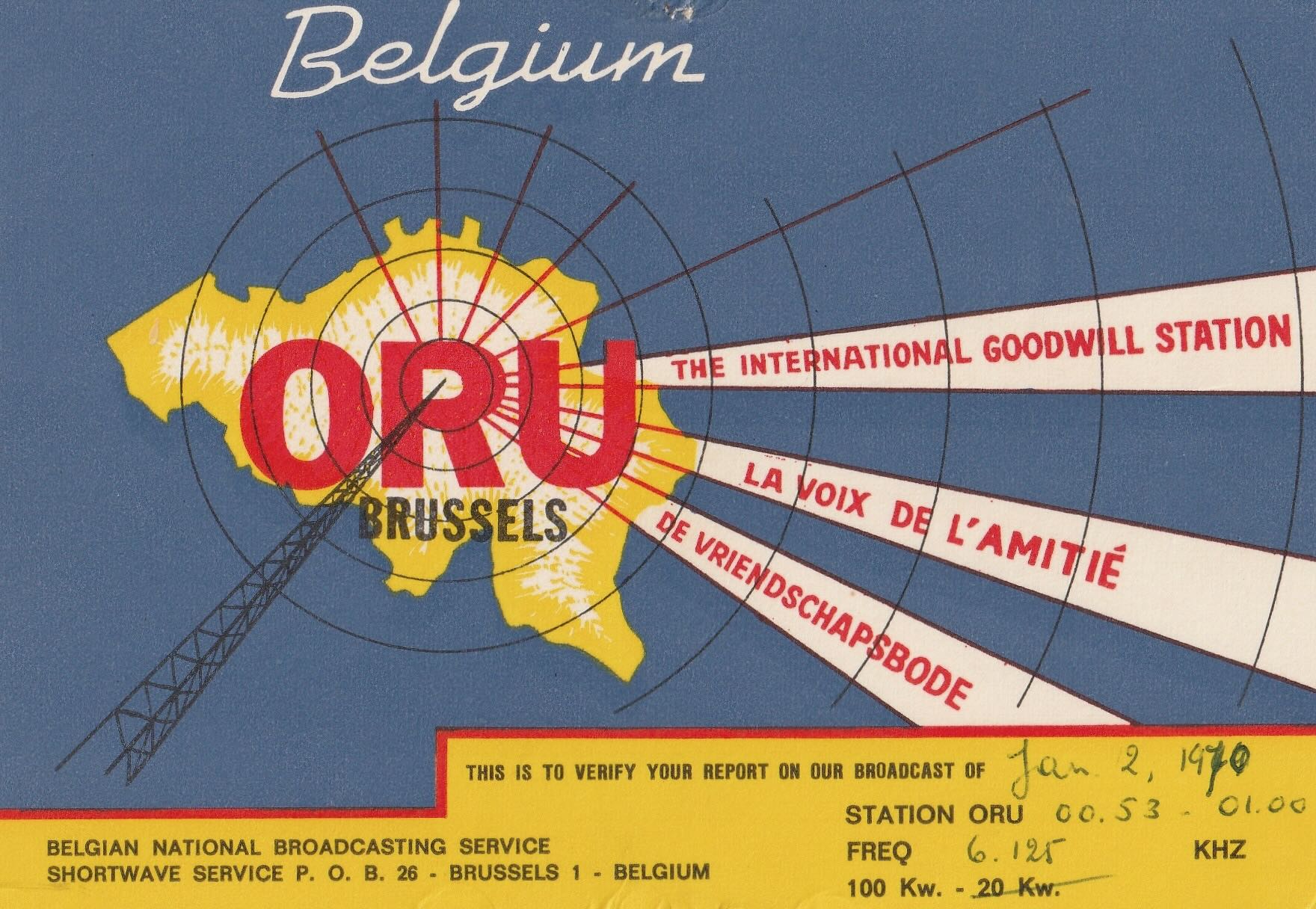
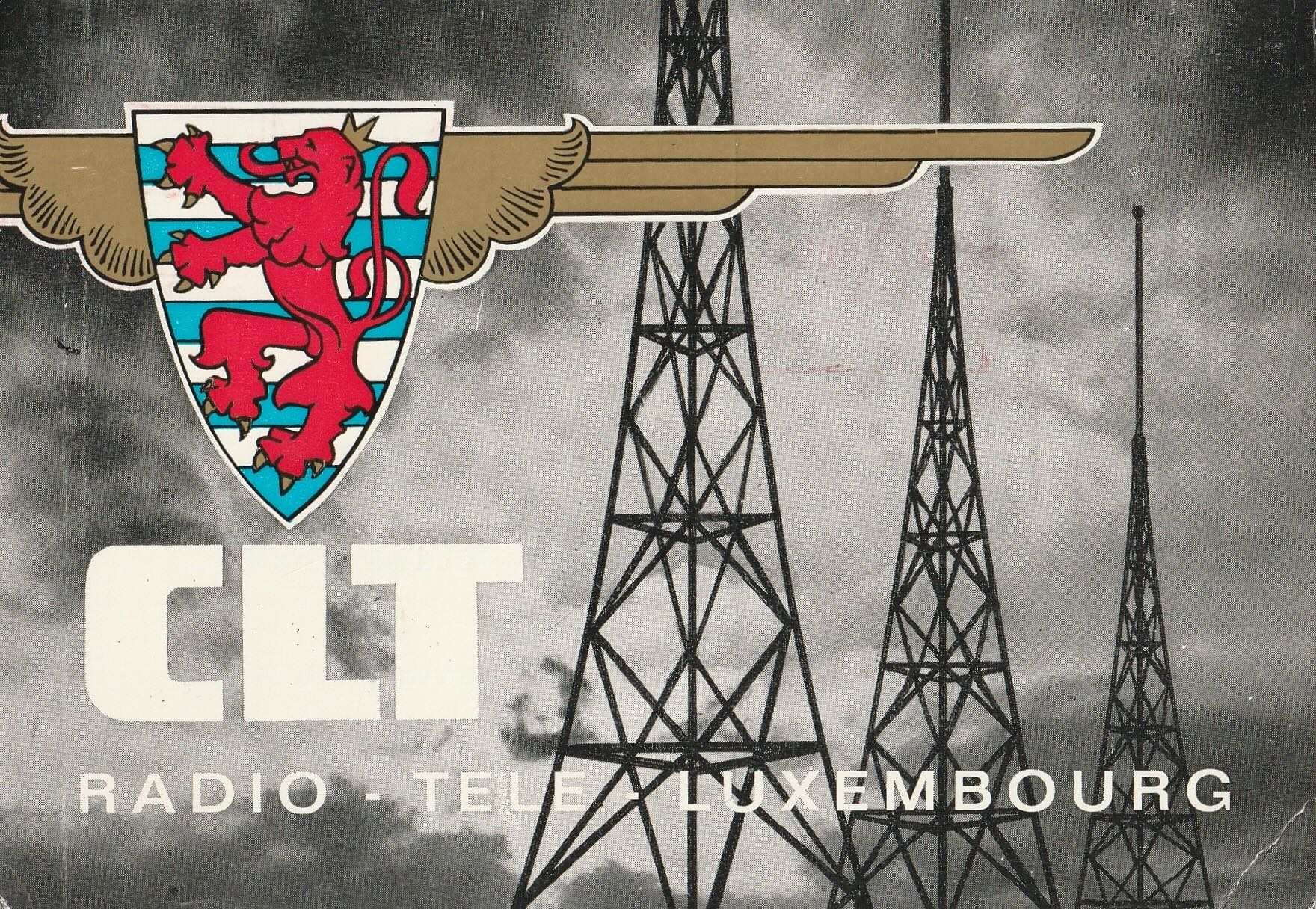
During the golden years of shortwave listening, many European countries had an international shortwave service and broadcast programs to North America (where I live) in English. As a result, these stations were usually among the first that a newcomer to the hobby would find. However, since there was no internet or e-mail, schedules often had to be found in the various club bulletins and hobby magazines. QSLs arrived through the postal system and could often take months to arrive.
I soon developed the habit of making a brief recording of each station as additional “proof of reception,” and many of these have survived to this day. These were typically made by placing the microphone directly in front of the speaker of my receiver. In recent years, they have been uploaded to the Internet Archive, and links to some of them from the early 1970s can be found here.
[Note that each title links to the Archive.org page where you can find more information and QSLs.]
Speaking from Prague at the latest HFCC (High Frequency Coordination Conference), Jeff White—chairman of the HFCC and founder of Radio Miami International—shares why shortwave broadcasting still matters now more than ever. He reflects on decades of shortwave listening, recalls how Radio Prague hooked him in as a kid, and shares the practical work the HFCC does to keep global broadcasts interference-free.
White also reminds us why shortwave endures: it reaches places with little or no internet, rural areas where AM/FM won’t cut it, and listeners who simply love hearing signals from halfway around the world. Despite funding challenges and broadcast cutbacks, he believes shortwave has a bright future—and a fascinating story behind it.
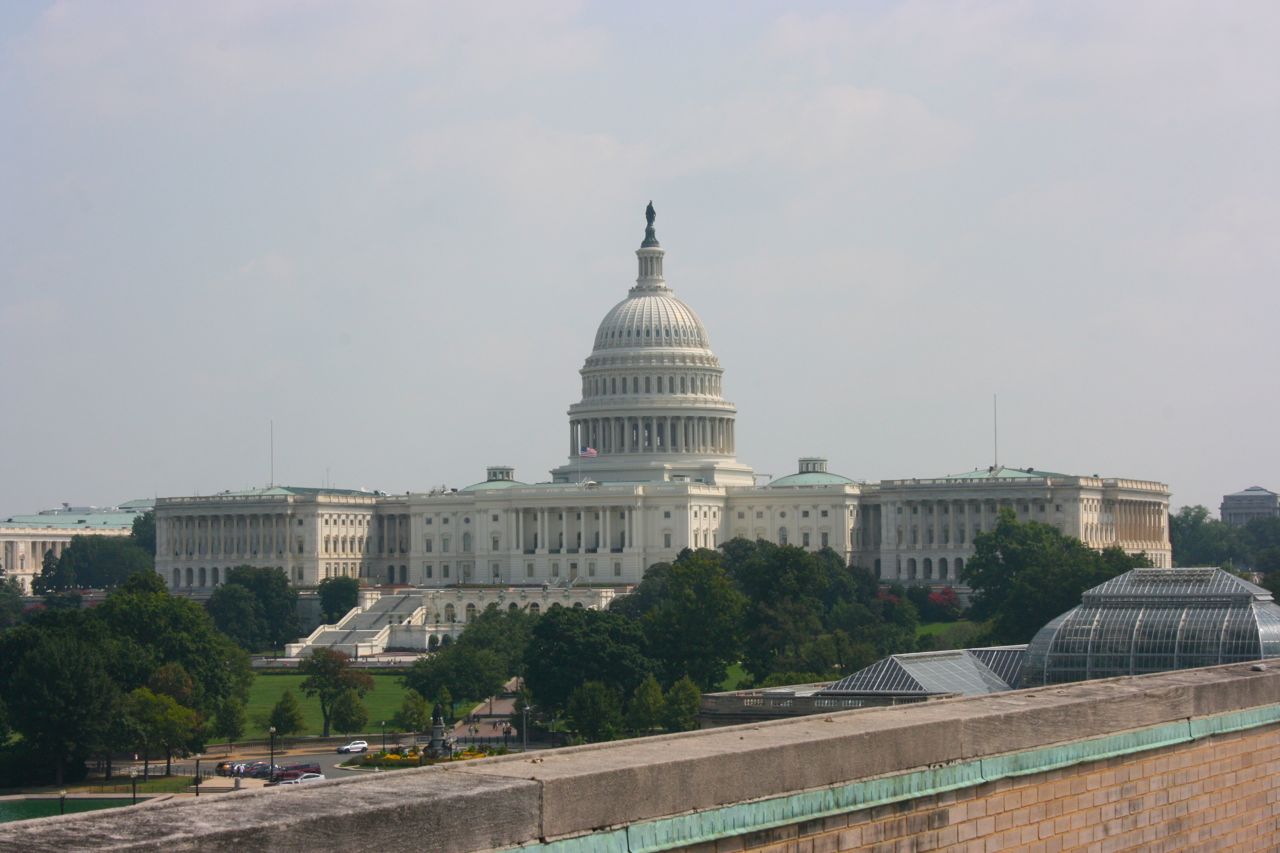
View of the Capitol Building from the roof of the Voice of America on 330 Independence Ave., S.W.
The Guardian is reporting that more than 500 full-time employees at Voice of America and other U.S. government-funded broadcasters will soon be laid off. The U.S. Agency for Global Media announced that 532 federal positions are being cut, part of a larger restructuring effort that’s already stirred up legal challenges and concerns about leadership changes at VOA.
These broadcasters—including Voice of America, Radio Free Asia, and Radio Free Europe/Radio Liberty—collectively reach over 400 million people worldwide. Employee groups and unions are warning that the cuts could undermine U.S. public diplomacy and even pose risks to national security. It’s a significant shake-up for organizations that have long played a role in bringing independent news to international audiences.