Author Archives: Thomas

Radio Waves: Russian State Radio in KC, FRBs, New-Cycle Sunspot, and ABC Friends Bushfire Update

Radio Waves:  Stories Making Waves in the World of Radio
Because I keep my ear to the waves, as well as receive many tips from others who do the same, I find myself privy to radio-related stories that might interest SWLing Post readers.  To that end: Welcome to the SWLing Post’sRadio Waves, a collection of links to interesting stories making waves in the world of radio. Enjoy!

Many thanks to SWLing Post contributors Michael Bird and Ted Miller for the following tips:


Meet The Man Who Brought Russian State Radio To Kansas City (KCUR)

The man responsible for broadcasting Russian state programming in the Kansas City area says he always dreamed of owning a radio station.

Today he owns two, plus a small fleet of radio transmitters across the Kansas City metro.

But money remains tight, he laid off his staff years ago and the stations sell airtime to local residents and religious organizations at cut-rate prices. He hasn’t given himself a paycheck in months.

So Pete Schartel’s ears perked up a while back when he heard that Radio Sputnik pays $30,000 a month to broadcast its programming in Washington, D.C.

“I’m going, ‘Oh my Lord, that’s twice what my whole budget is,’” he told KCUR in a two-hour interview at his flagship station, KCXL, last week. “They must have some money. Let’s investigate this.”

Schartel found Arnold Ferolito, the broker who negotiated the 2017 deal to broadcast Russian programming 24 hours a day in Washington, and made his pitch: “We’re right in the middle of the country. This would be a good test market.”[]

Something in Deep Space Is Sending Signals to Earth in Steady 16-Day Cycles (Vice)

Scientists have discovered the first fast radio burst that beats at a steady rhythm, and the mysterious repeating signal is coming from the outskirts of another galaxy.

A mysterious radio source located in a galaxy 500 million light years from Earth is pulsing on a 16-day cycle, like clockwork, according to a new study. This marks the first time that scientists have ever detected periodicity in these signals, which are known as fast radio bursts (FRBs), and is a major step toward unmasking their sources.

FRBs are one of the most tantalizing puzzles that the universe has thrown at scientists in recent years. First spotted in 2007, these powerful radio bursts are produced by energetic sources, though nobody is sure what those might be. FRBs are also mystifying because they can be either one-offs or “repeaters,” meaning some bursts appear only once in a certain part of the sky, while others emit multiple flashes to Earth.

Pulses from these repeat bursts have, so far, seemed somewhat random and discordant in their timing. But that changed last year, when the Canadian Hydrogen Intensity Mapping Experiment Fast Radio Burst Project (CHIME/FRB), a group dedicated to observing and studying FRBs, discovered that a repeater called FRB 180916.J0158+65 had a regular cadence.[]

A New-Cycle Sunspot is Forming (SpaceWeather.com)

Today, [February 7, 2020] a new sunspot is emerging in the sun’s southern hemisphere, right here. Its magnetic polarity identifies it as a member of Solar Cycle 25, the long-awaited next solar cycle. Although solar activity remains low, this new-cycle spot continues the recent trend of intensifying Solar Cycle 25 sunspot formation. Apparently, Solar Minimum won’t last forever….www.spaceweather.com

ABC Friends’ Special Bushfire Edition of Update (ABC Friends)

British natural historian David Attenborough has described this summer’s fires as ‘a major international catastrophe.’ Read gripping personal accounts of bushfire experiences, analysis from our National President Margaret Reynolds and Vice-President Professor Ed Davis, selected articles from journalists, reports from the ABC, and the observations of many ordinary Australians on the role of the ABC as our Emergency Broadcaster.

The ABC’s Emergency Broadcasts saved lives and kept families safe. Hundreds of ABC staff, many returning early from leave and working in extreme conditions, brought stories, pictures, sound and  essential emergency information to every corner of Australia.  It is appalling that many ABC staff are facing redundancy as a result of the recent $83.7 million budget cuts inflicted on the ABC by the Morrison government, on top of the $250m in cuts since 2014.

ABC Friends will be in Canberra when parliament resumes to demand the restoration of funds so that our ABC remains strong and independent.

Read Update here

Update is the national membership magazine of ABC Friends. Not a member? Sign up here.
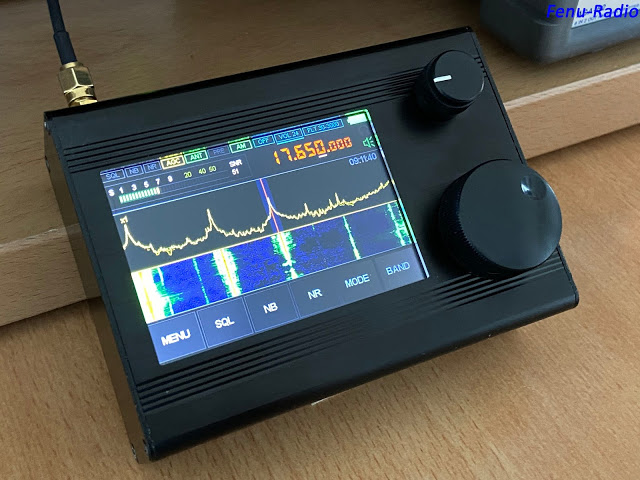
The Malahit-DSP: A potential Holy Grail portable SDR?

(Image via Fenu Duarte)

Many thanks to SWLing Post contributor, Dan Robinson, who provides this update to his article on the Belka DSP receiver. Dan writes:

One of the other DSP radios shown being demonstrated on YouTube is this one by Georgy Yatsuk, presumably from somewhere in Russia. In his comments posted on January 14th, Fernando Duarte who runs the FENU site says:

“This little gem makes a name for itself. Everyone wants it. But it is still difficult to get. Georgy Yatsuk (RX9CIM) developed this small portable SDR with two of his colleagues. What this little guy offers is simply phenomenal! -Frequency range: 50KHz-2GHz -All important types of operation -160KHz wide waterfall & spectrum display zoomable -Noise reduction adjustable -Noiseblanker adjustable -Equalizer for adjusting the timbre – Controllable via PC -Control via CAT -etc, etc … Because the firmware is still in full development, certain functions will definitely be added. A test and a detailed presentation will be available on my website in the near future. Stay tuned !!”

https://fenuradio.blogspot.com/2020/01/malachit-dsp-der-edelstein-aus-russland.html

As of this moment there is no additional information as to whether this seemingly excellent receiver will ever become available and in what numbers.

Many thanks for this update, Dan! We published a post about the Malahit-DSP in November on a tip from H. Garcia (PU3HAG). I have put in an inquiry to purchase one to evaluate here on the SWLing Post as well.  This does look like a fascinating portable SDR!


Do you enjoy the SWLing Post?

Please consider supporting us via Patreon or our Coffee Fund!

Your support makes articles like this one possible. Thank you!

RTI and Space Line test broadcasts (Feb 22 – Mar 1)

Many thanks to SWLing Post contributor, Kanwar Sandhu, who writes:

Following email was received by Radio Taiwan International, French Service:

French service will collaborate with Space Line from Bulgaria for a daily broadcast of thirty minutes from 19:00 to 19:30 UTC from Sunday March 29, 2020. Broadcasting will be provided from the city of Kostinbord on the frequency 6005 kHz.

Before the official resumption of our broadcast, we will conduct five days of trial scheduled for February 22-23, 28-29 and March 1.

We would like to invite you to help us to find out the listening conditions by sending us your listening reports on these five days of testing. (Meg Wang, French Service RTI)

Many thanks, Kanwar, for sharing this tip!

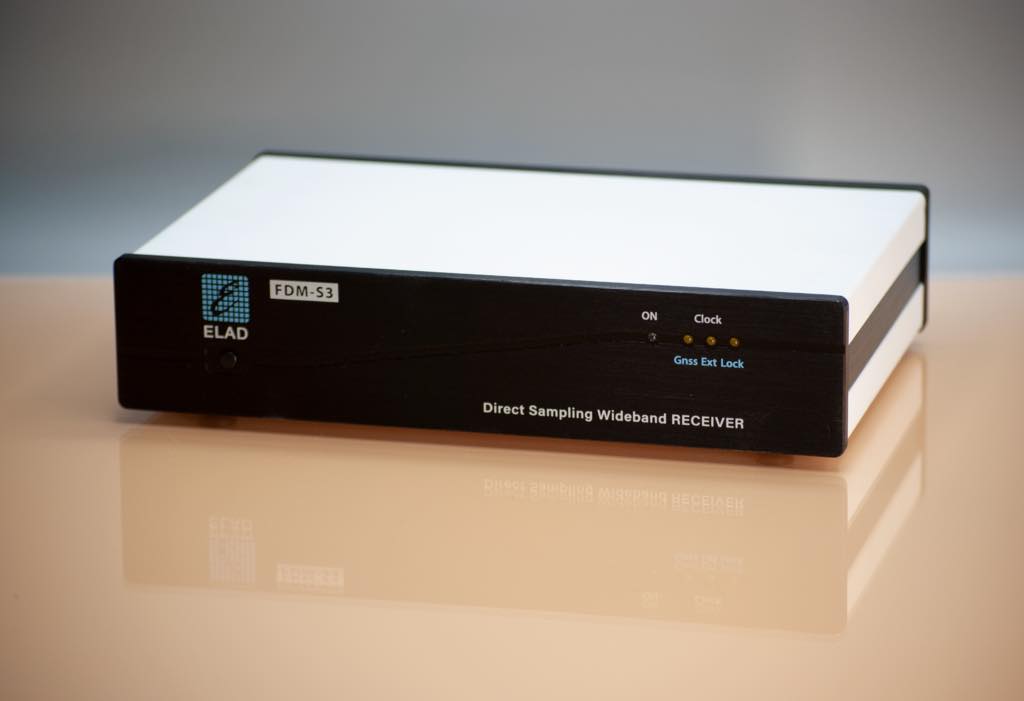
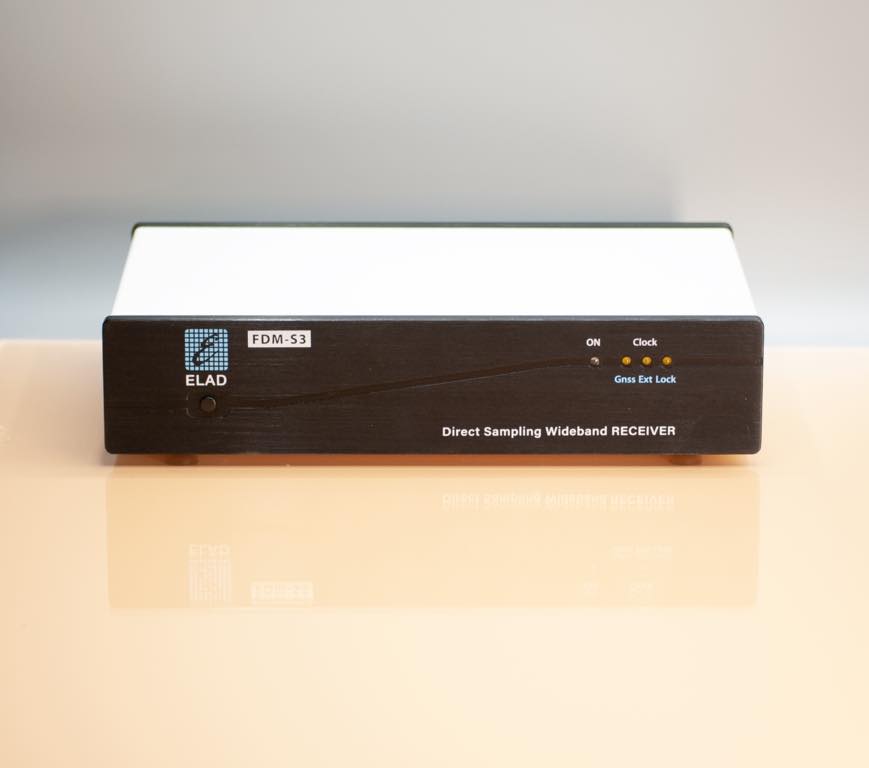
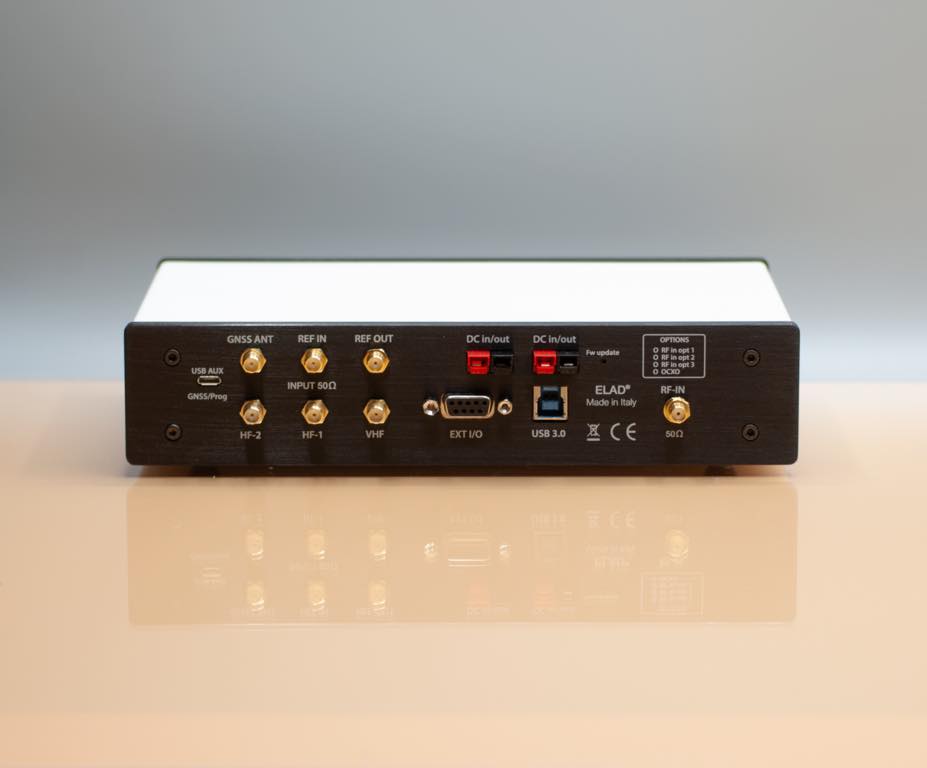
New ELAD FDM-S3 Direct Sampling Wideband Receiver – Specifications and Photos

Many thanks to Paul Jones with ELAD who recently shared the following photos and specifications of the upcoming FDM-S3 SDR:

ELAD FDM-S3 Direct Sampling Wideband Receiver

JAN 2020 SPECIFICATIONS

2 switchable HF Antenna inputs direct sampling

1 VHF Antenna input direct sampling

Works with FDM-SW2 ELAD Software & SDR Console

Optional: Antenna RF input downconversion (50MHz – 2GHz preview)

Real Time I/Q Stream Bandwidth 192kHz, 384kHz, 1536kHz, 12880kHz, 24576kHz

122.88 MSPS – 98.304 MSPS 16bit A/D converter

Clock synchronized to GNSS Global Navigation Satellite System or 10MHz Ext Ref

GNSS works with GPS, GLONASS, GALILEO, BEIDOU

Auxiliary USB used to monitor GPS status or for clock firmware updates

10MHz Clock reference Output

10MHz internal standard TCXO 100ppb referenced, optional 3ppb OCXO referenced

Paul notes that the price will be 949 Euro (roughly $1040 USD). No delivery updates were mentioned.

I’m a bit in awe of the maximum working bandwidth: 24.576 MHz–!

No word on availability yet, but I will post it when ELAD has a firm date. I do plan to review the FDM-S3 once it’s released. Follow updates by bookmarking the following tag: ELAD FDM-S3

A Look Back: Memories of the Panasonic RF-2200 and its sibling, the National Panasonic DR22

Many thanks to SWLing Post contributor, Mario Filippi (N2HUN), for the following guest post:


A Look Back: Memories of the Panasonic RF-2200 and its Sibling, the National Panasonic DR22

by Mario Filippi, N2HUN

All photos by author unless otherwise noted

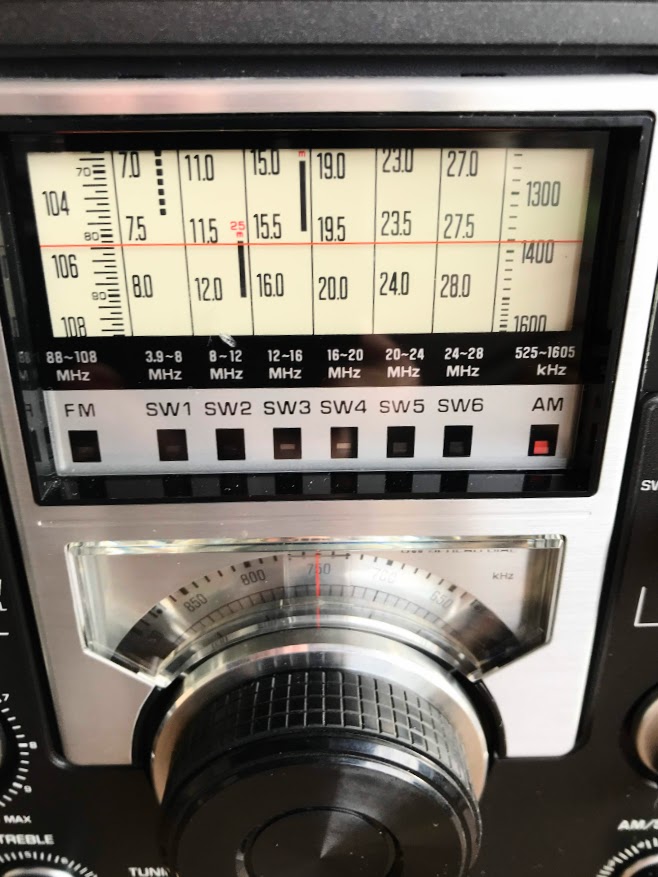
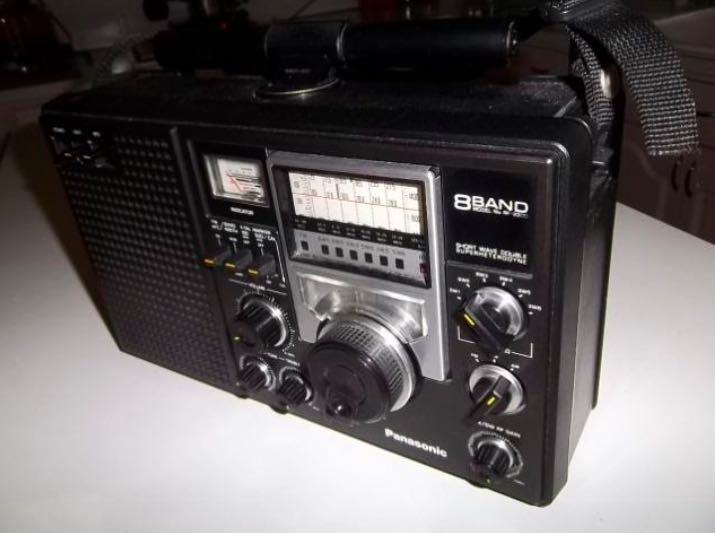
One of the preeminent AM/FM/SW portables of all time is the venerable Panasonic model RF-2200 receiver that was sold in the USA starting in the mid-1970’s for around $165.00 US.

Weighing in at a hefty 7 pounds, 13 ounces and vital statistics of 12” x 7” x 4” it came equipped with a robust shoulder strap to schlep from the radio shack to alfresco listening sites and was basically a completely self-contained entertainment center for the radio enthusiast.  My first RF-2200 was purchased in the late ‘70’s from Grand Central Radio Shop in New York City, now just a memory and long gone, but back then they sold a bevy of shortwave and ham radio equipment.

Photo 1. Author’s favorite portable of all time, Panasonic RF-2200

It was love at first sight when I saw the RF-2200 in the store’s gleaming glass display case way back when. The ‘2200 possessed all the bells and whistles to guarantee a good time for the SWL such as a rotatable ferrite AM broadcast band antenna, BFO (Beat Frequency Oscillator) for SSB reception, AM /FM/SW (3.9 – 28 MHz) bands, a D’Arsonval “S” meter that doubled as a battery status indicator, large four inch front mounted speaker, switchable coarse/fine tuning speed, base/treble/RF gain pots, 125/500 kHz crystal markers to calibrate the VFO, wide/narrow bandwidth switch, dial/S meter lights, earphone/recorder jacks and telescopic antenna for SW and FM. Plus it sported the renowned Panasonic trademark.

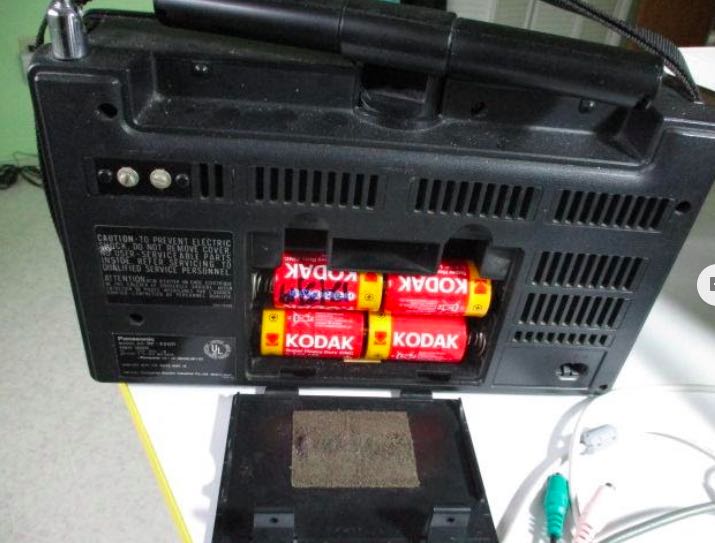
Photo 2. RF-2200’s rear: exposed battery compartment, screw connectors for external antenna, AC plug lower right. Rectangular earphone storage compartment is above batteries. Battery cover’s gray foam pad is dry rotted and needs replacement.

Part of the 2200’s ample avoirdupois can be attributed to the unit’s four “D” battery power plant, but Panasonic also supplied an AC cord to plug into the house mains and an earphone (located inside the battery case).  It runs forever on those four stout dry cells, one of the many positive features of this vintage gem.

Back in those days portable radios generally were not judged and valued based their diminutive size and weight but on the array of features geared to the end-user. Front panels were festooned with an array of controls rivaling an aircraft’s cockpit.  Knobs, analog dials, meters, large front-mounted speakers, switches and lots of black plastic were the order of the day. These all contributed to the beauty and practicality of portable shortwave radios back then.

One thing missing though was built-in memory channels; those existed in the operator’s brain and not yet delegated to memory chips.

Photo 3. Pack of four “D” cells, at 1 lb 4oz, weighs more than some of today’s portables!

One of the features long gone and missing in modern receivers these days is the “recorder out” jack that looks identical to an eight-inch earphone jack and yes the ‘2200 has one. It was used to plug in a tape recorder to memorialize an op’s favorite radio show. Of course back then there were many more shortwave stations broadcasting.  Gone also are those tiny incandescent bulbs, sometimes described as “grain of wheat” lamps that were used on S meters, dials, etc. The RF-2200 sports ample illumination for the S-meter and tuning dial which makes it a perfect bedside table radio for late night DX’ers and insomniacs.

Speaking of DX, the ‘2200’s rotatable AM ferrite antenna is one of the main virtues this radio possesses.  As an avid AM DX’er and faithful disciple of AM radio in general, the ‘2200’s rotary directional antenna nulls out noise and routinely pulls in stations as far away as Nashville (WSM), Chicago (WBBM), St. Louis (KMOX), Atlanta (WSB), Boston (WBZ) and Toronto (CJBC) when the sun goes down. Look closely at the antenna mount’s base and you’ll even see compass-like degree markings that’ll help when retrieving a favorite local or DX AM station.

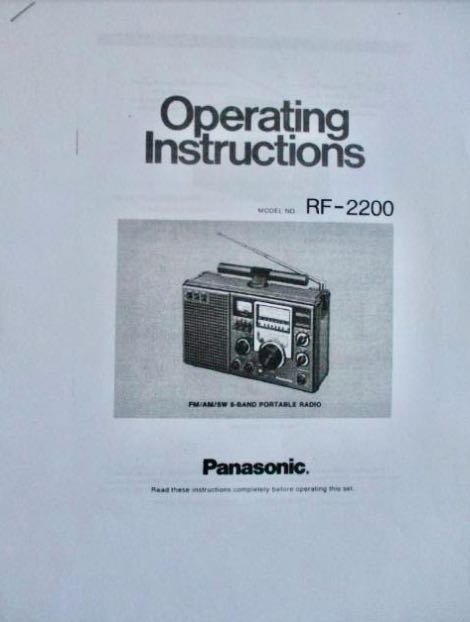
Photo 4. Operating manual copy is available on-line

Shortwave coverage is approximately from 3.9 – 28 MHz as per the service manual, but I’ve checked the actual coverage of my unit using a calibrated service monitor and found it to be 3.47 – 28.9 MHz which makes sense since I’ve tuned to W1AW’s code practice on 3.581 MHz with no problem and have also heard the Volmet station on 3.485 MHz. That’s good news for hams wanting to receive 80m CW.  It gets a bit tricky though using the fine tuning option for CW hi hi.

AM broadcast band coverage is only from 525 – 1610 kHz as per the specifications; the AM band had not yet been extended to 1710 kHz at that time.  The ITU approved the extension in 1988. With that in mind I wanted to determine what the actual band coverage of my unit was. Again, using an IFR service monitor it was found to be from 514 – 1720 kHz; that’s good news for those who listen to stations at the top of the band.  It also explains why I can hear YWA, a non-directional radiobeacon (NDB) from Toronto, Canada just below the AM band on a frequency of 516 kHz. If you own a RF-2200 or DR22 tune to the bottom of the AM band and listen for it. You may also hear the warbling sound of NAVTEX stations on 518 kHz.  Switch on the BFO and wait for dark, you might get lucky like I have.

My apologies for not being an FM broadcast band listener so all I can state is the few times I’ve listened it sounded absolutely great.  The specs state a FM broadcast band frequency range of approximately 87.5 – 108 MHz. Mine measured from 86.8 – 108.9 MHz but I’ve yet to realign my unit so these ranges may vary among the population.  Note that I have undertaken the labor intensive task of aligning my National Panasonic DR-22 which is almost the exact same unit as the ‘2200. You can search this blog for my results that were kindly published by Thomas previously (click here to read).

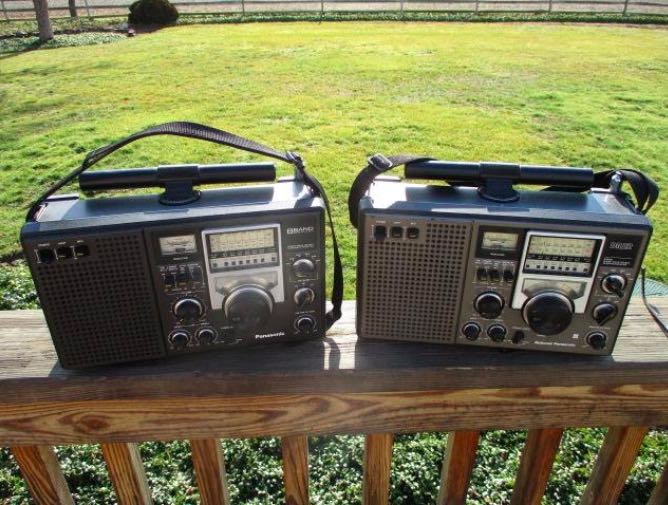
Photo 5. Side by side comparison.  Panasonic RF-2200 on left, National Panasonic DR22 on right.

For those not aware, the RF-2200 was also marketed in Europe as the National Panasonic DR22 and in other parts of the world as the Cougar 2200. My DR22 was an eBay purchase, and that’s the best place to find either model.

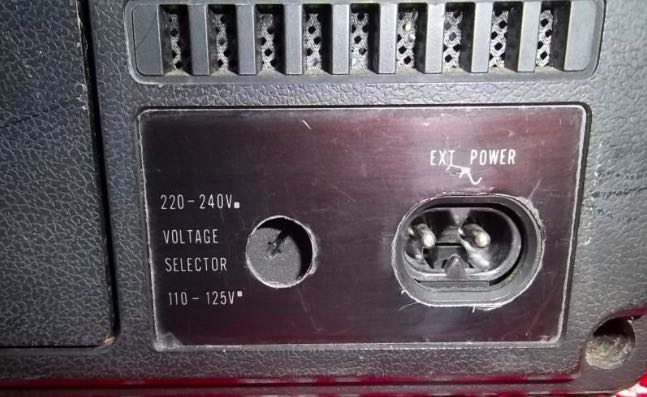
DR22s are rather rare compared to the ‘2200 though. First off, one of the major differences with the DR22 is that it runs on either 110 or 220V, and that’s accomplished by a switch on the back of the unit.

DR22 runs on 120 or 240V via switch on rear panel

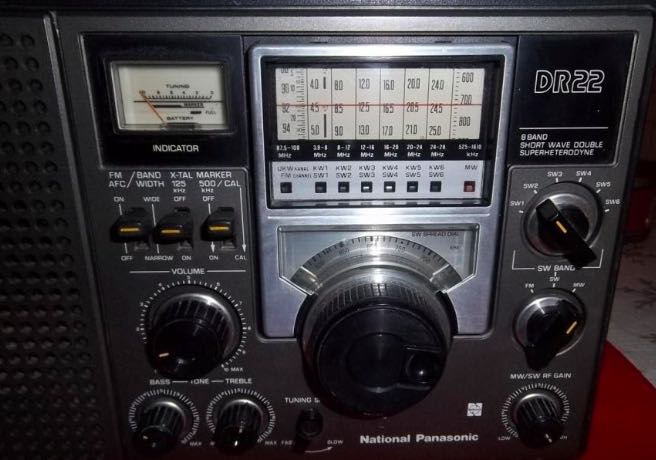
The DR22’s front panel stenciling is slightly different too, as shortwave bands are labeled “KW 1 – KW 6” in addition to “SW1 – SW6”.  Not sure what “KW” means though. Perhaps some reader can enlighten us.

Well, that’s about it, if you want a RF-2200, or DR22 then window shop on eBay.  Lately they have been selling from $40.00 US (parts only) to $455.00 for pristine units. That’s a pretty wide price range and even I’m surprised at the high prices being gotten for clean units.  All I can say is that the two I have now are staying right here in the shack with me.

Thanks for reading and 73’s.


eBay searches (note these eBay partner links support the SWLing Post):


Thank you so much for sharing this excellent post, Mario. Like you, I’m a massive fan of the Panasonic RF-2200; in fact, I own two of them! It is, in my opinion, the best AM/MW portable ever made. 

Post Readers: Any other RF-2200 and DR22 owners out there? Can anyone explain why the DR22 labels shortwave bands as “KW1 – KW6”–?  Please comment!


Do you enjoy the SWLing Post?

Please consider supporting us via Patreon or our Coffee Fund!

Your support makes articles like this one possible. Thank you!

Radio Waves: RNZ Cuts Classical, Australian EmComm Plan, BBC Funding, and NHK Viewing Fees

Radio Waves:  Stories Making Waves in the World of Broadcasting 

Because I keep my ear to the waves, as well as receive many tips from others who do the same, I find myself privy to radio-related stories that might interest SWLing Post readers.  To that end: Welcome to the SWLing Post’s Radio Waves, a collection of links to interesting stories making waves in the world of radio. Enjoy!

Many thanks to SWLing Post contributors Troy Riedel and Michael Bird for the following tips:

RNZ set to cut back Concert and launch new youth service (Radio New Zealand)

In the biggest overhaul of its music services in years, RNZ is planning to cut back its classical music station RNZ Concert and replace it on FM radio with music for a younger audience as part of a new multimedia music brand. Mediawatch asks RNZ chief executive Paul Thompson and music content director Willy Macalister to explain the move.

The broadcaster is proposing to remove RNZ Concert from its FM frequencies and transform it into an automated non-stop music station which will stream online and play on AM radio.

It would be replaced on FM by a service aimed at a younger, more diverse audience as part of a new multimedia “music brand”.

RNZ Concert would be taken off FM radio on May 29 and the youth platform would be phased in ahead of its full launch on August 28.

RNZ’s music staff were informed about the proposed changes this morning in an emotional, occasionally heated meeting with the RNZ music content director Willy Macalister, head of radio and music David Allan, and chief executive Paul Thompson.[]

[Australian] Senate to vote on National Emergency Communications Plan (ABC Friends)

Today Senators can vote to recognise and support ABC Emergency Broadcasting Services and start to plan for a National Emergency Communications Plan.

[…]The motion comes after ABC Friends surveyed bushfire affected communities, with 95% of the 750 respondents indicating that they wanted to see a national plan of additional essential communications infrastructure.

More information to come once the motion has been moved.[]

UK government, at odds with media, eyes BBC funding change (AP)

LONDON (AP) — Britain’s government announced Wednesday it is considering a change in the way the BBC is funded that would severely dent the coffers of the nation’s public broadcaster.

Prime Minister Boris Johnson’s Conservative government — which is increasingly at odds with the country’s news media — said it would hold a “public consultation” on whether to stop charging people with a criminal offense if they don’t pay the annual levy that funds the BBC.

The broadcaster gets most of its money from a license fee paid by every television-owning household in the country, which currently stands at 154.50 pounds ($201) a year. Failing to pay can result in a fine or, in rare cases, a prison sentence.

In 2018, more than 121,000 people were convicted and fined for license fee evasion. Five people were imprisoned for not paying their fines.

The BBC is Britain’s largest media organization, producing news, sports and entertainment across multiple TV, radio and digital outlets. The BBC’s size and public funding annoy private-sector rivals, who argue the broadcaster has an unfair advantage.[]

NHK Asked to Cut Viewing Fees Further (Jiji Press)

Tokyo, Feb. 5 (Jiji Press)–Japanese Internal Affairs and Communications Minister Sanae Takaichi asked Japan Broadcasting Corp. (NHK) on Wednesday to cut television-viewing fees further.
The request was included in a set of proposals compiled by Takaichi. The proposals were approved the same day at a meeting of the Radio Regulatory Council, which advises the minister.

After expected cabinet approval, the proposals will be submitted to the ongoing session of the Diet, Japan’s parliament, together with NHK’s fiscal 2020 draft budget.

The public broadcaster has already decided to cut viewing fees and expand the scope of fee exemptions by the end of fiscal 2020, in order to reduce viewers’ burdens by the equivalent of 6 pct of its fiscal 2018 fee revenue.[]

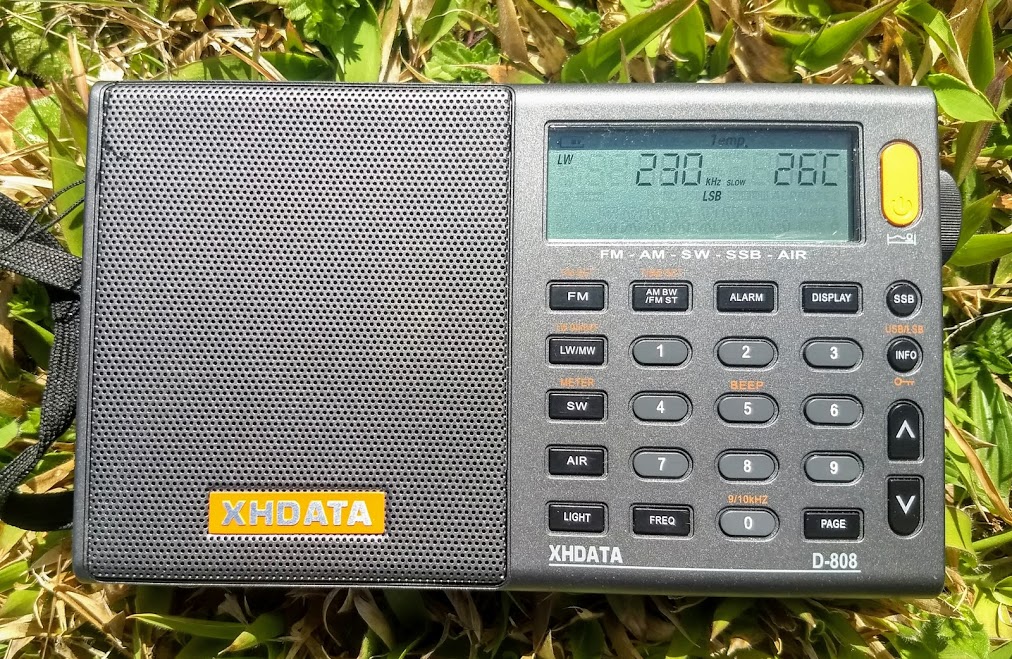
Best portable radio for LW and NDB reception?

Many thanks to SWLing Post reader, Ian Harling (G7HFS), who writes:

I have been a SWL for about 50 yrs and also hold an amateur radio license, but here is where I need some advice.

Can you recommend a portable radio that performs well longwave and also NDB reception? I do have a Datong VLF converter that I can use but I’m looking for a dedicated portable set that works well on frequencies between 100 and 500 kHz. Any suggestions?

Good question, Ian. While I always do a basic check of longwave performance on shortwave portables–checking regional NDBs–I have never done a proper comparison test or used them for longwave listening or DXing sessions.

I know there are some dedicated LW DXers and listeners in the SWLing Post community, so my hope is someone can chime in with their radio suggestion in the comments section. Thank you in advance!