Author Archives: Thomas

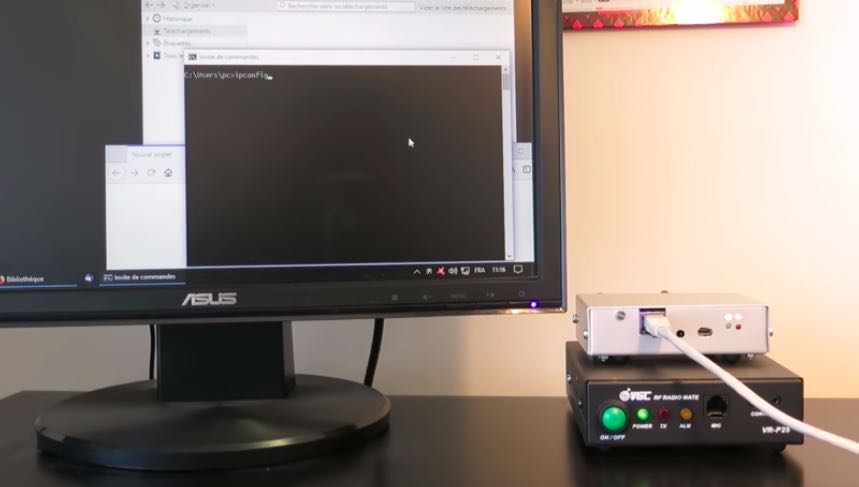
IEEE Spectrum: Build a Long-Distance Data Network Using Ham Radio

(Source: F4HKD via YouTube)

(Source: IEEE Spectrum)

Send data via IPv4 up to 300 kilometers with easy-to-assemble hardware

By F4HDK

I have been a hobbyist and maker for almost 15 years now. I like inventing things and diving into low-level things. In 2013, I was looking at a protocol called NBP, used to create a data network over amateur radio links. NBP was developed in the 2000s as a potential replacement for the venerable AX.25 protocol [PDF] that’s been in use for digital links since the mid-1980s. I believed it was possible to create an even better protocol with a modern design that would be easier to use and inexpensive to physically implement.

It took six years, but the result is New Packet Radio (NPR), which I chose to publish under my call sign, F4HDK, as a nom de plume. It supports today’s de facto universal standard of communication—the Internet’s IPv4—and allows data to be transmitted at up to 500 kilobits per second on the popular 70-centimeter UHF ham radio band. Admittedly, 500 kb/s is not as fast as the megabits per second that flow through amateur networks such as the European Hamnet or U.S. AREDN, which use gigahertz frequencies like those of Wi-Fi. But it is still faster than the 1.2 kb/s normally used by AX.25 links, and the 70-cm band permits long-distance links even when obstructions prevent line-of-sight transmissions.

Initially, I considered using different frequency bands for the uplink and downlink connections: Downlinks would have used the DVB-S standard, originally developed for digital satellite television. Uplinks would have used a variation of FSK (frequency-shift keying) to encode data. But the complexity involved in synchronizing the uplink and downlink was too high. Then I tried using a software-defined radio equipped with a field-programmable gate array (FPGA). I had some experience with FPGAs thanks to a previous project in which I had implemented a complete custom CPU using an Altera Cyclone 4 FPGA. The goal was to do all the modulation and demodulation using the FPGA, but again the method was too complex. I lost almost two years chasing these ideas to their dead ends.

Then, in one of those why-didn’t-I-think-of-this-earlier moments, I turned to ISM (industrial, scientific, and medical) chips.[…]

Click here to read the full article.

Many thanks to SWLing Post contributor, Marty, for the tip!
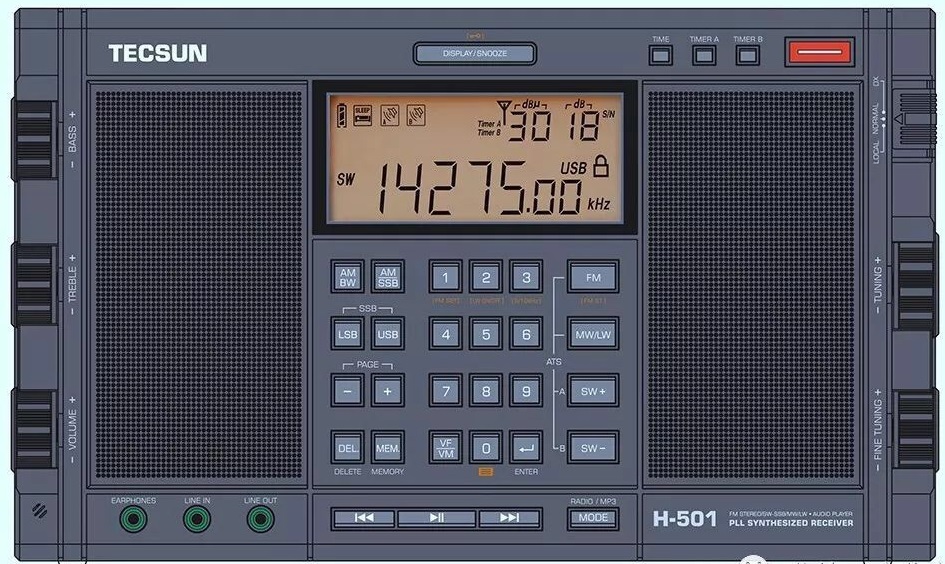
Update: Availability of the Tecsun PL-990 and H-501

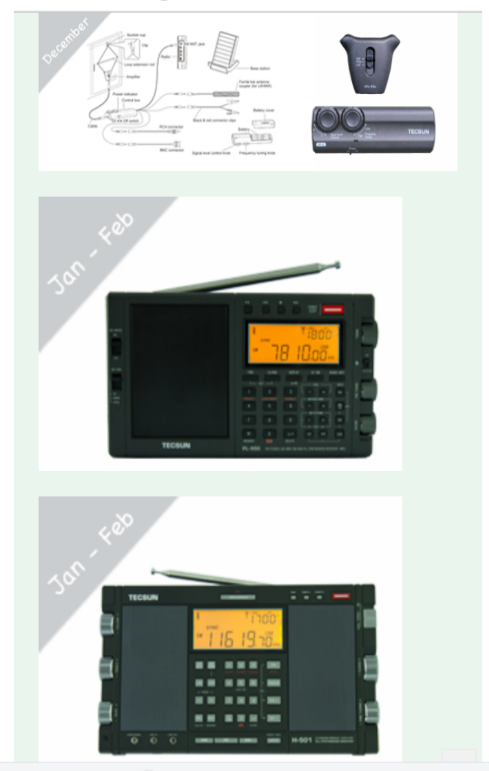
Many thanks to SWLing Post contributor, Gareth Buxton, who recently received the latest availability dates of the new Tecsun PL-990 and H-501.

According to Anna at Anon-Co, both radios should start shipping in January or February of 2020. Gareth included the following screenshot which also notes the new AN-48x active loop antenna:

Still no firm pricing information. I will be reviewing both of these radios as soon as they’re available, so stay tuned!


Do you enjoy the SWLing Post?

Please consider supporting us via Patreon or our Coffee Fund!

Your support makes articles like this one possible. Thank you!

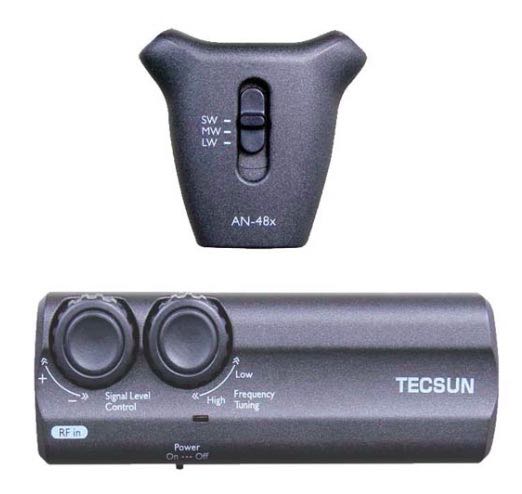
The new Tecsun AN-48x Active Loop Antenna

Many thanks to SWLing Post contributor, Troy Riedel, who shares a link to the new Tecsun AN-48x Active Loop Antenna at Anon-Co. Here’s the description from Anon-Co:

TECSUN AN-48x is an active loop antenna for enhancing shortwave (SW), medium wave (MW/AM) and longwave (LW) reception.

Unlike previous models (DE31MS, A38-LMS) available on anon-co.com, the AN-48x is supplied with adapters to connect the antenna to BNC and RCA sockets. This greatly simplifies hooking up the antenna to TECSUN receivers like S-2000 and S-8800, while it is just as easy to use with H-501, PL-990, PL-880 and the rest of the “PL”-family.

AN-48x also works with portable radios that do not have an external antenna jack!

Effective Frequency Range

Longwave: 120 ~ 400 kHz

Medium Wave (AM): 520 ~ 1700 kHz

Shortwave: 3500 ~ 20,000 kHz

[…]

Click here to view at Anon-Co.

Anon-Co notes that they expect to launch this product in December 2019. If you happen to grab one, consider sharing your review here on the SWLing Post!

One sunspot into Solar Cycle 25

(Source: NASA Solar Dynamics Observatory via Spaceweather Archive)

(Source: Spaceweather Archive via Michael Bird)

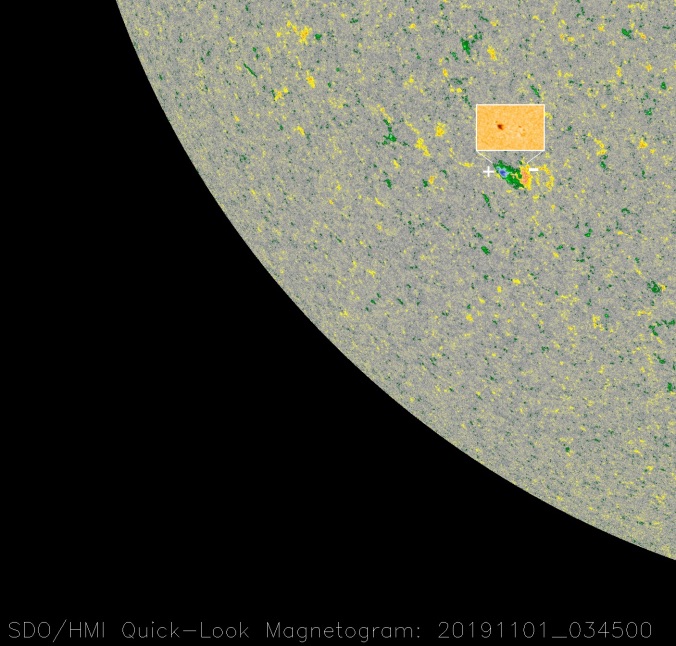
Nov. 1, 2019: Breaking a string of 28 spotless days, a new sunspot (AR2750) is emerging in the sun’s southern hemisphere–and it’s a member of the next solar cycle. A picture of the sunspot is inset in this magnetic map of the sun’s surface from NASA’s Solar Dynamics Observatory:

How do we know AR2750 belongs to the next solar cycle? Its magnetic polarity tells us so. Southern sunspots from old Solar Cycle 24 have a -/+ polarity. This sunspot is the opposite: +/-. According to Hale’s Law, sunspots switch polarities from one solar cycle to the next. AR2750 is therefore a member of Solar Cycle 25.[…]

Click here to read the full article.

TX Factor Episode 24

Many thanks to SWLing Post contributors, Eric and Tom, who note that the latest episode of TX Factor has been released.  Here’s the show summary:

Episode 24 of TX Factor is a Hamfest 2019 special, reporting on some of the eye-catching products and services on display at this year’s event in Newark.

We investigate the current state of HF propagation, celebrate 50 years of Nevada Radio, Mike tries out a few solder stations, and Bob goes all soft over the VMARS vintage AM radios. And to cap it all, we take a look at the latest rig from Yaesu.

As always, there’s a chance to win a great bundle of prizes from our sponsors, ML&S and the RSGB.

We hope you enjoy the show!

Click here to view on YouTube.

SDRplay announces the launch of the RSPdx

(Source: SDRplay)

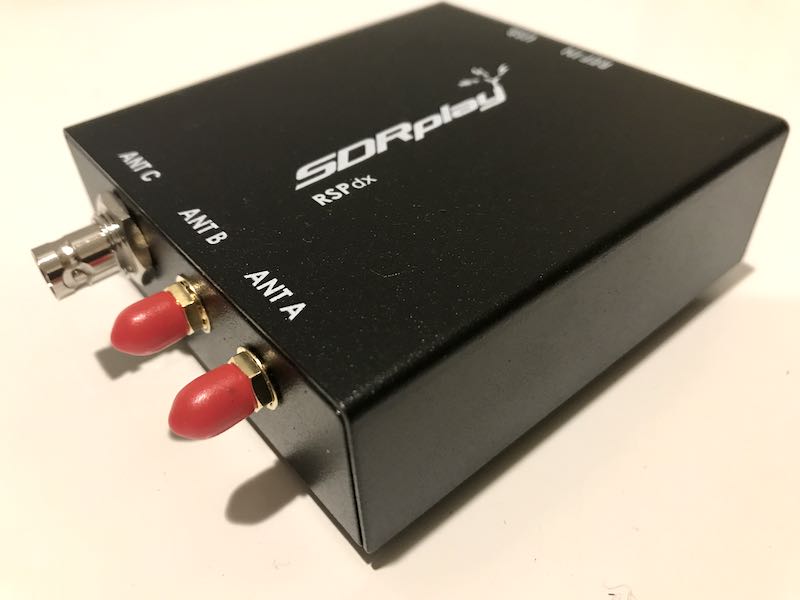
SDRplay Limited has announced the launch of a new Software Defined Radio product – the RSPdx.

The RSPdx is a replacement for the highly successful RSP2 and RSP2pro SDR receivers, which have been extensively redesigned to provide enhanced performance with additional and improved pre-selection filters, improved intermodulation performance, the addition of a user selectable DAB notch filter and more software selectable attenuation steps . The RSPdx , when used in conjunction with SDRplay’s own SDRuno software, introduces a special HDR (High Dynamic Range) mode for reception within selected bands below 2MHz. HDR mode delivers improved intermodulation performance and fewer spurious responses for those challenging bands.

The SDRplay RSPdx is a single-tuner wideband full featured 14-bit SDR which covers the entire RF spectrum from 1kHz to 2GHz giving up to 10MHz of spectrum visibility. It contains three antenna ports, two of which use SMA connectors and operate across the full 1 kHz to 2 GHz range and the third uses a BNC connector which operates up to 200MHz.

The RSPdx also features a 24 MHz ‘plug and play’ reference clock input which allows the unit to be synchronised to an external reference clock such as a GPS disciplined oscillator (GPSDO)
Due to its exceptional combination of performance and price, the RSP family of receivers have become very popular, and the RSPdx builds on the learning and feedback from many thousands of users across the amateur, scientific, educational and industrial SDR community.
As was the case for the other RSP family members, SDRplay will work with developers of the popular third party SDR receiver software packages to maximise compatibility. SDRplay will also provide multiplatform driver and API support which includes Windows, Linux, Mac, Android and Raspberry Pi 3 and 4.

The RSPdx will be available to purchase in the next few weeks and is expected to retail at approximately £159 GBP or $199 USD (excluding taxes).

For more information visit the SDRplay website on www.sdrplay.com About SDRplay:
SDRplay limited is a UK company and consists of a small group of engineers with strong connections to the UK Wireless semiconductor industry. SDRplay announced its first product, the RSP1 in August 2014

FCC to consider allowing AM broadcasters to transition to digital

(Source: Radio World)

All-Digital on the AM Band? The FCC Might Allow It Soon

AM radio station operators in the United States may soon have the option of switching their transmissions to all-digital.

It’s not a done deal; but the concept is about to take a step closer to reality, because the Federal Communications Commission will consider a proposal at its next meeting that would start a process. It will take comments on whether to allow AM band licensees to make the switch if they want.

Ben Downs, VP/GM of Bryan Broadcasting in Texas, petitioned the FCC in March to initiate a proceeding to authorize the all-digital mode of HD Radio.

Allowing stations to use all-digital transmission is an idea that some broadcasters feel could give business-challenged AM stations in the United States new life or at least another option. Turning off their analog signals would mean that most existing receivers could no longer pick up that signal; but many AM broadcasters are currently heard on FM translator simulcasts now. And adding the all-digital AM option could open up new possibilities for them as the number of digital receivers in the marketplace continues to grow.

[…]Chairman Ajit Pai described the proposal in a blog post Monday: “Just as the FCC is trying to keep pace with changes in the market, so are AM radio operators, and the commission wants to give them as much flexibility as possible to compete in the digital age,” Pai wrote.[…]

Read the full article at Radio World.

Click here to read the proposal (PDF) that will be discussed at the November FCC meeting.

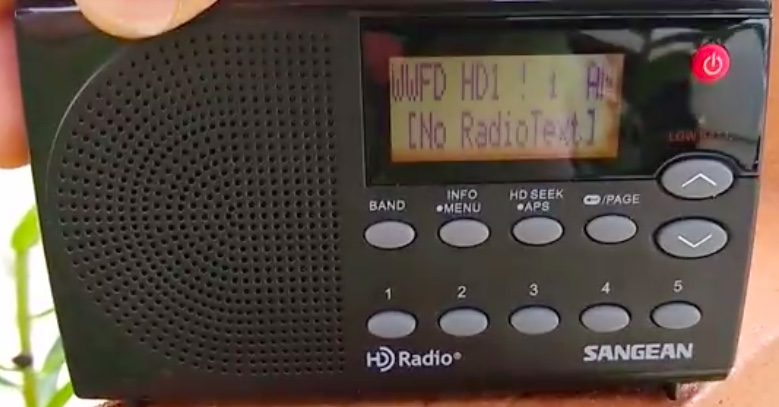
The Radio World article mentions WWFD in Frederick, MD–a station that has been broadcasting AM digital for over a year. We posted a note about this last year and I even included a short recording/video with reception when traveling through the area.