Author Archives: Thomas

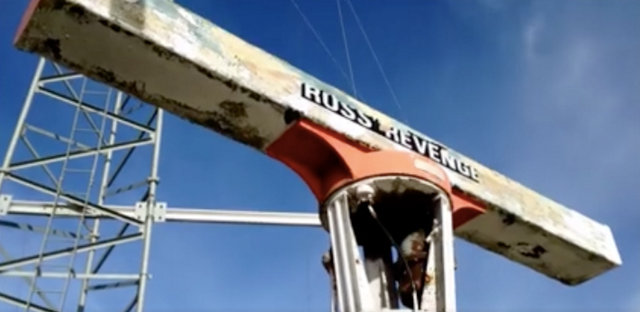
This weekend: Radio Caroline North broadcast from the Ross Revenge

(Source: Southgate ARC via Eric McFadden)

Caroline North June

We are counting down the days to another fabulous Radio Caroline North broadcast – LIVE from our historic radio-ship  Ross Revenge this weekend.

Welcome back Chris Pearson after a two-year absence, now joining us as both a Caroline presenter and MD of Manx Radio!

Tune in on Saturday 22nd and Sunday 23rd June as our on-board presenters bring you some of the best music from the 60s, 70s and 80s.

Our sponsor for the June broadcast is Dave, Brian and Roger from Plastic Building Supplies Thetford – and you can win prizes in our web shop competition sponsored by Pete Gadd.

Listen in on 648 AM in the South and South-East, on 1368 AM via Manx Radio in the North and North-West, online here, on your mobile, on smart speakers … so many ways to listen!

We would love to hear from you – please send your emails direct to the  Ross studios at  [email protected] during the broadcast.

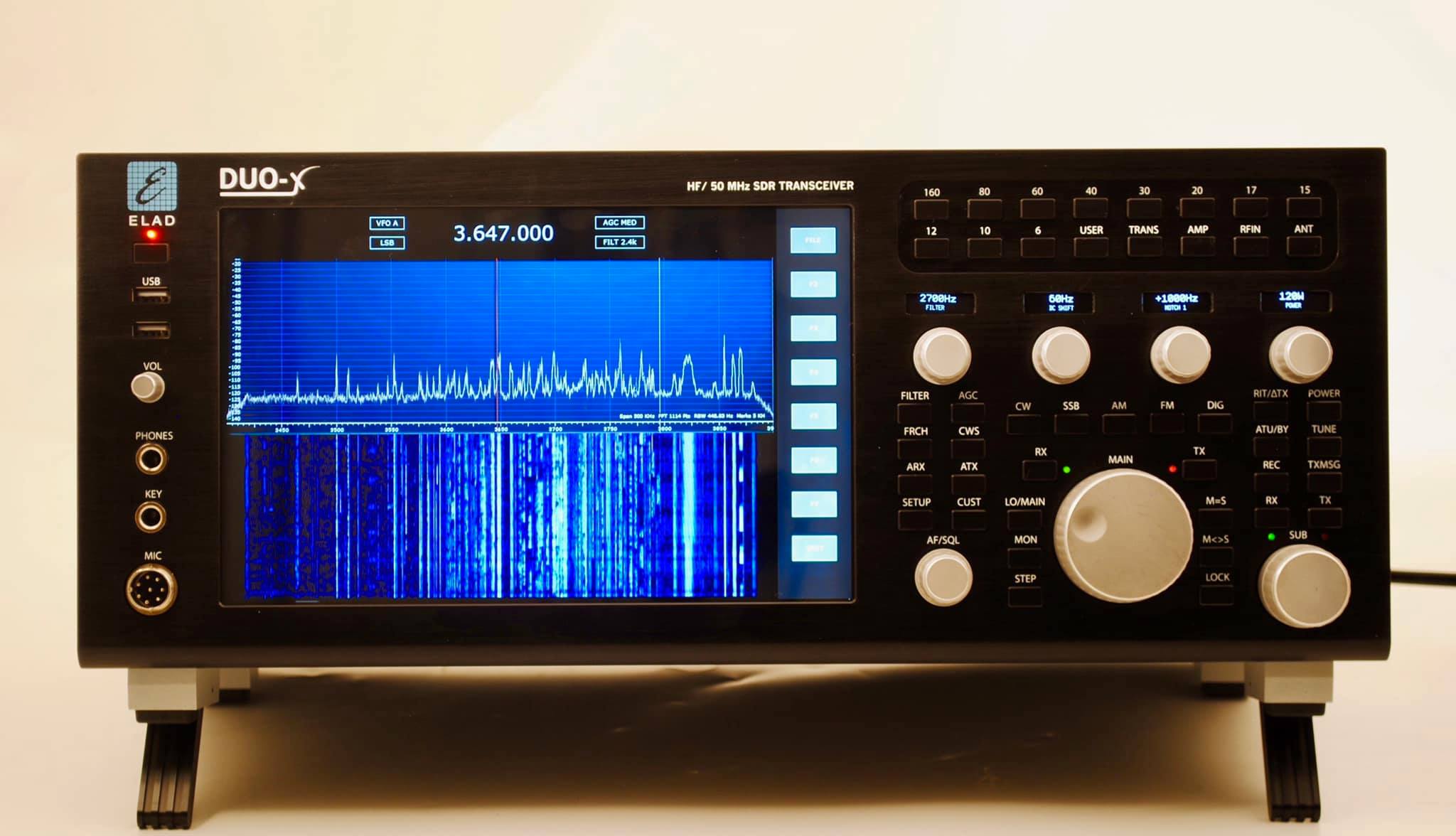
ELAD introduces the new DUO-X SDR Transceiver

Many thanks to SWLing Post contributor, Paul Jones, who shares an image of the new ELAD DUO-X transceiver:

A prototype of the DUO-X will be on display this weekend at Ham Radio Friedrichshafen this weekend.

I don’t have a lot of details about the DUO-X yet, but here is what I can confirm:

  • There will be two 2 versions 120 watt and a 220 watt
  • 4 independent receivers
  • 10.2 inch touchscreen
  • 4x 1″ OLED screens above four programmable multifunction knobs
  • Built-in ATU
  • Stand-alone or connect to your PC

More details to follow! Bookmark the tag ELAD DUO-X for updates.

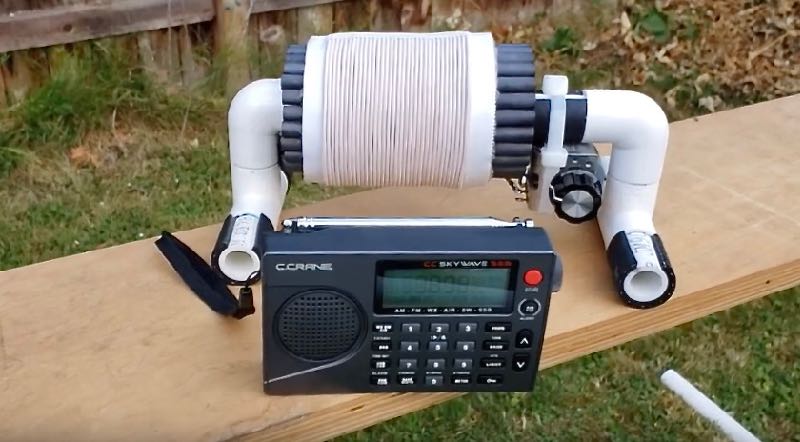
Video Demonstration of Gary DeBock’s 3″ Baby FSL Antenna

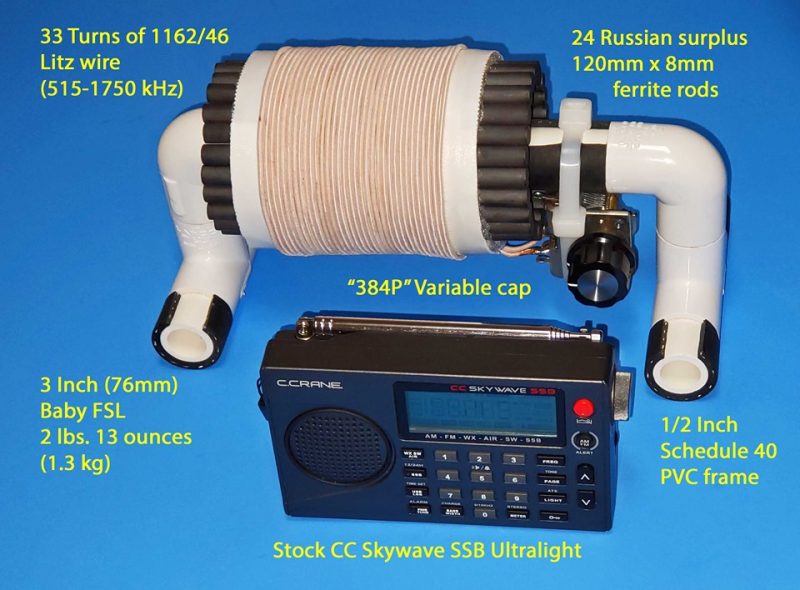
Many thanks to SWLing Post contributor, Gary DeBock, who shares a video of his latest Ferrite Sleeve Loop (FSL) antenna: the 3″ Baby FSL.

Gary Notes:

The new design 3 Inch (76mm) Baby FSL antenna is the smallest, most compact and lightweight of the “airport friendly” FSL’s developed here recently, but it provides a very potent inductive coupling boost for weak AM-DX signals.

This demonstration video shows its huge boost to a weak daytime DX signal from 1070-CFAX (10 kW in Victoria, BC, Canada) here in Puyallup, WA, USA:

Click here to view on YouTube.

Most impressive, Gary! You’re right: that design is compact enough that it should even fit the bill for my one-bag travel philosophy. I think I might have to build one of these!

Check out more of Gary’s adventures in Ultralight DXing, by browsing our archive.

June 21: Help record the 2019 BBC Antarctic Midwinter Broadcast

Every year, the BBC broadcasts a special program to the scientists and support staff in the British Antarctic Survey Team. The BBC plays music requests and sends special messages to the small team of 40+ located at various Antarctic research stations. Each year, the thirty minute show is guaranteed to be quirky, nostalgic, and certainly a DX-worthy catch!

After successful listener events from years past, I’m once again calling on all SWLing Post readers and shortwave radio listeners to make a short recording (say, 30-60 seconds) of the BBC Antarctic Midwinter Broadcast today and share it here at the Post (frequencies and time below).
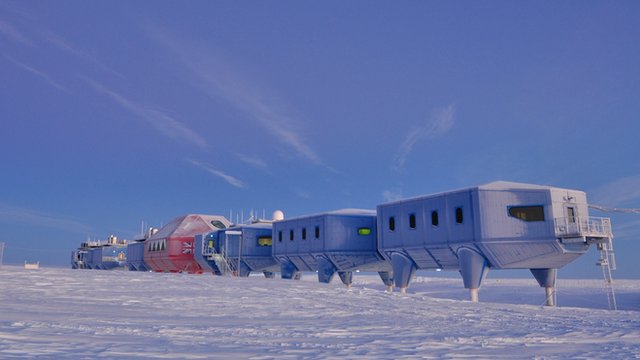
Halley VI: The British Antarctic Survey’s new base (Source: British Antarctic Survey)

The recording can be audio-only, or even a video taken from any recording device or smart phone. It would be helpful to have a description and/or photo of your listening environment and location, if possible. Please only submit recordings made from your location–since this is all about how you’re able to receive the broadcast at your location, we would rather not include WebSDR recordings.

Audio should be in the MP3 format and videos either hosted on YouTube or Vimeo so that I can easily embed them without having to convert and upload myself.

If you submit your recording to me, I will post it here on the SWLing Post–and insure that the British Antarctic Survey receives the post, too.  The recordings will be arranged by geographic location. Note that due to my schedule this year, it might take a few weeks before I can curate all of the recordings (the process typically takes 8+ hours!).

Frequencies

UPDATE (June 21, 2019): Broadcast frequencies have been confirmed by the BBC as 5875, 7360, and 9455 kHz.

Please note that the broadcast begins at 2130 UTC on (Friday) June 21, 2019.

The following frequencies were provided by The Bulgarian DX Blog and were used in the BBC test broadcast. Typically, the same frequencies are used during the live broadcast—we will update this post with any last-minute changes.:

2130-2145 on 5875 WOF 300 kW / 184 deg to Antarctica English-very good
2130-2145 on 5990 DHA 250 kW / 203 deg to Antarctica English-fair/good
2130-2145 on 7360 ASC 250 kW / 207 deg to Antarctica English-very good
2130-2145 on 9455 WOF 300 kW / 182 deg to Antarctica English-very good

The Midwinter broadcast is one of my favorite programs of the year. I suppose, in part, this is because it happens on June 21–the Summer/Winter solstice–which also happens to be my birthday! Woo hoo!

CW used to prove song lyrics had been lifted

Many thanks to SWLing Post contributor, Ed, who shares this article from Mashable:

Genius is, well, genius. The company recently accused Google of lifting song lyrics from its site, reports the Wall Street Journal.

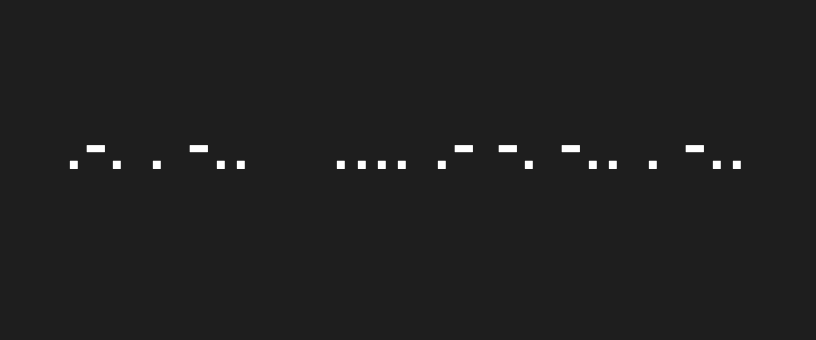
How did Genius know Google was stealing? In 2016, Genius made a few changes to the punctuation in its song lyrics. Sometimes, it used a straight apostrophe. Other times, a curly one.

Genius did this in a very specific sequence because (are you ready for this?) when “the two types of apostrophes were converted to the dots and dashes used in Morse code, they spelled out the words ‘Red Handed.'”[…]

Click here to read the full article at Mashable.

Planetary orbits may influence 11-year solar cycle

(Image: NASA)

Many thanks to SWLing Post contributor, Dan Van Hoy, who shares this interesting article via Space.com:

The orbits of Venus, Earth and Jupiter may explain the sun’s regular 11-year cycle, a new study suggests.

A team of researchers from Helmholtz-Zentrum Dresden-Rossendorf (HZDR), a research institute in Dresden, Germany, showed that the magnetic fields of those three planets influence the cycle of solar activity, resolving one of the bigger questions in solar physics.

“Everything points to a clocked process,” Frank Stefani, a researcher at HZDR and lead author of the new study, said in a statement. “What we see is complete parallelism with the planets over the course of 90 cycles.”

The researchers compared observations of solar activity — like sunspots, solar flares and coronal mass ejections — from the last thousand years with planetary alignments in order to show that there was in fact a correlation, according to the statement.[…]

Click here to read the full article at Space.com.

RNZ: No plans to replace AM radio mast in the Cook Islands

(Source: RNZ via Michael Bird)

The Cook Islands Investment Corporation says there are no plans to replace an AM radio mast that is to be dismantled on Rarotonga.

The mast at Matavera, built with New Zealand aid money many years ago to provide a signal to the outer islands, is rusted through in places and in danger of collapsing.

Pupils from an adjacent school have been moved to ensure their safety, while plans are made for the dismantling.

In a statement the CIIC says with the rollout of FM radio and the ability to digitally stream events of national importance, the AM signal is no longer required.[…]

Click here to download the audio.