Author Archives: Thomas

May 2026 Schedule Updates: From the Isle of Music & Uncle Bill’s Melting Pot

Many thanks to SWLing Post contributor, Bill Tilford, who shares the following update:

From the Isle of Music, Friday, May 8, 2026, 3955 kHz, 1600 UTC, repeats 2200 UTC
This month, we present some Cuban rock and pop from the 60s, 70s and 80s..

Uncle Bill’s Melting Pot, Friday, May 15, 2016,: 3955 kHz at 1600 UTC, repeats 2200 UTC
This month, we present some Persian classical music.

In addition to direct radio reception, we do honor reception reports using remote SDRs as long as the whole program is described and which SDR is specified. All QSLs are e-QSLs only.

Bruce Is Pleased with the BAJEI SDR Portable Receiver

Many thanks to SWLing Post contributor Bruce (VE3EAR), who writes:

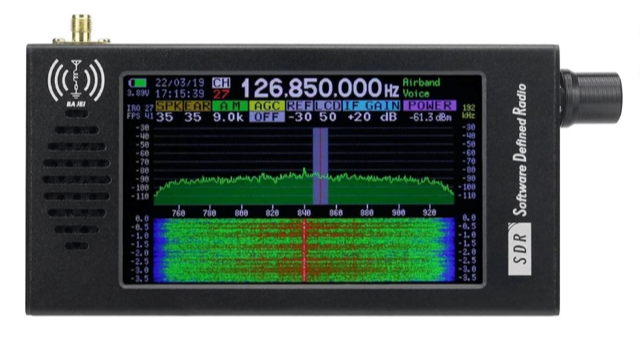
Hello Thomas, about a month ago, I bought a portable SDR receiver after reading a few positive reviews about it online.  It’s a BAJEI, which I purchased from Amazon [SWLing Post affiliate link] and shipped from China.  It arrived on my doorstep just ten days after placing the order.  It cost me CND $114, which included shipping and taxes.

There is a bit of a learning curve to its operation, but I soon figured it out and the “one knob” control became very easy to use!  It covers a range from 100 kHz. up to 149 mHz. continuous in AM, CW, FM, and SSB modes.  For a radio measuring just 6 x 3 x 1 inches, it packs a lot of features for its size.  The colour display is 4.5 inches diagonal.

The antenna connection is a top mounted SMA female, while the two controls (on-off switch & knob) are on the right hand end, along with a USB-C jack for charging the internal Li-on battery, and a USB-A jack for powering an external 5 volt device.  A 1/8 in/3.5 mm stereo jack for headphones is on the left hand end.

A small oval speaker to the left of the display sounds good for its size. The black case is ruggedly built from aluminum.  A collapsable whip antenna and charging cord are included with the radio.  I use a pig-tail SMA male to BNC female adaptor to connect external antennas, reducing any strain on the antenna jack.

I am very happy with the set and give it a thumbs-up for anyone who is looking for a portable SDR.  When I’m using it in my radio shack, I connect it to a broad-band “Super Loop” antenna, which pulls in the AM broadcast and Shortwave stations very nicely.  I’m intending to take it for a listening test at an electrically quiet location in my SUV, using an 8 foot whip antenna.

73, Bruce, VE3EAR

Kim Andrew Elliott: Why Congress Should Fund VOA

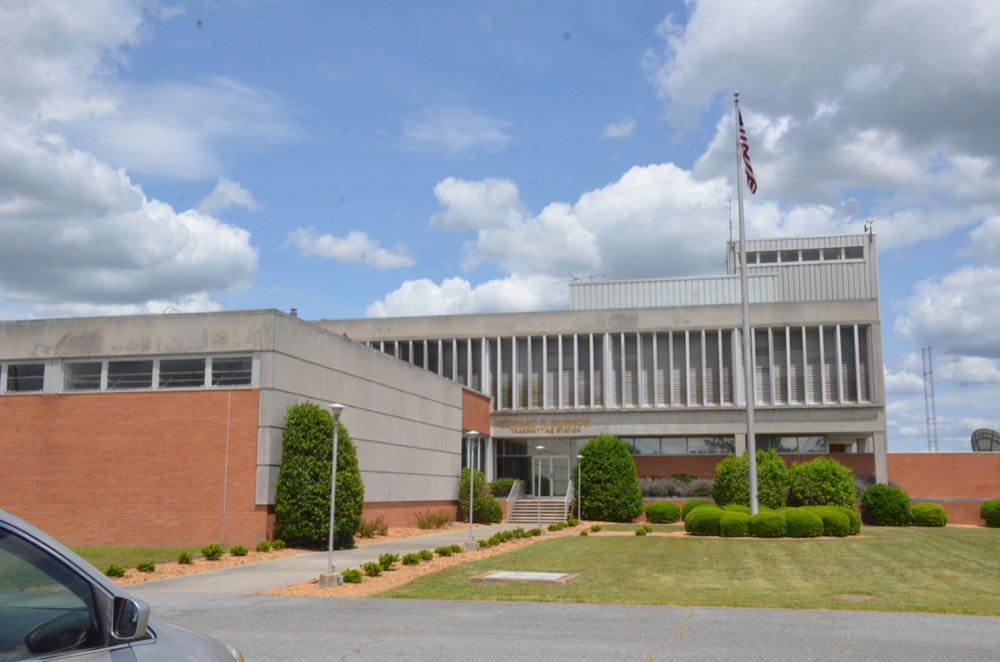
Edward R. Murrow Transmitting Station in North Carolina

Many thanks to SWLing Post contributor Dennis Dura who shares this post from Kim Andrew Elliott regarding the importance of continued congressional funding for the Voice of America (VOA). He argues that U.S. international broadcasting is still a vital form of soft power—delivering credible news where press freedom is limited—and warns that cutting funding would weaken a key source of trusted global journalism when it’s needed most.

Click here to read the full article.

DX Central: 2026 Summer of DX Challenge

Many thanks to SWLing Post contributor, Loyd Van Horn, who shares the following announcement:

Summer of DX 2026

FOR IMMEDIATE RELEASE

DX Central Announces the 2026 Summer of DX Challenge: The Biggest, Most Advanced Logging Event Yet

MANDEVILLE, LA — DX Central is thrilled to announce the return of the hobby’s most exciting seasonal event: The 2026 Summer of DX Challenge! Running from May 2 through August 31, 2026 at summerofdx.com, this year’s challenge pushes the boundaries of radio monitoring with brand-new bands, entirely new challenges, and a revolutionary, custom-built data terminal that makes logging easier than ever before.

For the first time in the event’s history, NOAA Weather Radio (NWR) joins Medium Wave (AM) and FM Broadcast Band II (FM) as an official challenge category, opening up an entirely new layer of tropospheric and meteor scatter chasing for scanner enthusiasts.

To handle the massive influx of summer logging, DX Central has completely eliminated registration requirements and launched a brand-new, custom-coded interactive dashboard.

New Features for 2026 Include:

  • Frictionless Logging & Bulk Import: Say goodbye to typing out callsigns and cities! The new terminal features a click-to-log Database Search utilizing WTFDA and Mesa Mike databases. Prefer to upload your logs rather than enter manually? The new Bulk Import tool allows you to upload CSVs directly from FMList, MWList, and WLogger, automatically mapping your data and updating your score in real-time.

  • The Multiplier Scoring Engine: Borrowing from traditional Ham Radio contests, DXers now earn massive score multipliers for every unique US State, Canadian Province, and International Country they log per band.

  • The John Cereghin Century Club: The legendary Grid Square challenge expands! DXers who log 100 unique US Maidenhead Grids on MW, FM, (20 on NWR) will earn our prestigious Century Club certificate, with endorsements for every 50 additional grids (10 for NWR).

  • County Hunters & Rovers: Chase US Counties across all three bands, and take your gear on the road! The new “Rover” category allows mobile DXers to activate rare grids and counties for special recognition.

  • Bi-Weekly Bounty Hunts: Tune in to our DX-themed Internet radio station, DX Radio (thisisprobablydxradio.com), for encrypted ‘targeted intercepts’ hidden through secret broadcast codewords revealed at the top of each hour. Enter the codeword into the DX Central terminal to unlock clandestine, time-sensitive DXing missions!

The 2026 Summer of DX active logging window opens on Saturday, May 2, 2026 at 0100 UTC and closes on Monday, August 31, 2026 at 2359 UTC. All receptions must be solely from this time period to qualify. To ensure everyone has plenty of time to review their SDR recordings, the DX Central terminal will remain open to accept logs and bulk uploads until September 30, 2026.

Whether you are a seasoned FM Sporadic E chaser, a dedicated MW night-owl, or firing up a weather radio for the first time, the 2026 Summer of DX has a challenge for you.

Get your receivers ready, prepare your antennas, and prepare to log! For more information, to view the live leaderboards, and to access the logging terminal, visit summerofdx.com

Loyd Van Horn
W4LVH – Mandeville, LA
Member: IRCA/NRC Courtesy Program Committee (CPC)
Founder: DX Central – Because we’re all about radio
Web: dxcentralonline.com
Twitter: @DXCentral
YouTube: youtube.com/c/DXCentral

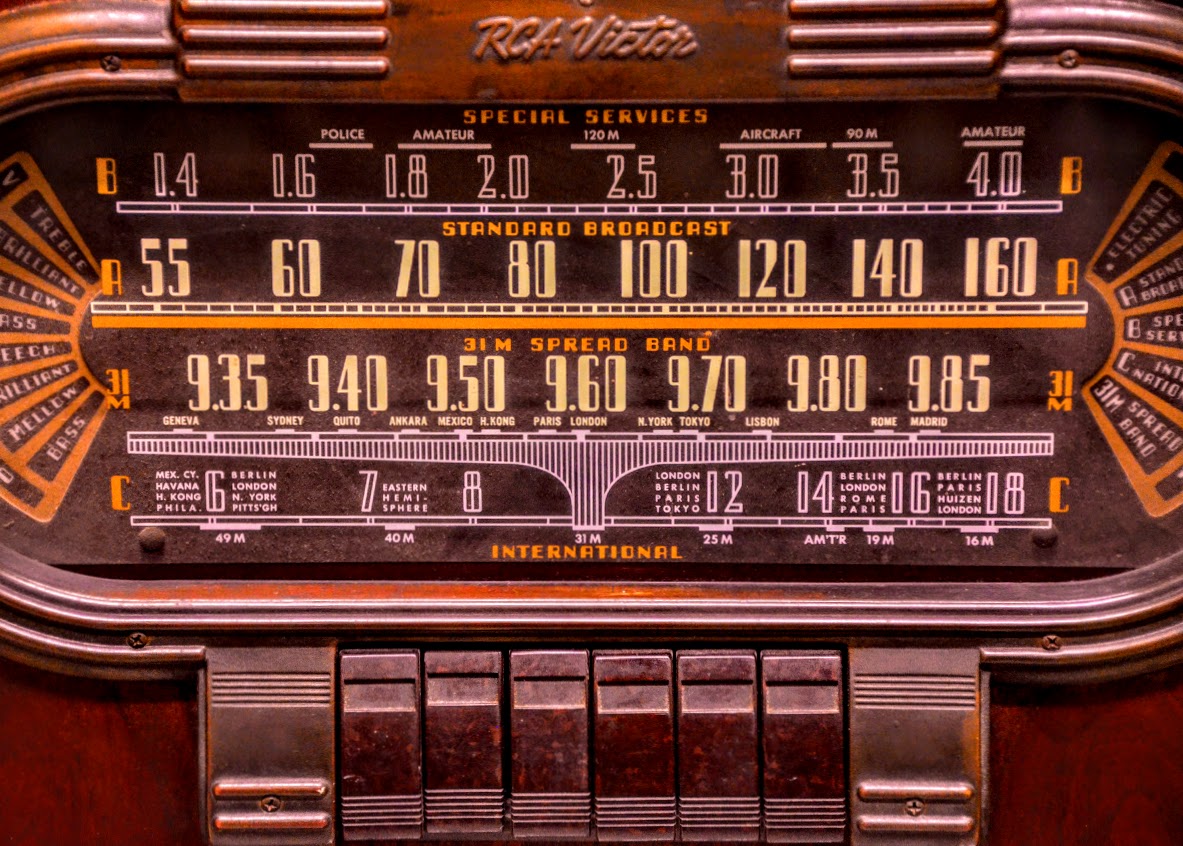
Carlos’ Illustrated Radio Listening Report and Recording of BBC’s Emergency Radio Service (April 28, 2026)

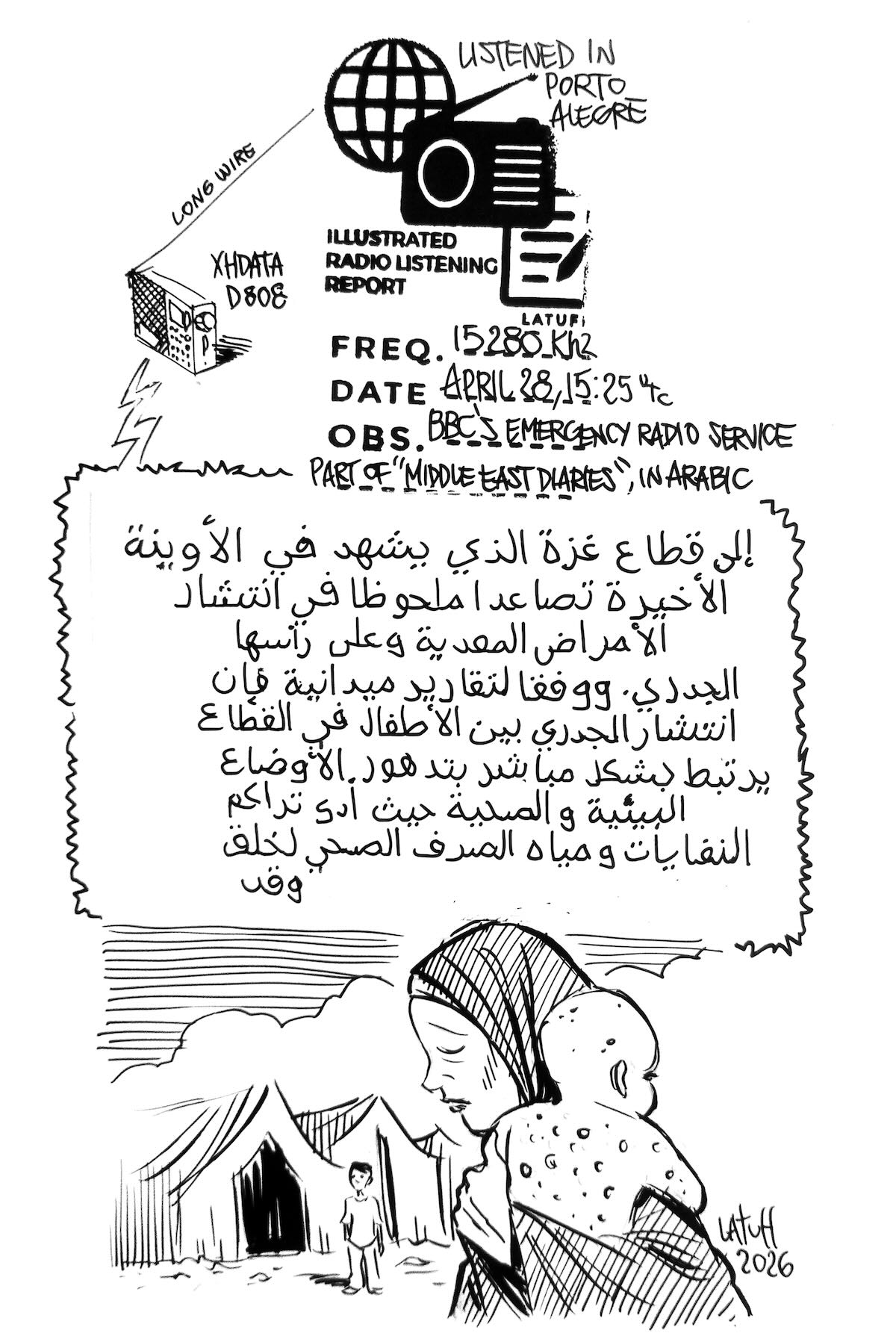
Many thanks to SWLing Post contributor and noted political cartoonist, Carlos Latuff, who shares the following illustrated radio listening report of a recent BBC broadcast.


Click here to view on YouTube.

Carlos’ Illustrated Radio Listening Report and Recording of the BBC Emergency Radio Service (April 27, 2026)

Many thanks to SWLing Post contributor and noted political cartoonist, Carlos Latuff, who shares the following illustrated radio listening report of a recent BBC broadcast.


Carlos notes: 

BBC’S emergency radio service, 15280 kHz

Click here to view on YouTube.

Ethiopia on Shortwave – Then and Now

by Dan Greenall

Back in the early 1970’s, Radio Voice of the Gospel, station ETLF, in Addis Ababa was the best way to hear this country, though it was by no means an everyday occurrence here in southern Ontario, Canada. Their distinctive drum interval signal was the first 4 notes of “A Mighty Fortress.” Or perhaps you would be lucky to hear “Elizabethan Serenade” being played prior to the start of their broadcast. Two recordings I have managed to save can be found at the Internet Archive here: https://archive.org/details/etlf-ethiopia-1971

In 1977, the station was nationalized by the Provisional Military Governing Council of Ethiopia and renamed the Radio Voice of Revolutionary Ethiopia.

Later, in the late 1990’s, a couple of Ethiopian stations could readily be heard thanks to their out of band frequencies. The Voice of Tigray Revolution used 5500 kHz and I recorded their signal on February 21, 1999 while at a DX Camp in Coe Hill, Ontario.

Radio Fana used 6940 kHz and I made a recording of them signing on just prior to 0330 UTC also on February 21, 1999 while at the same DX Camp.

Today, a few stations are still listed as broadcasting on shortwave from Ethiopia, namely Radio Oromiya on 6030, Amhara State Radio on 6090, and Radio Fana on 6110 kHz.

When active, they all seem to suffer from low modulation levels and co-channel interference (primarily from Chinese stations). Recently, I was able to discover that Radio Fana is still using the same interval signal as they did in 1999, by listening on a Kiwi SDR in Mombasa, Kenya.
Here is a recording of their sign on at 0300 UTC on April 26, 2026 on 6110 kHz.

They now seem to ID as Fana Media Corporation, even though programming is not in English.

Listen at the 3:05 mark for this. Also, the modulation level jumps up significantly about the 3:28 mark.

Additionally, I have included a recording of their sign off on April 1, 2026 beginning at 2053 UTC and concluding with the Ethiopian national anthem.