Author Archives: Thomas

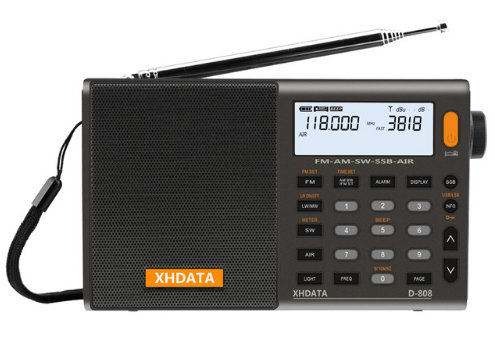
The XHDATA D-808 shortwave portable: A variation of the Digitech AR-1780?

Many thanks to SWLing Post contributor, Ivan, who shares the following:

In December, sales of this radio will begin. The seller promises to put the price of 60 US dollars. Radio of a level not lower than Tecsun PL-660 for such a small price is great! There is a video review on YouTube. Unfortunately in Russian. There is no more information on this radio on the Internet. I myself found out by accident.

Click here to view on YouTube.

Thank you for the tip, Ivan! I’m guessing this is yet another portable based on the Silicon Labs SL4735.

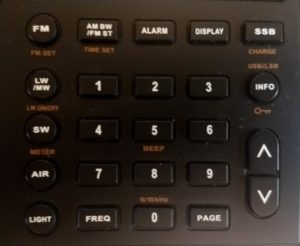
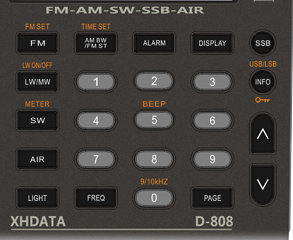
The display looks like that of the Digitech AR-1780 and the keypad configuration is nearly identical–the only visible difference being the shape of the SSB button which is rectangular on the AR01780.

The Digitech AR-1780 keypad.

The XHDATA D-808 Keypad.

The power buttons are also in different locations.

AliExpress has the D-808 in their catalog, but the price is listed at $2,000 per unit (!!!) with no shipping to the US. Perhaps the pricing formula changes if you place an order within Russia?

UPDATE: Ivan adds, “I talked to the seller of Xhdata D-808 on Ali about the crazy price claimed now. The seller replied that the price will be quite different and much more humane than what is now.”

Again, thanks for the tip, Ivan!

Post readers: If you have the XHDATA D-808, I’d certainly welcome a review. Please feel free to contact me about submitting one.

Changes to Iceland’s ham radio call sign configuration

(Source: Southgate ARC)

Iceland plans to end ham radio call sign discrimination

On November 9, 2017 Iceland’s Ministry of Transport and Local Government has published draft changes to the Radio Regulations for comment

The national society, Icelandic Radio Amateurs (IRA), had proposed ending the practice of highlighting amateurs who had Novice call signs, an N was added to their call sign. In addition the IRA proposed ending another discriminatory practice where Icelandic call signs reflected the geographic call area where a station is located.

The Post and Telecom Administration’s new draft Radio Regulations incorporate the IRA’s requests and the frequency allocation table has been updated to include the 630m and 60m bands.

Read the Icelandic Radio Amateur article in Google English at
http://tinyurl.com/IcelandIRA

Draft amendment with new frequency table
https://www.stjornarradid.is/lisalib/getfile.aspx?itemid=a0bf8794-c538-11e7-941e-005056bc4d74

The old frequency table is at
https://www.reglugerd.is/reglugerdir/allar/nr/348-2004

Radio Caroline testing on 648 kHz

(Source: Southgate ARC via Mike Terry)

Caroline 648 testing

A test signal with continuous music and announcements reported today.

Reception reports on Facebook from the UK, Holland, Belgium, France and Austria.

Some reports from mainland Europe refer to a co-channel Romanian or Slovenian station.

I think this is at a lower power than the permitted 1 KW.

Much excitement in anorak circles!

Note that if you’re interesting in monitoring 648 kHz but live outside the broadcast footprint, you can easily listen and record via the U Twente WebSDR.

Listen to the 30th Anniversary of The International Radio Report–Sunday, November 12

(International Radio Report press release via Sheldon Harvey)

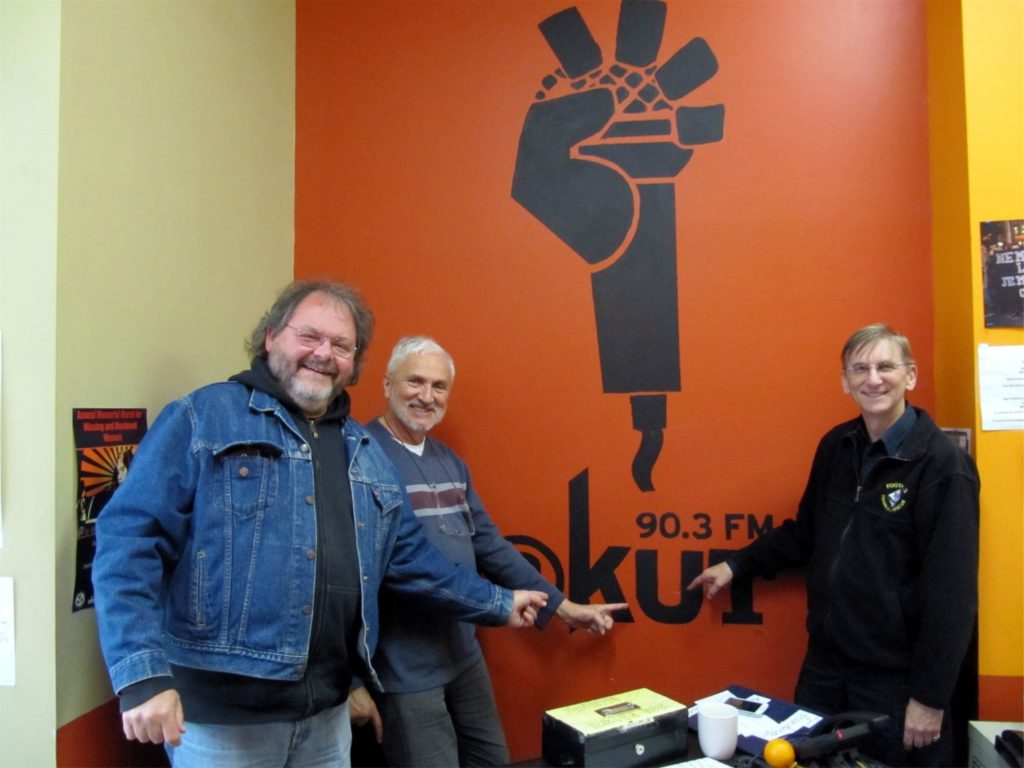
NOTICE: 30th Anniversary edition of The International Radio Report on CKUT-FM 90.3 MHz in Montreal

Sunday, November 19, 2017 from 10:30 am to 11:30 AM Eastern (1530 to 1630 UTC)
The International Radio Report, is a radio program conceived by Sheldon Harvey and submitted to CKUT’s first station manager Ms. Susan Elrington as a proposal in the fall of 1987. CKUT obtained its FM broadcasting license in 1987 and began broadcasting regular programming, 24 hours a day, 7 days a week, in November 1987.

The program proposal was approved and the International Radio Report, a weekly 30-minute program about the medium of radio, first aired on Thursday afternoons from 2:30 to 3 PM, beginning in mid-November 1987 when CKUT first went on the air. The program eventually moved to Sunday mornings from 10:30 to 11:00 AM. It has aired every week for the past 30 years on CKUT.

The program, originally hosted and produced by Sheldon Harvey and William Westenhaver, initially dealt exclusively with the world of international radio broadcasting, or shortwave radio, featuring information on radio broadcasts from around the world that could be listened to on shortwave radio. Over the years the scope of the program evolved and expanded to also include information and developments in local and national radio broadcasting, campus/community radio, pirate and clandestine radio and, eventually, Internet and digital radio. The program also covers developments in radio equipment, radio technology, and more.

Throughout its 30 years on the air, the program has had a few other hosts and producers. Sheldon Harvey and William Westenhaver took a break for several years, but the program continued with hosts Janice Laws and Steve Karlock. Eventually Steve left and Sheldon returned to co-host with Janice. Then Janice left and was replaced by David Asselin. Today the show continues with co-hosts Sheldon Harvey and David Asselin.

Over the years numerous guests have appeared on the program, including personalities from local and international radio stations, members of various shortwave and amateur radio clubs and organizations, representatives of Industry Canada and the Canadian Radio Television and Telecommunications Commission (CRTC), and other radio related organizations.

The program has developed a dedicated local audience, as well as many listeners from around the world tuning in via CKUT’s webpage live-stream. There is also a very active Facebook group with over 365 members from around the world.

The International Radio Report will be celebrating its 30th anniversary broadcast on Sunday, November 19th with a special one-hour edition of the program from 10:30 to 11:30 am. Sheldon and David will have an array of special in-studio guests, plus some samplings of past historic broadcasts, including a clip from the very first edition in November 1987. We will also pay tribute to past hosts and guests and have a round-table discussion on the evolution of radio over the last 30 years and what the future holds for the medium.

We invite you to tune in to this special 1-hour edition of the International Radio Report, live from 10:30 to 11:30 AM, on Sunday, November 19, 2017 on CKUT-FM 90.3 in Montreal and online, live-streaming, on www.ckut.ca. The broadcast will then be available on the CKUT archives.

 

Amazon Deal: Eton Field BT $97.49 shipped

Many thanks to SWLing Post contributor, Troy Riedel, who writes:

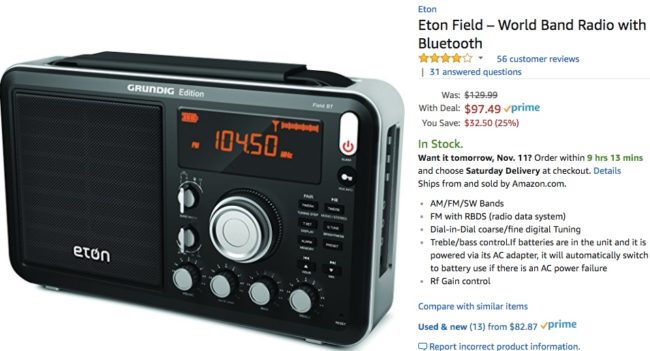
Wow, Amazon (this morning) dropped the price on the Eton Field BT to $97.49. Given Amazon’s “stock market-like” pricing, no telling how long this price will last.

Thanks, Troy!  I do believe this is the lowest price I’ve seen on the Field BT, which I consider to be a fine radio–certainly an affordable alternative to the pricier Tecsun S-8800 (if SSB reception is of no concern). The last time Troy shared an Amazon deal with me, it disappeared before I could even post it. Their pricing algorithm is tricky. If you’ve been waiting to bit the bullet, now is likely the best time. Click here to read Troy’s comparison of the Field BT and the S-8800.

Click here to view the Field BT deal on Amazon.com (affiliate link!).

NAB Delivers Radios to Hurricane-Ravished Puerto Rico

(Source: NAB Blog via Richard Langley)

https://youtu.be/NtOpsVDnJzM

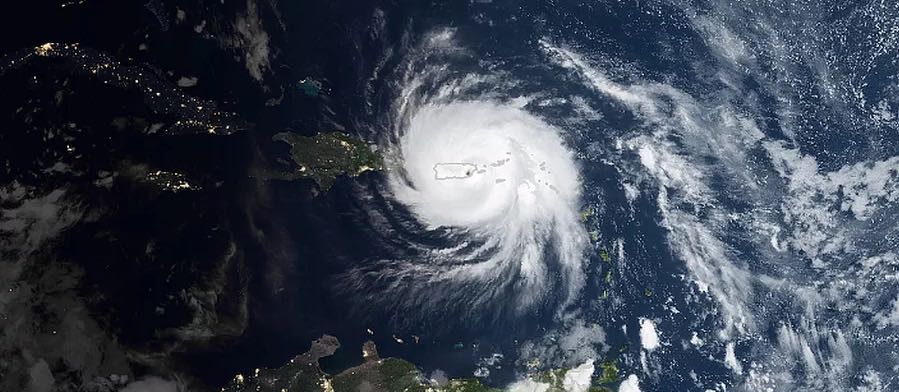
I recently had the opportunity of a lifetime. I was asked by my employer – the National Association of Broadcasters – to travel to Puerto Rico to help distribute 10,000 battery-operated radios to people in hurricane-ravaged island and the Virgin Islands.

The idea for the radio hand-out stemmed from a meeting where President and CEO Gordon Smith asked: “What can NAB and our industry do to help?” NAB swung into action, purchasing, shipping and delivering the radios in just 18 days.

I had seen pictures of the devastation in Puerto Rico, but nothing compares to seeing it in person. Most of Puerto Rico remained without power and drinkable water during our visit. Even in the Capitol of San Juan, power came almost exclusively from generators that had to be refilled with fuel or diesel daily by hand, sometimes every four hours. Police directed traffic at intersections.

People wait from six to 14 hours over three days to get tarps to cover the roofs of their houses. It’s common for people to wait in line for three hours to enter grocery stores, where bottled water is sold in rationed quantities. We saw 100-year-old trees uprooted, bringing concrete sidewalks with them and toppling power lines. We saw people living in cars or in tents on the beach. Recovery in areas away from the coast, where mountains and rain forests dominate the landscape, is occurring at a snail’s pace.

[…]People in 25 Puerto Rican municipalities, plus the U.S. Virgin Islands, received radios from our shipment of 10,000 devices. Donations from NAB, the National Alliance of State Broadcasters Associations (NASBA) and multiple U.S. radio companies covered the cost of this project.[…]

Click here to read the full article at the NAB blog.

Many thank, Richard, for the tip! I’m most impressed with how quickly the NAB were able to source those radios and hand-deliver them to those in need.

At Ears To Our World, we’re in the process of doing something similar, though on a much smaller scale. We’re partnering with a Puerto Rico amateur radio club to deliver a number of self-powered radios and flashlights to those in need. If the distribution goes well, and there is still a need moving forward, we will increase the number we distribute.

By many accounts, it could still be weeks or months before electricity is fully restored to the island.

Great job, NAB!

Free Ham Radio Class videos available online

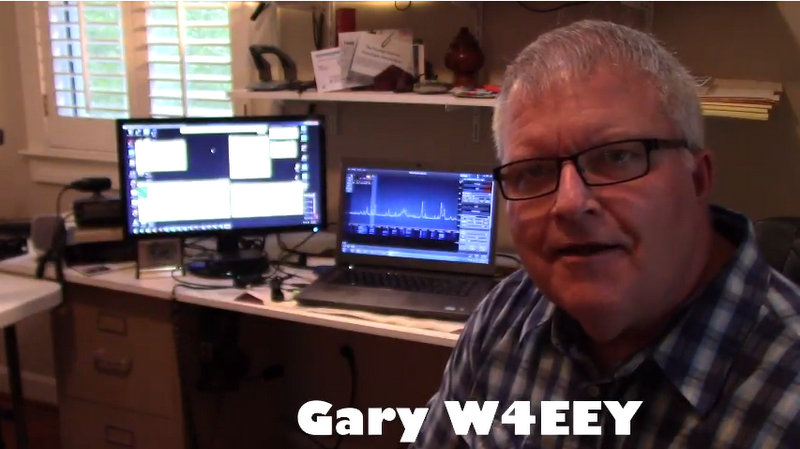
Many thanks to SWLing Post contributor, Gary Wise (W4EEY), who shares the following:

As you might know, Dave Ivey, KE4EA, and I have been teaching Ham Radio classes in Greer, South Carolina (under the sponsorship of the Greer Amateur Radio Club – and Greer Parks and Recreation). We are completing Technician and General classes later this month.

What might be of interest to your readers, if they have ever thought about getting their own Ham Radio license, is that we have recorded the classes, and posted them online at my YouTube channel. Anyone can view the videos and prepare for the amateur radio exams at home. License Tests are given by a variety of Volunteer Examineers all over the United States.

A link to the channel is here. (The channel name is my callsign, W4EEY.)

We use the ARRL License Manuals as a basis for the class. Links to the books are here:

Technician http://www.arrl.org/shop/ARRL-Ham-Radio-License-Manual-Spiral-Bound/

General http://www.arrl.org/shop/ARRL-General-Class-License-Manual-Spiral-Bound/

Extra http://www.arrl.org/shop/ARRL-Extra-Class-License-Manual-Spiral-Bound/

This was all new to us this year and the first videos are pretty basic. But we’ve made improvements along the way, and hope to continue with the effort. We will have Technician and Amateur Extra classes starting in January and will continue to record and edit the videos for each new class session.

Ham Radio is the best hobby in the world! Dave and I enjoy teaching the classes and helping others into this great hobby.

Vy 73,

Gary W4EEY

Thank you so much for sharing this, Gary!

Readers, what Gary didn’t mention is that I’ve checked out his ham radio classes in person–he invited Vlado (N3CZ) and I to do a presentation on my favorite topic: field portable radio! The class was packed with students and all of them were enthusiastic. Gary and Dave have really put their labor of love into a proper class, with peer support and interactive hands-on demonstrations. I was amazed with the diverse group of students in his Technician class last year.

Again, thanks for sharing, Gary and keep up the good work!

Check out their ham radio class videos on Gary’s YouTube channel.