Author Archives: Thomas

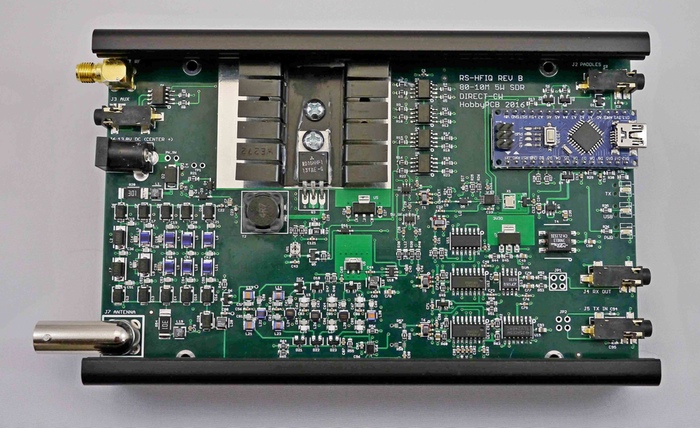
Kickstarter: The $239 RS-HFIQ 5 Watt General Coverage Transceiver

rs-hfiq-sdr

Many thanks to Jim Veatch (WA2EUJ) who shares the following:

HobbyPCB is offering their RS-HFIQ 5W SDR on Kickstarter starting at $239. Check it out here:

https://www.kickstarter.com/projects/hobbypcb/rs-hfiq-5w-software-defined-radio-sdr-tranceiver

Thanks, Jim-I wish you success in this campaign (though it appears you’ve met your base goal and are now into stretch goals).

While there are a fair amount of SDRs in the $200-300 price range, there are few that are actually transceivers.  I’m also impressed with the level of filtering on both the RX and TX stages and the fact that the baseband and digital section have separate and isolated grounds. The RS-HFIQ could potentially have a low noise floor and a decent front end.

If you back the RS-HFIQ, please consider sending us your review to publish here on the SWLing Post!

DXtreme Station Log 12

dxtreme-station-log-12

(Source: DXtreme Press Release)

Product Announcement: DXtreme Station Log 12

DXtreme Software™ has released a new version of its popular logging program for

Amateur Radio operators: DXtreme Station Log 12™.

New Features in DXtreme Station Log 12

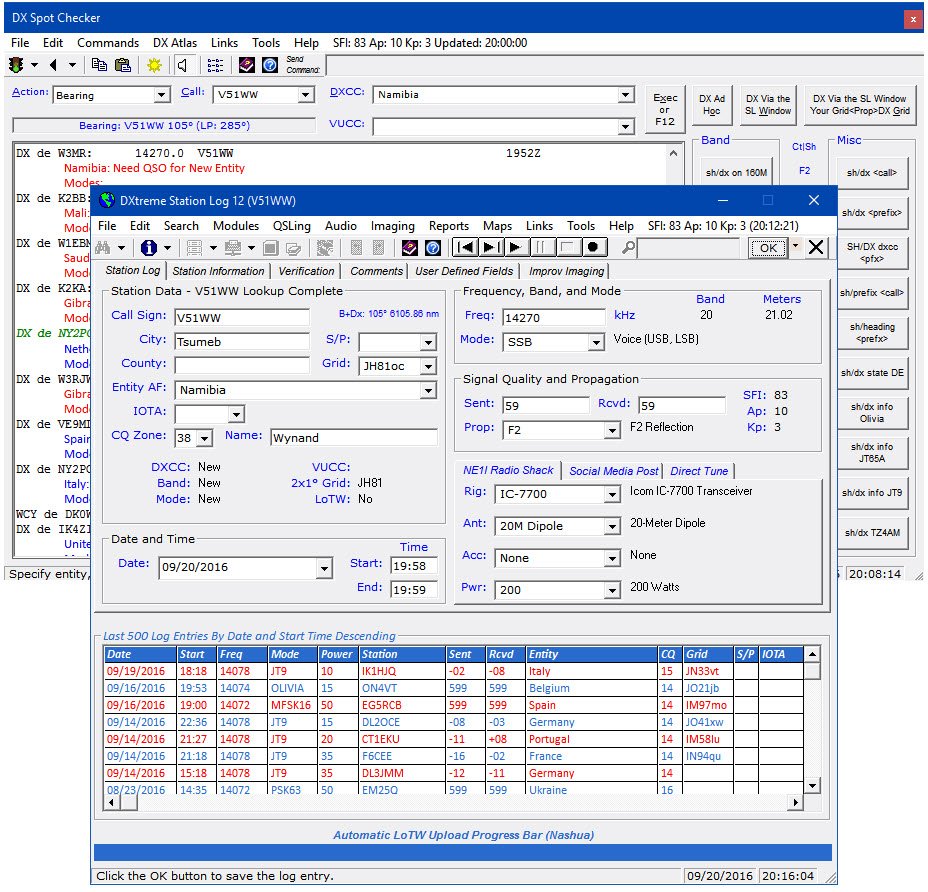
  • Automatic LoTW Upload Users can set Station Log 12 so it uploads each log entry to LoTW automatically when added, capturing and saving QSO Record Status from the LoTW server as part of the process. Modified log entries can be uploaded as well. If desired, users can disable automatic uploading and can upload log entries to LoTW semiautomatically and manually in batches whenever they want to.
  • LoTW Reporting Users can perform searches and run reports filtered by LoTW QSO Record Status, which indicates whether log entries are On, or Not On, the LoTW server following upload or QSL-updating. Users can also perform searches and run reports filtered by LoTW QSL Record Status, which indicates the date of each LoTW QSL record processed by DXtreme’s LoTW QSL Update Utility.
  • JT65A and JT9 Contact Pre-fill Right-clicking the New button presents a shortcut menu that lets users pre-fill the Station Log window with log information from a JT65A or JT9 contact completed on WSJT-X or JT65-HF-HB9HQX Edition.
  • Afreet Ham CAP Integration Expansion Station Log 12 now integrates with optional Afreet Ham CAP throughout the program. Users activate Ham CAP by requesting short- or long-path propagation predictions on spotted and logged stations and entities.
  • Quick Find A box on the Station Log toolbar lets users type a call sign and press Enter to search quickly for a station in their log. If the call is in the log, a list of QSOs with it appears on a popup window. If desired, the list of log entries can be loaded into the Station Log window for viewing or editing, one log entry at a time.
  • Improv Imaging™ — Lets users associate adhoc images with their log entries. This feature is like, but separate from, our popular QSL Imaging™ facility. Users can capture, scan, or paste any image and save it as a single-page .jpg, or single- or multi-page .tif. Improv images popular with users include signals on a spectrum analyzer or waterfall, QSOs conducted on Amateur Television and data applications, and rigs and antennas used during contacts.
  • Other Imaging Enhancements The QSL image previewer on the Station Log window is larger, as is the QSL Image Explorer, which also lets users call-up, in the Station Log window, the log entry associated with each QSL image, making the Explorer act like a Search window. Improv Imaging has its own, dedicated previewer and explorer.
  • UX Improvements Users can apply foreground and background colors and font attributes to grid headings and data rows throughout the program.

Standard Features in DXtreme Station Log 12

DXtreme Station Log 12 lets hams log their contacts and import ADIF files from other programs. It supports major call sign subscription services, and offers the following multimedia and advanced functions:

  • DX Spot Checker™ Receives DX spots from Telnet-based servers, and determines whether QSOs are needed for new or verified DXCC® entities, band-entities, mode-entities, or VUCC grids.
  • DX Atlas Integration Performs DX Atlas azimuth plots from the user’s location to that of a spotted or logged station. Also creates maps for a variety of reports.
  • Band Master Integration Afreet Band Master can be invoked with needed band and IOTA lists based on the user’s Station Log 12 database.
  • Rig Control Tunes/retrieves frequencies and modes from supported rigs through integration with Afreet Omni-Rig.
  • QSL Processing Creates QSL and address labels for physical QSLs, and supports the ARRL’s LoTW facility, including capturing LoTW QSL records as digital images.
  • Audio Facility Records and plays QSOs.
  • Reports Provides a wide range of performance and station reports to let users see how well they’re doing. Reports can be filtered and sorted. Includes DXCC® and WAS Analytics™ tools for analyzing and enhancing DXCC and WAS standing.

Operating System and Requirements

DXtreme Station Log 12 runs in 32- and 64-bit versions of Microsoft® Windows® 10, Windows 8.1, Windows 8, Windows 7, Windows Vista®, and Windows XP.

Pricing and Support

DXtreme Station Log 12 retails for $89.95 USD worldwide for Internet distribution. Reduced pricing is available for upgrading users, and CD shipment is available at a nominal surcharge. All prices include product support by Internet e-mail.

About DXtreme Software

Based in Nashua, NH, DXtreme Software produces powerful and easy-to-use logging applications for all kinds of radio enthusiasts — from short-wave and medium-wave listeners and DXers to Amateur Radio operators. For more information about DXtreme Station Log 12, visit www.dxtreme.com or contact Bob Raymond, NE1I, at [email protected].

DXCC® is a registered trademark of the American Radio Relay League, Inc.

Microsoft®, Windows®, and Vista® are registered trademarks of Microsoft Corporation.

Band Master, DX Atlas, Ham CAP, and Omni-Rig are owned by Afreet Software, Inc. A purchased software license for Band Master and DX Atlas are required to use them.

JT65-HF HB9HQX Edition is owned by Beat Oehrli, HB9HQX. WSJT-X is owned by Joe Taylor, K1JT.

Reminder: Global HF Pirate weekend!

IMG_20160903_085705777

Many thanks to SWLing Post contributor, Andy Yoder, who shares the following:

I’m just writing with a reminder about the Global HF Pirate weekend is just starting. This is the revival of an idea from a few years ago: Stations broadcast on high frequencies in an effort to be heard across long distances and in different continents. I’ve heard from a few stations, received a schedule from one, and have heard from a few listeners in countries without many stations. So, I have hope that we’ll all have a good time by the shortwave radios over the next 48 hours or so.

November 5-6, 2016
General frequency ranges:

  • 15010-15100 kHz
  • 21455-21550 kHz

Basic schedule:

  1. European morning, 0800-1200 UTC from Europe to Asia/Japan/Oceania.
  2. European afternoon, 1200-1600 UTC from Europe to North American and vice versa.
  3. European night, 2200-2400 UTC from North America to Asia/Oceania.

Of course, these are general frequency ranges where pirates have broadcast during prior Global HF Pirate weekends. Some stations will surely operate on frequencies and times outside of these ranges. These will be updated on HF Underground and on the Hobby Broadcasting blog (http://hobbybroadcasting.blogspot.com/) as schedules are received from stations.

Update: North American DX Contest

Zenith-Dial-2Many thanks to SWLing Post contributor, John Cooper, who writes:

THE FINAL COUNTDOWN

NASWA, Universal Radio, Inc. and CIDX, is sponsoring the North American Shortwave DX contest “The Final Countdown” which will start on 00:00 UTC hours on 7 January 2017. The contest is open to all North American SWLers and DXers.

Contest forms for those interested can be obtained by e-mailing me at: [email protected] or mailing me a request to:

John P. Cooper 734 Sally Ann Drive, Lebanon, PA 17046.

Prizes for 1st-3rd place will be provided by Universal Radio Inc., and Contest Certificates suitable for framing will be mailed to each contestant. Beat the January doldrums! This is a great chance to sharpen your DXing & SWLing skills or just a chance to dust off that old SW radio stashed away and see what’s on the SW bands now.

Many thanks, John for organizing and championing this contest. And a special thanks to Universal Radio, CIDX and NASWA for supporting it!

Richard Langley also suggests checking out the following link for more contest details:

https://www.hfunderground.com/board/index.php/topic,30913.msg115631.html#msg115631

Jon reviews the VITE VT-111 receiver

vite-vt-111

Image: jontabor.tk

Many thanks to SWLing Post reader, Jon Tabor, who writes:

I’m new to SWL, but found your site a few months ago, and have been loving it ever since.

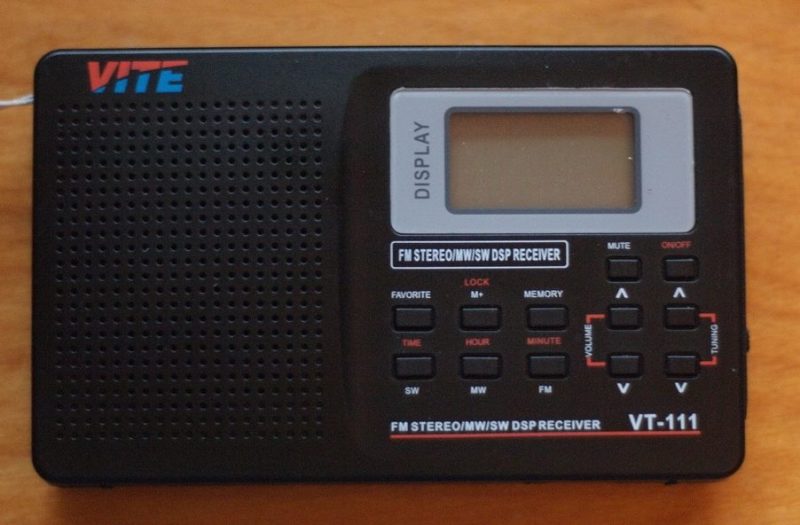
I recently picked up, for about $11 off eBay, a cheap MW/SW/FM radio called the VITE VT-111, which appears to be a rebadged (updated?) Basbon DS-858, which I know you’ve seen before.

Okay, it’s not a great radio, but it was $11! I know, I know, it’s a terrible way to get started in SWL, but did I mention it was $11?

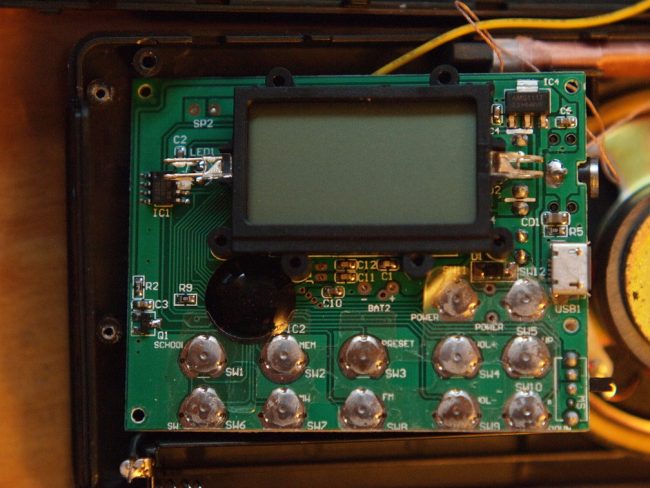
Anyway, I opened it up and found some differences between the photos you posted of the Basbon, as well as what appears to be an I²C bus in there; I’m not familiar with I²C busses, but I thought maybe some of your readers might find it interesting to see the guts of this radio and how it differs from the Basbon, or at least see the insides of yet another cheap radio.

vit-vt-111-inside

Image: jontabor.tk

Here’s the link:
http://jontabor.tk/wordpress/?p=31

Thank you for sharing, Jon!

You’re reminding me that I have a VITE SRW-710S sitting on the shelf and must review it soon. One reader was curious if its on-board recording feature would be effective on shortwave. We’ll soon know!

Is the end near for Vatican Radio’s shortwave service?

radio_vaticano

Many thanks to SWLing Post contributor, Andrea Bornino, for sharing the following article from espressonline.it:

Goodbye, Jesuits. Vatican Media Get a New Face and New Boss

And this with a Jesuit pope, no less. Vatican Radio will stop broadcasting on shortwave. And “L’Osservatore Romano” will also be absorbed into a single “content hub.” Under the command of Monsignor Dario Viganò

by Sandro Magister

[…]

Because in effect Vatican Radio costs a great deal. It does not run advertising, its revenues are paltry and its numerous linguistic sections push to about thirty-five the number of journalists on the payroll. The total shortfall fluctuates between twenty and thirty million euro per year.

Well then, Monsignor Viganò doesn’t want to hear about shortwave anymore. He sees it as antiquated and to be dismantled, because it has been supplanted by the web. While instead for Fr. Lombardi it continues to have an essential role “of service to the poor, the oppressed, the minorities, rather than of subjection to the imperative of the maximization of the audience.”

They are two antithetical visions. But the marching route appears to have been marked out already. In Africa, where internet access is sporadic, Viganò has announced an agreement with Facebook through which the pope’s messages will be brought to 44 countries by cell phone, through an app.

By December, in short, Vatican Radio will cease to exist as a self-contained reality. It will be incorporated into a single centralized “content hub,” or in Viganò’s words, into “a single center of multimedia production of texts, images, audiovisuals and radio podcasts in multiple languages,” beneath a single editorial leadership held by Viganò himself today and soon to be handed over to a “task force of journalists,” many of them drawn from Vatican Radio itself and adapted to the new role.[…]

Read the full article by clicking here.

I can’t quite tell if this is a news item or opinion piece.

Post readers: Have you noted other sources confirming the closure of Vatican Radio’s shortwave service?  I know this topic is certainly on the table at Vatican Radio, especially since it’s been discussed in the past.

HDSDR publishes a new Beta release

hdsdr-screenshot

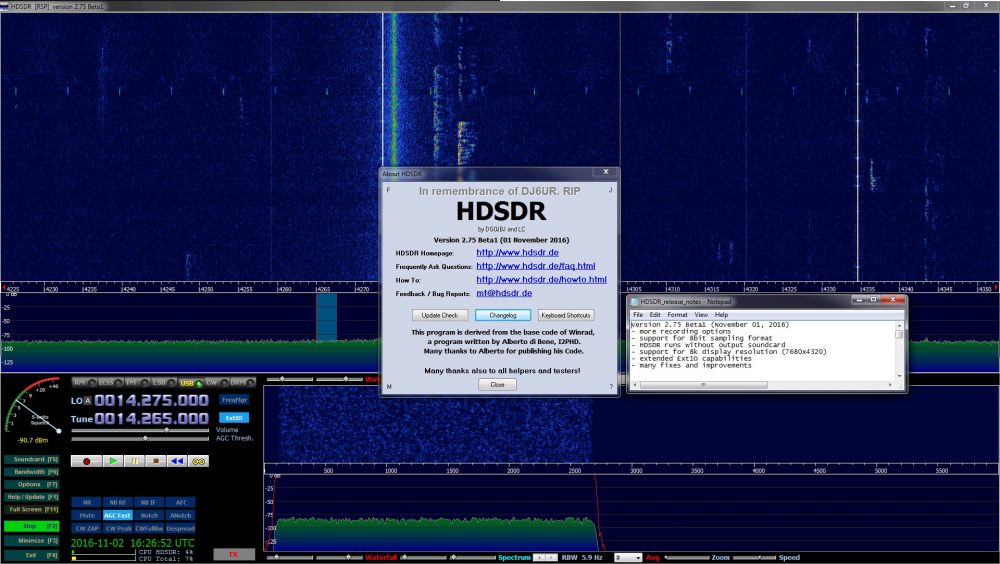
Many thanks to SWLing Post contributor Mike Ladd who notes that HDSDR has just published a new 2.75 Beta release.

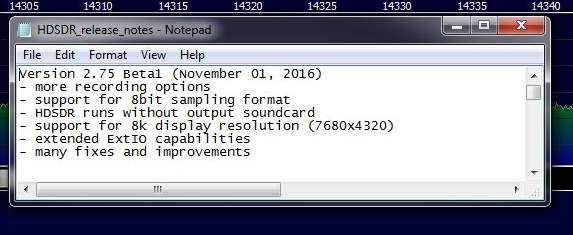
Mike included the screenshot (above) which includes the following release notes:

hdsdr-screenshot

Click here for the HDSDR website and to download the new Beta release.

Thanks for the tip, Mike!