Category Archives: Broadcasters

VOA to increase broadcasts to Burundi

voa logoMauno Ritola shared the following message on the WRTH Facebook page this morning:

VOA Boosts Broadcasts to Burundi as Civilians Flee Political Violence

Monday through Friday:

  • 0400-0530: 7350 kHz, 9815 kHz, 11905 kHz

  • 1600-1630: 13630 kHz, 15460 kHz, 17530 kHz

  • 1930-2000: 9470kHz, 11615 kHz, 12140 kHz

Mauno also notes that the late evening frequencies are incorrect in the following VOA news release:

(Source: VOA News)

Voice of America today began boosting broadcasts to Burundi where at least 14 people have been and killed and more than 200 injured in protests against President Pierre Nkurunziza running for a third term.

VOA has additional shortwave and FM broadcasts in Kirundi, Kinyarwanda, Kiswahili, French, and English with an expanded call-in show, more reporting from the ground, and new drive-time newscasts.

“At this critical moment for democracy in Burundi, we are stepping up to keep our audiences informed, “ says VOA Director David Ensor. “Voters deserve to know what is going on with presidential elections just one month away.”

The African Union and the United States say the Nkurunziza candidacy violates a regional peace deal that ended civil war in 2005. U.S. Secretary of State John Kerry says the president’s move “flies directly in the face of the constitution of his country.”

President Nkurunziza says he is exempt from the two-term limit because his first term was chosen by parliament.

VOA is one of the last remaining sources of news in Burundi after authorities blocked access to social media, closed Radio Publique Africane, and suspended relay transmissions for two other independently owned stations — Bonesha FM and Isanganiro.

The Committee to Protect Journalists condemns this harassment and says the Nkurunziza government is “blatantly trying to gag” coverage of its opponents.

VOA is adding reporters in Burundi and Rwanda along with additional staff in Washington D.C., where its U.S. government-funded transmissions originate.

Daily broadcasts air on 95.2 FM and 94.9 FM in Bujumbura and on 104.3 FM in Kigali.

There are new VOA shortwave broadcasts from 04:00 to 05:30 UTC and from 19:30 to 20:00 UTC on 7350 kHz, 9815 kHz, and 11905 kHz; and from 16:00 to 16:30 UTC on 13630 kHz, 15460 kHz, and 17530 kHz.

“With thousands of Burundians fleeing to neighboring Rwanda, Tanzania and the Democratic Republic of Congo, VOA is committed to providing accurate and reliable news to this critical region,” says Ensor.

In theory, ERT workers go back to work today

ERT_Digital

Many thanks to SWLing Post contributor Ayar, who writes:

According to many Greek news sources, the workers of ERT will go back to work tomorrow to restart ERT and take over from NERIT, even though there is no explicit permission from the government for them to do so!

This was a decision taken today by the ERT workers trade union “POSPERT”, who asked the workers to go back to work and start broadcasting from ERT HQ. (Here is the original decision published on their website translated from Greek by Google).

An interesting observation: The domain “ert.gr” no longer redirects the visitor to “nerit.gr“, and the servers connected to the ert.gr domains (dns1.papaki.gr, ns2.papaki.gr, ns120.papaki.gr) are now showing error and test pages from their active servers. Just this morning, they were all inactive! It seems that somebody is working on the servers to
re-establish the ERT website.

It will be interesting to see what will happen!

Indeed, it will! Let us know of any updates. I’ll tune to the ERT Open relay on 9420 this evening to see if IDs have changed. Again, many thanks for the report, Ayar!

TX Factor Episode 8

TX-Factor-Episode-8

Many thanks to SWLing Post reader, David (G4EDR), who writes:

“I thought you and the many readers of your SWLingPost would be interested in the latest edition (8) of TX Factor a UK produced online TV programme.

It features two employees of the BBC who are also radio amateurs and shows them in their working environment as studio managers and continuity announcers on BBC radio.

Just navigate to http://www.txfilm.co.uk/txfactor/txfactor.shtml and select watch now for episode 8.

There are also items about Icom UK and Practical Wireless magazine.

Thanks for hosting your SWLingPost, I really enjoy it.”


Many thanks again, David! Another brilliant episode! At time of posting, the TX Factor site was down, but their YouTube channel, of course, is working fine. I’ve embedded the video below:

My buddy Eric (WD8RIF) also alerted me that this episode had been published. I love watching TX Factor–I’m so impressed with both their programming and production quality.

TX Factor Team: Keep up the good work!

When WLW was the one and only “Super Station”

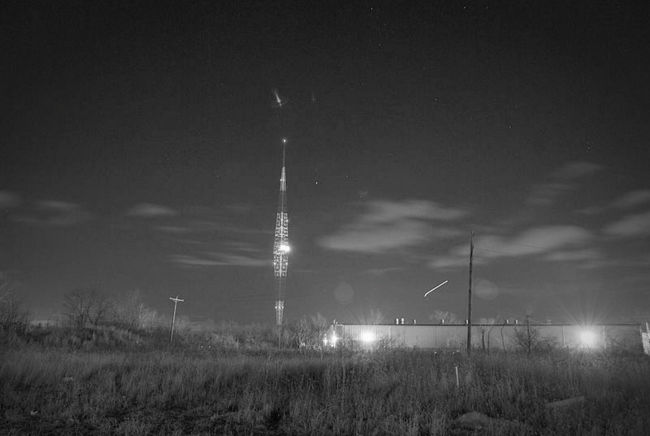
WLW's diamond-shaped Blaw-Knox radio tower at night (Original photo by RP Piper via Creative Commons)

WLW’s diamond-shaped Blaw-Knox radio tower at night (Original photo by RP Piper via Creative Commons 2.0)

(Source: National Endowment for the Humanities)

For a Brief Time in the 1930s, Radio Station WLW in Ohio Became America’s One and Only “Super Station”

by Katy June-Friesen

When President Franklin Roosevelt, sitting in the White House, pushed a ceremonial button on his desk in May 1934, a five hundred thousand-watt (500 kW) behemoth stirred in a field outside Cincinnati. Rows of five-foot glass tubes warmed. Water flowed around them at more than six hundred gallons per minute. Dozens of engineers lit filaments and flipped switches, and, within the hour, enough power to supply a town of one hundred thousand coursed through an 831-foot tower.

Thus began WLW’s five-year, twenty-four-hour-a-day experiment: a radio station that used more power and transmitted more miles than any station in the United States had or would. The so-called super station—licensed by the new Federal Communications Commission (FCC) on a temporary basis—amped up the debate among broadcasters, government regulators, and listeners about how radio should be delivered to serve the “public interest,” a mandate laid out in the Radio Act of 1927, and influenced legal, programming, and technical decisions that shape the broadcast system we know today.

Since radio’s beginnings in the early 1920s, industry and government leaders promoted it as the great homogenizer, a cultural uplift project that could, among other things, help modernize and acculturate rural areas. The challenge was how to reach these areas, many of which received few or no radio signals in the mid-1930s. One solution was high-powered, clear-channel stations that could blanket large swaths of the country with a strong signal. These stations operated on “cleared” frequencies that the government assigned to only one station to prevent interference.

WLW had operated on one of forty designated clear channels since 1928. The station’s creator and owner, an entrepreneur, inventor, and manufacturer named Powel Crosley Jr. frequently increased the station’s wattage as technology and regulation allowed. In 1934, when WLW increased its power from 50 kW to 500 kW, all other clear-channel stations were operating at 50 kW or less. Now, WLW had the ability to reach most of the country, especially at night, when AM radio waves interact differently with the earth’s ionosphere and become “skywaves.” People living near the transmitter site often got better reception than they wanted; some lights would not turn off until WLW engineers helped rewire houses. Gutters rattled loose from buildings. A neon hotel sign near the transmitter never went dark. Farmers reported hearing WLW through their barbed-wire fences.

Continue reading…

Wojtek Gwiazda retires from RCI

Wojtek’s final appearance on the Link in RCI’s remaining studio, with Lynn and Marc on Friday May 1, 2015 © Leo G- RCI (Source: RCI)

Wojtek’s final appearance on the Link in RCI’s remaining studio, with Lynn and Marc on Friday May 1, 2015 © Leo G- RCI (Source: RCI)

My friend, Wojtek Gwiazda, who has been a host and journalist for Radio Canada International–and an integral part of the RCI Action Committee–has retired.

Click here to listen to an exit interview with Wojtek on RCI’s The Link.

Also, check out this page and audio from the RCI website.

Wojtek: here’s wishing you the best in your retirement!

Sean’s A15 Season International Broadcasting Statistics

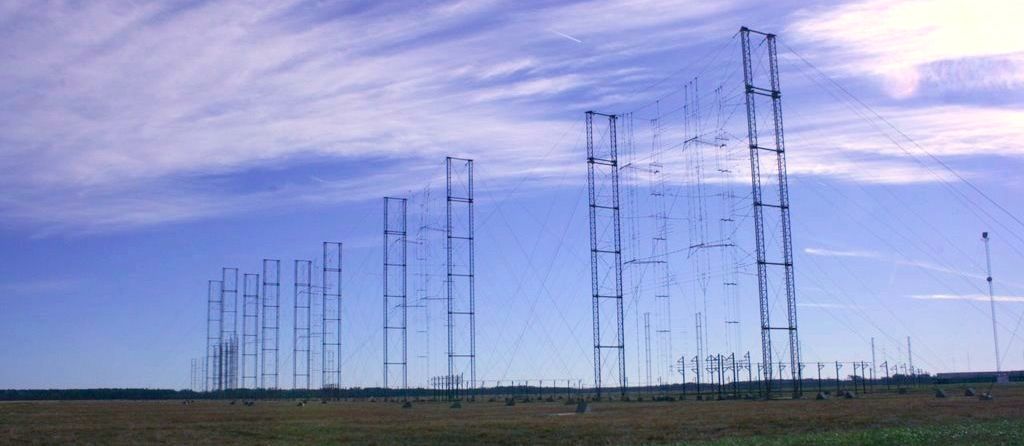
VOA-Greenville-Curtain-Antennas

Many thanks to Sean Gilbert, International Editor at the World Radio TV Handbook, who is kindly sharing some international broadcasting statistics with us again. These statistics were originally posted on the WRTH Facebook group:

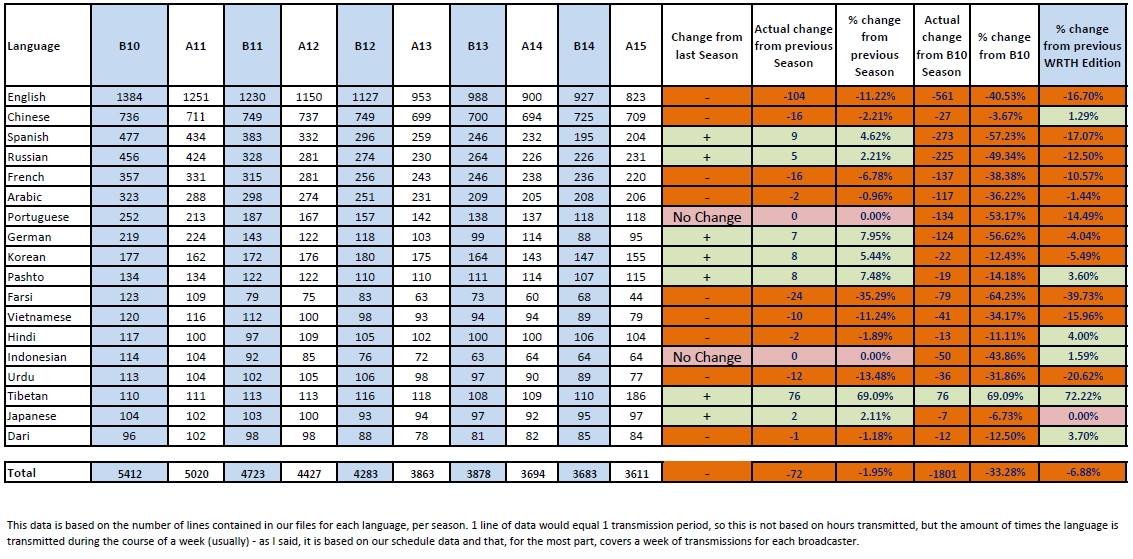
Seasonal Language Output Comparison

[F]or the top 19 languages used in international (and Domestic SW) broadcasting. There are 10 seasons worth of data to compare. In those 10 seasons, we have seen an overall drop of 33%, the biggest casualties being Farsi, German, Portuguese, Spanish, Russian, English & Indonesian. Tibetan is usually fairly stable with it’s output being pretty constant over the past 9 seasons – this season, however sees a huge increase in output (+69%), mainly due to the USA hiking output of the language this season. In sheer numbers of data lines (which is how this table has always been generated), English is the biggest casualty, dropping 104 transmission periods per week.

Click to enlarge.

Click to enlarge.

A transmission period is based on the following data structure:
Shown below are 2 “transmission periods” for WWCR and 1 for WWRB. 2 in English and 1 in Spanish. These transmission periods cover a weeks worth of output on that frequency at that time for that broadcaster.

WWCR 1630-2100 English wcr 100 NAm,Eu,NAf daily 15825
WWCR 2100-2200 Spanish wcr 100 NAm,Eu,NAf daily 15825
WWRB 0100-0400 English wrb 100 NAm daily 3195

So a transmission period could, in reality, be from 5 minutes on a single day to 24 hours, daily, depending on the broadcaster. There are nearly 5000 of these entries in our database for this season (When I started at WRTH back in 2000, there were over 10000 entries). Of these 5000 entries, over 3600 are taken up by just 19 languages. The other 1400 entries share somewhere in the region of 200 languages/dialects and combinations! Although this doesn’t show how many hours a particular language has decreased by, it does show the ongoing trend in International broadcasting by radio.

WRTH2015A15 International Broadcasting Season Facts

There are 191 schedules listed in the International Radio and COTB (Clandestine & Other Targeted Broadcasts) section of the WRTH A15 schedules file.

Who uses the most frequencies? CRI, with a whopping 279 frequencies in use. The next largest station, by frequency use is (probably quite surprising to many of you) Voice of the Iranian Republic of Iran (VOIRI) with 140 (that is half the amount of CRI!). Next is VOA with 126; then RFA at 112; BBC at 110 then Sound of Hope Radio International with 84 and All India Radio at 67.

Below is a list of the ‘Top 20’ broadcasters in terms of frequency usage. If you were to do a study of actual transmitted time, the list would look rather different. I will shortly post a table showing the top languages, by use, and what has changed over the past 10 broadcasting seasons.

  • CHINA RADIO INTERNATIONAL (CRI): 279 frequencies
  • VOICE OF THE ISLAMIC REPUBLIC OF IRAN (VOIRI): 140 frequencies
  • BBG – VOICE OF AMERICA (VOA): 126 frequencies
  • BBG – RADIO FREE ASIA (RFA): 112 frequencies
  • BBC WORLD SERVICE: 110 frequencies
  • SOUND OF HOPE RADIO INTERNATIONAL: 84 frequencies
  • ALL INDIA RADIO (AIR): 67 frequencies
  • RADIO ROMANIA INTERNATIONAL (RRI): 56 frequencies
  • AWR ASIA/PACIFIC: 52 frequencies
  • RADIO JAPAN (NHK WORLD): 49 frequencies
  • VOICE OF TURKEY (VOT): 43 frequencies
  • RADIO TAIWAN INTERNATIONAL (RTI): 41 frequencies
  • BBG – RADIO FREE EUROPE/RADIO LIBERTY (RFE/RL): 33 frequencies
  • KBS WORLD RADIO: 32 frequencies
  • SAUDI INTERNATIONAL RADIO: 32 frequencies
  • AWR AFRICA/EUROPE: 30 frequencies
  • VATICAN RADIO: 29 frequencies
  • RADIO CAIRO 29: frequencies
  • VOICE OF KOREA (VOK): 27 frequencies
  • FEBC PHILIPPINES: 26 frequencies

63 broadcasters, or so, use just a single frequency.