Category Archives: Ham Radio

What are your favorite radio apps?

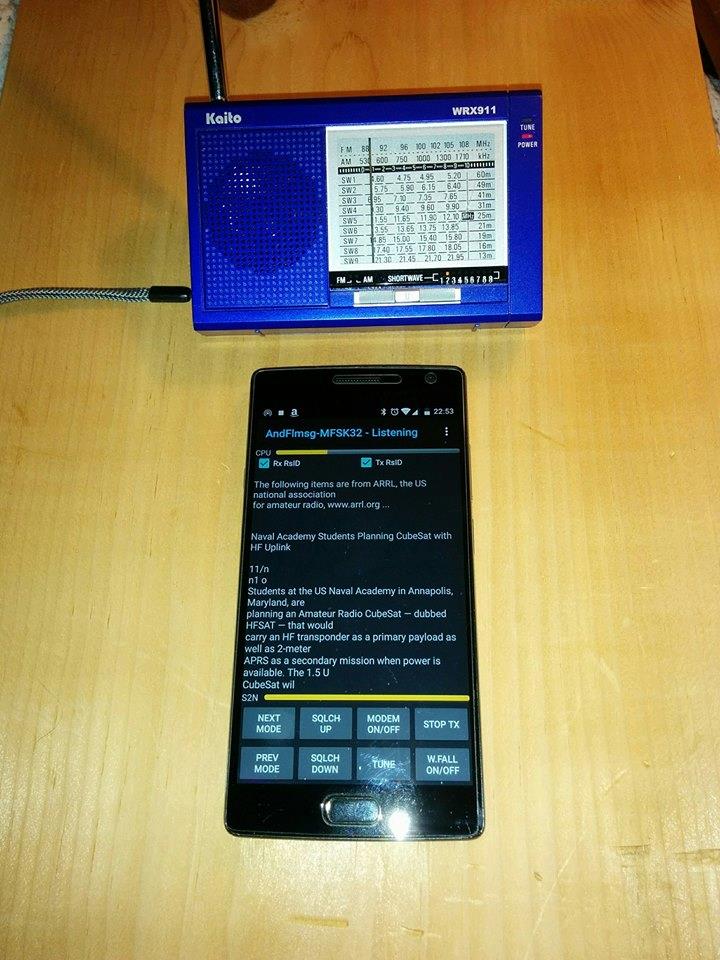
As I mentioned in a previous post, I’ve been browsing the Google Play store this morning in search of an Android app that would help one of our readers decode HF digital modes.

I suggested Tivar, which is essentially FLdigi for Android devices. The app was originally created by Dave (W1HKJ) and published on Google Play by Stephen Cooper. According to the description, the app does not have a dedicated developer, but based on reviews, it seems to work for many.

I assume this is the best (or only?) app for decoding broadcasts like the VOA Radiogram, DigiDX, etc?

Searching Google Play–and noticing a number of new apps–made me realize that it’s been a while since I’ve done a proper updated of my list of Android, iOS and Windows apps for radio enthusiasts.

What’s in your phone or tablet?

Post readers: I could use your help…

If you have a moment, please browse my list of apps and comment (on this post) with suggestions of any that you love, but I haven’t recommended.

I’ll check out each app and update the list accordingly over the next few weeks.

It would be very helpful if you note what you like about the app and if it’s available on multiple platforms (iOS, Android and/or Windows). I imagine there are many I’ve yet to check out!

Thank you in advance!

Potomac Valley Radio Club (PVRC) and the US Naval Academy Radio Club to operate NSS special event May 13

Photo: US Coast Guard

Many thanks to SWLing Post contributor, Brian D. Smith, who writes:

Longtime SWLs will recall the repeating CW messages of Coast Guard station NSS and its distinctive “DAH-dit di-di-dit di-di-dit” ID.

There’s even a nostalgia page created in its honor: http://hawkins.pair.com/nss.shtml – along with a Wikipedia entry: https://en.wikipedia.org/wiki/NSS_Annapolis – and an online history: http://www.globalsecurity.org/military/facility/greenbury-point.htm – among other online references.

Unfortunately, like most other such CW stations of its day, NSS is gone forever … right? Wrong! Get this: NSS will return from the dead during Armed Forces Day crossband tests on May 13!

Here’s what the ARRL is reporting:

“The Potomac Valley Radio Club (PVRC) and the US Naval Academy Radio Club will operate NSS on the site of the 1918 Naval Radio Transmitting Station on Greenbury Point in Annapolis, Maryland, across the Severn River from the US Naval Academy.”

How cool is that?
http://www.arrl.org/news/armed-forces-day-crossband-military-amateur-radio-communications-test-is-may-13

So both hams and SWLs can obtain a QSL card from this ghost of a station. Personally, I’m thrilled with the news, because I was never able to get a QSL card from NSS or any similar station during my teenage years.

As far as I know, this is the first time NSS has been heard since … what, 1999? It certainly wasn’t on the air during last year’s Armed Forces Day radio event.

Wow–thank you for the tip, Brian! I, too, would love to snag an NSS QSL card!

Soviet Era Radio: Dennis reviews the Shoroh R-326 receiver

Many thanks to SWLing Post contributor, Dennis Kalinichenko, who shares the following review:

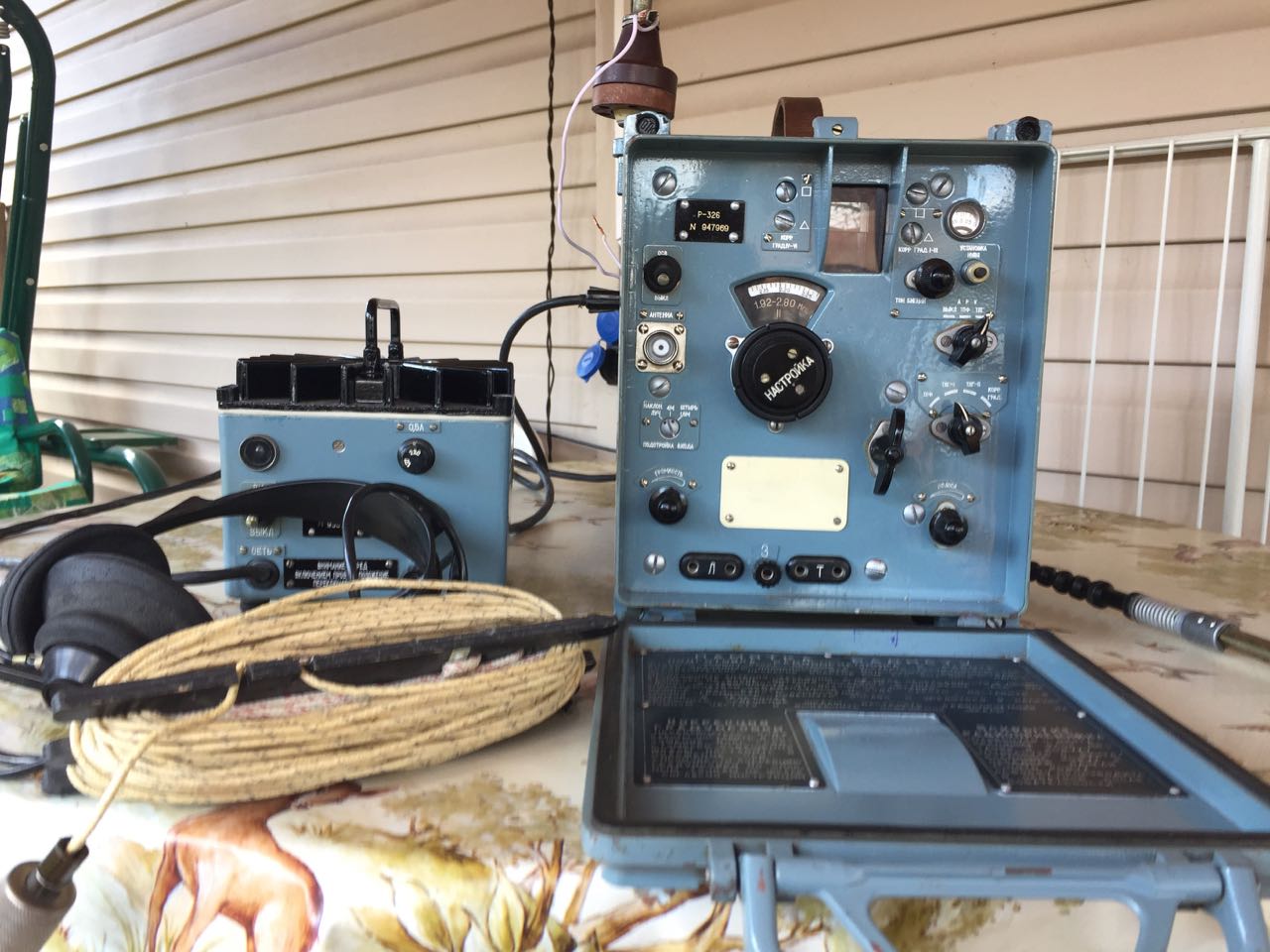
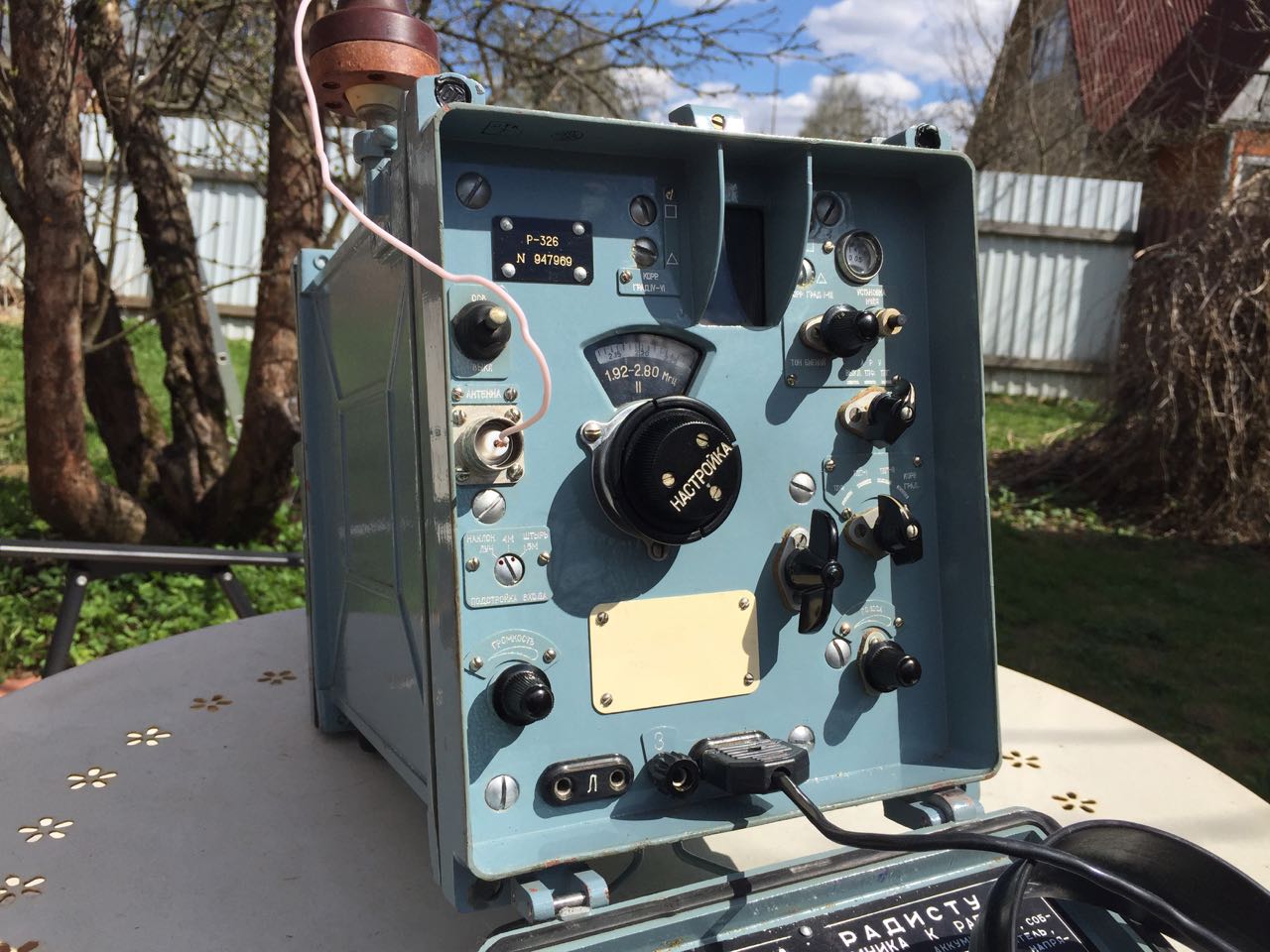
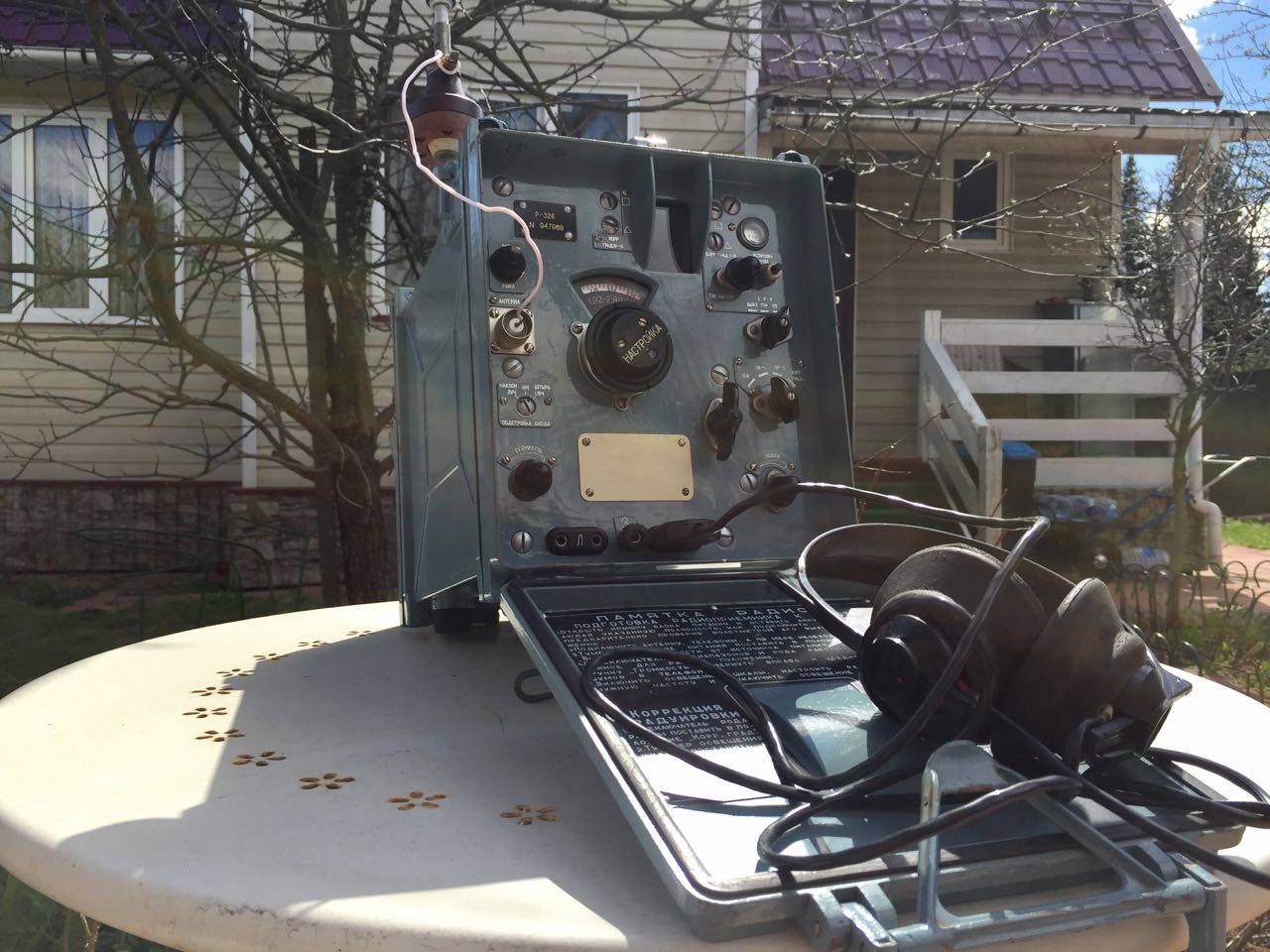
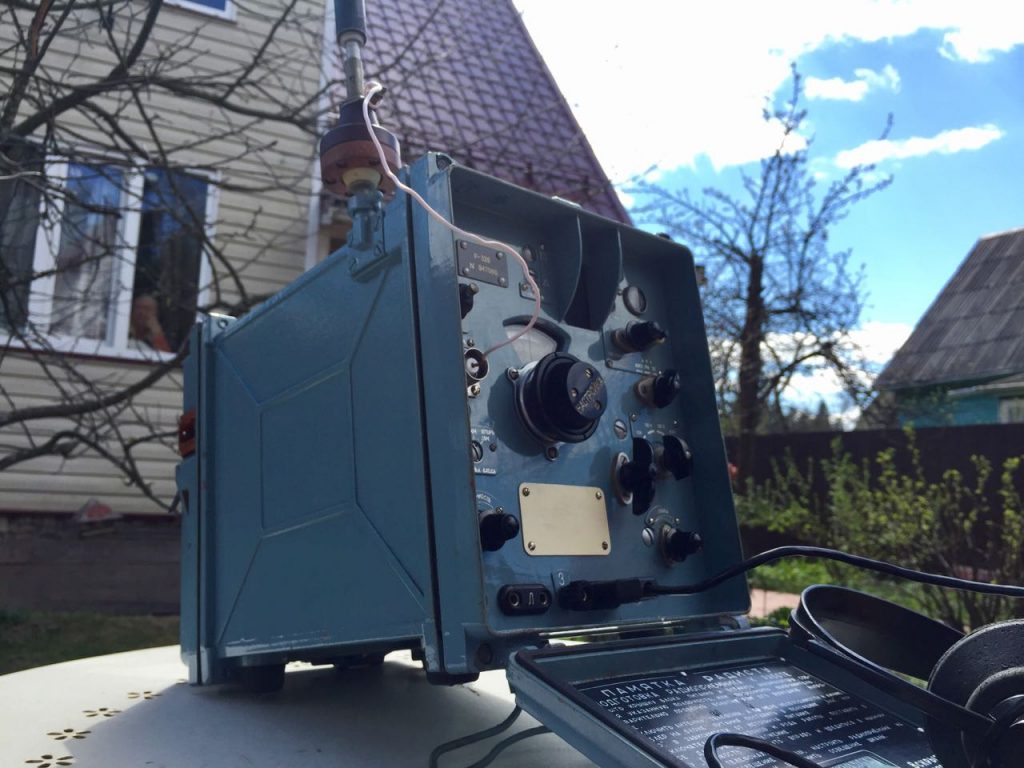
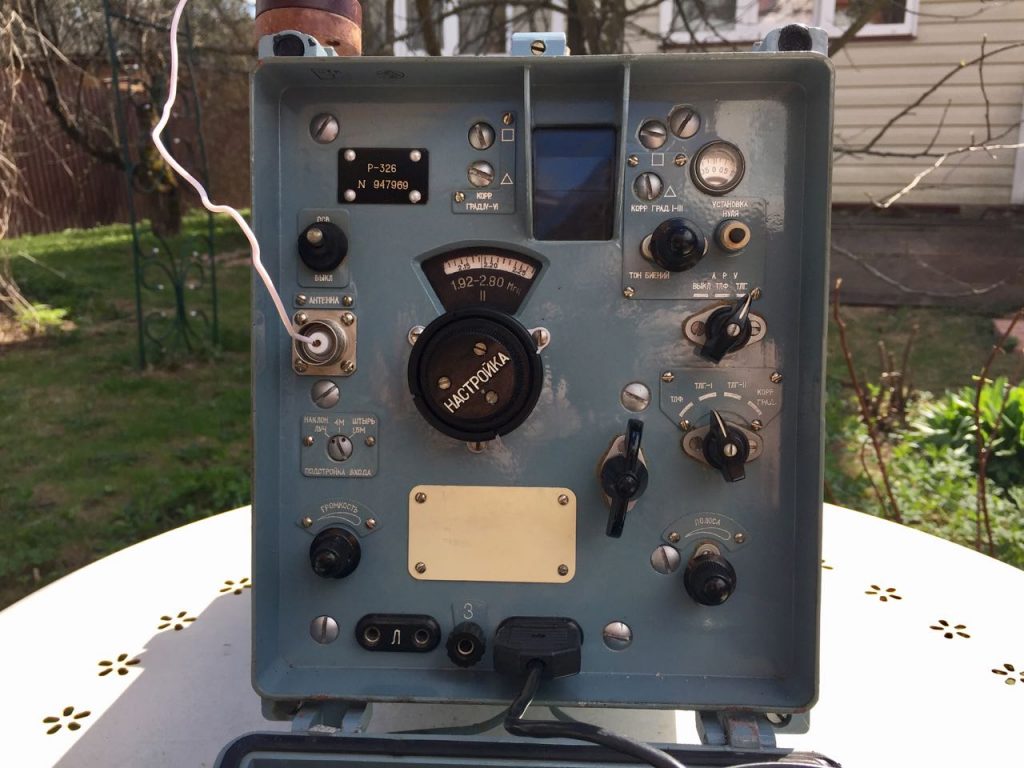
The Shoroh R-326 military radio

by Dennis Kalinichenko

I believe the piece of Soviet military equipment I recently bought to my collection would be interesting to all readers and contributors.

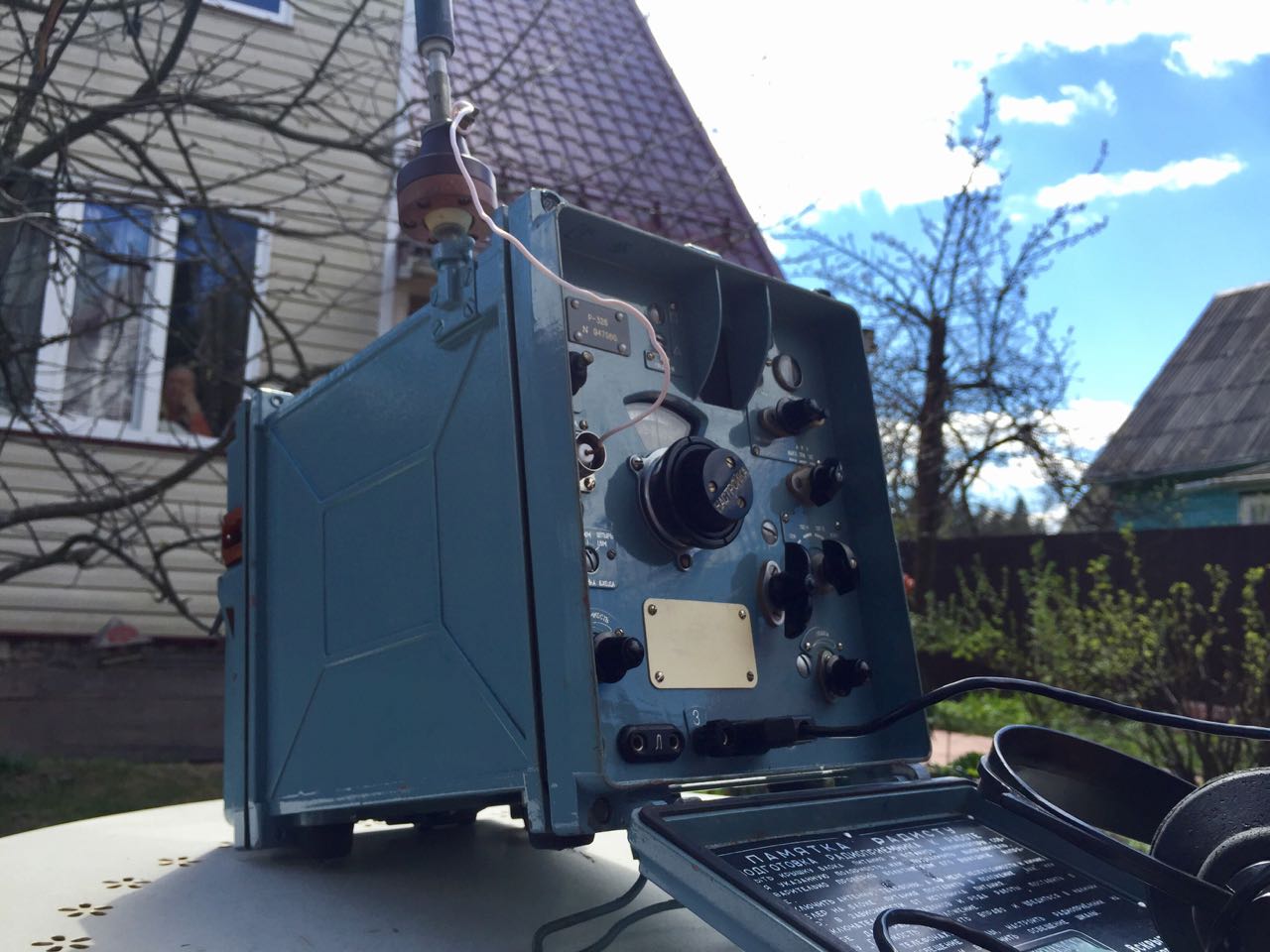
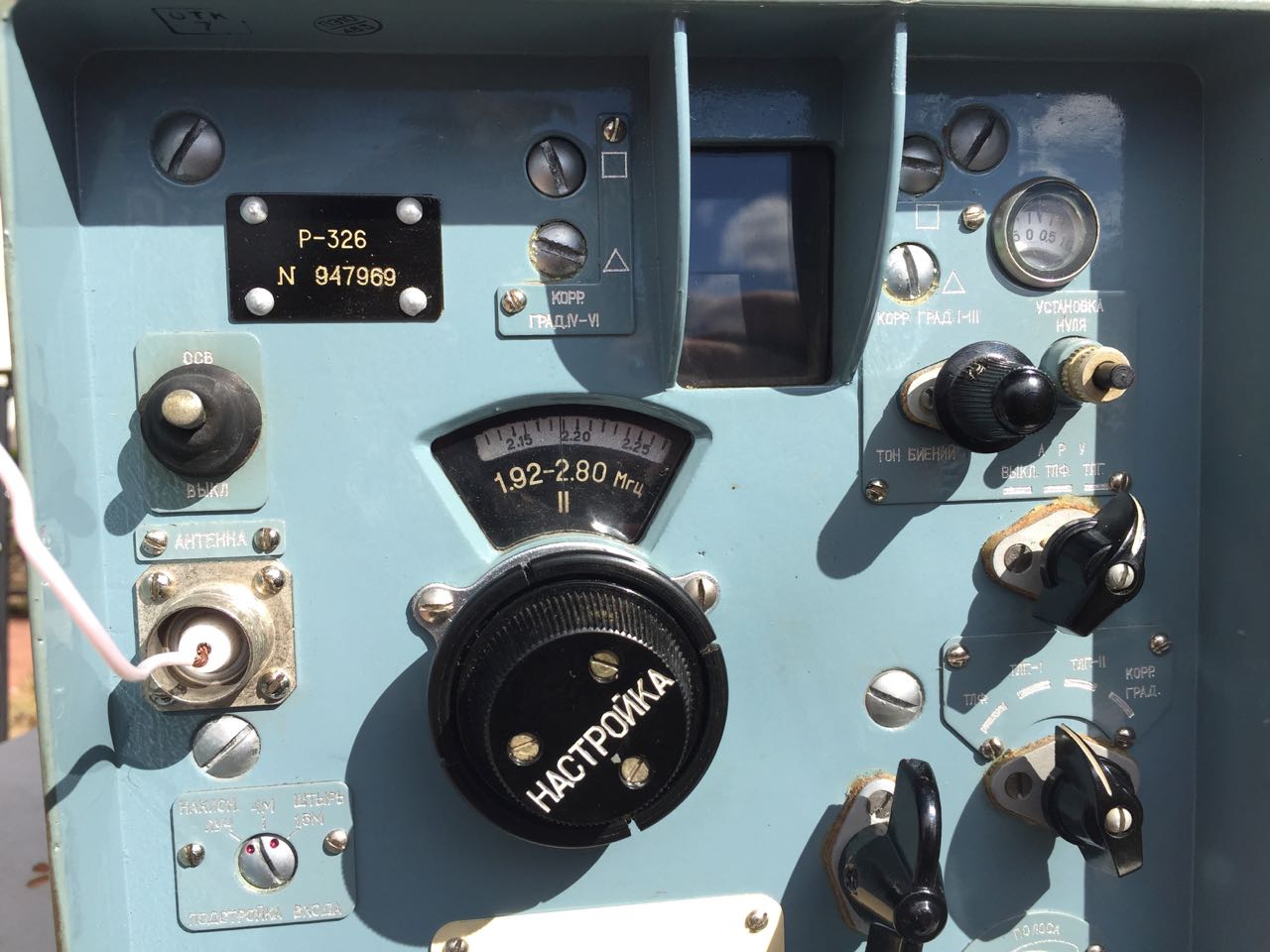
This is the R-326 “Shoroh” (“Rustle”) general coverage military tube shortwave radio receiver. These were produced decades ago, back in 1963. These portable receivers were in active military use in the Soviet Army until the early 2000s, when the R-326 was finally discontinued . Today, this set is no more a spy secret, but a great collector’s item and also a good receiver for home use.
My set cost me about $150 US, which is rather expensive for this radio. The R-326 was plentiful in the local market in 90-s, right after the fall of the Soviet Union, very cheap and popular between radio amateurs, but nowadays this radio has become more and more rare, so the price rises up.
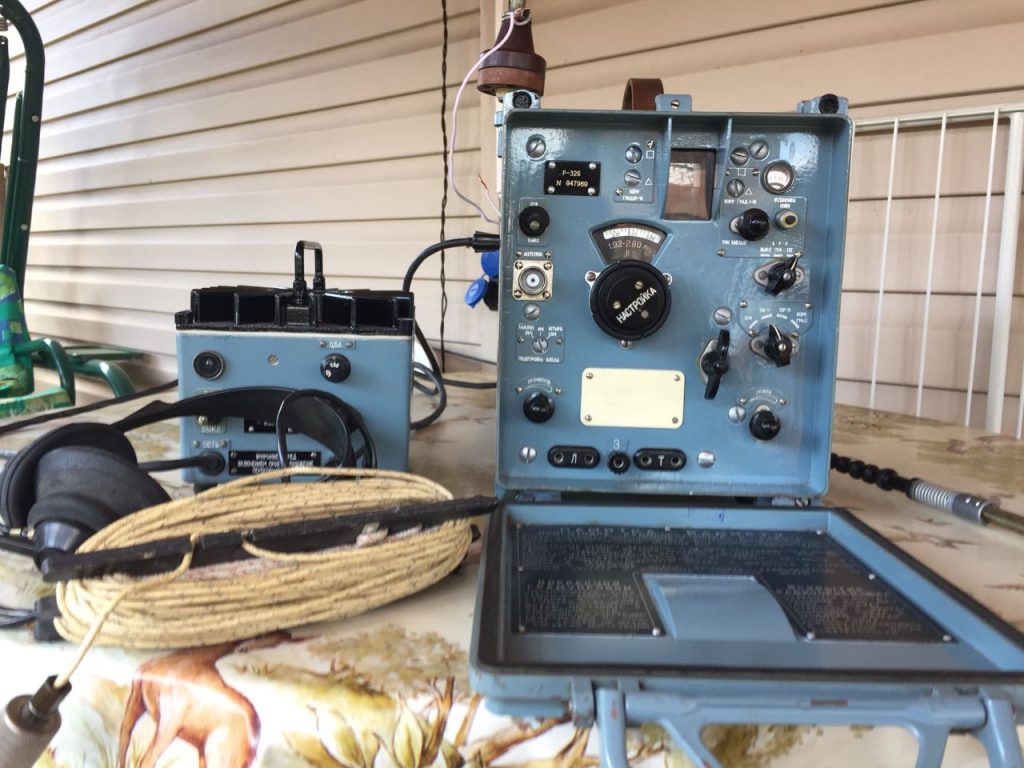
My R-326 arrived from Khabarovsk city, the Russian Far East, where, I believe, for many years it was on duty in some of the Soviet radio intelligence and defense forces division.
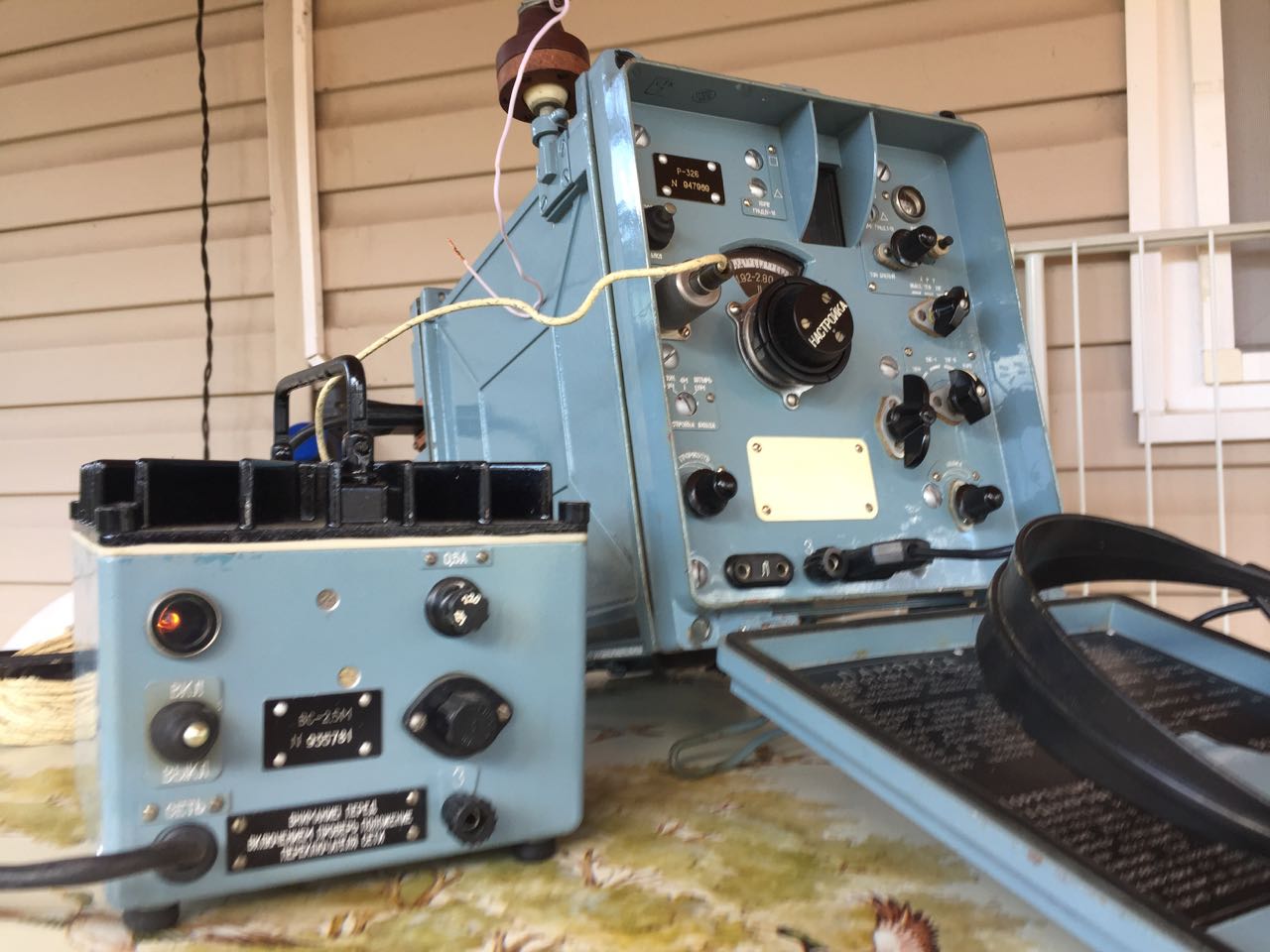
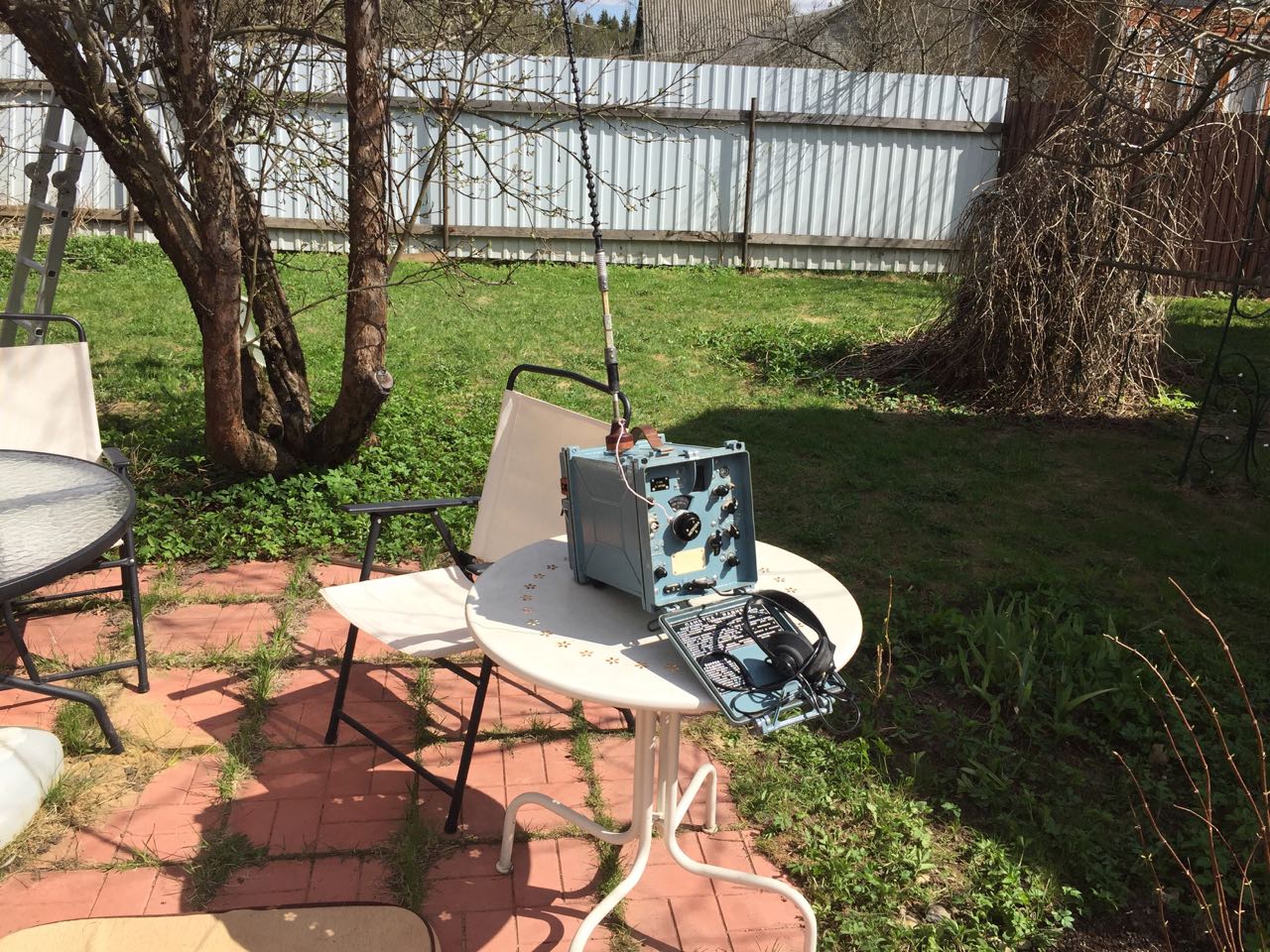
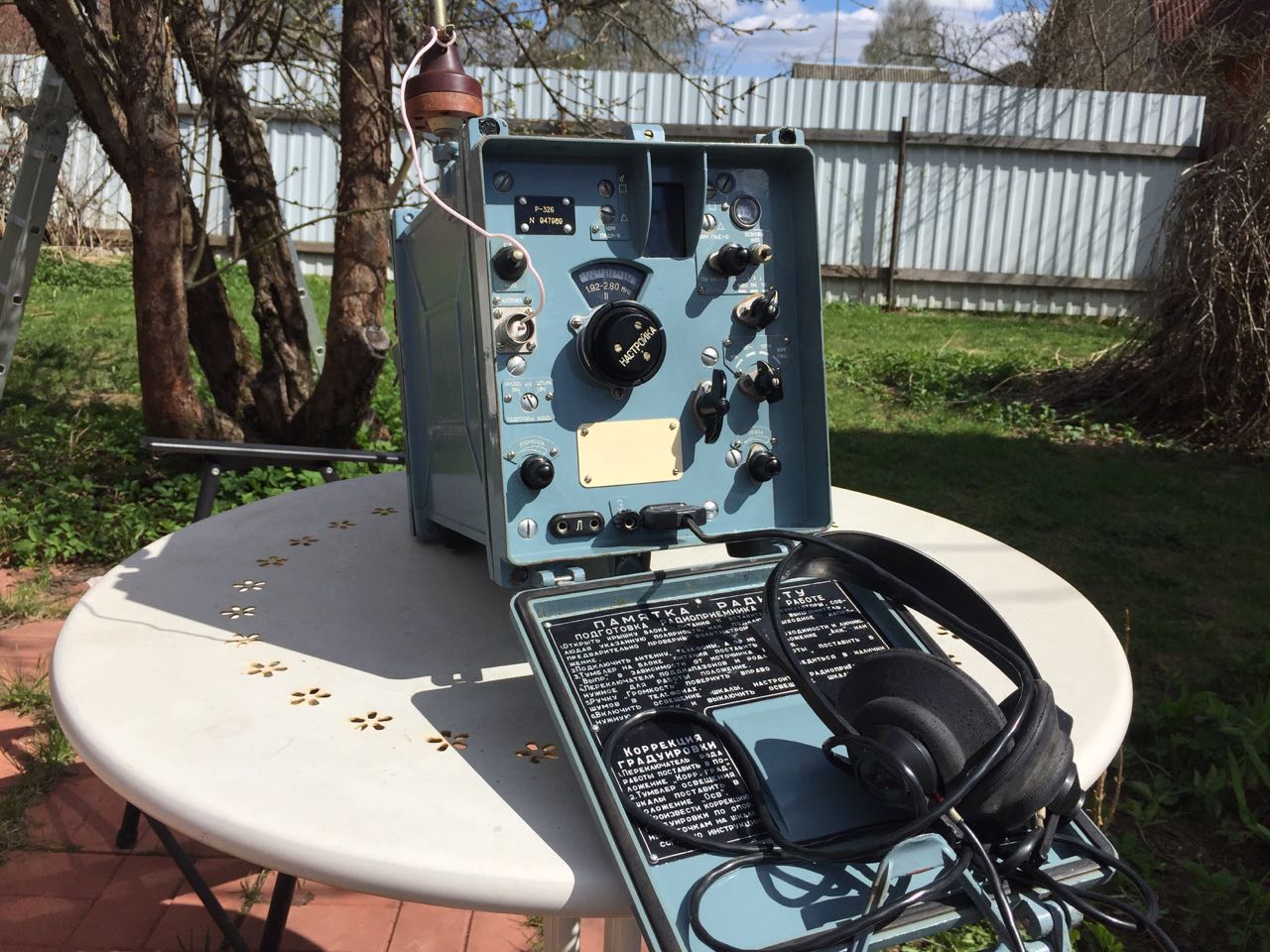
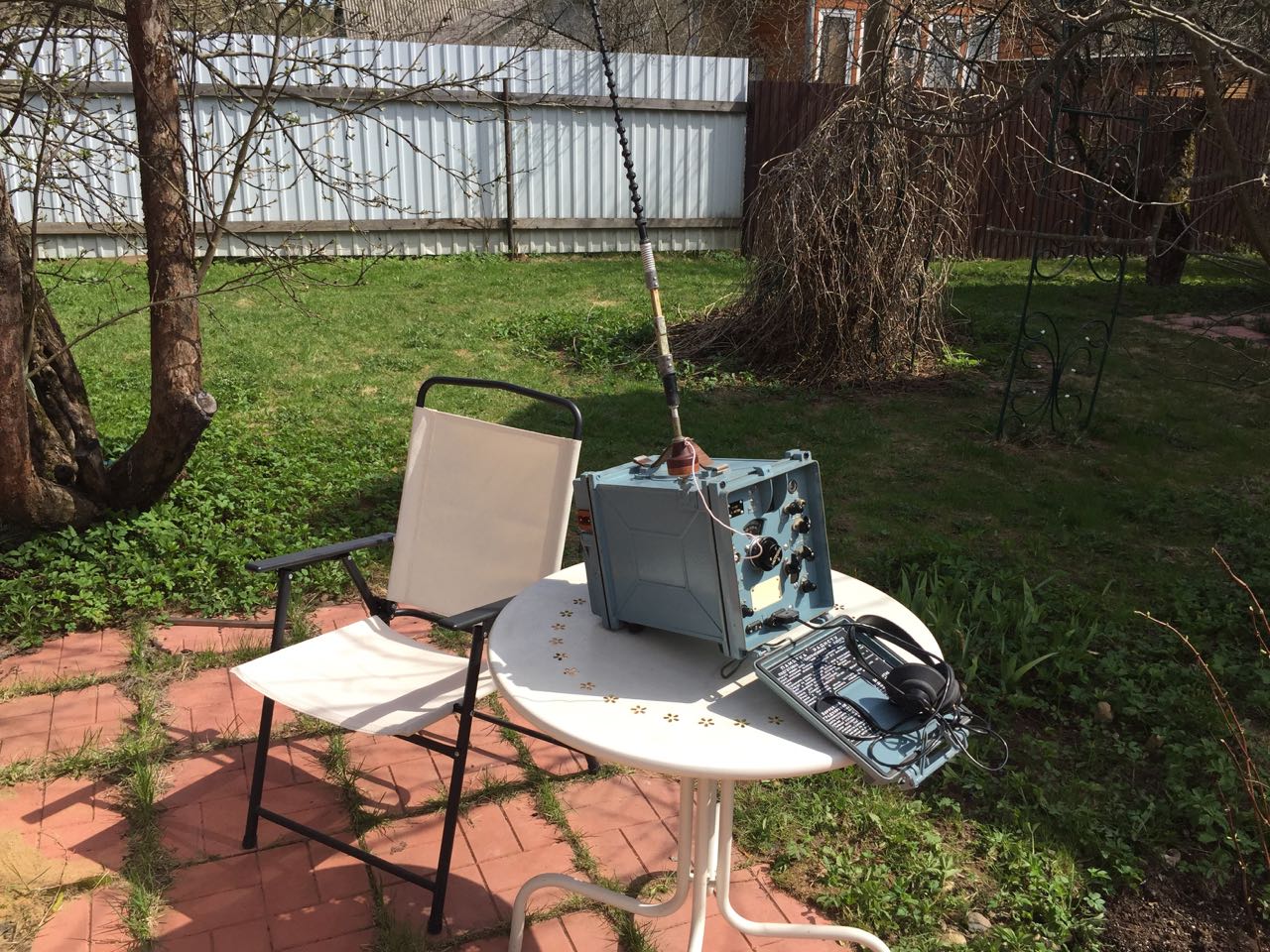
The set includes the radio itself, original military 100 ohm headphones, original rectifier box for 2,5 V output, 12 meter long wire antenna on a reel, the 1,5 meter famous “Kulikov” mini-whip antenna, the isolator for placing it on top of the radio and some minor accessories.
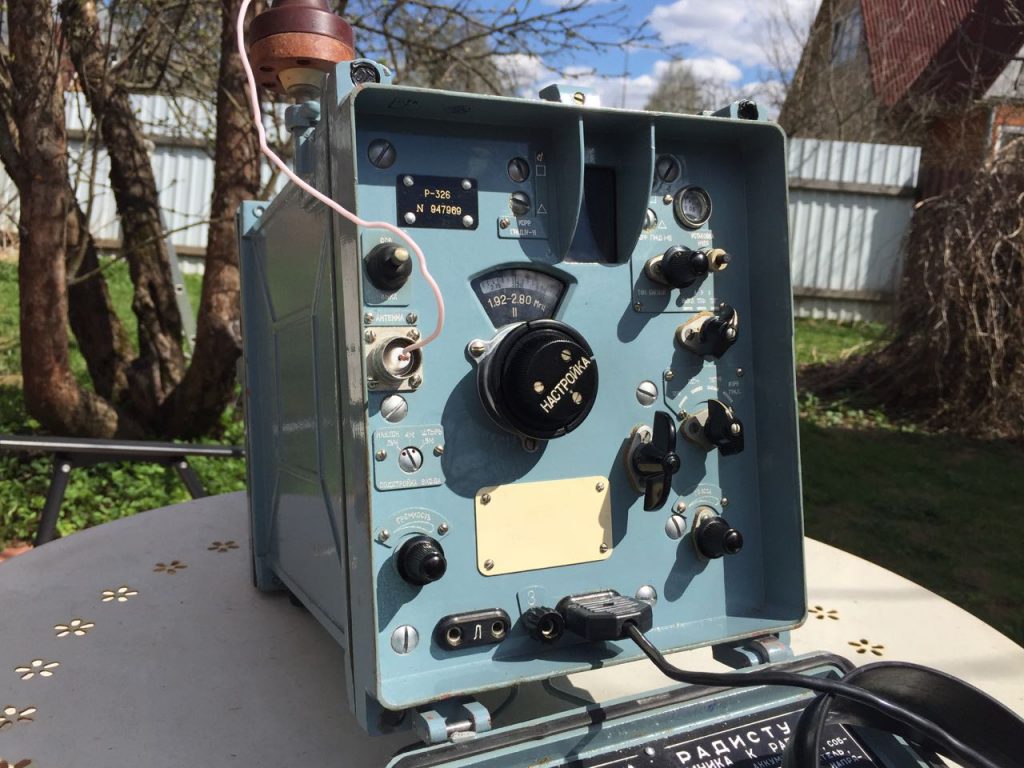
Originally, the R-326 radio came with two batteries–1,25 V each–for field use, but mine are totally drained and need to be serviced, so I haven’t used them so far.
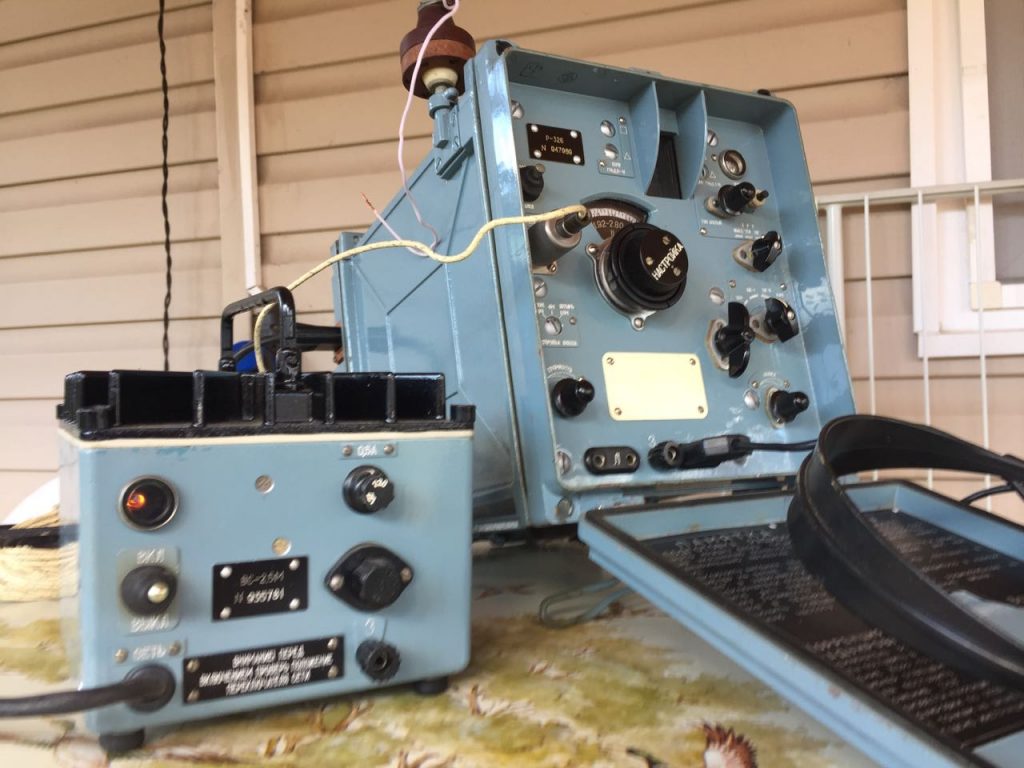
The radio is a light-weight, only 33 lbs, which is a real minimum for Soviet military equipment–the famous R-250 radio’s weight is up to 220 lbs–so, in comparison, this unit is really portable. You can easily put it in your car using the attached leather handle and take it with you on a weekend trip. No other military radio can be so “travel-friendly”; this is one of the reasons it was so popular in the ham radio and SWL communities.
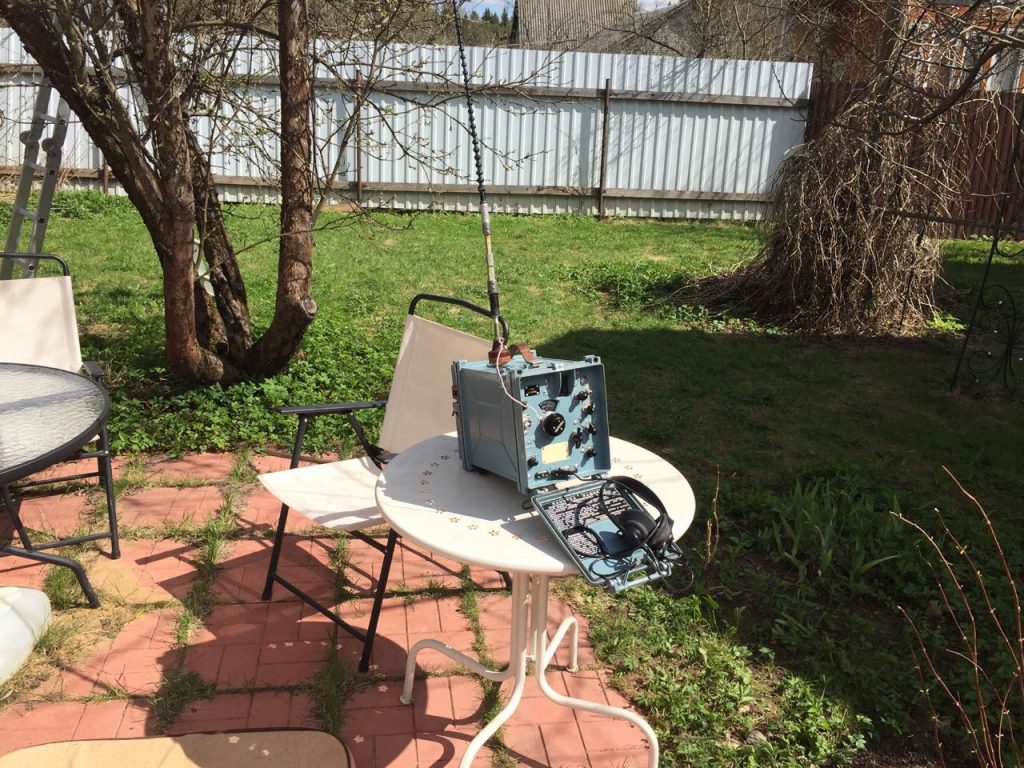
The case is made out of steel and looks so solid you may want to use it as a nutcracker. And you can! In no way could you harm the box constructed to resist nuclear attacks. It is waterproof and sealed–so I can be confident that no previous owner has ever tried to solder something in the guts.

The radio is a super heterodyne containing 19 (!) special mini tubes and covering 6 SW bands, from 1 to 20 MHz. It works in both AM and SSB (CW) modes, having an on-board adjustable bandwidth control from 300 Hz to 6 kHz.
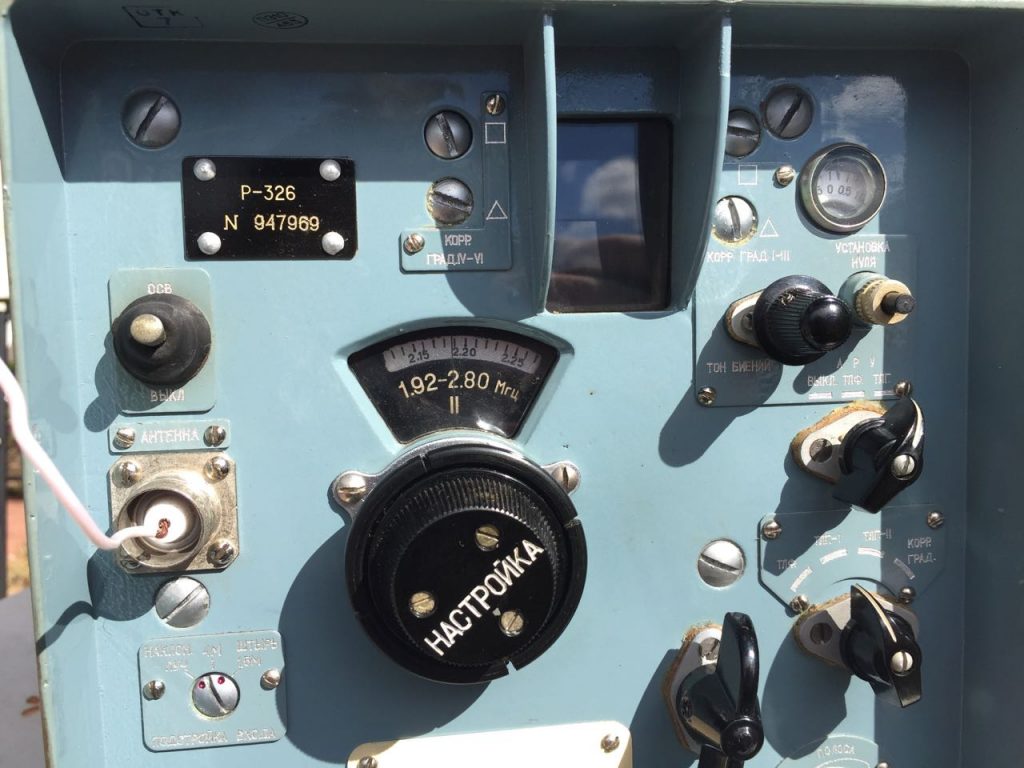
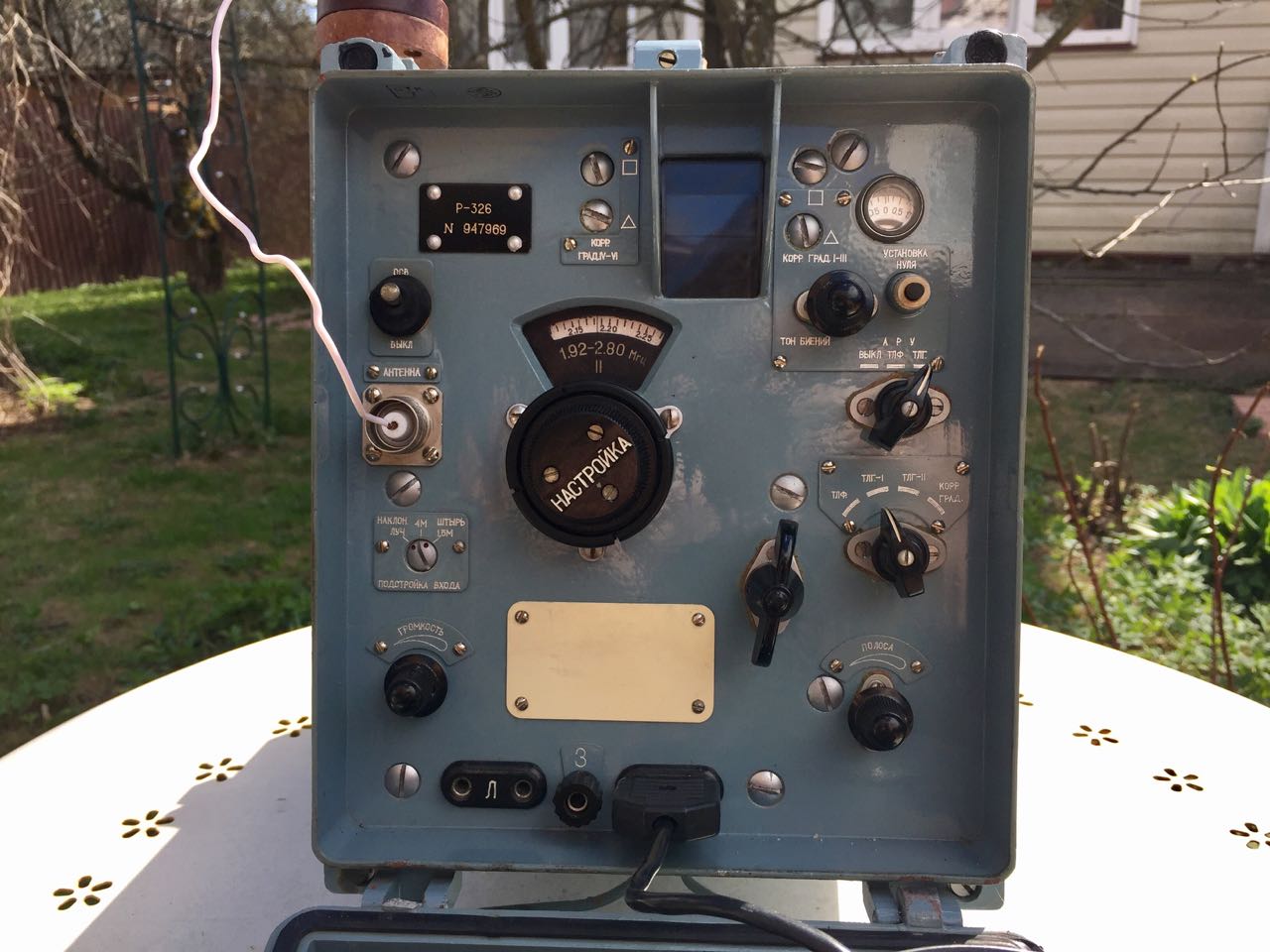
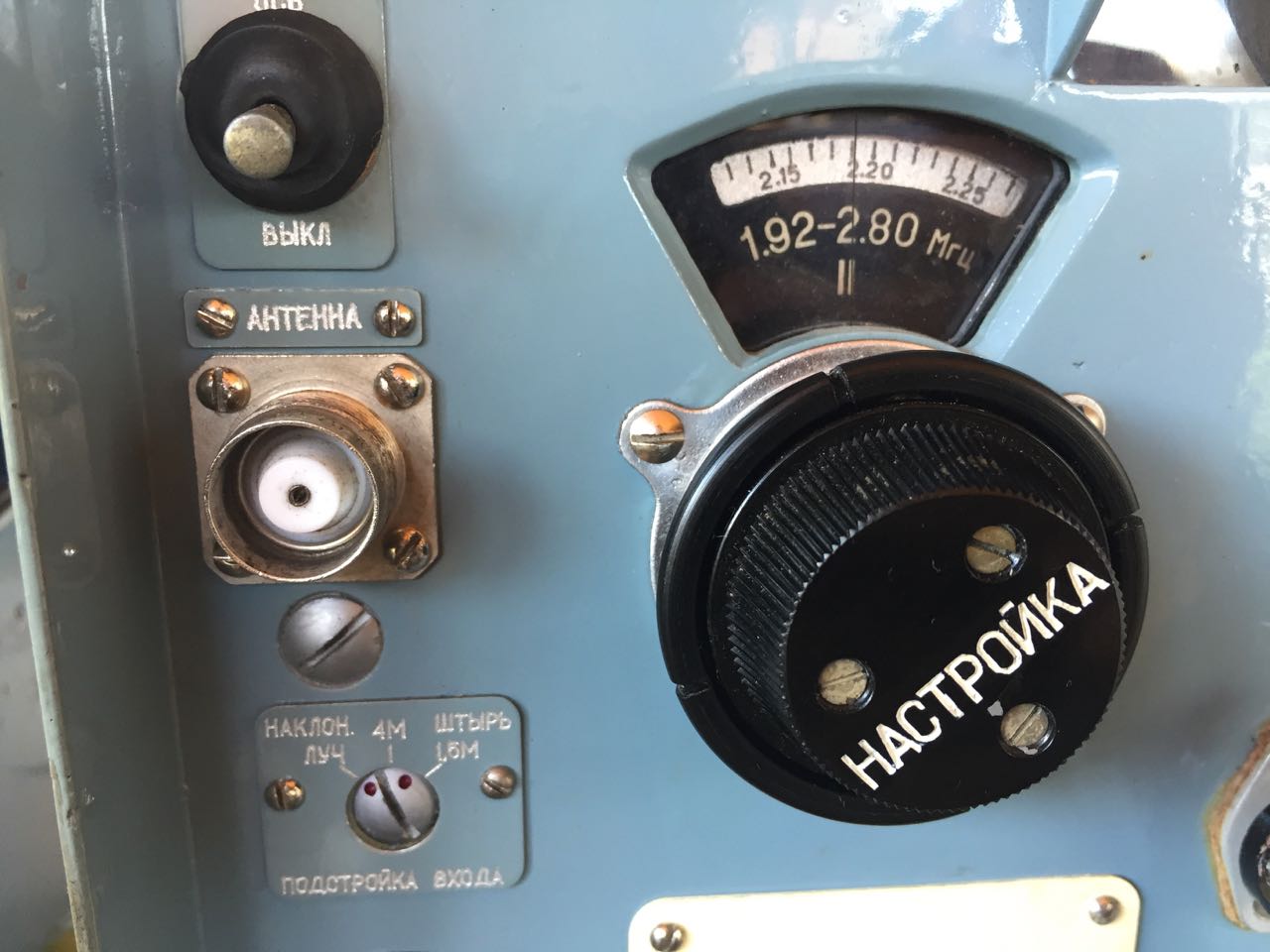
On the front panel, there are two scales: one is rough/coarse, and above is the precise one, a so-called photoscale, which may be adjusted to match real radio-frequency using the four screws near the sun protection visor. With this scale, you don’t actually need a digital readout. It also has a BFO control with a zero setting, adjustable AGC levels for AM and CW, and adjusting screw for matching the antenna input, as marked for 12 m long wire, 1,5 m and 4 m whip.
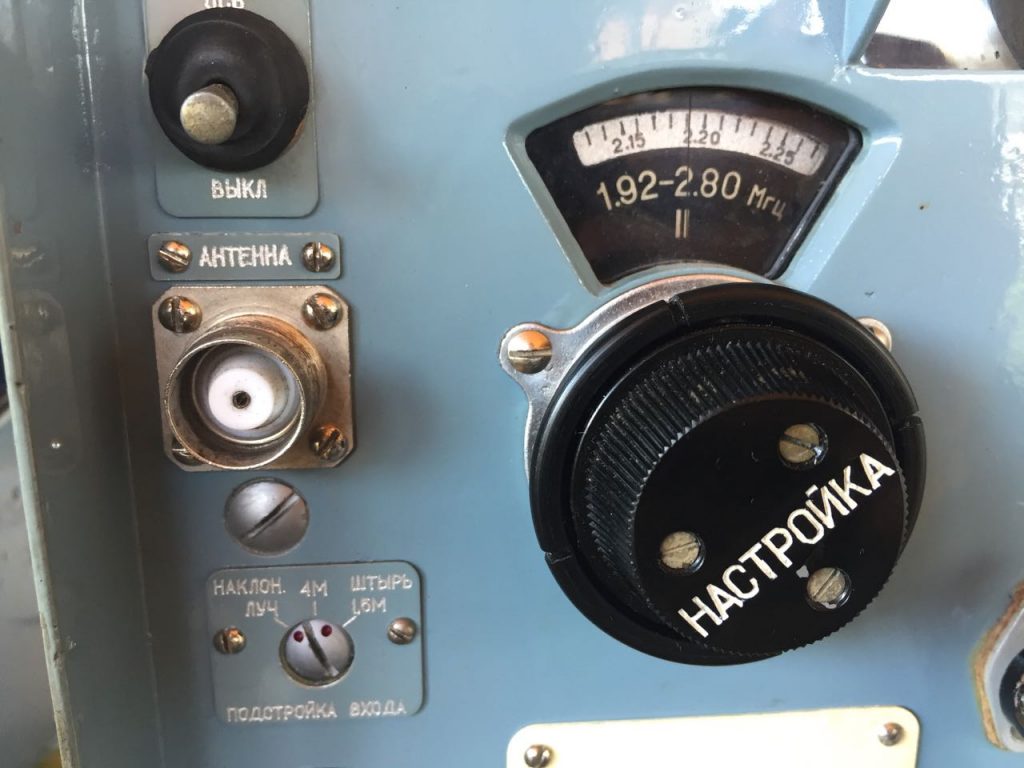
The radio has no built-in speaker. Instead, there are two output sockets on the front panel, for 100 ohm headphones and 600 ohm line-out.

The power consumption is very low for s tube radio, the rig needs only 1,4 A at 2.5 volts DC (including the lightscale). I use the original power transformer (transistor rectifier) and therefore switch the unit into the 220 AC outlet.
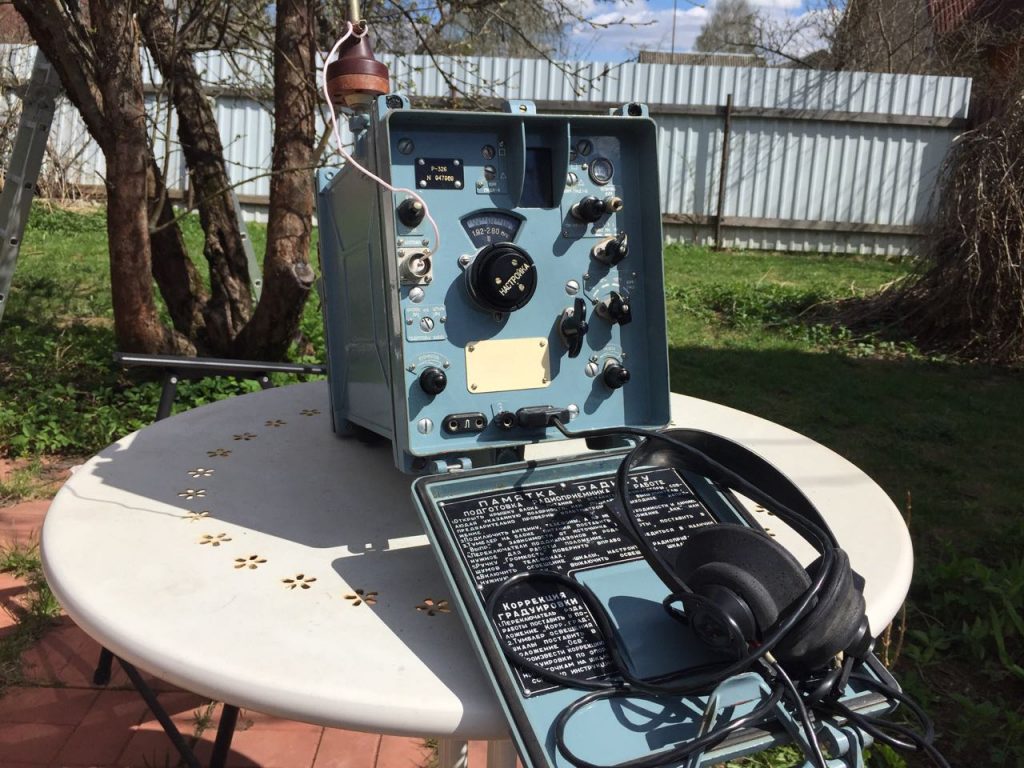
The sensitivity of the radio is extremely high and equals some modern transceivers. The selectivity is also impressive. No doubt it was really great for 1960s. But there’s negative side as well: the radio easily overloads even from the outdoor long wire antennas. The best fit is the “Kulikov” mini-whip that you can see in the photos.
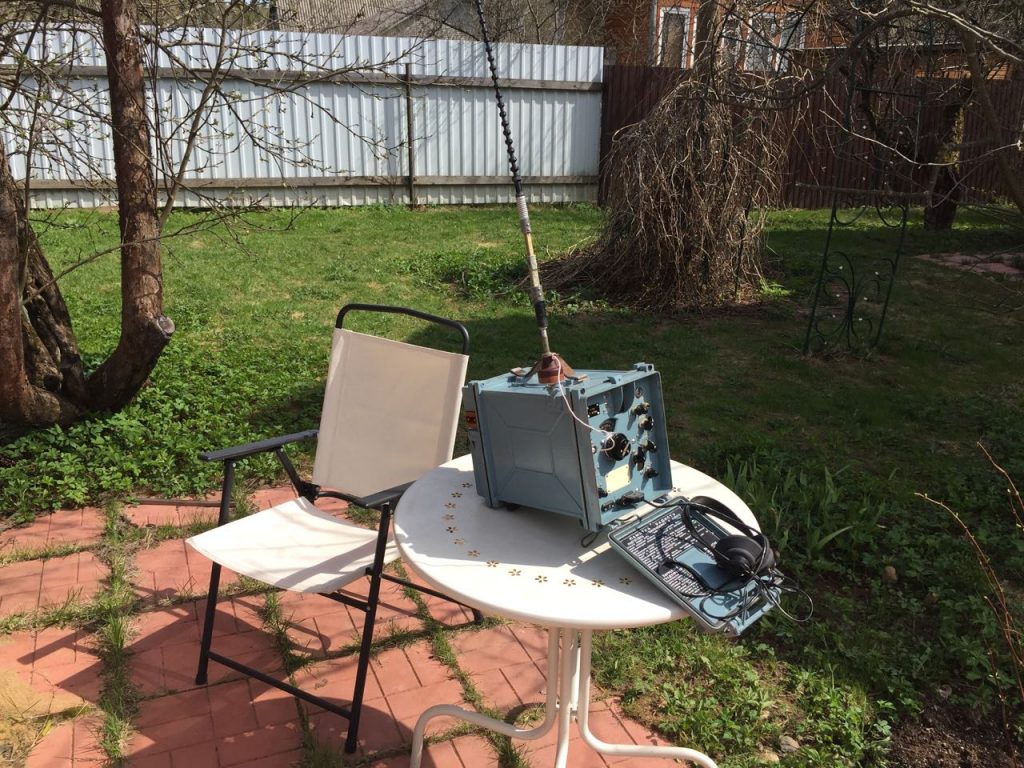
When you switch on the radio, you hear noise, the level of which seems high, so you lower the volume down. Yes, the radio is sensitive and a bit noisy. But thanks to the tubes it sounds really amazing in the headphones. The SSB ham operator’s voice is warm and very clear.
The tuning is very smooth, being actually 2-speed: outer wheel is for fast tuning, inner wheel for precise tune.
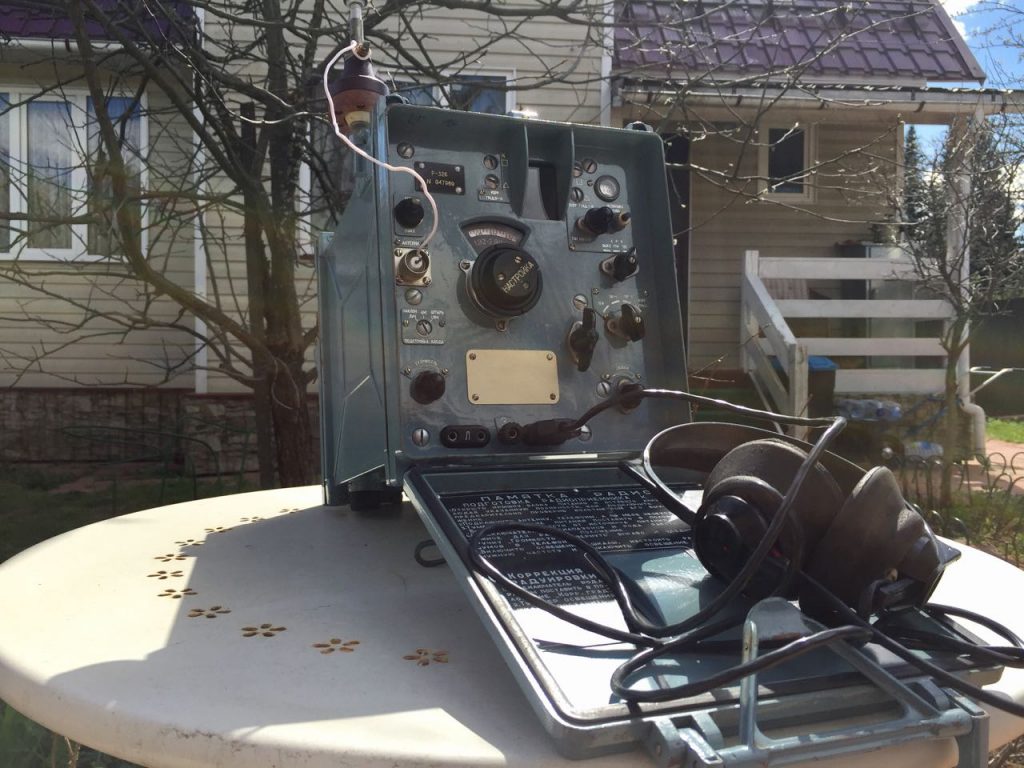
It’s absolutely obvious that nowadays a simple Degen or Tecsun may be more useful than this old and heavy unit with big and tough knobs and switches. But what a pleasure sitting in front of this perfect tube radio at night, with the headphones on, turning the huge tuning wheels, looking into the moving dim scale, listening into distant voices and rustles, feeling yourself a Cold War times operator near the rig.

Isn’t this experience priceless?

Indeed the experience is priceless, Dennis! Better yet, your R-326 now has an owner that will keep it in working order and enjoy it on a regular basis. I personally believe keeping these vintage rigs on the air is one way to preserve, and experience first hand, a little of our collective radio history.

Thank you so much for sharing your review and excellent photos of the R-326!

Post readers: If, like Dennis, you have a vintage radio you would like to showcase/review here on the SWLing Post, please consider submitting your story and photos. Being a huge fan of vintage radio, I truly enjoy reading through and publishing your reviews.  I know many other readers feel the same!

W9IMS special event stations, May 7-13

Many thanks to SWLing Post contributor, Brian D. Smith, who writes:

My radio club is about to begin another year of W9IMS special events commemorating the 3 major auto races at the Indianapolis Motor Speedway: the Grand Prix of Indianapolis, the Indianapolis 500 and the Brickyard 400.

We’re among the most popular annual special event operations in the United States (along with the Original 13 Colonies and Route 66). Our first special event (for the Grand Prix) will run from May 7-13; for more complete info, go to www.w9ims.org

As you probably recall, we offer 3 new and colorful QSL cards every year, as well as a nice certificate for stations that work all 3 special events in a given year.

Naturally, the offer extends to SWLs as well … so paper chasers, take note! And here’s a tip for locating us when we’re on the air: Keep an eye on DX Summit — http://www.dxsummit.fi/#/ – which will feature constantly updated DX spots for W9IMS during our weeks of operation.

Excellent–thanks for sharing this, Brian. It’s great to know that this event will also issue QSLs for SWL reports!

The Cricket: The Four State QRP Group’s latest transceiver kit

Here’s a hot tip for those of you who enjoy building transceiver kits:

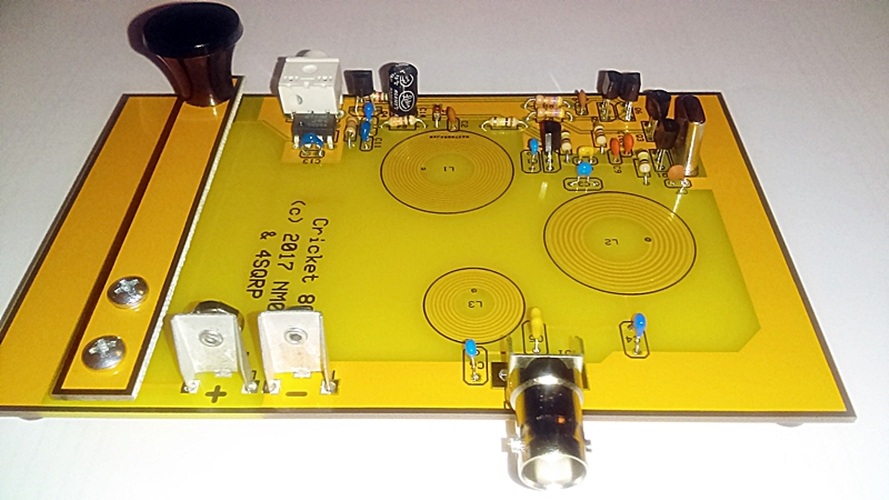
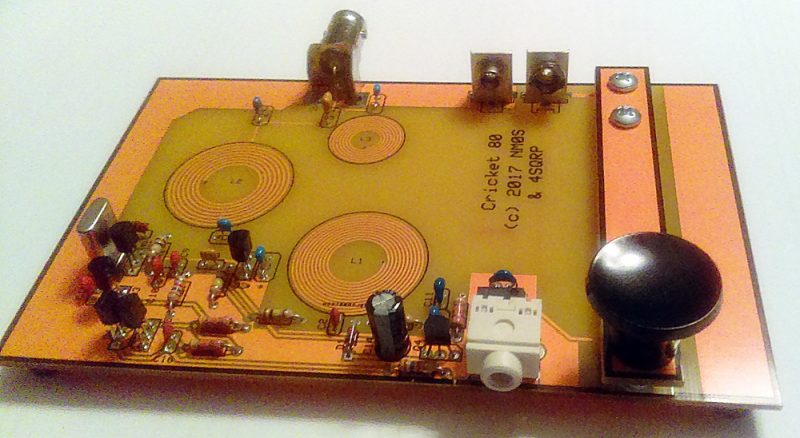
The Four State QRP group has just released The Cricket: a simple 80 CW transceiver kit. The Cricket was designed by David Cripe (NM0S) who is behind a number of successful kits (including the Ozark Patrol and the Bayou Jumper).

The amazing part about this kit is that it’s super simple, has no toroids to wind and doesn’t even need to be aligned. It even includes a Morse key.

All this shipped for $32.68 in the US, $39.50 in Canada and $43.50 for international orders. A serious bargain, in my book.

Typically, Dave’s kits sell out the same day they are posted for sale. If you’re interested in The Cricket, don’t hesitate to order! (I just bought three, for example.)

Click here to order The Cricket.

Here’s The Cricket kit description via the Four State QRP Group website:

Kitted and Offered For Sale By The Four State QRP Group

The Cricket is a low cost entry level minimalist CW transceiver for the 80 meter band. Chosen as the build session kit for OzarkCon 2017, it bears a family resemblance to the well known but much lower performing Pixie. However it is very different and vastly improved over the Pixie. This is NOT a Pixie, it is far superior! It features low parts count, better components including MOSFETs for better sensitivity and switching, and a modern NJM2113D audio amp.

A TX/RX offset is also incuded so that you can work other stations that have zero beat you, or are using a crystal on the same frequncy. Full QSK and a sidetone complete the essential operating features. Dave’s famous etched spiral coils are included on the pc board, so there are NO TOROIDS to wind. Additionally a straight key is included on the pc board, just snap it off, mount it on the board, and the whole rig is then self contained. Also included is an electronic keyer adapter – you can use your favorite keyer with the Cricket! These are many features for such a low parts count and inexpensive transceiver.

ALL THROUGH HOLE parts make this kit very easy to assemble. It will make a fine, fully functional, and educational first rig for a new builder, the new ham, or seasoned veterans wishing to just have fun with a new rig at minimal expense and effort. Note that Novices and Technicians have 80M CW privileges from 3.525 to 3.600, same as everyone else – so they also can build and use the Cricket.

This simple rig is fun and functional, and made many contacts at OzarkCon after the build session. A proven design and a great choice for your next rig, it is perfect for a group build with nets and contacts after the build. This is an excellent club project.

Photos of a B-17G Radio Operator Position

I had the pleasure of visiting the Champaign Aviation Museum recently and examining their under-restoration B-17G, “Champaign Lady”. Actually, the term “under-restoration” is incorrect. In actuality, the Champaign Aviation Museum is effectively building their B-17G nearly from scratch—quite an undertaking but one that the volunteers are performing skillfully and enthusiastically.

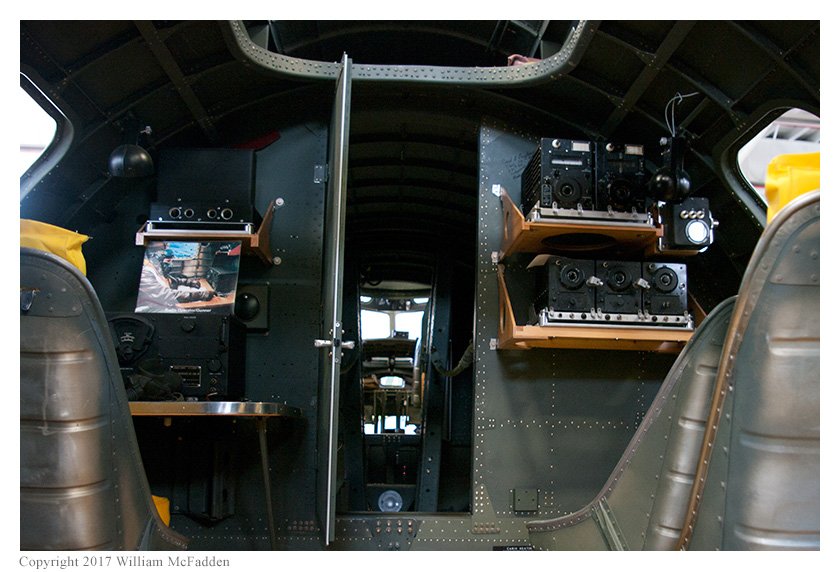
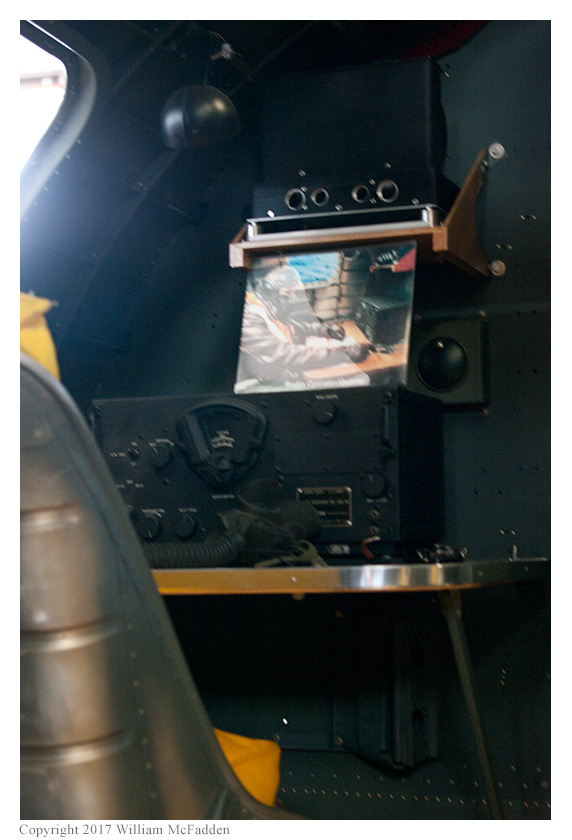
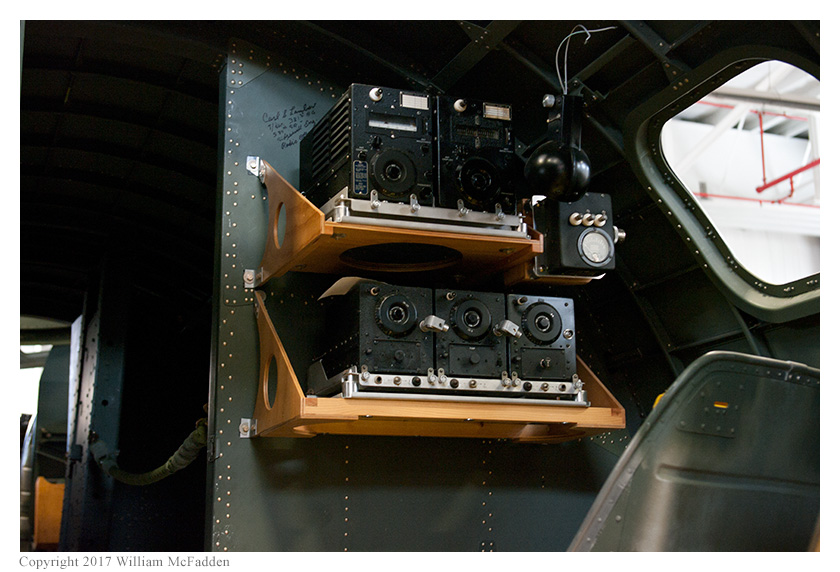
Being an amateur radio operator, shortwave listener, and would-be WWII-radio restorer, I was was pleased to see that Champaign Lady already has a nearly-complete radio-operator position installed, between the bomb-bay and the waist-gun section of the airplane. As a B-17G would have had during the war, Champaign Lady features a BC-348 liaison receiver and morse-code key mounted on a desk on the port (left) side of the bomber and a stack of AM/CW Command Set transmitters and receivers racked on the starboard (right) side of the bomber. In the photos, the top Command Set boxes are the transmitters and the bottom three Command Set boxes are the receivers. Of course, the BC-348 and the Command Set transmitters and receivers are fully tube-type, semiconductors having not yet been invented. During the war speedometer-type cables would connect the Command Set receivers to controls in the cockpit, allowing the pilot and co-pilot to control the Command Set receiver frequencies; electrical cables would have carried the receivers’ audio to the pilot and co-pilot and would have allowed them to change volume-level. The radio operator could transmit using the Command Set transmitters and could also switch the pilot or co-pilot intercom microphones to any of the Command Set transmitters to allow the pilot or co-pilot to broadcast to other bombers in the formation.

"Champaign Lady" radio operator position

B-17G “Champaign Lady” radio operator position; BC-348 liaison receiver on the port (left) side and Command Set transmitters and receivers on the starboard (right) side.

"Champaign Lady" BC-348 receiver

B-17G “Champaign Lady” BC-348 liaison receiver and morse-code key.

"Champaign Lady" Command Set transmitters and receivers

B-17G “Champaign Lady” Command Set transmitters and receivers on the starboard side of the radio room

During the war, the B-17G radio operator was an enlisted man, typically a sergeant or higher in rank. If in an earlier version of the B-17G, the radio operator was also responsible for manning a .50 caliber machine gun located in his section of the airplane. In all versions of the B-17G, the radio operator assisted the navigator by providing position reports based on radio fixes of beacons or radio stations. Additional information about the role of the B-17G radio operator can be found on the B-17 Queen of the Sky website.

And, for those interested, here is what Champaign Lady’s nose-art looks like:

B-17G "Champaign Lady" nose-art

B-17G “Champaign Lady” nose-art, starboard side; the port side features a mirror-image version of the same design

The Champaign Aviation Museum has a beautifully restored B-25J, “Champaign Gal”, in flying condition. Unfortunately, I’ve not been able to see if Champaign Gal features a restored radio operator position.

I have a BC-224, which is the 12-volt version of the BC-348 liaison receiver to put back into service as well as a BC-696A Command Set transmitter that I hope to eventually put back onto the air in the 80-meter amateur band. It would be wonderful if I had a B-17G in which to install these items—or even just room to build a replica B-17G radio operator position!

73,

Eric McFadden, WD8RIF
http://wd8rif.com/radio.htm

The new Cross Country Wireless HF Preselector

(Source: Southgate ARC)

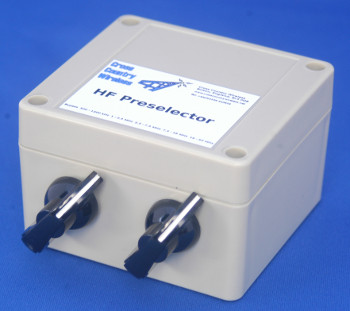
Cross Country Wireless release HF Preselector

Cross Country Wireless have released a HF Preselector.

It is a passive high Q design that does not use an amplifier or external power.

It tunes from 0.5 to 52 MHz.

It is ideal for use with simple SDR receivers like the RTF-SDR dongle with upconverter or SDRPlay. It can also be used with the new receiver socket modification on the IC-7300.

The web page has more details including network analyser plots showing the selectivity of the Preselector.

The web page is:
http://www.crosscountrywireless.net/preselector.htm