Category Archives: Ham Radio

The Elecraft KX3 continues to impress

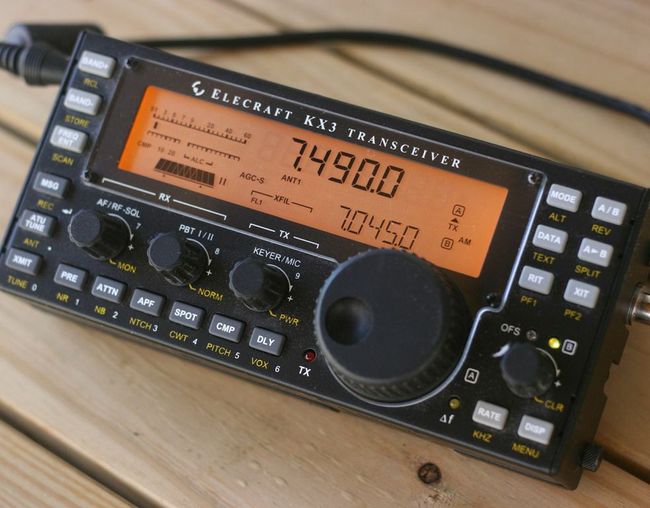
I’ve owned my Elecraft KX3 for five years, and this little rig continues to amaze me.

In 2013, I gave the KX3 one of the most favorable reviews I’ve ever published–and it continues to hold its own. That’s why last year I recommended the KX3 to my buddy and newly minted ham radio operator, Sébastien (VA2SLW), who had already been eyeing the KX3 as his first HF transceiver.

A few weeks ago, Sébastien bit the bullet and is now the proud owner of a KX3 with built-in ATU. He purchased the KX3 with plans to do a lot of field operations including SOTA (Summits On The Air) and also use the KX3 at home.

Wednesday, I popped by Sébastien’s flat to help sort through some low-profile antenna options. I had suggested that he not invest in a factory made antenna just yet, but instead explore what he’s able to do with a simple wire antenna directly connected to the KX3 with a BNC Male to Stackable Binding Posts adapter. I’ve had excellent luck using this simple arrangement this in the past with the KX3, KX2 and even the KX1.

I did a quick QRM/RFI survey of his flat and balcony with my CC Skywave SSB. While there were the typical radio noises indoors, his balcony was pleasantly RFI quiet. At 14:00 local, I was able to receive the Voice of Greece (9,420 kHz), Radio Guinée (9,650 kHz) and WWV (both 10,000 and 15,000 kHz) with little difficulty. His building has incredibly thick concrete walls–I assume this does a fine job of keeping the RFI indoors. Lucky guy!

We popped by a wonderfully-stocked electronics shop in Québec City (Électromike–which I highly recommend) picked up some banana plugs and about 100′ of jacketed wire. We took these items back to the flat and cut a 35′ length of wire for the radiator and about 28′ for the ground. We added the banana plugs to the ends of each wire.

Sébastien temporarily attached one end of the antenna wire to the top of the fire escape and we simply deployed the ground wire off the side of the balcony. Neither of these wires interfere with his neighbors and neither are close to electric lines.
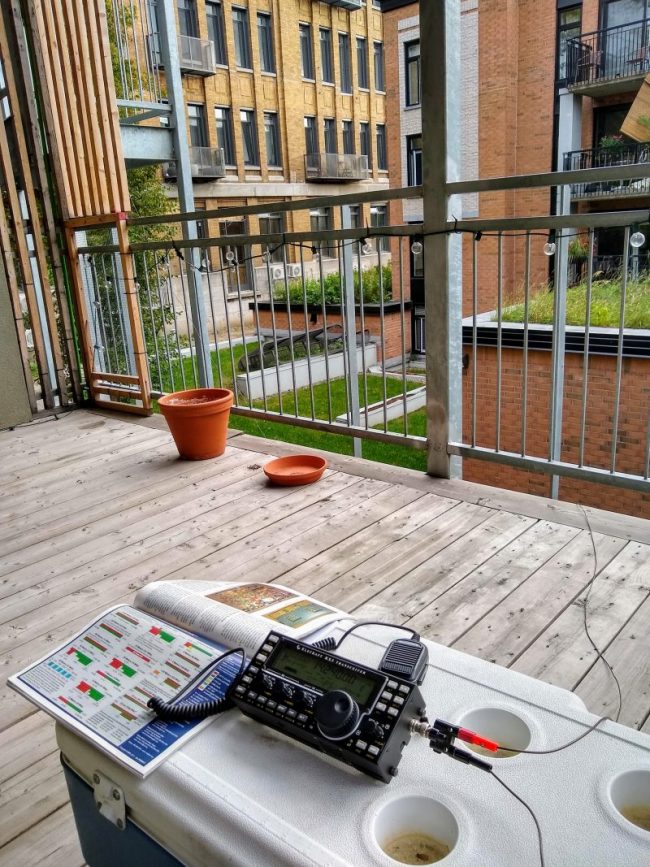
I had planned to cut both the radiator and ground until we found the “sweet spot”: where the ATU could find matches on 40, 30, 20 and 17 meters (at least).

Much to my amazement, the KX3 ATU got 1:1 matches on all of those bands save 80M where it still could achieve a 2.8:1 ratio.  I couldn’t believe it!

Frankly, Elecraft ATUs are nothing short of amazing.

Even the ATU in my little KX2 once tuned a 20 meter hex beam to 40 meters and found a 1:1 match to boot. In contrast, the Icom IC-7300 sitting next to the KX2 wasn’t able to match that hex beam even though we performed a persistent ATU search. Not surprising as I wouldn’t expect a 40 meter match on a 20 meter antenna, but the Elecraft ATU did it with relative ease.

Sébastian did a quick scan of the ham radio bands where we heard a number of EU stations. I also took the opportunity to point out how well the KX3 operates as a broadcast receiver with the AM filter wide open and using headphones in the “delay” audio effects mode. The Voice of Greece sounded like a local station–absolutely gorgeous signal.

It was getting late in the day, so I couldn’t hang around to call CQ with Séb, but I left knowing that he is going to have a blast playing radio at home and, especially, in the field. Next, he plans to build a simple mag loop antenna, get a BioEnno LiFePo battery and eventually add other Elecraft accessories to his station. I’d say he’s off to a great start!

Want more info? Click here to read my review of the Elecraft KX3 and here to read my review of the Elecraft KX2.

Do you enjoy the SWLing Post?

Please consider supporting us via Patreon or our Coffee Fund!

Your support makes articles like this one possible. Thank you!

Arcing can produce nasty broadband radio interference

On this trip to Québec, indoor listening has been more productive than listening from our balcony.

I mentioned in a previous post that, this year, QRM levels here at the condo in Québec are higher on our balcony than they are inside the building.

I think I found the source.

A couple weeks ago, on my morning walk, I passed underneath some high voltage power lines about 1 km from the condo. I noticed the sound of arcing coming from a pole nearby. No doubt, something metal–a staple, a cable, a pin, etc.–is the culprit.

I pulled out my smart phone and made this short video. If you turn up the volume, you might hear the noise especially at the end of the clip.:

I took a portable radio back to the site later and heard the same broadband noise I heard from the condo.

Although we only rent this condo a couple months a year, I’ll try to report the noise to the Hydro Québec. I know that our utility company in the States must follow up with requests like this and do their best to eliminate unintentional sources of RFI. These issues can also be an indication of something in the system failing, so power companies can actually be quite grateful for the feedback.

If you have persistent broadband noise at home, check out some of the trouble shooting tutorials at K3RFI’s website for a little guidance.

Despite all of this noise, I’m pleased I can still receive a few of my favorite shortwave stations. And, of course, escape to the KiwiSDR network and hit the field from time to time!

No worries, though, I’ll be back at my home station soon and can once again enjoy a relatively RFI-free radio space!

Post readers: Have you ever been plagued with power line noise? What did you do about it? Any tips? Please comment!

Do you enjoy the SWLing Post?

Please consider supporting us via Patreon or our Coffee Fund!

Your support makes articles like this one possible. Thank you!
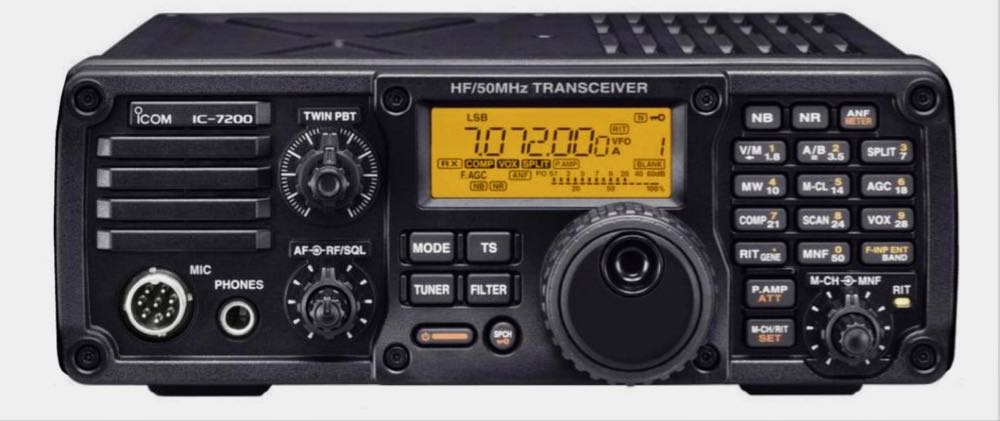
The Icom IC-7200 has been discontinued (yet again)

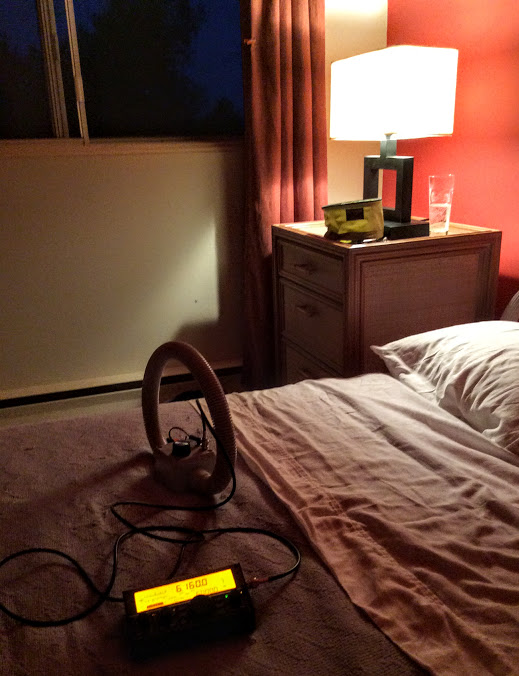
Many thanks to SWLing Post contributors Dave Zantow (N9EWO) and Larry W who both note that the IC-7200 has been discontinued once again by Icom. Universal Radio has even listed it as discontinued on their website and doesn’t appear to have any in new inventory.

You might recall that Icom discontinued the IC-7200 in early 2016 and re-introduced it exactly one year later in 2017.

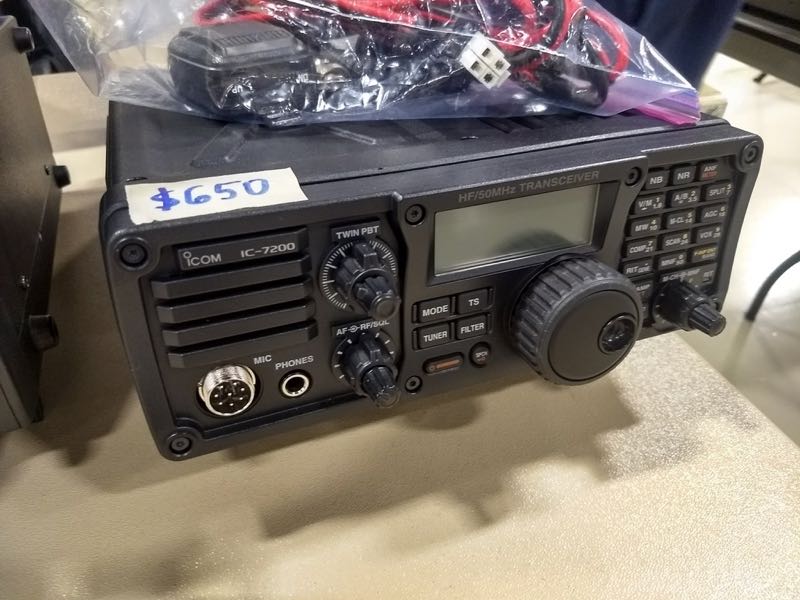
I consider the IC-7200 to be one of the best general coverage transceivers for broadcast listening under $1,000 US. Used IC-7200s can be found for excellent prices–I’ve seen many at hamfests for $650 (like new) and much less.

Spotted at a local hamfest earlier this year: The IC-7200

It appears that GigaParts and Ham Radio Outlet still have the ‘7200 in stock and shipping for $749.95 US after rebates. Of course, you can also find them on eBay.

Radio City is closing shop

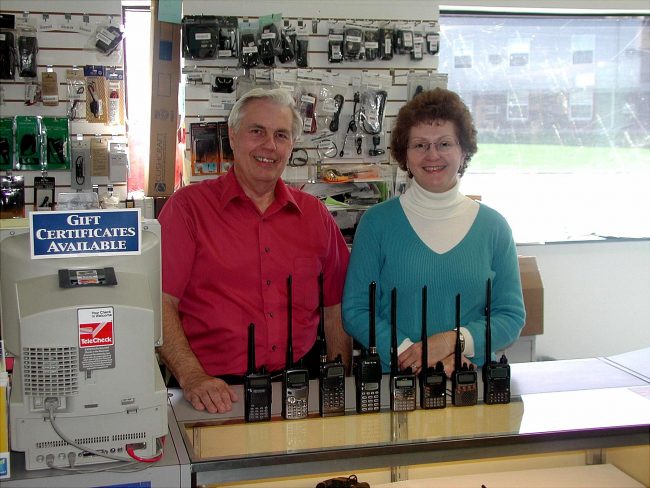
Many thanks to SWLing Post contributor, Dave Zantow (N9EWO), who notes that Radio City in Mounds View, MN, will be closing its doors soon.

Ham City owners, Dan and Maline Fish, are retiring. They posted the following message on their website:


Sept. 11th, 2018

It’s Time to Retire.

Dan and Maline Fish of Radio City

It’s been a wonderful 36 years for us at Radio City and we have decided to retire and close Radio City. 🙁 We are so thankful for the many years of support and we have enjoyed working you, our customers. The technical, intelligent and polite conversations plus advice have been invigorating, thus making this decision extremely difficult for us.

We appreciate all the teachers, Elmers, VE examiners, ham and astronomy clubs efforts in growing new ham radio operators and amateur astronomers into our special community.

We will also miss going to and supporting amateur radio and astronomy clubs all over MN and IA at their events. We will greatly miss all the friendships we have been privileged to maintain with many of our customers.

We plan to exit by this year’s end or a bit sooner as we empty our shelves of new and used materials.

Upcoming Events:

Final Goodbye Tour:

We will be at Smartfest in Cologne, MN on Saturday September 22nd. We will also be in Carlton MN for their Fallfest on Saturday September 29th.

Goodbye Party:

Please come on by on Saturday October 6th for our good bye party. We will of course have cake and coffee for everybody.

Other Necessary Details:

Service:

We will complete servicing items we currently have in the service dept. We will not be accepting any additional ‘Out of warranty’ items. ‘In warranty’ items will be still be processed by Radio City per normal until about October 31st, 2018.

Consignment :

We will no longer accept more items for consignment. All items that have NOT been sold need to be picked up the week of Oct 13th, 2018. We will consider all items not picked up by then to be abandoned.

In closing we will very much miss all of you and perhaps there is someone out there interested in running the store under New Management.

Thanks again for all your support,
Dan and Maline Fish

Link to Fox9 News story about the store closing:
http://www.fox9.com/news/minnesota-s-last-ham-radio-store-to-close-its-doors-as-owners-retire

VoIP Hurricane Net details

Many thanks to SWLing Post contributor, Dennis Dura, who shares the following information about the VoIP Hurricane Net in which he is heavily involved:

**VoIP Hurricane Net will activate starting at 9 AM EDT Thursday Morning through 11 PM EDT Saturday Evening for Dangerous Hurricane Florence which is expected to be a major hurricane and will slow its approach to the Southeast North Carolina/Northeast South Carolina Coast Thursday Night through Friday Night with continued hurricane impacts into Saturday.**
**WX4NHC, the Amateur Radio Station at the National Hurricane Center, will activate at 900 AM EDT Thursday 9/13/18 for Dangerous Hurricane Florence**

Here are the VoIP Hurricane Net and WX4NHC Activation Plans for Florence as of Wednesday Evening 9/12/18 at 745 PM EDT/2345 UTC:

The VoIP Hurricane Net will activate starting at 900 AM EDT Thursday Morning through Saturday Evening for Dangerous Hurricane Florence’s impacts to North and South Carolina. WX4NHC, the Amateur Radio Station at the National Hurricane Center, will activate at 900 AM EDT Thursday 9/13/18. Florence is expected to be a dangerous major hurricane and slowing her approach to the North and South Carolina coast Thursday Night through Friday Night with hurricane impacts and landfall some time on Saturday.

Any Amateur Radio Operators in the affected area of Hurricane Florence or with relays into the affected area of Florence are asked to provide surface and damage reports into the VoIP Hurricane Net for relay into WX4NHC, the Amateur Radio station at the National Hurricane Center. We appreciate any and all support from Amateur Operators in the affected area or Amateur Operators with relays into the affected area. We are looking for reports based on the National Weather Service SKYWARN Reporting criteria. This can be seen on the VoIP Hurricane Net web site at the following link:

http://voipwx.net/voip-hurricane-net-reporting-criteria/

Any pictures or videos of wind damage, river/stream/urban/storm surge flooding etc. can be sent to the following email address: [email protected] and credit will be given to the Amateur Radio Operator, weather spotter or individual that took the photos and media and be shared with the Amateur Radio team at the National Hurricane Center and other agencies and outlets.

Advisories on Hurricane Florence can be seen off of the Atlantic Tropical Products menu selection on the voipwxnet web site, via our Facebook and Twitter feeds, and off the National Hurricane Center web site via the following link:

http://www.nhc.noaa.gov

Reports as obtained via the VoIP Hurricane Net from Amateur Radio Operators in the affected area, relays from the affected area or from APRS/CWOP Weather Station feeds and other social media outlets can be found at the following link:

http://report.voipwx.net/qilan/nhcwx/list_VOIP_records?auth=OK

Stations outside the affected area who would like to listen into the VoIP Hurricane Net can use any of the following systems for listen-only purposes and can connect on either Echolink or IRLP:
*NEW-ENG3* Echolink conference node: 9123/IRLP 9123

Stations outside the affected area who would like to listen into the VoIP Hurricane Net can use any of the following systems for listen-only purposes on Echolink:
*KA1AAA* Echolink conference node: 4439
*WX5FWD* Echolink conference node: 372418
*ARERT* Echolink conference node: 27366

Stations outside the affected area who would like to listen into the VoIP Hurricane Net can use any of the following systems for listen-only purposes on All-Star by dialing *33009123.

We will have an audio livestream as provided by KC4QLP-Bob Carter. That link is listed below:

http://173.249.54.155:9050

The VoIP Hurricane Net Management team continues to closely watch Hurricane Florence. Thanks to all for their continued support of the VoIP Hurricane Net!

73,Rob-KD1CY.
Director of Operations for the VoIP Hurricane Net

How to listen to Hurricane Watch Net frequencies

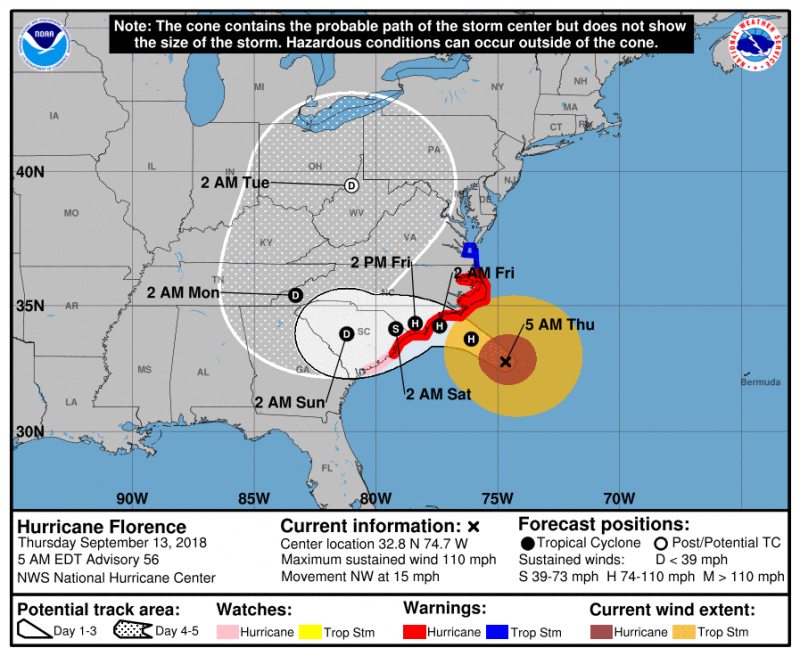
As Hurricane Florence starts to make landfall today, it is expected to have a serious impact on coastal South Carolina and North Carolina. Florence is currently a category 2 hurricane, but they expect wind speeds to diminish quickly upon landfall. No doubt, we’ll remember Florence for the tremendous amount of rainfall she packs–there will be significant flooding in her path.

A few readers have asked about frequencies to monitor as the storm approaches.

Hurricane Watch Net (HWN)

hwn-hurricane-watch-netThe Hurricane Watch Net is a group of amateur radio operators who are trained and organized “to provide essential communications support to the National Hurricane Center during times of Hurricane emergencies.” The HWN focuses on “ground truth” observations (much like SkyWarn nets).

The Hurricane Watch Net is activated when a hurricane is within 300 statute miles of expected land-fall. The HWN covers the Caribbean, Central America, Eastern Mexico, Eastern Canada, and all US Coastal States.

The HWN operates in both English and Spanish, and is active on 14.325 MHz (upper sideband) during the day and 7.268 MHz (lower sideband) at night. The HWN is known to operate on both frequencies if propagation allows.

Please keep HWN frequencies clear

If you’re an amateur radio operator, please avoid using 14.325 MHz and 7.268 MHz anytime the HWN has been activated.

Monitoring hurricane frequencies

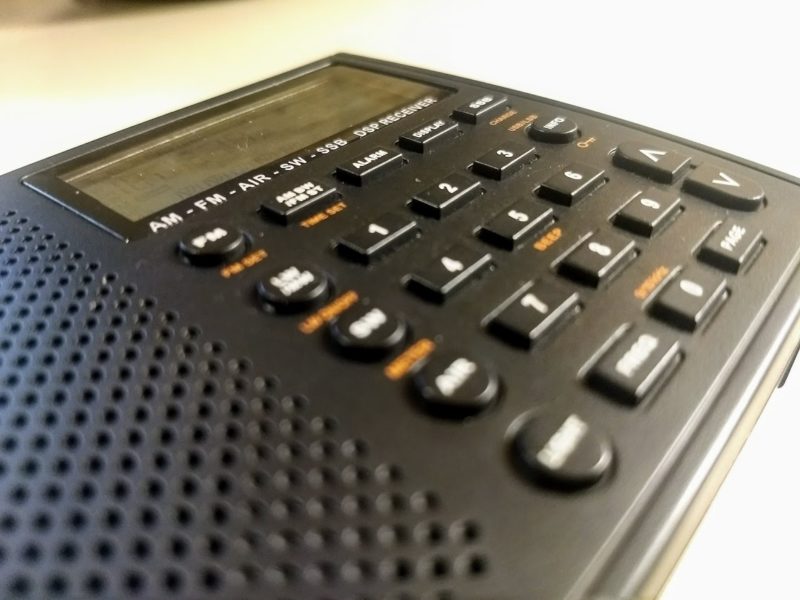
If you have a shortwave radio with a BFO/SSB mode–and you live within the propagation footprint–you can monitor the Hurricane Watch Net.

Note that you’ll need to use upper sideband on 14.325 MHz and lower sideband on 7.268 MHz.

You can also monitor the Hurricane Watch Net via a number of WebSDRs on the KiwiSDR network and even potentially via the U Twente WebSDR in the Netherlands (although a WebSDR in North America would be preferable).

Click here to view the Hurricane Watch Net website.

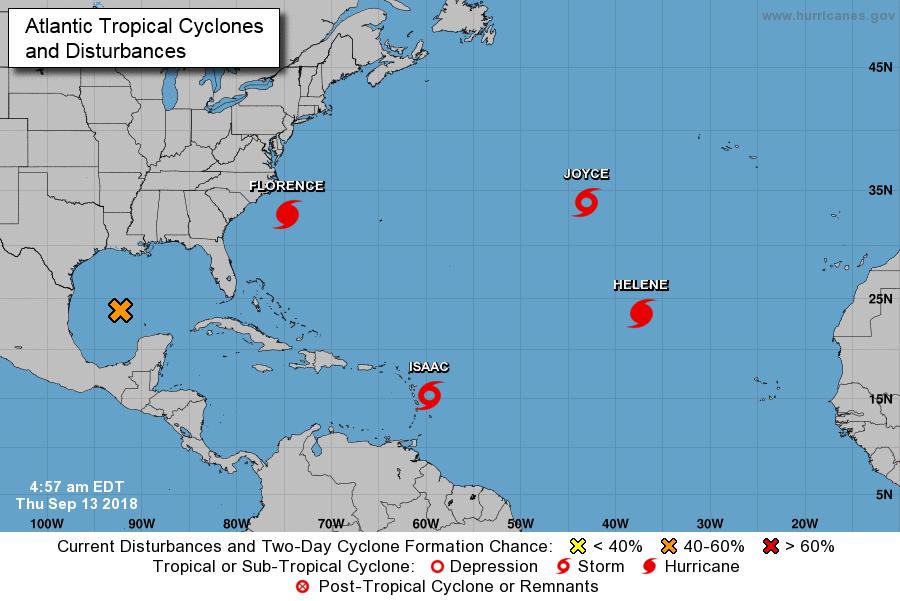
At time of posting, there are a number of tropical storms in the Atlantic. If you live in an area prone to hurricanes, tropical storms and other natural disasters, please keep an emergency kit fully-stocked and at the ready. Click here for some ideas about building your own simple kit.

Spectrum Management and the Impact on Amateur Radio

Many thanks to an SWLing Post reader who has shared the following document which was published during the IARU Region 3 conference in Seoul. The document is titled “The evolution of spectrum management in the era of hyper-connectivity and its impact on the amateur service.” Certainly a tough look at the realities of spectrum use and amateur radio’s part in it.

Click here to download (.docx format).