Broadcasting Board of Governors budget request includes plans for shortwave
Kim Andrew Elliott
22 February 2018
The Broadcasting Board of Governors, consisting of VOA, RFE/RL, Radio Free Asia, Radio/TV Martí, Radio Sawa and Alhurra, is slated for a $24 million budget reduction in fiscal year (FY)
2019.
Of course, Congress will review and probably will modify the President’s budget request for BBG and other agencies.
Here are excerpts from the budget request pertaining to shortwave:
“TSI [Technology, Services and Innovation, i.e. BBG engineering] continues to move the BBG from traditional broadcasting technologies, such as cross-border radio transmissions shortwave (SW) and medium wave (MW serving regions where these platforms are no longer popular, to other delivery systems that are rapidly growing in effectiveness and are less expensive to operate (e.g., FM radio, DTH satellite, internet streaming, mobile, and social media). …
“As part of its multi-year global network realignment, TSI will continue to focus efforts on upgrading its shortwave capacity at the Kuwait Transmitting Station, even as use of SW decreases. With superior strategic location and extremely low operating costs, this station will be able to serve the overwhelming majority of legacy SW audiences in the most cost-effective manner possible, at a fraction of the cost of other BBG operated site or expensive leased capacity. …
“Over the years, the use of shortwave (SW) radio has declined globally. TSI has responded by consolidating broadcasts to more cost-effective transmitting stations and reducing or even eliminating SW where it is no longer relevant. In markets where SW does still retain a sizable, valuable audience, TSI is committed to making SW service available in the most cost-effective way possible. To meet this need, TSI has been upgrading the Kuwait Transmitting Station (KTS), which enjoys a superior strategic location and extremely low operating costs. In FY 2017 TSI continued to expand that facility, and in FY 2018 TSI will procure and install new antennas. In FY 2019, TSI is committed to investing in the KTS expansion further, utilizing whatever resources may be available, in order to realize longer-term savings. Ultimately, the BBG’s goal is to be able to serve most legacy SW audiences from this one site, at a fraction of the cost of all the other transmitting stations, so that other, more expensive sites may be scaled back or closed.
Philippines relay will close
“In FY 2017, TSI completed the closure of the station in Sri Lanka and in FY 2018 will close the BBG facility in Poro, Philippines. TSI’s systematic and thorough review of all transmission leases will continue in FY 2019, identifying further opportunities for savings. In the years between 2010 and 2016, total costs associated with Cross Border Radio (SW and MW ) have declined by over $25 million (34.5%), and we expect this decrease to continue as we respond to market needs and as the Administration and Congress authorize us to shutter less effective legacy facilities …
“[I]n China, including Tibet, TSI will continue to provide satellite TV and radio service via Telstar 18, the most popular satellite in China, for only a fraction of the cost of the BBG’s legacy shortwave and medium wave transmissions to the region. This allows TSI to leverage the widespread use of satellite receiver dishes across the country and provide accessible programming where local cable and internet access is restricted. In FY 2018, TSI will procure additional satellite capacity on this satellite, allowing BBG to simultaneously distribute HD and SD TV programming and capitalize on the migration of Chinese audiences to HDTV, while not stranding legacy SD users. …
“Radio remains a very popular platform in many BBG markets, particularly Africa. BBG global weekly radio audiences increased by a stunning 28 million in 2016 alone and by 35 million since 2012. While shortwave continues to be a relevant means of delivery in several African markets, in most countries rapid growth and competition in the media market have shifted radio
habits almost entirely towards FM. The BBG provides 24/7 FM radio programming in over 30 markets across the continent. …
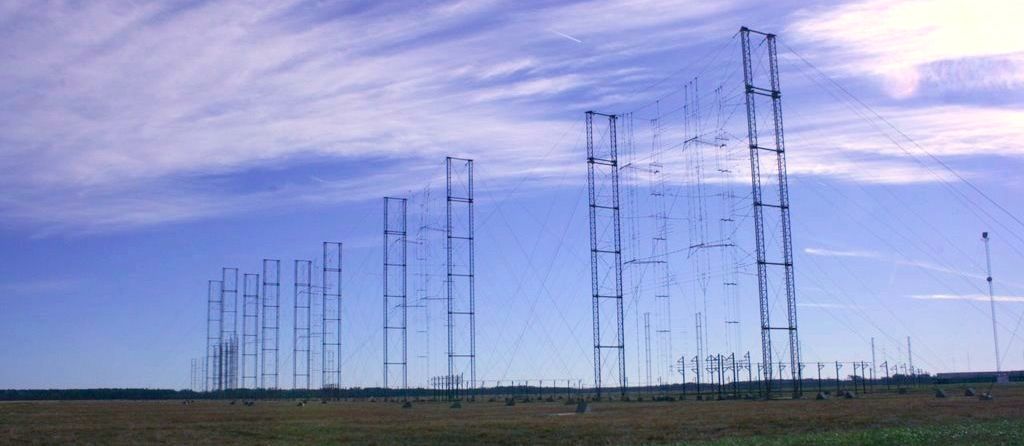
But good news for Kuwait and Greenville stations
“As part of its multi-year global network realignment, TSI will continue to focus efforts on upgrading its shortwave capacity at the Kuwait Transmitting Station, even as use of SW decreases. With superior strategic location and extremely low operating
costs, this station will be able to serve the overwhelming majority of legacy SW audiences in the most cost-effective manner possible, at a fraction of the cost of other BBG operated site or expensive leased capacity. …
“The BCI [broadcasting capital improvement] funds in FY 2018 (and base funds in FY 2019) will be used to continue the planned reconfiguration and expansion of the shortwave broadcast
infrastructure at the Kuwait Transmitting Station. This will allow BBG to enhance transmission to multiple regions, including Africa, and achieve cost savings for shortwave broadcasts.
Because of the very low cost of electrical power in Kuwait, the Kuwait Transmitting Station is the least expensive IBB station to operate. This project will allow the agency to shift mission-critical but higher cost transmissions from other stations in the IBB network to Kuwait.
“TSI will install and deploy three newer SW transmitters at the Greenville, NC Edward R. Murrow transmitting station enabling a doubling of frequencies servicing Cuba and making it extremely difficult for the Cuban government to effectively block Radio Marti signals into the Island. …
“To serve audiences in less developed areas of the world, the BBG must continue to broadcast via traditional technologies, such as shortwave, and maintain capability and improve efficiency on these platforms by replacing antiquated equipment. But to stay relevant in competitive news markets and serve current and future audiences, the BBG must continue to invest in new cutting-edge technology. In areas where ownership and usage of shortwave radio has declined significantly, the Agency has evolved away from broadcasting in that medium. The BBG has closed transmission stations, repurposed equipment and invested these savings in
platforms that the audience has shifted to, primarily television and digital media.”
The entire FY2019 BBG budget submission is here:
https://www.bbg.gov/strategy-and-performance/budget-submissions/