Category Archives: International Broadcasting

Sony ICF-2001D/2010 vs ICF-SW77: The final result & next contender ~ The Eton E1

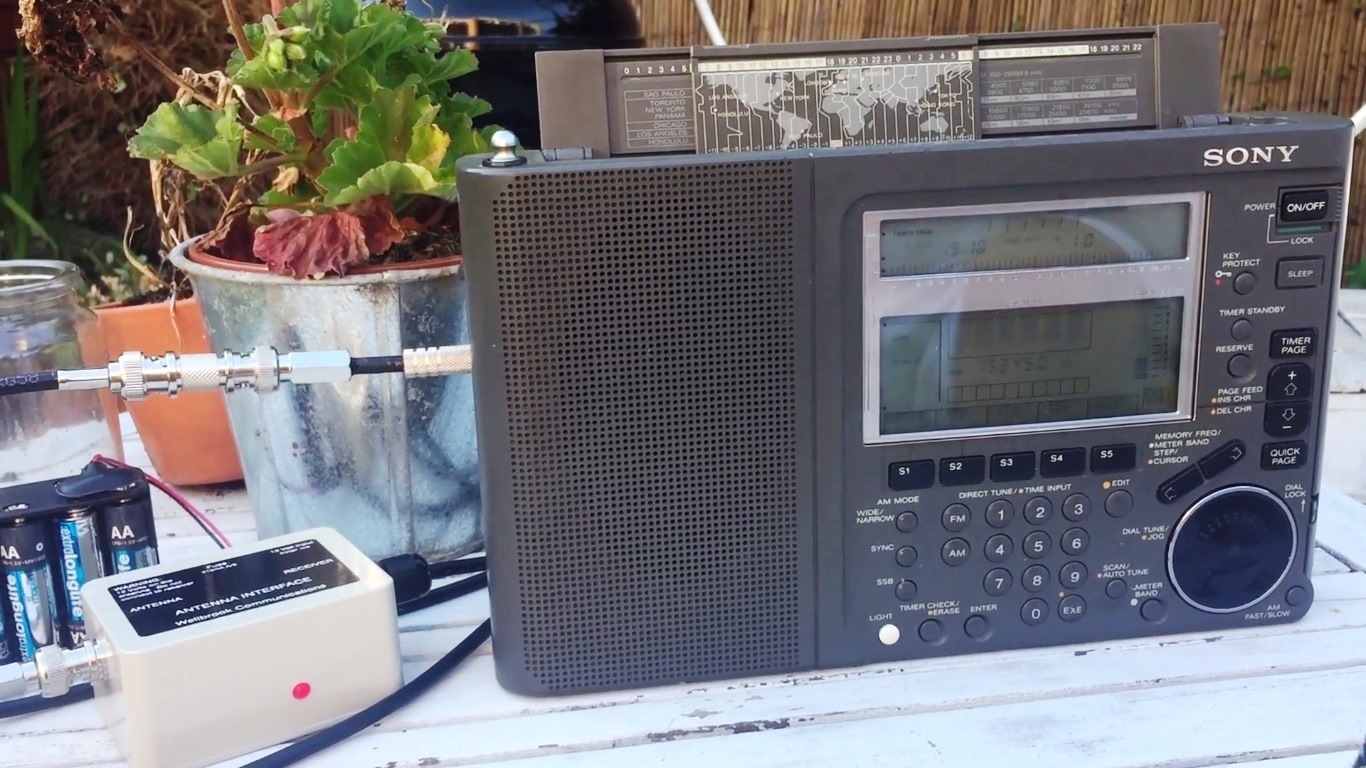
Hi there, after conducting a total of 14 reception tests comparing these two vintage – but excellent portable shortwave radios, there was a clear winner – the ICF-2001D. Interestingly, the second half of the testing identified yet another example of synchronous detection lock dropping out on the ICF-SW77 (during reception of Radio CANDIP, Democratic Republic of the Congo on 5066.4 kHz). Generally, however, and despite a fairly narrow performance margin, the ICF-2001D managed to deliver clearer audio across 5 of the remaining 6 reception tests, giving a final score of 9 to 3 in it’s favour. However, despite the clear win, there is no doubt in my mind at all that the ICF-SW77 is still a great portable receiver and in my humble opinion, remains one of the best ever made.

I believe this comparison test reveals the only likely remaining contender to the top-spot in portable shortwave receivers to be the Eton E1/E1XM. Originally to be marketed as the ‘Satellit 900’ (that never happened) and following a decade of development, involving RL Drake, it was finally introduced in 1995 – and then out of production within a few years. Fortunately, a couple of months ago, I managed to snag one in excellent condition on eBay, for a reasonable price. Now, these radios are not without issues, including, but not limited to; sticky rubber exterior casing, malfunctioning display, failing function keys and general all-round fragility. Not exactly what I would be looking for in a rugged, well-performing portable for my DXpeditions. However, as someone who is always exploring ways to ‘push the performance envelope’ and the obvious potential benefits of passband tuning, an allegedly superior synchronous detection circuit, 4 audio bandwidth filters and tuning resolution down to 10 Hz, the E1 was impossible for me to ignore. Thus, at some point in the near future, I will perform a similar comparison test with the Sony ICF-2001D and the Eton E1. Whichever camp you might be in, I hope you’ll enjoy the reception videos and find the results/conclusions informative.

For now, wishing you all excellent DX.

eton-e1l

The Eton E1; possibly the best portable shortwave receiver of all time?


Clint Gouveia is the author of this post and a regular contributor to the SWLing Post. Clint actively publishes videos of his shortwave radio excursions on his YouTube channel: Oxford Shortwave Log. Clint is based in Oxfordshire, England.
BBC World Service to launch 11 new language services

(Image source: BBC)

(Source: BBC News)

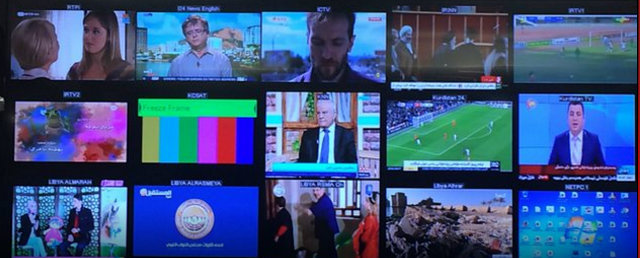
The BBC World Service will launch 11 new language services as part of its biggest expansion “since the 1940s”, the corporation has announced.

bbc-newlanguageservices

The expansion is a result of the funding boost announced by the UK government last year.

The new languages will be Afaan Oromo, Amharic, Gujarati, Igbo, Korean, Marathi, Pidgin, Punjabi, Telugu, Tigrinya, and Yoruba.

The first new services are expected to launch in 2017.

[…]The plans include the expansion of digital services to offer more mobile and video content and a greater social media presence.

On Wednesday the BBC launches a full digital service in Thai, following the success of a Facebook-only “pop-up” service launched in 2014.

Other expansion plans include:

  • extended news bulletins in Russian, with regionalised versions for surrounding countries
  • enhanced television services across Africa, including more then 30 new TV programmes for partner broadcasters across sub-Saharan Africa
  • new regional programming from BBC Arabic
  • short-wave and medium-wave radio programmes aimed at audiences in the Korean peninsula, plus online and social media content
  • investment in World Service English, with new programmes, more original journalism, and a broader agenda

The new language services mean the BBC World Service will be available in 40 languages, including English.

Lord Hall has set a target for the BBC to reach 500 million people worldwide by its centenary in 2022.

Click here to read the full article…

In addition, Mike Terry, posted a link to this Leading Article  from The Times which focuses on the BBC expansion. This content is behind a paywall (though you can register to read two free items per week) but here is an excerpt from the conclusion that I found particularly interesting:

“The radio may seem an irrelevance in the age of the internet but it is the most intimate of the so-called mainstream media and as such poses a challenge to authoritarian rule. Radios are cheap, ubiquitous and can whisper truths under the bedcovers. There is nothing that dictators hate more than direct access to the ears of their subjects.”

Indeed.

Which is the best? Sony ICF-2001D/2010 or ICF-SW77? Part two

sony-test

Hi there, after the first set of recordings were analysed, the score was 4-3 to the ICF-2001D, demonstrating how similar these two great receivers are in overall performance. There were a copule of notable differences however. The synchronous detection circuit on the ICF-2001D allows the user to effectively tune through a signal in 01. kHz steps, whilst the receiver automatically locks onto either the upper or lower sideband, depending on the frequency offset. The ICF-SW77 synchronous detection system differs in that the user must tune the signal and select the sideband. The results of this test confirmed that whilst the ICF-2001D almost always retained SYNC lock, the ICF-SW77 was very prone to losing lock, which of course affected the audio quality in many cases. The other issue was with the ICF-SW77 in that the narrow audio bandwidth filter often seemed to deliver ‘muddy’ audio. Whilst this feature proved to be excellent in terms of mitigating adjacent channel QRM, it also reduced signal clarity/ audio discernibility a little too much in my opinion. However, overall, sensitivity and selectivity was very similar between both radios – in fact, one recording had to be judged a draw (Radio Bandeirantes, Sao Paolo on 9645.4 kHz) – I simply couldn’t split them. Part two of the reception testing follows, using signals from Canda, DR Congo, Brazil, Cuba and Peru.

I hope you enjoy the recordings – text links and embedded videos follow below:


Clint Gouveia is the author of this post and a regular contributor to the SWLing Post. Clint actively publishes videos of his shortwave radio excursions on his YouTube channel: Oxford Shortwave Log. Clint is based in Oxfordshire, England.

Which is the best? Sony ICF-2001D/2010 or ICF-SW77? The halfway score

Hi there, here is a summary of the first half of tests comparing the Sony ICF-2001D against it’s replacement the ICF-SW77. Both receivers are widely acknowledged as being amongst the best shortwave portables ever made, but how close are they in performance? Is there a clear winner after the first 8 reception tests? I hope you enjoy the summary video. Links to the first half of reception tests follow again, below, whilst the second half will follow in a separate post. Thanks and good DX to all.


Clint Gouveia is the author of this post and a regular contributor to the SWLing Post. Clint actively publishes videos of his shortwave radio excursions on his YouTube channel: Oxford Shortwave Log. Clint is based in Oxfordshire, England.
Which is the best? Sony ICF-2001D/2010 or ICF-SW77?

sony-test

Hi there, subscribers to my YouTube channel Oxford Shortwave Log  will be aware that I currently operate both of these wonderful vintage portables. I purchased the ICF-2001D only 18 months ago from eBay, based largely on its reputation as one of the best performing portables ever made. Previously I had been using my excellent ICF-SW55 as the mainstay receiver for my numerous DXpeditions, coupled with irregular appearances from my Sangean ATS-803A and the excellent value-for-money Tecsun PL-360. The ICF-2001D proved to be a revelation in terms of sensitivity, selectivity and contrary to popular belief, with careful planning (to avoid crowded bands), is able to cope pretty well with very large antennas. As regards audio bandwidth filtering, SSB and synchronous detection, in my experience, the ICF-2001D is as good as it gets in a portable – or a vintage portable at least. I have lost count of the number of personal-firsts I’ve achieved using this wonderful receiver and as someone who likes to push the envelope a little, I soon started to wonder whether it’s replacement, the ICF-SW77 might prove to be an even better performer. Subsequent online research  confirmed there was no absolute consensus on this issue, with followers of these two great receivers firmly placed in both camps.

Sometime later, a good friend of mine, fellow radio hobbyist and subscriber to Oxford Shortwave Log very kindly offered to send me his cherished ICF-SW77 on long-term loan. Like me, he was intrigued to know how it compared to it’s venerable predecessor and thus the deal was done! Upon it’s arrival in July, I started planning a back-to-back series of comparison tests at the very quiet wood in Oxfordshire I used for my DX’peditions, using the same antenna for both recievers – the excellent Wellbrook ALA1530 active loop. In total, I made fourteen reception videos comparing the ICF-2001D and ICF-SW77 and posted them to Oxford Shortwave Log. Both receivers performed very well, delivering excellent reception on the Tropical Band and elsewhere on the shortwave spectrum from Bolivia, Brazil, Guatemala, amongst others. At the halfway stage, I generated a video to summarise the results to-date and this will follow in my next post to swling.com.  In the meantime, I hope you enjoy the first half of the reception videos; which follow below:


Clint Gouveia is the author of this post and a regular contributor to the SWLing Post. Clint actively publishes videos of his shortwave radio excursions on his YouTube channel: Oxford Shortwave Log. Clint is based in Oxfordshire, England.
Foreign Affairs Committee believe “government should fund BBC Monitoring”

(Source: Parliment.UK via Andy Sennitt on PCJ Media’s Facebook Page)

Government should fund BBC Monitoring, not the licence fee payer

bbc-monitoring29 October 2016

It was a mistake to end Government funding for BBC Monitoring in 2013 and that change should be reversed, say MPs on the Foreign Affairs Committee.

Report findings

The Foreign Affairs Committee says BBC Monitoring is vital to the FCO’s scrutiny of developing events across the world. Highly valued by the Government, the service translates and analyses news and information from freely available media sources in 100 different languages and covering 150 countries.

Triggered by a shortfall of £4m in funding, the BBC now proposes an extensive restructure of the service, which would mean the closure of 40% of BBC Monitoring posts in the UK and 20% of posts abroad, and relocation of the service from Caversham to London.

The Government is the prime customer for the service. The Foreign Affairs Committee believes Government should restore funding for open source monitoring of media sources overseas, whether they pay BBC Monitoring or carry out the work themselves.

Chair’s comments

Chair of the Committee, Crispin Blunt MP, commented:

“BBC Monitoring is a highly regarded organisation whose work is more important than ever.

These cuts to BBC Monitoring, proposed by the BBC, are simply not in the interest of the UK Government. They will not help the FCO improve its performance in detecting trends and undercurrents overseas that have implications for UK policy – something it notably failed to do in Libya, for instance. Given the vast increase in social media output, this kind of monitoring is more important than ever.

Other countries with similar operations fund them from central Government. The principal benefit of the output of BBC Monitoring is better-informed Government policy, which is why the Government should fund it, not the licence fee payer. It’s notable that in the face of these cuts, government departments are in the process of recreating this capability internally. This should not be necessary and we should be bolstering the work of BBC Monitoring, not cutting it.”

Further information

Oxford Shortwave Log: DXing in the tropical rainforest of Pará, Brazil – part 2

img_9956pl-680

Hi there, here is part 2 of my reception videos taken in the tropical rainforest of Pará, Northern Brazil. As I mentioned in my previous post, I took a Tecsun PL-680 with me on the trip because I didn’t want to risk losing or trashing one of my precious vintage portables but also because of the following:

  • It can handle a longwire very well without overloading (I actually only used a 5 metre wire)
  • An excellent synchronous detection circuit and audio bandwidth filtering options
  • Excellent sensitivity, as demonstrated by the many DX reception videos on YouTube
  • If it got lost or damaged it would be a pain, but not difficult to replace

So, what can you hear in the jungle? Part 2 of my group of reception videos follow below – I hope you enjoy them.


Tropical rainforest DX in Pará, Brazil: RMI Overcomer Ministry 11530 kHz


Tropical rainforest DX in Pará, Brazil: Radio Tamazuj 11650 kHz, Madagascar


Tropical rainforest SW in Pará, Brazil: Radio Nacional Brasilia 11780 khz


Tropical rainforest DX in Pará, Brazil: R Aparecida 11855 khz (TX distance 2430 km)


Tropical rainforest SW in Pará, Brazil: R Brasil Central 11815 kHz, Goiania


Tropical rainforest DX in Pará, Brazil: Voice of Turkey 11980 kHz


Tropical rainforest DX in Pará, Brazil: Radio Dabanga 13800 kHz, Madagascar


Clint Gouveia is the author of this post and a regular contributor to the SWLing Post. Clint actively publishes videos of his shortwave radio excursions on his YouTube channel: Oxford Shortwave Log. Clint is based in Oxfordshire, England.