Category Archives: Mediumwave

Norway DXer tunes into CBC Saskatchewan

SX-99-Dial-Nar

Many thanks to my pal, Sheldon Harvey (of the International Radio Report and CIDX), for sharing this news item from the CBC News in Saskatchewan:

Ole Forr is a 58-year-old radio lover who tunes into radio stations across the world for fun

A dairy farmer in Norway went to great lengths to tune into CBC Saskatchewan.

Sure, The Morning Edition with Sheila Coles is the No. 1 morning radio show in Saskatchewan. But few people could have expected it to reach a group of listeners more than 5,800 kilometres away— and not through the internet.

Ole Forr doesn’t let thousands of kilometres and the Atlantic Ocean get in the way of his hobby.

[…]Every late October, Forr and three friends visit a remote location in northern Norway, where he said they spend up to two weeks listening to radio broadcasts using some very long-range receiving antennas.

On Oct. 27, 2015, Forr tuned into CBK 540 AM from Andøya, Norway.

“It’s very remote, so there is no man-made noise,” Forr said. “From October to March, it’s very dark up there so to have dark between the transmitter and the receiver.”

Forr contacted CBC Saskatchewan to verify his recording, providing MP3 evidence of the broadcast.[…]

Read the full article, along with audio, on the CBC News Saskatchewan website.

Thanks again, Sheldon! I love stories like this that give our radio hobby a little time in the limelight!

Ayar notes LW and MW transmitters still active in France

AM-Dial-Digital-Grundig-Mediumwave-MWIn response to our previous post about France, Germany and Luxembourg leaving the AM broadcast bands, SWLing Post contributor Ayar (HB9EVW) comments:

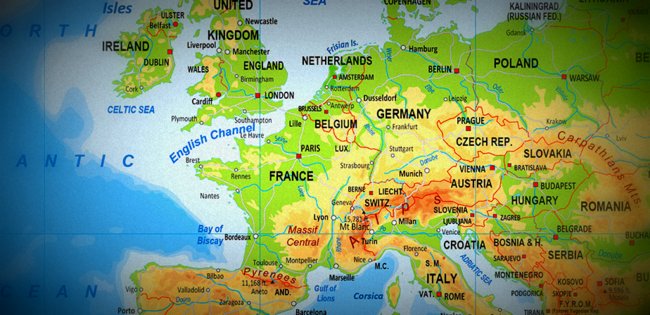
It is indeed a sad day for AM broadcasting. Not only Germany, France and Luxembourg, also the Czech Republic will turn off 3 MW transmitters on January 5th 2016. The three transmitters carrying the CRo Plus program are: 639, 954 and 1332 kHz.

[In the Czech Republic, there] are 2 transmitters on 693 kHz, the bigger one in “Liblice” with 750 kW will be switched off, but the smaller one in “Ostrava-Svinov” with 30 kW will remain active for now, or at least until the FM coverage is good enough for this region.

In France (including Monaco), there will still be few active LW and MW stations:

162 KHz. Allouis (France Inter)
216 KHz. Roumoules (RMC)
1467 KHz. Roumoules (TWR)
1467 KHz. Col de la Madone (Radio Maria France)
1593 KHz. St Goueno (Bretagne 5)

I am already recording some of the transmitters from Germany and France. I can receive few of them here in Switzerland even during the day.

Many thanks, Ayar. I would love to share some of your recordings on the SRAA.

Mediumwave: France, Luxembourg and Germany go silent

france-germany

On Facebook, Mike Terry reminded me:

“Tomorrow France, Germany and Luxembourg go very quiet on medium wave.”

He’s right–there will be more empty space on the AM broadcast band for those living in or near France, Germany or Luxembourg.

I hope there are Post readers out there who might be able to make recordings of some of these stations as they go off the air.  I would like to add those recordings to the archive. Please comment or contact me if you can.

Radio France to shut down mediumwave

La Masion de la Radio, Paris, France, (Photo source: Gérard Ducher via Wikimedia Commons).

La Masion de la Radio, Paris, France, (Photo source: Gérard Ducher via Wikimedia Commons).

Many thanks to SWLing Post reader, Marc, who shares this news from Radio France.

The article (in French) notes that as of midnight on December 31, 2015, Radio France will cease all mediumwave broadcasts permanently. Up to this point, Radio France’s mediumwave transmitters have broadcast France InfoFrance bleu RCFM and France Bleu Elsass.

The article notes that regions previously within the broadcast footprint of their mediumwave transmissions are now serviced via FM and/or online streaming.

Click here to read the article on Radio France’s website.

WRTH 2016: now in publication

WRTH-2016I’m very happy to see this notice from Nicholas Hardyman, Publisher of the World Radio TV Handbook:

We are delighted to announce the publication today of the 70th edition of WRTH.

For full details of WRTH 2016 and to order a copy please visit our website at www.wrth.com where you can also order the B15 WRTH Bargraph Frequency Guide on CD and as a download.

WRTH 2016 is also available for pre-order, for readers in the USA, from Amazon or Universal  Radio in Ohio.

I hope you enjoy using this new edition of WRTH and the new CD.

Best regards

Nicholas Hardyman
Publisher

An iPhone app and Paul’s secret for successful reception reports

VoiceRecorderIconMany thanks to SWLing Post contributor, Paul Walker, who writes:

Wether you do AM, shortwave, longwave, FM or something else, I think this will prove useful.

I have a pretty high return rate when submitting reception reports and asking for QSL cards/letters. I’d say my return rate is probably better than 60 percent, sometimes even 70 or 80 percent. It just depends.

But what helps me so much? EVERY reception report I email or snail mail includes an audio recording. Sometimes it’s only 30 seconds if the signal is really rough, weak or hard to pick out anything useable. Sometimes I include anywhere between 5 minutes and 30 minutes with a detailed report.

Well, how do I record? I use my smartphone! I have an iPhone 6 Plus with 128 GB of storage. iPhones record some of the best audio I’ve ever heard from a smartphone. Androids do a pretty decent job–not as good, but not bad.

The best app I’ve found for this is Voice Recorder Pro 7.

Click here to view Voice Recorder Pro 7 on iTunes.

Voice Recorder Pro 7 Screenshots

Voice Recorder Pro 7 Screenshots

You can select the recording format (mp4, mp3 or wav), you can select the sample rate, bit rate (32kbps all the way up to 320kbps), you can select mono or stereo as well.

But where this really comes in handy? You can email the audio file to yourself or someone with the click of a button, you can upload it to a google drive, dropbox, one drive or a box cloud account. You can even have it upload to an FTP server or to your Facebook page if you want!!

The one feature I like is being able to turn audio into a YouTube video and uploading it directly! I was recording videos by holding it up to the radio’s display and while the audio was good, it wasn’t great because it was a bit further away from the speaker so I could show the S meter and frequency on the display.

So what I ended up doing is to put the phone right near the radio’s speaker and start recording… this produces better audio then a straight up video. Then you click a button after the recording is over and it generates the video frames for you, putting a picture there; you fill in the particulars of your video and it uploads it to your YouTube account.

See what I’m talking about here, by viewing my YouTube account:
https://www.youtube.com/user/OnAirDJPaulWalker

You can easily tell which videos were made by me holding up the phone to the radio’s display and which are audio only with the video generated by Voice Recorder Pro 7.

Here’s an audio only track I recorded to give you an idea how it sounds.

https://soundcloud.com/paul-walker-11/radio-mediterranne-international

I don’t recall if they have this app for Android phones, but if they don’t, there’s something similar. It’s worth investigating.

A detailed written report is one thing when requesting a QSL, but audio is indisputable and absolute confirmation of what was heard.

Many thanks for the recommendation, Paul. I use an Android phone (the Moto X 2nd generation). I’m hoping a Post reader can suggest a recording app that is equally robust.

Like you, I typically send an audio recording when submitting a reception report. It’s certainly a valuable piece of information for broadcast engineers. Thanks again!