Category Archives: New Products

A review of the SDRplay RSP1A software defined radio


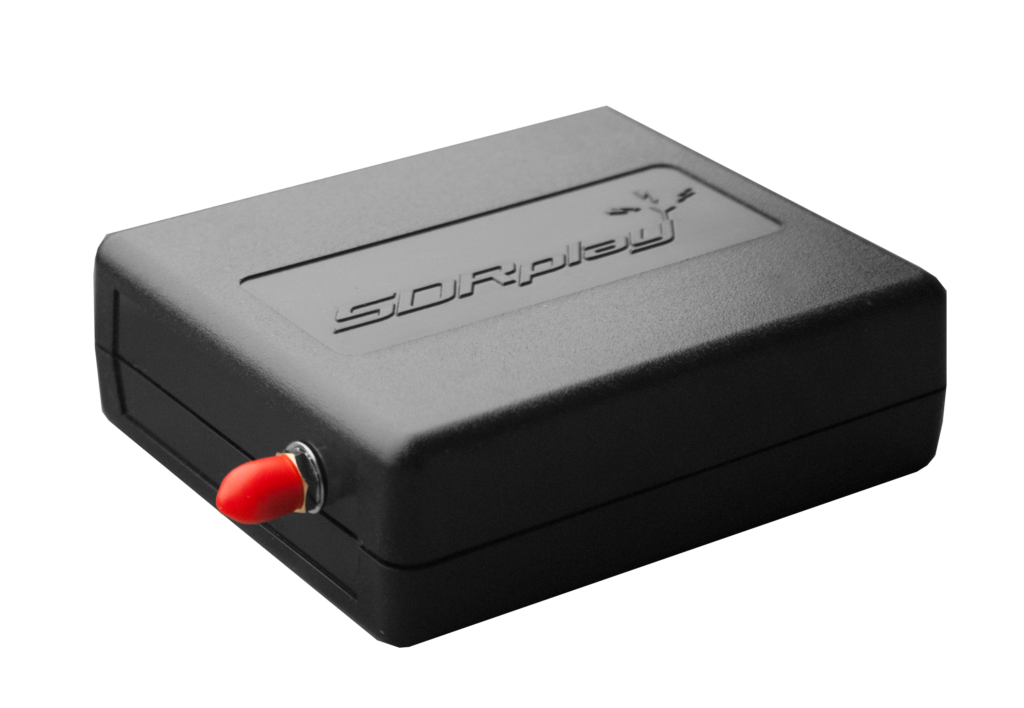
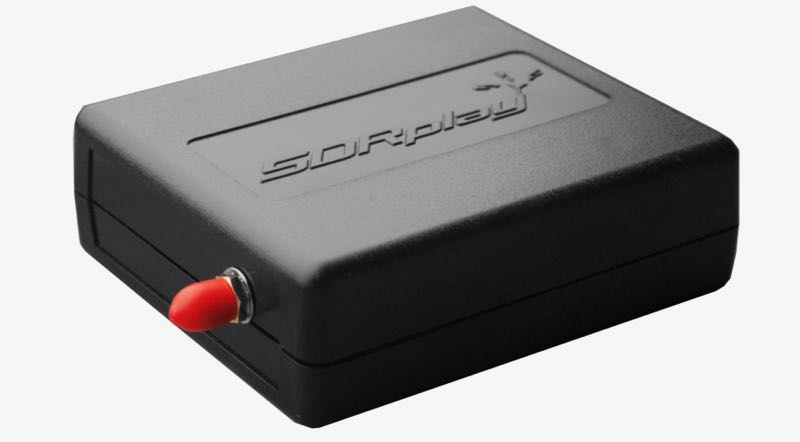
Today, SDRplay, the UK-based manufacturer of affordable software defined receivers, announced a new addition to their product line: the SDRplay RSP-1A.

The RSP1A joins the SDRplay product line of the RSP2 ($169.95 US), and RSP2 Pro ($199.95 US). The new RSP1A will retail for $99.00 US.

But what of this SDR’s performance?  In a nutshell: as of today, I’d contend that the RSP1A will simply be the best SDR value on the market. End of story. There is nothing I know in the $99 price bracket that can beat it.

How do I know this?  I can make this statement with confidence because I have been involved with real-world testing and evaluation of the RSP1A Alpha, Beta, and production models since May. I took the RSP1A with me to Canada this past summer for field recordings with my laptop, and I’ve also evaluated the RSP at my home. Like a number of other reviewers, I’ve been intimately involved with putting the RSP1A through its paces. And let’s just say I like what I’ve seen.

I actually do quite a bit of Alpha and Beta testing for manufacturers. While it’s time-consuming volunteer work and requires meticulous attention to minor details, it gives me an opportunity to have meaningful positive impact on an upcoming product. Manufacturers that actively involve enthusiasts in their testing phase tend to produce better-quality products on the first run. Better products, of course, mean a better radio market with options for those only now discovering the mystery––and fun––of radio as well as DXing.

Since the RSP1A is essentially iterative agility on behalf of SDRplay, the RSP1A was surprisingly solid even in its early release. And try as I might, there were very few issues I ever needed to report back to the engineering team. SDRplay took each item of feedback seriously, logged it, and followed-up. Over the course of the evaluation period, SDRplay improved their dedicated SDR application SDRuno, as well.

In essence, the RSP1A hardware now in production and shipping has been thoroughly tested and is ripe-and-ready for your radio adventures.

I have not compared the RSP and RSP1A side by side; running two instances of SDRuno on the same PC has been problematic. To my ear, when I’ve tested one after the other, the RSP1A serves up slightly better sensitivity, perhaps due to a slightly lower noise floor. Also the RSP1A frequency stability is much improved over the RSP1.

Specifically, the following upgrades have been made per SDRplay:

  • ADC resolution increased to 14-bit native for sample rates below 6 MHz, increasing to 16 bits with decimation
  • Enhanced RF pre-selection (greater filter selectivity plus 4 additional sub-bands compared to the original RSP1) for reduced levels of spurious responses
  • Improved LNA architecture with variable gain––the RSP1 had just a single gain step
  • Improved intermodulation performance
  • Performance extended to cover 1kHz to 2 GHz with a single antenna port.
  • Bias-T facility
  • Improved frequency stability incorporating a 0.5ppm TCXO (software trimmable to 0.01ppm)
  • Selectable broadcast AM/FM/DAB notch filters
  • RF shielding within the robust plastic casing

Performance
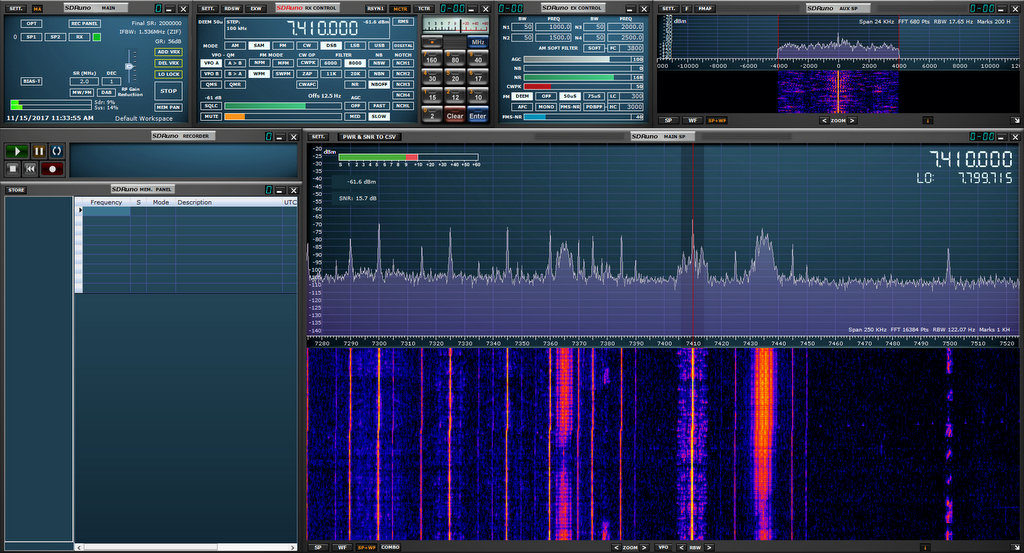
Suffice to say, this budget SDR delivers, and users will be wooed by its stellar performance.

I’ve spent 95% of my evaluation time on the HF and mediumwave bands and I’ve been impressed with the receiver’s sensitivity, selectivity, and AGC control. The audio fidelity is also highly customizable since it’s pumping audio directly through your PC’s system.

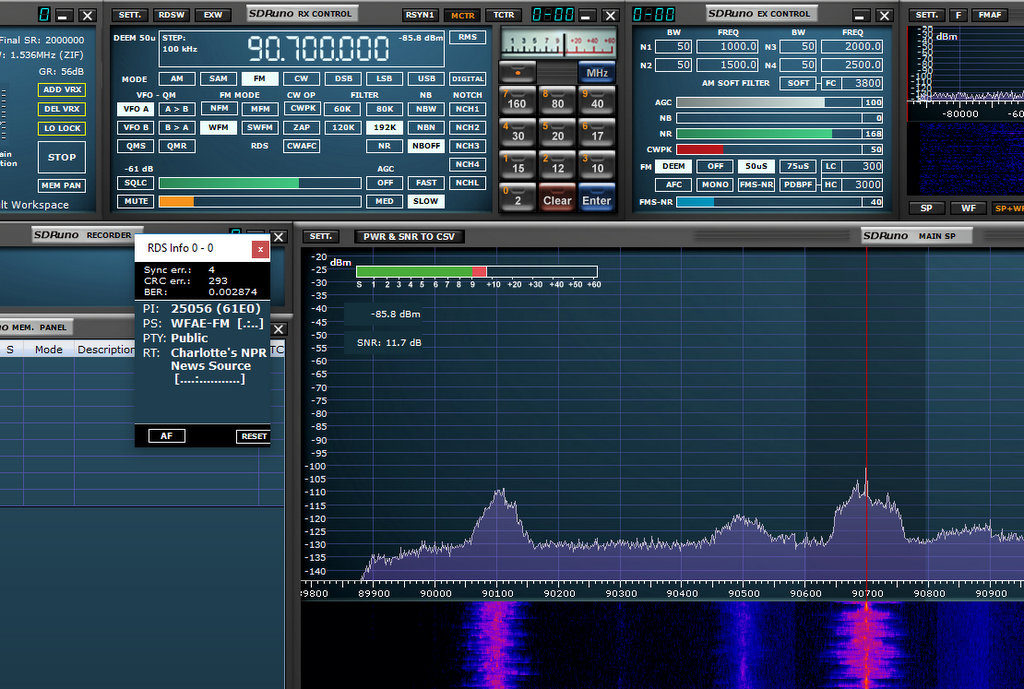
I haven’t spent any time above the aviation bands (higher than 140 MHz); I have, however, tested the RSP1A thoroughly on the FM broadcast bands and found it a solid FM performer. Note, too, that SDRuno’s built-in RDS decoder window provides quite a lot of data.
I’m also pleased that I haven’t noticed any front-end overloading––this, despite the fact that during travel, I’ve used it in the vicinity of some powerful broadcasters.

Comparing to benchmarks

I’ve compared the RSP1A to the Elad FDM-S2 ($500), WinRadio Excalibur ($900) and Microtelecom Perseus ($900).
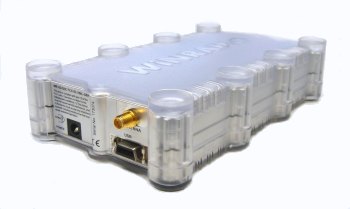
The WinRadio G31DDC “Excalibur”

But let’s be clear, here: this is not an “apples-to-apples” comparison since the RSP1A is a fraction of the cost of the others, and is also a wideband receiver (1 kHz to 2 GHz). The only other SDR I own that has VHF coverage is the FDM-S2, which tops out at 160 MHz.

Pricier HF-focused SDRs have distinct hardware advantages––especially in terms of filtering––that give them an edge over budget wideband SDRs. Still, in my comparisons, the RSP1A holds its own quite well.

Compared to the WinRadio Excalibur, for example, this SDR came fairly close in terms of sensitivity.  The WinRadio’s synchronous detector––which I consider to be the best in the business––was indeed more stable than that of the RSP1A. The RSP1A sync lock could falter a bit during a weak signal’s QSB dip compared with the Excalibur.

But again, HF SDRs in the league of the FDM-S2, Excalibur, and Perseus have the luxury of designing receiver architecture around a much smaller portion of the spectrum. If you are a hard-core DXer looking for uncompromised performance on the HF/MW bands, then you should invest in one of these benchmark SDRs. I have, and I’d never give one of them up.

With that said, even though I have these amazing benchmark SDRs at my disposal, I still purchased the original RSP1 (then at $159 US) years ago. Why?  For one thing, it’s more portable than the Excalibur or Perseus as it requires no external power supply (like the excellent FDM-S2, the RSP derives its power from the USB data cable). Additionally, I do like to play with frequencies above 50 MHz from time to time. The RSP offers up an all-in-one RF toolbox at a very affordable price. I don’t hesitate to throw the RSP in my pack and take it anywhere I’m travelling. If it gets damaged or lost, I’m only out $99––not $1,000.

Again, RSP1A’s bang-for-buck simply blows my mind.

Side note: I do wish someone would develop an accessory outboard filter box that could be implemented with budget wideband SDRs, thus providing, in a sense, a hardware “upgrade.” Something like the Elad SPF-08 preselector box designed for the FDM-S2

Any cons?

This review has been overwhelmingly positive because, frankly, the RSP1A is challenging to find fault with. Of course, if it carried a price tag of $600-900, I’d be much more critical of its performance as compared with my benchmark receivers in that same price class. I’d fully expect a robust preselector system, a bullet-proof front end, and performance that could match or surpass the benchmarks.

But for just $99? You simply can’t get that kind of hardware for that cost.  So SDRplay engineering cleverly pulls every bit of performance out of their receiver by focusing on their SDRuno application, which is optimized for this receiver.  And for that reason, it’s in a class by itself.

Admittedly, when SDRplay first introduced their application, SDRuno, I wasn’t the biggest fan. I found it rather quirky and a little cumbersome to use. SDRuno has come a long way, though; SDRplay has continuously improved it, and today, I prefer it to HDSDR and SDR console. SDRuno is much less cumbersome to use than it used to be, and the default window arrangement is pleasing (though I’d still like SDRuno windows to lock and act as one window as I flip through programs on my Win 10 PC). I even prefer SDRuno to Elad’s application in terms of ease of use.

If more AF/IQ recording features are added (virtual receivers, for example) it could even become my application of choice.

The great thing about the SDRplay RSP series, however, is that they’re supported by so many third-party SDR apps. If you don’t like the one you’re using, there are numerous others to chose from. SDRplay takes an affirmative stance that their hardware should be usable on as many platforms with as many applications as possible. Kudos to them.

Here’s a question I know I’ll be asked…

“I just purchased the RSP1. Should I upgrade?”

Good question! As you might guess, my answer is fairly simple and depends on your particular needs:

If you’re happy with the RSP1 and see no real benefit in the RSP1A upgrades above, don’t bother upgrading. Seriously…enjoy what you have! The RSP1 is still a sharp, capable, versatile little SDR and fully supported by SDRplay and its community. I’ve worked some incredible DX with mine over the past few years, and love it.

If you like the sound of the RSP1A and would appreciate the upgrades listed above, then go for it! After all, it’s only $99! Consider this: the price is less than that of my recently reviewed Digitech AR-1780 portable and less than the venerable Tecsun PL-660. Even with a modest external antenna, it will perform circles around these rigs.

If you need an excuse to justify the upgrade to the RSP1A, consider doing what I’m planning to do: give your RSP1 to a friend or someone interested in the hobby. Or, donate it to your radio club as a raffle prize. Then too, of course, you can snag a decent price for it by selling it on eBay or QTH.com.

Summary
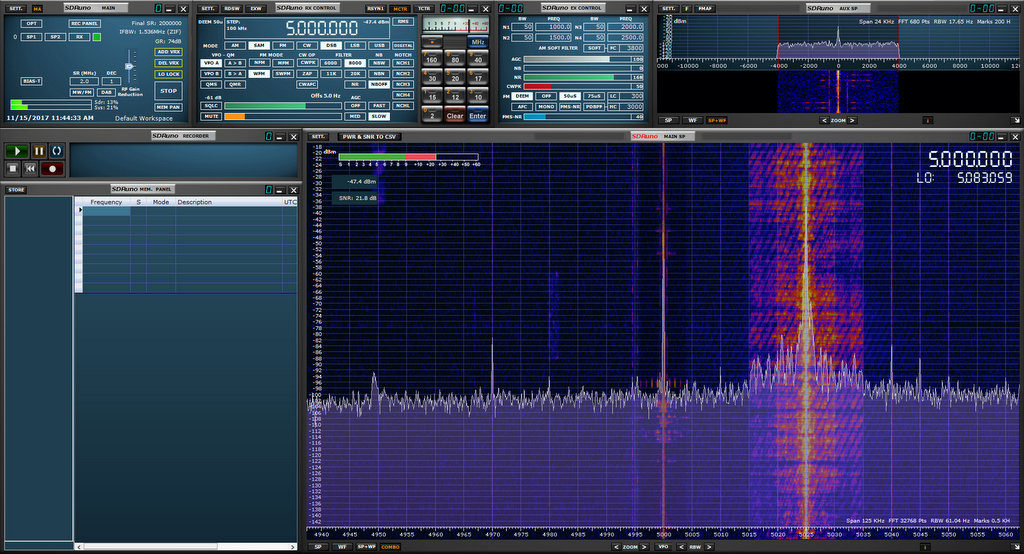
While a little busy, I do enjoy the combined spectrum display option on SDRuno.

If you can’t tell, I’m most impressed with this latest offering from SDRplay. I can recommend it with confidence because you simply can’t beat the performance and features for the price.

If you’re considering the RSP1A as your first SDR, you’ll be happy to know SDRplay’s Mike Ladd has also amassed a healthy number of SDRuno instructional videos on YouTube as well. If you start with the first video, by the end of the series you’ll be adept at using SDRuno. Couldn’t be easier.

Think of it this way: The RSP1A is the sporty-but-affordable compact car of the SDR world. It delivers performance well above its comparatively modest price and is fun to operate. In terms of DX, it gets you from point A to point B very comfortably––and quite affordably!

With just $99, there’s no reason you can’t join the world of SDR––the RSP1A is a very accessible, very intuitive SDR start your exploration of the radio spectrum.

Click here to view the RSP1A at SDRplay’s website.

SDRplay announces the RSP1A software defined radio

(Source: SDRplay Press Release)

15/November/2017, Wakefield UK:

SDRplay announces the RSP1A

SDRplay Limited has today announced the launch of a new Software Defined Radio product – the RSP1A.

The SDR-play RSP1A is a major upgrade to the popular RSP1 and is a powerful wideband full featured 14-bit SDR which covers the RF spectrum from 1 kHz to 2 GHz.

Due to its exceptional combination of performance and price, the RSP1 has proved to be a very popular choice as an “entry level” SDR receiver. Since launching the RSP1, we have learned a great deal about what people are looking for in SDR receivers, and where possible, we have incorporated these improvements and new features into the RSP1A.

The RSP1A therefore delivers a significant number of additional features which result in benefits to amateur radio enthusiasts as well as significant benefits for the scientific, educational and industrial SDR community.

Here are the main additional features of the RSP1A compared to the original RSP1:

  • ADC resolution increased to 14-bit native for sample rates below 6 MHz, increasing to 16 bits with decimation.
  • Enhanced RF pre-selection (greater filter selectivity plus 4 additional sub-bands compared to the original RSP1) for reduced levels of spurious responses
  • Improved LNA architecture with variable gain. The RSP1 had just a single gain step.
  • Improved intermodulation performance • Performance extended to cover 1kHz to 2 GHz with a single antenna port.
  • Bias-T facility • Improved frequency stability incorporating a 0.5ppm TCXO (software trimmable to 0.01ppm)
  • Selectable broadcast AM/FM/DAB notch filters
  • RF shielding within the robust plastic casing

When used together SDRplay’s own SDRuno software, the RSP1A becomes a high performance SDR platform. The benefits of using the RSP1A with SDRuno include:

  • Highly integrated native support for the RSP1A
  • Calibrated RF Power Meter with more than 100 dB of usable range
  • Calibrated S-Meter including support for IARU S-Meter Standard
  • The ability to save power (dBm) and SNR (dB) measurements over time, to a CSV file for future analysis
  • The IQ output wav files can be accessed for 3rd party applications

SDRplay has also worked with developers of the popular HDSDR, SDR-Console and Cubic SDR software packages to ensure compatibility. As with the RSP1, SDRplay provides multiplatform driver and API support which includes Windows, Linux, Mac, Android and Raspberry Pi 3. There is even a downloadable SD card image available for Raspberry Pi3 which includes Cubic SDR.

The RSP1A is expected to retail at approximately £76 (excluding taxes) or $100 (excluding taxes)

For more information visit our website on www.sdrplay.com

About SDRplay:

SDRplay limited is a UK company and consists of a small group of engineers with strong connections to the UK Wireless semiconductor industry. SDRplay announced its first product, the RSP1 in August 2014

Email: [email protected]

Introductory video:

Click here to view on YouTube.

Click here to check out the RSP1A at SDRplay.com.

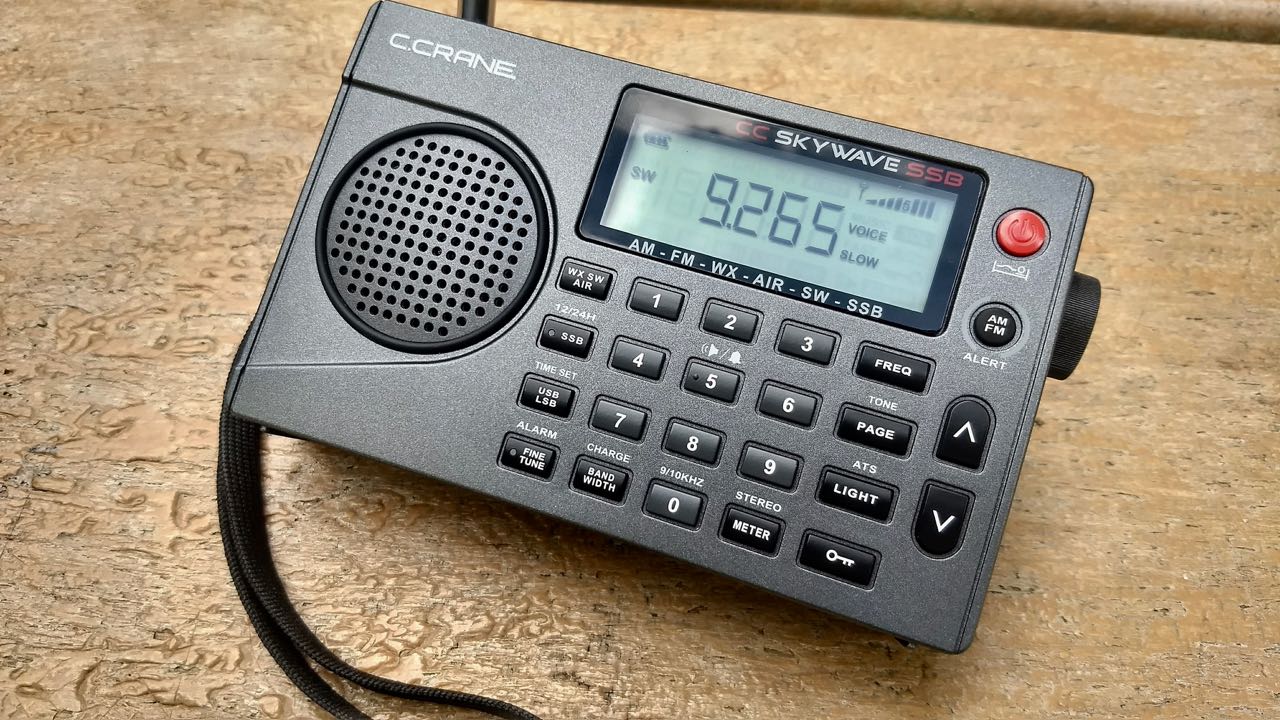
C. Crane lowers price of CC Skywave SSB

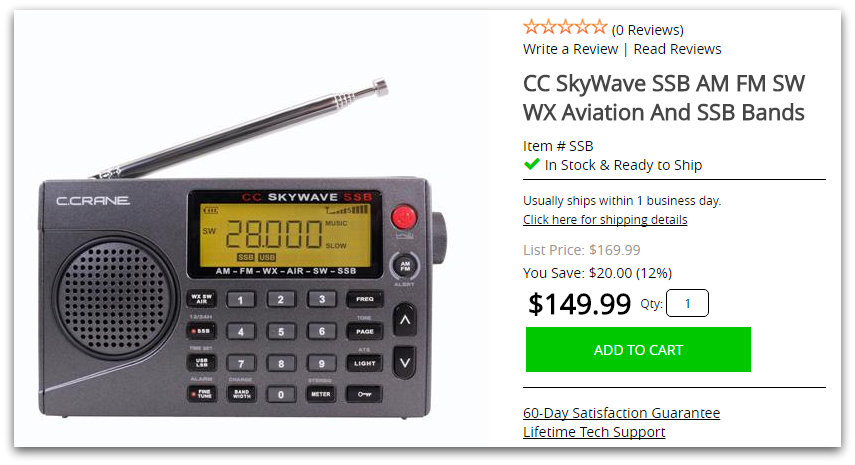
C. Crane has lowered the price of their new CC Skywave SSB from $169.99 to $149.99. I’ve confirmed with C. Crane that anyone who ordered the Skywave SSB at the $169 price level will be reimbursed $20 on their invoice.

I ordered a radio from the first production run and just received it.

While $149.99 is still topping the price range of compact portables, the radio package does include a nice protective soft case, a pair of CC Buds and (best yet) a CC Reel Antenna. I did not realize the production unit would also include the external antenna–very happy to report this as the CC Reel Antenna is my favorite on the market.

I’ll be testing my CC Skywave SSB over the next week and reporting back here!  While I’ve had the pre-production unit on the air for a few months, I’ve yet to check out the final! Looking forward to it!

Click here to check out the CC Skywave SSB at C. Crane.

A review of the Red Oxx Micro Manager EDC and radio gear bag

Besides being a radio enthusiast, regular SWLing Post readers know that I’m also an avid traveler and, as a result, something of a pack geek.

In September, I posted a review of the Red Oxx “Lil Roy”–a small, relatively inexpensive multi-purpose bag that I love to haul my radio gear in.

In the spirit of full disclosure, I’m a huge fan of Red Oxx gear. I’m fairly choosy about the quality of packs that I buy and am willing to pay a premium for packs that offer exceptional durability and are guaranteed for life. Red Oxx gear is designed and made in Montana, USA, and is nearly bullet-proof.

I love the design of Red Oxx bags; they can’t always be accurately described as tactical, low-profile, or urban, however.  Red Oxx leader Jim Markel describes the bags’ strengths this way: “Tactical strength without looking like you’re going to war.”  That’s fair.

Their designs are unique to the company and, I would argue, in Red Oxx bags, form definitely follows function.

After posting my review of the Red Oxx “Lil Roy,” I received a message from a representative at Red Oxx. They kindly noted that they were impressed by the detail my review provided, but also recalled that last year, I’d made a suggestion that they design an EDC (Everyday Carry) bag especially suited to those of us who like to carry radio gear (or any electronic gear, for that matter) out to the field. I specifically requested if they would consider designing a medium-sized bag with padded sides and floor, and the option for an over-the-shoulder carry strap––?

My hopes were not unfounded.  Red Oxx replied, saying that they’d actually designed just such a bag and wanted to know if I would test it prior to release, and offer any input.

Well…How could I resist?

The “Micro-Manager,” as their new product is aptly and amusingly named, arrived the day I left on a weekend trip. As I drove down the road with the unopened box next to me, I simply couldn’t wait to see what the design looked like. Since I didn’t know the dimensions, configuration, compartment size, nor the coloring, I really wasn’t sure what to expect.

Introducing…the Micro Manager

Upon reaching my destination, I opened the box and removed the Micro Manager––and by golly, I was very impressed with the bag’s size:  modest, handy, but not dinky.  Just about right.

I say this because portable radio gear is a funny thing.  Quite often I find a great pack in terms of material and features, but it’s either too small or too shallow for portable gear––or, at the other extreme, swallows my equipment, so that I have to fish around in its yawning depths to find my rig and add extra padding. Rarely is a bag appropriately sized in terms of height, width, and depth for radio carry.  The Micro Manager appeared to be just about the size I’d have made it, if I designed it myself.  But I had still to test it with the actual equipment, so I tried not to get my hopes up too soon.

Construction

I unzipped the pack, noting that the Red Oxx-standard extra-beefy #10 YKK VISLON zippers actually extend to within an inch of the bag’s base. In terms of main compartment access, structure, and configuration flexibility, I find this nearly ideal. The zippers also have attached “monkey fist” knots made from nylon cording that permit easy zipper operation.  These look rather cool, too.  In addition, the Micro Manager is designed with the Red Oxx Claw Shoulder Strap in mind, having two D-rings on opposite sides of the zipper––this means balance on the shoulder. And the Micro Manager includes the Claw Shoulder Strap, which is sturdy and solid.

Like all Red Oxx packs, the Micro Manager’s exterior sports 1000 weight CORDURA nylon material that is available in twelve solid color combos; mine is “Olive.”  Which is, well, olive––olive green––just as you’d expect.  No weird color names to throw you off.

Inside the Micro Manager, Red Oxx opted for a red 400 denier CORDURA Brand nylon lining which makes the interior resilient to nearly any kind of damage, and easy to wash up.  The vivid red color of the lining also means that any items in the bottom of the pack stand out, making it a cinch to find whatever you’re looking for in there.


But I wanted to check the pack even more closely, from the inside out.  And so I did just that:  I turned the pack inside out, examined it up close, looked at the stitches and the basic construction:  this is clearly one rugged bag.

Durability is not in question here.  Tom Bihn is another excellent US pack company; I’d say Red Oxx’s products and Tom Bihn’s run neck-and-neck, though Red Oxx has more of a tactical leaning and beefier hardware than the urban sleek, neat packs Tom Bihn produces.

In short, the Micro Manager is one tough pack. I would argue the toughest I’ve ever used for field equipment.

This little pack is built like a tank.

Padding

Of course, what really makes this pack ideal for radio gear is the fact the floor of the pack as well as the side panels are lined with Volara 4-pound closed-cell foam padding. This isn’t super-thick padding, but it’s dense, and in my view effective for radio gear. Nor would I want thick, bulky padding in this pack. It’s simply enough to absorb the shock of setting the pack down, even a hard or hasty set-down, and would likely help protect the contents if the pack were dropped.

To be clear: I’m not talking about stashing upwards of $1300 worth of radio gear in this pack and flinging it out an upstairs window to test the padding.  I’m not planning to check this bag at the airport, since I like my gear handy, and I’ll treat the pack and its contents with reasonable care.  The padding in this case just makes the contents more secure and resilient to the odd drop, bash, or tumble. I think it will do just fine.

Right Size…confirmed

But I still had to see how everything fit in the pack.  Being the radio geek I am, the first thing I did upon my arrival at home was to throw my Elecraft KX2 Transceiver pack and antenna supplies bag in the Micro Manager to see if my gear fit as well as I thought it might.  It all fit like a glove, and still had room for log book, pens, multi-tool, sunscreen, and (of course) bug repellent!

Next, I removed these items, and tried my larger Elecraft KX3 for size in the Micro Manager––again, ample interior room with just enough space left to include a battery pack and antenna supplies. Brilliant!

I tried various combos of gear and kit to find that the Micro Manager is quite a flexible field bag.  Finally!  A pack up to the task.

Configuration

But what really makes this pack shine? The large, open compartment is ideal for us “modular pack” folks.

Tom Bihn Pilot (left) Red Oxx Micro Manager (right)

In my experience, frequent travel means modular packing. In my main EDC pack (a Tom Bihn Pilot) all my gear is organized in cubes and pouches. If I’m heading out the door to catch a flight and want to take a backpack, rucksack, or duffel bag, I can whip the stuff out of my EDC bag, and in a matter of seconds, populate the other pack. Not only does it make transitioning from one pack to another a speedy process, but I’ll know exactly what’s in the pack, and exactly where.

When I opened the Micro Manager the first time, I instantly saw that it lends itself to modular packing, since there’s no internal organization walls and pockets are on the interior sides.

So, aside from packing radio gear, tablets, headphones, a DSLR camera, recording gear, or any other accessories, a packing cube could be used in the Micro Manager to carry clothing on a weekend or on a quick one-to-two night jaunt.

Packed for an overnight trip.

All essentials inside: iPad Air in sleeve, Tom Bihn Snake Charmer (I use as toiletries kit), and an old Eagle Creek packing cube.

Fully unpacked. Click to enlarge.

I’ll take a close look at the Micro Manager’s internal dimensions and see if one of the Red Oxx packing cubes might fit the bill.  Maybe, if I’ve been extra good this year, Santa will drop one in my stocking.

Packing in a cube and other modular packs would take full advantage of the Micro Manager’s modest-outside, spacious-inside capacity. A full-size internal cube packed with clothing would be easy to stash in a hotel room to reduce bulk while you’re in meetings at your location, thus leaving more room for files/reports, magazines, a paperback (for those of us who still like paper), and the like; then you could simply replace your clothing module in your MM for your flight home.

A great EDC pack, too

I have even pulled all of the packs from my Tom Bihn Pilot EDC bag and cheerfully used the Micro Manager for the day.

The Micro Manager works wonderfully as an EDC pack if I don’t need a laptop (my 13” MacBook Air is a little too large). It packs my iPad Air with ease and the padded interior pocket gives me peace of mind, encapsulating the tablet in padding all around. On the outside of the padded tablet sleeve, Red Oxx has added four pencil holders and two larger pouches which are large enough for most smartphones, business cards, field notes, and other small accessories.

Of course, there’s another interior pouch with an embedded pocket on the opposite side of the padded sleeve. I’ve used this sleeve for note pads, coiled antenna line, a paperback book, and a portable radio over the past few months. I’ve used the embedded zipper pocket for charging cables, wire cutters, adapters, USB memory sticks, you name it. It’s not a deep zipper pocket, so I wouldn’t put anything thick inside simply because I don’t like bulking out pockets, but it’s very useful.

On the outside panels of the Micro Manager, you’ll also find two double-zippered pockets. These are shallow in depth, but are ideally suited for cords, wire, and antenna line. Of course, they’ll easily hold notepads and other supplies.

The Micro Manager is large enough to hold 8.5 x 11” paper in a folder or even low-profile notebook. For someone who carries a tablet to work, this could easily replace a briefcase.

The genius behind the Micro Manager’s flexibility, in my view,  is the open design: the ability to open the main compartment zippers either partially or all the way to within an inch of the bottom of the bag. This allows you to fully open the pack without compromising its ability to be self-supporting. Since Red Oxx’s #10 YKK zippers won’t slip backwards, you can even simply open the top of the bag and not worry about the contents spilling out.  I like that.

Summary

Everything I review has its pros and cons, of course. When I begin a review or evaluation, I take notes from the very beginning so that I don’t forget my initial impressions. Following is the list I’ve formed over the time I’ve been evaluating the Red Oxx Micro Manager:

Pros:

  • Durable construction, solidly stitched
  • Made with rugged cordura
  • Lengthy, robust zippers track down to near the base of bag and don’t slide back, making for versatile loading/unloading of the bag––half open or fully open
  • Padded interior pocket for tablets or (for our use) a full-sized portable radio
  • Interior pocket for cables, pencils/pens, smartphones, and/or field notes
  • Ample padding is not too bulky but dense enough to take impact
  • Carry handles plus a strong claw strap for portability
  • Well-balanced on the shoulder
  • Lifetime, no-questions-asked, transferrable warranty

Cons:

If the Micro Manager were marketed primarily for outdoor use, then perhaps some rain protection around the zippers might be beneficial. Though I wouldn’t suggest doing this, I did leave the bag out in a surprise shower once and saw no signs of water penetration. The only point of water penetration could potentially be the zipper line. But from my observation, you’ve nothing to fear if you get caught in a downpour; I just wouldn’t leave it out in heavy rain or overnight.

The Micro Manager’s solid build means the bag is not featherweight.  It weighs in at about two pounds.

The Red Oxx D-Ring attachment points for the Claw shoulder strap are beefy and nearly indestructible. I’m 100% okay with any added weight.

If you prefer bags with entirely built-in storage, like elastic holding straps, instead of the sort of open construction that permits the carrying of modular cubes or kits for your gear, this bag may not be your thing.  But you might want to give it a look just the same; I was glad I experimented with modular kits and have learned to really appreciate their benefits.

And some readers will consider the $130 US price a “con” because similar bag configurations can be found on Amazon, eBay, or elsewhere for anywhere from $20-40. Somewhat better “camping grade” packs might be available at a further premium, perhaps $60-80. So yes, there are many cheaper bags out there.

But here’s the thing about Red Oxx gear: with that price comes rugged and superior quality and durability, in-the-US manufacture, and an incomparable warranty.  You’re buying from a company that designs and manufactures all of the their packs in Billings, Montana, USA. Their customer service, in my experience, is without compromise. They guarantee their products with a “no bull,” no-questions-asked, lifetime warranty.

Red Oxx routinely posts photos from their shop where employees are repairing customer bags bags that have been so severely battered that no (sane) company would consider it a warranty repair. But there’s integrity in Red Oxx’s insanity. That’s their customer base––folks who actually use their gear, who travel, who camp, who adventure.  Those who get out there, get going, get dirty.  These bags really take a beating, and thing is, it appears they can take it.

Remarkably, Red Oxx even honors their warranty without receipt of purchase, even knowing you might have purchased it used. Don’t believe me? Search eBay for Red Oxx bags–look at the completed sales pricing, and you’ll find even used bags selling for within a few dollars of their brand new pricing. Red Oxx doesn’t care how you came to be with their bag––you’re their customer, and that’s all that seems to matter to them.

So it’s clear:  Red Oxx packs not only hold your gear, they hold up––and they hold their value––over time. In my opinion, too, this bag is for the long haul.

Conclusion

Those of you who follow my blog know that I typically review radio gear. When I start testing new equipment, I never really know what I’m going to run into, especially if the equipment is mass-produced and the manufacturer has a questionable legacy when it comes to quality control.

I wasn’t sure what to expect when I opened the Micro Manager, having only seen a preview ad photo which showed little to no detail.  But I knew prior to evaluating this bag that its quality would be nothing less than benchmark. Red Oxx doesn’t allow anything out of their shop that doesn’t obviously meet some of the strictest quality standards in the business. As I mentioned above, I only know of one other pack company in their league, and that’s Tom Bihn. You simply can’t find better quality than these two US companies design into all of their US-made gear.

My only concerns when checking out the Micro Manager for the first time was about configuration and flexibility. Would it effectively hold my field gear without bulging or straining? Would internal organization get in the way of the main compartment’s capacity? Could this pack be used as an EDC bag, or personal carry-on item?

For my use, all of these questions were answered with a resounding Yes!  

So…do I recommend the Micro Manager? Heck, yes! Without reservation. As long as your portable kit fits inside, and you like the configuration as I do, you’ll be pleased with the Micro Manager as well as with the company that produces it.  This bag will stick around, staying faithfully by your side for many years to come.

Click here to check out the Red Oxx Micro Manager.

On a side note: Shhh…I’ll be purchasing another Micro Manager shortly. While I’ve been testing this bag, my wife has repeatedly tried to steal it to carry her art supplies. For once, I know what to get her for Christmas! And, thankfully, though she edits my reviews, she never reads my live blog. Mum’s the word! 

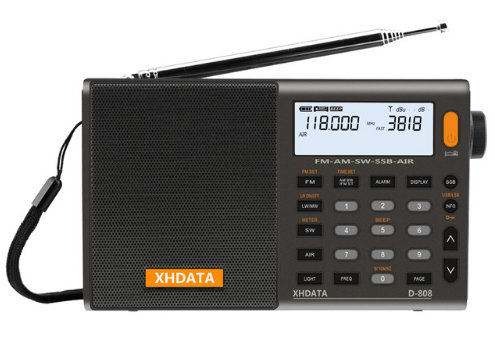
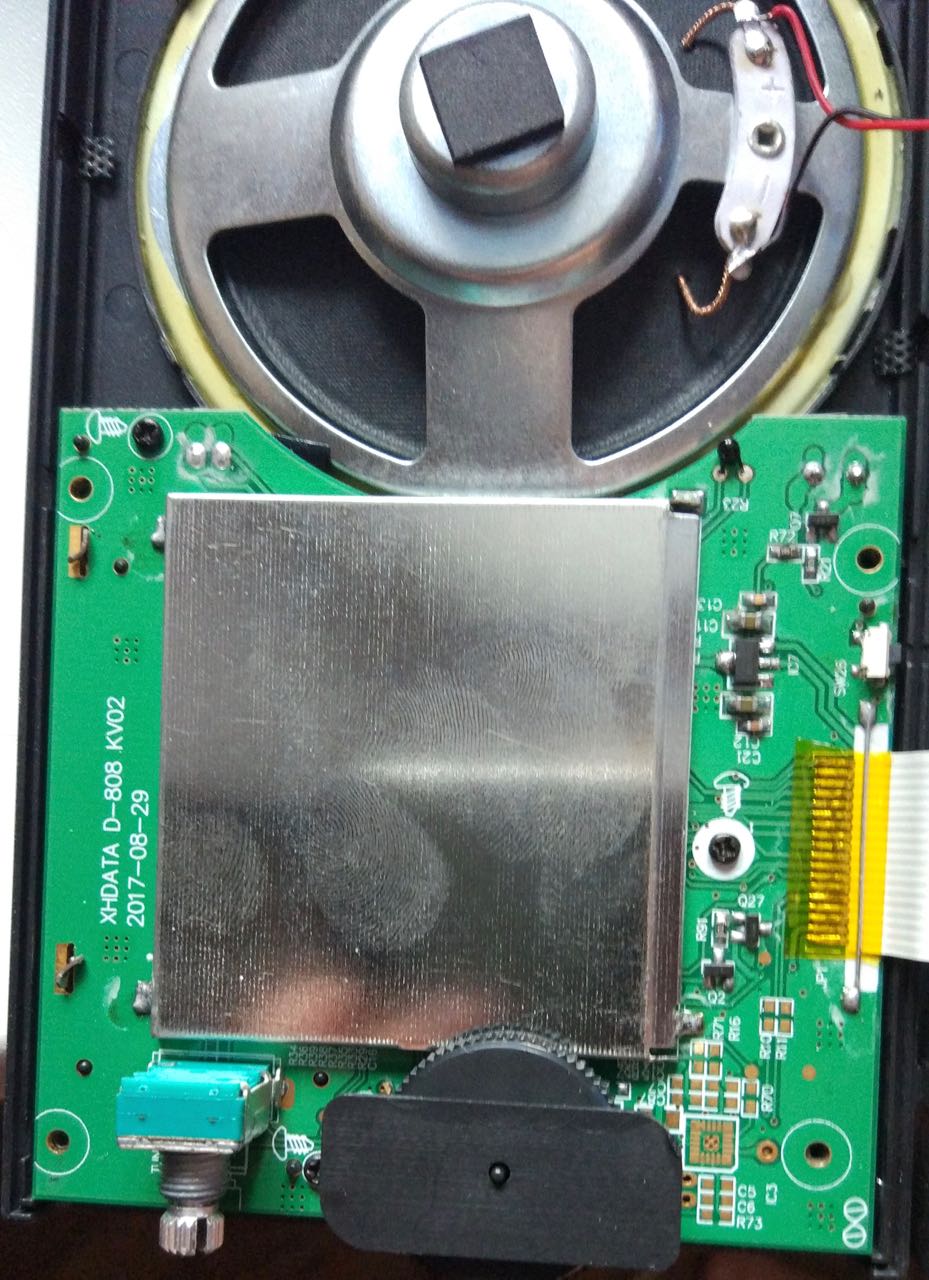
The XHDATA D-808 shortwave portable: A variation of the Digitech AR-1780?

Many thanks to SWLing Post contributor, Ivan, who shares the following:

In December, sales of this radio will begin. The seller promises to put the price of 60 US dollars. Radio of a level not lower than Tecsun PL-660 for such a small price is great! There is a video review on YouTube. Unfortunately in Russian. There is no more information on this radio on the Internet. I myself found out by accident.

Click here to view on YouTube.

Thank you for the tip, Ivan! I’m guessing this is yet another portable based on the Silicon Labs SL4735.

The display looks like that of the Digitech AR-1780 and the keypad configuration is nearly identical–the only visible difference being the shape of the SSB button which is rectangular on the AR01780.

The Digitech AR-1780 keypad.

The XHDATA D-808 Keypad.

The power buttons are also in different locations.

AliExpress has the D-808 in their catalog, but the price is listed at $2,000 per unit (!!!) with no shipping to the US. Perhaps the pricing formula changes if you place an order within Russia?

UPDATE: Ivan adds, “I talked to the seller of Xhdata D-808 on Ali about the crazy price claimed now. The seller replied that the price will be quite different and much more humane than what is now.”

Again, thanks for the tip, Ivan!

Post readers: If you have the XHDATA D-808, I’d certainly welcome a review. Please feel free to contact me about submitting one.

Airspy HF+ SDR Now Available to Order

As reported recently on the SWLing Post that the Airspy HF+  would be available “really, really, really soon”, the rumor has become reality–this new SDR receiver is for sale on Airspy’s main sale site www.Itead.cc.

The direct link for purchase is: https://www.itead.cc/airspy-hf-plus.html.  The price in US dollars is a very reasonable $199.00, considering the high performance evident by the few test units “in the wild” recently.

There was an initial $50-off coupon code available first come, first served this morning for the first 100 orders. These were snapped up quickly; I was fortunate to make it into that limited group and I saved $50 each off a couple of HF+ units. My intent is to pair them up for full coverage of the medium wave band–while recording I/Q WAV files)–using two receiver “instances” within Studio 1 or SDR-Console software. (The alias-free bandwidth of the HF+ is a modest 660 kHz, a trade-off this receiver makes to deliver high performance at a low price.) I expect a EXTIO DLL file to be available soon for use in EXTIO software like Studio 1 (or the EXTIO version of SDRuno which I also use).

I plan to be comparing the HF+ to my current Elad FDM-S2 SDR; based on specs and early user reports, it should be a tight race.

UPDATE: I’ve learned that the shipping timeframe for the HF+ is the beginning of December (approx. three weeks). There is also a U.S. distributor who is kindly offering a similar $50-off deal: https://v3.airspy.us/product/airspy-hfplus/

Simon Brown, author of the popular SDR-Console software versions, closely compares the Airspy HF+ ($199 USD) against a RFspace NetSDR ($1449 USD w/o options): http://www.sdr-radio.com/Radios/Airspy/AirspyHF

Who else is planning on an Airspy HF+ purchase? What are your monitoring interests you plan to use it for? Please comment below and share your thoughts with other SWLing Post readers!


Guy Atkins is a Sr. Graphic Designer for T-Mobile and lives near Seattle, Washington.  He’s a regular contributor to the SWLing Post.

Airspy’s latest: The Airspy HF+ SDR

SDR manufacturer, Airspy, has a new product shipping “really really really soon” (per their website). The Airspy HF+ promises improved frequency agility through the use of high-performance passive mixers with a polyphase harmonic rejection structure. Airspy states that no external band filters are required as they are with many budget SDRs.

There are many other improvements over their previous iterations. Here’s the product information copied from the Airspy HF+ page on Airspy’s website:

(Source: Airspy)

The Software Defined Radio revolution brought great flexibility in VHF and UHF reception. Today we offer the best wide band receivers which address these needs. We also provide a high performance extension for weak-signal wide band reception on HF – something other competing solutions fail to address efficiently.

Airspy HF+ is a paradigm shift in high performance HF radio design. It is a joint effort between Airspy, Itead Studio and a top-tier semiconductor company to build a state of the art SDR for HF and VHF bands.

Like most high-end HF receivers, the HF+ uses very high dynamic range ADC’s and front-ends. But unlike the current offerings in the market, it also brings more frequency agility by using high performance passive mixers with an excellent polyphase harmonic rejection structure. No external band aid filters are required like the lower end HF receivers, which makes it the ideal companion for light portable high performance operation.

Both the architecture and level of integration achieved in this design allow us to bring top performance reception at a very affordable price.

All the major SDR software is supported. Check the download page.

State of the Art SDR streaming technology!

We concentrated state of the art DSP and networking techniques into our SpyServer software to allow multiple users to stream high quality IQ data from the same receiver at the same time. No compromises in the quality were made like it is usually done in Web SDR interfaces. You get actual IQ data you can process with your plugins and extract the last bit of information out of it.
The server software is highly scalable and can run on computers as small as the $7 Orange Pi Zero to top end 64bit servers with multiple cores/cpus, including the popular Raspberry Pi series.

HF Tuner

Airspy HF+ achieves excellent HF performance by means of a low-loss band filterhigh linearity LNAhigh linearity tunable RF filter, a polyphase harmonic rejection (HR) mixer that rejects up to the 21st harmonic and multi-stage analog and digital IF filtering.
The 6 dB-stepped AGC gain is fully controlled by the software running in the DSP which optimizes the gain distribution in real time for optimal sensitivity and linearity. Harmonic rejection is a key issue in wide band HF receivers because of the large input signal bandwidth of the input signal. The output of the IF-filter is then digitalized by a high dynamic range sigma delta IF ADC for further signal processing in the digital domain.

VHF Tuners

Excellent VHF performance is also achieved by using optimized signal paths composed of band filtershigh linearity LNAs with a stepped AGC, a polyphase harmonic rejection mixer and IF filters optimized for their respective bands.
The amplifier gain is switchable in 3 dB-steps and fully controlled by the AGC running in the DSP. The RF signal is converted to baseband by a high linearity passive mixer with a polyphase harmonic rejection structure. The low-IF signal is then converted into the digital domain by the same IF ADC used in the HF chain.

IF Sampling

The IF analog to digital converter (ADC) is a 4th order multi-bit noise shaping topology; it features very high dynamic range and linearity. The IF-ADC sampling rate is determined by a control algorithm running in the embedded DSP. This advanced technique adjusts the sampling rate depending on the tuning frequency with the goal of avoiding the disturbances and spurs generated by the switching discrete-time sections of the IF-ADC.

Digital Down Converter

Once the IF signal is digitalized, the high sample rate I/Q stream is then frequency translated and processed with cascaded CIC and FIR decimation stages. After every stage, the sample rate is reduced and the resolution increased. The final signal at the output has 18bit resolution and an alias rejection performance of 108 dBc. The data is then scaled to 16bit and sent to the Micro-Controller for streaming over USB.

Architectural Advantages

The main advantages over techniques from the legacy super-heterodynes up to the now mainstream direct sampling is that the whole receiver chain is well protected against out of band blockers while still relaxing the RF filtering constraints, making it simple and cost effective.
The natural filtering of the sigma-delta ADC combined with the excellent linearity and sensitivity of the analog chain reaches an unprecedented level of performance and integration.

Use it over the network!

Connect as many SDR applications as needed to the HF+, over the Internet or in your own local network with near zero latency thanks to the new SPY Server software.
This setup basically brings all the flexibility of Web based SDRs while still benefiting from the full power of desktop applications. The IQ data is processed in the server with state of the art DSP and only the required chunk of spectrum is sent over the network. What is sent is the actual IQ signal, not compressed audio. This means you can use all your favorite plugins to process the IF, eliminate noise and perform heavy lifting of the signals as you are used to do with locally connected SDR’s.
We have a tradition of building multi-tools, so we made sure the SPY Server runs on 32/64bit Windows and Linux on Intel and ARM processors without any compromises. Low cost Raspberry Pi 3 and Odroid boards are in the party.

Technical specifications

  • HF coverage between DC .. 31 MHz
  • VHF coverage between 60 .. 260 MHz
  • -140.0 dBm (0.02 µV / 50 ohms at 15MHz) MDS Typ. at 500Hz bandwidth in HF
  • -141.5 dBm MDS Typ. at 500 Hz bandwidth in FM Broadcast Band (60 – 108 MHz)
  • -142.5 dBm MDS Typ. at 500 Hz bandwidth in VHF Aviation Band (118 – 136 MHz)
  • -140.5 dBm MDS Typ. at 500 Hz bandwidth in VHF Commercial Band (136 – 174 MHz)
  • -139.0 dBm MDS Typ. at 500 Hz bandwidth in the upper VHF Band (> 174 MHz)
  • +15 dBm IIP3 on HF at maximum gain
  • +13 dBm IIP3 on VHF at maximum gain
  • 110 dB blocking dynamic range (BDR) in HF
  • 95 dB blocking dynamic range (BDR) in VHF
  • 150+ dB combined selectivity (hardware + software)
  • 120 dB Image Rejection (software)
  • Up to 660 kHz alias and image free output for 768 ksps IQ
  • 18 bit Embedded Digital Down Converter (DDC)
  • 22 bit! Resolution at 3 kHz channel using State of the Art DDC (SDR# and SDR-Console)
  • +10 dBm Maximum RF input
  • 0.5 ppm high precision, low phase noise clock
  • 1 PPB! frequency adjustment capability
  • Very low phase noise PLL (-110 dBc/Hz @ 1kHz separation @ 100 MHz)
  • 2 x High Dynamic Range Sigma Delta ADCs @ up to 36 MSPS
  • No Silicon RF switch to introduce IMD in the HF path
  • Routable RF inputs
  • Wide Band RF filter bank
  • Tracking RF filters
  • Sharp IF filters with 0.1 dB ripple
  • Smart AGC with real time optimization of the gain distribution
  • All RF inputs are matched to 50 ohms
  • 4 x Programmable GPIO’s
  • No drivers required! 100% Plug-and-play on Windows Vista, Seven, 8, 8.1 and 10
  • Industrial Operating Temperature: -45°C to 85°C

Typical Applications

  • High Performance Networked HF/VHF Radio
  • Ham Radio (HF + 2m)
  • Short Wave Listening (SWL)
  • AM DX
  • FM DX
  • VHF-L TV DX
  • Remote Telemetry Radio Receiver
  • Low Bands IoT

Supported Operating Systems

  • Windows Vista, 7, 8, 8.1 and 10
  • Linux
  • *BSD
  • OSX

Supported Hardware

  • Intel compatible PC
  • Raspberry Pi 2 and 3
  • Odroid C1, C2 and XU4
  • Many other Single Board Computers (SBC)

Minimum hardware requirements

  • 1GHz Pentium or ARM
  • 1GB of RAM (to run your own OS, HF+ barely needs 1MB of memory)
  • High speed USB 2.0 controller

Supported Software

Developer API

  • Open source, multi-platform user mode driver libairspyhf on github

No price point has yet been made public–at least, none that I have discovered. Of course, we’ll post shipping and pricing details when they become available. Follow the tag AirSpy for more. Check out the Airspy website for full details and documentation.