Category Archives: New Products

This BBC radio adapts programming to match your environs

Thank to SWLing Post reader Mike for passing this along. The possibilities of adaptive radio broadcasts in distance learning alone are most inspiring:

(Photo: BBC Technology; Greg Povey)

(Photo: BBC Technology; Greg Povey)

(Source: BBC Technology)

A radio that is able to change a broadcast depending on where you are and what you are doing has been demonstrated by the BBC.

The Perceptive Radio, produced by the corporation’s Future Media North Lab, is thought to be a world first.

The team produced a computer-generated radio drama where the script altered depending on factors such as weather.

The device was shown off at the Thinking Digital Conference in Gateshead.

The proof-of-concept drama, which used a computer-generated voice for one of the characters, could adapt on the fly according to data pulled from external sources.

For instance, it could make reference to local places which would differ depending on where in the world you were.

Or it would mention weather conditions that were dependent on what was happening in the real world – such as replacing the phrase “it’s sunny outside” with “it’s raining”.[…]

Continue reading on BBC Technology.

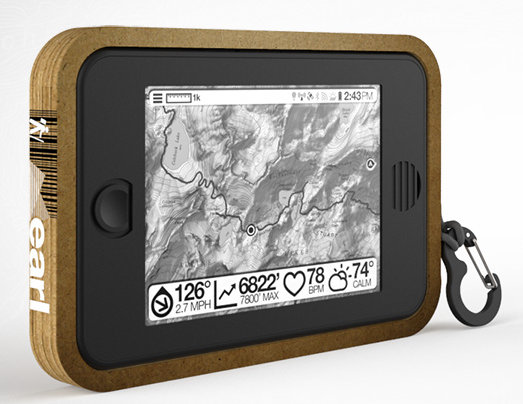
Introducing EARL: a rugged, solar-powered GPS and Android tablet with built-in shortwave radio

Earl

The Earl Backcountry Survival Tablet

A good friend recently introduced me to the Earl Backcountry Survival Tablet; a crowd-funded project that may very well come to fruition.

What makes this tablet really stand out are its impressive list of features which are all based on outdoor survival/adventure. Features include:

  • A rugged, waterproof/weatherproof body; IP67 rated!
  • Built-in solar panel
  • 20 hour battery life
  • An E-Ink, touch sensitive display screen
  • An excellent GPS chipset
  • ANT+ and Bluetooth 4.0 connectivity for devices to measure heart rate, pace and cadence
  • Android Beam technology
  • Built-in thermometer for measuring temperature, hygrometer for measuring the water density of air (humidity) with dew point, barometer for measuring air pressure and altitude and an anemometer (micro hot-wire) for measuring wind speed
  • A two-way radio featuring a FRS, GMRS and MURS transceiver. Earl can send secure text or voice messages via Walkie-Talkie; transmit weather, location, and route information
  • An eReader
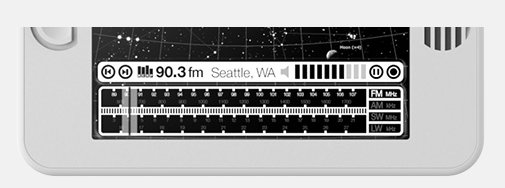
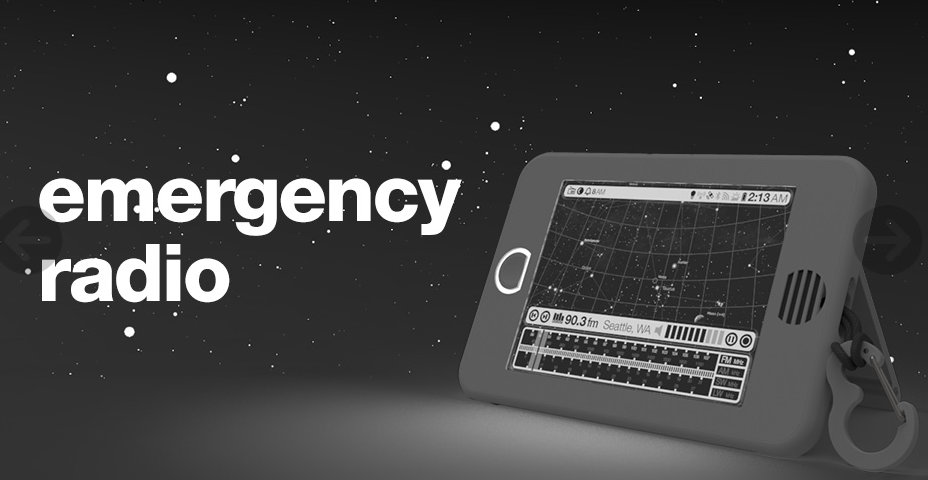
  • A radio receiver that covers AM (medium wave), FM, LW, NOAA weather radio (North America) and Shortwave
  • Much more: check out the Earl project page

EarlRadioOf course, I’m very interested in Earl’s receiver. Not only does it cover shortwave, but it covers a very wide frequency range (2.3 – 21.85 MHz)! Most impressive.

I don’t expect Earl to be a fantastic performer on the shortwave and medium wave bands–I doubt it’ll compare to the PL-390, for example– but perhaps it will be good enough to hear the major broadcasters. An inductively coupled loop antenna may help on AM (medium-wave). A port for an external SW antenna, would be a major plus.

Better yet, with the right Android app, I bet Earl could decode VOA Radiograms on the fly. Imagine being miles away from civilization, far out of reach of 3G/4G mobile systems, yet you’d be able to receive your news on your eReader over the shortwaves.

A dream? Perhaps, but one that’s well within grasp.

Pre-ordering/Backing

EarlRadio2At time of posting, Earl is 90% funded. You can pre-order Earl for $249 US–a 30% discount from projected retail. (A price that is only $100 more than a Sony ICF-SW7600GR.)

I just pre-ordered an Earl. I will plan to give a full review here on the SWLing Post. They expect to ship production units in August 2013. If they don’t receive funding, all pre-sales purchases will be refunded in full.

If you would like to back this project, check out Earl’s full list of features and pre-order on their website: http://www.meetearl.com/

The 2013 Dayton Hamvention

WinRadio's booth in the East Hall.

WinRadio’s booth in the East Hall.

Whew! Back from the 2013 Dayton Hamvention.  You may have noticed the lack of posts over the past week–this is just a hint of how incredibly busy I’ve been following this annual event. Every year that I go to the Dayton Hamvention, I come back exhausted…yet somehow energized about the lasting power and utility of radio.

As I’ve mentioned, one of the main reasons I go to the Hamvention is to build awareness about my non-profit, Ears To Our World (ETOW). The Hamvention donates an inside exhibitor table (worth $550+!) to ETOW each year, and our volunteers (myself among them) man it all day Friday, Saturday, and Sunday at the Hamvention. My voice was nearly gone by Sunday; I’d estimate we spoke with several hundred people.  But the great news is, we received a record number of donations this year–and on behalf of ETOW, I just want to say, Thank you! to all who support our mission of providing self-powered world band radios to classrooms and communities throughout the developing world.
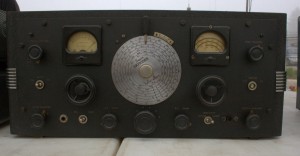
I spotted this Hallicrafters Super Skyrider in the flea market.  She would look quite good in my radio room!

I spotted this Hallicrafters Super Skyrider in the flea market. She would look quite good in my radio room!

At the Hamvention, I also get a chance to network with friends, meet fellow radio amateurs/shortwave radio listeners, and check out both vintage radios in the outdoor flea market, and new radio innovations inside. One of the great things about representing ETOW is hearing the stories of others who share our belief that shortwave radio has a place on this planet.  It’s very encouraging and cathartic.

Moreover, I’m fortunate that once more this year several SWLing Post readers sought out our booth:  it was terrific meeting each and every one of you! This blog provides me with a sense of radio community that lasts throughout the year; I hope it does the same for you.
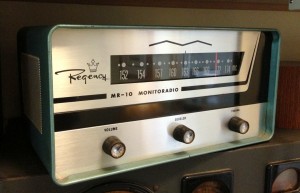
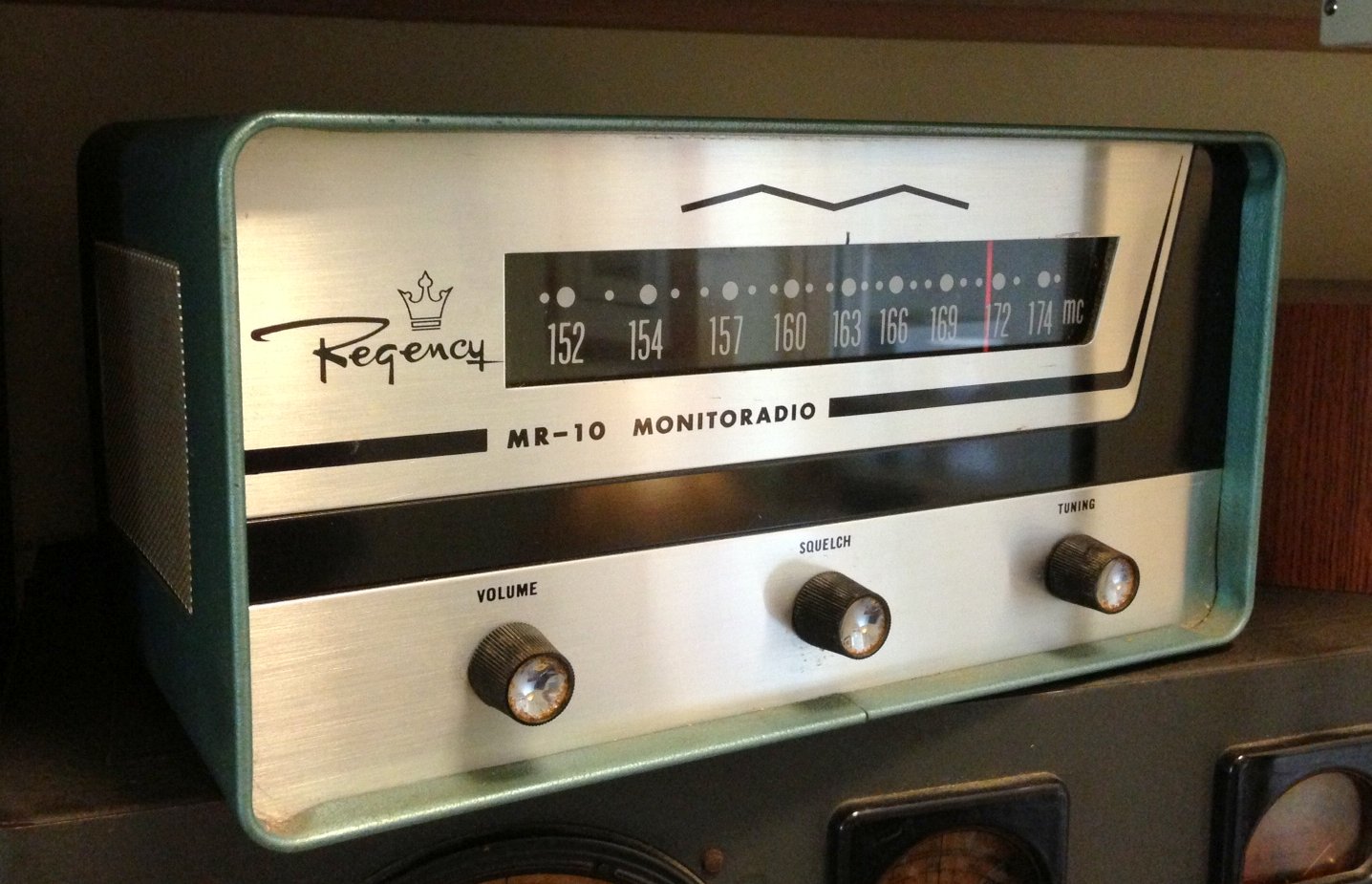
My Regency MR-10 Monitoradio.

My Regency MR-10 Monitoradio. (click to enlarge)

Typically, when I go to Dayton, I bring back a few purchases.  This year, I did not find a bargain like my BC-348-Q from 2012, but I did come back with much-needed supplies in the form of  connectors, adapters, cables, and one $6 Regency MR-10 Monitoradio (see photo).

I was thoroughly impressed by the number of innovations I saw at Dayton this year, especially the Software Defined Radios (SDRs) that are new to the market.
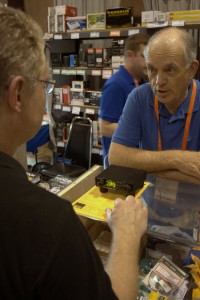
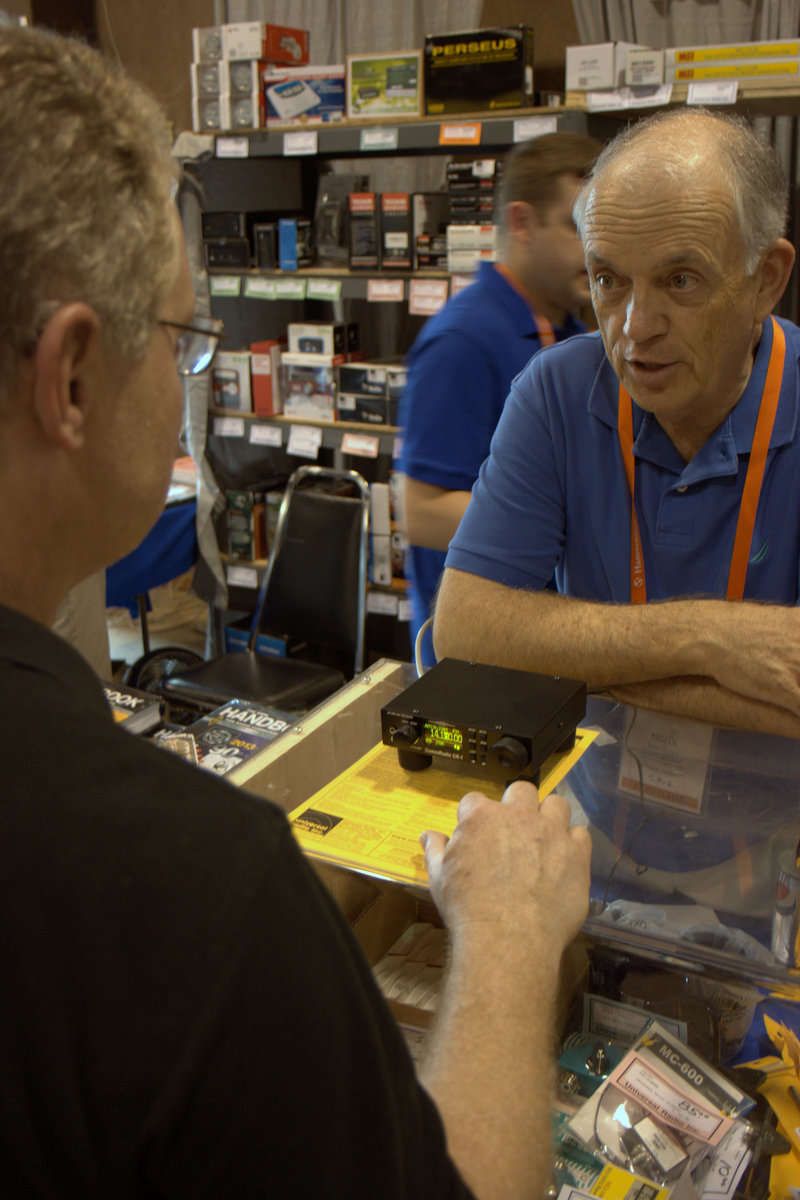
CommRadio's president, Don Moore, working with a customer at the Universal Radio booth.

CommRadio’s president, Don Moore, working with a customer at the Universal Radio booth.

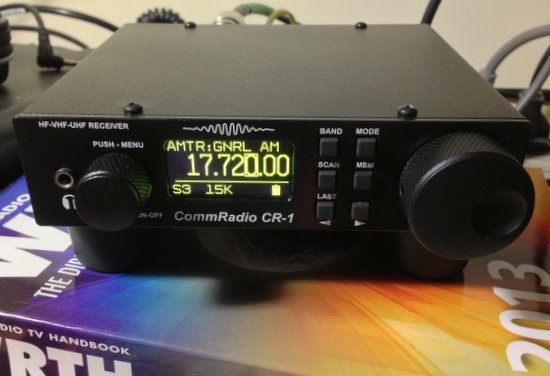
One SDR that received a lot of attention, according to Fred Osterman at Universal Radio, was the CommRadio CR-1; it is an SDR in stand-alone tabletop-receiver form (see current sale). Universal sold all of the units they brought to the Hamvention in very short order. We mentioned the CR-1 in an earlier post, and received mixed reactions:  many readers noted that it was very robust, but didn’t have the feature set to make it particularly marketable at the price point.  This doesn’t seem to have mattered.

Fortunately, at the Hamvention, I met with Don Moore, president and founder of CommRadio, who most kindly gave me a loaner radio for review. He’s well aware that my review will be frank, and I’m grateful to have this little receiver in my possession. I have only had it on the air for perhaps an hour so far.  Just long enough to tell that it plays well, has a tidy footprint, is built like a tank and…well, that it’s frankly cute.  I will pit it against my WinRadio Excalibur, Alinco DX-R8T, and Elecraft KX3, and include audio samples in a forthcoming review.  Stay tuned!

WinRadio also had a booth in the East Hall that seemed to have a constant stream of visitors. I found Dennis Walter with Bonito in Hara Arena showing off the RadioJet receiver we reviewed last year. I also saw many other shortwave receiver manufacturers and retailers including C.Crane, Palstar, TAPR, Ten-Tec and Alinco.  Indeed, Alinco hinted that an updated version of the tabletop DX-R8T is on the way, the DX-R9(T).  It will have the same form factor of the DX-R8T, but the receiver will be built around Collins mechanical filters, which will be much easier to replace than the current ones in the DX-R8T. I’ll post an announcement when the DX-R9 is in production.

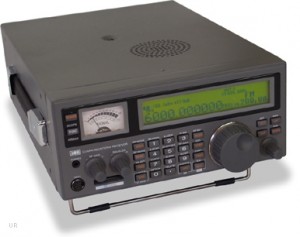
CommRadio offering sale on CR-1 for a limited time

The CommRadio CR-1 is on my test bench, ready for review. (Click to enlarge)

The CommRadio CR-1 sitting on my test bench, ready for review. (Click to enlarge)

Gary writes:

There is a limited time sale on the CommRadio CR-1 communications receiver. I received this offer via email today.

CommRadio is offering a SPECIAL SALE through Sunday, May 26th, 2013

Purchase a CR-1 Communications Receiver, with the battery included for free, PLUS take an additional $20 dollars off.

This is a one time DEAL – $480 Dollar Special

The CR-1 will then go back up to $500 until June 4th. Starting June 5th it will go up to $599.

This is your chance now to save with the promotional price.

Terms and Conditions:
One coupon per customer
You may only use it once.
This offer is only for US and Canada shipments.

Expiration day: May 26th 2013

COUPON CODE: CR1SPECIAL
(Enter at check out)

http://www.commradio.com/

Thanks, Gary, for the tip! I’m in the process of reviewing the CR-1 right now. Check back soon!

DXtreme Software releases new versions

Screen shot: DXtreme Station Log (Click to enlarge)

Screen shot: DXtreme Station Log (Click to enlarge)

Bob Raymond, NE1I, owner of DXtreme Software, has just informed me of the release of DXtreme Station Log, Version 10.0 ($89.95 US).

While the station log was designed with the amateur radio operator in mind, Bob also noted that his DXtreme Reception Log — Advanced Edition, was designed for the shortwave listener in mind (also $89.95 US).

If you use logging programs, you might want to check these out. Bob’s site also offers guided tours of both products. Click here for a PDF of the press release.

CommRadio CR-1 training videos

Don Moore, founder of CommRadio, has uploaded training videos for the CommRadio CR-1. These offer a pretty comprehensive overview of the CR-1, especially in terms of functions and menu structure.

Training Video 1 – Overview

Training Video 2 – Tuning

Training Video 3 – Menus and Functions

A review of the Degen DE32 shortwave radio: compared with the DE321 and Tecsun PL-380

The Degen DE32 (Click to enlarge)

The Degen DE32 (Click to enlarge)

The Degen DE32 is one of the latest DSP-based analog radios to hit the market. In the past, I have reviewed two others: the Degen DE321 and the Kchibo KK-9803. Tecsun had announced a version of their own–the Tecsun R-2010–which I had eagerly anticipated, but I now believe it’s been dropped from their future offerings. [Update: Not true–the Tecsun has been released as the R-2010D, see review].

I purchased my Degen DE32 from this China-based seller on eBay. To my knowledge, eBay is the only place the DE32 can be purchased, at time of posting. As with the other radios mentioned above, my expectations were quite low for this little radio.  After all, at $27 US (shipped), you can’t expect top-notch performance characteristics.

IMG_5886

The DE32 un-boxed (Click to enlarge)

The DE32 comes with a carry strap, USB cable, a carry pouch, slim rechargeable battery, and operating instructions in Chinese. It does not come with a USB wall adapter (you’ll have to plug it into a USB port on your PC or other USB wall charger) and it does not come with a Micro SD card (for digital audio playback).

Audio

The DE32 has a small built-in speaker. The sound is a bit tinny, but is actually better than I expected from a speaker of this size. It makes for comfortable listening at close range–especially of spoken-word broadcasts. Happily, plugging in a good set of earphones helps audio fidelity tremendously.  This is the only way I would listen to music on the DE32 for an extended period of time. On FM, in fact, audio via earphones is surprisingly good (again, for a $27 radio–check out the audio sample below).

(Click to enlarge)

(Click to enlarge)

Performance

The DE32 covers three radio bands: medium wave (AM), FM and shortwave (5.6-22 MHz). Performance between bands varies greatly. The best band, by far, is FM. Again, no surprise here, as the DE321 and KK-9803 performed quite well on FM.

Here’s a 20+ minute audio sample of a local classic rock radio station I recorded, 95.7FM The Ride:

From my home, I can pick up my benchmark distant NPR station quite easily if I hold the radio in my hand. If I place the radio in a window sill, its performance degrades somewhat and contains more static as the extra grounding (from holding the radio) made a positive difference. The audio, though, is still perfectly intelligible. Local FM stations come in quite clear and fidelity (through headphones) is excellent.

The Degen DE321 (left) and DE32 (right)

The Degen DE321 (left) and DE32 (right)

I found that strong local medium wave (AM) stations sound quite good on the DE32–better than its cousin, the DE321, by a small margin.

While traveling over the holidays in December, I recorded extended samples of local station (630AM WAIZ) with both the DE32 and the DE321. You can listen to audio samples below, but first it’s important to note that I recorded these (and the FM sample above) with my Zoom H2N digital audio recorder, with radios at a comparable volume and via an audio patch cord.

Note that these recordings represent what each radio sounds like via headphones, not their internal speakers.

This is WAIZ on the Degen DE32:

Compared with WAIZ on the Degen DE321:

(Click to enlarge)

(Click to enlarge)

You’ll note that the DE32 sounds a little fuller than the DE321, but reception is nearly identical on this local strong medium wave (AM) station. I also found that the DE32 was quite effective at nulling out local RFI (electrical noises) on medium wave. At the beginning of the recordings, above, you’ll hear the static increase and fade as I null out the noise by turning the body of the radio. The DE321 couldn’t null out the local noise quite as effectively as the DE32.

For medium wave DXing, though, you’re better off finding a different ultralight radio. The AGC simply can’t handle marginal signals. Indeed, the same AGC problems plague the shortwave bands as well. DXing would be very unpleasant as the AGC circuit simply can’t cope with weak signals or fading.  All in all, as with medium wave, shortwave radio reception is fine for most strong signals.

Tecsun PL-380: What a difference an extra $23 makes

On shortwave, I decided to also compare the DE32 ($27) to the Tecsun PL-380 ($50). I tuned to a Radio Australia broadcast on 11,945 kHz. The comparison between these three portables is interesting:

First, the Degen DE32:

Now, the DE321:

Both the DE32 and DE321 struggled to receive the Radio Australia signal. In fact, if you really wanted to hear those broadcasts and had to listen on either radio for 30+ minutes  it would be frustrating and fatiguing. Notice, however, the difference when listening to the same broadcast with the Tecsun PL-380:

The Tecsun PL-380 receives circles around the DE32 and DE321 on shortwave and medium wave

The Tecsun PL-380 receives circles around the DE32 and DE321 on shortwave and medium wave (Click to enlarge)

There’s no comparison, really. In other words, you can hear it. The PL-380 has a lower noise floor, a fuller sound and no AGC problems as with the DE32 and DE321.  Hence the reason I always take the PL-380 while travelling–and as a back-up if I plan to record a broadcast on-the-go.

On the shortwaves, as with medium wave, the DE32 is respectable when tuned to a strong signal. For comparison to the weaker signals above, here is a short recording of the DE32 tuned to Radio Havana Cuba:

Not too bad, really. Keep in mind, though, that in my part of North America, Radio Havana broadcasts are so strong that I can pick them up without even extending the whip antenna on most portables.

Conclusion:

The DE32 has a built-in LED flashlight (Click to enlarge)

The DE32 has a built-in LED flashlight (Click to enlarge)

I haven’t tested the digital audio playback on the DE32 yet, although I expect the audio to be pleasant enough.  Of course, it lacks a display to show any information about the audio you’re playing, but it would be great to load a few podcasts or audio books on.

In summary, I’ve tabulated the pros and cons below from the moment I took the DE32 out of the box, below. Note that these pros and cons take into account the $27 price level of this radio:

Pros:

  • Very portable and lightweight
  • With micro SD card, storage for hours of pre-recorded content (though not tested in this review)
  • Adequate shortwave coverage (5.6 to 22 MHz) (see con)
  • Good audio fidelity, via headphones, on strong stations, slightly better than the DE321
  • Above average FM reception
  • Great nulling ability on medium wave (AM)
  • Features a built-in LED light (see con)
  • Overall build quality seems to be acceptable
  • Standard analog volume control (not digitally incremented levels)
  • Red LED tune light (see con)

Cons:

  • Shortwave sensitivity and selectivity are poor
  • Shortwave coverage lacks the lower tropic bands
  • Bandwidth is not adjustable and too broad for crowded conditions
  • AGC (as with many DSP portables in this class) cannot deal with weaker DX stations
  • Medium wave (AM) imaging on the shortwave bands if strong local station present
  • Antenna slightly loose in antenna hole when fully extended
  • No battery level indicator
  • No back stand
  • Tinny sound from tiny built-in speaker
  • To operate LED flashlight, you must press a button continuously to keep illuminated and LED  bulb orientation does not help with reading display in dark (see pro)
  • No option for standard AA or AA batteries–only included li-ion rechargeable pack
  • LED tuning light only works with very strong stations (see pro)
Conclusion? Though slim, lightweight and inexpensive,  I wouldn't find the DE32 DSP radio/digital audio player a useful radio in my collection.

Conclusion? Though slim, lightweight and inexpensive, I wouldn’t find the DE32 DSP radio/digital audio player a useful radio in my collection.

If I were you, would I buy it?

If you’re looking for a very inexpensive MP3/Digital Audio player with AM/FM and shortwave, and your expectations are fairly low, the Degen DE32 is a reasonable $27 piece of kit. Especially if you only plan to use the FM band.

If the digital audio playback abilities are not important to you, I would go with the cheaper ($18 US) Degen DE321.

But if you really want performance on medium wave and shortwave, and you could care less about digital audio playback, spend the extra $23 ($50 total) and buy the Tecsun PL-380, instead.  As you can hear above, it’s a much, much better receiver.