Many thanks to SWLing Post contributor, Dan Amoroso (W3DI – WPE3DNC) for scans of his QSLs from WWVH in Kekaha, HI:
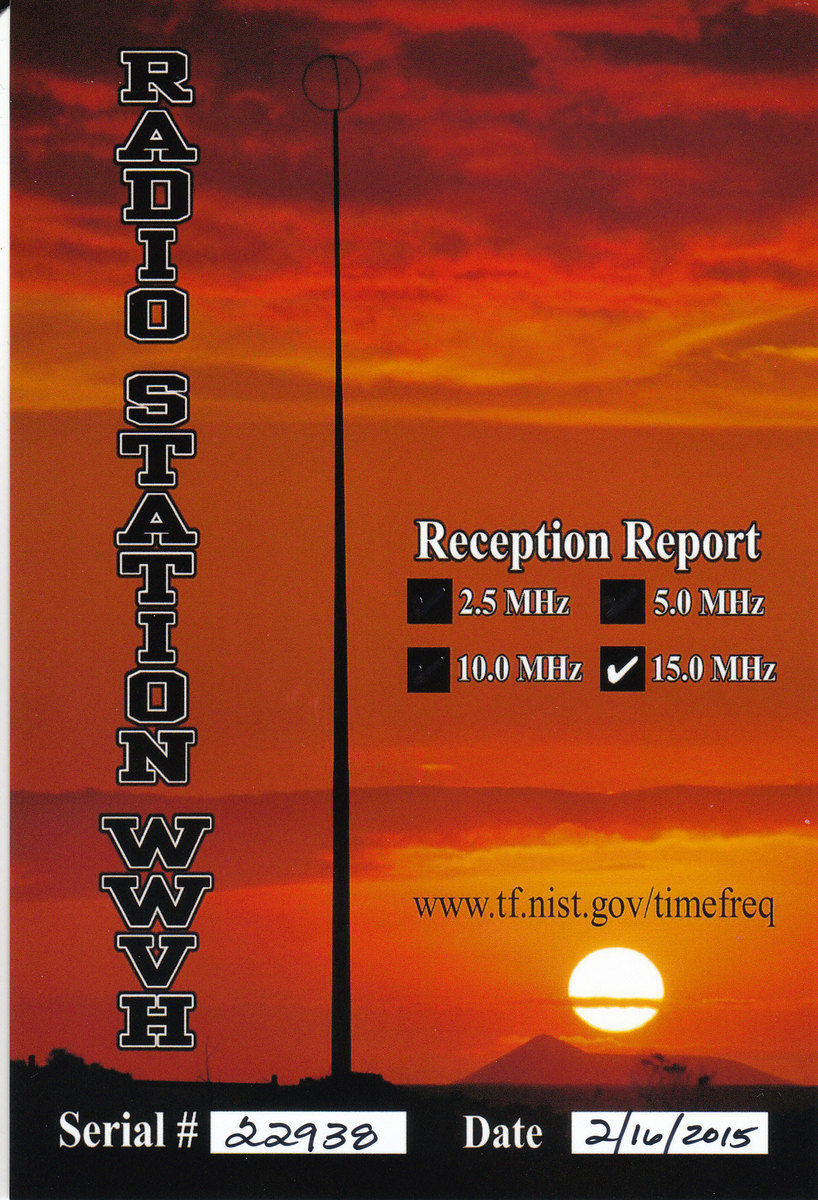
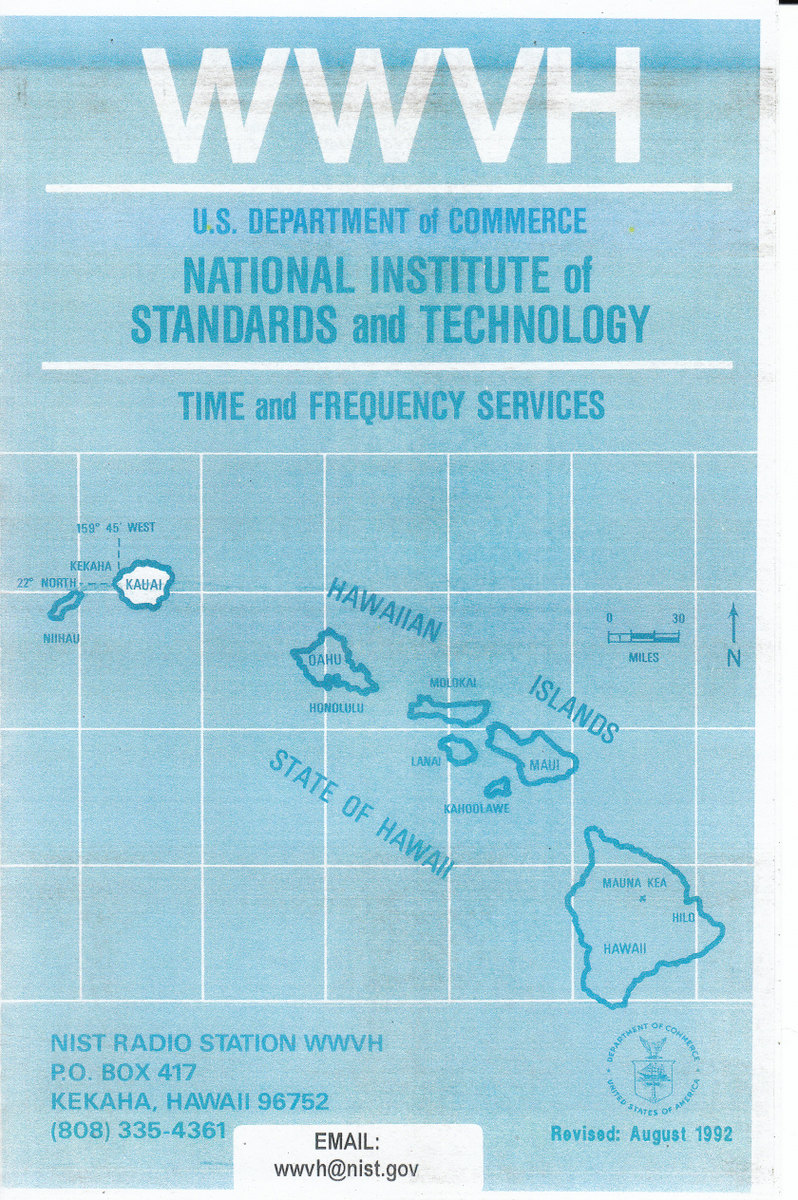

Many thanks to SWLing Post contributor, Dan Amoroso (W3DI – WPE3DNC) for scans of his QSLs from WWVH in Kekaha, HI:
 Many thanks to Any Sennitt who shares a link to this article by Telegraph journalist, Colin Freeman.
(Source: The Telegraph via Andy Sennitt)
Along with the glaciers of the Arctic and the sand dunes of the Sahara, northern Somalia is one of the loneliest, most godforsaken places I’ve ever visited as a foreign correspondent. You can wander its Arizona-like landscape for days without seeing another soul, and when I was held hostage there in 2008, I could see why so many British troops posted to Somalia after the Second World War committed suicide through loneliness.
That I did not succumb to the same urge is thanks to many factors – one being the good cheer of the photographer held captive alongside me, another being the Telegraph’s heroic efforts in securing our release.
But during the six weeks we spent held at gunpoint in a cave, one thing that stemmed the despair was the tiny, battery-operated radio that our kidnappers sometimes lent us. On the short wave channel we could get a faint BBC World Service signal, and while it was often fuzzy as it bounced round the cave’s walls, it was better than yet another game on our chess set made from cigarette foil.
So I’m pleased to hear that this lifeline is now being extended to inmates of another, much larger prison – the 25 million citizens of North Korea, who are denied access to any outside media by their leader, Kim Jong-un. As the Telegraph disclosed on Thursday, the World Service is to plan a new North Korea channel, giving the country’s brain-washed citizens a much-needed alternative to the relentless propaganda of the world’s last Stalinist regime.

(Image source: Screen capture from NASA video)
(Source: Discovery News)
The sun has erupted with its first X-class solar flare of 2015, a not-so-subtle reminder that it can still muster the energy required to generate the most powerful class of solar explosion.
The magnetic eruption occurred yesterday (Wednesday) at 12:22 p.m. ET (16:22 UT), lighting up a huge area in the lower solar corona (the sun’s magnetically dominated ‘atmosphere’). Shortly after the huge eruption, that measured X2 on the scale of flare energy, Spaceweather.com reports a radio blackout was detected over large swathes of the globe, including much of the Americas.
“The X-flare scrambled the ionosphere thoroughly so that no decametric radio signals were supported in my part of the world,” said amateur radio astronomer Thomas Ashcraft. “The ionosphere started to reform after about fifteen minutes when stations began to reappear. (The stuff visible during the blackout was my own observatory electricity. Nothing exterior.)”
Based in New Mexico, Ashcraft reports that the blackout was most obvious in the frequency range of 15 MHz to 26 MHz.
Good news? There may be some HF band openings in the wake of this flare. We shall see.
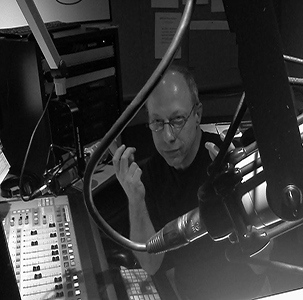
Raoul van Hall (Source: Ameristream Live)
After Global 24 went off the air, several SWLing Post readers commented that they were going to miss hearing music programs like Jazz from the Left and The Rockpile.
Fortunately, Raoul van Hall, who hosts and produces both programs, noticed your comments . Yesterday, he commented with good news:
“For those of you who would still like to hear The Rockpile or Jazz from the Left, you can follow these links to hear both programs, whenever and wherever you’d like:
http://ameristreamlive.com/the-rockpile/
http://ameristreamlive.com/jazz-from-the-left/
I’ve exchanged a few emails with several SW stations to maybe put RP or JFTL back on shortwave. Different time and frequency. We’ll see. I’d have to lease the airtime and hopefully get at least one sponsor and some listener contributions. I like the idea of broadcasting on shortwave. After all of these years on AM and FM.
I used to love listening to music on shortwave, when I was younger. When there was some music on SW. There’s something about hearing the music fade in and out on the signal that’s magical to me. I first fell in love with radio listening to shortwave.
Plus I like being able to play lots of music that’s not heard anywhere on US FM.
If I decide to do it, I’ll make sure it’s on a smoking signal and at the right times.
Naturally, I’d welcome any of your thoughts or suggestions.
Raoul”
I couldn’t agree with you more about the magic of hearing music over shortwave.
Raoul, keep in touch and I will post any updates you provide regarding potential shortwave broadcasts. Thanks for making your programs available via Ameristream Live.
 Many thanks to SWLing Post reader, Bill Patalon, for sharing this article about potential reform at Italy state broadcaster, RAI:
(Source: The Economist)
“SELDOM has an organisational chart prompted a defamation trial. Yet judges in Milan recently heard a case involving a colour-coded table published by Libero, a newspaper. The chart listed 900 executives of Italy’s public television and radio network, RAI, and the political parties to which they supposedly owed their appointment. Dismissing charges of libel, the judges said it was well known that, in RAI, “even the most meritorious individuals are favoured by their acquaintanceships in political circles”.
Italian commentators call RAI the “mirror of the nation”: an institution so permeated by competing interests that it sometimes anticipates political shifts even before they surface. Once, this was not unhealthy. Instead of being in thrall to the government of the day, RAI offered contrasting viewpoints. The Christian Democrats controlled the first television channel, the Socialists the second and, from 1979, the Communists a third. All three parties disintegrated in the 1990s, but the idea that politicians were entitled to meddle in RAI survived. The number of newsrooms grew to 11, as did a spirit of fierce internal rivalry.
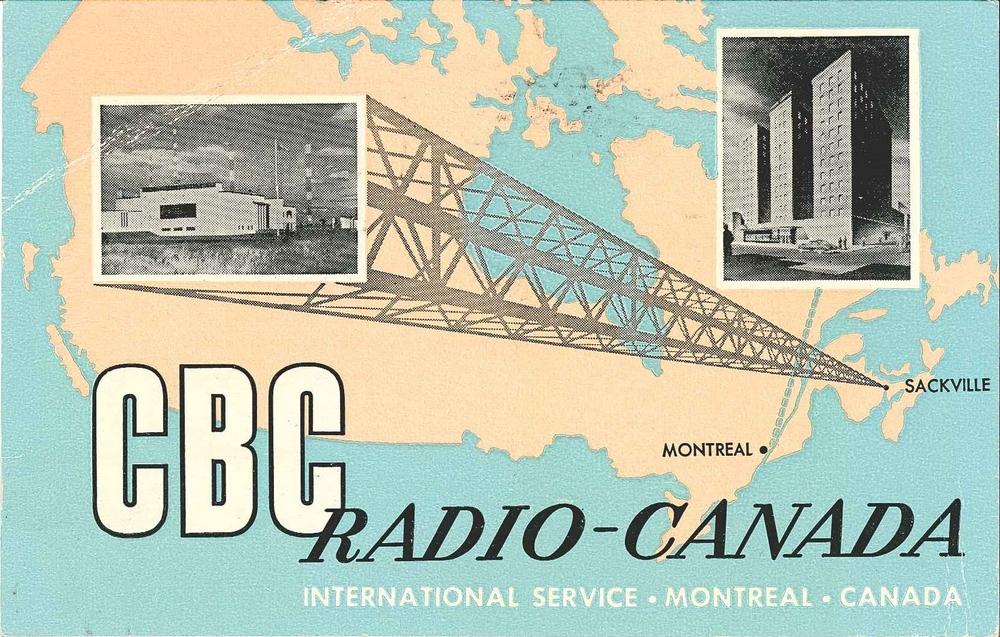
Many thanks to SWLing Post and SRAA contributor, Richard Langley, who writes:
“[C]oncerning the RCI anniversary, attached are scans of a QSL card from the CBC International Service for reception on 20 April 1964 when I was in high school. That was on the Knight-Kit Span Master regenerative receiver I had built the previous Christmas.”
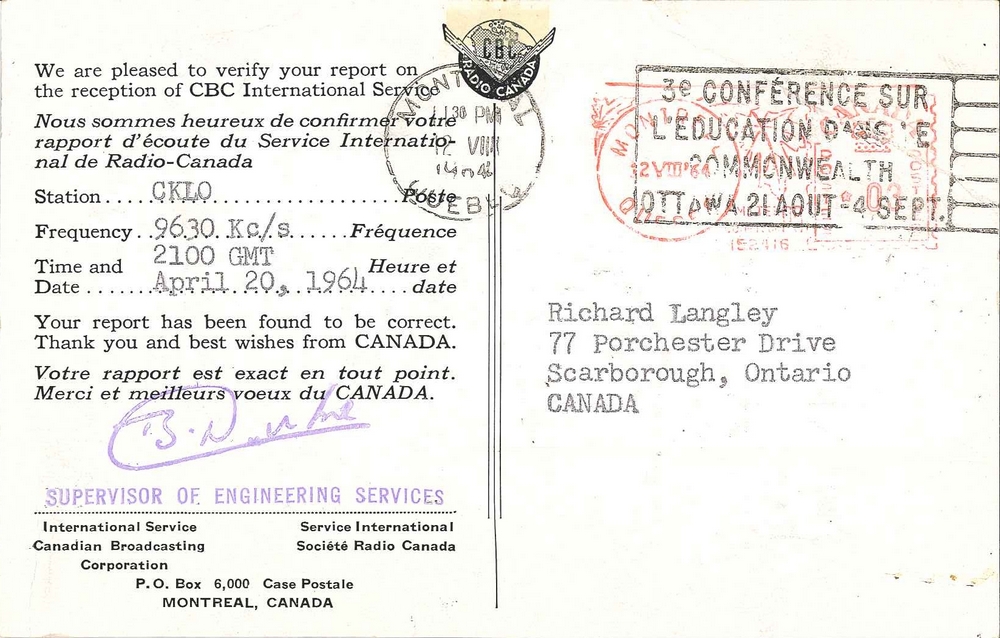
“About 50 years later (in 2012, actually), I did an interview with RCI’s Victor Nerenberg on GPS and the ionosphere, which appeared on the RCI program “The Link.”
It’s still on their website:
http://www.rcinet.ca/english/archives/program/the-link/ home/date/27-01-2012/
(about 15 minutes in)
and
http://www.rcinet.ca/english/archives/program/the-link/ archives/episode/09-10_2012- 01-30-the-link-friday-january- 27-2012/ The RCI site also is featuring some information related to the 70th anniversary:
www.rcinet.ca/rci70-en/And, lastly, there’s also some interesting stuff in the CBC’s Digital Archives under
http://www.cbc.ca/archives/categories/arts-entertainment/ media/radio-canada- international-canadas-voice- to-the-world/broadcasting-to- the-world.html
There was also an episode of the CBC Rewind archives program on RCI:
http://www.cbc.ca/player/Radio/Rewind/2011/ID/ 2167995222/
Many thanks, Richard! I wish I understood the ionosphere as well as you do–that was a fascinating interview. Thanks for sharing your knowledge.
Gorgeous QSL card, by the way!
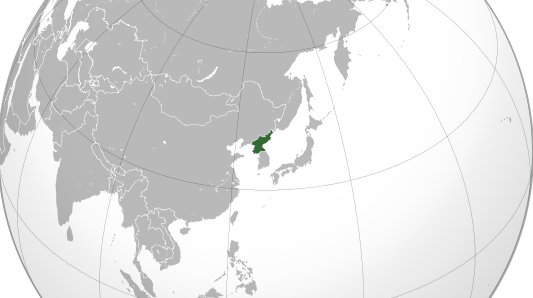 Many thanks to SWLing Post reader, Richard Cuff, for sharing this news from The Telegraph:
“The BBC is planning a new North Korea service to give the totalitarian state’s 25 million people an alternative to Kim Jong-un’s propaganda.
In a move that could plunge the corporation into confrontation with the North Korean dictator, the World Service is examining how to set up a special news channel that will get around Pyongyang’s ban on foreign media broadcasts.
The plan has echoes of Western broadcasts into the Soviet Union and Warsaw Pact countries during the Cold War, when the BBC, Radio Free Europe and Voice of America all broadcasted to listeners behind the Iron Curtain.
However, it is likely to spark fury from Pyongyang’s volatile leadership, and could lead to the British embassy in Pyongyang being targeted for protests or being shut down altogether.
It could also put Britain in the firing line for North Korean-led cyberattacks, such as the one that targeted Sony Pictures last year over its film “The Interview”, which lampooned Kim Jong-un.”[…]