Category Archives: News

Degen DE1128: More photos and features released

This blog has published more details about the DE1128. For those of us not fluent in Chinese, Google translate seems to do a fair job of translating details.

We have updated the SWRI entry for the Degen DE1128 with our interpretation of the translated features.

It appears it has many of the features we had assumed and is strikingly similar to the Grundig G2 Reporter.

Thanks to the Herculodge for the tip!

UPDATE: eBay seller Tao Qu has informed us that the Degen DE1128 will have AM (Mediumwave) steps locked in at 9kHz, meaning this portable would not be ideal for the MW DXer  in the US.

BBC World Service awards £200M contract to Babcock International Group

(Source: Radio Today)

Babcock International Group has won a 10-year contract to continue providing radio and TV transmission and distribution services to the BBC’s World Service.

The deal sees the firm manage more than 150 FM relays around the world as well as 180,000 hours of shortwave broadcasts each year.

The contract kicks in on 1 April and is worth around £200m over the 10 years. Babcock says it will build on the work they’ve been doing with the BBC over the last 15 years to ensure the corporation ‘provides a reliable and resilient service to its global audience’.

[…]The contract includes:

  • Scheduling and co-ordination of all BBC World Service shortwave broadcasts across the globe. In the first year of the new contract Babcock will co-ordinate a total of 180,335 hours of transmissions for the BBC.
  • Operating and maintaining the BBC’s six high power sites and a power station to ensure global coverage. This includes the BBC key target areas of Africa and the Middle East, the Indian Sub-Continent and South East Asia.
  • Monitoring of high frequency broadcast performance (using independent data). The BBC is committed to offering the best quality of service to its worldwide audience and Babcock’s monitoring ensures the best possible audio quality is achieved in the desired target areas.
  • Managing the satellite network contracts and support of the satellite distribution systems including 1,300 receivers worldwide in over 650 locations in 128 countries.
  • Maintaining the BBC World Service’s FM Relay network. In addition to the satellite receiver maintenance, Babcock will support the equipment of more than 150 FM relay sites around the world. This will underpin the resilience of the service offered by the BBC.

Read the full article on Radio Today’s website.

Pop’Comm Monitors – get your own shortwave listening post call sign

At SWLing.com, one of the most frequent email questions we’ve  received over the years is regarding the availability of call signs (station identification) for shortwave monitoring stations.  Until today, I’ve had to tell these inquiring folks that there was no known organization managing such a program. Some people have even suggested that SWLing.com begin one, but this sort of program needs to be organized, maintained, and curated–no small task, and one which is frankly outside our scope at SWLing.

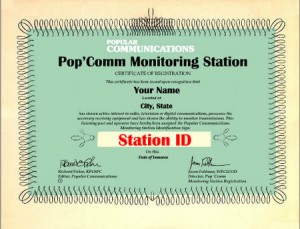
I’m delighted to report that Popular Communications Magazine has stepped up to the plate and is now steward of just such a radio monitoring  program, to be known as Pop’Comm Monitors.

So, Pop Comm is granting shortwave listening post call signs. What’s more,  you can request–much like amateur radio’s vanity callsign system–the 3 letter suffix of your choice.

What is the utility of a SWL callsign?  I think fellow radio listener and operator, John Harper sums it up quite well on his site.  In my view, it’s just one more way to conveniently connect and engage radio hobbyists across the globe.

Click here to go to the dedicated website for Pop’Comm Monitors, and sign up! There is no cost for joining the program.

WRMI/Radio Republica Special DX Test

Radio Miami International

(Source: Jeff White WRMI and Mike Terry, Cumbre DX)

Radio Miami International, in cooperation with our client Radio Republica, will be conducting a special DX test at 2000-2100 UTC January 7, 2300-2400 UTC January 7, and 0200-0300 UTC January 8, 2012 on the frequency of 5954 kHz from Cariari, Costa Rica. (These times are 3-4 pm, 6-7 pm and 9-10 pm Eastern Time Saturday, January 7 in North America.) The programming aired will be Radio Republica in Spanish. The power will be 10 kilowatts.

Shortwave listeners may be aware of the fact that Radio Republica has used this frequency in the past, but it has been off the air for several weeks now. Radio Miami International will verify all reception reports with a QSL card indicating the special tests. Reports may be sent to Radio Miami International, P.O. Box 526852,… Miami, Florida 33152 USA, or by e-mail to [email protected]. Thank you to the DXing community worldwide for monitoring these special tests and for letting us know if you are able to hear them in your area.

WRMI Radio Miami International
175 Fontainebleau Blvd., Suite 1N4
Miami, Florida 33172 USA
Tel +1-305-559-9764
Fax +1-305-559-8186

Radio Literacy program in Zabul

(Source: DVIDS via Kim Andrew Elliot)

(Photo credit: DVIDS)

FORWARD OPERATING BASE LAGMAN, Afghanistan – It’s said that education is power and nowhere is that truer than in Zabul province, Afghanistan, where for a time the Taliban controlled the populace by means of intimidation which included preventing people there from working at, or having their children attend school. The end-result was an undereducated, illiterate people who were powerless to prevent their schools from being under-populated, underfunded and undermanned, which in-turn allowed the Taliban to control the dissemination of knowledge – and therefore power – in Zabul province.

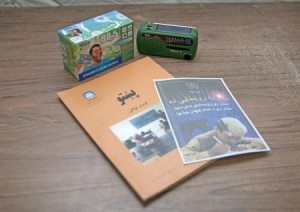
[…]Villagers that participate in the project receive one Radio Literacy handbook per family – sometimes two if theirs is a large family – which includes 15 weekly modules, and forty-some odd lessons, all of which are very rudimentary.

[…]In addition to the Radio Literacy handbook, participating villagers also receive 1 hand-crank radio per family which can receive AM and FM frequencies, as well as shortwave 1 and shortwave 2. Shortwave radio, more commonly known as ham radio in the United States, is able to reach areas where AM and FM frequencies cannot.

Read the full article here.

2012 WRTH: A Look Inside

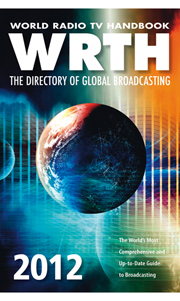
I just received my eagerly-anticipated copy of the 2012 WRTH directly from the publisher and, as ever, jumped right into their articles and reviews.

Like many radio listeners, I always look forward to the newest edition of the WRTH. It takes its rightful place at arm’s length next to my main receiver. Even though I use online frequency guides, I find they generally lack the detail and foresight that WRTH delivers.  And much more than just a listing of frequencies, WRTH’s radio reviews, feature articles, and HF report make for excellent reading.

On that note–this year, WRTH reviews several noteworthy shortwave receivers: the Alinco DX-R8E (the European version of the DX-R8T which we reviewed), the Reuter Elektronic RDR54C, WinRadio Excalibur Pro, Sangean ATS-909X and the Tecsun PL-660. They also take a look at the very affordable Pappradio DRM SDR receiver. The WRTH review mix always covers the receiver spectrum, from portables to professional, tabletops to SDRs.

The 2012 WRTH edition also gives a simple primer on the terminology and techniques used for evaluating receiver performance–e.g., sensitivity, selectivity, dynamic range, etc.–a worthy reference for anyone who routinely reads radio reviews.

I always enjoy their human-interest articles as well. In this edition they take us to the remote–I should say, most remote–Atlantic island, Tristan da Cunha; report on radio’s involvement (or lack of it) in the “Arab Spring;” and visit our good friends at Radio Bulgaria.

But, of course, the reason we all buy WRTH is for their in-depth comprehensive radio schedules for the upcoming year. How comprehensive are they? Check out the results from the annual comparative analysis of WRTH vs competitor guide Klingenfuss at the end of this post. Personally I can’t do without my WRTH–as I’ve often said, this indispensable go-to reference guide is the source for my shortwave listening fare.

Purchase your copy of WRTH directly from WRTH’s publishers, or from a distributor like Universal Radio (US) or Radio HF (Canada).

If you’re new to WRTH, note that they regularly update changes to their schedules throughout the year:  go to their website to download these updates.

If you would like to know more about using WRTH’s schedules, please see one of our previous posts.

How does WRTH compare with other frequency listings? Sean Gilbert posted the following on WRTH’s Facebook page:

The annual comparative analysis of WRTH vs Klingenfuss has just been published. I am pleased to announce that, once again, WRTH has proved more accurate and comprehensive than the Super Frequency List as regards Shortwave broadcasting (which is the area this study concentrates on). Overall we scored 98.4%, compared to the SFL which scored 97.6%. Breaking this down out of a possible 125 points for international broadcasting, we scored 124, whereas SFL scored 120. For domestic broadcasting, WRTH scored 122/125 and SFL scored 124/125, so the SFL just has the edge. This is caused by WRTH not including the full schedule for some of the tropical band stations in SAm. Here is a comment extracted from the report:
——-
“I still consider it useful, if the Handbooks also can provide the DX-er with additional information about Geographical Coordi-nates for his propagation calculations and Google Earth search, and ID in the language heard. Furthermore it is necessary to know current addresses (postal, e-mail and web) and QSL-policy for his reception report writing. For listeners with Broadband internet (ATDL) is it also useful to know, if the station broadcasts live audio on the web.

Most of these useful details can be found in the WRTH, but they are still missing completely in the SWFG !

The Handbooks are very useful for the DX-er and ordinary shortwave listener and are at a very high accuracy level and can hardly be much better!”
———
This fantastic result is down to the extremely hard work and dedication of all our country editors, contributors, monitors and, of course, the 3 main international sub editors who gather the majority of the information for the section. Without their enormous knowledge and skill, the section would not be what it is today. Finally we must not forget the publisher who has, amongst many other things, the unenviable job of doing the final setting and making it all fit into the available space – more difficult than it sounds, believe me!!

[…]Best wishes and regards,

Sean Gilbert – International Editor.

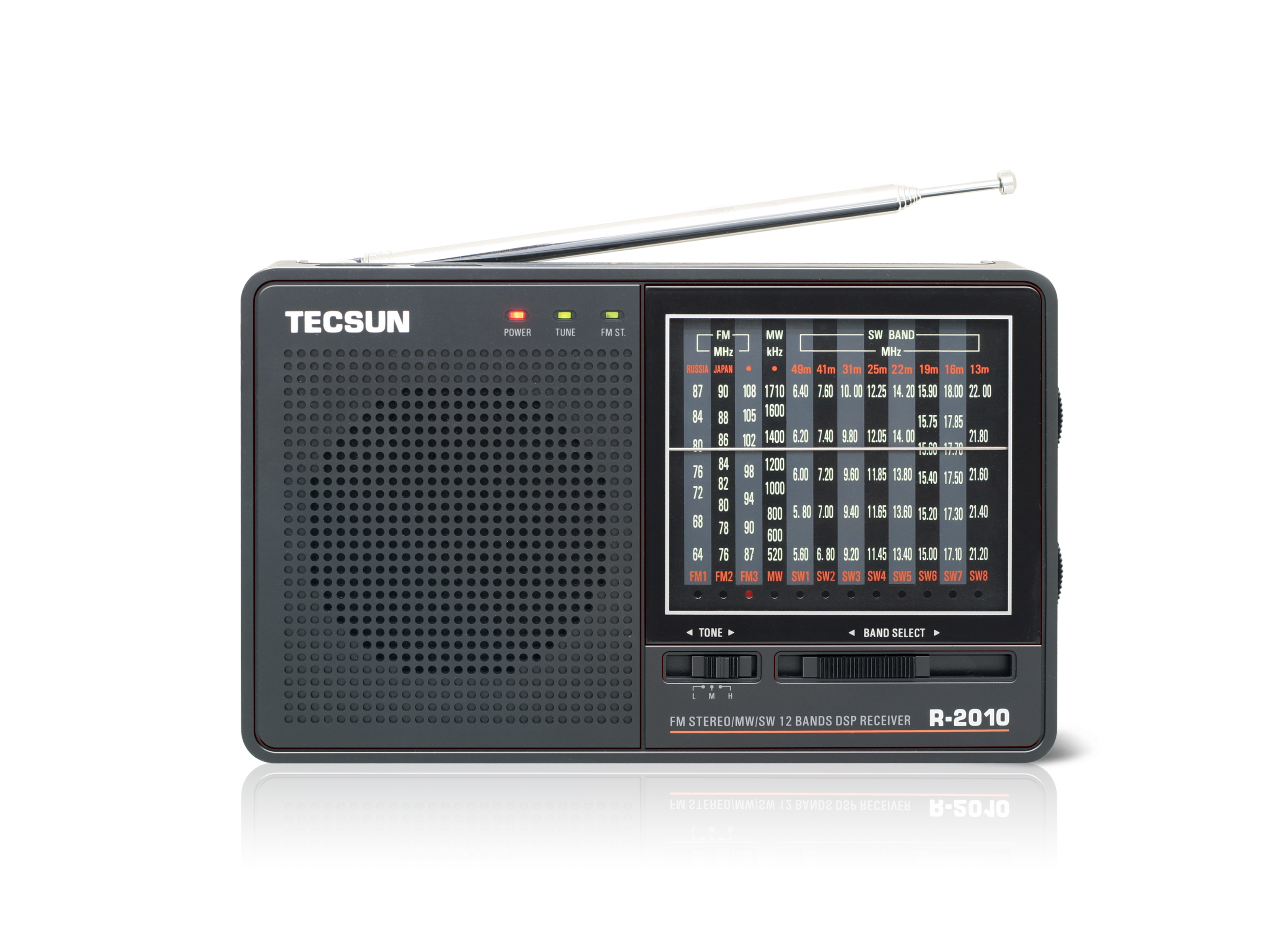
Is the Tecsun R-2010 being re-designed?

Will the analog face be replaced with a digital display on the Tecsun R-2010?

Reliable sources have told us that Tecsun may be re-designing the R-2010 with a digital display. 

This is yet unconfirmed as there are no prototypes or designs available, however, this is very plausible. Not only could be a positive response to feedback from other DSP analog radios like the Degen DE321 (namely, that digital tuning is precise, but the analog display is vague–a quirky combo), but this may also explain why the R-2010 has not been released even though Tecsun has had it in the works for nearly a year.

We will post updates here as they become available.