Category Archives: Nostalgia

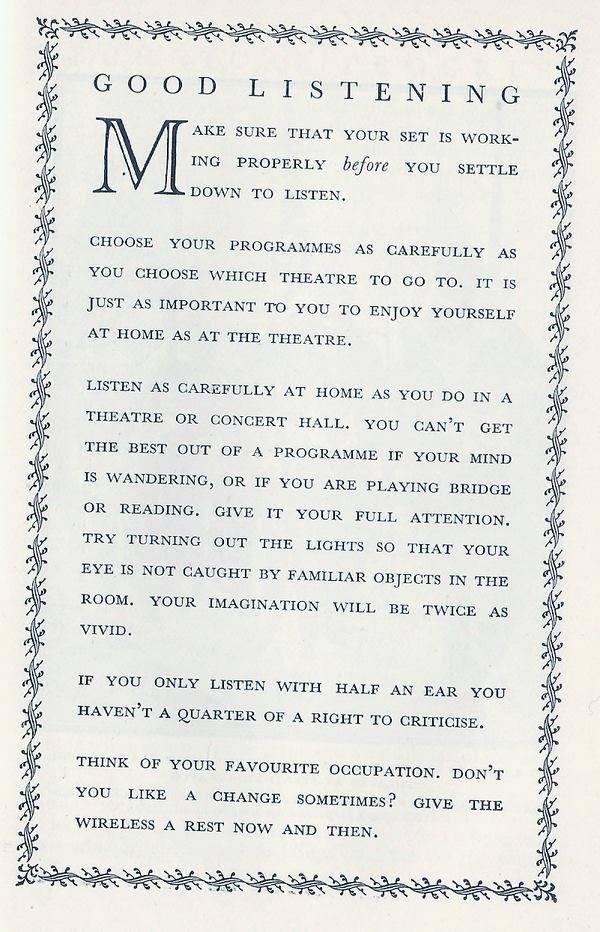
How to listen: A 1930 BBC radio manual

BBC-Radio-Manual

Many thanks to David Goren for sharing this article from Open Culture:

A comparison between the invention of radio and that of the Internet need not be a strained or superfical exercise. Parallels abound. The communication tool that first drew the world together with news, drama, and music took shape in a small but crowded field of amateur enthusiasts, engineers and physicists, military strategists, and competing corporate interests. In 1920, the technology emerged fully into the consumer sector with the first commercial broadcast by Westinghouse’s KDKA station in Pittsburgh on November 2, Election Day. By 1924, the U.S. had 600 commercial stations around the country, and in 1927, the model spread across the Atlantic when the British Broadcasting Corporation (the BBC) succeeded the British Broadcasting Company, formerly an extension of the Post Office.

Unlike the Wild West frontier of U.S. radio, since its 1922 inception the BBC operated under a centralized command structure that, paradoxically, fostered some very egalitarian attitudes to broadcasting—in certain respects. In others, however, the BBC, led by “conscientious founder” Lord John Reith, took on the task of providing its listeners with “elevating and educative” material, particularly avant garde music like the work of Arnold Schoenberg and the Second Viennese School. The BBC, writes David Stubbs in Fear of Music, “were prepared to be quite bold in their broadcasting policy, making a point of including ‘futurist’ or ‘art music,’ as they termed it.” As you might imagine, “listeners proved a little recalcitrant in the face of this highbrow policy.”
Continue reading…


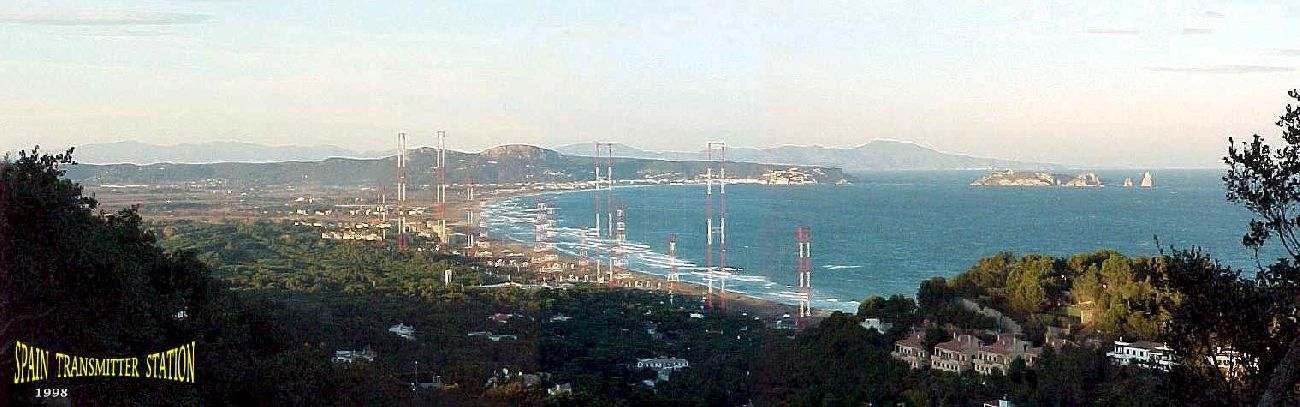
Playa de Pals transmitter site history and documentary

Photo courtesy: http://www.radioliberty.org

Photo courtesy: http://www.radioliberty.org

In response to Listening to WWV at the source, SWLing Post reader, David (EA4998URE SWL) comments:

What a “coincidence”. Hopefully, before the summer holidays officially end, I will be off to another shortwave transmitter site. Well, to the remains of it. I will be visiting the former RFE/RL (and VOA in the last years of operation) site in Playa de Pals, near the Catalan city of Girona and also very close to my main QTH in Barcelona. The Pals RFE/RL site was from where a 1MW signal was transmitted by feeding the same audio signal to 4 Continental transmitters.

Their output signals where put in phase, then the big Group D dipole curtain was divided into two “halves” by switching the feed lines in the appropriate way. Each half of the curtain received 500KW from two transmitters. So the total was 1000KW, or 1MW. If we add the antenna gain, the ERP was in the order of several megawatts. This was a signal directed to Eastern Europe, and more specifically to Moscow, via single-hop propagation. I suppose receivers in Moscow released plenty of smoke and had to be replaced every time they were tuned to a RFE/RL signal from Pals. Hahaha!

The curtains were demolished in 2006 and because the place is abandoned now and has been repeatedly sacked, the station buildings are in a very poor situation, specially in the inside. Almost no radio hardware survives, but what is still there is quite interesting. […]

There is an excellent website (www.radioliberty.org) which is a virtual museum of all things related to the Pals station. It was created and is maintained by a former worker of the station. The language in the English version of the website is a bit “macaronic” in some parts of the site, but I think this is a minor issue given the excellent amount of information kept there.

There is also a YouTube channel (https://www.youtube.com/user/PalsRadioStation) which keeps videos for the above website. Some of them are really long and very complete.

Finally, although not part of the Pals station virtual museum website, there was even a documentary made, after the demolition of the antennas, as a tribute to the station. It can be watched in the following link although parts of it have not been translated to English: https://www.youtube.com/watch?v=tJnxsSL3bbY

Many thanks, David!

After you visit the Playa de Pals site, later this year, please share your experience with us!

Coldwar Radio: When the VOA was an offshore broadcaster

Photo courtesy of former Courier crewman David M. Newell. Source: US Coast Guard

Photo courtesy of former Courier crewman David M. Newell. Source: US Coast Guard

(Source: VOA News)

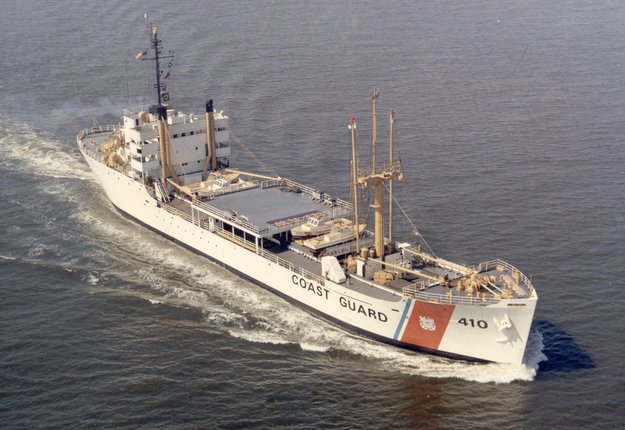
In 1952, amidst the Cold War, a 338-foot Coast Guard Cutter was transformed into the mobile broadcasting base of the Voice of America. Its mission for more than a decade: send information beyond the Iron Curtain to counter Soviet propaganda in more than a dozen native languages. Daniela Schrier reports from an exhibit honoring the veterans and broadcasters who served aboard the ship in the waters off of Rhodes, Greece.


Click here to watch the video if the embedded player above is not visible.

BBC Radio 4 Extra: The First Pirate

RadioNormandy

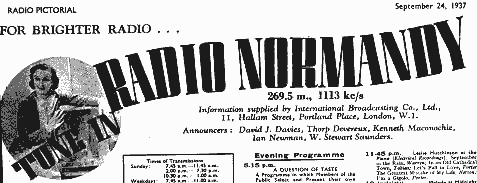
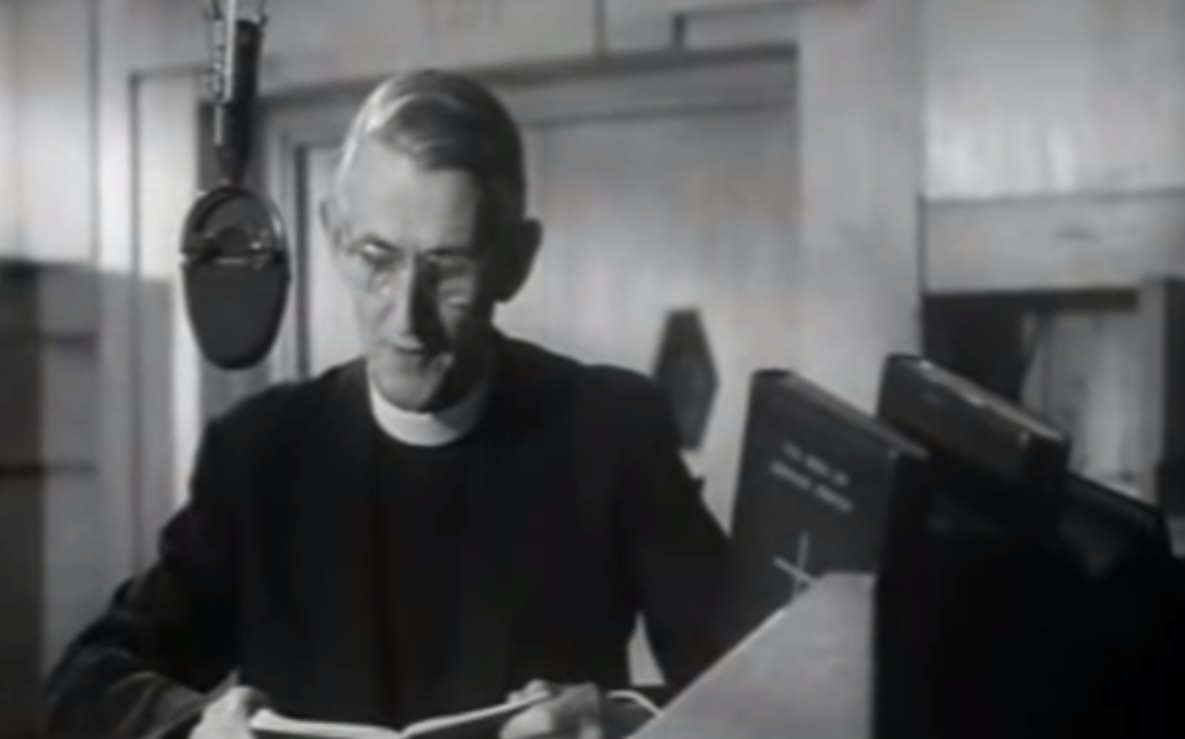
The First Pirate is the title of a Radio 4 Extra–an interview with Les Woodland who tells the story of Captain Plugge, founder of Radio Normandy, the first station to take on the BBC.

(Source: Southgate ARC)

Capt Leonard Plugge was the driving force behind Radio Normandy in the early 1930s. He created the International Broadcasting Company in 1931 as a commercial rival to the British Broadcasting Corporation by buying airtime from radio stations such as Normandy, Toulouse, Ljubljana, Juan les Pins, Paris, Poste Parisien, Athlone, Barcelona, Madrid and Rome. IBC worked indirectly with Radio Luxembourg until 1936. World War II silenced most of Plugge’s stations between 1939 and 1945.

Click here to listen to The First Pirate which will be broadcast on Thursday, August 21st 2014 at 05:30, 12:30, and 19:30 UTC and Friday August 22 at 1:30 UTC. 

Dave’s late night listening session

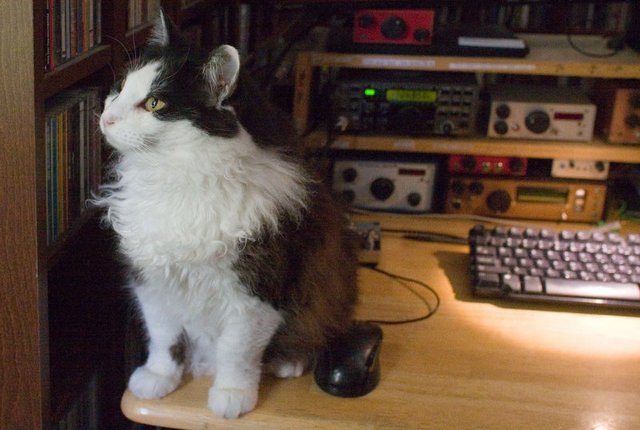
IMG_7321

My good buddy, Dave Richards (AA7EE), recently shared this message with his friends, many of whom do not know a lot about shortwave radio (yet):

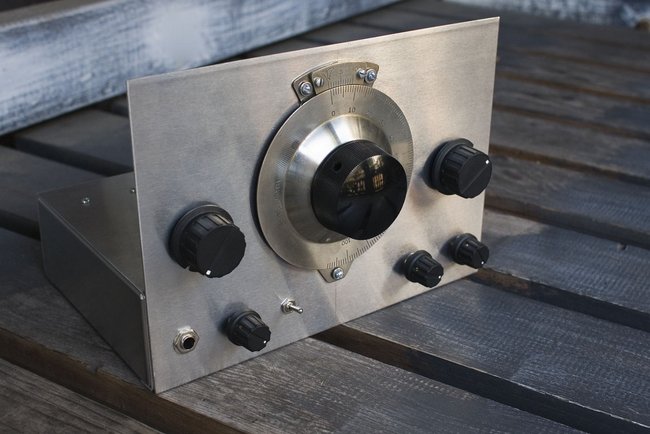
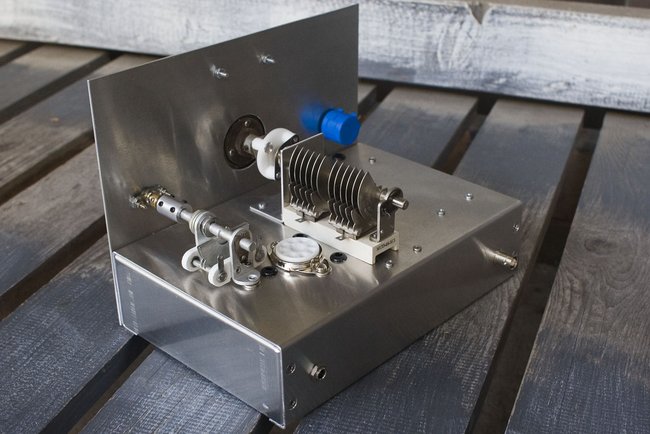
“I’m waking up very slowly this morning – was up until 4:30am listening to the 49 meter shortwave band on a new receiver I’m building, dubbed “The Sproutie Regen” after my cat Sprout. “Regen” is short for regenerative, which refers to the type of circuit used in this receiver – it was developed by Howard Armstrong in 1915 and is 100 year-old old technology. Most of the parts are fairly new, with the exception of the tuning dial, which was made by a company from Massachusetts, called “National” – it’s probably around 50 – 70 years old, and the tuning capacitor, which is around 50 years old but had never been used. It was “new” in it’s box.

IMG_7327

It’s not finished yet – will look a bit more spiffy when it’s done, but these are what its bones look like. 49M was fascinating last night. I heard an American propaganda station broadcasting to North Korea (The Voice Of Hope), and being jammed by the DPRK, an American propaganda station broadcasting to Cuba (Radio Marti), a very low power broadcaster from Canada, as well as Radio Habana Cuba, Radio Australia broadcast in Pidgin, Radio China International, as well as the Chinese domestic radio service (which Mao Tse Tung wanted all citizens to listen to), and a host of other broadcasters from all over. It was a fascinating cornucopia of signals from our very diverse world – and all on a receiver I built myself using 100 year-old technology.

I had trouble sitting in front of the desk because Jingles the blind kitty had curled up on the circular cushion on the chair and was happily sleeping. I somehow managed to squeeze myself in next to her and she is still napping here on the cushion next to me.

JinglesThe BlindKittie

Dave’s cat, Jingles, in his shack.

I love these late night sessions. It’s just me, a cup of coffee, a shortwave receiver to listen to far-off lands, and a lovely little furry creature slumbering next to me. Perfect. As some people in this part of the San Francisco Bay Area might say, ‘my natural vibrations are perfectly aligned with the planets and receiving much abundance.’

As for me, I’m just having a good time, thank you.”

Like it, too?  Follow Dave, Jingles, Sprout, and all of his homebrew adventures via his excellent radio blog.

Ken’s favorite QSL card

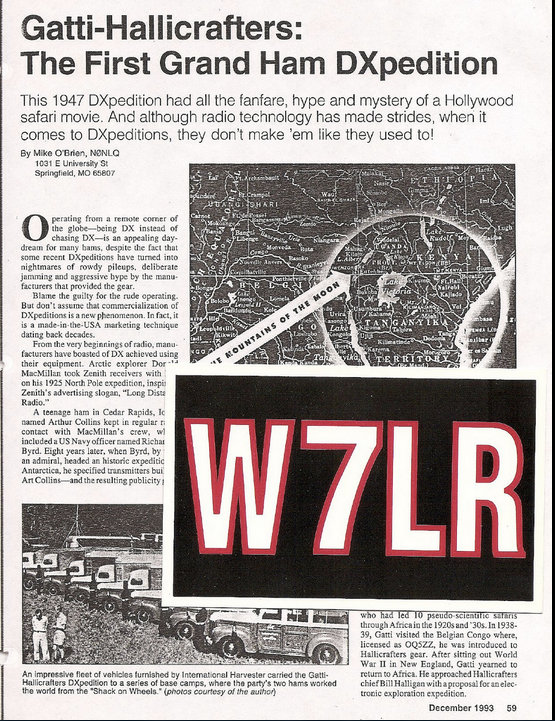
W7LR-KenCarrRegarding memorable QSL cards, SWLing Post reader, Ken Carr comments:

“I received my favorite QSL card many years ago as a result of a random contact. I was just starting out in ham radio when I logged a QSO [contact] with a ham from Montana. I was thrilled because I knew how sparsely populated the state was. I once lived there for 8 weeks while studying at the biological station on Flathead Lake.

The very friendly and helpful ham from Montana was Bob Leo, W7LR. I promptly sent him a card and soon thereafter received one from Bob. Years later I was reading an article in QST. It was about a massive Dxpedition of 1947 sponsored in part by Hallicrafters. Hams from all over the country competed for the two coveted positions on what was called the Gatti Expedition. One of the hams chosen was Bob Leo!”

A photo of the card superimposed on the QST article along with more details are found on my Flickr site: http://bit.ly/1sxnL06

Thanks so much for sharing this memory, Ken!

Readers: you can follow Ken on his blog, KE1RI – A New England Ham.