Radio Waves: Stories Making Waves in the World of Radio
Welcome to the SWLing Post’s Radio Waves, a collection of links to interesting stories making waves in the world of radio. Enjoy!
During Led Zeppelin’s 12 years together, the group released eight studio albums, each composed of tracks Jimmy Page and company believed to be the best representation of the group at that specific moment in time. When amassed, these albums trace the evolution of Zeppelin’s style, approach to production, individual musical skills, and songwriting habits. And while we might have assumed this rendering of Zeppelin’s musical life to be complete, it would seem that we’ve not been given the full picture. Indeed, there are certain Led Zeppelin songs that even some of the group’s most die-hard fans never knew existed.
Following the release of the Led Zeppelin compilation album BBC Sessions in 1997, Jimmy Page began hearing a bootleg version of a song he hadn’t heard in just under 30 years. The band had never attempted it during an album session, and it never appeared on any of their records. After a bit of digging, Page realised that the track had come from a BBC performance Led Zeppelin made in the first months of 1969. Unfortuantely, it transpired that the BBC had managed to lose the tape from that day, meaning that Page was forced to track down a copy of the song a fan had recorded off the radio back in ’69. [Continue reading…]
(By Tom Langmeyer) The unfortunate conventional wisdom that has prevailed in radio during the last 20 years is “We are a music station. We don’t do news.” Unfortunately, this sentiment represents many people who set the tone for the industry and make these proclamations proudly, as the radio business becomes more and more irrelevant.
There is some truth to the statement that a “music station should not be covering news” by those who think completely linearly. However that culturally process-driven approach that has zero to do with results.
A music-intensive radio station is not expected to do news in the traditional sense, nor should be competing with news stations. It’s not a music station’s role.
However, all radio stations must have a component of “news. Now, before folding your arms across your chest, think about it this way.
“News” is really what your listeners need and want in the radio experience. What does “news” mean for your station? What is it? How is it delivered? How much? How do we activate our listener? That’s where things are different and need to be defined.
Think about a great country station that’s talking about a concert that’s happening in town and building an experience around it. That’s NEWS.
No one is saying a music station should be WINS, WBBM, KNX or KCBS.
No matter the music format is, there needs to be a playbook for how and what information (relevant “news”) gets presented.
On the advising side of Great Lakes Media’s business, we create customized plans for stations committed to localism and winning on the revenue hill. Sure it’s different – and that’s why it works.
It’s called the “Great Lakes Media Way.” [Continue reading at Radio Ink…]
Agents traced signals in Pennsylvania, Maryland and Oregon
The Federal Communications Commission has sent notices to several property owners of alleged pirate radio activities on their properties.
The letters from the Enforcement Bureau are headlined “Notice of Illegal Pirate Radio Broadcasting.” They remind the owners that federal law now provides for fines of up to $2 million “if we determine that you have continued to permit any individual or entity to engage in pirate radio broadcasting from the property that you own or manage.”
The bureau said its agents used direction finding techniques to source these FM signals. It mailed letters to Richard Manson for broadcasts on 103.5 MHz in Philadelphia in January; to Maria V. Hernandez of Kissimmee, Fla., for signals on 87.9 MHz in Hazleton, Pa., in January; to Edwin and Joyce Pitt of Baltimore, Md., for signals on 91.3 in February; and to Kent and Deanna Coppinger for signals on 100.5 MHz in La Grande, Ore., in March. [Continue reading…]
After nearly three years, Hamvention is back.
The convention is the world’s largest amateur radio gathering at Greene County Expo Center, according to the event’s website.
Around 30,000 visitors are expected to come to the event from all over the world.
Michael Kalter, the spokesperson for Hamvention, said that based on numbers from the Greene County Convention Visitors Bureau, Hamvention adds $30 million to the local economy.
He said amateur radio, also known as ham radio, is something people of all ages and backgrounds can be a part of, which is why he thinks the convention draws such a large crowd.
Kalter shared how it feels to bring so many people from around the world together. “That makes me feel really good,” Kalter told News Center 7?s Kayla McDermott. “I’m glad that the hobby seems to be really growing and flourishing,” he added.
There are no COVID-19 restrictions in place for this year’s convention. With thousands of people expected to attend, safety is a top priority. Before entering the convention center, people must have their bags checked. The Greene County Sheriff’s Department said they have prepared for the event.
Major Shawn Prall, with the sheriff’s office, said they have a plan in place to make sure traffic moves along smoothly as there are only two lanes to get to the grounds. Crews will also keep an eye on the weather, in case there is a chance for it to turn severe. Prall said this will be his fourth Hamvention and he has never had an incident. “We’re taking precautions, both that the public will see in uniform presence and also things that they can’t see. Just trying to keep everybody safe and be ready for any kind of incident, whether it be weather or manmade or anything like that,” Prall said.
The convention runs this weekend 9 a.m.-6 p.m. Friday, 9 a.m.- 5 p.m. Saturday and 9 a.m.-1 p.m. Saturday.
Source: https://www.whio.com/news/local/hamvention-kick-off-this-weekend-xenia-thousands-expected-attend/RUMUJLOHEJCUXOOSMEZJL6S22I/
Do you enjoy the SWLing Post?
Please consider supporting us via Patreon or our Coffee Fund!
Your support makes articles like this one possible. Thank you!


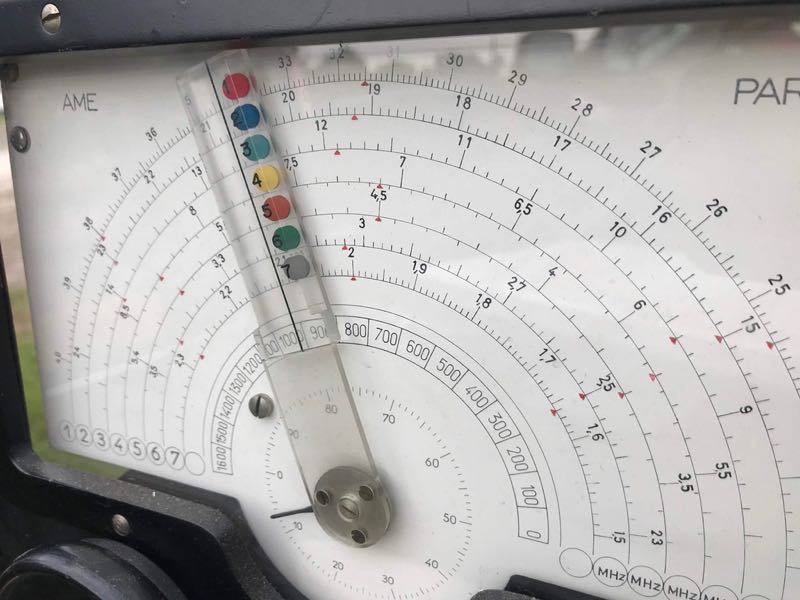
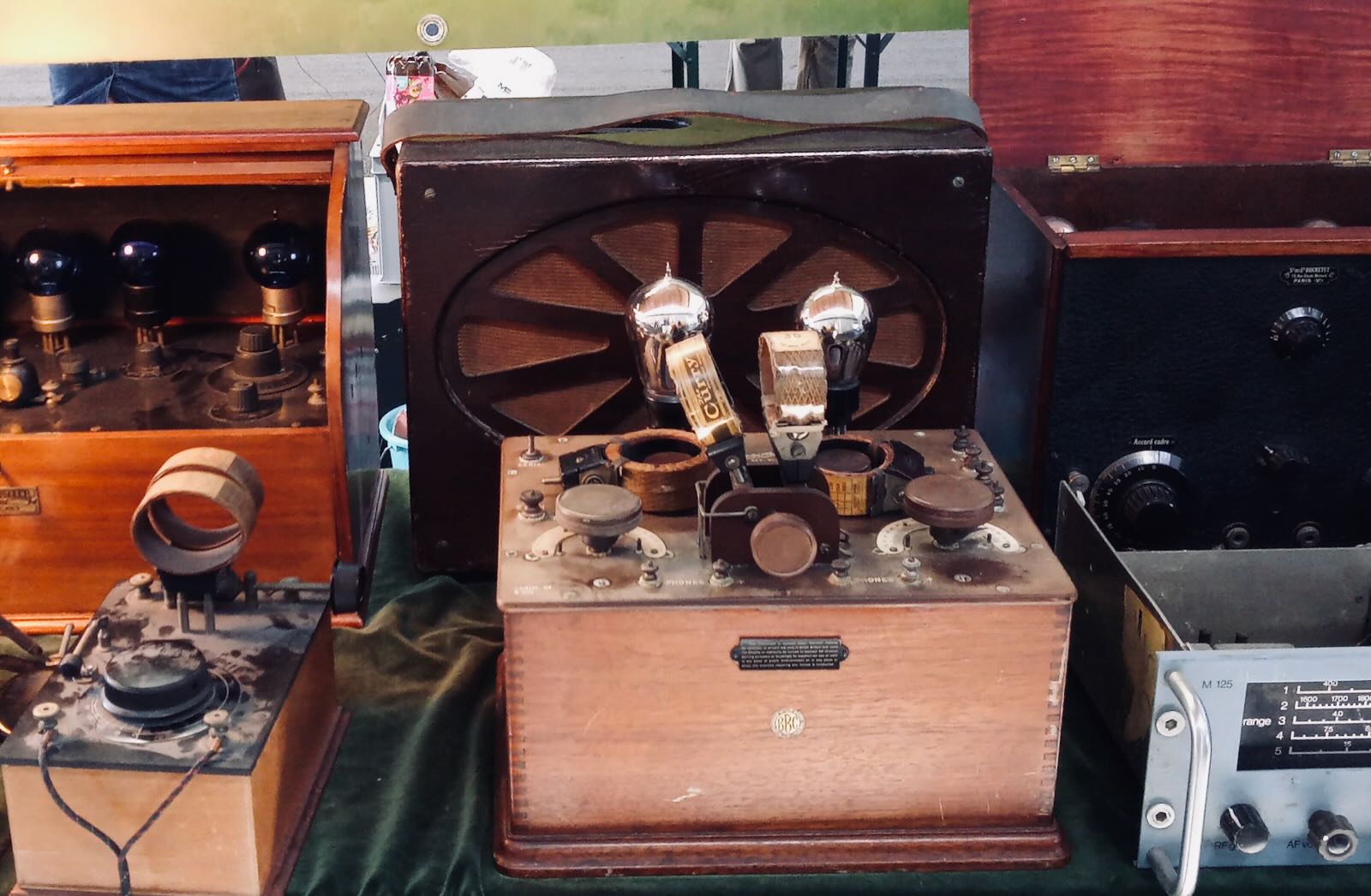 Many thanks to SWLing Post contributor, Alexander (DL4NO), who shares the following photos and notes from Friedrichshafen: