Category Archives: Nostalgia

Inches Per Second: Bob’s massive collection of archived reel to reel recordings

Very recently, Bob Purse reached out to me through the Shortwave Radio Audio Archive. Bob is the owner and curator of the excellent Inches Per Second audio archive and blog.

Bob’s archive is all about sharing what essentially amounts to lost and found sound: reel to reel recordings he’s discovered at thrift stores, estate sales, in junk piles, etc.

One of Bob’s shelves chock-full of reel to reel recordings

Bob describes his passion for collecting these recordings in this post on WFMU’s blog.  I can say that he’s truly a kindred spirit as we both love taking recordings that would otherwise be lost forever and making them freely available online for everyone to enjoy.

Bob has kindly offered up the off-air shortwave radio recordings he’s collected and digitized over the years. We’ll be slowly adding these to the SRAA.

Many thanks, Bob, for sharing your recordings with the Shortwave Radio Audio Archive.

Post readers: I would highly recommend checking out Bob’s numerous recordings and notes on Inches Per Second!

Can you identify John Lennon’s mystery radio?

Many thanks to SWLing Post reader, Robert Yowell, who writes:

Hi Thomas – you might recall several years ago I found a photo of a Sony ICF-2001 in the New York studio where John Lennon was recording his final album “Double Fantasy.”

Well I just recently found this photo of John Lennon which I believe is dated to the late 1970’s [correction: the photo was actually taken in November, 1980, just a few days before his death] tuning an unknown brand of portable radio. Do you think your readers might be able to identify it?

All the best,

Robert

Thanks for sharing this, Robert! No doubt, this will be a difficult radio to ID since we can’t see the front of it. Then again, we’ve some savvy radio enthusiasts here in the SWLing Post community! If you think you can ID this radio, please comment!

Radio Waves: A Second Golden Age, RFE Popular in Russia, Station Helps Ukrainian Refugees, Symbol of Normalcy, Saving Wax Cylinders, and Antarctic Post Office Opportunity

Radio Waves:  Stories Making Waves in the World of Radio

Because I keep my ear to the waves, as well as receive many tips from others who do the same, I find myself privy to radio-related stories that might interest SWLing Post readers.  To that end: Welcome to the SWLing Post’s Radio Waves, a collection of links to interesting stories making waves in the world of radio. Enjoy!


Is radio in a second golden age? Here’s what the first looked like. (MSN / Washington Post)

On. Oct. 30, 1938, America was rocked by shocking news: Aliens had been spotted crash-landing outside Grover’s Mill, N.J. Additional sightings were soon made across the Northeast, including reports of Martians unleashing poisonous gas on Manhattan and burning onlookers alive with ray guns. Periodically, the breathless news reports would be reduced to static.

Listeners reacted in real time; many of them flooded the streets wearing gas masks and wet towels over their faces. Stores were raided, bridges and expressways were inundated with traffic, and pregnant women reportedly went into early labor.

Of course, the alien invasion never actually happened. The news bulletins were part of a live Halloween program a young producer and a cast of talented actors were presenting over the radio. The producer was 23-year-old Orson Welles, and the name of the episode was “War of the Worlds.” The H.G. Wells-adapted story had been produced for radio as part of Welles’s regular Sunday night broadcast, “The Mercury Theater on the Air” — a program that had hitherto been largely ignored, as it was up against a wildly popular variety show starring comedians Edgar Bergen and Charlie McCarthy.

Only this Sunday was different, as millions of Americans who had tuned in to listen to Bergen and McCarthy changed their dials when the duo introduced a guest opera singer. “No one was in the mood for opera that night, and much of the country stumbled onto Welles’s broadcast by mistake, not knowing the news bulletins they heard were part of a radio drama,” explained Carl Amari, a syndicated radio host and the founder of Radio Spirits, a large distributor of classic radio programs. [Continue reading…]

The Kremlin tries to stifle Radio Free Europe — and its audience surges (Washington Post)

As the U.S.-funded broadcaster is forced to shut most of its Russian operations, its Web traffic indicates that Russian people are eagerly consuming its stories

Radio Free Europe, the U.S.-funded operation that got its start by piping American-flavored news through the Iron Curtain in 1950, could see big trouble brewing for its Russian operation in recent years.

The Kremlin kept putting the screws to its Russian-language broadcasts, throwing up ever more regulatory hurdles. But it was in late 2020 that the hammer really came down. The “media regulator” demanded that every broadcast, digital story and video carry an intrusive disclaimer at the top stating that what followed was the product of a foreign agent.

“Basically, it was like telling our audience to go away,” said Jamie Fly, the CEO of Radio Free Europe/Radio Liberty, as the organization has been known since a 1976 merger.

That labeling would interfere with the private nonprofit’s mission at a core level. So, Fly told me, “we refused to comply.” [Continue reading…note that this content might be behind a paywall for some readers.]

New radio station helps Ukrainian refugees adapt in Prague (AP)

PRAGUE (AP) — This is Radio Ukraine calling.

A new Prague-based internet radio station has started to broadcast news, information and music tailored to the day-to-day concerns of some 300,000 Ukrainian refugees who have arrived in the Czech Republic since Russia launched its military assault against Ukraine.

In a studio at the heart of the Czech capital, radio veterans work together with absolute beginners to provide the refugees with what they need to know to settle as smoothly as possible in a new country. Continue reading

Antiques Roadshow Radio and “The changing sound of radio”


Many thanks to SWLing Post contributor, Pete Madtone, who writes:

[L]ast night while I was having my dinner, a lovely Marconi crystal set came on Antiques Roadshow that a chap had rescued from a skip!  In the end it was valued for £1000-£1500. A sort of radio you’d love in a museum cabinet at home.

Nice pics of radio in that time too in the little piece.

Click here to watch on iPlayer.

[Also,] I just got a recommendation about a wonderful series on the BBC called The changing sound of radio with Chris Watson (wildlife sound recordist and original member of Cabaret Voltaire). The first one is all about recording natural sounds which is wonderful but episode 2 has shortwave radio, binaural sound and tape loops in music. It is very very interesting!

Click here to check it out on BBC Sounds.

Thank you so much for these tips, Pete!

Video: “The Glory Days of Shortwave Radio”

Many thanks to SWLing Post contributor, Adi, who writes:

Hi Thomas, this video just popped for me on YouTube. I searched the SWLing Post and didn’t find it, it’s not new so maybe you missed it.

Thank you, Adi. I’m almost positive I’ve posted this one before–but if I have it’s been so long it should be re-posted! A wonderful nostalgia trip! Thanks for sharing.

Click here to view on YouTube.

WU2D and “Dream” SW Receivers of the 1960s and 70s

Many thanks to SWLing Post contributor, Bill Meara, who shares this most recent post from his excellent SolderSmoke Podcast blog:

Mike WU2D Looks at the “Dream” SW Receivers of the 1960s and 70s (Video)

Wow, I really liked Mike’s walk down memory lane. I saw several of my own dream receivers:

S-38E. Indeed, this little monster did add some danger to your life. AKA “The Widow Maker,” I gave one to my cousin’s husband so he could listen to what the commies on Radio Moscow were saying. He later told me that the receiver had given him a shock. I now have TWO S-38Es in my shack (two more than I really need). I have installed isolation transformers in both of them, so they have lost the one element (danger!) that made them attractive.

HA-600A. I got this one for Christmas in 1972. The A model is MUCH better than the plain vanilla HA-600. I recently got another HA-600A and found serious deficiencies in the Product Detector. Has anyone else noticed these problems? BACKGROUND INFO AND A PLEA FOR MORE INFO HERE: https://soldersmoke.blogspot.com/search?q=HA-600A+Product+Detector

HQ-100. Got one in the Dominican Republic. Fixed it up, repairing damages caused by radio life in the tropics. Disabled the goofy audio amplifier circuitry. I now wonder if this receiver might benefit from the insertion of a 455 kc ceramic filter.

NC190. Wow “Cosmic Blue” Perhaps this was an early influence that led to “Juliano Blue?”

HQ-180. “18 tubes and almost as many knobs!” FB!

HRO-500. Love the dial.

Transoceanic. Never had one, but built a BFO for the Transoceanic that W8NSA took with him to SE Asia during the war.

R-390A. I don’t have a crane for the workbench.

Thanks Mike — that was a lot of fun.

The Cooling Radio Station & MUSA: The Ultimate SSB Receiving Site

Many thanks to SWLing Post contributor, Mark (AE2EA), who shares the following video from the Antique Wireless Association. Here’s the video description:

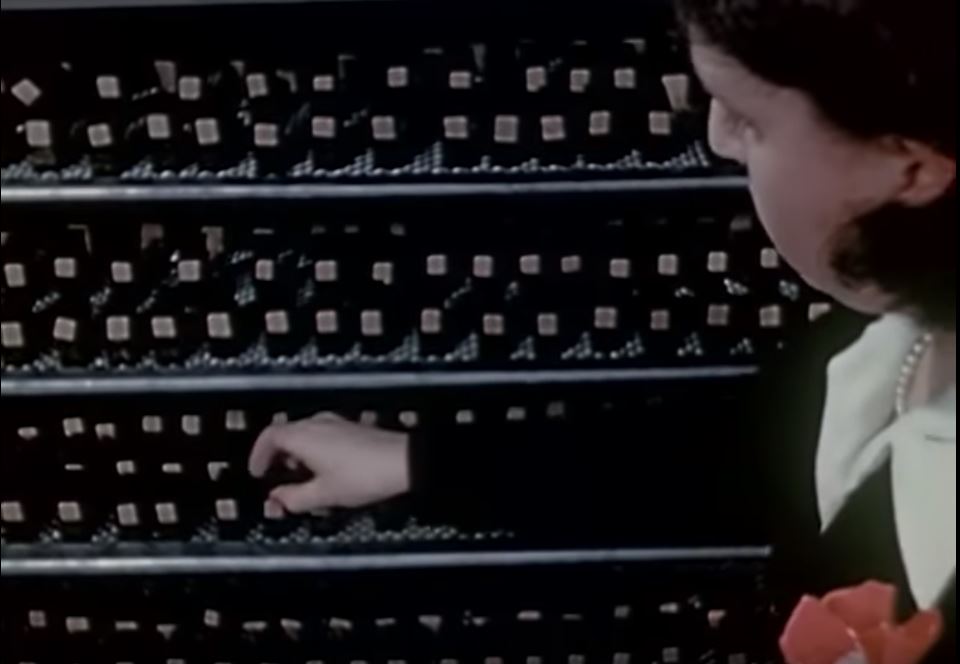
Cooling Radio Station was at the UK end of a point-to-point, shortwave signal beamed from Lawrenceville, New Jersey. The site of the station was carefully selected as the antenna, MUSA (Multiple Unit Steerable Antenna), upon which it depended to receive the incoming transmission, had to be: directly aligned with Lawrenceville NJ, USA; two miles long; comprised of an array of 16 individual rhombic antenna; and have an area of three miles in front of the MUSA that would be free from radio interference. The 16 rhombic antenna were strung between 60ft high telegraph poles; each side was 315ft long with internal angles of 140 degrees. The signal from each antenna was sent to the station via a core coaxial cable sheathed in a watertight copper tube and buried in a central trench.

This vital communications link, between the US and British governments at the very highest level, operated from 1942 until the early 1960s. Although a transatlantic telegraph cable had been in use since 1866, there was no telephone cable until 90 years later, in 1956. An initial shortwave system was set up in 1929, but was of poor quality. The Post Office set up and ran Cooling Radio Station solely for the reception side of two way, shortwave, voice channels with the United States. Land was purchased in 1938 and the building was completed in 1939. The receiver used 1,079 valves and was considered to be the most complex radio built. It was connected to the adjacent MUSA (Multiple Unit Steerable Antenna) and could receive 4 incoming radio telephone channels. It was officially in use on the 1st July 1942. This may well have been because German intelligence services were able to break the scrambler / encryption device available in 1939. By 1943, Bell Laboratories in the US had developed SIGSALY, a far more secure scrambler system. (This system was so well screened and secure that German records captured at the end of WW2 showed that they were not aware that transmissions were person to person, direct voice contact.) SIGSALY was installed in the basement of Selfridges department store in Oxford Street with extensions to 10 Downing Street, the Cabinet War Rooms and the US Embassy amongst others. The US transmitter was located at Lawrenceville, New Jersey, while UK transmissions were made from Rugby to the US receiver at Manahawkin, New Jersey.

Click here to view on YouTube.

Click here to become a member of the AWA.