Category Archives: Radio History

Radio Waves: SpaceX Encrypts Falcon 9 After Ham Downloads Data, Postcard From Titanic Op at Auction, History of Sound Art, and WNYC’s Early Recording

Radio Waves:  Stories Making Waves in the World of Radio

Because I keep my ear to the waves, as well as receive many tips from others who do the same, I find myself privy to radio-related stories that might interest SWLing Post readers.  To that end: Welcome to the SWLing Post’s Radio Waves, a collection of links to interesting stories making waves in the world of radio. Enjoy!

Many thanks to SWLing Post contributors Ulis (K3LU), Chris Walter, and Ron James  for the following tips:


SpaceX Encrypts Falcon 9 Telemetry After Amateur Radio Operators Download Data (Extreme Tech)

SpaceX doesn’t operate like a traditional aerospace company. For one, the CEO is usually hamming it up on Twitter during launches and providing details that would usually go in a press release. SpaceX also live streams almost all of its launches, even the prototypes that have an unfortunate tendency to blow up lately. It wasn’t even encrypting the Falcon 9 telemetry feed… until now. Unfortunately, some digging by amateur radio tinkerers seems to have convinced SpaceX to step up its security.

It all started a few weeks ago when several Redditors managed to lock onto the 2232.5 MHz telemetry downlink from a Falcon 9 upper stage. Right away, they were able to pull out a few interesting plaintext snippets from the unencrypted feed. With a little more work, the radio enthusiasts were able to capture some amazing images from the spacecraft’s cameras.

After that discovery was public, other SpaceX fans tried to grab some data from the Starship during its prototype tests. However, SpaceX had chosen to encrypt that data. Even with the right wireless equipment, the decoded signal was just noise. Now, it appears the same thing is happening with the Falcon 9. When attempting to pull data from the most recent Falcon 9 launch, the original signal snoopers discovered it had also been encrypted. A series of tweets from SpaceX engineers suggest the decoding of the telemetry signal was the reason for the change.[]

Postcard from Titanic’s radio operator is being sold at auction (Stars And Stripes)

BOSTON — A postcard written by the Titanic’s senior radio operator just weeks before the ocean liner sank in the North Atlantic in 1912 has been put up for auction.

The card, with a glossy image of the ill-fated ship on the front, was written by Jack Phillips to his sister, Elsie Phillips, in March 1912 while awaiting the ship’s first sea trials, according to RR Auction in Boston.

“Very busy working late. Hope to leave on Monday & arrive Soton Wednesday afternoon. Hope you quite OK. Heard from Ethel yesterday,” he wrote. It’s signed “Love Jack.”

It is postmarked Belfast, where the Titanic was built, and has a canceled halfpenny stamp.

“Soton” is a contraction of Southampton, the English port city from where the Titanic departed on its maiden voyage. It sank in the early morning hours of April 15.

Phillips, who turned 25 on board, stayed at his post after the Titanic struck an iceberg to send calls for assistance to other ships in the area until water was lapping around his feet, according to RR Auction.

He made it off the ship after being told by the captain that he had done his duty, according to his biography in the British National Archives, but died of exposure in the frigid North Atlantic, according to RR Auction.

The postcard is being sold by the estate of Vera and John Gillespie, longtime members of the Massachusetts-based Titanic Historical Society, said Bobby Livingston, executive vice president at RR Auction.[]

Radio Survivor Podcast #292: The History of Sound Art (Radio Survivor)

What is sound art? And what do we know about its origin story? We explore this question and more with our guest this week, artist and educator Judy Dunaway. An adjunct professor in the History of Art Department at Massachusetts College of Art and Design, Dunaway’s recent article, “The Forgotten 1979 MoMA Sound Art Exhibition,” is a fascinating look at the history of sound art and highlights important contributions by female artists. In our wide-ranging discussion, we also hear about Dunaway’s own artistic practice, from her work with latex balloons to transmission art to a “phone improv” show over BlogTalkRadio a decade ago.

Click here to check out this piece at Radio Survivor.


Overcoming the Limitations of Time (From the January/February 1940 WNYC Masterwork Bulletin)

A MATTER OF RECORD: Mighty useful gadgets are WNYC’s four new recording machines. They were used in a variety of interesting ways during the past year, so we decided that the how and the why of recording would be an appropriate subject for this, the third of our Behind the Microphone series dealing with the technical side of things at the Municipal Station.

One of the most valuable uses of the recording units is that they have partially enabled us to overcome the limitations of time — have made it possible to make available to our listeners important evening programs which we could not broadcast directly because of our fluctuating time allotment.

For instance, we could not pick up the ASCAP Music Festival Concerts from Carnegie Hall last Fall because WNYC was not on the air after 8:30 P. M.[1] What to do? The recorders to the rescue! The concerts were “broadcast” over our regular Carnegie Hall lines to the Municipal Building where they were transcribed on our two standard studio-type recording machines. Each transcription[2] was put on the air on the afternoon following the original perfor

Similarly, our two mobile recording units made possible an afternoon broadcast of the official opening of La Guardia Field which took place at midnight. Recording equipment is also used frequently to transcribe major programs “off the air” so that they may reach a larger audience through rebroadcast. There was the time, for example, when the Mayor’s office was the scene of a final report on the new Police and Fireman’s pension plan. Official reports on the balloting were recorded and rebroadcast at a time when the majority of the policemen and firemen affected could listen in.

We used to think recording an easy job: Just put the recording needle on the disk, turn a few buttons, and let ‘er go. After watching one of our expert recording engineers at work, we realized that it’s a delicate task, requiring special training and long practice.

Click here to read the full piece at WNYC.


Do you enjoy the SWLing Post?

Please consider supporting us via Patreon or our Coffee Fund!

Your support makes articles like this one possible. Thank you!

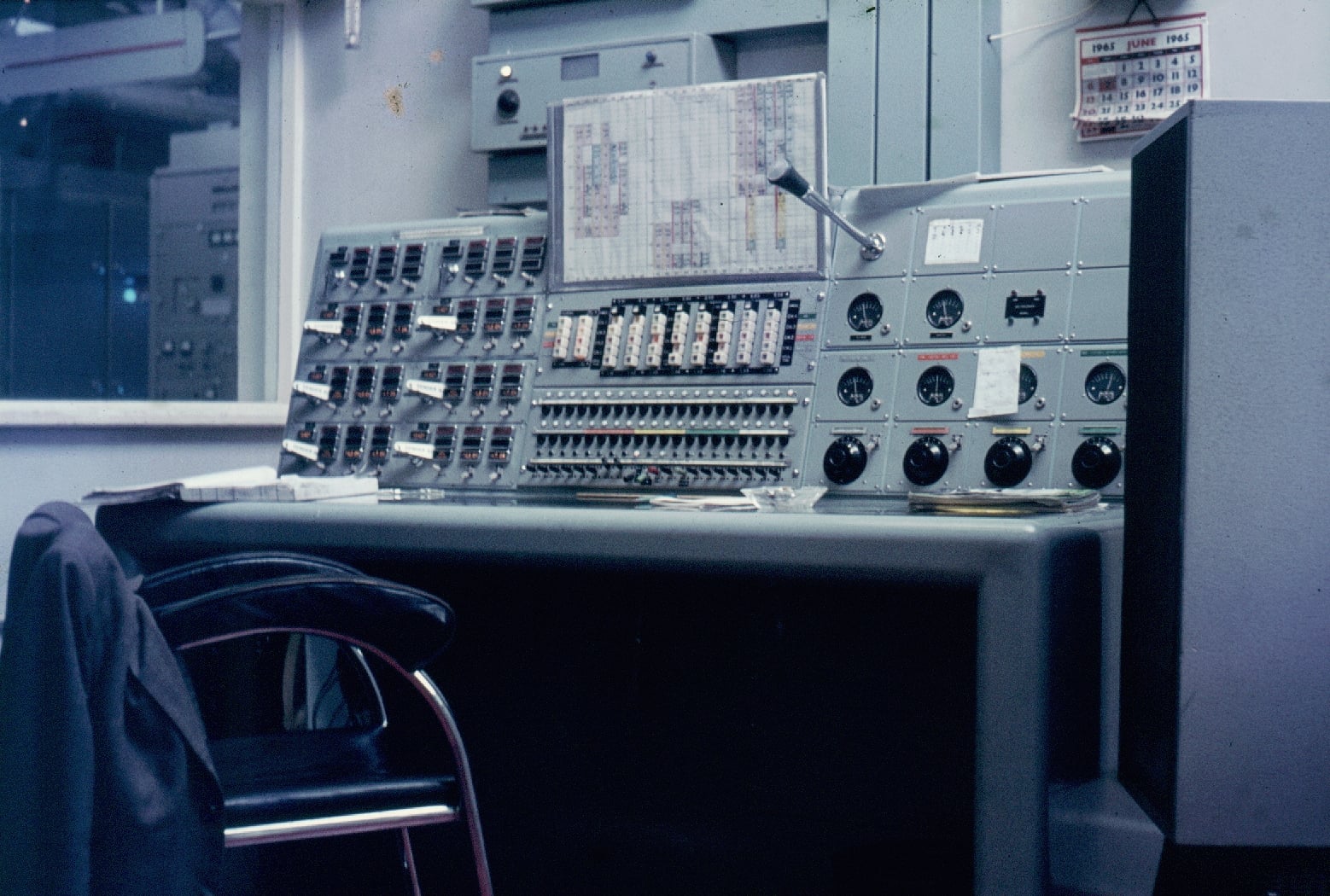
Woofferton Control Desk circa 1965

Many thanks to SWLing Post contributor, Dave Porter (G4OYX), who writes:

Thought you might like to post this pic (above) just in from Phil Brooks who used to be an engineer at Woofferton.

In front of the operator on the desk is what was described as “The External Services Operational Schedule”.

The WOF version was chopped into three eight hour periods. Where there is print the senders are ON. There are eight vertical columns and they correspond to Sender 91 to Sender 96. There are two blank columns on the RHS corresponding to Sender 85 and Sender 86 that were available but not scheduled.

Assuming that they chopped the schedule from midnight to 0800, 0800 to 1600 and 1600 to midnight then it appears that VoA services start up at 0100 and run through to 0630.

Similarly for end of night shift there is BBC starting at 0730 to cover for the maintenance break at Daventry and off at 0900. VoA resumes at 1300 and carries on until 2330 throughout day and evening shift.

WOF has a maintenance break 0900 to 1300.

The six “white flags”are the “Crater keys” and are an interlock device such that if the key is removed then the sender associated with it can’t be powered so that antenna switching can take place.

The view from the window shows part of Sender 92 in the actual sender hall.

The six Peak Programme Meters PPM (UK version of VU – but much better) show the audio on the sender output or input if selected.

This desk ran from 1963 to 1981. It was replaced when automation with a Control System (the WATCH) was installed. That ran from 1981 to 2008.

Thanks so much for sharing this, Dave. We always appreciate the context you add with a career in transmitting informing you!

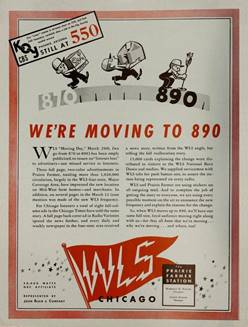
AM Radio History: 80th Anniversary of the “Havana Treaty,”

Many thanks to SWLing Post contributor, Bob Colegrove, who writes:

Hi Thomas,

I came across this article on Wikipedia. It is a few days late, but thought it might be of interest to others. The link is

https://en.wikipedia.org/wiki/North_American_Regional_Broadcasting_Agreement.

Briefly, this past Monday, was the 80th anniversary of the implementation of the “Havana Treaty,” which was actually signed on December 13, 1937, and finally implemented 80 years ago on March 29, 1941. It provided for reorganization of the “AM” medium wave band into frequency allocations for clear channel, regional and local stations.

AM radio was the Internet of its day. The invention of the telegraph notwithstanding, radio provided widespread, instant communication, albeit one way, to a vast population reaching hundreds of miles from the transmission source. It extended to the most rural parts of the country adding “A battery” and “B battery” to the lexicon.

The initial licensing process had been done with very little planning and forethought using 96 channels between 550 and 1500 kHz. The reorganization was the culmination of the need for some order to reduce mutual station interference and provide more reliable service to listeners. It involved frequency changes for about 1000 stations in several countries. March 29, 1941 was informally known as “moving day.”

The Wikipedia article details the changes made at that time and goes on to describe subsequent expansions of the AM broadcast band.

Fascinating! Thank you for sharing this bit of radio history with us, Bob!

1933 Aluminum disc recordings from a DXer in England

Many thanks to SWLing Post contributor, Mark (AE2EA) with the AWA, who writes:

Your loyal followers might be interested in this video of airchecks
recorded on aluminum discs in England of US broadcast stations in late
1933, from the Antique Wireless Museum.

From the AWA description:

These audio clips were recorded on aluminum discs using more of an embossing than cutting action. Reading an AWA Facebook post that the AWA doesn’t have the equipment or experience to digitize the very fragile audio information on these discs, [email protected] volunteered to do so. He did a great job is highly recommended for your consideration as a service for archival digitization and restoration.

The discs were in Peter R. Testan’s collection because they included recordings of station WBBC in Brooklyn, NY that his dad, Peter J, started. As well as being a broadcast owner and engineer, Peter J. Testan was also a ham operator. Pictures of his ham shack were featured in a recent issue of the AWA Journal.

While the calls are identifiable, the other programming in these recordings is difficult to listen to. The Creative Director of a New York City radio station remarked after listening: “”It’s so funny because I have DXers sending me EXACTLY the same quality audio as on these discs. Nothing has changed in nearly 100 years!!!”

The audio quality in this video has been enhanced from the original aluminum disc recordings through the use of bandpass filtering, noise reduction and compression, with the goal of removing some of the artifacts of the recording process.

The Wikipedia entry for aluminum discs is pretty succinct: https://en.wikipedia.org/wiki/Aluminum_disc

If you enjoyed this video, consider becoming a member of the Antique Wireless Association at https://antiquewireless.org/homepage/membership/

Absolutely mazing! Thank you so much for sharing this, Mark!

1940: When Sears Roebuck sold a wide array of radio gear

Many thanks to SWLing Post contributor, Charlie (W4MEC), who shares a PDF of the 1940 Sears Roebuck Co. catalog section featuring a wide array of radio gear and test equipment.

This file is hosted on the Pro Audio Design forum and can be downloaded as a PDF (15.8 MB) by clicking here.

It’s a real nostalgia trip reading through the fine Hallicrafters, Hammarlund and National HRO descriptions. Thanks so much for sharing this, Charlie!

“How To Make a Cheap Receiving Outfit”

Our friends over at the SolderSmoke Daily News recently posted this fun piece from a January 1921 issue of Radio News:

This is great! I’ve often thought a proper ground needed daily watering. And we know it must work: Mars is some serious DX!  Professor Nutty T. Wyrlus was way ahead of his time.

Click here to check out the original post at the SolderSmoke Daily News.

Radio Waves: WLW at 100, WWVB Upgrades, Ofcom Radio Amateur Data, and Unlocking the Airwaves

Radio Waves:  Stories Making Waves in the World of Radio

Because I keep my ear to the waves, as well as receive many tips from others who do the same, I find myself privy to radio-related stories that might interest SWLing Post readers.  To that end: Welcome to the SWLing Post’s Radio Waves, a collection of links to interesting stories making waves in the world of radio. Enjoy!

Many thanks to SWLing Post contributors Mike Terry, Dave Zantow, and John Figliozzi  for the following tips:


WLW-AM Begins 100th Year On Air (WVXU)

It wasn’t Cincinnati’s first radio station, but WLW-AM is still the biggest.

Cincinnati industrialist Powel Crosley, Jr. began broadcasting WLW-AM over a 20-watt station from his College Hill home on March 2, 1922 – which means that the station is entering its 100th year today.

WLW-AM wasn’t Cincinnati’s first commercial radio station, but it is the oldest surviving station from the 1920s. WMH was operated by the Precision Instrument Co. from Dec. 30, 1921, to January 1923.  WMH was sold to Crosley and merged into WLW, says Randy Michaels, the former WLW-AM programmer and Jacor/Clear Channel executive who is the best radio historian I know.

In 1934, WLW-AM became “the Nation’s station” when President Franklin D. Roosevelt flipped a switch in the White House to activate the station’s unprecedented 500,000-watt experimental transmitter under its Tylersville Road tower. WLW-AM broadcast at “super power” around the clock for five years, through 1939, and continued the mega-wattage output midnight-2 a.m. until 1943. For years WLW-AM has boasted that the 50,000-watt signal reaches 38 states. (I’ve heard the station in New Jersey, Maryland, North Carolina, Florida, Georgia, Illinois and Missouri.)

For 99 years, WLW-AM has broadcast some of the most popular personalities in town: Jim Scott, Gary Burbank, Bob Trumpy, Marty Brennaman and Joe Nuxhall, Cris Collinsworth, Jim LaBarbara, Bill Cunningham, Mike McConnell and Dale Sommers. Before them came Ruth Lyons, Bob Braun, Doris Day, Rosemary Clooney, newsman Peter Grant, sportscaster Red Barber and comedian Red Skelton.

Although WLW-AM likes to promote itself as “news radio,” it’s perhaps best known for carrying Reds and most Bengals games, plus University of Cincinnati football and basketball and Xavier basketball.[]

WWVB broadcast system upgrades may include temporary outages (WWV)

The WWVB broadcast system is being upgraded with new equipment to improve the reliability of the signal. In order to install this equipment, beginning on March 9, 2021 the WWVB signal may be operated on a single antenna at approximately 30 kW radiated power for periods up to several days in duration, and may have occasional outages. Periods of reduced power operation lasting longer than 30 minutes will be logged on the WWVB Antenna Configuration and Power web page, and any outage longer than five minutes’ duration will be recorded on the WWVB Outage web page. Upgrades are expected to be complete by March 31, 2021.

Ofcom released age of radio amateurs data (Southgate ARC)

Following a Freedom of Information request about the age of radio amateurs Ofcom said they do not hold Date-of-Birth information for many radio amateurs but released what information they do have

Ofcom say “We do not hold a full breakdown of the age of issued amateur radio licensees as date of birth is not a mandatory field for licence applications.”

In September 2000 the then communications regulator (RA) abolished the ban on people under 14-years-old holding a Full amateur licence, since that time a person’s date of birth has served little regulatory purpose.

The data Ofcom released showed they only had Date-of-Birth information for:
7,312 out of 28,845 Foundation licences
4,104 out of 12,127 Intermediate licences
44,944 out of 54,072 Full licences

As of March 1, 2021 there was a total of 95,044 valid UK amateur radio licences.

Download the FoI reply and the available age data at
https://ofcom.org.uk/__data/assets/pdf_file/0022/214915/age-of-amateur-radio-licensees.pdf

You can submit a Freedom of Information request to Ofcom online at
https://www.whatdotheyknow.com/new/ofcom

Unlocking the Airwaves (UMD)

Unlocking the Airwaves: Revitalizing an Early Public and Educational Radio Collection is a comprehensive online collection of early educational public radio content from the National Association of Educational Broadcasters (NAEB). The forerunner of CPB and its arms, NPR and PBS, the NAEB developed and distributed educational radio programs and accompanying print materials to schools and communities across the United States. What’s more, the NAEB lobbied extensively to unlock the airwaves—to access precious frequency space—in order to bring the voices of poet Robert Frost, architect Frank Lloyd Wright, anthropologist Margaret Mead, and conservationist “Ranger Mac,” among many other individuals, into American homes and classrooms.

The NAEB’s history is the dramatic story of idealists who believed in the utopian possibilities of technology for education and social uplift and who faced considerable challenges in pursuit of those goals, including economic depression, world war, and the scarcity of the electromagnetic spectrum. It’s a story that has much to tell us about 20th century American culture, as well as the 21st century’s environment of online educational technology and podcasting that we live in today.

Despite its historic importance and contemporary relevance, most of the NAEB members’ programs were never heard again after their initial brief moments on the air. The archives for the radio programs and their related paper documentation have been split for over 25 years between two institutions: the University of Maryland and the Wisconsin Historical Society. Unlocking the Airwaves reunites the split collections, finally realizing the potential of the collections of the NAEB for exploration and and the broader public.

Click here to explore Unlocking the Airwaves.


Do you enjoy the SWLing Post?

Please consider supporting us via Patreon or our Coffee Fund!

Your support makes articles like this one possible. Thank you!