Category Archives: Radio History

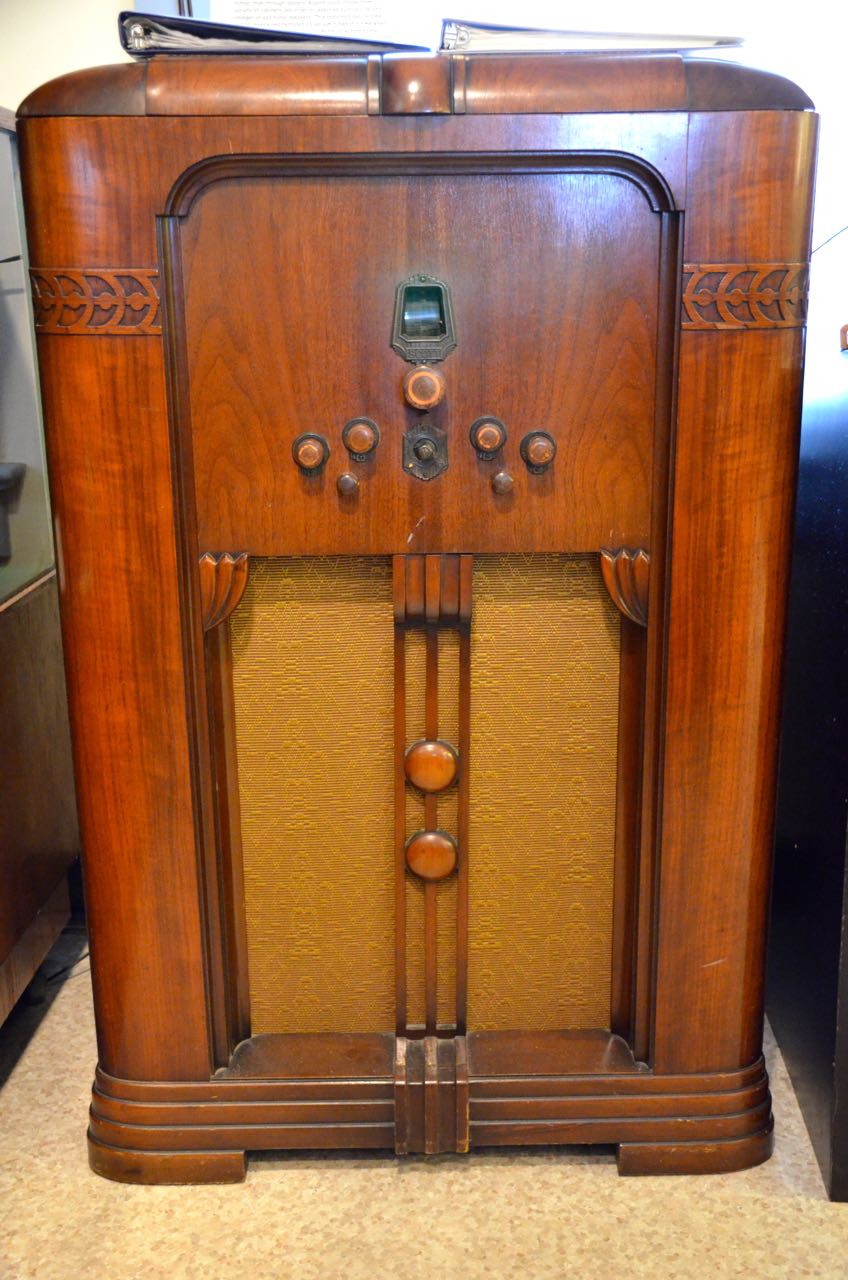
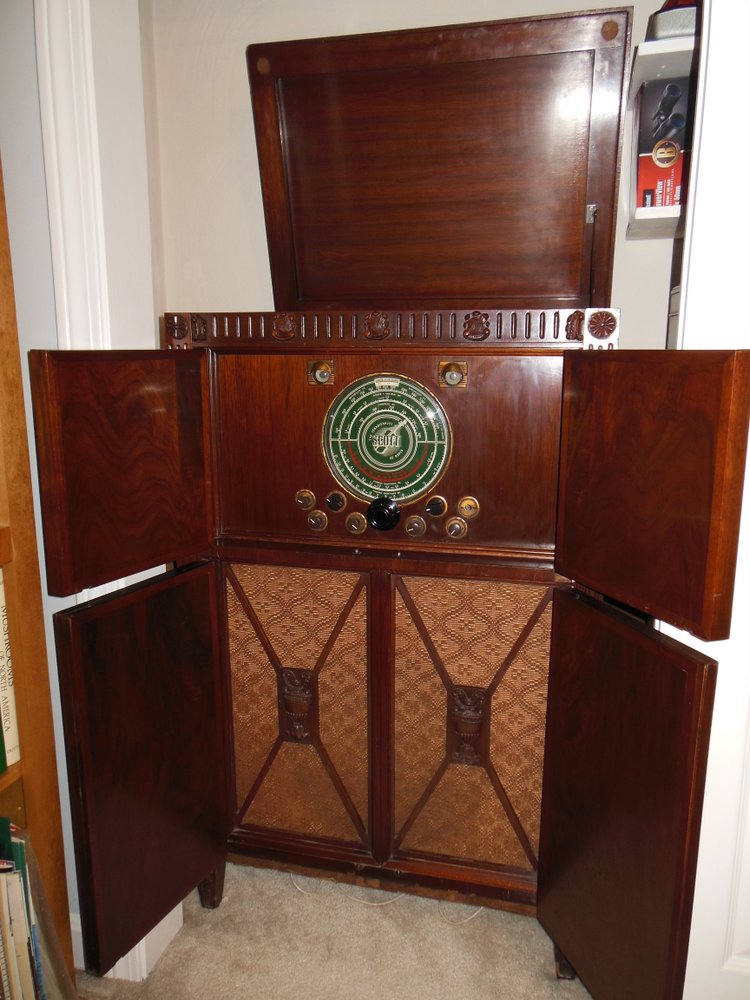
Ken’s E. H. Scott Philharmonic Beam of Light console radio

E. H. Scott Philharmonic Beam of Light Open 2

In response to an inquiry in our post about the Crosley WLW Model Super-Power Radio Receiver, SWLing Post contributor, Ken Carr, writes:

I’m not sure if my radio is a ‘benchmark’ but it sure is close to it.
It is the E. H. Scott Philharmonic Beam of Light console radio.
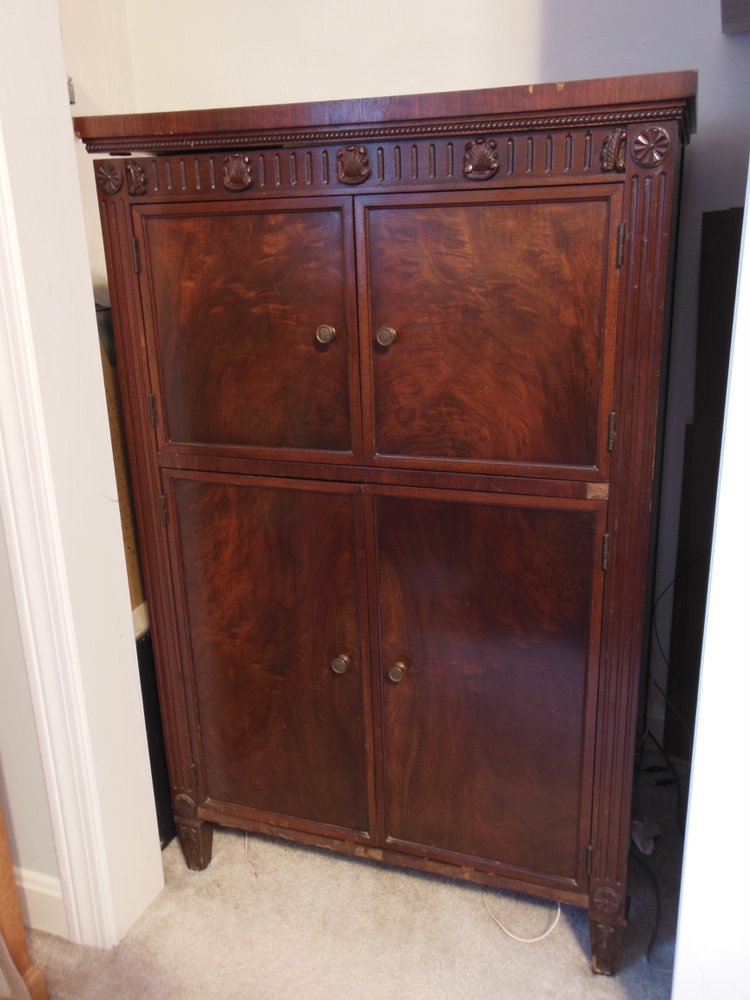
E. H. Scott Philharmonic Beam of Light Outside Closed

Mine appears to have been built in 1939 or early 1940. It has 30 tubes, most of which are covered by chrome-plated shields. The power supply/amplifier (4 6L6’s in the output stage), receiver, 15″ speaker and cabinet easily weigh over 150 pounds.
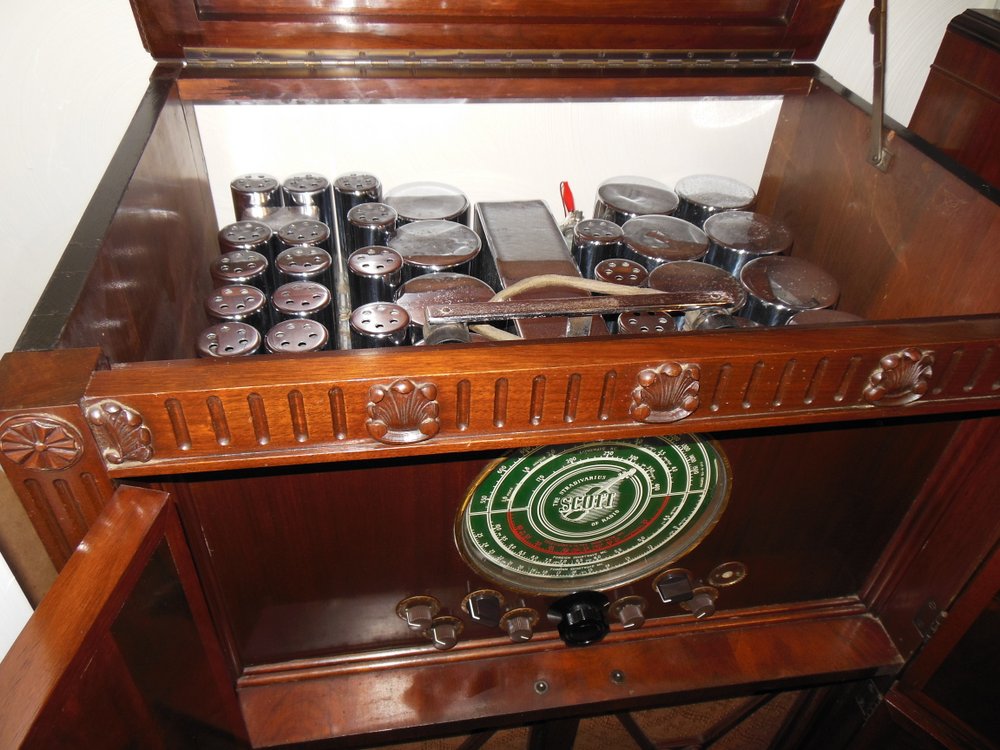
E. H. Scott Philharmonic Beam of Light inside

It took me two years of occasional work (I am retired so I don’t rush) to get it going and working reasonably well. I had to replace over 100 capacitors and correct some B+ voltage problems left by a previous repair person. 

None of the knobs are correct (mine came without them … 9 required) and replacements are difficult to come by (and quite expensive when they do appear).

When receiving a strong station the volume is such that it would easily drown out anything within 100 yards (and with no distortion).
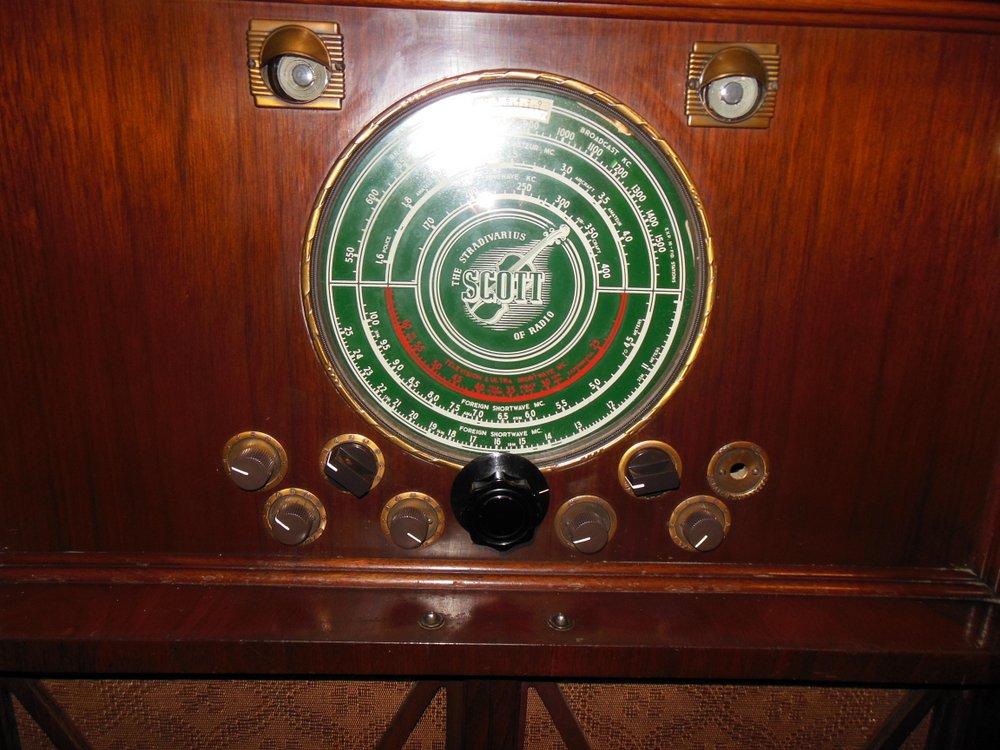
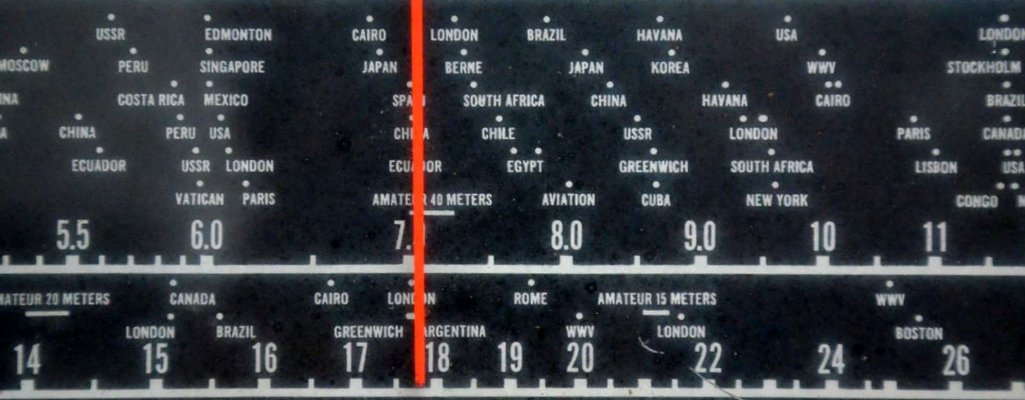
E. H. Scott Philharmonic Beam of LightDial

Some day I will post some details and photos on my WordPress site (idlenot.com). I’ll be sure to let you know, Thomas. [Note: Yes, Ken, please do!]

Oh, the first time I powered it up and received a station they were playing Light My Fire (The Doors, I think). Appropriate. I put a video of it on YouTube. The radio is all apart as I was still working on it at the time.

Click here to view on YouTube.

Now that is serendipity, Ken–I mean, the first music you hear after restoring this beauty is Light My Fire? Brilliant!

The E. H. Scott Philharmonic Beam of Light is a benchmark console by any standard. I first learned about this radio through a local classified ad–the owner was selling the internal components (and original knobs) but had no cabinet. I believe he was asking $1200. The chrome plating is such eye candy, I can see why some owner in the past removed it from the cabinet to save space. Still, it was a shame the cabinet had been discarded–as one can see from your photos, the craftsmanship is simply stunning.

Ken, thank you for taking the time to share the Beam of Light console with us!

Post readers: you should check out Ken’s blog, Idlenot.com, where you’ll find more vintage radio and classic cars!
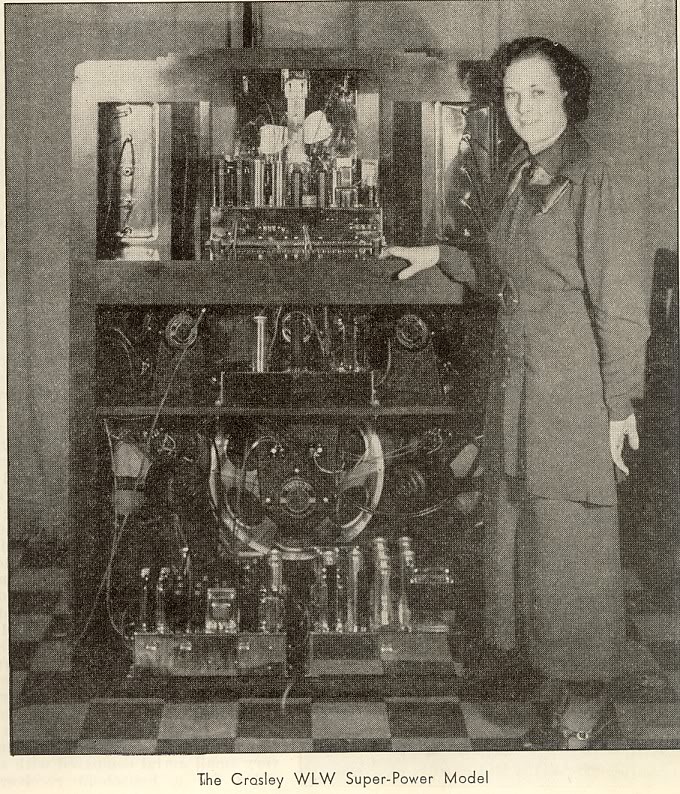
The Crosley Radio Corporation’s 1936 “WLW Model Super-Power Radio Receiver”

Crosley

(Image: AntiqueRadios.com)

(Source: Nuts and Volts)

In 1935, the Zenith Radio Corporation produced a stunning radio receiver called the Stratosphere model 1000Z. The set used 25 tubes and three loudspeakers — more than any other radio to date. An amazing (for the time) 50 watts drove its three speakers — one 6 inch dynamic high-frequency and two 12 inch dynamic low-frequency speakers.

Standing 50-1/2 inches tall, the Stratosphere sold for $750.00 — more than many automobiles; in comparison, a new Ford cost $652.00. At that price, it’s no wonder that only about 350 sets were produced during the four years that the Stratosphere was offered.

This achievement impressed Powel Crosley, Jr. — the President of the Crosley Radio Corporation — who praised it as a fine example of quality in radio construction, but it used “only” 25 tubes and three speakers! Crosley — who also owned the 500,000 watt powerhouse radio station, WLW — was inspired to surpass Zenith by bringing the world the largest and most powerful radio receiver yet known.

[…]Out of the numerous [engineering conferences were held throughout the winter months] and Crosley’s imagination came the basic specifications: the radio would be a superheterodyne receiver with no fewer than 30 tubes, six loudspeakers, four chassis; a suitably impressive cabinet would house it. More intricate than any set ever built, it would naturally have the highest possible quality and richness of tone.

[…]In its completed form, the WLW Model Super-Power Radio Receiver indeed surpassed the Zenith Stratosphere model. It had 37 tubes, six speakers, and 75 watts of power. The cabinet stood 58 inches tall, 42 inches wide, and 22 inches deep. Everything inside the cabinet that could be was chromium-plated. The transformer coils, tubes, and speaker frames were finished in black and each chassis had its own serial number plate.

Continue reading the full article at Nuts and Volts…

Regular SWLing Post readers know that I’m a bit of a vintage radio nut, so I thought I’d do a little digging to see if any WLW Model Super-Power Radio Receivers had been sold or auctioned recently.  I was curious what sort of price they’d fetch.

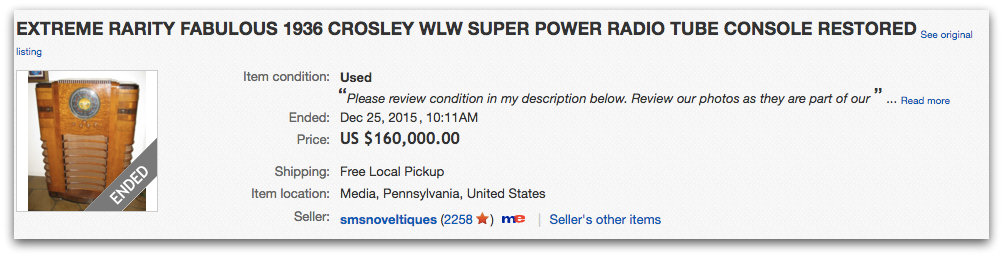
Let’s just say, some owners demand a high price…Crosley-WLW-Receiver-eBay

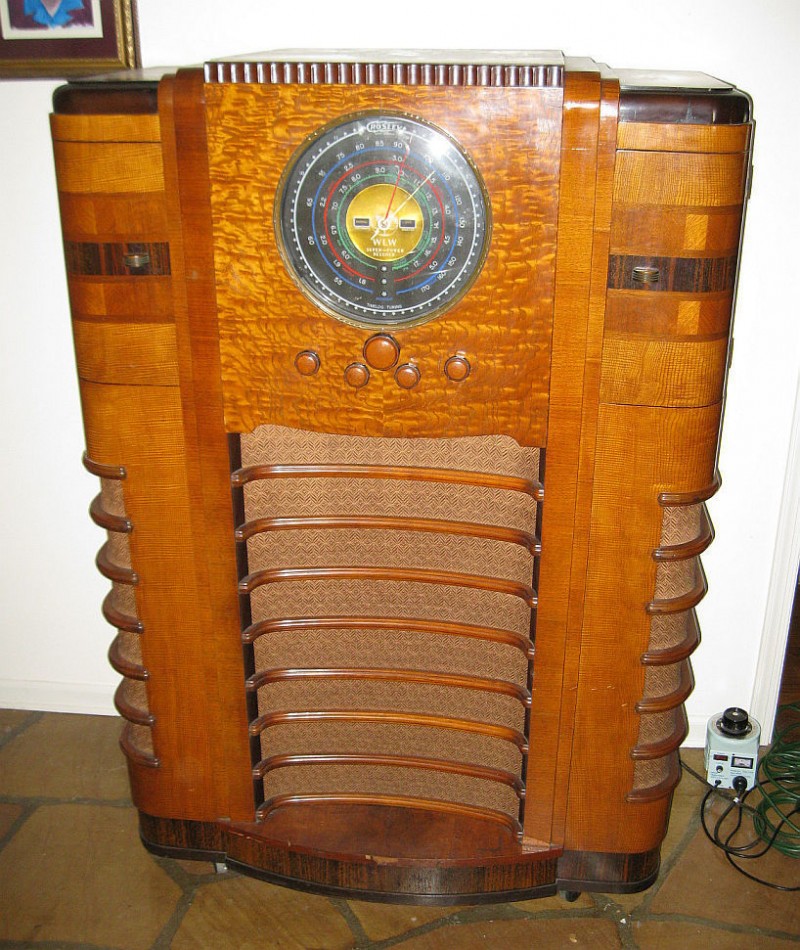
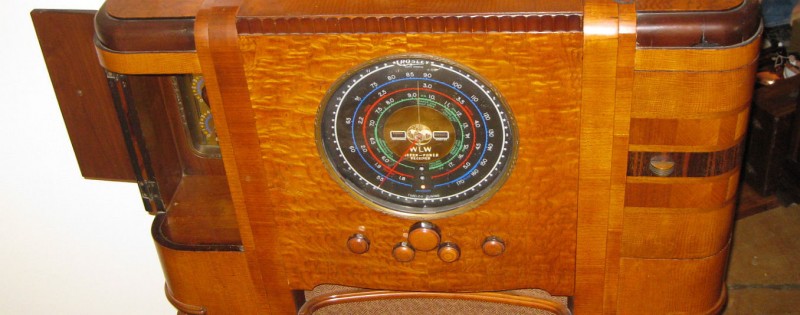
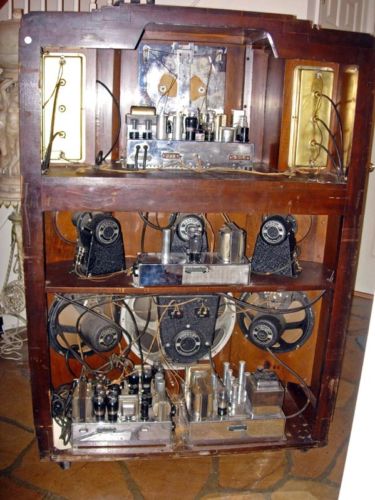
This unit was put up for sale on eBay for $160,000 US last year! While I know the Crosley WLW receiver is rare, that price was obviously over the top as is wasn’t sold. Still, the seller included some great photos of this near-mint model:

Crosley-WLW-RX

WLW Model Super-Power Radio Receiver-1 WLW Model Super-Power Radio Receiver-2 WLW Model Super-Power Radio Receiver-3 WLW Model Super-Power Radio Receiver-4

Around the time of the Zenith Stratosphere and the Crosley WLW–the mid to late 30s–radio manufacturers must have either believed there was a market for these high-end, high-fidelity receivers, or they simply enjoyed designing and manufacturing them as a company benchmark or showpiece.

While not as feature-packed as the Crosley WLW receiver, at the National Capital Radio and Television museum last year, I was completely enamored with this gorgeous powerhouse console: the E.H. Scott All-Wave 23 console.

Scott-ConsoleRadio

The docent told me that the E.H. Scott All-Wave 23 console could easily fill a banquet hall with hi-fi audio. It sported 23 tubes and a very large speaker. If memory serves, it originally sold for $750–easily three or four times the price of most console radios.Scott-Console-Radio-Dial

Post readers: Do you know of any other benchmark console radios?  Do you own one of these amazing receivers?  Please comment!

Radio Prague: Underground agents and plots in the Cold War broadcasting war

HalliDial

Many thanks to several SWLing Post readers who shared the following story from Radio Prague:

Underground agents and plots in the Cold War broadcasting war

In this week’s Czech History we look at one aspect of the Cold War, the use of secret agents to spy on and disrupt the enemy’s propaganda services. In particular, we focus on the circus that surrounded the return of a Czechoslovak double agent Pavel Mina?ík 40 years ago in 1976 which was aimed at discrediting the US financed and Munich-based broadcaster Radio Free Europe.

Click here to read the full article and listen to the radio documentary on Radio Prague’s website.

WWII: Sussex home provided Bletchley Park with intercepts

SWLingPost-Numbers1(Source: Eastbourne Herald)

Much has been written about Bletchley Park and the decoding of German Enigma signals. However, the code breakers first needed the raw material – transcripts of enemy messages.

The British Y Service was the ‘ears’ of Bletchley Park and without this, code breaking was impossible. There were several departments under the control of MI-8. The RAF, Army, Navy, Metropolitan Police, Post Office and Foreign Office had interceptors and American units also contributed. Haystoun House in Church Street, Willingdon – today flats and previously an old people’s home – was the base of the American 129th Signal Radio Intelligence Company. In the 1940s it stood alone with space for the so-called ‘aerial farm’ – 40 aerials in the form of inverted L’s, 20 on each side of the house.

These were fed to a ‘set room’ that could cater for 42 receivers. Tables around walls had partitions to separate operating positions. Operators kept four-hour watches, known as ‘tricks’ and searchers tuned over a segment of the short wave spectrum listening for any new stations that might pop up. Experienced operators were able to recognise the Morse styles – the so-called ‘fists’ – of individual German signallers. Message pads were ferried by dispatch rider to London. Operators were trained at Camp Crowder in Missouri where they learnt to copy high-speed Morse onto a typewriter. However, a pencil and message pad proved easier because receivers drifted off frequency and one hand was needed to re-tune. The daily schedule was 15 sets at night and 25 during the day.[…]

Continue reading: http://www.eastbourneherald.co.uk/news/nostalgia/nostalgia-willingdon-home-was-the-sussex-bletchley-park-1-7269441#ixzz43fTvD8hO

US Signal Corps: Horseback mobile

SignalCorpsHorse

Source: Time Magazine; BETTMANN / CORBIS

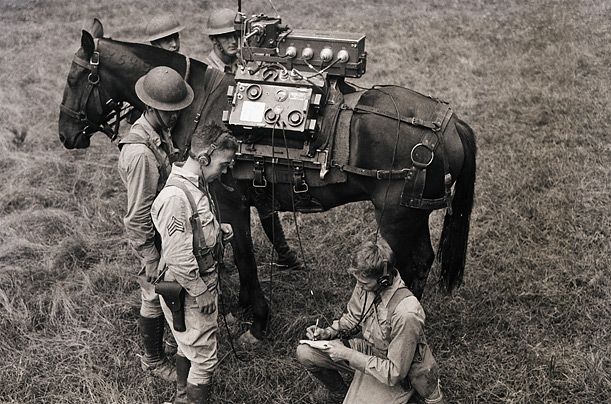
Yesterday, I stumbled upon this 1940 photograph of the US Army Signal Corps communicating via radio in the field.

I bet that radio kit weighs almost as much as or more than the typical soldier!

Does anyone know what model of Signal Corps radio that would be?

Update…

Richard comments:

Thomas,

The original photo is at the site below.

At the link, https://tinyurl.com/hxp5akx

It’s a Radio Set SCR-203 (Phillip pack saddle mounted). Consisted of:
BC-228 transmitter – Transmitter, 2.1-3.1 MHz, 2 ea VT-25 & VT-50, Part of SCR-203
BC-227 receiver – Receiver, 2.1-3.1 MHz, Part of SCR-203
BC-235 control box – Control box, Part of SCR-203

The unit was powered by various battery packs and a GN-35 hand cranked generator and used a 25 ft whip antenna (Image: W.J. Schweitzer collection)

Thanks so much for identifying the equipment, Richard!

Paul Litwinovich on “The Life, Decline and Possible Rebirth of AM”

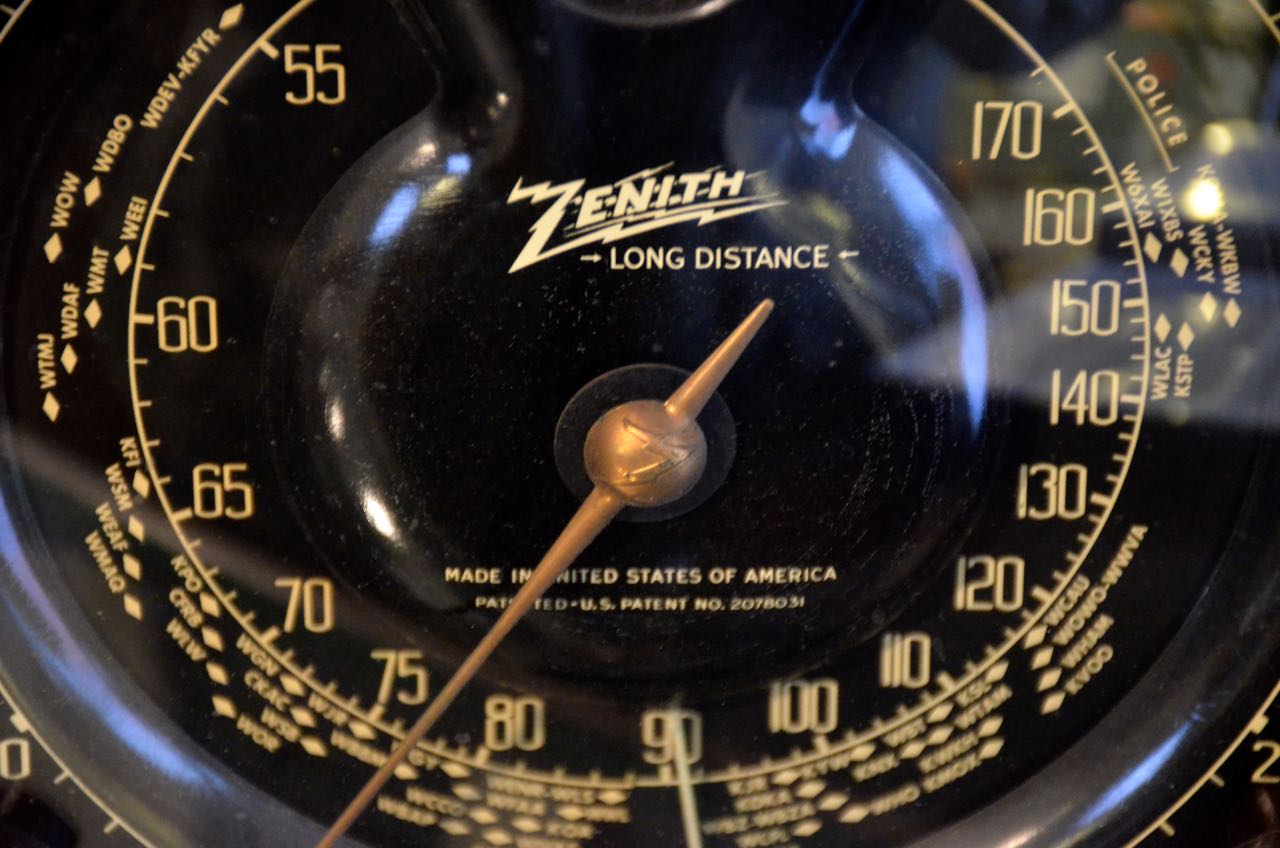
Zenith-Shuttle-DialMany thanks to the SWLing Post reader who noted this latest post by Paul Litwinovich at WSHU (Paul is frequently referenced here on the Post).

A short excerpt:

“AM occurs elsewhere in nature. A lightning strike or manmade electrical discharge will produce a burst of electrical noise that varies in amplitude. Since AM radios are designed to detect variations in amplitude, this is why they are prone to interference from such things. AM held sway as the primary method of modulating a radio wave up to WWII, not only for broadcasting, but for all types of radio communications.

Every vintage consumer radio, be it standard broadcast or shortwave, up to WWII, received amplitude modulated signals. Nowadays, AM broadcast stations are associated with lower quality audio, but such was not always the case. Receiver design really came of age in the 1930s with the superheterodyne circuit and advancements in loudspeaker design. The grand floor consoles of the late 1930s leading up to WWII were capable of producing audio that was very good, even by today’s standards, the only exception being that they were monaural, as stereo technology was still a ways off.”[…]

Litwinovich’s article is a must-read as he gives a concise overview of amplitude modulation, AM vs. FM, and even covers current proposed uses of the broadcast band (something we’ve also recently mentioned).

Click here to read The Life, Decline and Possible Rebirth of AM.

KIRO saves radio history by accident

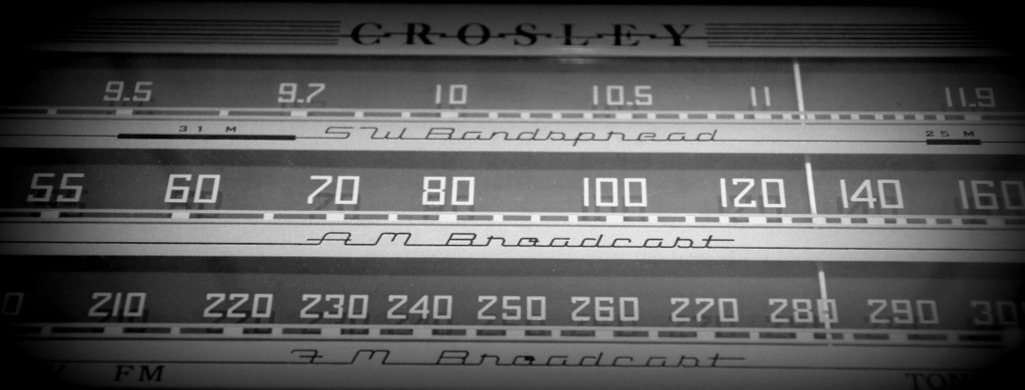
Crosley-Dial-BlackAndWhiteMany thanks to SWLing Post reader, William Lee, who shared the following story from Mynorthwest.com about how radio station KIRO saved a bit of radio history through “accidental preservation.” Here’a an excerpt:

One of the most important events of the 20th century was World War II. The Cold War that followed and many of the national borders that exist to this day were largely created during that deadly, years-long conflict from the late 1930s to 1945.

An expert speaking at the Library of Congress at the first-ever Radio Preservation Task Force Conference described how one of the most important tools for understanding World War II is available to researchers only because of an “accident” at KIRO Radio more than 70 years ago.

During his keynote address last week in Washington, DC, longtime archivist and librarian Sam Brylawski spoke of KIRO Radio’s role in saving a priceless audio record of American history.

It was a case of “accidental preservation,” Brylawski told the audience of more than 200 radio history scholars from around the US and Canada, that resulted in the creation of a nearly complete archive of CBS news broadcasts during World War II.

“KIRO is the station in Seattle that cut lacquer discs to timeshift,” Byrlawski said, explaining how the scheduling of live broadcasts of CBS Radio’s news coverage was aimed at the Eastern time zone, which was not convenient for West Coast audiences. KIRO, as Brylawski described, violated network radio policies to make recordings of news programs on giant, 16-inch diameter discs, and then play them back a few hours later at times that were more convenient to Seattle-area listeners.

Continue reading the full article and listen to the audio report at Mynorthwest.com…