Category Archives: Radios

Tinkering with the Credit Card Crystal Radio

Credit-Card-Crystal-Radio-2

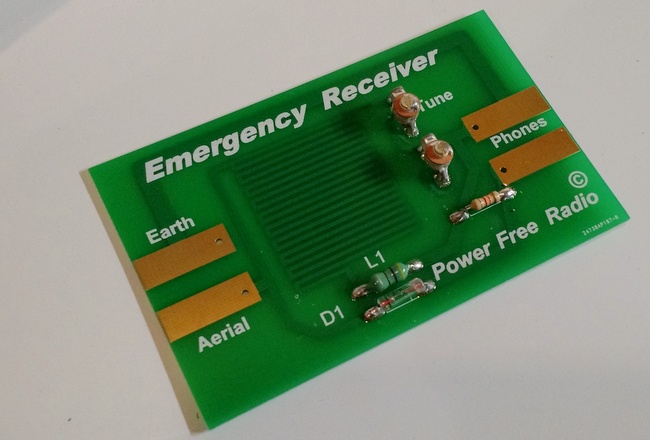
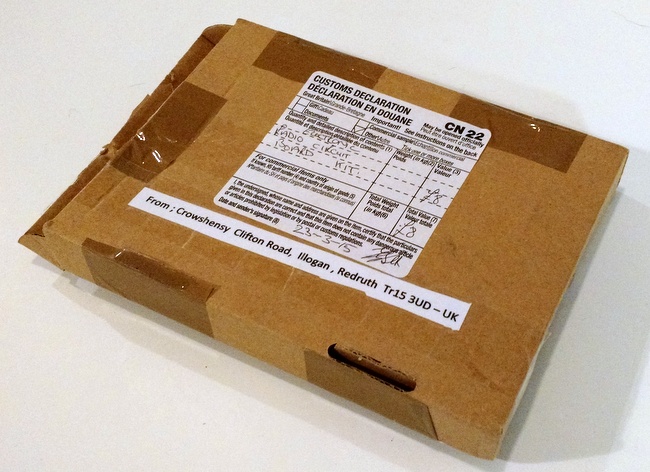
A few weeks ago, we published a short post about a credit card crystal radio from an eBay seller in the UK.

I purchased a kit–at $17-18 US shipped, it’s quite a modest investment for what might be a fun little project.
Credit-Card-Crystal-Radio

The crystal radio arrived while I was traveling during Easter break, but my free time has been so (extremely) limited lately, I was only able to unpack and try out this new arrival yesterday.

Credit-Card-Crystal-Radio-1

The biggest surprise for me was the fact that this isn’t really a kit–the board is fully populated and requires no soldering whatsoever. The board feels of very good quality.

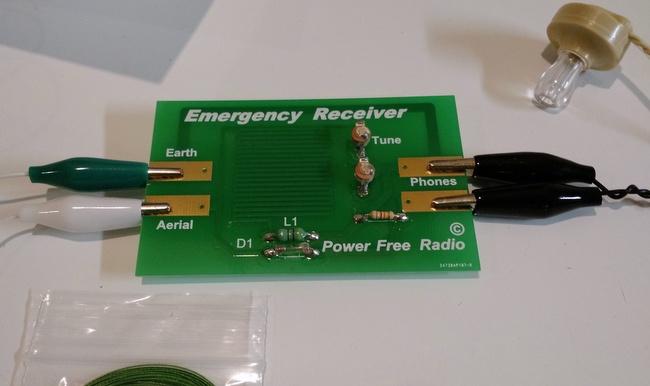
All that is required is connecting the high-impedance earphone, earth/ground and aerial/antenna to the board. Since all of these components can be connected with the supplied alligator clip cables, getting it on the air took all of 20 seconds. I simply hooked up the ground and connected the aerial to my sky loop wire antenna.

I instantly heard a signal and station ID which confirmed it was our closest local broadcaster on 1010 kHz.  This station isn’t of the blowtorch variety, but is the strongest one I receive on the MW band simply due to its proximity. Audio was quite faint through the earpiece, but I believe if I tinkered with antenna length and the two variable capacitors, I could improve reception.

SWLing Post reader, Richard Langley, received his crystal radio and had a very similar experience with reception.
Credit-Card-Crystal-Radio-4

With any crystal radio (especially one this small), performance is directly correlated with antenna length, availability of a good ground connection and, of course, strong broadcasters in your vicinity.

I plan to spend an evening tinkering with this little receiver and see if I can pick up some of the night time powerhouse AM stations on the east coast.

I can say this: if you’re looking for a simple, uber-compact emergency receiver for your go-bag, bug out bag or emergency kit, this one will certainly fit the bill. This crystal receiver and all of its components weight no more than a few ounces and could easily fit in compact pouch or sleeve.

Have any other readers have enjoyed tinkering with this little emergency crystal radio?

If you would like to purchase one, try searching eBay with one of the links below. The product will only appear in the search results if currently available.

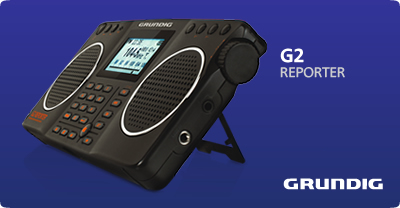
Dave Zantow’s Grundig G2 Notes

(Photo source: Eton Corporation)

(Photo source: Eton Corporation)

After posting the recent mini review of the Grundig G2 Reporter, Dave Zontow (N9EWO) notes:

I just completed updates on my reviews page regarding these models.

http://webpages.charter.net/n9ewo2/g2reporter.html

Owners should take note for the cure with excessive battery consumption when OFF . It’s not covered well in the owners manuals (if at all depending on the variant). One toggled in the menu’s, it pretty much squashes the issue.

Many thanks, Dave for your very detailed review of the Grundig G2!

A source of Sangean shortwave radios in New Zealand

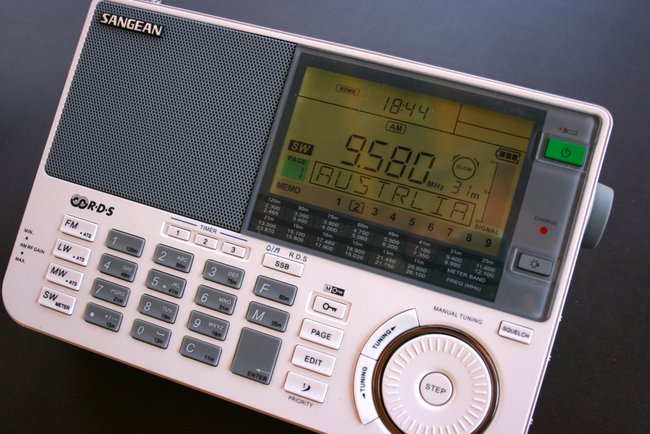
ATS-909X

In response to a post last year where we asked about sources of shortwave radios in New Zealand, SWLing Post reader, James Patterson, writes:

I have now found a very good importer of very good quality shortwave portable radios here in New Zealand.

[T]here is an importer of the Sangean ATS 909X portable radios. He has a shop and warehouse. He imports all Sangean radio products, is excellent to deal with and will ship them anywhere in New Zealand.

I have just recently bought the ATS 909X. I must say that I did buy one off him and found the frequency band coverage on that one [unit] was very limited. [This unit] got mixed in with a batch sent to him, but was meant for a different country with government restrictions on band coverage. The one I have now is “full band” and an excellent portable receiver in every way. I’m very pleased to be able to share this with anyone either living here in New Zealand or wanting to come here for a holiday and in need of good quality shortwave radio with very good SSB.

The importer’s internet site is : www.mayogroup.co.nz

The website will give the full details and contacts of the importer, who is a well-known and trusted person to deal with. He does not advertise on sites like TradeMe. However, he does deal through electronics stores such as 100% Appliances here in NZ.

Many thanks, James, for the report on the Mayo Group as an importer of the Sangean ATS-909X. Very encouraging to hear as there are so few local sources of shortwave radio products in New Zealand.

Of course, those living in New Zealand can always purchase shortwave radios through sellers on eBay, but delivery time may be as long as two weeks or more, depending on the parcel service chosen.

This shortwave listener gives the Grundig G2 a positive review

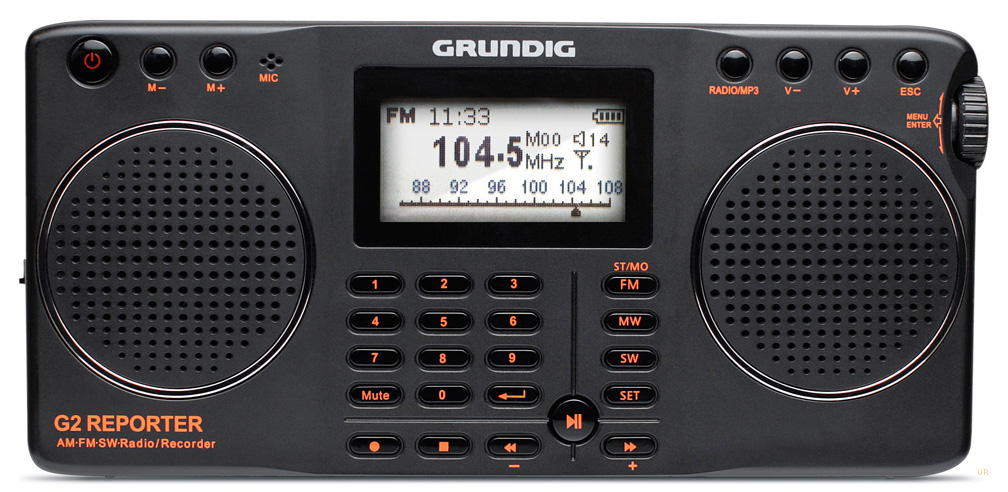
GrundigG2Front

Regarding the Grundig G2, SWLing Post reader “Shortwave Listener 22007” recently commented:

I have owned this radio for about 2 months, here are the things I have noticed…

The good:

  • The G2 has shortwave reception almost matching that of my Tecsun PL880
  • The e-reader function works great for programming shortwave schedules, contains bookmarks for easy access
  • Audio is decent through earpieces
  • Recorder events can be labeled using a computer
  • The receiver is small enough to fit into a small coat pocket
  • The radio is available new for only +- $50

The Bad:

  • No glue of any sort is used to keep the plastic knob from falling off
  • Receiver controls are somewhat complicated e.g, it requires that push in the knob 3 times and then turn the knob just to begin a recording session
  • A glitch causes the G2 to freeze up after a recording event is deleted, because there is no reset button the only way of solving this problem is to take out battery and then put it back in again, in which case the time and date settings have to be reset again.

Summary: The Grundig G2 Reporter is excellent receiver for its price class and probably receives more criticism should, however, those interested in the G2 should still look at the upgraded 1128H version which has many of the operational peculiarities and glitches fixed.

Many thanks for your review! I have a Grundig G2 I purchased several months ago; I’m not sure if it’s an upgraded version. I may have to give it more time on the air and, especially, evaluate its recording capabilities.

Click here to search Amazon for a Grundig G2.

Also, note that Universal Radio has a current promotion that includes a free G2 with the purchase of an Eton Grundig Edition Field  or an Eton Grundig Edition Satellit.

Dave reviews the Kenwood R-1000

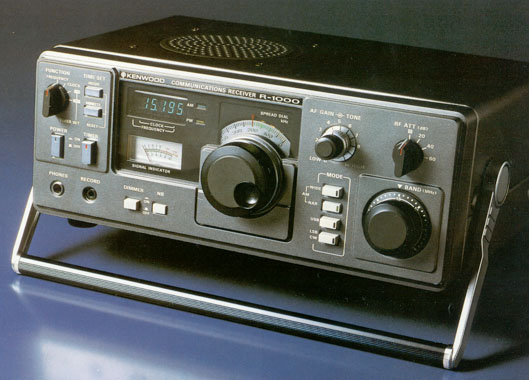
Kenwood R-1000 (Source: Universal Radio)

Kenwood R-1000 (Source: Universal Radio)

My buddy, Dave Zantow (N9EWO), has apprised me of a new review he has published of the classic Kenwood R-1000 receiver. Dave comments that he doesn’t normally review discontinued sets anymore, but he made an exception for the R-1000 as it “was so unique/good and still is to this day.”

Click here to read Dave’s full review.

Click here to search for a Kenwood R-1000 on eBay. Kenwood R-1000 owners should note that one Canadian eBay seller lists a re-cap kit for the R-1000 for about $50 shipped.

My new (to me) Sony ICF-2001 shortwave radio

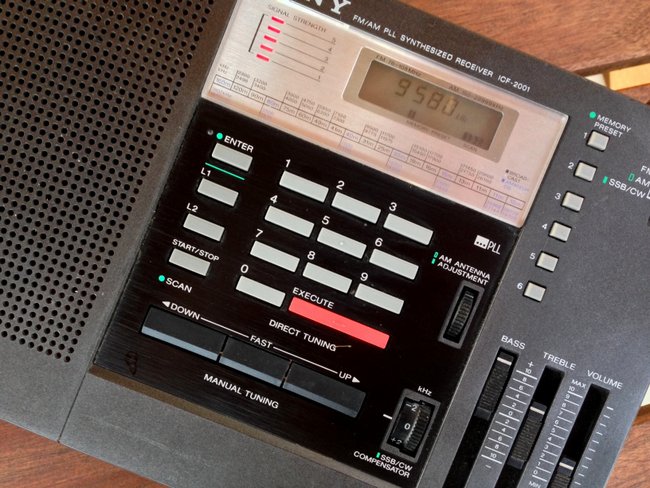
Sony-ICF-2001-003

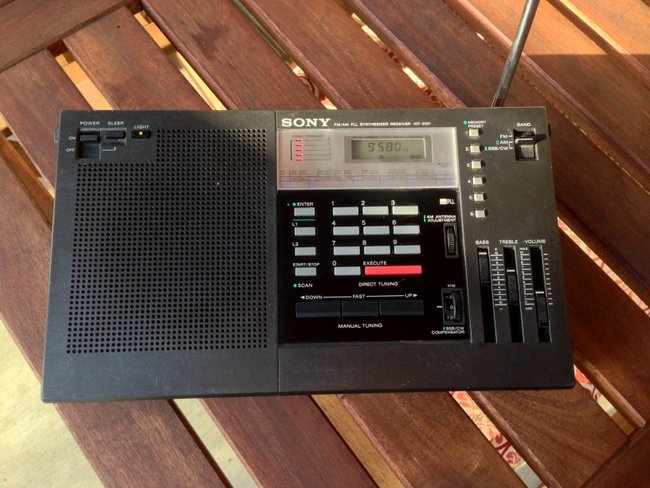
A few weeks ago, I made an impulse purchase: a Sony ICF-2001.

Perhaps it was the post about John Lennon’s ICF-2001, or perhaps it was the simple fact I couldn’t afford a ‘2001 when I was a kid; either way, I saw what I thought was a fair price and I bit the bullet.

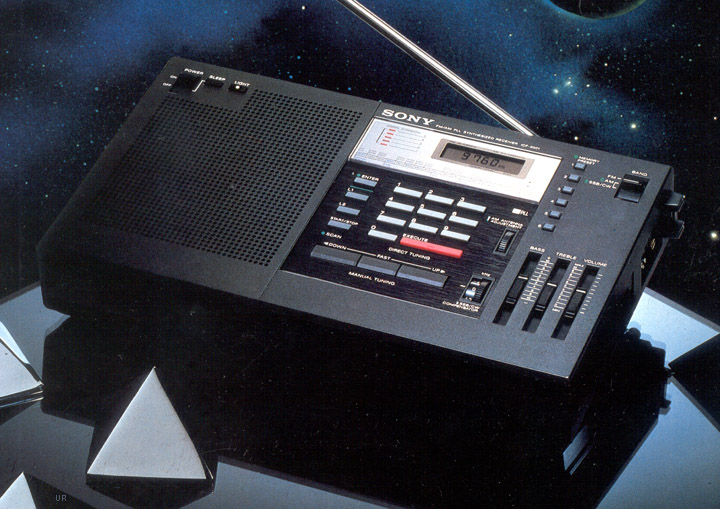
icf2001lAt about 9-10 years old I remember seeing the (above) image of the ICF-2001 in an advertisement and imagining all that I could hear with this amazing–microprocessor-controlled, dual conversion, frequency synthesized general coverage(!)–portable receiver.

Sony-ICF-2001-7

At the time, my only shortwave radio was the Zenith Trans Oceanic Royal D7000–a wonderful radio for sure–but the convenience of digital tuning? I could only imagine.

The ICF-2001 had revolutionary featured like direct access keypad tuning and an LCD digital readout. The ICF-2001 covered 150 to 29,999 kHz and, like my Transoceanic, could receive single sideband. It also had six memories that could be assigned to buttons for quick access to my favorite frequencies. Six. Whole. Memories!  

Sony-ICF-2001-1

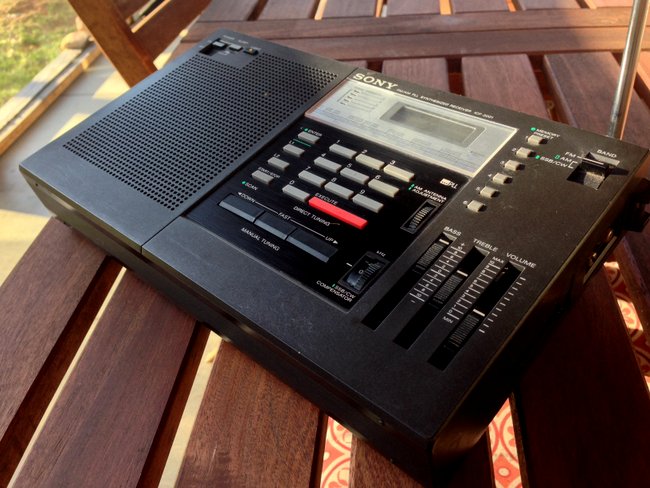
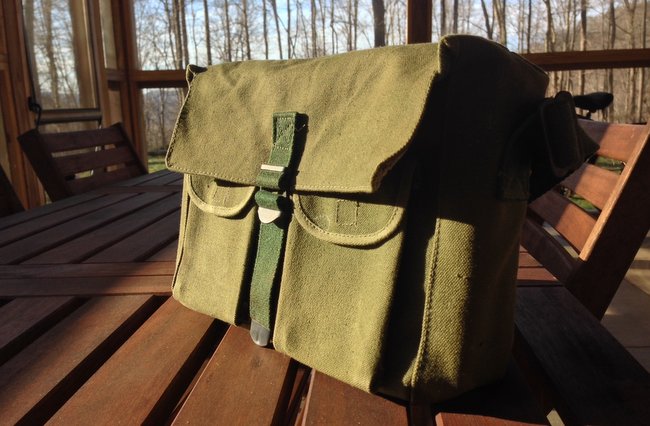
I picked up my used ICF-2001 for $67.00 US shipped. The seller (a fellow ham radio operator) insured that the radio was in excellent mechanical shape, though cosmetically showed some signs of wear. The only thing missing was the ICF-2001’s shoulder strap. That was fine by me, though, because the seller included all original manuals/documentation and a very cool canvas carry bag (below) that fits the ICF-2001 like a glove.

Sony-ICF-2001-8I’ve had the ICF-2001 for a few weeks now and I must say that I’m quite pleased.  It’s much larger that most portables currently on the market, but was probably slightly smaller than the venerable ICF-2010.

The audio from the ICF-2001’s built-in speaker is top-notch; with separate treble and bass control, it’s easy to adjust audio to your taste.

Would the ICF-2001 out-perform a modern portable receiver? Probably not. Was performance similar to the ICF-2010? No way. The ICF-2001 has a few annoying quirks (like muting between frequencies, no tuning knob, a backlit display that’s rather small and hard to read at certain angles)–items most modern portables have long since addressed.

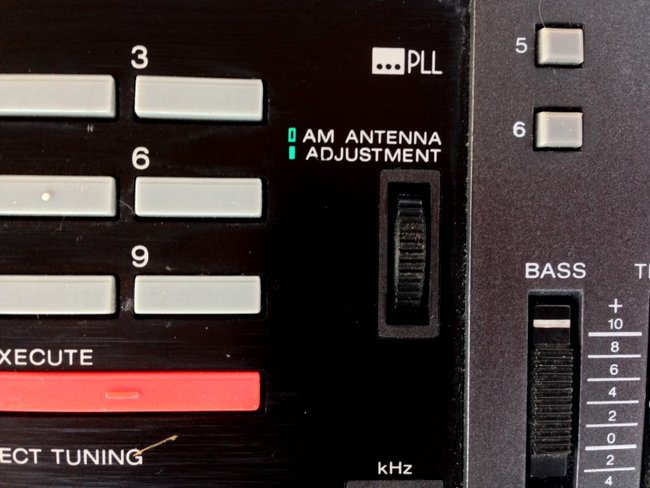
With that said, the ICF-2001 does have a few features I wish modern receivers would adopt, like, a built-in antenna trimmer.

Sony-ICF-2001-3

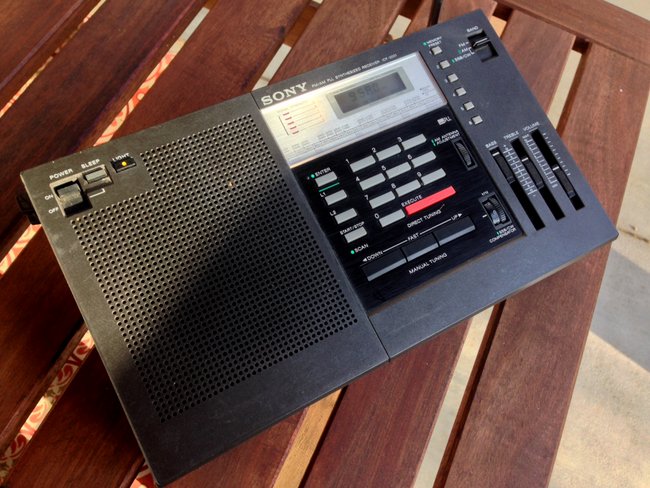
This morning, on my porch, I listened to several broadcasters across the bands and used the antenna adjustment to tweak the match. The adjustment would sometimes increase reception by three S units. I would love to have a similar feature on, say, my Tecsun PL-680.

I also like the old school power switch–a proper mechanical switch that makes it much more difficult to accidentally turn the radio on while traveling or operating in a portable setting.

Sony-ICF-2001-1

Even thought the ICF-2001 was a bit of an impulse purchase, I have no buyer’s remorse at all. She’s a sturdy rig with great audio and, I believe, decent performance on the shortwave and medium wave bands. I can certainly confirm that it would have blown my mind when I was 9 years old!

Besides..if the ICF-2001 is good enough for John Lennon, it’s good enough for me!

Sony-ICF-2001-5

Any SWLing Post readers out there still have a Sony ICF-2001?

Paul Litwinovich sheds light on the “Royalty of Radios”

Zenith Model 7G605, the first in the line of Trans-Oceanic radios. Credit P. Litwinovich collection via WSHU

Zenith Model 7G605, the first in the line of Trans-Oceanic radios.
Credit P. Litwinovich collection via WSHU

Many thanks to SWLing Post reader, Paul, who points out this excellent article about the Zenith Transoceanic by Paul Litwinovich of WSHU.  Litwinovich’s article covers a brief history of the Zenith Transoceanic series including photos from his amazing collection (check out his model 7G605 above).

Here’s a short clip from his full article:

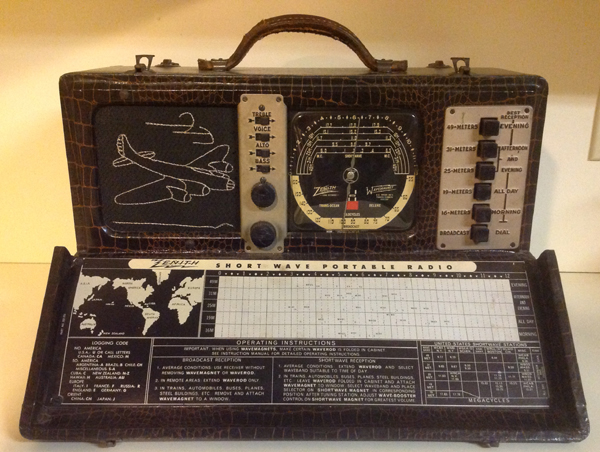
“The first version of Zenith Trans-Oceanic line of portable shortwave radios, the 7G605, [above] was released less than two months before the Pearl Harbor attack. It bore the sailboat image, and continued to be known as the “Clipper.” It sold for $75, and was an instant success. It was just the beginning, though, of the series’ long and colorful history. Zenith planned to heavily promote the radio for the coming holiday season. Then, the surprise attack on Pearl Harbor came. Most manufacturers halted production of consumer goods for the war effort. Zenith had other plans for their new radio, though. They changed the image on the grill from that of a sailboat to the likeness of the B-17 bomber. The change was implemented in such a hurry, that collectors have reported finding the bomber grill inserted over the top of the sailboat grill.”

Click here to read the full article at WSHU…

By the way, we’ve mentioned Paul before here on the SWLing Post–I would encourage you to bookmark his excellent article thread on WSHU’s website.