Many thanks to SWLing Post contributor, Richard Langley, who writes:
“Last January, I wanted to see if I could hear the BBC World Service’s technology program “Click” via shortwave.
I was and still am a regular listener to the podcast but I was home on a Tuesday afternoon stranded by a snow storm and tuned to one of the frequencies used by the World Service for west and central Africa, which usually come in reasonably well in eastern North America. To my disappointment, another program was aired at the time “Click” was going out on the real-time online streamed service. I kept listening but “Click” didn’t appear on shortwave later that afternoon either. In general, the programs going out shortwave were not the ones being streamed over the Internet.
I made enquiries to Bill Thompson, the knowledgeable co-host of “Click” and to others about when “Click” aired on shortwave but came up empty.
Fast forward to a couple of weeks ago. I got an e-mail from Bill asking me if I’d heard back from the BBC about the airing of “Click” on shortwave as he’d passed on my request for information. Unfortunately, I hadn’t, but his e-mail reminded me of my effort and so I did some more digging.
I once again scoured the BBC website and eventually found the World Service FAQ page. And, on that page, we find the answer to the question “Where can I find a schedule and frequency for BBC World Service programmes?”with the online program schedule as well as the program schedules for radio transmissions to the various world regions, including local AM and FM radio, DAB radio, satellite radio, and, for some regions, shortwave radio.
I noticed that, according to these schedules, “Click” is broadcast by radio at various times on Tuesdays and Wednesdays, depending on the target region, including some broadcasts by shortwave.
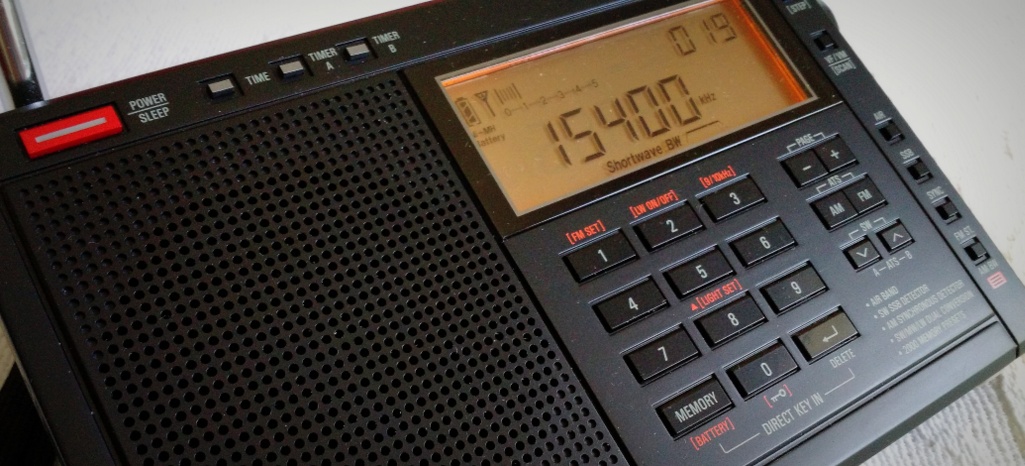
So, on Tuesday afternoon this week, I took one of my portable shortwave receivers (a Tecsun PL-880) to work and operated it from the back of my SUV in the parking lock of my building with a short wire antenna fed out through the rear window and recorded the audio.
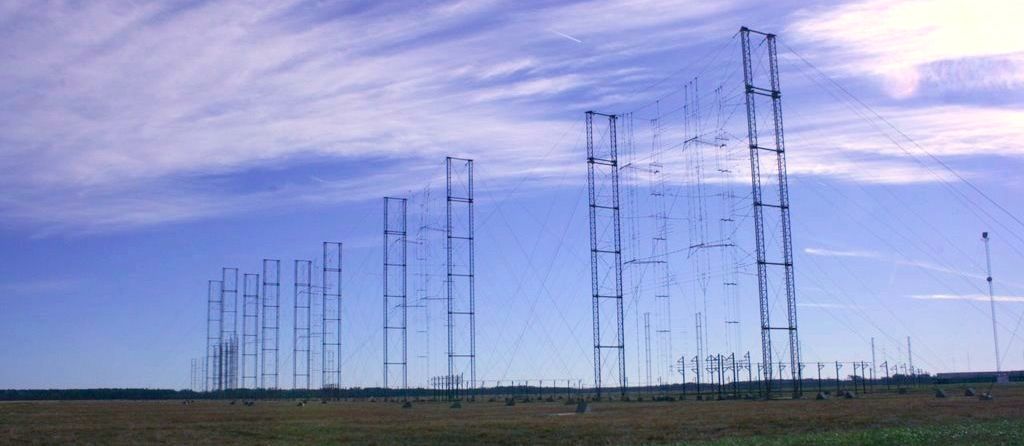
Low and behold, I heard “Click” at 19:32 UTC on 15400 kHz from one of the transmitters on Ascension Island. Reception was not bad given the fact that the signal is beamed in the opposite direction to us and there’s a fair degree of radio-frequency interference (RFI) from various electrical and electronic devices in and around my building. The signal would have been much stronger in the African target zone. A short audio clip of the start of the program is [below] (lasts one minute).
I’m sure I could find a quieter location RFI-wise like one of the university’s playing fields and might try that next week.
After confirming that “Click” is indeed still on shortwave, I decided to make a chart of all the “Click” broadcast times including those via shortwave as the “Click” website only gives the times of the online streamed broadcasts. [Click here to download a] PDF-version of the chart. A “bullet” indicates a broadcast of “Click” by any transmission method for each target region. If, in addition to other types of radio broadcast, shortwave is used, then the frequencies (in kHz) and transmitter locations are listed. I think all the information is correct but I’m happy to receive corrections. The schedule should be good until October and I’ll try to produce an updated version after that.
It is good to see that the BBC technology program is still available via shortwave – a still-useful technology in many parts of the world. And, although I’ll still listen to “Click” via the podcast, it’s nice to know that I can still catch it on a Tuesday afternoon with a shortwave receiver.”
Click here to download Richard’s PDF chart of Click shortwave broadcasts.
Many thanks, Richard! Like you, I’ve been a long-time fan of Click. Indeed, five years ago, I had the honor of being interviewed for the program [then known as Digital Planet].
I’ve heard Click a number of times via the BBC World Service on shortwave, but never noted the times and frequencies. Thank you so much for compiling this info for us, Richard, and happy listening!
Readers: Note that if Click’s shortwave schedule doesn’t work for you, you can always subscribe to Click’s podcast, or listen online.
Note: This post was updated December 3, 2015 with current broadcast schedule.