Category Archives: Shortwave Radio

Radio Waves: Switzerland’s Move to Digital, Guyana Rejects USAGM’s Request, Ham Records China/US Encounter, and Farm Radio International Endorsement

Radio Waves:  Stories Making Waves in the World of Radio

Because I keep my ear to the waves, as well as receive many tips from others who do the same, I find myself privy to radio-related stories that might interest SWLing Post readers.  To that end: Welcome to the SWLing Post’s Radio Waves, a collection of links to interesting stories making waves in the world of radio. Enjoy!

Many thanks to SWLing Post contributors Mike Terry, Dan Robinson, Ulis Fleming, and William Lee for the following tips:


Switzerland Inches Closer to FM Switch-Off (Radio World)

GENEVA — Switzerland is embarking on the next phase of its digital radio switchover strategy. In May René Wehrlin, media specialist at Switzerland’s Federal Office of Communications (Ofcom) announced the country’s next steps toward the country’s total transition to DAB+.

Ofcom officially confirmed in 2019 that the nation would say “adios” to all FM radio programs by the end of 2024 at the latest. At the time, the “Digital Migration” (DigiMig) working group, set up by the Swiss private and public radio sectors and Ofcom in 2013, stated that 68% of radio listening was digital, 37% of which was via DAB+ and 15% exclusively via FM.[]

Guyana refuses US’ request to facilitate radio broadcasts to Venezuela (Demerara Waves)

Guyana’s President David Granger late Friday said his administration rejected a request by the United States (US) to use the medium wave radio frequencies of this South American nation to broadcast Voice of America programmes to Venezuela.

Mr. Granger said Guyana turned down the request because of security, health and political risks that Guyana could expose itself to with Venezuela which is claiming the Essequibo Region that makes up about two-thirds of this former British colony.

“Given the length of an unpoliced western border, the influx of refugees, the unsettled territorial question and the public health risks, it would not be in our national interest to do anything to contribute to destabilising relations at this time,” the President said.

A US Embassy spokeswoman said the American government was no longer interested in the project. ” The U.S Agency for Global Media is not actively considering this anymore. It is important that the people of Venezuela have access to uncensored news from credible Venezuelan and international journalistic news sources. Guyana has shown leadership in the past, in defense of representative government by joining other Lima Group members from the Americas to strive for a democratic resolution to the crisis in Venezuela,” she said.[]

Close encounter between US-China militaries captured by radio amateur (South China Morning Post)

The Chinese navy has warned off a US military plane that briefly flew close to the southern coast of China, north of the Taiwan Strait, according to a Beijing-based think tank.

In a 34-second scratchy radio recording released by the South China Sea Strategic Situation Probing Initiative (SCSPI), a think tank based in Beijing, a man – purported to be a Chinese naval official – can be heard saying in English: “This is China Naval Air Force on guard, you are approaching Chinese air domain, change your course immediately or you will be intercepted.”
He then repeated the warning in Mandarin Chinese.

The institute said on its Twitter account that the recording was captured on Thursday morning by a radio amateur. It remains unclear which aircraft was involved, or if there was any face-off in the air.[]

Charity Intelligence recommends Farm Radio International (Charity Intelligence)

Charity Intelligence is recommending donors support Farm Radio International for the coronavirus pandemic. Farm Radio has a network of over 1,000 radio programs reaching more than 250 million people in 41 countries across Africa.

To donate to Farm Radio’s covid-response

Communication is critical in the early stages of a disease outbreak to give people information. Rumours swirl that Africans cannot get coronavirus. Tanzania’s president, Magufuli, said churches should stay open because the coronavirus is “satanic” and “cannot survive in the body of Christ.” As all have witnessed, fake news has harmful consequences with the quick coronavirus.

Farm Radio International is a Canadian, medium-sized charity with donations of $3.9m in 2018. Typically, a charity of this size would not be front of mind in a global response. Yet Farm Radio has the existing platform and local operations to play an effective role reaching millions quickly in a coronavirus response. Early communication is an urgent need. []


Do you enjoy the SWLing Post?

Please consider supporting us via Patreon or our Coffee Fund!

Your support makes articles like this one possible. Thank you!

Joint RAE and LRA36 Radio Nacional Arcangel San Gabriel test transmission today July 25, 2020

Many thanks to SWLing Post contributor, Adrian Korol, who shares the following announcement:

RAE Argentina to the World, broadcasting from Antarctica

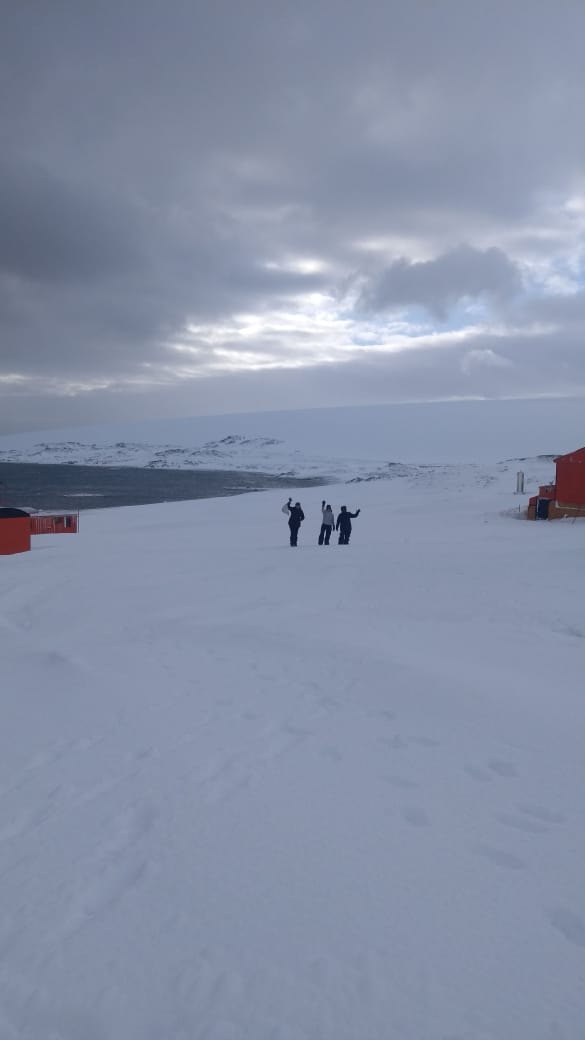
RAE will join a trial transmission by LRA36 Radio Nacional Arcangel San Gabriel, broadcasting from Base Esperanza, in the Argentine zone of Antarctica.

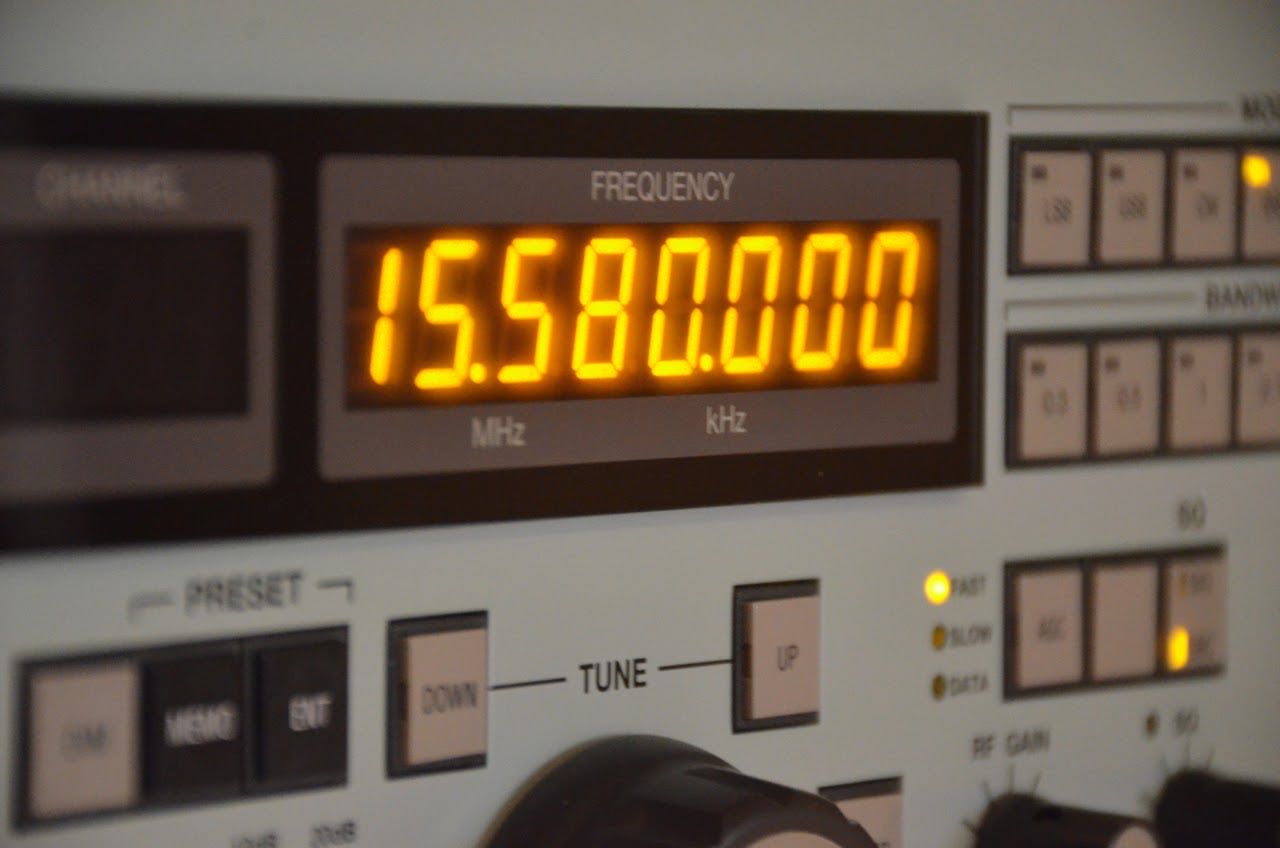
This Saturday, July 25, between 17:00 and 21:00 UTC, the Antarctic station will perform a series of tests on the 15476 kHz frequency (19-meter band), Upper Side Band, via a Collins HF80 transmitter and a rhombic antenna.

RAE Argentina al Mundo will put on the air two 30-minute programs, one in Spanish and the other in English, hosted by Fernando Farias, focusing on the history of RAE and LRA36 with historical files and information that listeners, DXers and radio amateurs alike will appreciate. On the Spanish-language show, Fernando is joined by RAE’s director Adrián Korol.

Let’s recall that last Saturday, July 18th, the first test USB transmissions were carried out with excellent results amid optimal broadcast conditions .

Damian Tranamil, LRA36 operator and technician, answered afterwards more than a hundred reception reports from all over the World.

Many listeners said they had the chance to pick up a station from Antarctica for the first time, while others said they were thrilled to be able to receive Arcángel San Gabriel’s signal for the first time in 20 years.

Accurate reception reports will be verified with an electronic QSL card (eQSL). They are to be sent to : [email protected]

We also appreciate listeners sending clips of them receiving our broadcast, or tagging us when they post on social media.

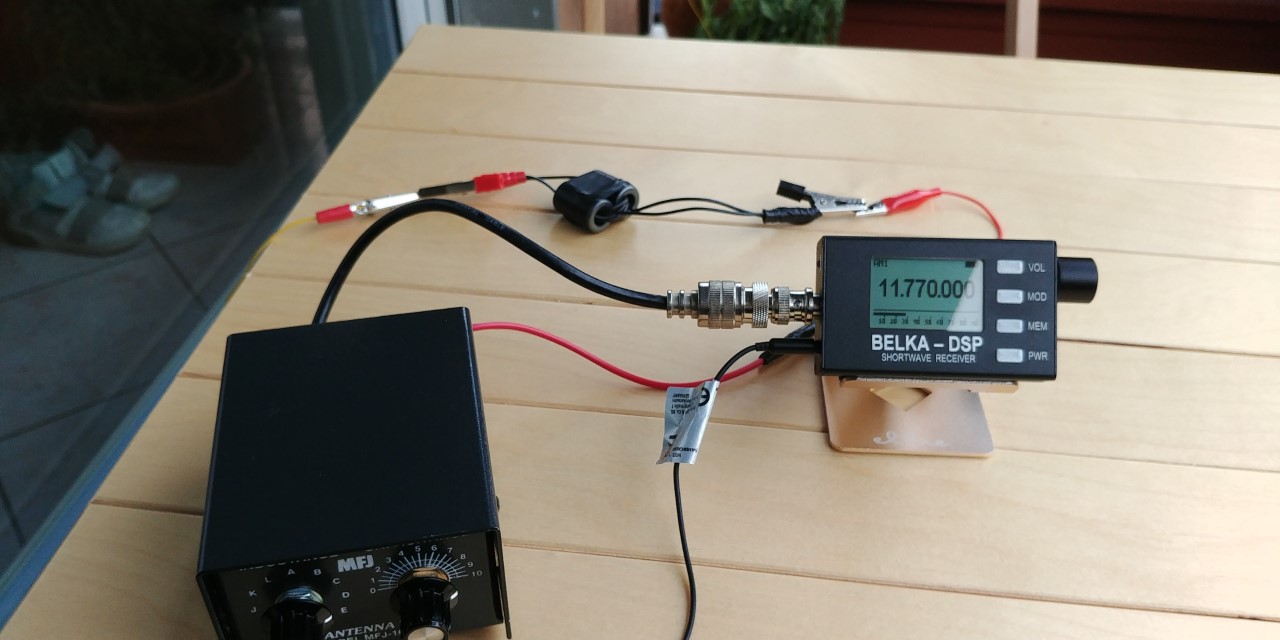
Belka-DSP shortwave receiver now available via Mobimax

Many thanks to Boris (LZ2JR/AC9IJ) who notes that his company, Mobimax, in Europe now distributes the excellent Belka-DSP receiver.

Boris informed me that he has inventory and they ship immediately (at time of posting–July 25, 2020).

The price is 145.72 EUR (roughly $170 US).

They have two shipping options to US:

  1. Via International Priority Air Mail (11-25 days) 18 Euro
  2. Via TNT/FedEx Express 26 Euro

Click here to check out the product page.

I’ve been working with Boris for well over a year now. He’s the designer and developer behind the Mission RGO One transceiver project. He’s a top-notch fellow and provides excellent customer service to his clients (check out what reviewers say about him on eHam).

Click here to check out Dan Robinson’s initial Belka-DSP review,

China Radio International: Jim seeks help understanding language schedule and transmitter locations

Many thanks to SWLing Post contributor, Jim Meirose, who asks:

Each day in NJ I am hearing China Radio International in German on 9.570 MHz. It “fades in” up out of the noise about 2 pm EDT, and strengthens until the broadcast signs off just before 3 pm (1800 UTC).

Two things: first, I have found on a couple of websites that a broadcast from CRI on 9.570 does run daily and signs off just before 1800 UCT, but–the listings say it is in English. What I am hearing is in German.

I would like to find someone who can explain the discrepancy in languages between the listings and what I hear.

Second, I would like to know for sure where the transmitter for this broadcast is located. I know CRI broadcasts not only from Beijing but from Albania, Cuba, and possibly others. Can someone tell me the answer?

Thanks very much.

Per your request, Jim, I’ll toss your question out here to the experts in the SWLing Post community. Please comment if you can help Jim with his inquiry!

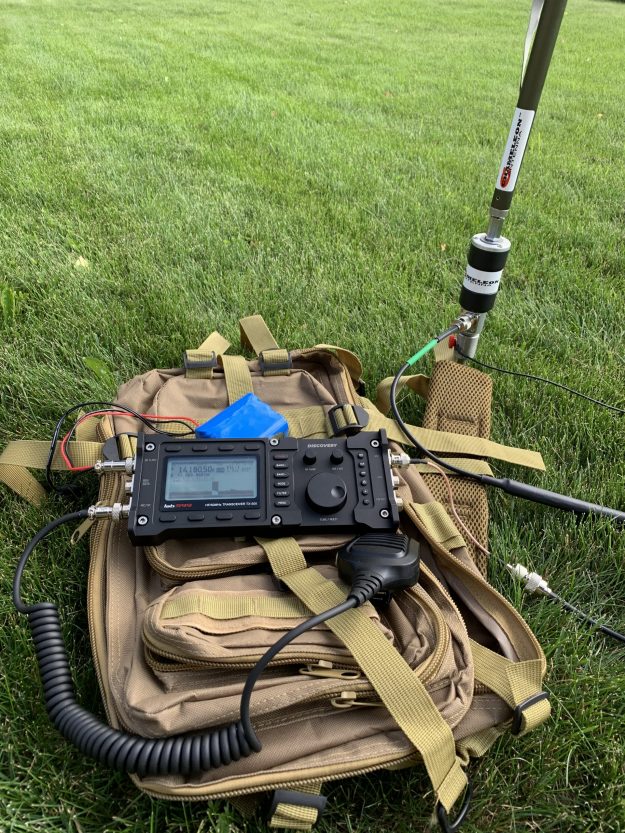
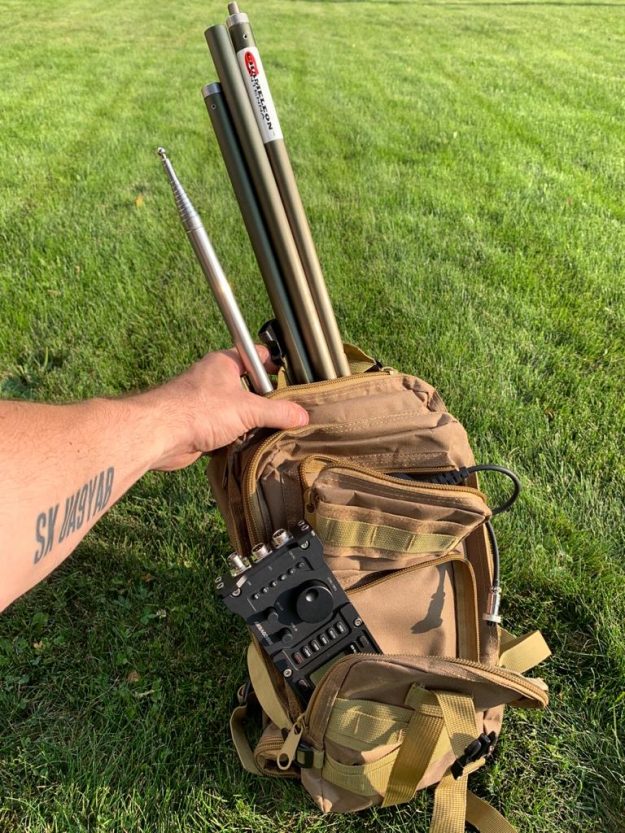
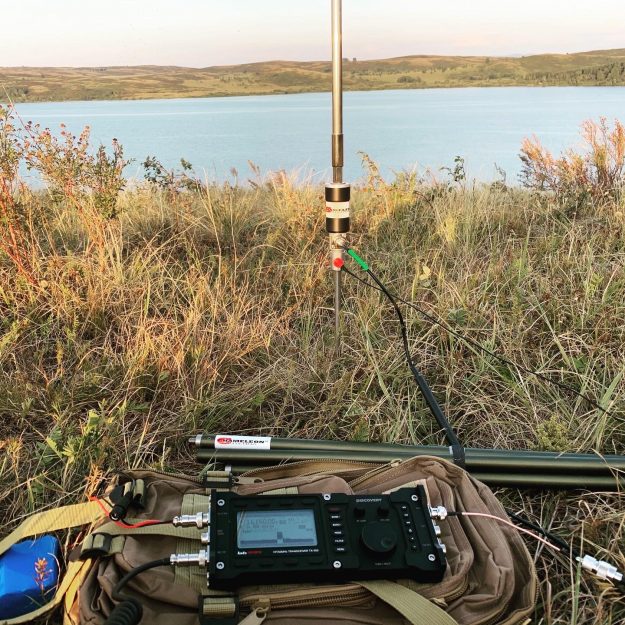
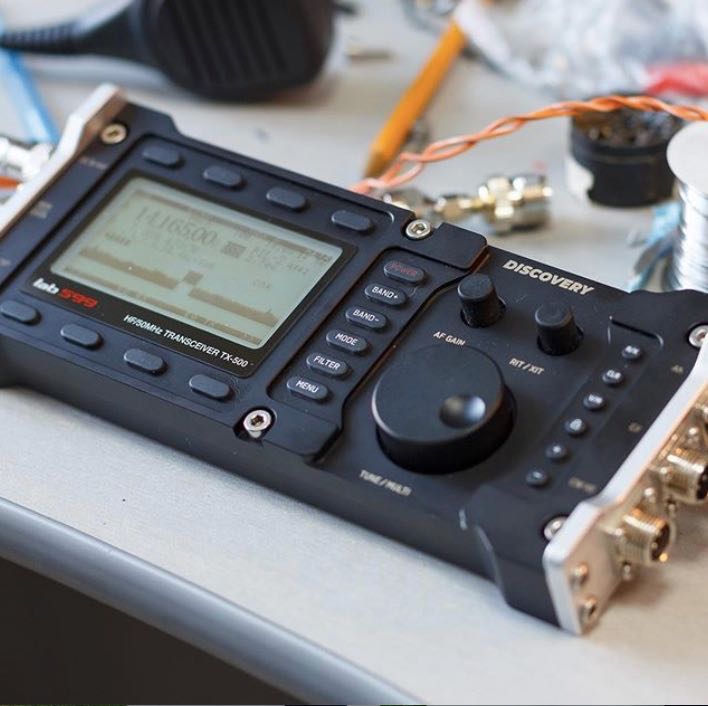
Photos of the lab599 Discovery TX-500 in the field

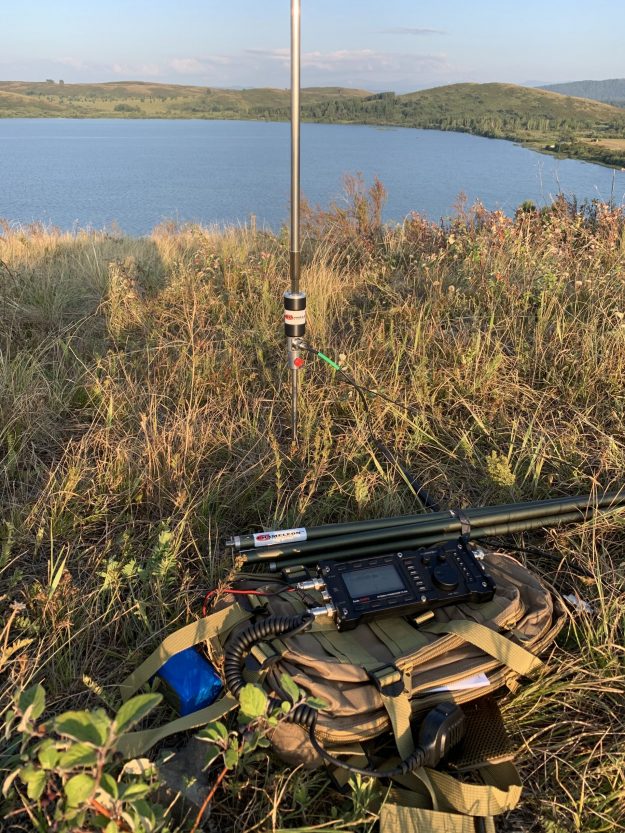
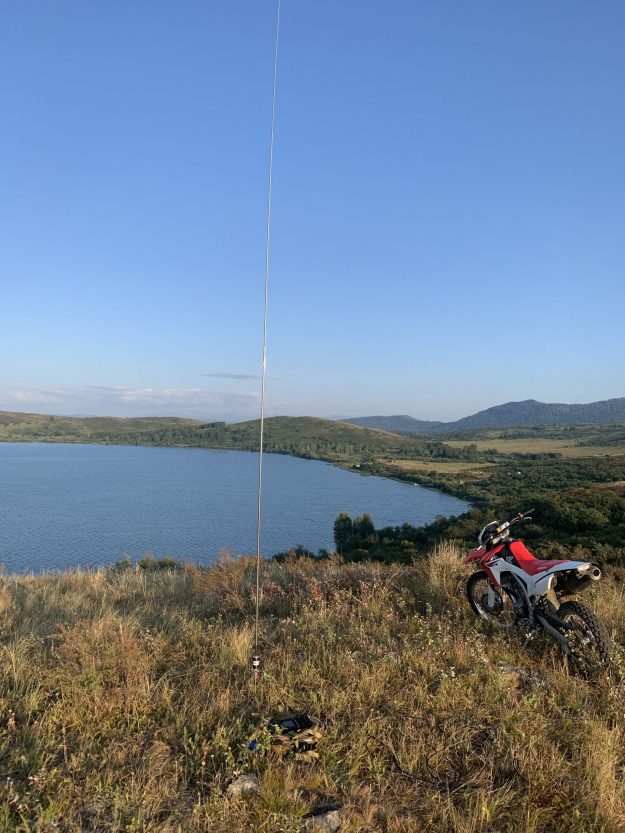
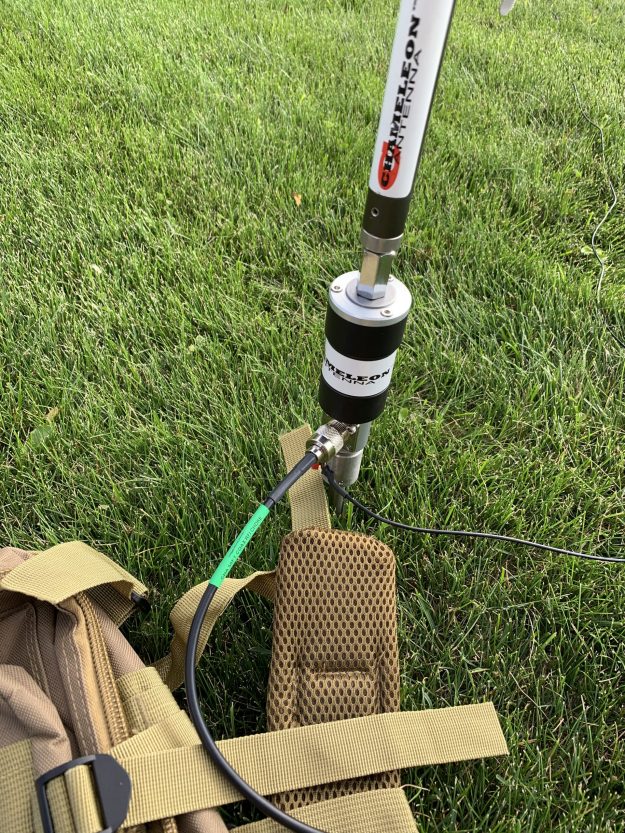
Many thanks to SWLing Post contributor, Don (W7SSB), who shares the following photos of the new lab599 Discovery TX-500. Don notes that all of these photos were taken in Russia–where the TX-500 is manufactured–and include a number of Chameleon resonant field antennas.

Thanks for sharing these, Don.  The thin form-factor of the TX-500, paired with a resonant antenna, certainly makes for a lightweight portable field setup!

Radio Waves: Radio Six on Shortwave Again, ATN Refrains from Politics, NPR Ratings Drop in C-19, and Grand Central’s Role in Standard Time

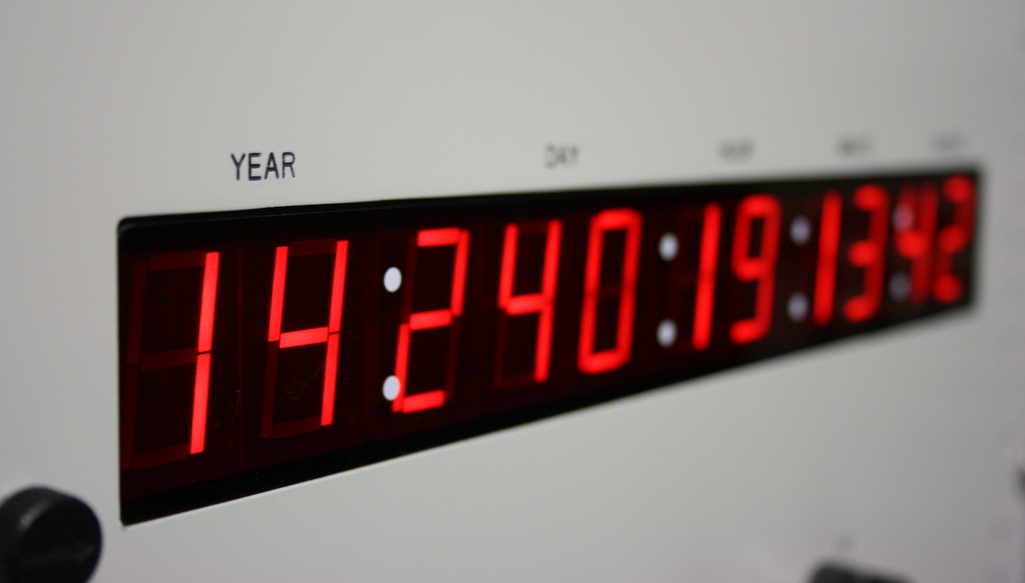
A WWV Time Code Generator

Radio Waves:  Stories Making Waves in the World of Radio

Because I keep my ear to the waves, as well as receive many tips from others who do the same, I find myself privy to radio-related stories that might interest SWLing Post readers.  To that end: Welcome to the SWLing Post’s Radio Waves, a collection of links to interesting stories making waves in the world of radio. Enjoy!

Many thanks to SWLing Post contributors Michael Bird,  John Figliozzi, and Jack Dully for the following tips:


Radio Six Pops Up Again on Shortwave (Radio World)

Radio Six International has not been a full-time shortwave broadcaster for some time. But after two recent live broadcasts on 6070 kHz prompted by the pandemic, it says it will continue monthly broadcasts at least for now.

Radio World visited electronically with Tony Currie.[]

WLW’s America’s Truckin’ Network To Refrain From Political Talk (Radio Insight)

iHeartMedia News/Talk 700 WLW Cincinnati has eliminated political talk from its overnight “America’s Truckin’ Network” show hosted by Steve Sommers.

The Cincinnati Enquirer reports that Sommers told listeners of the change on Monday morning’s show after multiple unspecified complaints.

In the on-air statement, Sommers blamed the change on a group of individuals who took offense with comments made by a caller a few weeks ago.[]

NPR Radio Ratings Collapse As Pandemic Ends Listeners’ Commutes (NPR)

Broadcast ratings for nearly all of NPR’s radio shows took a steep dive in major markets this spring, as the coronavirus pandemic kept many Americans from commuting to work and school. The network’s shows lost roughly a quarter of their audience between the second quarter of 2019 and the same months in 2020.

People who listened to NPR shows on the radio at home before the pandemic by and large still do. But many of those who listened on their commute have not rejoined from home. And that threatens to alter the terrain for NPR for years to come, said Lori Kaplan, the network’s senior director of audience insights.

“We anticipated these changes,” Kaplan said. “This kind of change was going to take place over the next decade. But the pandemic has shown us what our future is now.”

Commercial radio is experiencing, if anything, worse declines. But audience research commissioned by Kaplan indicates that NPR’s audience is disproportionately made up of professionals who are able to work from home and who are interested in doing so even after the pandemic subsides.[]

The Day That New York Had Two Noons, a Century After Losing 11 Days (Untapped New York)

New York’s history has included everything from transit strikes to riots over Shakespeare to immigration from nearly every country in the world. Yet, for much of this history, people didn’t always know the “correct” time or date. Until 1883, virtually every place in the country set local time according to the sun. According to Sam Roberts in his book Grand Central: How a Train Station Transformed America, “Typically, noon would be regularly signaled so people could synchronize their clocks and watches.” From dropping a ball down a flagpole in Manhattan to ringing a gong, settlements all across the country would alert people of noon. But as railroads spread throughout the country, it was nearly impossible to standardize the time.

“A passenger traveling from Portland, Maine, to Buffalo could arrive in Buffalo at 12:15 according to his own watch set by Portland time,” Roberts writes. “He might be met by a friend at the station whose watch indicated 11:40 Buffalo time. The Central clock said noon. The Lake Shore clock said it was only 11:25. At Pennsylvania Station in Jersey City, New Jersey, one clock displayed Philadelphia time and another New York time. When it was 12:12 in New York, it was 12:24 in Boston, 12:07 in Philadelphia, and 11:17 in Chicago.”[]


Do you enjoy the SWLing Post?

Please consider supporting us via Patreon or our Coffee Fund!

Your support makes articles like this one possible. Thank you!
Video: Josh takes us on a tour of the lab599 Discovery TX-500 QRP transceiver

Many thanks to SWLing Post contributor, Josh (KI6NAZ), who shares a link to his YouTube channel where he takes us on a tour of the lab599 TX-500 Discovery:

Click here to check out Josh’s channel, Ham Radio Crash Course on YouTube.

Thanks for sharing this, Josh! The TX-500 is certainly a unicorn in the world of field-portable QRP radios since it’s designed to be weather-proof.

lab599 has confirmed that they will dispatch a TX-500 loaner unit for my upcoming review.  I’m looking forward to see how it plays in the field and might compare with other QRP rigs in my arsenal!