Category Archives: Shortwave Radio

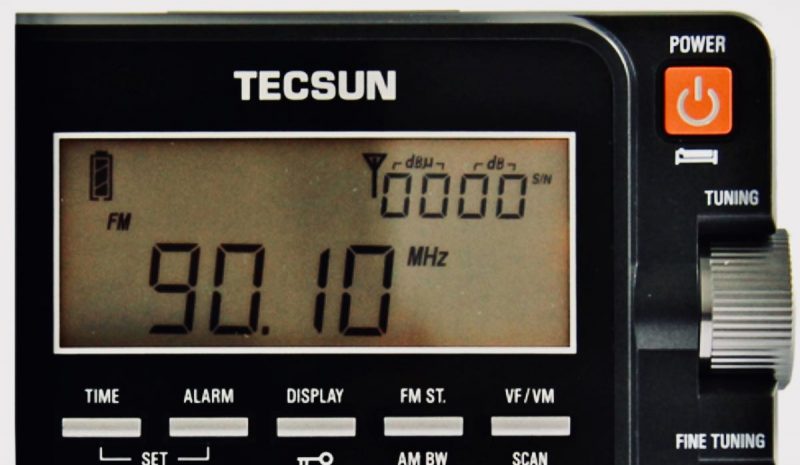
Converting Tecsun signal meter numbers into five strength units?

Many thanks to SWLing Post contributor, Chris Rolfe (M3OZP), who writes with the following inquiry:

Don’t know if anyone can help.

I have a Tecsun PL-880, and it shows signal strength in db. How can I work out the signal strength as 1 to 5? All my other radio have 1 to 5 signal strength meters which is what I have always been used to.

Many thanks.

Chris Rolfe
M3OZP

Thank you for your question, Chris. The signal meter on the PL-880 and a number of other late-model Tecsuns that use similar DSP chips share the signal display which indicates both the signal strength and signal-to-noise ratio.  I believe the dBu number indicates the conducted voltage across the receiver’s internal resistance.

It’s perhaps one of my quirks, but as a listener I actually pay little attention to signal displays on portables unless I’m evaluating signal strength for a report or even using it to locate a local noise. Converting those numbers into an S1 to S5 number is simply something I would do by “guesstimating.” Yeah, not terribly scientific.

There are folks in the SWLing Post community who can do a much better job explaining the readout and how to interpret/convert signal strength across the MW, SW and FM bands.

Post Readers: Please comment if you can shed some light on simplifying signal strength for Chris.

Giuseppe’s reception of the LRA36 test broadcast

Photo from the Argentine Antarctic Base (LRA36) – Source: RAE

Many thanks to SWLing Post contributor, Giuseppe Morlè (IZ0GZW), who shares the following:

Dear Thomas

Here is the link of to video regarding the transmission of LRA 36 in USB mode Saturday July 25, 2020 from 17.00 UTC on 15.476 MHz.

A good result if I think it was almost impossible to listen to it with the sun still high … the place where I listen, in Formia, Italy, is really excellent.

73. Giuseppe Morlè iz0gzw.

Thank you for sharing this, Giuseppe! I’m always impressed with the DX you catch there at your location in Formia! Grazie e ciao!

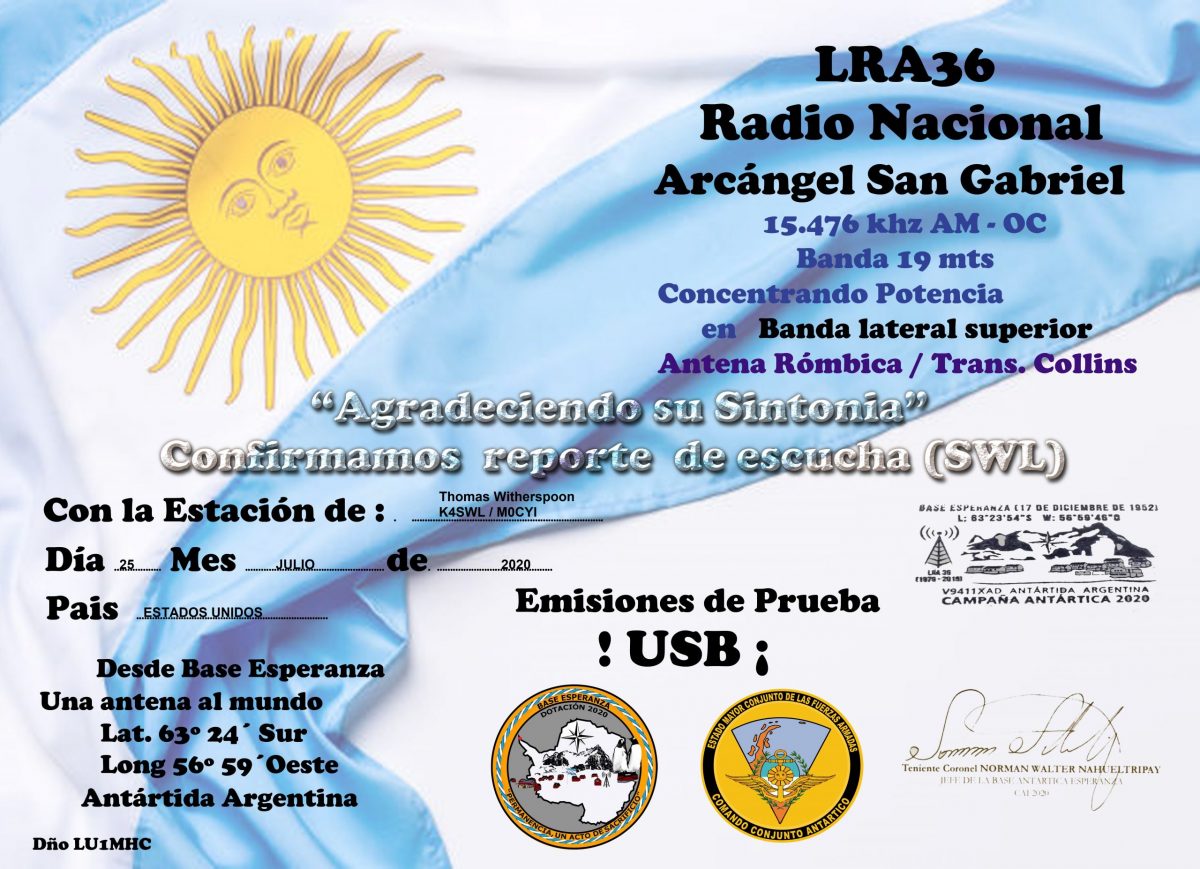
Finally confirmed reception of LRA36 Radio Nacional Arcángel San Gabriel Antarctica

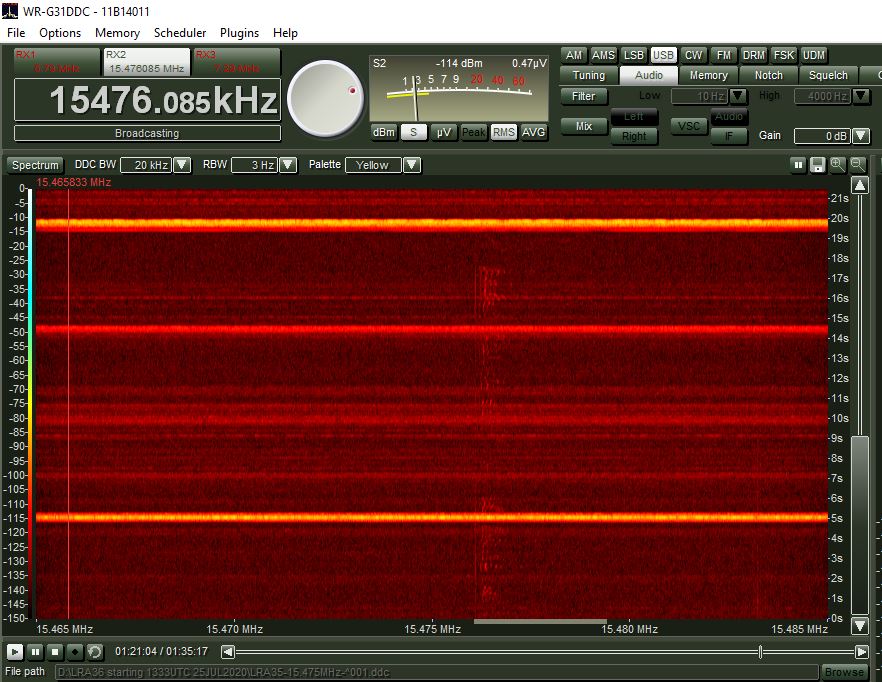
For years now I’ve attempted to get decent reception of LRA36 Radio Nacional Arcángel San Gabriel in Antarctica. At times, I’ve been able to barely hear their AM signal here in North Carolina–at least, see it as a faint line on my spectrum display and barely hear audio rise above the noise. But in truth I could never confirm anything more than “male voice” and “music” thus never bothered with a report in good faith.

Recently, we’ve posted announcements for a series of test broadcasts from LRA36 in single sideband (SSB). Two weekends ago, I couldn’t receive a single inkling of their signal, but this past Saturday, I finally heard the station well enough to submit a detailed report and recording in confidence.

I had actually set my SDR to record 20 kHz of spectrum at home while I made my first CW POTA activation at the nearby Blue Ridge Parkway. A pop-up storm chased me away from the POTA site and it worried me that I had left my SDR running and connected to the antenna. Fortunately, none of the small thunder storms were directly over my home. Although there was heavy QRN due to local pop-up thunderstorms, their signal was there.

The following sample recording starts at 17:51 UTC  (July 25, 2020) on 15476 kHz.  It’s weak signal DX for sure, but interpretable. I made the recording with my WinRadio Excalibur SDR hooked up to a large Skyloop antenna. This clip starts with the song  Juana Azurduy by Mercedes Sosa:

I’m so chuffed to add the LRA36 QSL to my collection! Broadcasting in SSB made all the difference!

Have you successfully logged LRA36 from your home?  Please comment!

The new Silphase R1 SDR receiver


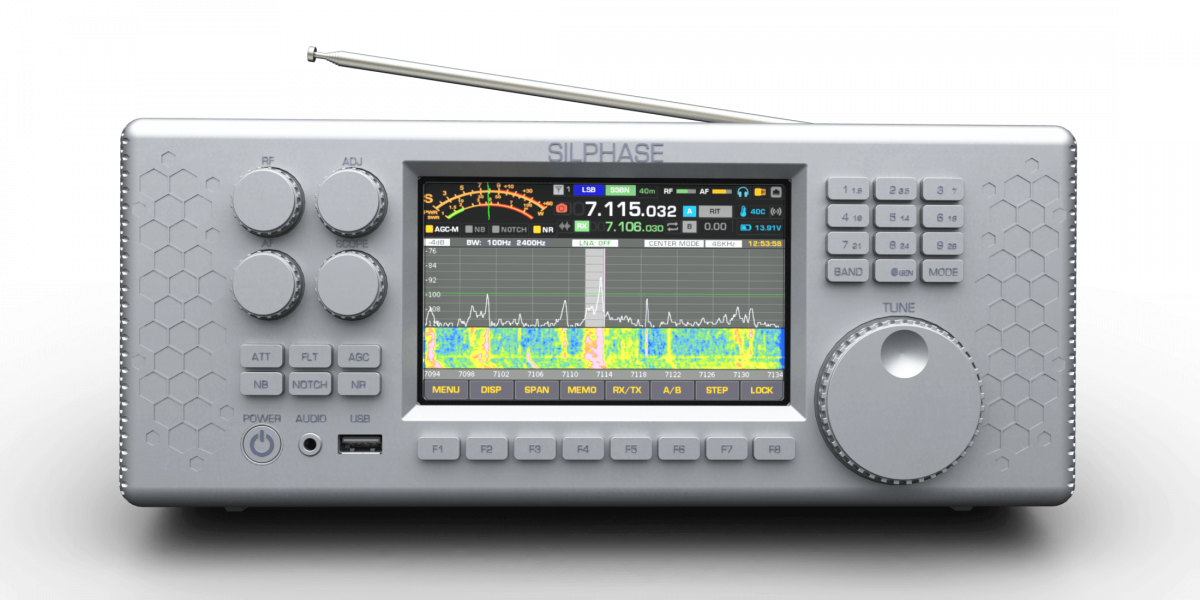
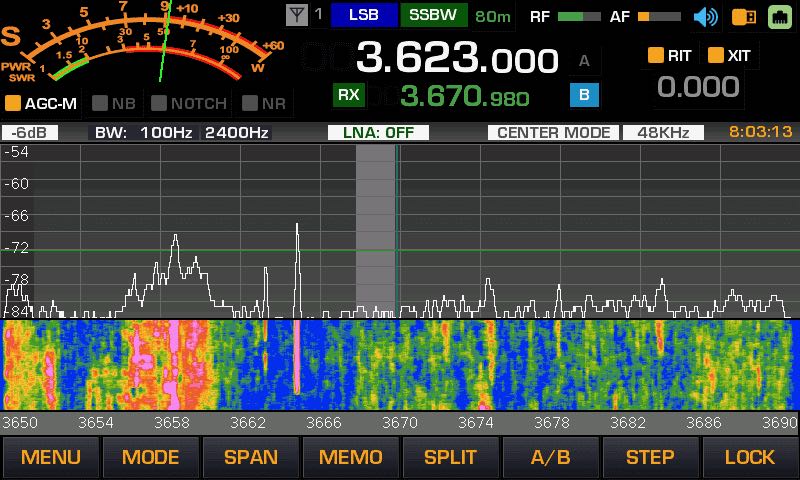
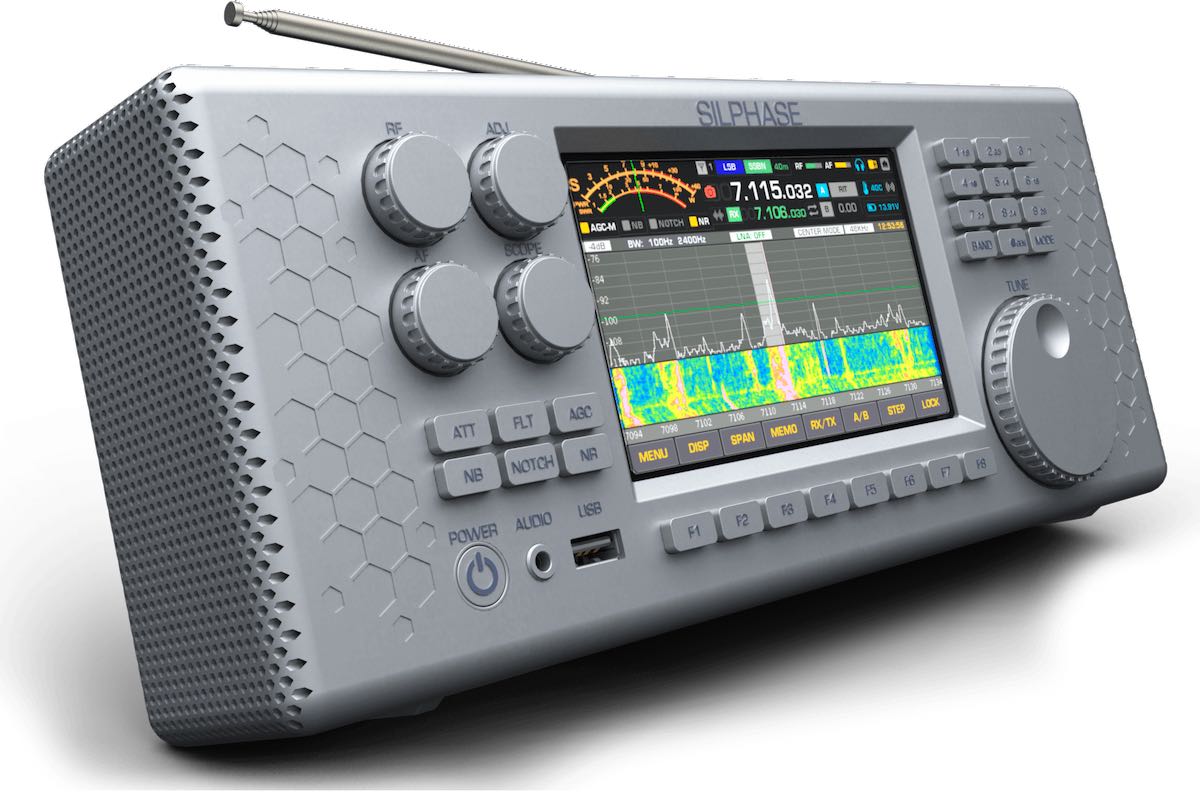
I’ve just learned about a new SDR receiver in development by the Polish company Silphase. It’s called the Silphase R1 and appears to be a stand-alone, high-performance SDR receiver.

What could set this receiver apart from the rest is the:

  • Color backlit 5″ TFT touch screen display
  • Magnesium alloy body/chassis
  • USB out for recording and native logging
  • Record to internal “flash memory” (unclear if audio and/or spectrum)
  • Four internal speakers
  • 12.6V 12000 mAh, internal battery
  • IP55 rating for water/dust protection
  • The price is $1199/€1099 with no expected availability date at time of posting
  • Click here to download the PDF product brochure.

The receiver is portable and will measure 11.25×4.3×2.2in (285×110×55mm). Looks like the screen will be 5″ which should allow for a detailed spectrum viewing area (for comparison, the Icom IC-7300 TFT display is 4.3″)

Siphase is a new company based in Poland and they claim they also plan to eventually produce transceivers:

“At the end of 2020 we will introduce a 25W transceiver in the same form factor powered by an internal battery, and a bit little later a 100W transceiver in the same form factor also powered by an internal battery.”

The Silphase product page has a complete list of specifications, but here are some worth noting:

  • Frequency coverage RX 0.1–30MHz
  • Frequency resolution 1Hz
  • Frequency steps 1Hz to 1KHz
  • Dual VFO
  • Direct sampling 16bit high speed 122 M/s ADC
  • Modes: CW, SSB, AM, FM
  • Sensitivity 1.8–29.999MHz, SSB/CW: (BW: 2.4kHz at 10dB S/N) – 132 dBm, 0.06?V
  • 20dB LNA
  • Spurious and image rejection >90 dBm
  • Clipping level -3dBm
  • DSP (various filters, adaptive noise reduction, automatic notch filter, notch blanker, adjustable filters (0-1KHz HPF,0.5-6KHZ LPF, 50Hz step, etc.)
  • AGC (slow, medium, fast)
  • Main filter sharpness Factor 1.05 and lower
  • Audio recorder (use the internal flash memory or USB 16GB external flash memory)
  • Virtual USB audio card for OS update
  • Ham radio hardware log
  • OS QNX (“UNIX-like” real time operating system)
  • Telescopic antenna with F connector
  • Main optical encoder and four multifunction encoders
  • 6 input modes buttons (attenuators, adjustable filters, AGC, NB, auto notch filter, NR)
  • Power supply requirement 12.6 DC ±15%
  • Power consumption RX 0.6 A typical
  • Battery 12000 mAh, 12.6V (3×3.7V/12000 mAh)
  • Operating time 20 Hours
  • Operating temperature range –10C to +60C; 14F to 140F
  • Frequency stability Less than ±0.2ppm (–10?C to +60?C; 14?F to 140?F)
  • Dimensions (W×H×D) 285×110×55mm; 11.25×4.3×2.2in
  • Weight (approximately) 1.8kg; 4 lbs
  • Magnesium alloy body, IP55 (in future IP 67)
  • “Expected Operational Lifetime 30 Years” With One Year Warranty – Additional Warranty
  • Made in EU

As I learn more about this receiver and the company producing it, I’ll post updates with the tag: Silphase R1

Click here to check out the Silphase website.


Do you enjoy the SWLing Post?

Please consider supporting us via Patreon or our Coffee Fund!

Your support makes articles like this one possible. Thank you!

Tom’s amazing 1986 Voyager Experimental Aircraft flight communications recording and QSL card

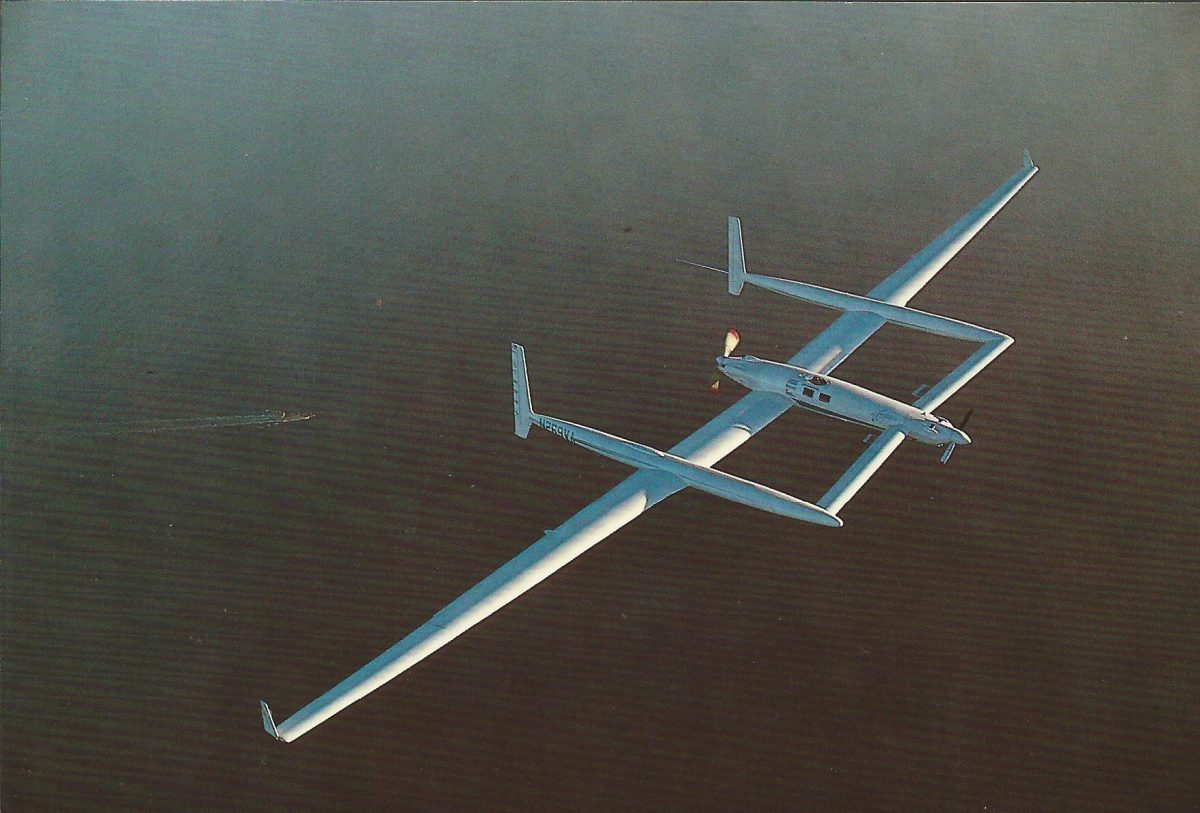
The Voyager aircraft circles before landing at Edwards Air Force Base (Source: NASA via Wikimedia)

One of the most amazing things about hosting and curating a massive collection of shortwave radio recordings is listening to each recording as they’re published on the Shortwave Radio Audio Archive (SRAA).

SRAA contributor, Tom Gavaras, has shared some brilliant off-air and studio recordings over the years including the following shortwave recording of Voyager Experimental Aircraft flight communications with Dick Rutan and Jeana Yeager in 1986.

I haven’t even published the recording on the archive yet, as he just submitted it. Tom notes:

Rutan Model 76 Voyager Experimental Aircraft was the first aircraft to fly around the world without stopping or refueling.

It was piloted by Dick Rutan and Jeana Yeager.

The flight took off from Edwards Air Force Base’s runway in the Mojave Desert on December 14, 1986, and ended 9 days later on December 23, setting a flight endurance record.

This shortwave recording is a sample of some of the communications between Dick Rutan and his ground crew including a debate if Dick should walk out of the aircraft after it lands.

Tom made this recording with an ICOM R71A receiver in Minnetonka, MN, and believes the date of this recording is December 22, 1986:

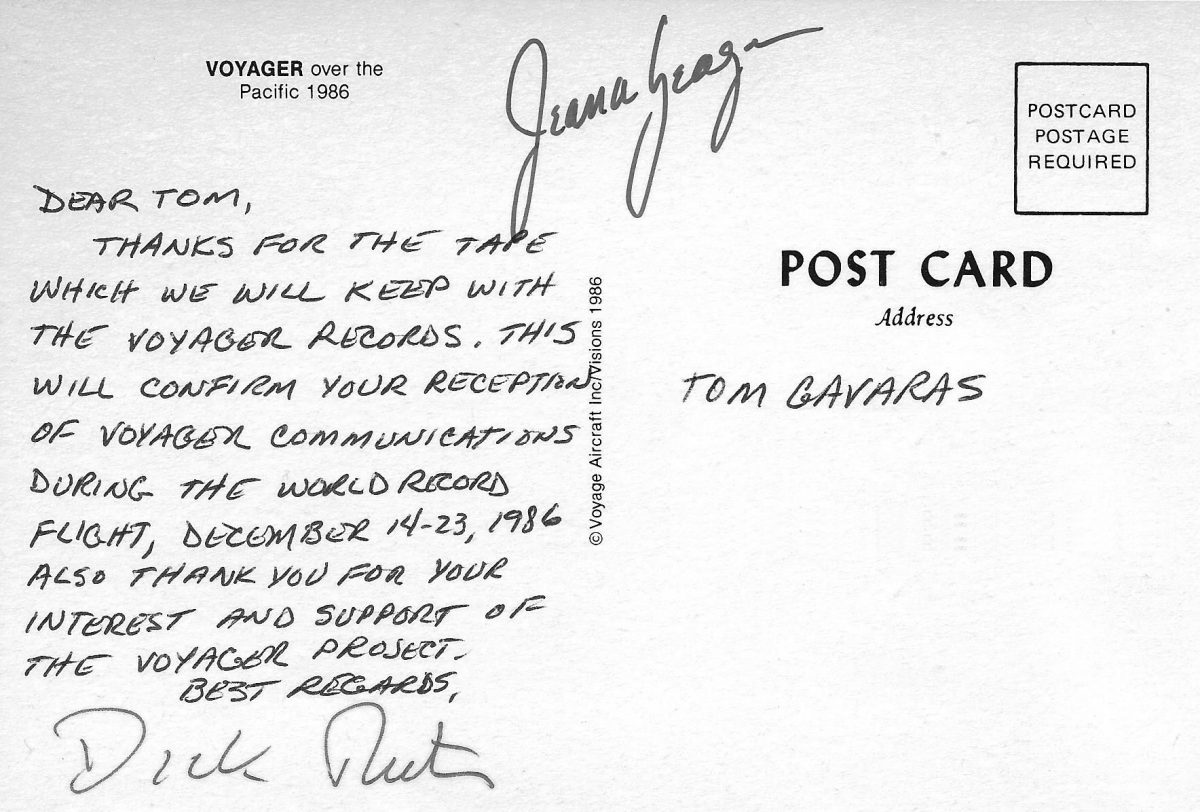
QSL card

This is simply amazing, Tom! Thank you so much for sharing your recording and QSL card with us. A proper radio treasure!

Post readers: click here to check out the Shortwave Radio Audio Archive and click here to browse some of Tom’s contributions. Also, click here to read our previous post about Tom’s amazing RadioTapes.com website.

Radio Waves: Switzerland’s Move to Digital, Guyana Rejects USAGM’s Request, Ham Records China/US Encounter, and Farm Radio International Endorsement

Radio Waves:  Stories Making Waves in the World of Radio

Because I keep my ear to the waves, as well as receive many tips from others who do the same, I find myself privy to radio-related stories that might interest SWLing Post readers.  To that end: Welcome to the SWLing Post’s Radio Waves, a collection of links to interesting stories making waves in the world of radio. Enjoy!

Many thanks to SWLing Post contributors Mike Terry, Dan Robinson, Ulis Fleming, and William Lee for the following tips:


Switzerland Inches Closer to FM Switch-Off (Radio World)

GENEVA — Switzerland is embarking on the next phase of its digital radio switchover strategy. In May René Wehrlin, media specialist at Switzerland’s Federal Office of Communications (Ofcom) announced the country’s next steps toward the country’s total transition to DAB+.

Ofcom officially confirmed in 2019 that the nation would say “adios” to all FM radio programs by the end of 2024 at the latest. At the time, the “Digital Migration” (DigiMig) working group, set up by the Swiss private and public radio sectors and Ofcom in 2013, stated that 68% of radio listening was digital, 37% of which was via DAB+ and 15% exclusively via FM.[]

Guyana refuses US’ request to facilitate radio broadcasts to Venezuela (Demerara Waves)

Guyana’s President David Granger late Friday said his administration rejected a request by the United States (US) to use the medium wave radio frequencies of this South American nation to broadcast Voice of America programmes to Venezuela.

Mr. Granger said Guyana turned down the request because of security, health and political risks that Guyana could expose itself to with Venezuela which is claiming the Essequibo Region that makes up about two-thirds of this former British colony.

“Given the length of an unpoliced western border, the influx of refugees, the unsettled territorial question and the public health risks, it would not be in our national interest to do anything to contribute to destabilising relations at this time,” the President said.

A US Embassy spokeswoman said the American government was no longer interested in the project. ” The U.S Agency for Global Media is not actively considering this anymore. It is important that the people of Venezuela have access to uncensored news from credible Venezuelan and international journalistic news sources. Guyana has shown leadership in the past, in defense of representative government by joining other Lima Group members from the Americas to strive for a democratic resolution to the crisis in Venezuela,” she said.[]

Close encounter between US-China militaries captured by radio amateur (South China Morning Post)

The Chinese navy has warned off a US military plane that briefly flew close to the southern coast of China, north of the Taiwan Strait, according to a Beijing-based think tank.

In a 34-second scratchy radio recording released by the South China Sea Strategic Situation Probing Initiative (SCSPI), a think tank based in Beijing, a man – purported to be a Chinese naval official – can be heard saying in English: “This is China Naval Air Force on guard, you are approaching Chinese air domain, change your course immediately or you will be intercepted.”
He then repeated the warning in Mandarin Chinese.

The institute said on its Twitter account that the recording was captured on Thursday morning by a radio amateur. It remains unclear which aircraft was involved, or if there was any face-off in the air.[]

Charity Intelligence recommends Farm Radio International (Charity Intelligence)

Charity Intelligence is recommending donors support Farm Radio International for the coronavirus pandemic. Farm Radio has a network of over 1,000 radio programs reaching more than 250 million people in 41 countries across Africa.

To donate to Farm Radio’s covid-response

Communication is critical in the early stages of a disease outbreak to give people information. Rumours swirl that Africans cannot get coronavirus. Tanzania’s president, Magufuli, said churches should stay open because the coronavirus is “satanic” and “cannot survive in the body of Christ.” As all have witnessed, fake news has harmful consequences with the quick coronavirus.

Farm Radio International is a Canadian, medium-sized charity with donations of $3.9m in 2018. Typically, a charity of this size would not be front of mind in a global response. Yet Farm Radio has the existing platform and local operations to play an effective role reaching millions quickly in a coronavirus response. Early communication is an urgent need. []


Do you enjoy the SWLing Post?

Please consider supporting us via Patreon or our Coffee Fund!

Your support makes articles like this one possible. Thank you!