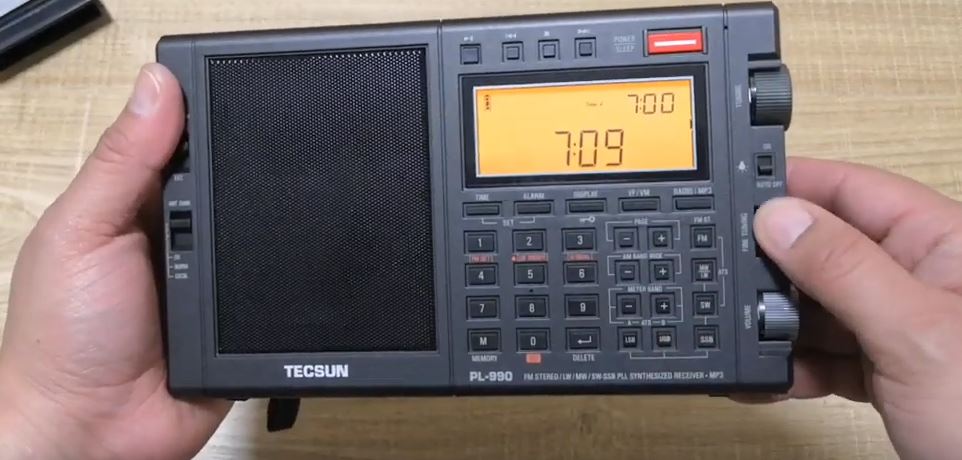
Many thanks to SWLing Post contributor, Marty, who shares a link to the following video (in Chinese) of the new Tecsun PL-990:
https://youtu.be/9asB3keMrE0

Many thanks to SWLing Post contributor, Marty, who shares a link to the following video (in Chinese) of the new Tecsun PL-990:
https://youtu.be/9asB3keMrE0
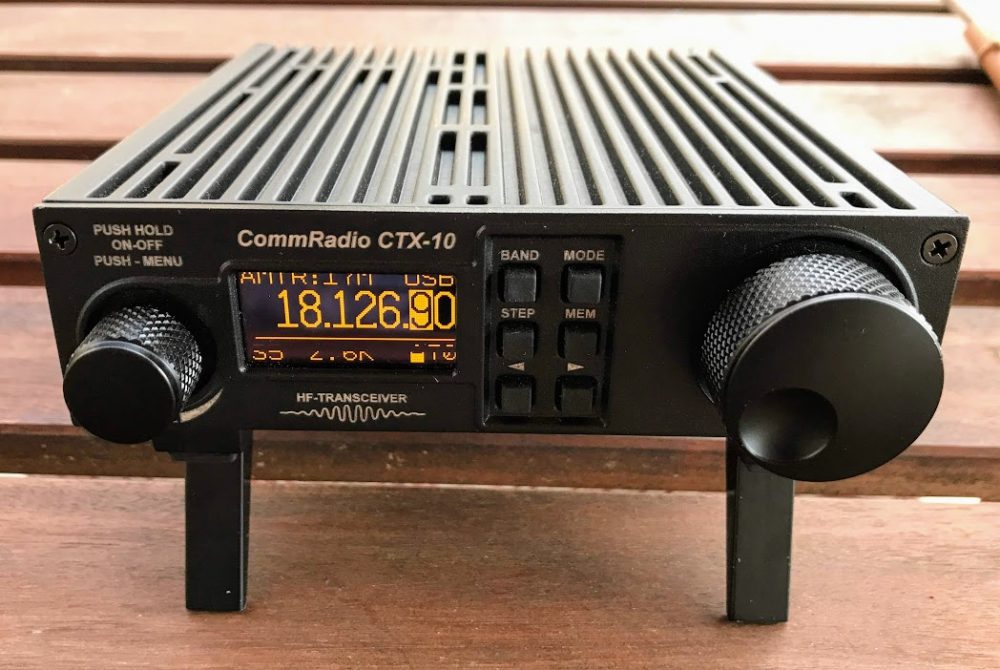
Earlier this year I published what I called an “initial” review of the CommRadio CTX-10 QRP transceiver, promising an eventual final review. The reason for this is that I sensed there were important CTX-10 updates on the horizon, and I wanted to re-evaluate the rig once the upgrades had been implemented through firmware.
This final review builds upon the initial review––think of it as the second installment, or “Part 2″––so if you’re considering the purchase of a CTX-10 and haven’t read the previous post about it, please do read the initial review first.
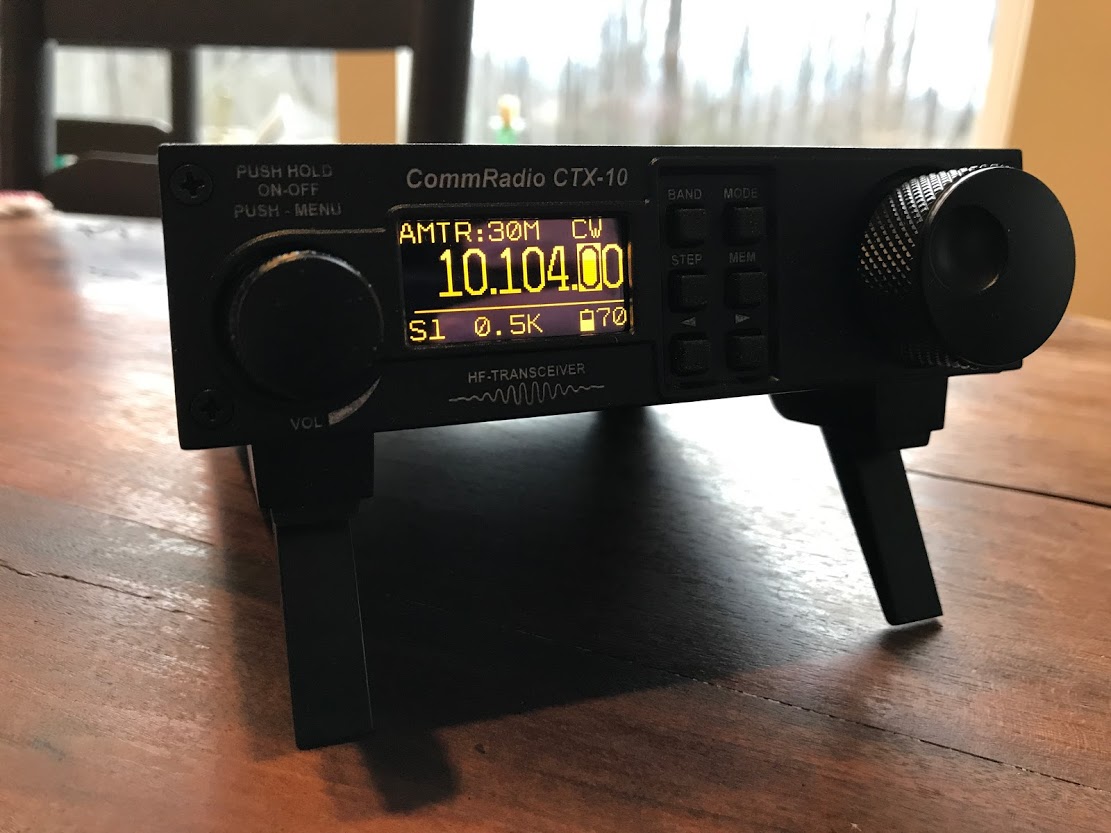
As anticipated, via simple at-home firmware updates, since my initial review the CTX-10 has now been upgraded and tweaked a number of times. [Click here to view all of the documented firmware updates and notes at CommRadio.]
I’ve been very pleased with the attention CommRadio has paid to their customer feedback on some of the most important requests.
Instead of reiterating what I wrote in the initial review, I’ll jump straight into the upgrades.
At time of posting my initial review, the CTX-10 didn’t have A/B VFOs. This was my primary gripe about the CTX-10, because without A/B VFOs, there was no way to operate split, which meant that you could not work DX stations that use split to manage large pileups. This is actually a really important feature for a QRP radio because during split operation, a pileup is pulled apart across a few kHz of bandwidth, thus giving a 10-watt signal a better chance of being heard through a collection of legal-limit signals.
On June 10, 2019, CommRadio released a firmware package that added A/B VFOs and the ability to operate split to the CTX-10.
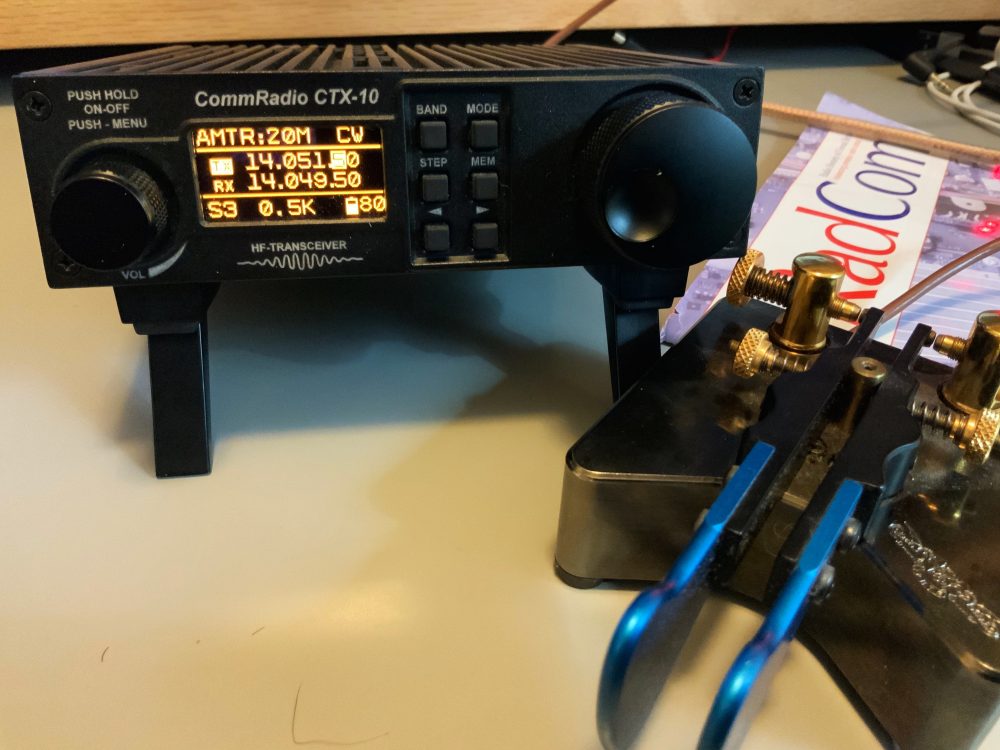
Even though there are only a limited number of buttons on the front panel, it’s incredibly simple to enter into split mode:
I do like the clear TX and RX lines, which leave no doubt in the user’s mind what the frequency used for transmitting and receiving is. On some radios, this can be a bit confusing.
Split operation is simple and effective, thus I consider this issue fully resolved.
In my initial review, I noted that the CTX-10 ATU needed near-resonant antennas for the ATU to make a strong 1:1 match. Indeed, a number of times I actually used a near-resonant antenna in the field––the EFT Trail-Friendly, for example––and the ATU couldn’t get below a 3:1 match. For what it’s worth, CommRadio states that the CTX-10 can easily handle 3:1.
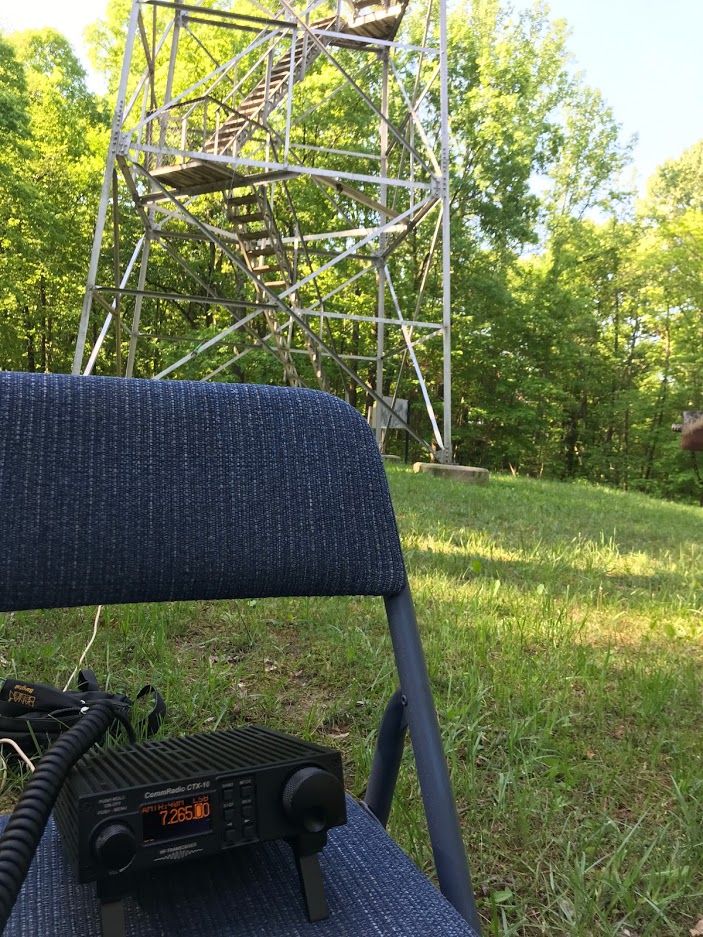
Making a Parks On The Air activation at Tar Hollow in Ohio.
CommRadio has made modifications to the ATU function, improving the performance of the antenna-tuner algorithm, which had a significant impact on 80 and 60 meters. I’ve also had better luck with a number of field antennas I’ve tried on 40 and 20 meters. Is it as good as the Elecraft KX-series ATUs? No.
Having a built-in ATU on the CTX-10 is certainly a valuable feature in the field. When I need to match a challenging antenna with the CTX-10, I bring my Emtech ZM-2 manual tuner along for the ride.
There still is no way to adjust the microphone gain control nor microphone compression on the CTX-10. Much like a military or commercial radio, the CTX-10 is optimized for just one style of mic: in its case, the modular MFJ-290MY or Yaesu MH-31A8J handheld mic.
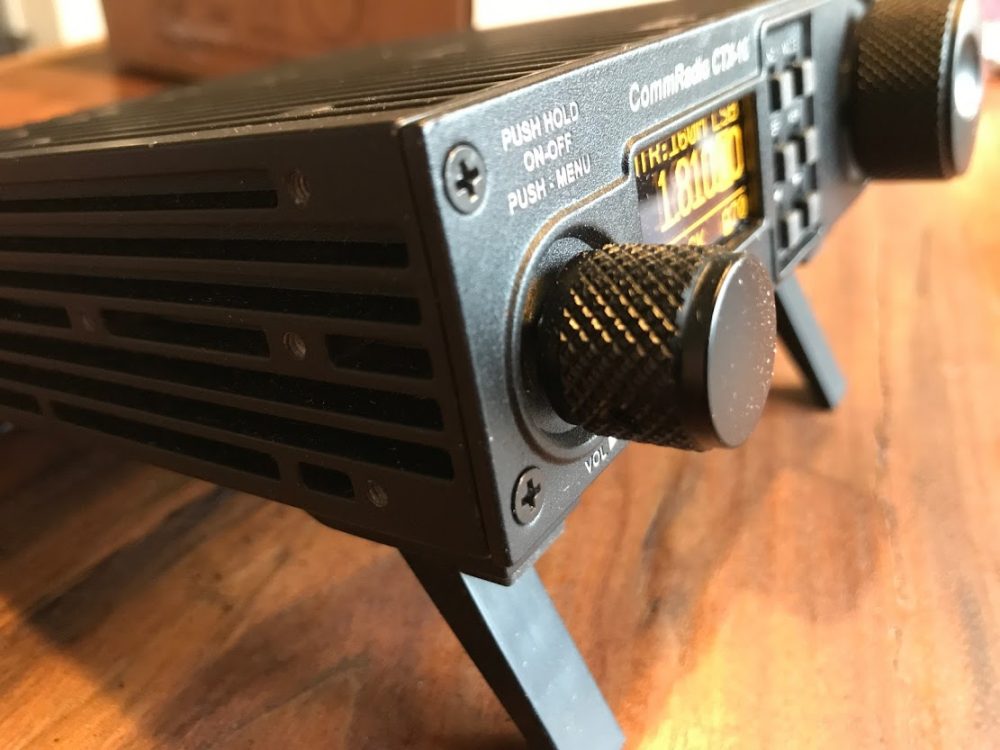
The CTX-10 microphone input has a limiting pre-amplifier with built-in compressor and ambient noise gate–in short, the CTX-10 handles all microphone settings automatically.
Through firmware updates, a number of positive adjustments have been made to the microphone settings:
These are all welcome adjustments.
I would note here, though, that if you plan to use a mic other than the MFJ-290MY or Yaesu MH-31A8J handheld mics, you will have a limited means of adjusting the mic parameters unless you have an external mic EQ. A number of readers, for example, have asked about using their Heil boom headset with the AD-1-YM cable adapter on the CTX-10. Boom headsets are a wonderful tool for field operation because they free your hands to log contacts. As for using boom headsets on the CTX-10, since I don’t have the appropriate adapter, I can’t speak to this. But since you can’t control mic gain, it might take time to learn how to position the boom mic and adjust your voice level for optimum performance.
As mentioned in our initial review, the CTX-10 does not support QSK/full break-in operation. Rather, the CTX-10 uses a traditional relay for switching between transmit and receive. During CW operations, you’ll hear a relay click when switching from TX to RX and back again.
The CW hang time delay on the CTX-10 is not currently adjustable. For high-speed CW ops that prefer a faster relay recovery, I suspect this could be an annoyance.
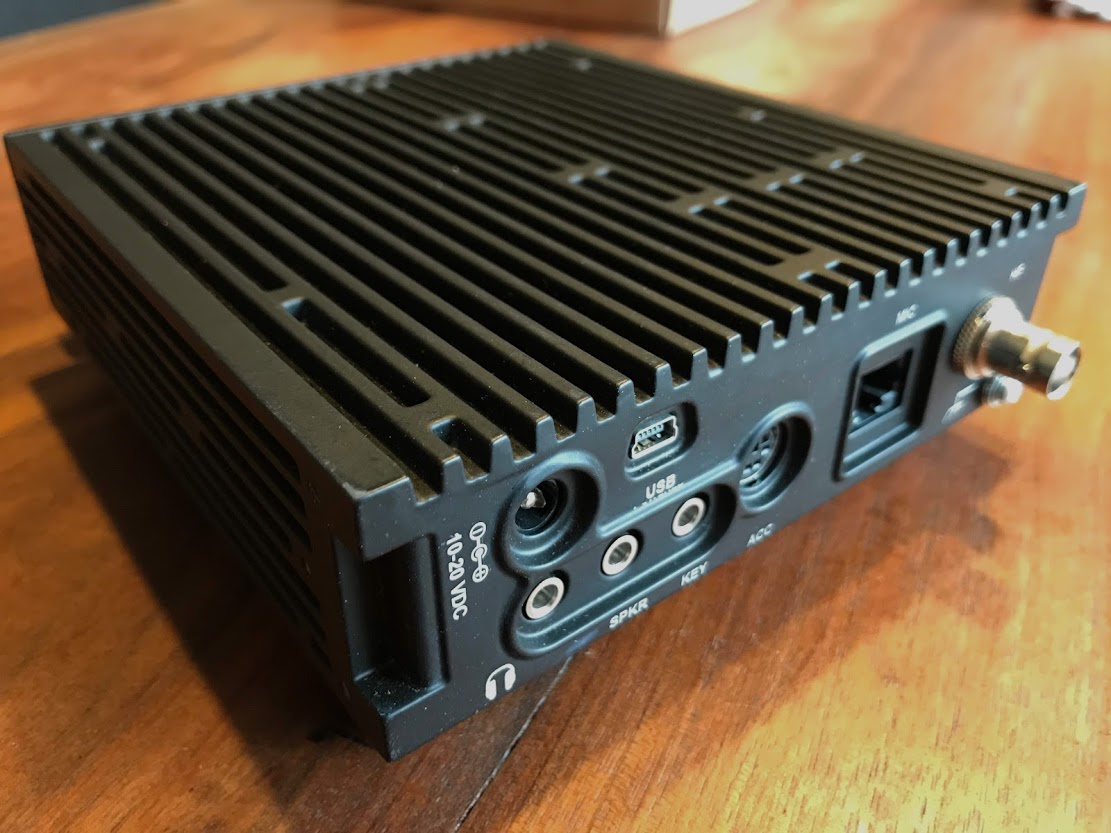
There have been recent CTX-10 firmware upgrades that have helped solve issues found with CW keyer timing in early units. I found the timing issues were mainly present while sending high-speed CW (25 WPM+). My buddy Vlado (N3CZ) put the CTX-10 through some high speed tests, and was pleased with the results overall.
I will reiterate here that the CTX-10 lacks other controls many CW operators appreciate. Currently, the CTX-10 lacks a sidetone control; as a result, you cannot change the sidetone volume/tone, nor can you turn it off. I continue to hope that CommRadio will fix this quirk via a future firmware upgrade.
The CTX-10’s built-in CW keyer does not currently support iambic keying. Meaning, when both levers of a dual paddle are closed simultaneously (squeezed), it will not send a series of alternating dots and dashes. I imagine this could be addressed in a future firmware update.
Additionally, without re-wiring your paddle, you can’t change which side of your paddle sends ‘dits’ and which sends ‘dahs.’ A minor con, for sure–still, most modern QRP transceivers allow you this flexibility.
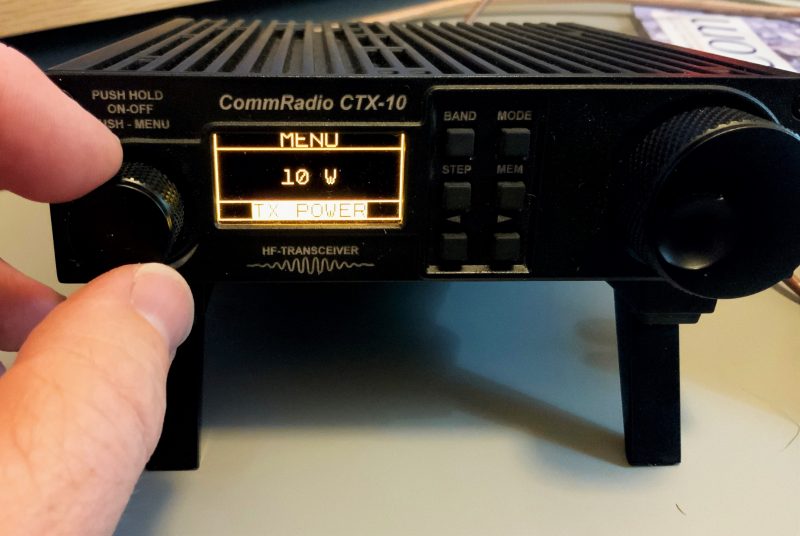
Let’s be clear: as I stated at length in my initial review, the CommRadio CTX-10 was designed around simple operation, like one might expect from a military or commercial channelized radio. I know ham radio operators and preparedness enthusiasts who prefer this approach to gear design, and they will appreciate this CTX-10 design philosophy.
Still, the CTX-10 lacks many of the features and adjustments you’d typically find on a QRP transceiver in its price class. Instead, the CTX-10 was designed to handle many of these adjustments automatically.
The CTX-10 still has no separate RF gain control. The CTX-10’s RF gain is directly tied to the three AGC settings (slow, medium, and fast). While I believe it does a fine job of adjusting RF gain, I do ride an RF gain control a lot during noisy summer conditions, and miss this feature.
The CTX-10 still has no passband (PBT) control, notch filter, or noise blanker––all features I’d normally expect in a QRP radio at this price level.
There are no CW (os SSB) memory keyers. I wouldn’t expect these, as I believe only the Elecraft KX2 and KX3 sport this feature in this price class of QRP radios.
Also, the ARRL lab reports of the CTX-10 are found in the July 2019 issue of QST (Bob Allison, WB1GCM) noted:
Though adequately sensitive, its third-order IMD and blocking gain compression dynamic ranges, as measured in our laboratory, are more suited to casual operation with antennas of modest gain.
Even with the AGC disabled, one or more strong, adjacent signals will result in the reduction of speaker volume, and I was unable to measure the reciprocal mixing dynamic range (RMDR).
The dynamic range was reported as 58 dB, which is a very low number. Blocking was 65 dB.
Update, 25 Nov 2020: Rob Sherwood recently tested and added the CTX-10 to his receiver test data table.
 Out of his comprehensive table which includes vintage radios, the CTX-10 scored the lowest of all of them sorted by third-order dynamic range narrow spaced. It is literally at the bottom of his list: at time of posting, number 146 out of 146 tested radios. Rob concluded that an out-of-passband signal that is approximately S9 will start blocking the radio. Click here for his full notes (PDF).
The CTX-10 doesn’t really have the tool set or receiver performance to cope well with contests or DX conditions.
Please note: as with most firmware-based radios, some missing features could potentially be added in future firmware upgrades. If one of these items is keeping you from purchasing the CTX-10, please contact CommRadio and inquire.
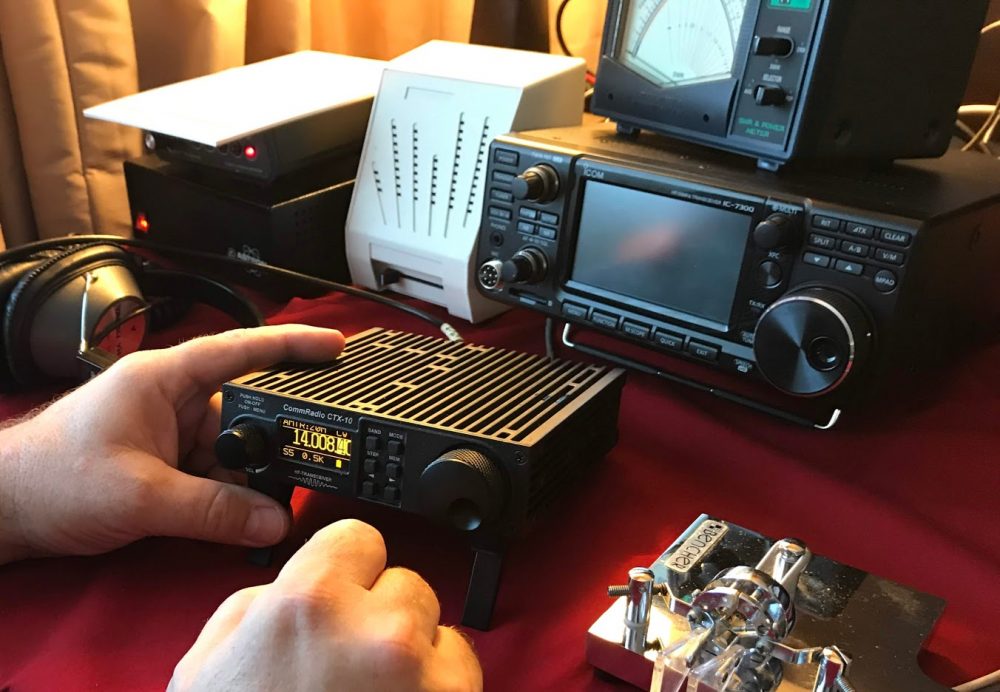
The CTX-10 on air at the W4DXCC conference
With the most recent upgrades, CommRadio has solved the major issues that kept me from recommending it in my initial review. I still feel there are more capable portable transceivers for the $1,000 US price.
The addition of split operation was especially key for me, as I do operate split. The more nuanced adjustments to the CW keyer, an extra feature to prevent the radio from accidentally turning on while in transit, and the adjustments to the mic algorithm, all make this radio more pleasant to operate at home or (especially) in the field.
As I mentioned in the initial review, the CTX-10 owner is one who operates casually and values a very simple, straightforward radio. Those who want a sturdy, no-frills, set-it-and-forget-it rig. If that’s you, take a closer look at the CTX-10: it may just suit your needs if you’re not planning on using it on Field Day or during RF-dense contest environments.
If, however, you’re looking for a full-featured QRP radio with many of the features and nuanced adjustments you’d expect in the shack, check out the Yaesu FT-818, Elecraft KX2, Elecraft KX3, lab599 TX-500, or the Icom IC-705. All of these rigs are excellent.
The two major advantages of the CTX-10 over competitors are:
I believe the CTX-10 will have appeal for radio enthusiasts who value these characteristics:
The CTX-10’s overall construction and components are, as I’ve said, near mil-spec. While the CTX-10 isn’t weatherized or waterproof––no more than any of its current competitors (save the TX-500)––the construction is top-shelf, for sure. It should run for decades without need of repair.
Although I can’t recommend to the CTX-10 for serious radio operators, it is built like a tank, and has a simple feature set for field operation. It’s also designed and manufactured right here in the USA. All the better.
Click here to check out the CTX-10 at CommRadio.
Click here to check price and availability at Universal Radio.
Please consider supporting us via Patreon or our Coffee Fund!
Your support makes articles like this one possible. Thank you!

(Source: Pete Madtone)
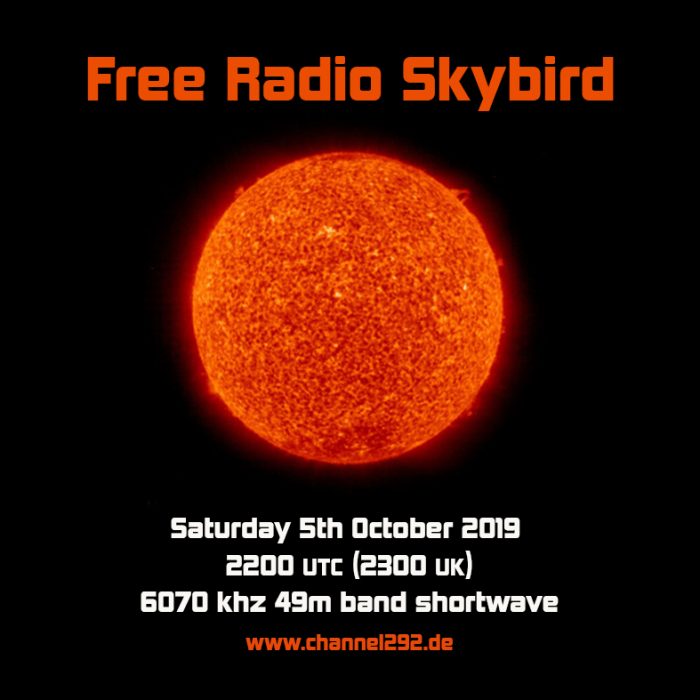
On Saturday 5th October at 2200 UTC/ 2300 UK there’s a new transmission from DJ Frederick’s Free Radio Skybird on 6070 khz on shortwave. The later time which will help propagation hopefully is broadcast by Channel 292 and if you haven’t a shortwave set can also be heard on the SDR link on their site here.
This month’s programme will feature: Justin Patrick Moore’s Radiophonic Laboratory, Steve with Mini-indie radio and our very own One Deck Pete presenting the Skybird Mailbag. They will also play his “Solar minimum but the music’s maximum” mix that has tunes from: Froth Whitlam, Dasya, Andre J Kwenda and a worldwide exclusive from Madtone.
The programme will be available on DJ Frederick’s Soundcloud page the day before, if you want to hear the show in quality stereo. We here prefer it intermingled with the sounds of the ionosphere. Tune in and turn on whichever way you fancy!
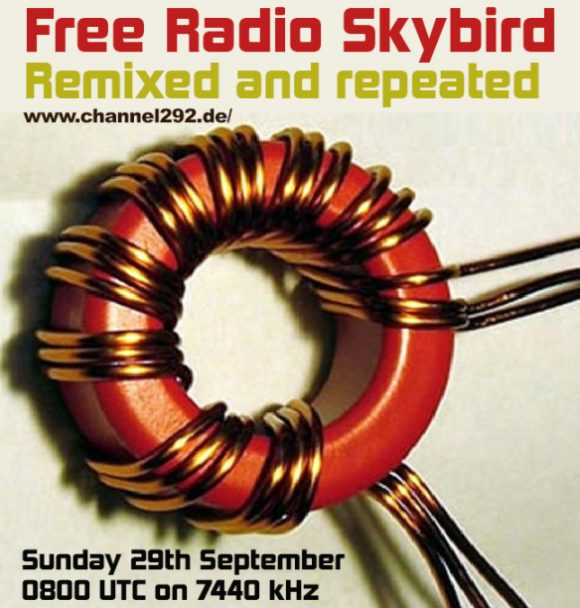
Also this weekend coming sees the re-transmission of Free Radio Skybird’s Remixed show on Sunday 29th September at 0800 UTC (0900 UK) on 7440 khz which will feature One Deck Pete’s “Sounds of the shortwave” mix.
#shortwavesnotdead #freeradioskybird #madtone

Many thanks to SWLing Post contributor, Paolo Viappiani (SWL I1-11437), who shares the following guest post:
by Paolo Viappiani – SWL I1-11437
Recently, I have been amazed by the growing number of frauds that foul up the radio market on the Internet (I was scammed too), so I decided to write a post in order to help anyone who is interested in buying anything on the web.
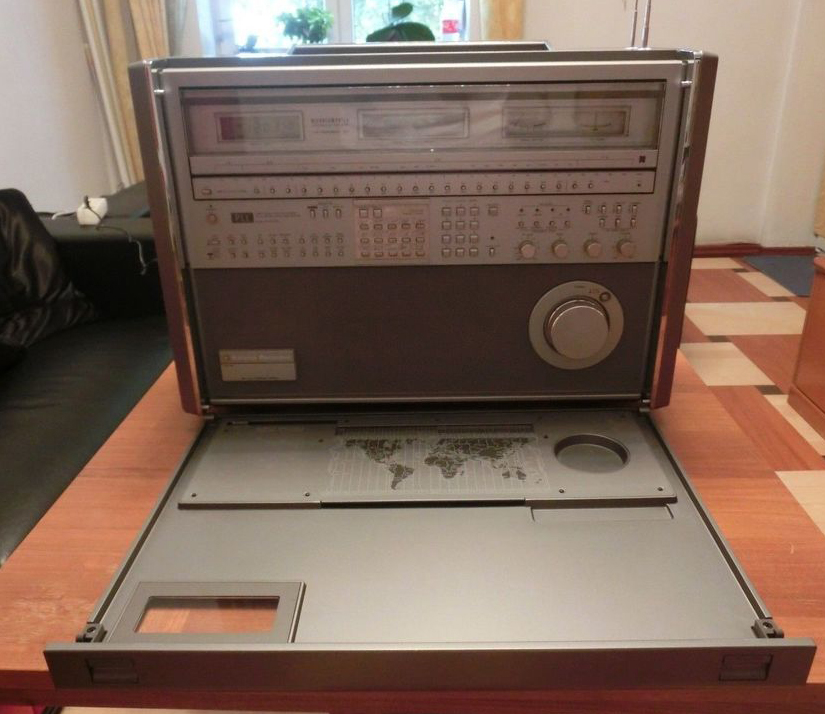
First, it’s worth saying that most scam attempts involve high-quality items that are offered at surprisingly low prices. One of the most significant examples involves some rare (and discontinued) high-end radios by National Panasonic, typically the RF-8000 and RF-9000 models. In this post, I make an example of the RF-8000, but scams also concern radios of other brands..
Generally speaking, a number of advertisements on the most known advertising/classifieds sites (Quoka.de and ebay-kleinanzeigen.de in Germany, Subito.it, Kijiji and AAAnnunci.it in Italy, Le Bon Coin in France, ComoFicho in Spain, etc.) are mirrors for larks only, and we have to pay a great attention in order not to be scammed.
But… how can we recognize a scam?
The most common scams use the following techniques:
Please also notice that often the fraudulent sellers offer a free period for evaluating the item, saying that if you do not like the device, you can send it back. Please don’t fall into this trap, it is only one of the means the scammers use to entice you to purchase, but it is not true at all!
In the following section I’ll recount some examples of real scams concerning the National Panasonic RF-8000 and RF-9000 radios (but, as I already mentioned, the scams involve many other radios and also high-quality electronic or electro-acoustic devices).
One of the most prevalent (and very dangerous) scams concerning the RF-8000 radio is (was) perpetrated by a Portuguese seller who offered (for about 2.300 Euro on the AAAnnunci.it and Quoka.de websites) a very nice appearing radio, look at the photos below.
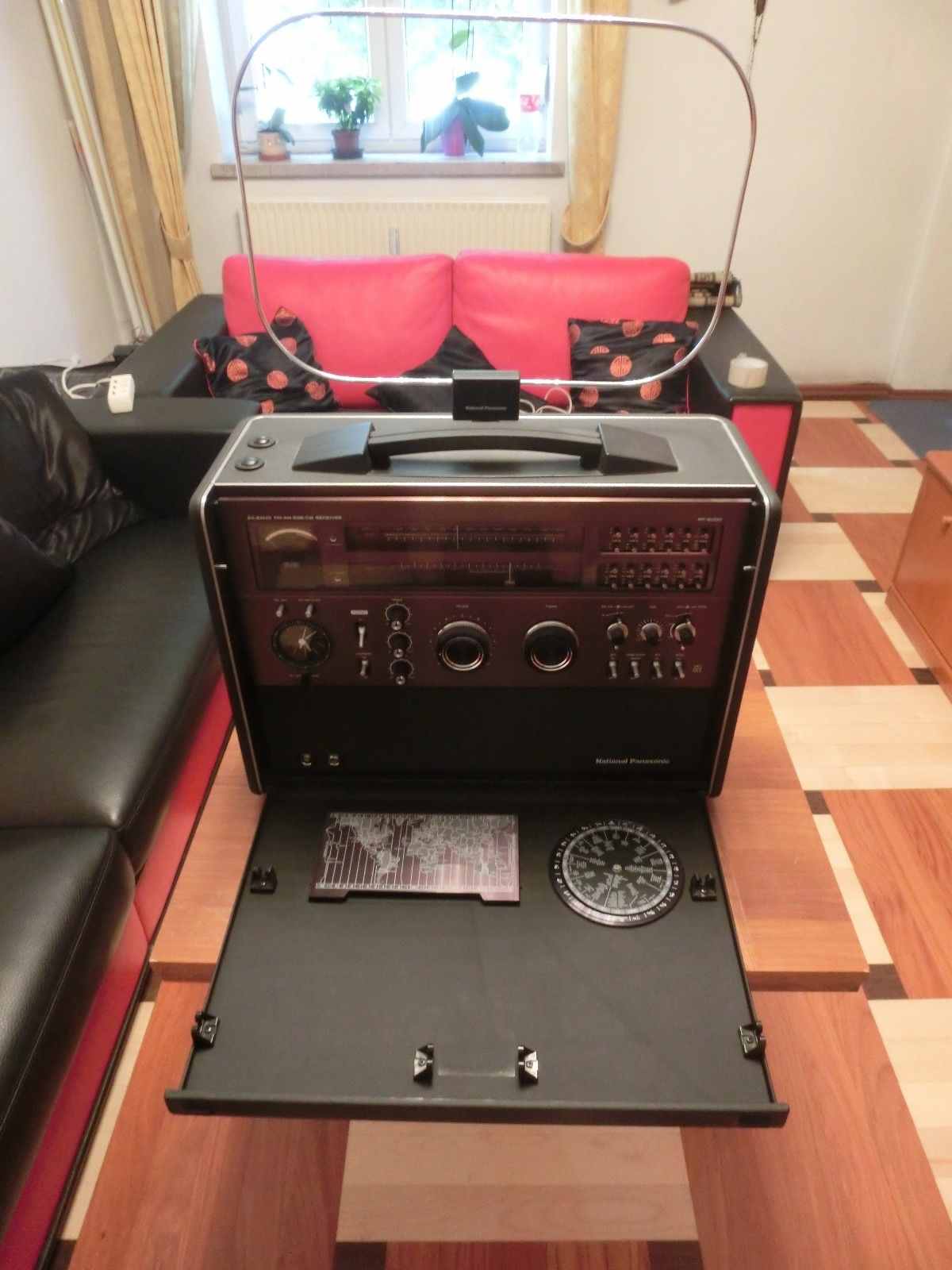
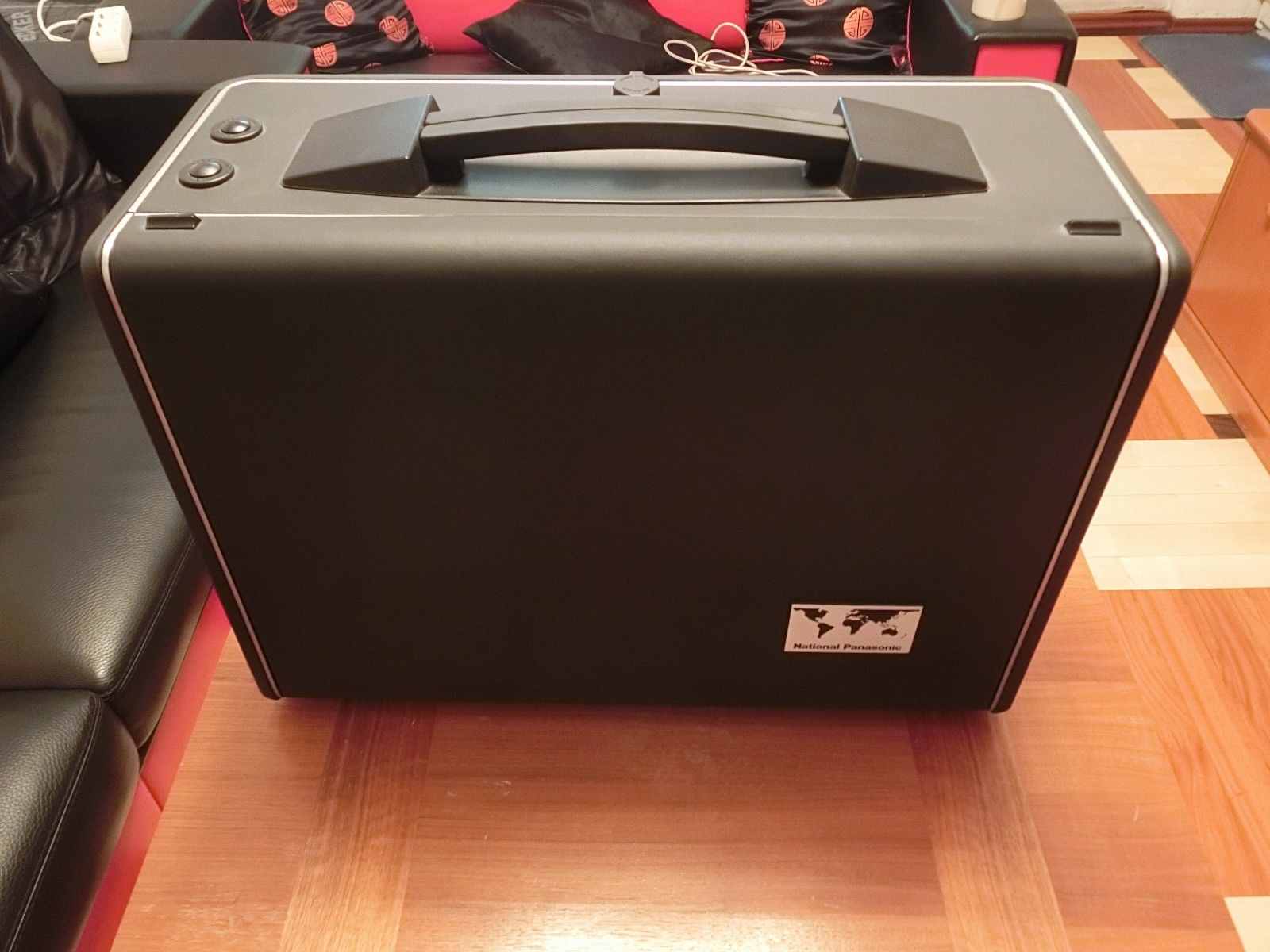
Really a radio in like-new conditions, uh?
But it is just a trap: most of the Panasonic RF-8000 radios have the leather covers on all sides cracked like crocodile skin (look at the image below); only a very few units still have the covers in pristine condition and for sure they cannot be found at cheap prices!
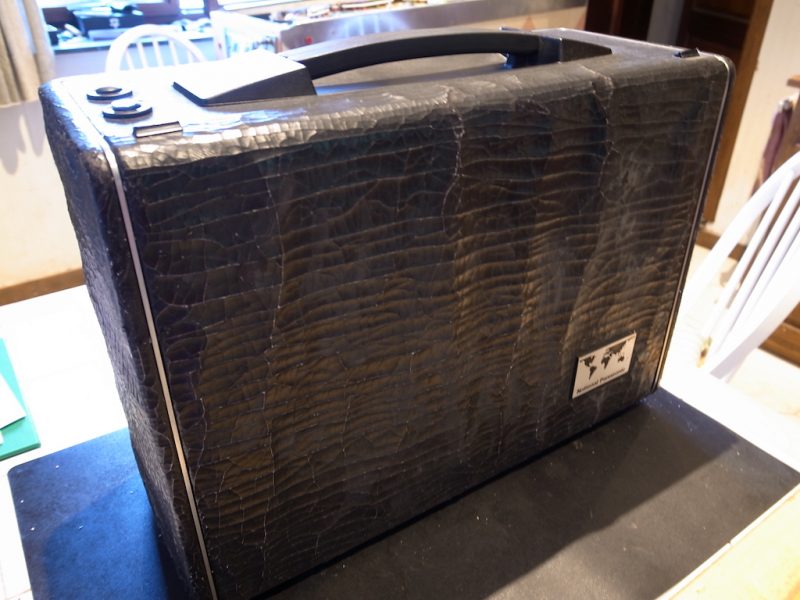
Incidentally, all the pictures used by that scammer (including the two shown in the first two pictures above) were stolen from an old eBay advertisement of October 2018 and that wonderful appearing RF-8000 was sold to a radio collector in China for about $ 5,000 USD.
But the same images also recently appeared on some European advertisement websites (in Italy and in Germany too); if you ask for info, you’ll be contacted soon by a seller from Portugal who offers to handle the purchase through a “trust company” of his confidence, named TrafCargo (beware of this, it is a convincing but fake website!).
Then, the seller requests that the amount for the radio and its shipping costs be sent via a bank wire transfer to the fake transportation company.
After that you never hear anything from the seller again.
Very similar scams are also found in various advertisement/classified websites (Quoka.de, ComoFicho.com etc.), look at the images below as examples. If such items are offered cheap, it is for sure a scam:
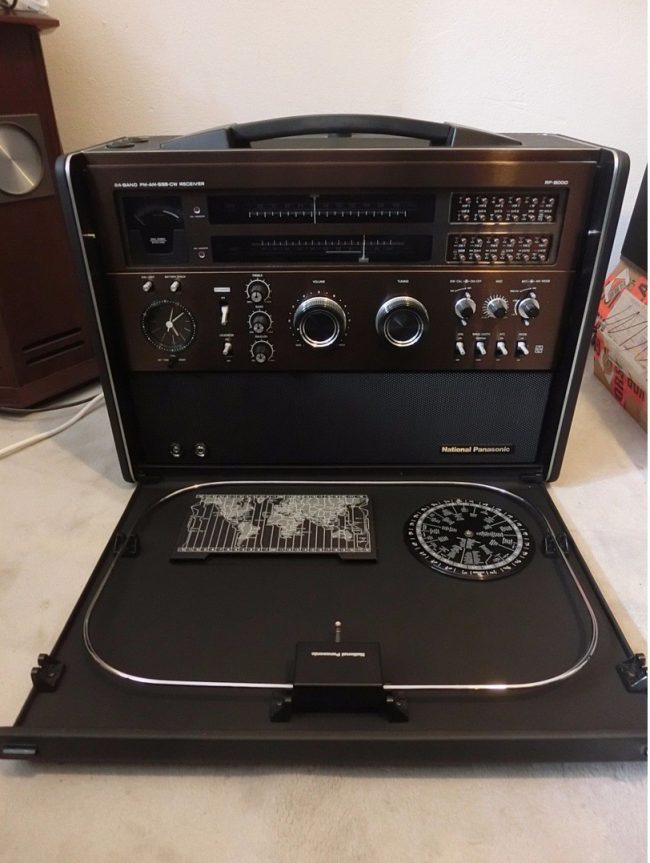
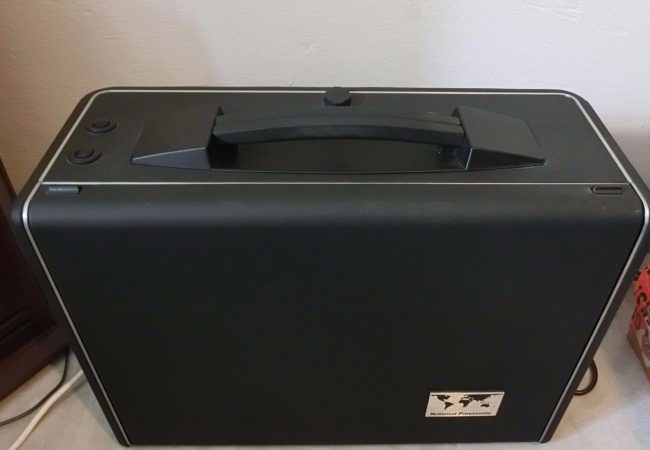
A similar attempt of fraud is commonly perpetrated by other people, including a female seller from Spain. As you might suspect, she offers something that looks like a real bargain, but it’s only a scam. After you have asked for info on the product, you receive a message in which it is specified that the item is located abroad and you are asked to deposit money to a fake “eBay” account (note that eBay does not accept any payment outside their site!).
In order to be more persuasive, often the scammer attaches a copy of his/her passport of other identity documentation in order to appear as a serious seller–please do not trust them however!
Also, beware of the fake “eBay invoice” that sometimes the scammers send, and for anything that involves eBay, contact the eBay helpdesk, ask for specific info and report them the fraud eventually.
In the following section you’ll find some useful advice on recognizing scams and making secure and safe purchases on the Internet:
And, in the case that you are a victim of a scam anyway, please always report the incident to the Police or the Judiciary of your Country, and don’t forget to also warn the site where the announcement was found.
Following the above advice should be sufficient to avoid any scam. So, good luck on your future web purchases!
This is excellent advice, Paolo. Thank you for sharing your experience!
One of my favorite bits of advice above–and one I use anytime I make a significant purchase via a classifieds website–is to ask the seller for specific photos or a video of the item. As you say, they don’t typically have the item on hand, so can’t comply and will make up excuses. That’s a major red flag!
Another red flag? If it sounds too good to be true, it probably is! Trust your instincts and avoid the hassle and headache.
Post readers: Please share any other advice you have about avoiding radio scams. Have you ever been the victim of a scam? How did it play out? Please comment!
Please consider supporting us via Patreon or our Coffee Fund!
Your support makes articles like this one possible. Thank you!

Many thanks to SWLing Post contributor, Eric McFadden, who shares the following note from the Southgate ARC:
The article Decoding Numbers Stations by Allison McLellan which appears in the November 2019 issue of ARRL’s QST magazine is available for free download
Download the article PDF from
http://www.arrl.org/this-month-in-qstDigital membership of ARRL costs just £40 ($49)
https://www.arrl.org/membership-levels
Many thanks to SWLing Post contributor, Jack Kratoville, who writes:
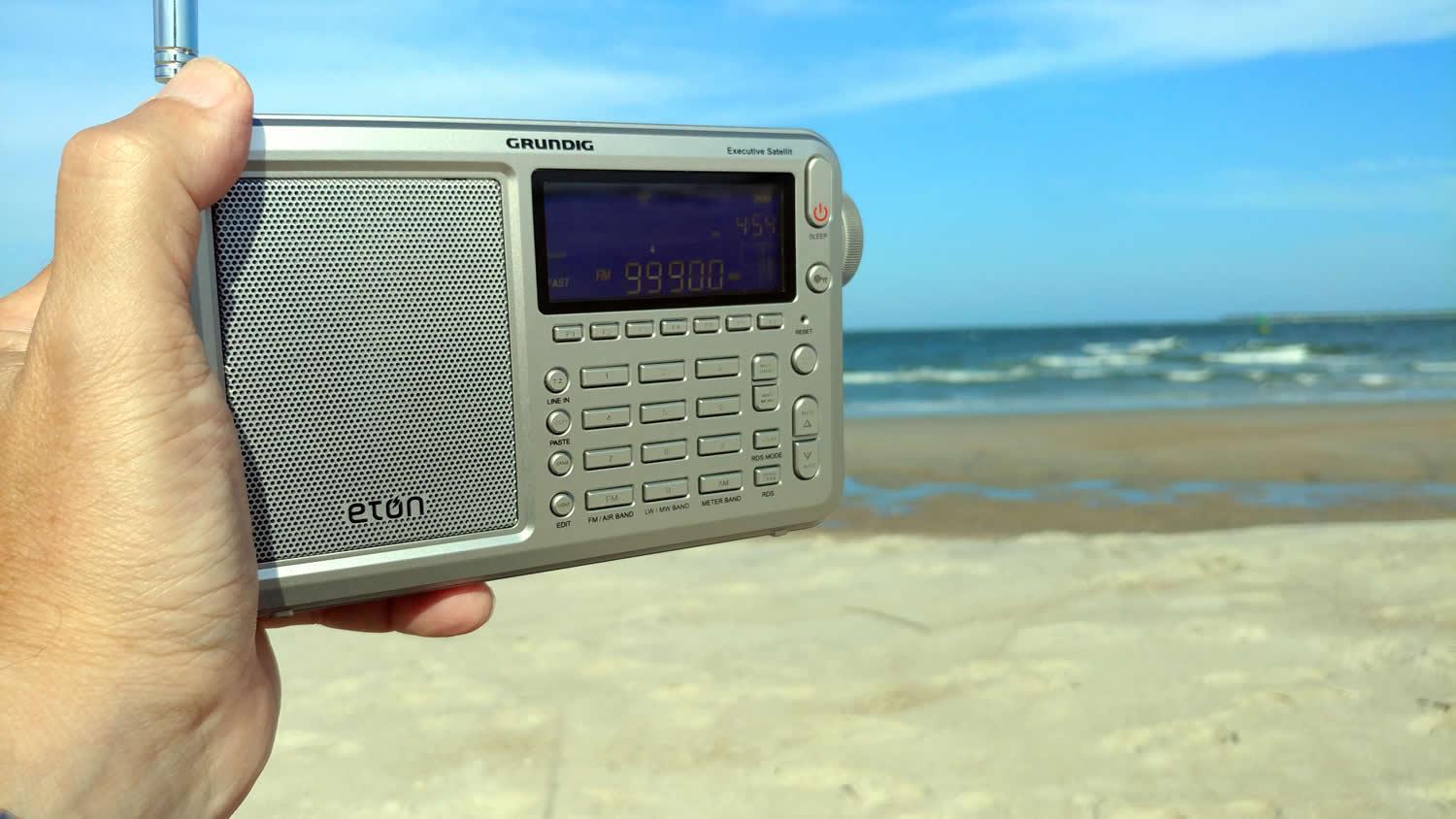
I was once big into Grundig; I owned the YB-400PE, 550, Traveller II, Mini, finally settling on the G5 as one of my favorite radios. I looked at the G3 and probably got a bad one – sold it on eBay. When the G2 “Reporter” went on sale, $35 closeout at RS, I grabbed it. The worst radio I ever owned, so bad I returned it. A radio that had sold for $150, down to $35, and I still wanted my money back. I moved on to Tecsun and C Crane.
Recently, a friend in eastern NC had the Executive Satellit (silver) and had no use for it. I took it to the backyard, then to Atlantic Beach and was very impressed. This receiver was hitting all the right user buttons for me. I was reminded of what the G3 should have been, a decent upgrade to the G5. Aside from solid performance on all bands, the Executive Satellit provides better dial info (no big fan of orange display that goes poof when off), analog volume, decent speaker (second only to the Digitech AR1780) Sync & SSB, plus very quick scanning. And… a Line In/Out! I’m thinking here’s most likely the last of the Grundig (and Satellit) lineage and they finally hit a home run!
Well here’s where I’m reminded of how weird radios from Eton can be. I like bringing along my mp3 player for when I’m bored of band scanning. I have a JBL Flip 4, but now here was a single unit that could cover all the bases for me on a quick trip. I activated the Line In, plugged in my Sansa Sport and knew right away one of the stereo channels was missing. I looked up the manual and it said the Line In was 3.5mm stereo. I called Eton. Unfortunately, the service department (I remember Walter, who knew more about those radios than most) no longer exists. The woman I spoke to tried to explain there was only the mono speaker and after as simple an explanation I could manage, she said she would get back to me.
In a few days, she did and said, after consulting a colleague, I was right. The jack is stereo, but only produces the right channel. I wrote back saying “I felt this was a serious design flaw and why in the world would anyone design a radio like this?” I figured that was the end of our email exchange, but then I received the following:
———-
Jack,
My colleague tells me that the reason the implementation was done this way is that the internal speaker amplifier, which is also shared as the output driver for the headphones is set up as a stereo-in / stereo out configuration. This works well for the line input to headphone output scenario as both L & R channels are separated within their respective connectors. Since this internal speaker amplifier’s outputs are shared between the mono internal speaker and the stereo line output jack the summation of the signal for that mono speaker would result in the summation for the line output jack as well. While this would be OK, a L + R mix for the internal speaker it would cause the user to also have a L + R mix for the line output for both line input and radio applications. In order to maintain the stereo line output for the radio signals we cannot sum the two channels together at the output of the amplifier. The only way to fix this would be to add a summing op-amp on the line input side or summing speaker amplifier on the output side, neither of which were chosen by the designer due to board space, power consumption and cost consequences. A more simple “dirty” way to sum the input would be to buy a short 1/8″ female to 1/8″ male cable, cut that cable open in the center and then short the L & R signals together and place it in-line between the source device and the analog line input on the Satellit. This is not ideal but would work to crudely mix both L & R input signals together.
We apologize that we do not have a more elegant solution for this product.
Regards,
Eton
————–
Wow! I thanked her graciously for a full and detailed answer.
So now I attempt quick fixes like stereo to mono to stereo adapters and it overloads the input. I can turn down the source, but I lose a lot of volume. (And trying to compensate with the radio’s volume is not a viable solution.) I’m also not one to open up this unit with soldering gun at the ready.
Therefore, to those with far greater knowledge, understanding and electronically more inclined – is there a way to create a cord that would give me L+R at proper line-in volume/level? (Rerecording over 5,000 songs to mono would be a real pain.)
Thanks in- advance for any suggestions – and kudos to Eton for providing above and beyond standard customer service.
Thank you for sharing your Eton customer support experience, Jack. That was indeed a thorough and sincere reply! I’m hoping someone in the community here can help you with ideas for a patch cable/adapter.
If you can help Jack, please comment!
Many thanks to SWLing Post contributor, Jim (W4OXB), who writes:
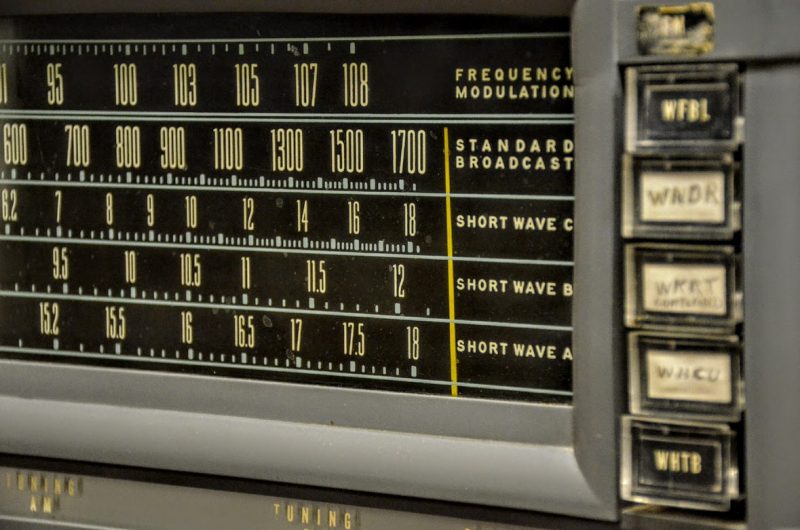
I have been involved in SWLing and ham radio since the middle 1960s. Mostly listening before I got my ham ticket in 1969. My current call is W4OXB.
I used to record dx catches on mediumwave and shortwave that I put in my logbook. About 20 years ago, I transferred my recordings from reel-to-reel to digital format.
My goal is to share the old recordings with other radio enthusiasts and the easiest way I’ve found to do that is YouTube. So, I have been working on this for a few weeks.
Click here to check out W4OXB’s Vintage DX Audio Clips
Excellent, Jim! You’ve got some great recordings in your list already. Thanks for sharing and, Post readers, note that Jim also plans to share some of his recordings with the Shortwave Radio Audio Archive. We really appreciate the support, Jim!