Category Archives: Shortwave Radio

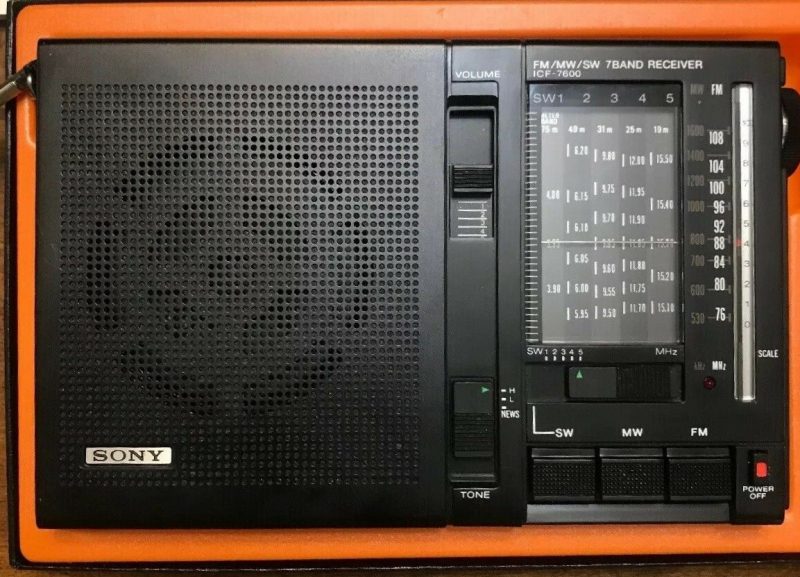
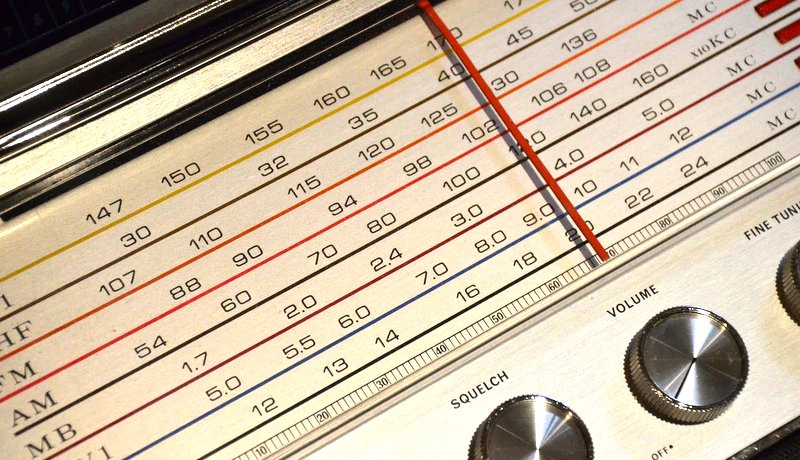
eBay: Julian spots an excellent condition Sony ICF-7600A complete with box

Many thanks to SWLing Post contributor, Julian Stargardt, who writes:

I was just browsing through eBay when I stumbled on this listing that may interest some SWLing readers: An excellent condition SONY ICF-7600A.

The listing is for a Sony ICF 7600 [with box and accessories] – the original ICF 7600, a very different beast from the still in production ICF 7600GR.

Must be over 40 years old and looks like it’s just left the shop.

Click here to view on eBay (partner link supports the SWLing Post).

Thanks for the tip, Julian. For someone seeking a complete ICF-7600A in great shape, this would be a good choice. The price is a bit steep compared to other 7600A’s on the market, but few come with a box, earpiece, and packing. I notice that the seller is accepting offers (that’s the route I’d go!). The ICF-7600A is a cool analog portable and one I’ve thought about acquiring at some point.

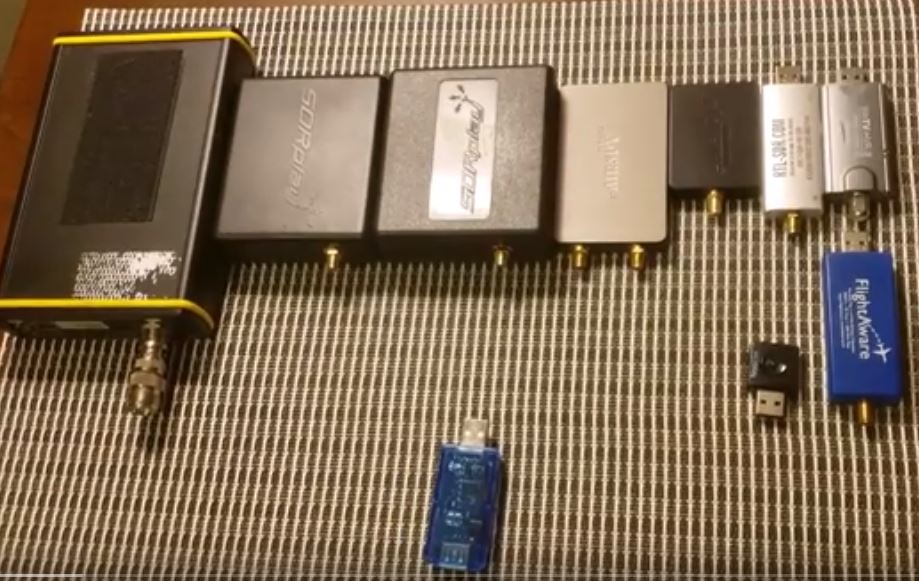
Video: Comparing SDR power consumption

Many thanks to SWLing Post contributor, Ivan Cholakov, who writes:

If you are interested, here’s a video where the power consumption of nine different SDRs was compared:

Click here to view on YouTube.

Fascinating!  I’ve always been curious about SDR power consumption because many of my SDRs are rarely turned off. Thank you for sharing, Ivan!

Marty needs advice as he builds a passive magnetic loop antenna

Many thanks to SWLing Post contributor, Marty Kraft, who asked that I share the following question with our community:

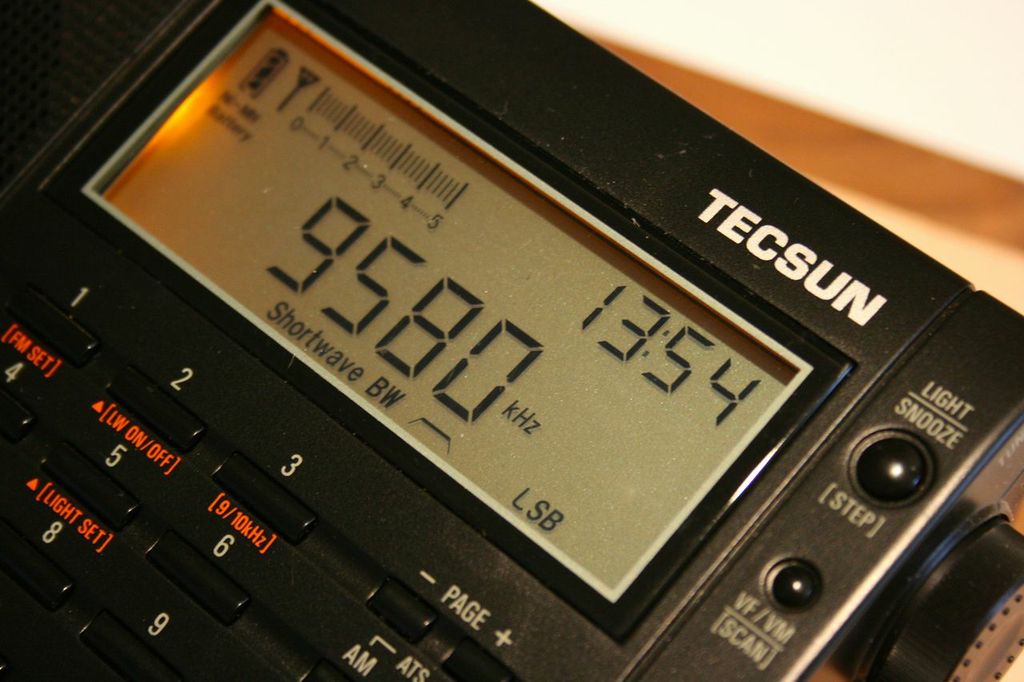
I’m still working on a receive-only passive hula loop magnetic antenna for my Tecsun PL-660.

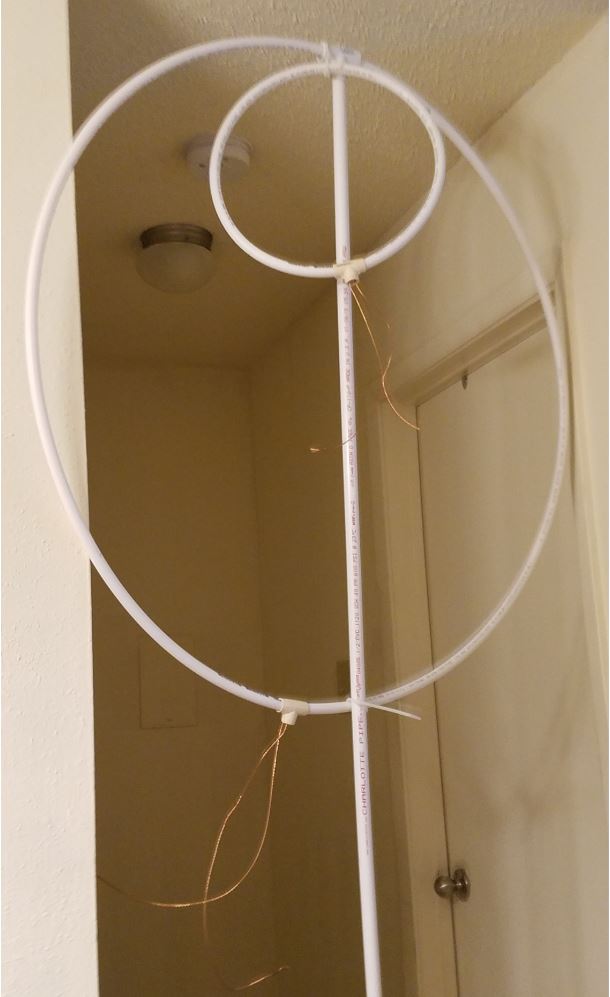
After viewing thousands of YouTube videos (LOL), I built the PVC-pipe structure [you can see in the photo below].

But I need some tech help to finish…

The antenna is 90 inches tall; large loop diameter is 40 inches; and small loop diameter is 17 inches. The wiring is 14 gauge braided.

I plan to put the antenna outside on the porch. Then I’ll run coax from the small loop to the receiver inside and use a 365 pF air variable capacitor to tune the large loop.

My first question is, what’s the best coax to use for the 10-ft run from the small loop to the radio inside? Second, will that 365 pF cap tune the entire 3-30 MHz range?

It’s hot here in Louisiana, so I’d really like to tune the capacitor from inside my apartment, also using coax to connect the cap to the large loop. Will that work? Or does the cap have to connect directly to the large loop?

Any other tips or suggestions? Thanks for the help!

Post Readers: If you have any helpful advice for Marty, please comment!

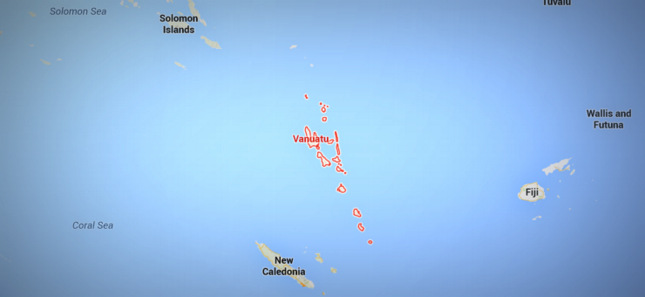
Radio Vanuatu: New shortwave and mediumwave service through infrastructure upgrade

(Source: Vanuatu Broadcasting & Television Corporation via Peter Marks)

RADIO VANUATU CAPITAL DEVELOPMENT WORK BEGINS

With the support of the Government of Vanuatu, the Vanuatu Broadcasting & Television
Corporation (VBTC) has begun work this month on a 942 million vatu (US$8.1m)
infrastructure upgrade to improve radio and free-to-air television service throughout
Vanuatu.

The first phase involves the design, installation and commissioning of a new shortwave (HF)
and medium wave (MF) service for Radio Vanuatu, the country’s public radio service. Costing
for phase one will be in excess of 242 million vatu (US$2.2m) and is funded by the
Government of Vanuatu. Following the improvements to shortwave and medium wave
services, VBTC will also undertake technical work to strengthen the coverage and reliability
of its FM services.

A 10kw MF Nautel transmitter imported out of Canada and a 10kw HF transmitter
manufactured by Hanjin Electronics of South Korea will be installed at VBTC’s major public
service transmission site at Emten Lagoon on Efate. Both transmitters will be commissioned
before the end of 2019.

The second phase, beginning early 2020, will reopen Radio Vanuatu’s medium wave radio
transmission facilities at St Michelle in Luganville on the island of Santo. This will provide AM
service to provinces in the top half of Vanuatu at a cost in excess of 300 million vatu
(US$2.5m).

The third phase will expand the national television free-to-air service, Television Blong
Vanuatu, along with a new digital television service. This final phase will cost an estimated
400 million vatu (US$3.5m).

Prime Minister Charlot Salwai Tabimasmas launched the capital development upgrade at a
special function attended by cabinet ministers, senior members of the public service,
members of the diplomatic corps and members of Vanuatu’s business and non-profit
communities on Friday September 20 in Port Vila before he departed the country to attend
the UN General Assembly in New York.

In his address, the Prime Ministerspoke atlength about the importance to Vanuatu of having
a strong national public radio and television broadcasting service and announced assistance
from Vanuatu’s development partners to help achieve this objective.

The Government of Australia funded the scoping study for the radio upgrade project and is
providing funding support to implement the strategic reform programme of VBTC which the
Prime Minister said is making good progress.

“I’m also happy to announce that the New Zealand Government is keen to support the
second stage of the Radio Vanuatu technical infrastructure upgrade while China is
considering my request to support the upgrade of Television Blong Vanuatu’s technical
infrastructure.”

Meanwhile Kordia New Zealand Limited has been awarded the contract to project manage,
design, install and commission the new radio transmission facilities beginning with the
facilities at Emten Lagoon outside Port Vila.

VBTC Chief Executive Officer, Francis Herman said that “Kordia has extensive experience in
the broadcasting and telecommunications industry in the Pacific, and recently completed a
major project in Samoa for State-owned Radio 2AP funded by the Australian Government”.
“We’ve worked hard with Kordia and a number of other technical experts to investigate the
most efficient and sustainable transmission solution for Vanuatu taking into account the
inclement weather, and the need to keep operating costs affordable.”

The shortwave service, which will be commissioned before the end of this year, will provide
national radio coverage to the 82 islands spread spanning 1,300 kilometres between the
most northern and southern islands.

“Our role as Vanuatu’s national broadcasting service is centered on helping create an
informed public opinion so our people can contribute more effectively to national
development”, Herman added.

“VBTC has struggled to remain relevant over the past decade because its technical
infrastructure was obsolete and badly neglected making it challenging for us to provide an
efficient, reliable, and responsive national radio and television service.”

Alongside the infrastructure upgrade, is an extensive programme to strengthen the technical
capacity of Vanuatu’s broadcast technicians along with a long-term maintenance regime to
expand the life of the equipment.

September 23, 2019

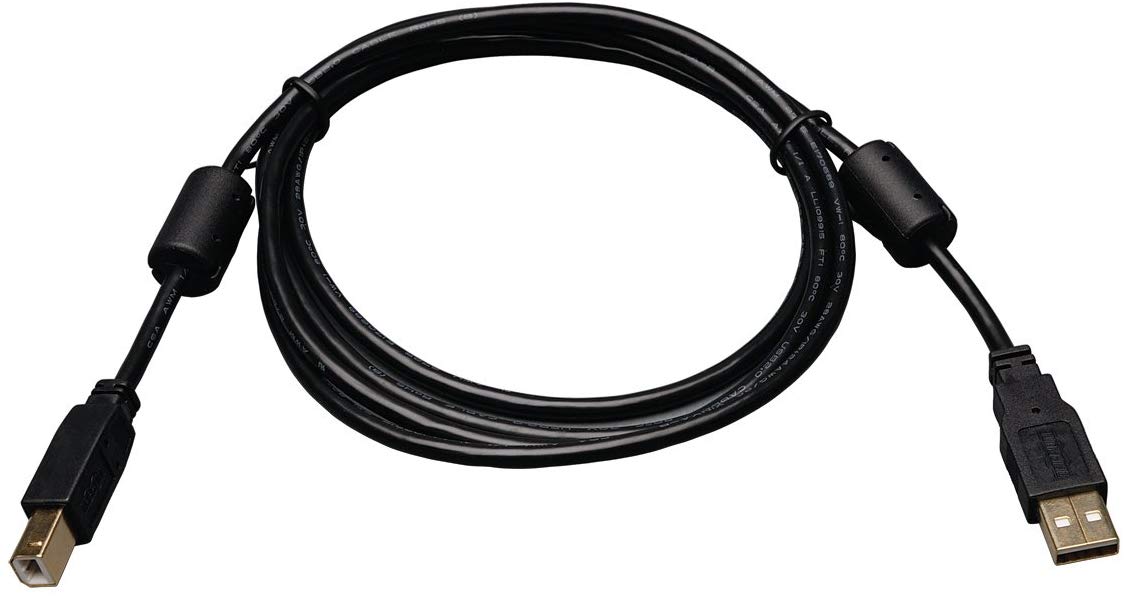
Tripp Lite dual ferrite USB cables

I found this tip from Lorne Waters on the SDRplay Facebook page:

I was having a lot of trouble with local noise and not getting really good signal spikes. Well I took a chance after reading many articles on using better USB cables. The picture below is what I purchased from amazon. It’s a USB with dual ferrite cores mounted at each end. Well this did wonders for me. It’s like less than 10 bucks. Well worth it. Try it for yourself. Using with SDRplay RSP1a.

Click here to view on Amazon.com (affiliate link supports the SWLing Post).

Lorne has a good point. All of my SDR USB cables have at least one in-line ferrite choke. Cables with dual chokes like the Tripp Lite are pretty rare. Note that this USB cable fits SDRs (like SDRplay models) with a USB-B port. I’ve had a difficult time in the past finding dual ferrite choke USB-A to Mini or Micro USB ports. In those cases, I often employ these inexpensive snap-on ferrite chokes.

Glenn Hauser’s World of Radio extra program from September 08, 1984

Many thanks to SWLing Post contributor, Dave Zantow (N9EWO), who writes:

Rosebud Reservation location in South Dakota

One of Glenn Hauser’s more interesting “extra” programs to me over the years was his radio 1981 summer vacation recordings to South Dakota (near the Nebraska border).

Attached is the entire WRNO recording of that program (which aired on Sep 8, 1984). This was before he “air numbered” the programs.

Station KINI web site (station active today) : https://www.rosebudmedianetwork.com/
Stream : http://listen.streamon.fm/kini

Click here to download the audio.

Amazing, Dave! Thank you for sharing this recording.

Post Readers: Keep in mind that you can still comment on this WOR post for a chance to win an Eton Mini receiver! This giveaway will close on Friday, September 27, 2019.

Radio World: “Historic Woofferton Boasts a Modern Twist”

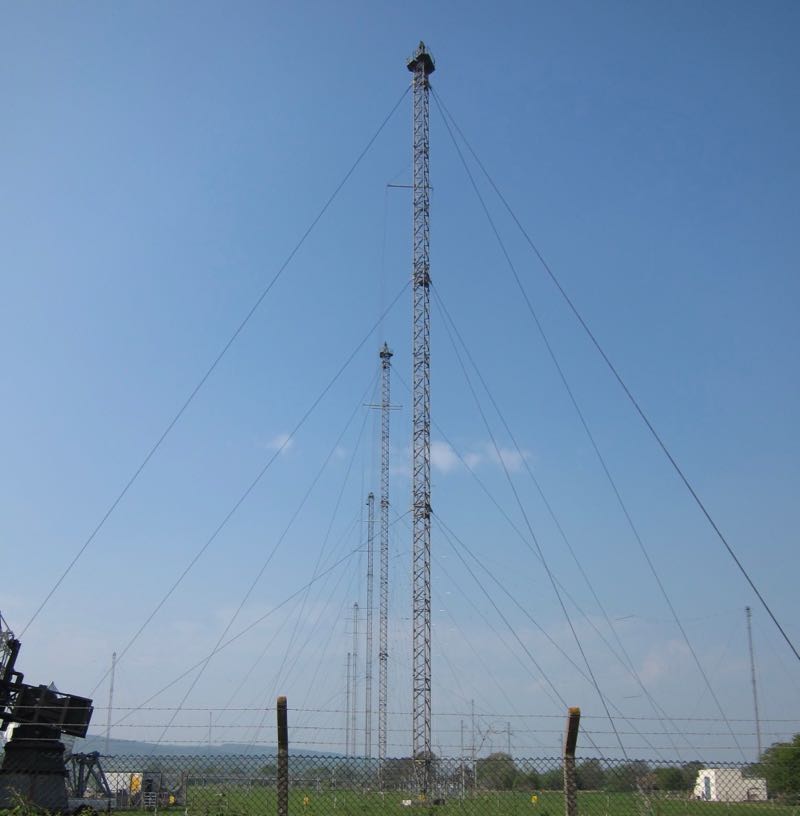
Photo by Flickt user Shirokazan via Wikimedia Commons.

(Source: Radio World via David Iurescia and Michael Bird)

WOOFFERTON, England — Nestled in the beautiful Shropshire countryside, just a few miles from England’s border with Wales, is the tiny village of Woofferton. That name is synonymous with shortwave radio for millions of listeners around the world as just a short distance from the village itself, lays the United Kingdom’s last remaining public service shortwave transmitting station.

Now owned and operated by Encompass Digital Media, Woofferton recently celebrated its 75th birthday. Built in 1943, the station has a fascinating history; originally designed to bolster the BBC’s General Overseas Service (now the World Service) during the latter years of World War II, it was later partly funded by the United States and was used extensively by the Voice of America to broadcast into Eastern Europe and the former Soviet Union during the cold war years. Today, Woofferton transmits programs for the BBC and a number of other international broadcasters, reaching audiences across Europe, North Africa and the Middle East.

[…]There are 10 high-power HF transmitters at Woofferton. They range from Marconi senders of various vintages, including two BD272 250 kW units that date back to the 1960s, to the more recent 300 kW B6124 solid-state transmitters, and four of the most modern RIZ 250K01 wideband systems, which are also capable of operating in Digital Radio Mondiale (DRM) mode. In fact, the BBC’s daily DRM transmission for Europe is broadcast from here.[…]

Click here to read the full article at Radio World.