Category Archives: Shortwave Radio

M.I.T. Radio Society: Public lectures covering all aspects of radio

Many thanks to SWLing Post contributor, Jennifer Waits, who notes that The Massachusetts Institute of Technology Radio Society (W1MX) and the Department of Electrical Engineering and Computer Science (EECS) are presenting a series of radio-related lectures covering a wide array of topics, “from the design of modern wireless communications systems and 5G, to software defined radio and satellite communications, to shortwave radio propagation, space weather, Radio Astronomy and more.”

The public lectures are announced here: http://student.mit.edu/iap/ns313.html 

All lectures are streamed live and archived on YouTube.

Jennifer notes that one of the most recent lectures focuses on shortwave radio and propagation:

Click here to watch on YouTube.

Click here to view the entire lecture playlist.

Thanks for the tip, Jennifer!
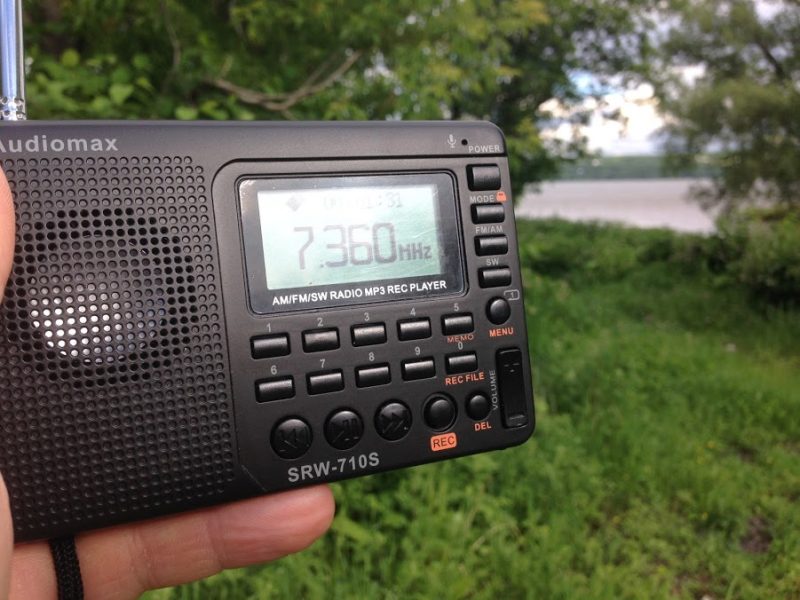
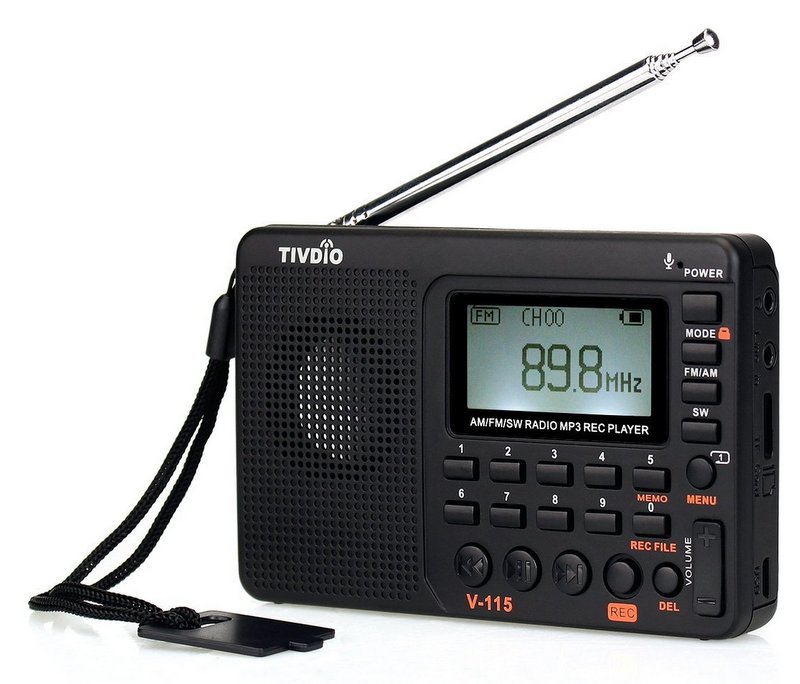
Tivdio V-115/Audiomax  SRW-710S: Keith approves of everything save battery performance

Many thanks to SWLing Post contributor, Keith Stephens, who writes:

Regarding the Audiomax  SRW-710S  radio.

I was very pleasantly surprised at more than one aspect of this radio.  First, it sounds like something with a much larger speaker.  It has the base capability of at least a 6″ speaker.  My favorite FM music station comes from a mountaintop repeater over 70 miles away.  The 710S is one of two radios I have tried through the years that brings it in clear and clean.  The other is a much bigger more expensive radio.  And of course, the voice quality of the local AM talk shows is excellent.  I lost my instruction booklet (as usual) but I do want to record the FM station for times when I am out of range.

It is a pity that I have to tell of a bad shortcoming on this wonderful radio.  Alas, I couldn’t believe it the first time it died at the end of three hours.  I thought I had a bad battery, but a fully charged new battery only lasts 3 hours!  I would pay twice the price for the same radio if it had a better battery life.  Please let me know if there is a better battery or the same radio with a larger battery.

Thanks for your mini review, Keith! Admittedly, I’ve never tested the battery performance of this set because I typically use it for short (1 hour) recording sessions.

Click here to read other reviews of the Audiomax  SRW-710S/Tivdio V-115.

Retailers:

Radiwow offers deep discounts for R-108 unbiased reviews

Many thanks to SWLing Post contributor, The Professor, who notes that Radiwow is offering free and half-price units to consumers willing to review their R-108 receiver. All of the details are on the Radiwow R-108 product page at AliExpress.

Here’s a copy of the statement:

Dear friends

Are you still struggling to find a cost-effective radio? Now the FREE  opportunity is coming!

Recently ,our store have launched a RADIWOW® R-108 Radio which has  great sound quality, selectivity and sensitivity .R-108 Radio is a good world receiver with great FM Stereo/LW/SW/MW /AIR/DSP. It will start selling on January 30, 2019.You deserve it!

We are looking for 20 people from Japan, the United States, Canada, the United Kingdom, Germany, Spain, Italy, France to test and write an unbiased and honest review for our latest radio.

In addition, we need friends from Spain, Italy, France to help us translate R-108 English user manual into Spanish, Italian and French.

In all top three users who apply for the test will enjoy the radio for free, and the 3-20 will enjoy it at half price. Please indicate in the subject when contacting us: your country; product model; leave review or translate user manual.

Click here to read this statement on the Radiwow R-108 product page.

Please comment if you’ve successfully ordered a unit under this program. I’m currently evaluating the R-108 here at SWLing Post HQ.


Do you enjoy the SWLing Post?

Please consider supporting us via Patreon or our Coffee Fund!

Your support makes articles like this one possible. Thank you!

Tivdio V-115: Simple modification to abate internally-generated noise

Many thanks to SWLing Post contributor, Marc Thomas, who shares a link to this site which describes modifications to eliminate the Tivdio V-115’s internal noise.

In a nutshell, the author made two small mods:

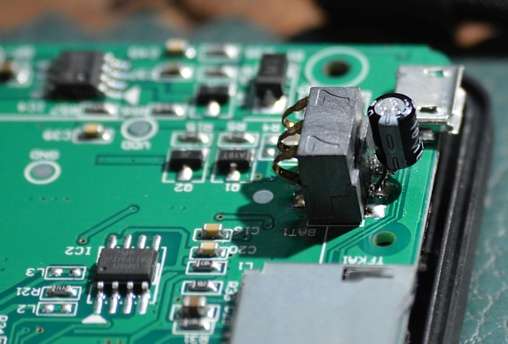
  • Decouple the power/battery with an electrolytic capacitor of around 10uF soldered to the battery connector inside the radio (see photo above)
  • The author also grounded the speaker, but didn’t test to see if this alone had any positive impact

I could not find contact details for the author of this mod, so I hope they don’t mind the fact I shared it here on the SWLing Post.

Note that the Tivdio V-115 is also known as the Audiomax SRW-710S and Kaimeda SRW-710S (and likely rebadged as a number of other models).

Click here to read reviews of this radio.

Retailers:

Bedside radio: Jeff ousts the Sangean WR-2 in favor of the Grundig G4000A

(Source: The Herculodge)

Our friend, Jeff McMahon, over at the Herculodge blog has just replaced his bedside radio–he writes:

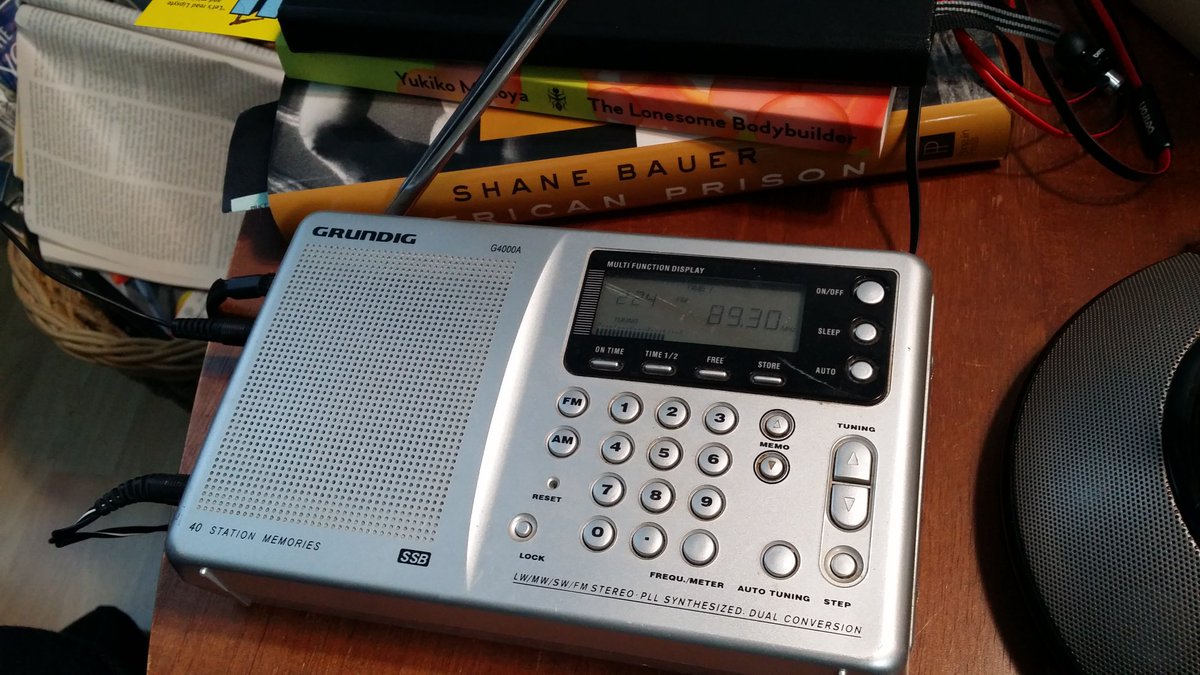
Inexplicably, the Sangean WR-2 wasn’t getting 89.3 KPCC without static, distortion, and bleed-in from another station, over the last few weeks, even with the wire FM antenna attached to the back of it. Who knows why FM reception is subject to variation. It could be the weather.

In any event, I put the Sangean WR-2 in my daughter’s room (she gets her pop station MyFM 104.3 very easily, with the pigtail antenna on the back) and put the 13-year-old Grundig G4000A by my bedside. With the telescopic FM antenna alone, KPCC has a weak signal, evidenced by the Grundig’s reception meter, but when I put the wire SW antenna to the side SW antenna port, the reception is strong and clear.

Over the years, I’ve had many portables, including the Degen 1103, and some old Tecsun models from about 10 years ago. They all suffered from weak tin speakers. Not so with the Grundig G4000A. The speaker sound is very pleasing.[…]

Continue reading at the Herculodge.

The NSA’s Software Defined Radio application “RedHawk” is now open source

Many thanks to SWLing Post contributor, Andrew, who writes:

Not kidding, a friend told me that NSA released a bunch of software to open source, the main list being here:

https://code.nsa.gov/

While looking at the list of projects on that page, halfway down the page, I found a project called “RedHawk” which is described as:

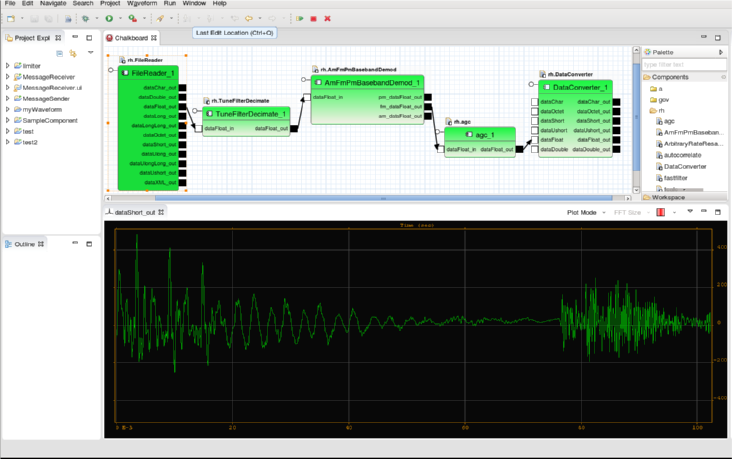
“A software-defined radio (SDR) framework designed to support the development, deployment, and management of real-time software radio applications.”

Now, being curious I opened the github link:

https://github.com/redhawksdr

[It] contains quite a number of subprojects, modules and other stuff, then I checked the main “RedHawk” project:

https://github.com/RedhawkSDR/redhawk

Here’s the documentation:

https://redhawksdr.github.io/Documentation/index.html

It seems really interesting; apparently it allows to define a wealth of processing stages (e.g. filters, converters…) and connect them to process signals coming from an SDR; I think it may be a very interesting and useful tool to fiddle/experiment with SDR receivers, if I’m not wrong it may allow to push an SDR to the limits, improving its performance, and may also be useful to write SDR software!

Fascinating! Thank you for the tip, Andrew!

Post Readers: It appears this project has been in the public domain for a little while. Please comment if you’ve tried implementing RedHawk in your SDR system!


Do you enjoy the SWLing Post?

Please consider supporting us via Patreon or our Coffee Fund!

Your support makes articles like this one possible. Thank you!

Australia: International broadcasting, soft power and the wisdom of the crowd

Many thanks to SWLing Post contributor, Nigel Holmes, who writes:

Here are a couple of interesting url following the joint Australian DFAT & DCA Review of Broadcasting Services in the Asia Pacific. [One] gives a good overview and the [other] is a concise assessment of HF and Radio Australia in the role of broadcasting to remote areas. Have a look. Former RA Head Jean-Gabriel Manguy made a submission, I did not this time. The submissions are in the public domain.

Click here to read Trevor Bird’s submission (PDF).

Click here to read Jean-Gabriel Manguy’s submission (PDF).

(Source: Lowy Institute – The Interpreter by Geoff Heriot)

International broadcasting: the ABC vs the wisdom of the crowd

The findings of two related government reviews – on international broadcasting, and soft power – should offer an incoming Australian government the potential of a substantial policy reset following the general election in May. Specifically, they may help clarify the purpose and place of state-funded international broadcasting/digital media in Australia’s foreign relations, following a decades-long cycle of investment and dis-investment.

Shortly before Christmas, the Department of Communications published most of the 433 submissions (92 private individuals, 31 organisations or groups, and 310 signatories to a pro-forma submission) made to the first of those reviews, Australian Broadcasting Services in the Asia Pacific, excluding those whose authors wished them to remain confidential. Finalisation of the broadcasting report precedes the related Soft Power Review, being undertaken by the Department of Foreign Affairs and Trade, which has proposed a completion date of around March.

So it is timely to take note of the wisdom of the crowd, as expressed through the more discursive submissions to the broadcasting review, and to compare them with the institutional perspective of the ABC as the responsible agency for international broadcasting.[…]

Click here to read the full article.