Category Archives: Shortwave Radio

Brilliant hard-core DX with the USB-powered Bonito MegActive MA305 antenna


Hi there, you might remember my post from last month focussing on the Bonito MegActive MA305 E-field antenna, kindly supplied to me for testing, by Bonito themselves. That post was essentially a report on my experiences travelling to Crete with the MA305, navigating through security at London Gatwick and Heraklion airports (mostly with relative ease), but more importantly, how well it worked with the equally excellent Eton Satellit portable receiver. Whilst in Crete I managed to copy a number of personal firsts, including CRI on 7295 kHz, via their relay in Bamako, Mali, The Voice of Beibu Radio on 5050 kHz, Nanning, XSL ‘Slot Machine’ on 6251 kHz USB, Ichihara, Japan, S32 ‘The Squeaky Wheel’ on 3828 kHz and NHK World Radio Japan, 11910 kHz. I also copied RTM Wai/Limbang FM on 11665 kHz from Kajang, Myanmar Radio on 5985 kHz and AIR Bhopal on 4810 kHz, amongst others – all of which I would certainly consider to be difficult catches in Europe.

 The USB-powered MegActive MA305 is perfect for DXing on the move…

Despite excellent all-round results from the ultra-portable USB powered MA305, there was one signal I copied, which more than any other, demonstrated the DXing credentials of this antenna; Radio Tarma from Peru on 4775 kHz. With a TX power of 1 kW, this is a very difficult station to hear in Western Europe, even with a longwire. To catch this station in Crete, with a 22 cm antenna was incredible and it was at that point during my trip that I realised E-field antennas really can work superbly well for hard-core DXers on the move.

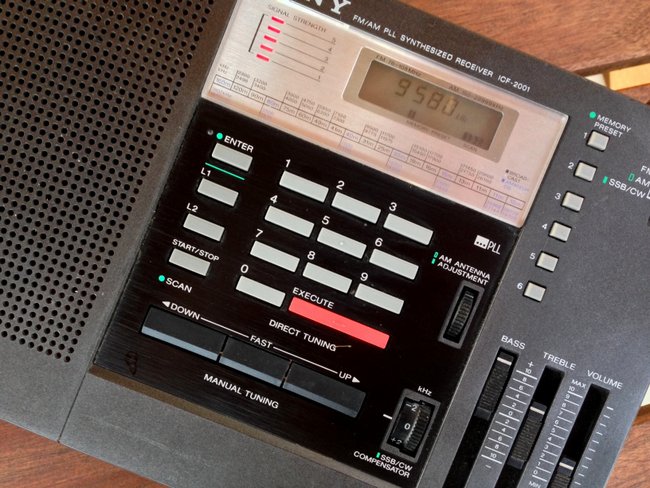
Upon my return to Oxford, I immediately started thinking about a DXpedition to the local woods I use for what I consider serious DXing. For obvious reasons, E-field antennas require an electrically quiet environment to ensure maximum SNR performance. In noisy environments, these types of antennas amplify the signal of interest and the background ‘electro-smog’, thus increasing signal levels but critically, not signal-to-noise. Fortunately, the Oxfordshire wood I have been using for a couple of years is only a 10 minute drive from my QTH as I sort of live in the countryside anyway and the QRM levels there are just about zero. Now, given that this was essentially an experiment to determine the best possible performance from the MA305, I decided to use my best portable radio. It was quite tempting to pack up the Elad FDM DUO which running on a home-brew battery pack has proven itself to be my best (pseudo) portable radio. However, this is supposed to be a real-world test and in this type of scenario, DXpeditions with the Bonito antenna are much more likely to be undertaken with a portable radio. For these reasons I decided to conduct the test with the venerable Sony ICF-2001D. Having proven to be a superb receiver over many, many dxpeditions (check out the evidence on my YouTube Channel Oxford Shortwave Log) and still regarded by DXers as one of the best ever portable radios – possibly the best – it was the obvious choice.

 My portable DXing kit comprising the Bonito MegActive MA305 antenna and the Sony ICF-2001D…a bit of a legend in DXing circles…

I ventured out in early June around 23:00 hrs BST (22:00 hrs UTC), parked the car on the edge of the wood and proceeded to set up my cheap camera tripod, slightly modified to accept a 2 metre-long stainless steel tube, into which a slightly thinner 1 metre tube was mounted, topped off with my partially disassembled ‘Selfie Stick’ – which made it back from Crete lol. The antenna was set up in less than 5 minutes and approximately 4 metres above the ground – much quicker and easier than de-spooling 100 metres of wire! With fresh batteries in the Sony and the MA305 powered up using the USB power brick supplied by Bonito, I was ready to start listening. Almost immediately I heard and recorded a personal first; Lao National Radio, Laos, signing on 6130 kHz, with an excellent signal. Hearing them in the UK was only made possible by the annual two week shut down of the PBS Xizang transmitter in Lhasa, Tibet, but hey, I’ll take it. A brilliant start to my listening session.

Over the next two hours I was amazed at what could be heard using this 22 cm amplified antenna. Bearing in mind I have spent many hours at the woods previously, listening via various 100 metre longwires and a 200 metre Beverage, my expectations were, I thought, realistic in that the MA305 coupled to the Sony would catch some very good DX. However, I did believe there might be an absence of at least some of the more exotic low power stations on the Tropical Band – afterall the MA305 is a very short antenna. Clearly I was wrong, because what transpired during the session surpassed anything I thought possible with this set-up. A list of reception videos follows below and further below, a selection of embedded videos. Some of the entries on this list simply stunned me at the time. Rádio Educação Rural for starters is such an incredibly difficult signal to hear in Europe, even with a very large antenna. Thus, to hear them on an ultra-compact set-up felt very special. Radio Mali is another station that is very difficult to catch with any modulation, except on a large antenna and yet there they were – at the first time of trying. Similarly, Rádio Nacional de Angola and Alcaravan Radio are exotics that at best deliver very weak audio – and most of the time no audio. Furthermore, the signals from Emisoras Pio XIIMyanmar Radio and Rádio Clube do Pará were verging on what I would call superb…I’d never heard anything like it previously except via 100 (or more) metres of wire.

 The ICF-2001D and MegActive MA305              Rádio Educação Rural transmitter site in Tefé, Brazil

So what’s next? Well it would certainly be an interesting experiment to compare the performance of the MegActive antenna with the Wellbrook ALA1530 active loop in a similar environment. I have used the Wellbrook on DXpeditions several times, with often excellent results, however, it’s not designed to be portable and if SNR performance could be demonstrated as similar between these two products, given a very favourable price delta, the Bonito antenna would add up to be a very compelling purchase decision. More on that to come. In the meantime, thank you very much for reading/watching/listening and I wish you all excellent DX.

Please click on the links below for the reception videos on the Oxford Shortwave Log YouTube channel.


Selected embedded reception videos from the list above:

Clint Gouveia is the author of this post and a regular contributor to the SWLing Post. Clint actively publishes videos of his shortwave radio excursions on his YouTube channel: Oxford Shortwave Log. Clint is based in Oxfordshire, England.

Médi 1 Radio may have left the shortwaves

Many thanks to SWLing Post contributor, Paul Walker, who forwarded a message from The Bulgarian DX blog which notes that Médi 1 Radio (Radio Méditerranée) has stopped broadcasting on shortwave:

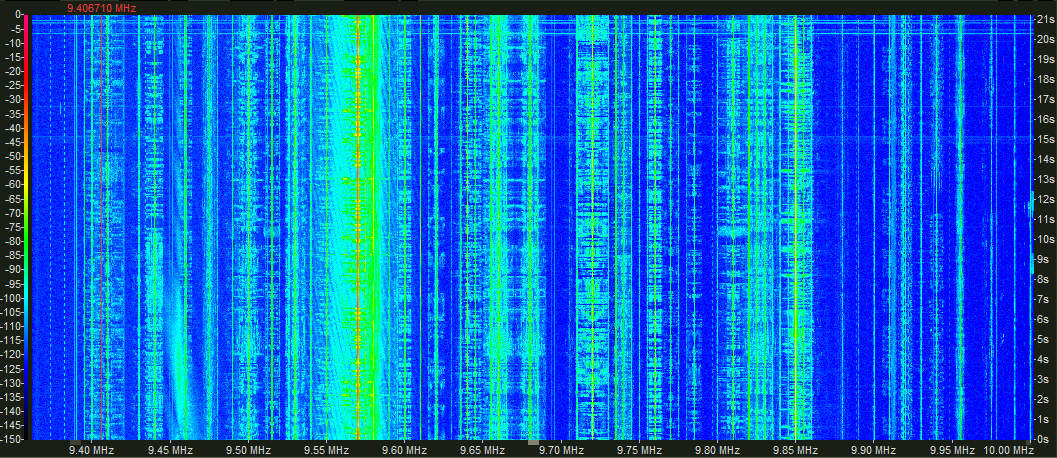
“MOROCCO According to Jean-Michel Aubier France and a mail sent by Abdellah El-Atmami from transmitting station Nador, Radio Medi 1 (Mediterranee) has stopped shortwaves forever: 24 hours on 9575 NAD 250 kW / 110 deg to NoAf Arabic/French”

I’ll miss Médi 1 Radio on shortwave because they always broadcast a splendid variety of music. Sure, I’ll probably listen to them over WiFi radio, but it’s just not the same–I love the way music sounds over the shortwaves.

Off-grid/RV enthusiasts need a radio-quiet solar charge controller: reader advice?

The Solar Boost 3000i solar MPPT charge controller

I’m currently in the process of adding 200-300 watts of 12-volt solar panels to my truck camper.

Solar panels will keep my camper’s 12V deep-cycle battery topped off, thus allowing longer stretches of time for boon-docking or primitive camping, during which an occupied camper is off-grid from shore power.

My truck camper actually came with a simple built-in charge controller which charges the battery via shore power. Thing is…this shore power charger is incredibly noisy when I’m on the radio.  The QRM it generates is broadband, and almost entirely wipes out HF and MW radio listening.

Because of this, I’m forced to unplug my power whenever I’m in the camper and want to hop on the air. And since the whole idea of camper living is to enjoy a bit of rest-and-relaxation, in other words, to pursue one’s hobbies in modest comfort, having to unplug the power––or else not play radio––limits my total enjoyment of RV camping.

But. Before I invest in a new solar charge controller, which would essentially charge the battery any time the sun is out, I need to be absolutely certain it doesn’t create RFI, too. Yet I’m finding it difficult to confirm whether a charge controller is RF-quiet prior to purchasing…

What’s more, I suspect I’m not the only radio listener or ham radio operator with an RV who has encountered the noise dilemma.

What’s a radio geek with an RV to do––?

A ham radio buddy who is an avid RVer recommended the Solar Boost 3000i (see top photo above). While it might be overkill for my application, I’m willing to invest, knowing it may charge without creating RFI.

But before I do, I’m curious if any SWLing Post readers have any experience with solar charge controllers, and/or can confirm models that create little to no RFI? I’d even appreciate knowing which models do pollute the spectrum––models to avoid, in other words, if radio listening or ham radio operations are your goal.

My hope is that SWLing Post reader recommendations may not only help me with this problem, but might help other RVer/off-grid radio enthusiasts, as well.

Please comment!

Deal Alert: Rebadged Tecsun PL-606 $31.99 shipped via Anon-Co

Many thanks to SWLing Post contributor, Troy Riedel, who writes:

Anon-Co is offering a Tecsun PL-606 Clone for $31.99 shipped. It’s badged as a: “Ritmix RPR-7020”. I’ve never heard of that badging/brand, maybe you have?

Kaito (via Amazon) currently prices the PL-606 at $41.80, Amazon’s price is $46.50.

Click here to view special on Anon-Co’s website.

Thank you for the tip, Troy! That is a great price for the PL-606 and Anon-Co is a retailer I certainly trust. I’ve never heard of the Ritmix name either.

Guest Post: “Night of Nights” July 12, 2017

Chief Operator Richard Dillman at Position 1 (Source: Maritime Radio Historical Society)

Many thanks to SWLing Post contributor, Brian Smith (W9IND), who shares the following guest post:


“Night of Nights” 2017

by Brian D. Smith, W9IND

“Night of Nights XVIII” – radio’s answer to “Night of the Living Dead” – will again unfold on July 12 (July 13 UTC) with the return of maritime Morse code transmissions that were thought to have died in 1999, but now haunt the shortwave and medium wave bands one night a year. The announced 2017 lineup brings both good and bad news, with venerable Coast Guard station NMN joining the active list while ship-to-shore heavyweight WLO stays on the sidelines.

For CW aficionados, the event offers not only an audio nostalgia trip, but a chance to obtain QSL cards and – for those in the San Francisco area – witness the event in person at the former KPH facility, located at Point Reyes National Seashore near San Francisco.

Amateur radio operators can get in on the fun by working the Maritime Radio Historical Society club station, K6KPH (via CW, of course) – and even operating it if they’re close enough to visit. The event organizers endorse amateur radio licenses with special stamps and “the Great MRHS Seal,” says Chief Operator Richard Dillman.

“Night of Nights” takes place annually on July 12 to mark the date in 1999 when commercial Morse code operations ceased in the United States. The six participating stations will take to the airwaves on multiple frequencies at 8:01 p.m. Eastern time on July 12 (0001 UTC July 13) and continue for several hours. Two MRHS stations, KPH and KFS, will beam signals from the original KPH transmitter site in nearby Bolinas, California, with a quartet of Coast Guard stations checking in from both coasts – NMC (California), NMN (Virginia), NMQ (California) and NMW (Oregon). The latter two will operate on medium wave frequencies only.

Follow this Maritime Radio Historical Society link for a complete list of participating stations, frequencies and other details: http://radiomarine.org/gallery/show?keyword=nonxi&panel=pab1_5#pab1_5

For the backstory on the KPH comeback and the tireless volunteer efforts that went into it, read “Who We Are” on the MRHS home page: http://www.radiomarine.org

This Point Reyes National Seashore page gives a historical perspective on the event: https://www.nps.gov/pore/planyourvisit/events_nightofnights.htm

This YouTube video from a 2012 visit provides an inside look at the MHRS operations: https://www.youtube.com/watch?v=Wj-IwYPrtTM

QSL requests for KPH, KFS and K6KPH go to:

Maritime Radio Historical Society
P.O. Box 392
Point Reyes Station, CA 94956
USA

QSL requests for NMC, NMN, NMQ and NMW go to:

ET1 Mike Leska
ESD Ketchikan – QSL
1300 Steadman St.
Ketchikan, AK 99901
USA

QSL requests to all stations should include an SASE – but no “green stamps” (dollar bills).

Here’s a sample K6KPH “Radiogram” QSL:

Here’s a sample Coast Guard QSL for NMC and NMQ:

Update to Alan Roe’s A17 guide to music on shortwave

Many thanks to SWLing Post contributor, Alan Roe, who writes:

I have attached my latest Music on Shortwave List Update (A-17 v2)[.]

1) Updated frequencies for RNZI (0300-0500)
2) Corrected/expanded entries for RAE
3) Additional SP program added for RRI
4) Added additional entries for V of Hope Africa (1700-1930)
5) Corrected station name of Countdown2.Christmas R (0000)

I hope that you find the list of use. Corrections and suggestions are always welcomed.

Click here to download the updated A17 Shortwave Music Guide (PDF).

Alan, thanks so much for keeping this excellent guide updated and for sharing it here with the community!

SDRplay lowers RSP1 price to $99.95 US

The SDRplay RSP software defined radio

(Source: SDRplay Press Release via Jon Hudson)

SDRplay are pleased to announce a price reduction for their entry-level SDR receiver, the RSP1 to $99.95 USD making it the most competitive mid-range SDR to include reception down to low frequencies without the need for an upconverter.

The RSP1 provides general coverage receiver and panadapter capability from 10 kHz to 2 GHz. As well as providing SDRuno SDR software, support for popular 3rd party packages like HDSDR, SDR-Console and Cubic SDR is provided. Recent availability of an SD Card image makes for easy set up on a Raspberry Pi.

Click here to visit SDRplay online.

Click here to read our RSP1 review.