
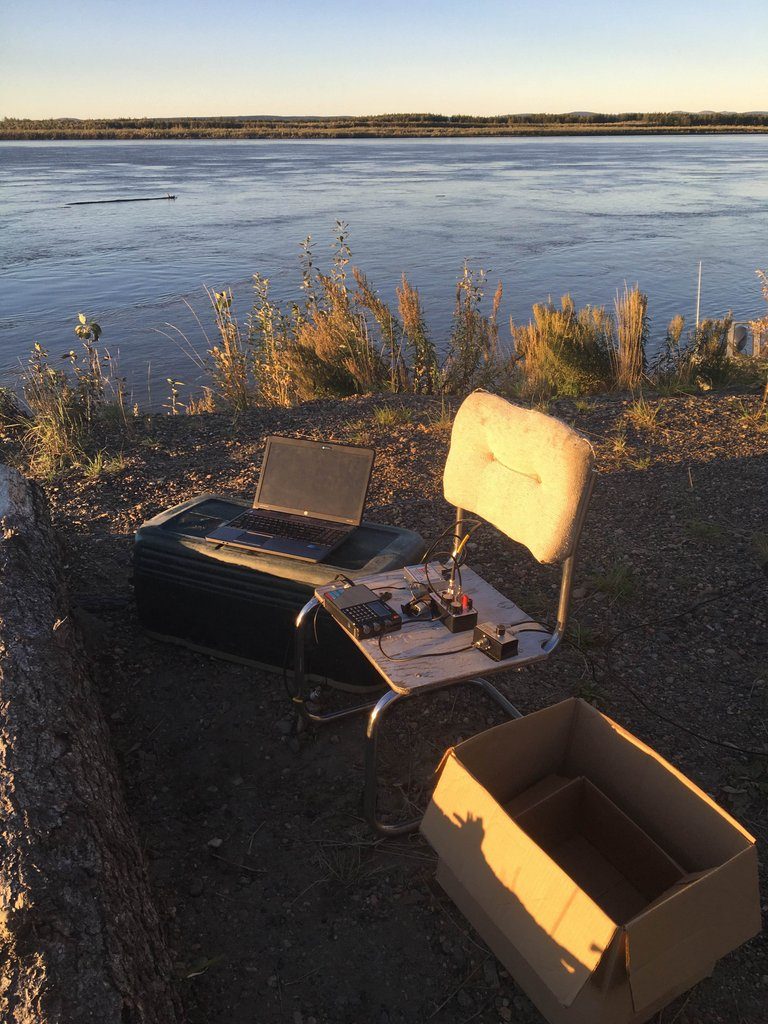
It’s been quite a while since I posted any logs. I picked out my best ones from the last 2 months.
Equipment: Tecsun PL-880, 225 foot long wires oriented for different directions, EmTech ZM2 Antenna tuner, DX Engineering RPA-1PLUS HF PreAmp and EmTech ZM2 antenna tuner.
5040 kHz, All India Radio Jaypore from 1641UTC to 1645UTC on September 22nd in the Oriya language with some singing and/or chanting. I would give this broadcast a SINPO Rating of 33343. The signal was overall on the higher side of fair but there ewas some static and noise with a light to moderate amount of fading and some digital data/pulsing kind of noise. Audio here: https://www.youtube.com/watch?v=rvtOZFbYMxo (Walker-AK)
7295 kHz & 7345 kHz, Radio Sahka via Yauktsk 1020UTC to 1030UTC on September 11 in Russian. What sounds like contemporary russian music is being played. 7295 is a bit louder and stronger for me, sometimes by a fairly noticeable margin most days but this time, the difference is hugely noticeable between the two signals. I would give these broadcasts a SINPO rating of 45455 I am rating this good as there was almost no atmospheric noise and very little fading! 7295 kHz audio here: https://www.youtube.com/watch?v=g24DkJgv0qc 7345 kHz audio here: https://www.youtube.com/watch?v=Ia4N62KB2gM (Walker-AK
7315 kHz, The Voice of Vietnam via Cypress Creek, South Carolina from 0100 to 0115UTC on September 22. The program begins with the incredibly recognizable and lovely VOV interval tune/intro signal. A female announcer gives a quick preview of the show and headlines then a news report begins.with a male. I would give this broadcast a SINPO of 34233. The signal was pretty fair, listenable but with lots of atmospheric noise/fading/static, but thankfully no interference. Audio here: https://www.youtube.com/watch?v=e_PH8MraW7A.
VOV also heard at 1624UTC on 7220 kHz via Hanoi with a traditional Vietnamese song and a SINPO rating of 33232. The signal itself was ok but there was a lot of noise, fading and at times, interference which resulted in my overall poor rating. The signal itself was ok but there was alot of noise, fading and at times, interference which resulted in my overall poor rating. Audio here: https://www.youtube.com/watch?v=G9Kf2AYVeDA .
1209 kHz via Hanoi at 1130UTC is heard at fair to good levels from with a little fading and noise but not bad overall. Audio here: https://www.youtube.com/watch?v=VIFVztEl1yM .
12005 kHz VOV heard via Woofferton on August 29 at 0230UTC with good signal. Audio here of 15520 kHz: https://www.youtube.com/watch?v=J6F0ktPTDuc
I have not heard the claimed VOV broadcasts in English on 5955 via Moosbrun or the 9550 broadcasts, wherever that comes from! (Walker-AK)
9445 kHz, All India Radio General Overseas Service from 1826 to 1830UTC on August 27th in English. Indian music followed by a sports program, co produced by AIR, BBC and Radio Australia.I would give this broadcast a SINPO rating of 45454. THe signal was pretty darn good and audio was good too. Only a slight bit of fading and ever so slight noise. Audio here: https://www.youtube.com/watch?v=1ka9mc7c_F8 (Walker-AK)
9650 kHz, Radio Guinea via Conarky from 2357UTC to 0035UTC in French. Lively Afro-pop type music and announcers talking in french. I would give this a SINPO Rating of 35333. The broadcast was moderately fair, the unique music made this broadcast a bit easier to pick out of the noise but it was moderately listenable. Audio here: https://www.youtube.com/watch?v=-lmG9ms3ucU (Walker-AK)
9870 kHz, All India Radio Vividh Bharati Service from 1728UTC to 1741UTC on August 27th. Stellarly awesome signal with some lovely indian music and female announcer. I would give this a SINPO Rating of 5555! Audio here: https://www.youtube.com/watch?v=dyJAJmwoE8I (Walker-AK)
9895 kHz, Radio Rossi via (???) from 0951UTC to 1002UTC on September 11. Enjoying some Russian music on Shortwave! I would give this a SINPO rating of 44344. I rate this overall as good because of the strong signal and overall high listenability signal/audio quality wise. If it weren’t for the slight fading and noise, this would be nearly a 55555. Audio here: https://www.youtube.com/watch?v=-XcsJEAgDuc
5900 kHz heard a day earlier with what sounds like a news or feature interview segment with more then one man talking in Russian at 1000UTC. Audio here: https://www.youtube.com/watch?v=WWEgjpT1vwU (Walker-AK)
I would give this a SINPO rating of 44343. This signal was on the lower side of good but the overall quality was the higher side of fair due to the fading, noise and slightly low modulation.
11735 kHz, Zanzibar Broadcasting Corporation via Dole, Zanzibar from 2049UTC to 2059UTC on September 5th. Some music playing, maybe middle eastern-like? somewhat lively tunes. A male announcer speaking, possibly in Swahili This is far from the best I log ZBC with, but also far from the worst I give this broadcast a SINPO rating of 44434. It was a fair to good signal with a bit of fading and choppy propagation but not bad. Audio here: https://www.youtube.com/watch?v=mn7o4G2iHSU (Walker-AK)
11750 kHz, Sri Lanka Broadcasting Corporation via Trincomalee, Sri Lanka from 1721UTC to 1725UTC on September 24th in the Sinhalese language. Unfortunately, I do understand what is being said other then it appears this is an interview or discussion program hosted by a woman with a male guest on the phone.. A friend who listened to the recording says she gives a station ID at some point. I would give this broadcast a SINPO rating of 34444. The signal was fair and there was no interference but fading was moderate and propagation was somewhat choppy. If the signal had been a bit stronger with a little less fading and better propagation, this would’ve been a very enjoyable signal to listen to. Audio here: https://www.youtube.com/watch?v=tfqEK4caKKo (Walker-AK)
12035 kHz, Voice of Mongolia via Ulaanbaatar, Mongolia from 0859 to 0908UTC on September 25 in English. My recording starts out with the carrier but no program audio yet. The interval tune begins, a male announces the name of the radio station. A female announcer comes on, welcoming people to the radio station. Frequency and broadcast schedule information is given out along with your website information. Another female announcer comes on and welcomes people to a New Edition of The Sunday Music Program. That female announcer reads a few news stories before a Mongolian song plays. I would give this broadcast a SINPO rating of 44344. Overall this broadcast was good because the signal was strong and with no noise or interference, just moderate fading and slightly choppy propagation. Audio here: https://www.youtube.com/watch?v=QpfoLtxkr70 (Walker-AK)
15275 kHz, Deutsche Welle via Issoudun from 1835 to 1838UTC on September 24 in French. It sounds like a news discussion/interview program with one man doing the large part of the talking. I would give this broadcast a SINPO rating of 45444. It was a pretty good signal with no noise or interference and only a slight bit more fading then my 1530 kHz reception of RFI on the same date and nearly same time from the same site with nearly the same target area. Audio here: https://www.youtube.com/watch?v=vTUzBk3FjeY (Walker-AK)
15300 kHz, Radio France International via Issoudun from 1837UTC to 1841UTC on September 24 in French. What sounds like a woman possibly interviewing a man. I would give this broadsast a SINPO Rating of 45444. The signal was very good, there was no interference and very little noise. Just a bit of fading and ever so slightly choppy propagation. Audio here: https://www.youtube.com/watch?v=w1sJs9P0Qrw (Walker-AK)
15320 kHz, Radio Taiwan International via Paochung, Taiwan from 0356UTC to 0359TC on September 8th. There is ALOT of static/atmospheric noise on the channel and the signal is very weak. I recorded 5 minutes worth and took the 3 best segments of the reception and put them together. If I didn’t know what to look for, this would be impossible to have nailed down In the first part of this one clip which is 11 seconds, a male gives out a frequency and time schedule. In the second part of this clip which is 9 seconds, the same man gives out what I assume is the PO Box mailing address for RTI. In the 3rd and final part of this clip, that same man says simply “Radio Taiwan International” I would give it a SINPO rating of 12112. Audio here: https://app.box.com/s/kkcoe959r5iphbjvvnjoz2n0qxslhevz. I have also heard RTI’s 9465 kHz and 11685 kHz english broadcasts in the 1500 to 1600UTC time frame usually at barely fair levels, but occasionally at fair to good levels. (Walker-AK)
15520 kHz, Voice Of Turkey via Emirler, Turkey from 1628UTC to 1650UTC on September 24th in English. The lovely Voice of Turkey interval tune played for about 2 minutes before time pips played followed by a male announcing the start of the english service and the frequencies and times to listen. A Female announcer then came on and read news stories for about 10 minutes before the letter box program came on with a male announcer reading listener letters and reception report. I give this broadcast SINPO rating of 44333. This broadcast was teetering between fair and good. If it wasn’t for the choppy propagation, this signal would’ve been alot more listenable. Audio here of 15520 kHz: https://www.youtube.com/watch?v=J6F0ktPTDuc I caught 9830 the next day and they played their interval tune for about 9 minutes before signing off about 10 minutes early!! 9830 kHz audio here: https://www.youtube.com/watch?v=3o7_LINGYMA . I’ve heard the 9515 kHz Turkey broadcast in English in early September as well at fair signal levels with somewhat choppy propagation. Audio here: https://www.youtube.com/watch?v=anc_8jznz_k (Walker-AK)
15590 kHz, Radio Thailand via Udon Thani from 02359 to 0015UTC on August 19. Superb signal with interval tune, station introduction and a news segment of national headlines.An ad or two was heard for local/regional businesses along with promotional announcement inviting advertising inquires and giving an email address. I would give this a SINPO rating of 55455. This broadcast is near perfect! Audio here: https://www.youtube.com/watch?v=mPQaA_RM74I. 9390 kHz heard in English on September 24th at 1937UTC with business and financial report information in english. SINPO of 54444 Almost as good as 15590 kHz and it should be noted that 9390 isn’t usually this good. Audio here: https://www.youtube.com/watch?v=JQnEexGUBoE (Walker-AK)
Paul Walker is the Program Director at Community Radio For Alaska: KIYU located in Galena, Alaska and is a regular contributor to the SWLing Post. Be sure to check out Paul’s YouTube channel and SoundCloud channel where everything he logs is recorded and posted. Click here to read his other contributions on the SWLing Post.


 This also affords me the opportunity to activate two “two-fers” for the