Category Archives: Shortwave Radio

DXing With Cumbre Episodes 717-721

DXing with Cumbre programs 717-721 are now available as mp3 downloads.

Here are the links:

DXing with Cumbre, for those of you who are not familiar, is an excellent program for anyone interested in the shortwave radio listening hobby. Best of all, it’s free to everyone!

The Gazette: CBC cuts gut cherished international service

More attention to the cuts at RCI from The Gazette of Montreal. This article features quotes from my friend, Sheldon Harvey of the CIDX and the International Radio Report:

(Source: The Gazette)

MONTREAL – Lost amid the auditor-general’s report last week on the F-35 fighter planes and Canada raising the retirement age to 67, was news of the impending demise of Radio Canada International – the CBC’s international service, for many a lifeline to Canadian culture and politics, from as far away as Hanoi or Rio de Janeiro.

While CBC, like other crown corporations and government departments, has to cut 10 per cent of its overall budget as a result of federal cutbacks, RCI, which is administered by the CBC but has long been its poor cousin, was told more than 80 per cent of its budget would be slashed, or $10 million of $12.3 million.

[…]“Upsetting,” “absolutely dreadful,” “shocking.” Those were the words listeners from Bulgaria to Missouri used to describe the end of RCI’s shortwave broadcasts after more than six decades on the air.

[…]Sheldon Harvey, the president of the Canadian International DX Club, and a longtime shortwave enthusiast, said the international service, over the decades, has gained a stellar reputation, ranked just behind the BBC World Service – despite its relatively tiny budget – for its balanced, neutral perspective.

It was never a propaganda tool, like the Voice of America, he said.

“They have table scraps thrown at them, yet are able to put together such high-quality broadcasts for people around the world,” Harvey said. “To see that tossed aside is really sad.”

[T]he idea that listeners in other countries can all go online is farcical, Harvey said. Only 22 per cent of the population in the developing world has access to the Internet, whereas anyone with a wind-up or solar-powered radio can receive shortwave transmissions. What’s more, governments can block the Internet – as they have in Iran, China and parts of the Arab world – all part of today’s Iron Curtain. But as was seen during the Cold War, it’s almost impossible to block shortwave frequencies. If the Soviet Union jammed some frequencies, broadcasters could simply switch to others, Harvey said, and the cat and mouse game continued.

Up till now, RCI also has served to introduce people to Canada during peacetime, whether as potential visitors, trading partners or immigrants, Harvey said. Shutting down its broadcasts is like closing down embassies and trade missions. “It’s waiting for people to come to us, as opposed to knocking on their doors … I don’t think the government realizes how much of the world they are cutting off by doing this.”

[…]“CBC’s mandate is to inform Canadians. But it’s important to have a broader perspective here. … If you believe this country has something to say, you can’t support these cuts.”

Read the full article at The Gazette.  We are actively posting news about the RCI cuts here on the SLWing Post and we also welcome your comments.

You will find the latest news by following our tag: RCI Cuts

The Gazette: Tributes to RCI pour in from around the world

A sampling of messages to The Gazette in response to the cuts to Radio Canada International (RCI):

(Source: MontrealGazette.com)

“This is absolutely dreadful. RCI has been one of the best shortwave radio stations and a much-needed voice of solid, objective reporting. I’ve been a loyal listener from the mid-1990s and I am really saddened by this news. I understand that the times are difficult and that cuts need to be made, but this is an incredibly short-sighted decision. The staff and RCI’s international listeners deserve better. Surely a plan can be devised that would keep RCI going.”

Nenad Knezevic, Belgrade, Serbia

“I’m at a loss for words. I’ve been listening to RCI on shortwave since the glory days of the 1970s. This is the loss of a great friend to me. I’ve enjoyed countless English broadcasts of RCI. I feel a huge emptiness upon losing Radio Canada International on shortwave!”

Charles Ermatinger, St. Louis

“What upsetting news! I listen to the Link at night — so insightful and enlightening! Why couldn’t the CBC have made cuts to the television instead? The Internet has usurped the role of the television, but radio is radio!!! I love the immediacy of radio! I will miss your voice most of all, Marc!”

elise db, Ottawa

“Shocking news, I didn’t really expect that the only reliable source of information about this beautiful country is going to be shut down. … Hope you’ll change your decision and continue to broadcast, even only in English.”

Georgi Bancov, Troyan, Bulgaria

“There are places on Earth that just do not have Internet access yet. Many remote locations, in poorer countries. SW radio is their only means to get by. I guess we’re just abandoning them, to stay current with costs and technology. Very sad. BTW, the broadcast from (the Sackville) towers can be heard everywhere on Earth.”

DM, New Brunswick.

“It seems very short-sighted to cease Canadian broadcasting to the world. The astronomical expense of the Olympics are always sold to host countries’ citizens as providing many intangible benefits … well surely the international broadcasts which promote and explain Canada, its systems, policies, culture, innovations and Canadian analysis of international events etc. is valuable to the government and the country. From what I’ve seen on radio discussions boards there will be no more broadcasts and most people laid off for the sake of $10 million … peanuts, methinks.”

BigC-Canuck

Read the full page of comments at The Gazette. We are actively posting news about the RCI cuts here on the SLWing Post and we also welcome your comments.

You will find the latest news by following our tag: RCI Cuts

Censorship in Djibouti: International broadcasters, take note

I just caught wind of a now all-too-familiar story in international broadcasting–this time, via Reporters Without Borders.

While I encourage you to read the full press release below, the summarized story is that Reporters Without Borders has launched a mirror web site for La Voix de Djibouti, an independent news source in Djibouti. Why? Because the regime in power in Djibouti, in an effort to stifle the free press, have decided to block the primary website of La Voix de Djibouti.

The article states (we add the boldface):

A Europe-based exile radio station that supports the opposition Renewal and Development Movement (MRD), La Voix de Djibouti, began by broadcasting on the short wave and then switched to being a web radio, but the authorities have blocked access to its website from within Djibouti.

The decision to move off of shortwave has, in essence, severely limited their freedom of the press and their listeners’/subscribers’ access to information. Reporters Without Borders is addressing this censorship by actively creating mirror sites of La Voix de Djibouti that are hosted outside of the blocked domains.

This is admirable, and we strongly support their worthy efforts in creating mirror sites.  However, this solution is, at best, full of holes:

  1. How do those who wish to follow the news find each new mirror site after it has been blocked?  And presuming they can do so, how long will this take to figure out?
  2. Will the website reader be tracked by the government and/or punished for attempting to circumvent imposed blocking? (Hint: Most regimes now have tools to do this: read this and this.) Has anyone considered these consequences to any individual  caught for circumventing a blocked site?
  3. What if the regime decides to simply turn off the internet? Can they do this?  Sure they can…and frustratingly, they may.

As we’ve stated here many times before, the Internet is a wonderful information resource and it is proliferating across the planet. But with the Internet, as with FM radio, cable TV and terrestrial TV, repressive regimes can and do hold the power button, as well as the ability to control the content, or even take it over.

Shortwave radio is comparatively immune to this, and moreover, is untraceable. When we eliminate the infrastructure that supports shortwave broadcasting (as is happening at RCI Sackville) we are throwing the baby out with the bathwater.

Poor child.

Full article as follows:

(Source: Reporters Without Borders)

4 April 2012–Reporters Without Borders has today launched a mirror site of radio La Voix de Djibouti’s website, http://lavoixdedjibouti.com, in order to help circumvent the government’s censorship and allow the population to have access to a news sources to which it is being denied.

The media freedom organization invites Internet users to go to http://lavoixdedjibouti.rsf.org in order to access an exact copy of the original site.

“As this is a country without media freedom, where only government propaganda is tolerated, we think it is crucial to help the population to gain access to other news sources,” Reporters Without Borders said. “While it is true that the level of Internet use is still low in Djibouti, it is not negligible, and use of social networks in particular is growing. The population will now be able to read critical news bulletins online.”

A Europe-based exile radio station that supports the opposition Renewal and Development Movement (MRD), La Voix de Djibouti began by broadcasting on the short wave and then switched to being a web radio but the authorities have blocked access to its website from within Djibouti.

So that independent news websites that are targeted by cyber-attacks and government blocking can continue posting information online, Reporters Without Borders has started mirroring sites. The first sites to be mirrored were those of the Chechen magazine Dosh and the Sri Lankan online newspaper Lanka-e News. The organization has also been urging Internet users all over the world to create more mirrors of these sites in a chain of solidarity.

Mirror sites can be used to circumvent blocking by governments. Although the government of Djibouti is blocking access to La Voix de Djibouti’s site, http://lavoixdedjibouti.com, by blocking the site domain name or the hosting server’s IP address, Internet users can still access the Reporters Without Borders mirror site, http://lavoixdedjibouti.rsf.org, because it is hosted on another server with another domain name.

The mirror site will be regularly and automatically updated with all the new content posted on the original site. If the mirror is itself later also blocked, the creation of further mirror sites together with a regularly updated list of these mirrors will continue to render the blocking ineffective in what is known as a Streisand effect.

Reporters Without Borders urges Internet users who want to help combat censorship and have the ability to host a site on a web server to follow suit. Send the URL of the mirror site you have created to wefightcensorship [at] rsf.org. The next mirroring operations launched by Reporters Without Borders will be reported on the @RSF_RWB and @RSFNet Twitter accounts with the #RSFmirror hashtag.

North Korea relying on shortwave radio listeners to verify upcoming satellite launch/orbit

NBC News space analyst, James Oberg, will be attending the launch of North Korea’s latest controversial satellite launch in person. As he points out, though, it will be shortwave radio listeners who first verify the success of the launch:

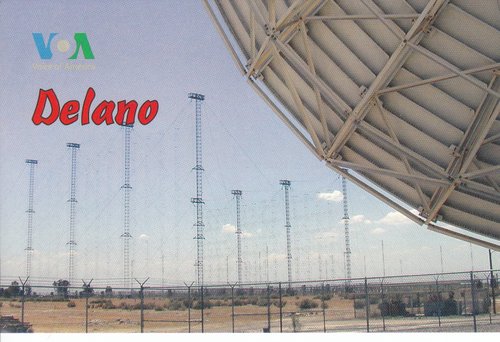
(Photo: VOA)

(Source: MSNBC)

The history of the first two North Korean satellite missions is also a heavy burden for the current campaign for “transparency.” That’s because, despite Pyongyang’s persistent insistence that both satellites were successfully placed in orbit, no sign of them has been detected by anyone in the Western world. No glint of reflected sunlight, no beep-beep of radio calls, no “bogey” blip of radar return. Nothing.

I do not expect any official revision of those old claims. What’s past is past. But the current promises of a renovation in public disclosure policy could be a sign that positive changes are ahead.

Probably the most critical move to establish credibility, aside from our visits, is to allow other outside observers to detect and subsequently announce their own of the satellite to be launched this week. And that could happen, with or without the North Koreans’ consent.

Far more authoritative than anything we report will be the post-launch detection of the satellite’s radio beacon by amateur radio operators in the outside world. Short-wave listeners are ideally placed to pick up such signals — first in Australia, and then along the west coast of South America, and finally up the east coast of North America. Only then will North Korea have its first chance to catch a fleeting signal, unless it managed an extremely long-range radio reception immediately after launch.

Read the full article at MSNBC.

Know the frequency? Please comment and I will update this page.

RCI’s Sackville towers to be featured in film

(Source: CBC)

A Moncton artist is now working against the clock to film the Radio-Canada International shortwave towers in her latest film project.

Budget cuts at CBC announced last week mean the towers, near Sackville, N.B., will soon be shut down, but it’s not known exactly what will happen to the towers themselves.

Amanda Dawn Christie said she remembers coming and going from Moncton and the towers signifying that she was almost home.

“Whenever I would drive in, I would just be filled with this exhilaration and I don’t know if it’s the high voltage. Like, some people get headaches and nauseous; I would get exhilarated,” she said. “So I don’t know if it was my interest or if it was the high voltage, but I definitely had this sense of ‘wow.'”

She said she’s heard similar stories as she’s started interviewing people for her feature film.

Christie’s been studying the towers for years.

She even created a sculpture on the marsh near the towers — a kitchen sink designed to catch radio waves — a phenomenon often reported by locals.

Now she’s collecting stories of people who call the towers their landmark, or a tightrope school because of the wires, or the connection to Africa or the Arctic.

Christie said she’s particularly fond of the sight at dawn and dusk.

“The sky’s kind of pink and blue, and the lights are on but you can still see all the towers and the wires. It’s very magical,” she said. “If you don’t know what it is, you’re filled with wonder. And the thing is, if you do know what it is, you’re still filled with wonder.”

Instead of the shortwave towers, RCI will broadcast internationally online.

In truth, even when RCI’s Sackville, NB site is decommissioned, I doubt the towers will be brought down immediately. It’s actually quite an engineering feat to dismantle these. I would hope RCI offers other broadcasters the opportunity to dismantle and use them. VOA (or the IBB) had success doing this at their Greenville, NC transmission site (Site A).

Grundig G2 Reporter now shipping

The Grundig G2 Reporter is now shipping from Universal Radio. The price is $149.95.

It’s worth noting that Universal has a lot of images of the radio, including photos of the box and contents.

I’ll post reviews of the G2 in the SW Radio Index as they become available. Have a G2 already? Please share your impressions.