Category Archives: Shortwave Radio

Saturday, from Bulgaria, Dr. Elliott will control your web browser

As DRMNA.info says:

“Let Dr. Elliott take control of your PC!”

I agree.

On several occasions now, Dr. Kim Elliott has transmitted digital messages via shortwave radio in an assortment of digital modes. We’ve mentioned this in the past (and we even posted a tutorial on decoding his WBCQ message).

Early Sunday morning (UTC–Saturday night for many) The Mighty KBC will once again broadcast some of Elliott’s digital messages from 00:00-02:00 UTC on 9,450 kHz. This time, they’ll even broadcast two different messages in two different modes simultaneously (details below). No Johnny, this isn’t your granfather’s shortwave:

(Source: Kim Elliott)

The Mighty KBC, 21 Nov 2012: “This UTC Sunday, 25 November, more digital text during the broadcast of The Mighty KBC at 0000 to 0200 on 9450 kHz. At about 0130 UTC, PSK125 will be centered at 1300 Hz on the waterfall, MFSK32 at 2200 Hz. Decode one from the radio, and the other from your recording. Just before 0200, only one mode, MFSK32, will be transmitted, centered at 1500 Hz. For this message, please have Fldigi and Flmsg (both available from www.w1hkj.com), as well as your web browser, all running on your PC. If all goes well, at the end of this transmission, the message should pop up in new windows of Flmsg and your browser. (In Flmsg, click Configure, then Misc, then NBEMS, then check Open with flmsg and check Open in browser.)

[Elliott’s comments] “UTC Sunday 25 November at 0000 to 0200 UTC is the same as Saturday evening, 24 November, 7 to 9 pm Eastern Time in North America. This transmission on 9450 kHz is via a leased transmitter in Bulgaria.

To decode the two text transmissions, download Fldigi and Flmsg from w1hkj.com. Configure Fldigi to work with your PC’s sound card.

Also, in Fldigi, click Configure, Misc, NBEMS. Under NBEMS data file interface, click Enable. Under reception of flmsg file, click Open with flmsg and Open in browser.

During reception, patch audio from the earphone or line out jack of your radio to the microphone input of your PC. You may have to experiment a bit with audio settings. You should see a “waterfall” on your Fldigi display.

If all goes according to plan, when the text message just before 0200 UTC (9 pm Eastern) is completely received, it should pop up in a new window of your default web browser.

By the way, if you haven’t noticed, I’m a big fan of The Mighty KBC. Not only do they broadcast an excellent mix of music on shortwave radio, but they’ll also blast these digital messages to their listeners. Thanks, KBC!

Again, please comment if you decode these messages!
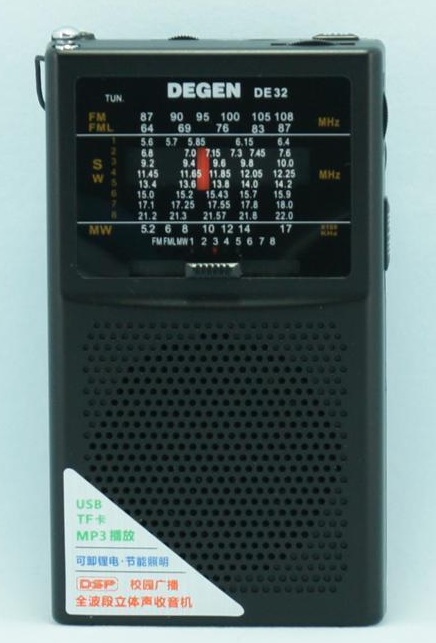
The Degen DE32 combines analog styling with MP3 features

The Degen DE32

I just ordered the Degen DE32–a new addition to the Degen shortwave product line. The DE32 is unique in that it has a (nearly retro) analog radio dial for tuning across the FM/AM/Shortwave bands, yet features MP3 playback.

Details are a bit scarce, but I have to assume that this is an analog radio as I see no mention of DSP in the description. (Though building on the DE321’s DSP chip could make sense.) It appears that MP3 recordings can be played back from an SD card and/or potentially from internal memory. Since there’s no digital display, sorting through recordings will be similar to using the iPod shuffle.

At $27 US shipped from Hong Kong, it’s certainly affordable, and my expectations will be adjusted accordingly. Still, I’m eager to see what this little radio has to offer. Check back as I will publish a review soon–simply follow the tag: DE32.

Thanks, Michael, for bringing this little radio to my attention!

Shortwave Radio Recordings: Voice of Greece and hours of music

This past Friday and Saturday evenings I had an opportunity to record several hours of music from the Voice of Greece. I am continually amazed with the audio fidelity from a station that is well over 5,000 miles away.

You can listen to the recordings below or download the mp3 files on Archive.org (who graciously hosts and archives all of our radio recordings).

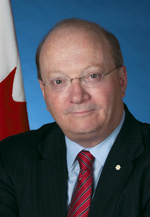
Media Network Plus interviews RCI shortwave supporter, Senator Hugh Segal

Senator Hugh Segal

PCJ’s Media Network Plus interviewed Senator Hugh Segal last week.  As we mentioned previously, Senator Segal made a motion that the CBC be made accountable for the unfair proportion of cuts imposed on Radio Canada International earlier this year.

I found Segal’s thoughts regarding the future of Radio Canada International articulate and accurate. If you’ve been following the RCI Sackville story, you will appreciate this interview as well.

You can listen to the interview on PCJ Media’s website, or by downloading the mp3 by clicking here.

Again, if you haven’t signed our petition to save Radio Canada International’s Sackville transmission site, please consider adding your voice and sharing this with your friends! Click here to sign the petition!

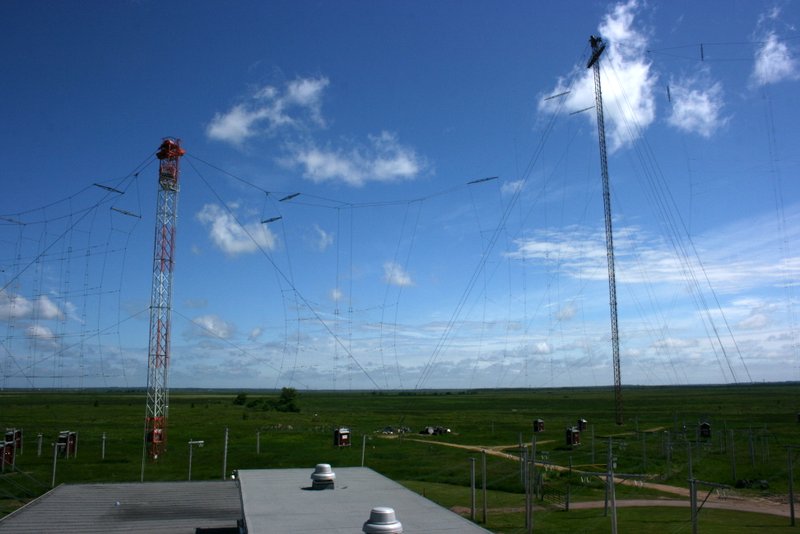
Sackville still broadcasting CBC North Quebec Service on 9,625 kHz…for now

The remaining curtain antenna faithfully broadcasting the CBC North Quebec relay

I just received confirmation that the Sackville, NB transmission site of Radio Canada International will continue broadcasting the CBC North Quebec service on 9,625 kHz until all of the FM relays in North Quebec have been tested and placed into service.

To be clear, contrary to the implication of the recent CRTC ruling, the Sackville site may continue broadcasting for a few more days or weeks, depending on progress with the FM relays’ implementation.

The remaining staff at Sackville have converted the site to run two transmitters and two antennas (for redundancy) for the North Quebec Service on 9,625 kHz via remote operation. Nothing else is being broadcast our of the Sackville site.

Have you singed our petition to save Sackville from being dismantled? Now would be the perfect time:


“Tuning In” Radio 4 documentary on the history of early radio in Britain

Tuning In, a history of early radio in Britain, will be broadcast November 3rd on BBC Radio 4. If you don’t live in the UK, you can listen live on the Radio 4 website where they will also post an archive of the show. (Note that some archived shows are only available for a limited time.)

(Source: Radio 4)

The press fulminated, the enthusiasts were frustrated, and the radio manufacturers fumed. Despite the fact that Marconi had invented radio before Queen Victoria had celebrated her Diamond Jubilee in 1897, radio in Britain took another 25 years to begin an official service to listeners. But when, on November 14th 1922 the British Broadcasting Company’s station at Marconi House radiated to an awaiting nation “This is 2LO calling” for the first time under the company’s name, it marked the start of the first and most distinguished public-service radio station in the world.

As part of the celebrations to mark nine decades of the BBC, historian Dominic Sandbrook explores the long and involved pre-BBC history of radio in Britain, how Britain’s broadcaster got going and developed into an institution dedicated to entertainment, education and information, discovers why Australian diva Dame Nellie Melba was involved, and how the improbably-named Captain Plugge made his first British commercial broadcast from the roof of Selfridges department store in London. From Marconi to Savoy Hill via an old army hut in Essex, the story of the early radio in Britain.

CRTC revokes Sackville’s CBC North license

A few of RCI Sackville’s curtain antennas

Occasionally, I have the opportunity to report good news on the SWLing Post. Unfortunately, this news is of a very disappointing turn:  According to the CBC’s plan, Sackville’s shortwave broadcasting license for the CBC North Quebec service has been revoked by the CRTC. This was announced today on the CRTC website; it is an eventuality in the wake of the 80% cut Radio Canada International received in April of this year.

What’s most sad about this revocation is that communities in North Quebec and Northern Canada who rely on this service, many representing First Nations (American Indians), probably do not even realize that they’re about to lose that service–the only service capable of bringing news to their vast Northern region.  The “replacement” for the service will be low-powered FM, which will just not have the same reach as shortwave.

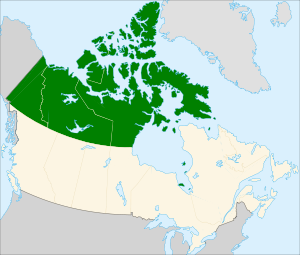
If the three provinces that make up north Canada were a country, it would be the 7th largest country in the world by land mass. Five low power FM transmitters cannot cover this region. (Map: WikiMedia Commons)

A closer look

How vast is this territory? After all, we’re talking about an area where most of us have never traveled. Well, the North Quebec administrative region, alone, is 747,161 sq km (288,480 sq miles)–that’s about the size of Afghanistan, or 200,000 sq km larger than France.

The three provinces which make up northern Canada have a combined area of 3,921,739 km2 (1,514,192 sq mi)–an area larger than India. If northern Canada were a country, it would be the 7th largest in the world.

The Sackville shortwave service covers the entire North Quebec region with ease, and probably most of Northern Canada.

FM can’t replace this service

The CRTC decision states:

The CBC also requested the revocation of its broadcasting license for the shortwave radio undertaking CKCX-SW Sackville, New Brunswick. It indicated that the new transmitters will ensure that the population of the aforementioned locations [Puvirnituq, Kuujjuarapik, Inukjuak, Salluit, and Kuujjuaq] continues to be served by the news and regional information programming of its Radio One service when CKCX-SW Sackville ceases operation.

Five low-power FM stations, one for each of these communities will, at best, cover a total land area of 500 square miles combined.  That equates to a land area about the size of New York City. Note that this is a very generous figure and assumes ideal FM transmission conditions.  Clearly, vast areas of the enormous region–where people live, travel, or hunt–will not be covered; in these areas, radios which once received programming from Sackville will receive only static.

Our petition lives on

Last week, I spearheaded a petition to Canada’s Heritage and Public Safety Ministers and the CBC management asking them to stop dismantling the RCI Sackville site –at least, we asked, please keep this site in a state that could support Canada’s domestic security and the North Quebec Service. While I’m fully aware that this petition is unlikely to alter the course of this previously-made decision (made before anyone could voice disagreement), the petition could still make a positive difference.

There is still time to save Sackville from being dismantled. This petition makes it clear that there is a large community of people who are aware of this arbitrary cut. Only last week, Senator Hugh Segal made a motion on the senate floor that the CBC be made accountable for their unfair 80% cut to RCI (while the whole of the CBC was only cut 10%).

This petition also validates the efforts of those who work at the Sackville site, with whom I’ve been in contact.  They are humbled and appreciative of the extraordinary outpouring of support, in the form of nearly 500 signatures from individuals all over the world. Among the countries represented:  the United States, Mexico, India, Taiwan, and various countries in both Europe and Africa.

If you haven’t already, I encourage you to sign the petition and share it with your friends.