Shortwave listening and everything radio including reviews, broadcasting, ham radio, field operation, DXing, maker kits, travel, emergency gear, events, and more
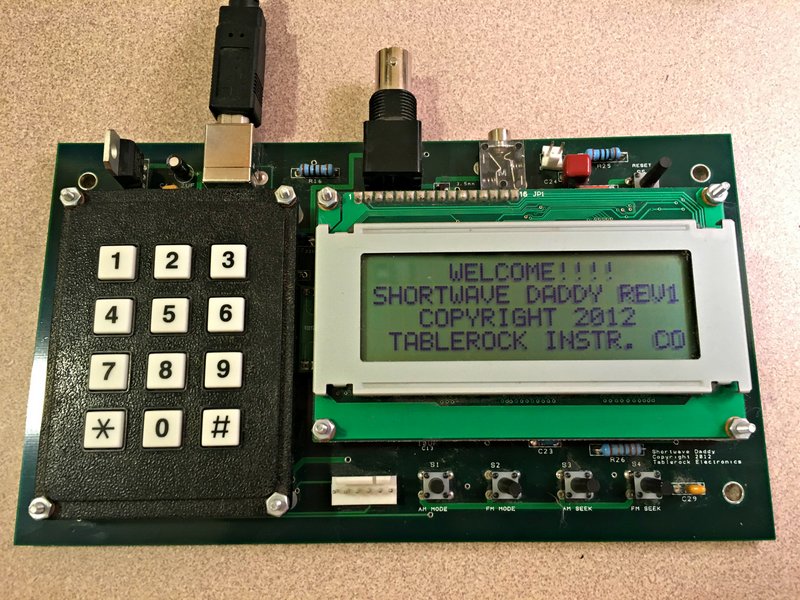
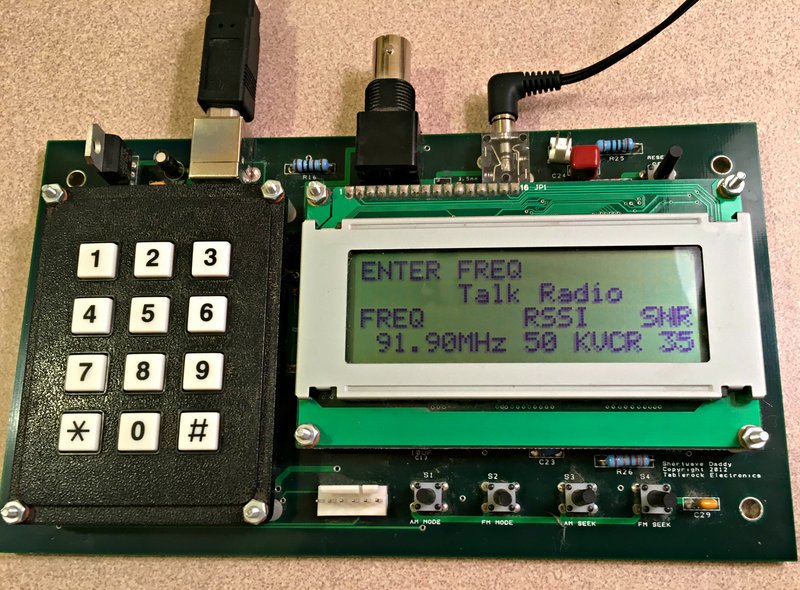
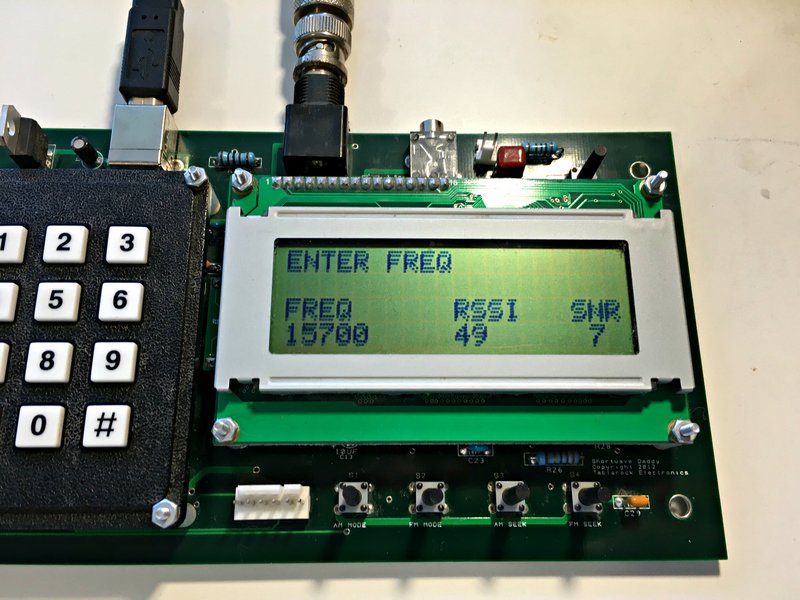
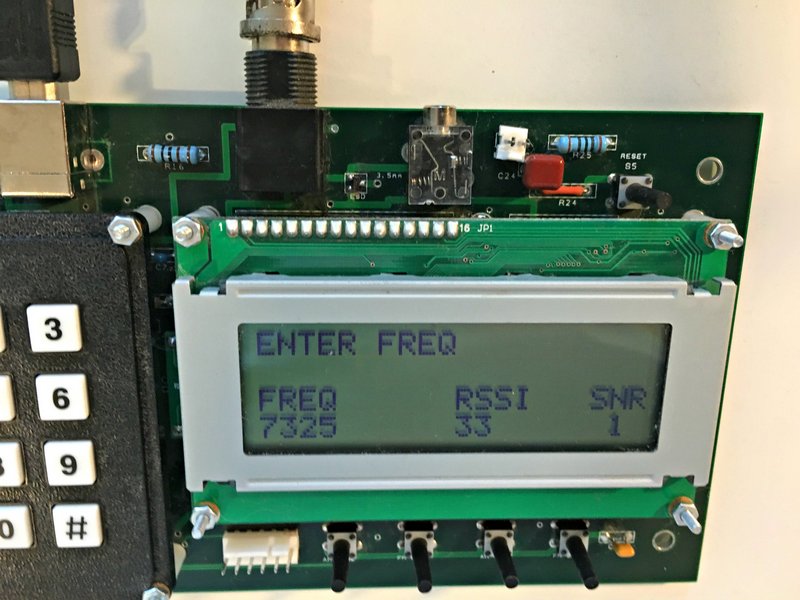
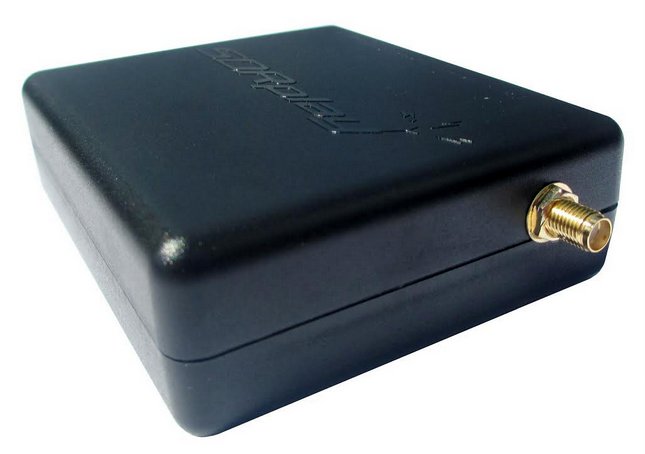
It’s not often I find a shortwave radio I’ve never heard about–so you can imagine my surprise when I looked at 73 Radio Row this morning and found the Shortwave Daddy software defined radio for $159.00.
How did I miss hearing about a radio called the Shortwave Daddy when it was on the market a few years ago?
Here’s the description lifted from 73 Radio Row:
The Tablerock Shortwave Daddy software-defined receiver connects to your computer to open up the exciting world of AM-FM-Shortwave radio. It is powered solely by your computer’s USB port via a connecting cable, which is provided. Your computer provides the audio. Except for the antenna, no external connections are required. Simply plug and play. Fully tested. The Shortwave Daddy is no longer produced. It originally cost $289.99.
For details, we strongly encourage you to read the Shortwave Daddy’s manual by clicking here.
The radio covers: Worldwide AM Band 520kHz – 1710kHz Shortwave Bands 2.3MHz – 26.1 MHz Worldwide FM Band 64MHz – 108 MHz
For computer compatibility specifications, click here.
If I didn’t have so many radios on my review table right now, I’d buy this just to review it on the SWLing Post.
Post Readers: Anyone own a Shortwave Daddy receiver? If so, please comment!
Many thanks to Jon Hudson with SDRplay who noted that, yesterday, the beta Windows version of ADS-B for SDRplay was released:
“We now have an updated beta version of ADS-B for Windows. This is based upon the 16bit Mutability version of dump1090 developed by Oliver Jowett and unlocks the full 12 bit performance of the RSP1. People should see a significant performance improvement over the dump1090_sdrplus version, which was based upon 8 bit code. Go to http://www.sdrplay.com/windows.html – as with the recent update on Raspberry Pi, it supports both 2MHz and 8MHz demodulator modes. We recommend you uninstall the previous version (if you had it) before installing this one. Performance should be better than before. This is still in beta so any feedback or comments to [email protected] is welcomed.”
SDRplay announces the acquisition of Studio 1 SDR software
SDRplay Limited has today announced that it has reached an agreement with Sandro Sfregola, (formerly CEO of SDR Applications S.a.s.) to acquire all Rights, Title and Interest in Studio 1 a leading software package for Software Defined Radio applications.
Jon Hudson, SDRplay Marketing Director said: “We are delighted to have reached this agreement with Sandro to acquire Studio 1. Studio 1 is the perfect complement to our SDR hardware products and gives us the ideal platform to deliver a complete class leading SDR solution for our customers. We look forward to working with Sandro and further developing Studio 1 to unlock the full capability of our current and future products”.
Hudson added: “Studio1 has established a strong customer base with users of many other SDR hardware products. Studio 1 will continue to be available as a stand-alone product from WoodBoxRadio http://www.woodboxradio.com/studio1.html for the foreseeable future , but we also look forward to further developing Studio 1 to specifically benefit present and future owners of our products”
Sandro Sfregola added: “I am very pleased to have reached this agreement with SDRplay. The long term future for SDR lies in complete end to end solutions and I feel the SDRplay RSP combined with Studio 1 software gives users an outstanding combination of performance and affordability”.
About Studio 1:
Studio1 was developed in Italy by SDR Applications S.a.s. and has hundreds of happy customers around the world.
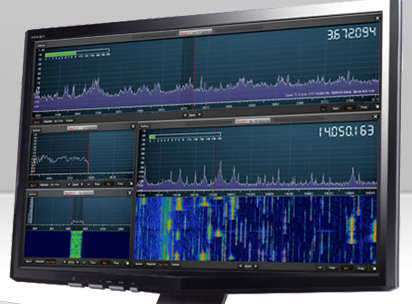
Studio 1 is known for its user friendly stylish GUI, CPU efficiency and advanced DSP capabilities, including features not
Of course, I believe this is a very good move for SDRplay. Studio 1 is a very well-respected application and, though I’ve never tested it myself, I’m very impressed with it’s interface. I’ve also received many positive comments about Studio 1 from Perseus owners.
This will give SDRplay a great platform to have native SDR applications for their current and future products. I’m sure they’ll continue to support and develop Studio 1 for all of its supported receivers:
This year, I have a lot of portable radio play in mind as I travel across the continent. At some point, I even plan to spend several days in an off-grid cabin on the coast.
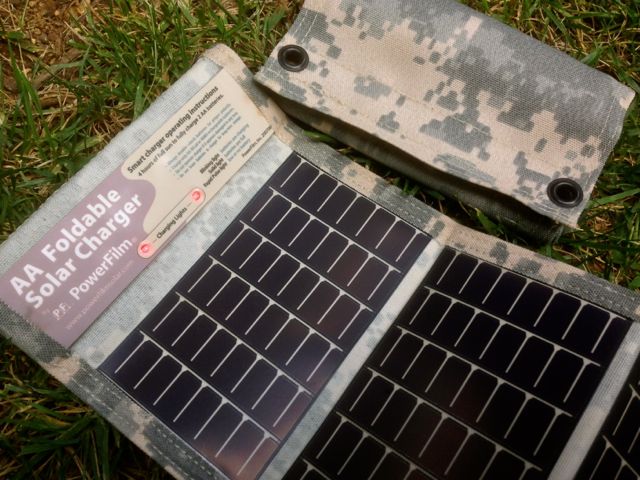
In the past, I’ve powered my 12 VDC ham radio transceivers with a system comprised of three PowerFilm solar 5 watt foldable PV panels (see below), a Micro M+ charge controller and several gel cell type sealed batteries (a couple 7 Ah and one 20 Ah).
The system works well, but the batteries are a little heavy and unhandy when I want to hike into a remote site or play radio on the beach, for example.
In terms of receivers, my portables (like the Sony ICF-SW7600GR, Tecsun PL-660, etc.) simply use AA batteries which I charge with PowerFilm AA PV chargers (see above). My CommRadio CR-1a has an internal battery that will power it for hours at a time.
Power is much less of an issue with receivers because they’re quite resource efficient.
I mainly need a system to power my QRP ham radio gear, and that’s where I could use your experience!
Wish list
Charge controller
I need a new charge controller since my Micro M+ (no longer produced) is now being used to power a remote antenna tuner.
Of course, I’ll need an inexpensive charge controller that doesn’t produce RFI (radio interference).
It would be an added bonus if the charge controller could also charge my batteries when grid power is available.
12 VDC Battery packs
I’d like something relatively lightweight and safe.
Note: LiPo packs worry me, especially since I had one (an early GoalZero model) quite literally melt down and burn up on my bed only a few hours after bringing it back from an eight hour flight a few years ago. Scary!
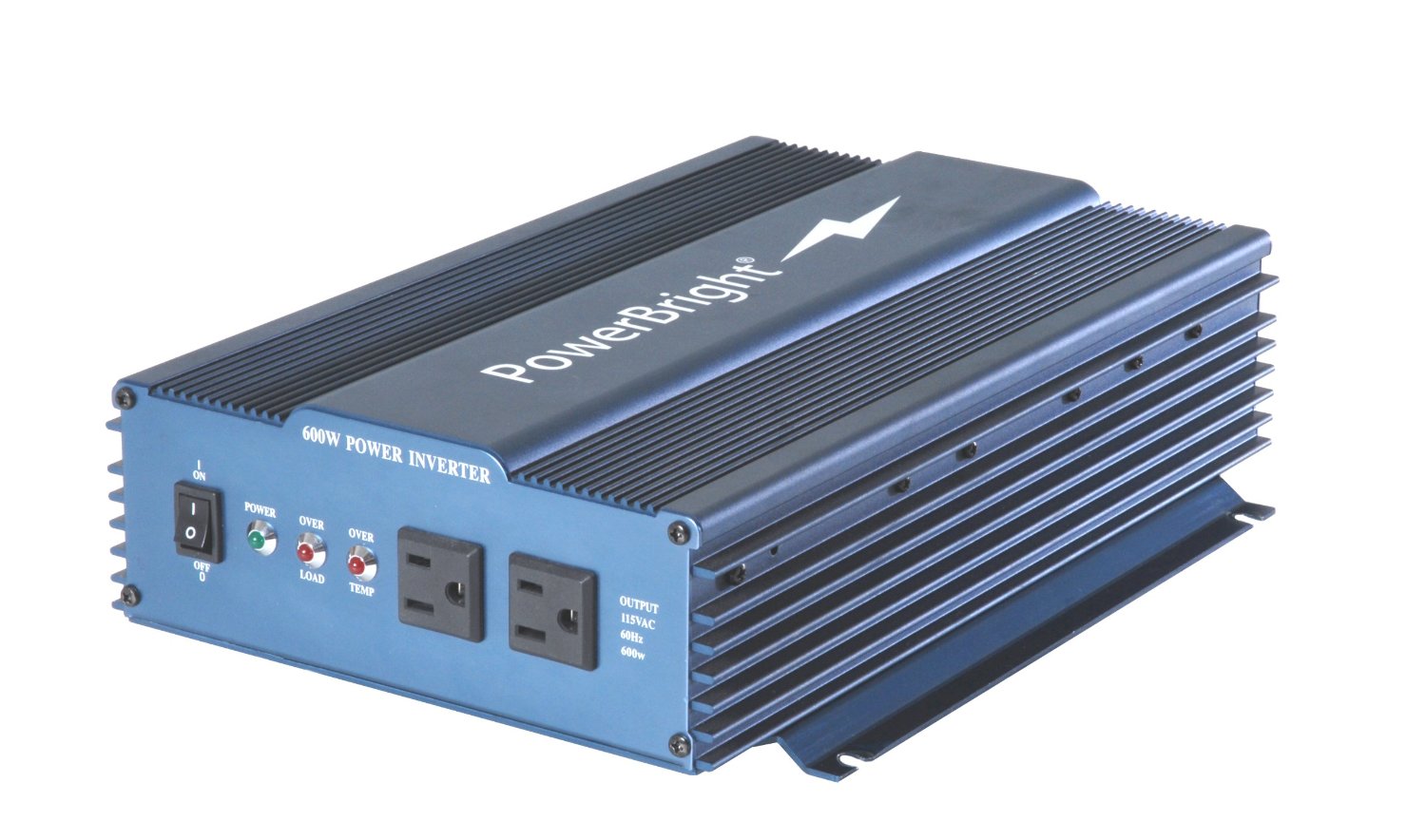
Pure Sine Wave Inverter
I’d also like a small, efficient pure sine wave inverter that I I could connect to my largest battery and power my laptop for extended SDR spectrum recording sessions while off-grid.
I’d love a recommendation from someone who uses one and can confirm a model that doesn’t create radio interference while operating.
Recommendations?
Post readers: Please comment with your recommendations and include model numbers and links if possible. Thank you in advance!
In the past, receiver shoot-outs in which I’ve provided sample audio for “blind” comparison––meaning, the listener does not know which audio sample is associated with which radio––have produced particularly positive feedback from Post readers.
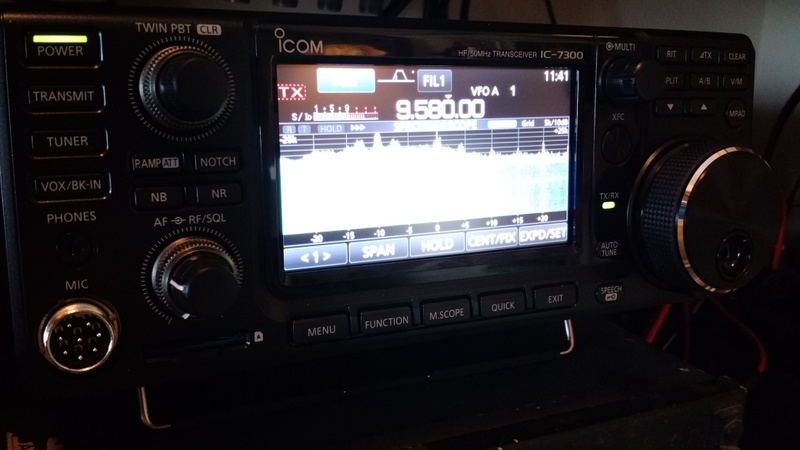
I have a number of SDRs (software defined radios) in the shack at the moment, but I picked the Excalibur because it’s the closest in price ($900 US) to the IC-7300 ($1500) as compared to my Elad FDM-S2 ($520) or the TitanSDR Pro ($2500).
Recording notes and disclaimers
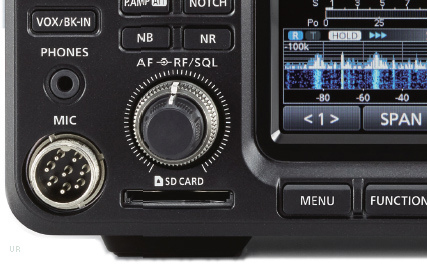
Both the WinRadio Excalibur and the Icom IC-7300 offer native digital audio recording (nice touch, Icom!). The Excalibur simply records the AF to a file on my PC’s hard drive, while the IC-7300 records the audio to an SD card which I can later transfer to my PC.
I’ve been using the Excalibur since 2012, so I’m very familiar with its recording feature. I was not, however, familiar with the IC-7300’s digital recorder, so prior to making recordings, I checked to make sure its recorded audio was a fair representation of its live audio. To my ear, the IC-7300 recorded audio was nearly identical to that of the live audio, so I used the 7300’s internal recorder rather than one of my external recorders.
Both receivers shared my large outdoor omni-directional horizontal delta loop antenna for each test.
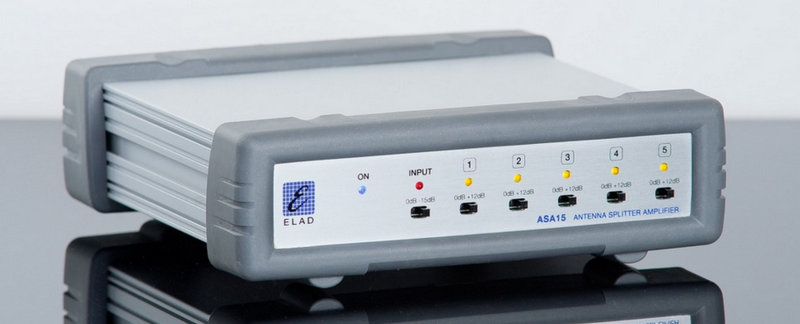
The Elad ASA15 Antenna Splitter Amplifier
To keep the comparison on as equal footing as possible, the receivers shared the same antenna through my Elad ASA15 antenna splitter amplifier. Though the ASA15 has both 12dB amplification and –15dB attenuation, I employed neither.
The ASA15 allowed me to make the following recordings simultaneously.
In each case, I tried to set up both radios using the same filter widths, gain, AGC settings, and (as much as possible), audio level. I didn’t engage a noise-reduction feature on either rig.
Note: the only exception to the radios’ equal treatment was in the AM mode recordings, in which I used the WinRadio’s AM Sync (AMS) mode. Why? Frankly speaking, 99% of the time during which I use the Excalibur, I do employ its AMS mode as its AM mode often sounds “hot” and over-driven when band conditions are as noisy, as they were last night.
The IC-7300 does not have AM synchronous detection (AMS mode), but I felt it compared very favorably to the Excalibur in AMS mode. The IC-7300 would have easily beat the Excalibur in this test had I only used the Excalibur’s AM mode. In the end, as a shortwave listener, the goal is to compare the total capabilities of broadcast performance between the two receivers (thus using sync mode if available, to maximize broadcast listening performance).
Please vote!
At the end of this post, I have an embedded a survey in which you can vote for the sample recordings you like best. Each recording is clearly labeled to denote that it’s either from “Radio A” or “Radio B” (I had my wife draw names from a hat to determine which radio would be labeled as A or B).
Since there are quite a few recordings, I’d suggest jotting down your notes separately before completing the survey.
The following recordings were made on the 40 meter ham radio band yesterday evening. Both radios have the same filter width: 250 Hz in CW, 3 kHz in SSB.
Note that the following mediumwave recordings were made during the morning hours (grayline). The strong station is the closest AM broadcaster to my home; it’s not a blow-torch “Class A” type station, merely the closest local broadcaster.
In the “weak” sample, I tuned to 630 kHz, where multiple broadcasters could be heard on frequency––but one was dominant.
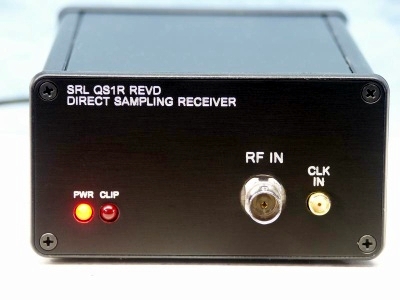
Many thanks to SWLing Post contributor, Ken McKenzie, who noticed the following message from Phil Covington (of Software Radio Laboratory LLC) on the QS1R Yahoo group:
I am working on a replacement for the QS1R that will be less expensive, yet use updated components. I am hoping to have them in production by the end of March.
Ken noticed that the message was originally dated about one month ago, so I’ll follow-up with Phil and see how much progress has been made. The QS1R was a well-respected SDR that had been on the market for several years. It would be great to see an updated version on the market.