The Mighty KBC is moving to 7,375 kHz

MightyKBCTruck

I just received word that The Mighty KBC is moving frequency from 9,925 to 7,375 kHz starting this Sunday September 7, 2014, 00:00 – 02:00 UTC.

The Mighty KBC’s Giant Jukebox is an easy catch in North America–even on a modest portable radio. Make the Giant Jukebox a part of your Saturday evening (or Sunday morning) entertainment.

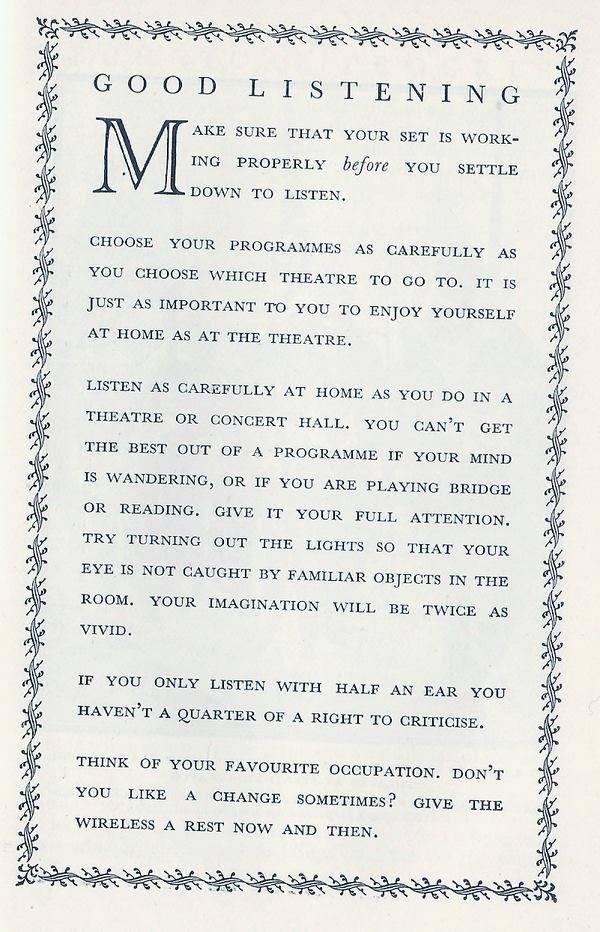
How to listen: A 1930 BBC radio manual

BBC-Radio-Manual

Many thanks to David Goren for sharing this article from Open Culture:

A comparison between the invention of radio and that of the Internet need not be a strained or superfical exercise. Parallels abound. The communication tool that first drew the world together with news, drama, and music took shape in a small but crowded field of amateur enthusiasts, engineers and physicists, military strategists, and competing corporate interests. In 1920, the technology emerged fully into the consumer sector with the first commercial broadcast by Westinghouse’s KDKA station in Pittsburgh on November 2, Election Day. By 1924, the U.S. had 600 commercial stations around the country, and in 1927, the model spread across the Atlantic when the British Broadcasting Corporation (the BBC) succeeded the British Broadcasting Company, formerly an extension of the Post Office.

Unlike the Wild West frontier of U.S. radio, since its 1922 inception the BBC operated under a centralized command structure that, paradoxically, fostered some very egalitarian attitudes to broadcasting—in certain respects. In others, however, the BBC, led by “conscientious founder” Lord John Reith, took on the task of providing its listeners with “elevating and educative” material, particularly avant garde music like the work of Arnold Schoenberg and the Second Viennese School. The BBC, writes David Stubbs in Fear of Music, “were prepared to be quite bold in their broadcasting policy, making a point of including ‘futurist’ or ‘art music,’ as they termed it.” As you might imagine, “listeners proved a little recalcitrant in the face of this highbrow policy.”

Continue reading…


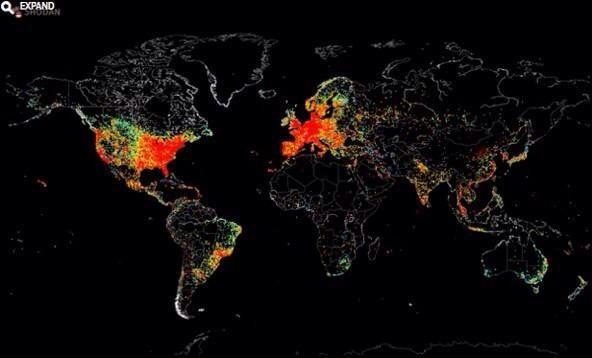
A map of every device connected to the Internet

(Source: John Matherly, via Gizmodo)

(Source: John Matherly, via Gizmodo)

SWLing Post reader, Mehmet Burk, shares this tweet from Sherry Rehman:

Many thanks, Mehmet!

Though this map may not be completely accurate since IP addresses in IPv4 can have thousands of devices behind a single IP, I believe it is a solid reflection on where the Internet is(n’t). Note that Africa is still very much in the information dark; shortwave and FM radio fills this void 24/7 in many rural communities.

Editor in Chief leaves Radio Netherlands

RNWMany thanks to Jonathan Marks, who shares this article from the populist Dutch daily newspaper De Telegraaf on Saturday.

If you can’t read Dutch, here’s a link to the article via Google Translate.

I believe RNW has struggled with identity and purpose since abandoning  all radio broadcasting and most programming in 2012. I’m still confused as to why they dropped The State We’re In; an award-winning program which had a loyal listenership and could have stood on its own.

Stack Exchange radio Q&A site

SX-99-Dial

London Shortwave writes:

I’ve just discovered that there is an Amateur Radio equivalent of the StackOverflow website (a Q&A website for programmers where answers are upvoted/downvoted according to a number of strict guidelines, ensuring answer relevance and quality).

http://ham.stackexchange.com

After a quick scan it seems that it contains many useful answers that are also relevant to SWLs, for example:

http://ham.stackexchange.com/questions/606/can-i-reduce-rfi-noise-at-the-antenna

Very cool! With over 630 questions ham radio questions so far, there are many answers that can help SWLs. Thanks for sharing this, LS!

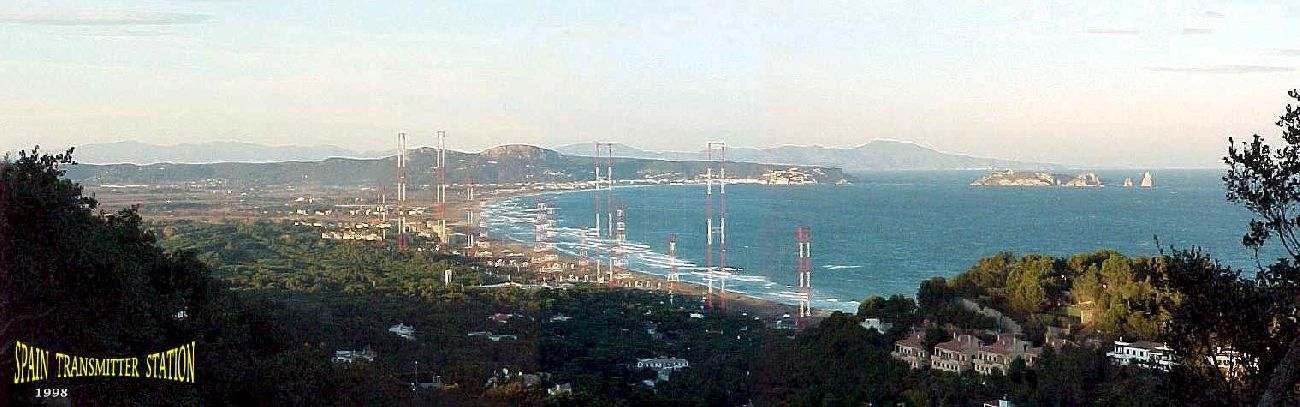
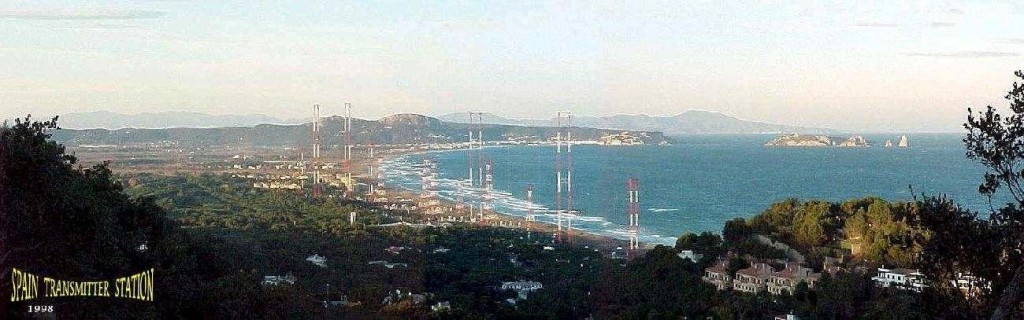
Playa de Pals transmitter site history and documentary

Photo courtesy: http://www.radioliberty.org

Photo courtesy: http://www.radioliberty.org

In response to Listening to WWV at the source, SWLing Post reader, David (EA4998URE SWL) comments:

What a “coincidence”. Hopefully, before the summer holidays officially end, I will be off to another shortwave transmitter site. Well, to the remains of it. I will be visiting the former RFE/RL (and VOA in the last years of operation) site in Playa de Pals, near the Catalan city of Girona and also very close to my main QTH in Barcelona. The Pals RFE/RL site was from where a 1MW signal was transmitted by feeding the same audio signal to 4 Continental transmitters.

Their output signals where put in phase, then the big Group D dipole curtain was divided into two “halves” by switching the feed lines in the appropriate way. Each half of the curtain received 500KW from two transmitters. So the total was 1000KW, or 1MW. If we add the antenna gain, the ERP was in the order of several megawatts. This was a signal directed to Eastern Europe, and more specifically to Moscow, via single-hop propagation. I suppose receivers in Moscow released plenty of smoke and had to be replaced every time they were tuned to a RFE/RL signal from Pals. Hahaha!

The curtains were demolished in 2006 and because the place is abandoned now and has been repeatedly sacked, the station buildings are in a very poor situation, specially in the inside. Almost no radio hardware survives, but what is still there is quite interesting. […]

There is an excellent website (www.radioliberty.org) which is a virtual museum of all things related to the Pals station. It was created and is maintained by a former worker of the station. The language in the English version of the website is a bit “macaronic” in some parts of the site, but I think this is a minor issue given the excellent amount of information kept there.

There is also a YouTube channel (https://www.youtube.com/user/PalsRadioStation) which keeps videos for the above website. Some of them are really long and very complete.

Finally, although not part of the Pals station virtual museum website, there was even a documentary made, after the demolition of the antennas, as a tribute to the station. It can be watched in the following link although parts of it have not been translated to English: https://www.youtube.com/watch?v=tJnxsSL3bbY

Many thanks, David!

After you visit the Playa de Pals site, later this year, please share your experience with us!

Radio Exterior de España: new management and possible change

RadioExteriorDeEspana

SWLing Post reader, David, writes from Barcelona:

I would like to let you know that changes are coming to my country’s SW broadcast station, Radio Exterior de España.

As they say in the latest “Listeners Club” program in the English Language broadcast, new bosses have come, the situation is chaotic now, and everything now is “up in the air”.

They may simply undergo a simple schedule change, but there’s a strong possibility as well, that REE went completely off the air. I think it is news worth spreading.

Here is a link to the latest “Listeners Club”, which includes comments on the issue: http://www.rtve.es/alacarta/audios/emision-en-ingles/english-broadcast-listeners-club/2735360/

Many thanks, David. Please keep us informed if you hear any news.