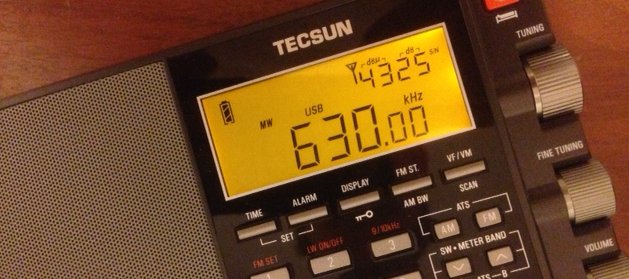
Hidden feature: Calibrating the Tecsun PL-880 for zero-beat operation

Tecsun-SSB-QRG-1Many thanks to Dan who learned, via the Tecsun PL-880 group, of another way to calibrate the PL-880 in upper and lower sideband. This method seems to be a little easier than a previously posted procedure.

Anna, with Anon-Co, translates this procedure given to her by Tecsun technicians:

  1. Place the Tecsun PL-880 in LSB or USB mode
  2. Tune to an AM broadcast station and zero-beat the signal (fine tune it until the signal has no SSB distortion and voices/music sound natural)
  3. If the last two digits of the frequency are not “00”, this means there is some display deviation
  4. Simply press and hold the [SNOOZE] button for about one second or so to calibrate the last two frequency digits, which will show “00” when successful.

I will try this procedure later today by re-calibrating my PL-880.

Dan has also noted what many others have–that the PL-880 “is sensitive to both power levels, and time in the powered on state, and will vary by some hz up and down the bands
no matter what one does to zero at any particular point.”

Has anyone else experienced this?
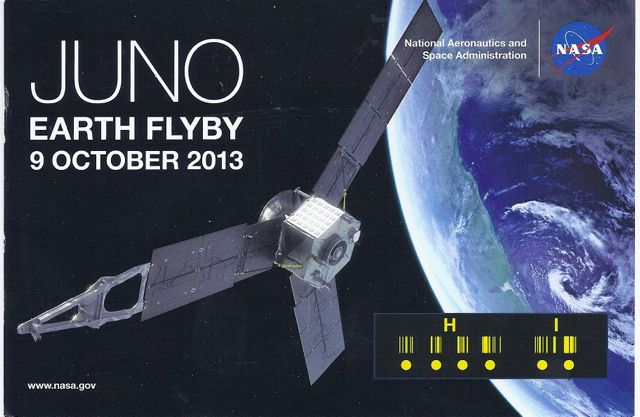
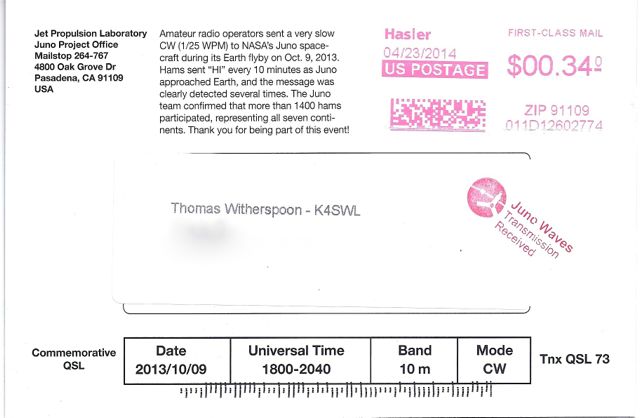
The Juno Earth Flyby QSL card

Happiness is receiving the Juno Earth Flyby QSL card in the mail:

JunoQSLFront-Med

JunoQSLBack-Med

Many thanks to the NASA Jet Propulsion Laboratory for making the Juno Flyby such a fun experiment. To read more about the flyby, check out our post from last year.

Were any readers able to “work” the Juno spacecraft?

Draft bill outlines major changes to BBG and US International Broadcasting

BBG-LogoMany thanks to Dan Robinson who shares this post on the BBG Watch which outlines major changes to US International Broadcasting.

The draft bill, originating in the House Foreign Affairs Committee, is known as the United States International Communications Reform Act of 2014. The bill outlines:

  • “the creation of the United States International Communications Agency within the executive branch of Government as an independent establishment”
  • creating an Advisory Board of the United States International Communications Agency–as the name implies, this board would serve in an advisory (in lieu of management) capacity
  • a new CEO of the United States International Communications Agency, who would be “appointed for a five-year term and renewable at the Board’s discretion. The CEO would exercise broad executive powers.”
  • the creation of the Consolidated Grantee Organization, for the non-federal grantees of the BBG who would be consolidated “and reconstituted under a single organizational structure and management framework.” This would affect the following agencies:
    • Radio Free Europe/Radio Liberty (RFE/RL),
    • Radio Free Asia (RFA), and
    • Middle East Broadcasting Networks (MBN)
  • “The Consolidated Grantee Organization would have its own board and its own CEO.”
  • “The Voice of America would be placed within the the United States International Communications Agency.”
  • Changes to the VOA charter including more freedom and flexibility to report the news. BBG Watch quotes: “The Voice of America’s success over more than seven decades has created valuable brand identity and international recognition that justifies the maintenance of the Voice of America; the Voice of America’s public diplomacy mission remains essential to broader United States Government efforts to communicate with foreign populations; and despite its tremendous historical success, the Voice of America would benefit substantially from a recalibration of Federal international broadcasting agencies and resources, which would provide the Voice of America with greater mission focus and flexibility in the deployment of news, programming, and content.”
  • The new bill also outlines sharing resources between the VOA and the new Consolidated Grantee Organization (which currently maintains much of its own network infrastructure)

There are many, many more points to this bill thus I would encourage you to read the BBG Watch post in full for all details.


Pirate Radio Recordings: Wolverine Radio

SSTV-28Apr2014-080706For your listening pleasure: 1 hour and 7 minutes of pirate radio station, Wolverine Radio–recorded April 27, 2014 starting around 1:10 UTC.

Wolverine was broadcasting on 6,945 kHz in the upper side band. Typical of Wolverine, lots of music variety which spans the decades and no commentary other than station ID throughout.

I decoded Wolverine’s SSTV QSL (see right) with Chris Smolinski’s SSTV app for iPhone.  As you’ll hear, overall signal strength and audio fidelity were excellent.

Click here to download the recording as an MP3 or simply listen via the embedded player below:

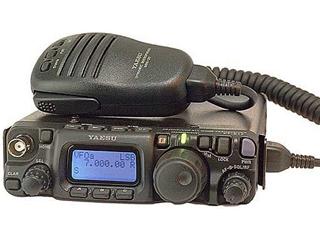
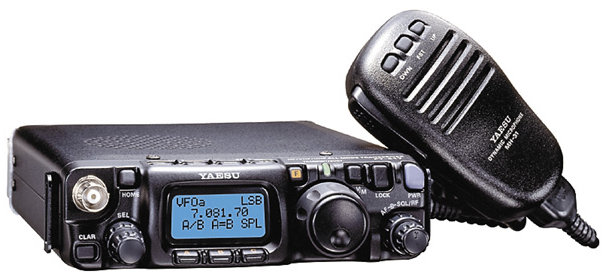
Yaesu FT-817 as a travel receiver

SWLing Post reader, Anil, comments on Traveling light, SWLing right:

Yaesu-FT-817

The Yaesu FT-817nd general coverage QRP transceiver

“I would like to suggest another candidate that is really hard to beat and is fantastic value when you buy a used one – The Yaesu FT-817 Low Power Transceiver.

It has outrageously good General Coverage performance and a massive LF – UHF coverage receiver. It has the same paperback footprint as many of the travel radios you review and a built in battery pack albeit a fairly low capacity one.

When it comes to extracting weak signals out of noise and interference it is head and shoulders above the rest with a switchable pre-amp, variable RF gain and attenuator, pass-band tuning, narrow filters etc.”

Anil, you’re right. The FT-817 is a very compact, full-featured radio and certainly easy to pack.

Yaesu-FT-817ND

I was an early adopter of the ‘817, having purchased mine in 2000 or 2001. I was living in the UK at the time and traveled extensively throughout Europe for my employer. I looked to the FT-817 as a means to play ham radio on the go. It easily fit into my carry-on bag at the time.

Like you, I was very pleased with the receiver though I had nothing to compare it to at the time.

I kept the FT-817 for about five years, but eventually sold it. I started using the Elecraft KX1 as its replacement.  I found that, for me, the ‘817’s front face was a little too small and some of the multi-function knobs could be a little frustrating to use while on the air. Those were relatively minor criticisms, though–the ‘817 continues to have a large fan base and is enjoying very long product life.

Anil, many thanks for sharing your comment!

Click here to check out the Yaesu FT-817 at Universal Radio or click here to search eBay for a used one.

Pirate Radio Recordings: MAC Shortwave

820px-Annex_-_Stewart,_James_(Call_Northside_777)_01

For your listening pleasure: over one hour of the pirate radio station, MAC Shortwave. I recorded this broadcast on April 27, 2014 starting around 00:05 UTC, on 6,950 kHz AM.

MAC Shortwave features host “Jimmy Stewart” and some excellent big band music.

The first SWLing Post reader to identify this MAC Shortwave interval signal gets extra credit!

Simply click here to download an MP3 of the recording, or listen via the embedded player below:

AirChat: Long-distance digital communications via radio

AirChatLogo-001Last month, I was interviewed by NK News regarding the possibility of using inexpensive SDR dongles as a means for citizen journalists to receive and potentially send information across the North Korean border. Of course this is possible: digital communications over radio is becoming easier and more accessible all of the time.

While not yet as portable as an SDR dongle, Anonymous is developing a tool called AirChat which will allow long-distance communications via radio. AirChat borrows from Fldigi: a free application that decodes a variety of digital modes and has been used by amateur radio operators for years. Indeed, Fldigi is the same software you’ve used to decode broadcasts from VOA Radiogram and the new STF Radio.

Many thanks to the excellent  Southgate ARC news site for this article about AirChat:

(Source: Southgate ARC)

The International Business Times reports that the online hacktivist collective Anonymous has announced that it is working on a new tool called Airchat which could allow people to communicate without the need for a phone or an internet connection – it uses radio waves instead 

Initially the data mode software AirChat used code from ‘minimodem’ and then from ‘soundmodem’ sources but they say after suggestions from radio amateurs involved in the Amateur Radio Emergency Service (ARES), they decided to make it modular to use the Fldigi software, a broadly deployed solution for use with ham radios.

They say “So far we have played interactive chess games with people at 180 miles away. we have shared pictures and established encrypted low bandwidth digital voice chats. We have 3D printed over distances of 80 miles and transmitted medical orders at distances of over 100 miles.”

So far Yaesu FT-897D’s amateur transceivers have been used and the developers are also looking at using low-cost ($40) VHF/UHF handheld transceivers.

Read the International Business Times story 
http://www.ibtimes.co.uk/anonymous-airchat-aims-allow-
communication-without-needing-phone-internet-access-1445888


LulzLabs AirChat
https://github.com/lulzlabs/AirChat/

You can read about the goals of AirChat on their Github site and follow AirChat on Twitter with the hash tags #lulzlabs and #AirChat.

Anonymous has also posted the following video–a demo of AirChat:

Airchat from #lulzlabs on Vimeo.