Hearing the speed of light: DX double echo

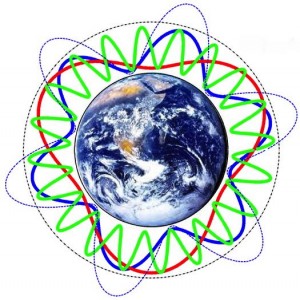
ionosphere-earth-radio-wavesTwo weeks ago, at the W4DXCC conference in Tennessee, I met Lyle Juroff (K9FIK). Not only did I find that Lyle and I had many radio interests in common, but he also told me a story about hearing, recording and analyzing a double echo on the HF bands. I asked if he would explain in an email and include the recording so that I could share it on the SWLing Post. He kindly agreed!
Lyle writes:

I worked a DX station [9A1A] on 10 meters this past spring.  As the band improved, I heard an echo develop on his signal and guessed it might be long path so I began recording the audio.   I then began to hear a double echo and looked at the waveform on AUDACITY.  The timing marks on AUDACITY indicated 140 milliseconds between echos.

I went to Wolfram Alfa, one of my go-to sights for things I can’t remember, and looked up the earth circumference.  It not only gave me the distance but also the time to travel it at the speed of light,  133 milliseconds.   Not sure if everyone working DX has heard this sort of thing, I played the recording at the next East Tennessee  DX Association meeting.  Nobody said they had heard that kind of double echo.

Click here to download an mp3 of Lyle’s recording or simply listen via the embedded player below (note that the second recording is .WAV format):

Have you heard a double echo this profound? Please comment.

Many thanks to Lyle (K9FIK) for sharing his story!

Work the NASA Spacecraft Juno (and get a QSL card)!

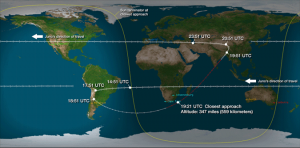
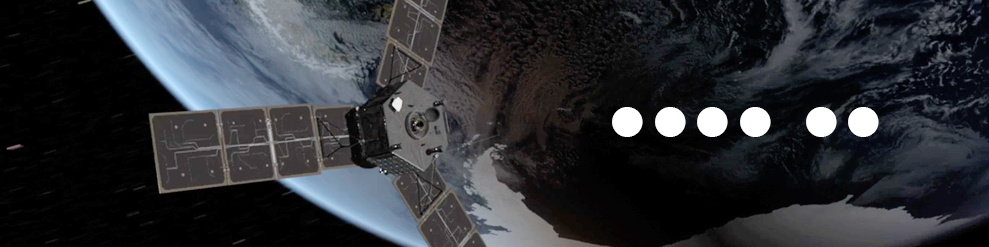
EFB_publicmap1-675Many thanks to SWLing Post reader, Troy, who emailed us about a really fun and unique opportunity for amateur radio operators:  to send the NASA spacecraft Juno a Morse Code greeting [specifically, “HI”] when it passes over Earth tomorrow, starting around 18:00 UTC.

The NASA Jet Propulsion Laboratory explains:

“NASA’s Juno spacecraft will fly past Earth on October 9, 2013, to receive a gravity assist from our planet, putting it on course for Jupiter. To celebrate this event, the Juno mission is inviting amateur radio operators around the world to say “HI” to Juno in a coordinated Morse Code message. Juno’s radio & plasma wave experiment, called Waves, should be able to detect the message if enough people participate. So please join in, and help spread the word to fellow amateur radio enthusiasts!

This page will be updated with additional information as the event approaches. In addition, we have created a Facebook event page where you are welcome to a discuss[ion of] this activity.”

ham_morsecode_ditsTo be clear, this is a coordinated and unified message to the Juno craft; there will be no opportunity to hear a response from it.  Rather, the Waves instrument data containing the message will be shared by the Juno team after the flyby.  But still, what fun!

If you’re a licensed ham, and this sounds like something that you’d like to be part of, please check out the the NASA JPL page dedicated to this event. It has all of the information you’ll need to transmit to Juno, including a countdown clock–or to simply listen to everyone who does. Be sure to check out Juno’s Technical FAQ (click on the FAQ link) which answers a lot of the questions participants have already asked.

I’ll certainly do my best to be a part of the unified greeting to Juno.

I should note that I’m pleased to see the JPL page is running despite the US government shutdown. Many other NASA web pages have been affected.

Hi, Juno; we send our greetings!

juno-banner

40th Anniversary Montage of ILR Radio Stations

IRL-StationLogosHat tip to Mike Barraclough for sharing a link to this audio/video montage on the BBC website celebrating the 40th anniversary of Independent Local Radio (ILR) with air check clips from stations across the country.

Even if you have never lived in the UK, there’s some serious radio nostalgia in this montage.

Many of these ILR stations still broadcast today, and you can listen to the majority of them via TuneIn radio.

Now available: DXtreme Reception Log version 8.0

DXtreme Reception Log schedule checker.

Screenshot of the DXtreme Reception Log schedule checker (click to enlarge)

I just received this press release from SWLing Post sponsor, Bob Raymond (NE1I), at DXtreme software.

Bob has announced the availability of the latest version of his logging software for radio and TV monitoring enthusiasts: DXtreme Reception Log — Advanced Edition, Version 8.0.

Click here to download the full press release (PDF) or here to visit DXtreme Reception Log’s web page.

And many thanks to DXtreme for supporting the SWLing Post!

Shortwave Radio Recordings: The Mighty KBC

"Dad, that's The Mighty KBC! Turn it up!"

“Dad, that’s The Mighty KBC! Turn it up!”

Sunday at 00:00-02:00 UTC, I tuned to 7,375 kHz to listen to The Mighty KBC. This was the first time I tuned to their winter frequency this season and wasn’t sure how strong their signal would be on a relatively noisy night on the bands.

KBC’s signal was blowtorch strength into North America. It could have been easily received on even the most simple of portable radios.

As we’ve come to expect, the Mighty KBC’s Giant Jukebox of music has a lot of rock-n-roll and Euro-pop variety, spanning the decades; DJ, “Uncle Eric” knows how to entertain and spin the tunes! Uncle Eric includes Kim Elliott’s digital text modes in this broadcast–if you missed the live broadcast, you can even decode the messages from the recording below.

Click here to download the recording as an MP3, or simply listen via the embedded player below. Enjoy:

Shortwave Radio Recordings: Radio Progreso

Havana, Cuba (Photo: Wikimedia)

Earlier this week, I noted that Cuban medium wave station, Radio Progreso, was to begin broadcasting on 4,765 kHz shortwave, beginning October 1st at 00:30 UTC.

I listened between 00:30 and 2:30 UTC on Oct 1st, but heard nothing other than the weak carrier from (possibly) Radio Emissora De Educao Rural. However, the following evening at 01:00 UTC (October 2nd) I did hear a strong signal from Radio Progreso.

For your listening pleasure: the recording I made of Radio Progreso on October 2, 2013, starting around 01:00 UTC. Click here to download the recording as an MP3 or simply listen via the embedded player below:

Shutdown: Wake Island DXpedition on ice

WakeIslandI’ve been somewhat amazed at the number of ways the US government shutdown has had an impact upon radio.

Many ham radio operators are aware of the upcoming Wake Island DXpedition commemorating the 70th anniversary of the World War II massacre; everything had been arranged in advance, including payment for the flight to Wake Island. But as the last leg of the operators’ trip to Wake Island relies upon a coordinated venture with the US Air Force, just as many USAF employees suddenly find themselves on furlough, the trip has been placed on hold until the shutdown ends. This is particularly unfortunate in that DXpeditions are pricey ventures; the total cost of the Wake Island DXpedition cost each radio operator $9,000 out-of-pocket, for a grand total of $140,000 US.

I received the following message from the DXpedition on Wednesday:

To All:

Those of us on the Wake Atoll DXpedition team were scheduled to depart today for Hawaii, on our way to Wake Island Friday.

However, because of the U.S. Government shutdown yesterday, the DXpedition has been delayed. The USAF is preoccupied with sequestration activities and many staff personnel have been furloughed.

We are hoping this is a short-term delay, as we continue to pursue the approval process. As soon as a revised schedule is finalized, new dates will be posted on the Wake DXpedition website.

http://wake2013.org/

In the meantime, thanks to all for your continued support.

73,
John Miller, K6MM

Yesterday, the DXpedition actually caught the attention of the Reuters news service:

(Source: Reuters)

For anyone questioning the reach of the federal government shutdown, consider Wake Island.

Not much more than military-plane refueling and classified operations occur on the unincorporated U.S. territory, a coral atoll located between Hawaii and Guam, about 6,700 miles (10,780 kilometers) from the legislative standoff in Washington.

That was about to change this week with the arrival of a dozen ham-radio operators who thought they’d won approval for a two-week commemoration of the 70th anniversary of the World War II massacre of almost 100 U.S. civilian contractors on Wake Island by the Japanese on Oct. 7, 1943.

Instead, after months of preparation, the trip is on ice because of a paperwork delay the group attributes to the partial federal shutdown, which started Oct. 1 as Republicans and Democrats failed to agree on a stopgap spending measure.

“They made it sound like it was just unfortunate timing,” said Craig Thompson, 61, one of the expedition’s leaders. “At the level that it was at, they were focused on what they had to do to shut down government, to prepare their budgets and deal with all of the other changes that were going on.”

The operation was of special interest to tens of thousands of ham operators inside and outside the U.S. The hobbyists collect contacts with all countries and islands in a practice known as DXing. Because Wake Island hasn’t had a major radio expedition since 1998, there’s great demand for its confirmation of a contact there.

All the paperwork was in place, except for final travel orders that needed one last Pentagon signature, said Thompson, an electronics company owner from central Illinois who is a veteran of radio expeditions to other remote locales, including Midway Island and Swains Island in thePacific Ocean.

[…]The U.S. Air Force manages Wake and access is restricted. The group was to fly commercial on Oct. 2 to Honolulu, where they would have then boarded a military flight today to Wake.

The decision to cancel was made late on Oct. 1 after determining the group probably wouldn’t get final approval in time to catch the second flight, flown once every two weeks.

[Continue reading the full article on Reuters…]

Follow this, and other radio-related stories around the US government shutdown, by following the tag shutdown.