Swiss Short Wave Service archives now online

(Photo: SwissInfo.ch)

(Source: swissinfo.ch)

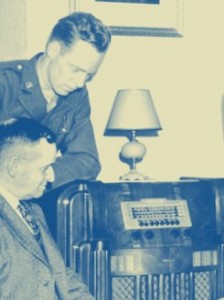
During the Second World War, Switzerland’s fledgling short wave radio service was essential to its attempts to communicate its policies and actions to an external audience made up of both foreign governments and the Swiss abroad.

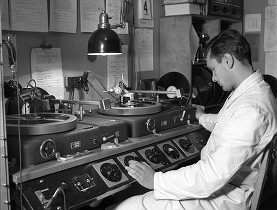
The archives of the Short Wave Service (SWS), founded in 1935, have been digitalised and are now available online (See link). SWS was the forerunner to Swiss Radio International (SRI) which later became swissinfo.ch.

The manuscripts of news bulletins from this dark time in Europe reveal Swiss thinking on events both out of its control and right on its doorstep as the country desperately held on to its beloved neutrality.

In Switzerland’s national languages (German, French, Italian) as well as English, Spanish and Portuguese, SWS broadcast news and analysis of military events on both sides.

It also reported on living conditions of Australian, New Zealand, South African and American POWs interned in mountain retreats, and issued sharp rebukes of external criticism of Swiss government policy.

“Switzerland finds herself today in one of the most peculiar situations of her long history. From a certain viewpoint, she is surrounded by one power only. From another viewpoint, she is surrounded, among others, by three defeated powers: Austria, France and Italy. Under these circumstances Switzerland has remained true to her traditional role of guardian of the Alpine passes,” began an English broadcast from Hermann Böschenstein in the wake of the fall of Mussolini in 1943.

The same broadcast went on to discuss dashed hopes that Italy’s fall would see a reopening of transport routes to the sea, praised the Swiss influence of the International Red Cross as “incontestable”, and noted that “all-out” training of Swiss army troops had resulted in “quite a few casualties lately” with the use of flame-throwers being responsible in some cases.

Treasure trove

Lausanne University’s François Vallotton, a specialist in contemporary audio-visual and media history in Switzerland, was unable to resist the lure of such a treasure trove of documents.

Vallotton, whose work focuses in particular on the Swiss Broadcasting Corporation (SBC) – the parent company of swissinfo.ch – convened a seminar to undertake initial research on the SWS archive documents.

The archives, which have been formatted into a database searchable by keyword, are particularly interesting for historians because the historiography of international radio services has not yet been developed, particularly in Switzerland.

Vallotton says analysis of the archives is unlikely to reinvent what is already known about Switzerland during the Second World War, but: “What is interesting is that it is a source that allows us to see the image that Switzerland wanted to present to the outside world.”

“That is something that is really new because before we examined local media which was aimed at the Swiss public.”

Broadcasts by SWS at that time were also notable for the fact that they were the first news bulletins produced by a dedicated radio editorial team; previously news bulletins had been written and read by journalists from the Swiss News Agency, a press organisation.

“The service treated events in a different manner than to the local media,” says Raphaëlle Ruppen Coutaz, who is doing his doctorate on the subject. “For historians, it’s precious because it is the only Swiss media outlet to address those abroad during the war.” [Continue reading…]

I have really enjoyed looking through the archives. Of particular interest are the corrections that were made before reading the news.  They’re all there.

The actual archive database can be found here.

Read the full article at swissinfo.ch.

Radio 4: And now an urgent SOS message…

This is a fascinating Radio 4 documentary about a BBC service that typically had a target audience of one individual.  Before the proliferation of telecommunications in the 1990’s, the BBC’s SOS message service acted as a communications link of last resort for people who needed to be urgently connected with loved ones.

This radio documentary reminded me of the fact that, even in our information age, radio can interact with a large audience of listeners who are doing everything from working to driving in a uniquely efficient manor.

I listened to this documentary yesterday, but it will be available on the BBC website for 5 more days (as of time of posting). Thanks to Andy Sennitt for bringing this documentary to my attention. 

(Source: BBC)

Radio 4 used to broadcast SOS messages – “could Mr and Mrs Snodgrass, believed to be travelling in the Cotswolds please ring this hospital where their auntie is dangerously ill”.

Eddie Mair wants to know more about them. He hears from listeners whose lives were dramatically changed through the SOS service. These short messages were transmitted regularly on The Home Service, and later Radio 4, for much of the 20th century. They appealed for relatives of dying people, often on holiday and thus, before mobile phones and internet cafes, uncontactable, to return home before it was too late.

Eddie invited readers of his Radio Times column to send in their recollections of the SOS Message Service, and little did the PM Presenter expect such a rich response of vivid memories, first person experiences and in one case, unexpected consequences as a result of the broadcast.

Some of these remarkable testimonies are told, in understated, haunting and even cheery ways in this narrative tribute to radio, and a nation, – “as it was”. Best summed up by the tale of a six year old girl in the North East who while staying with a relation in 1958, was hospitalised with a very serious illness. She survived and tells Eddie her story. In the days of very few domestic telephones, the BBC’s SOS message brought her parents to her bedside from London courtesy of an observant member of the public who heard the message and recognised the car number plate that had been announced.

The SOS Service, was the vision of John Reith, the first General Manager, and later Director General of the BBC. But its heart was the listener, as Eddie reveals.

New book focuses on China’s Firedrake jamming

I just received the following press release from Steve Handler (N9ABC), author of Firedrake – China’s Secret Shortwave Jamming Project Exposed!

Priced at $3.99, his new 45 page eBook is available at Amazon.com:

Firedrake – China’s Secret Shortwave Jamming Project Exposed!  by Steven Handler is the new revised and updated version of this electronic publication.  Published in late August, 2012, it is now available through Amazon.com for the Kindle.  Other booksellers should, by Mid September, 2012, be offering versions for other electronic readers including the Nook, iPad, Sony Reader and other formats.

A little “Firedrake” History-The Chinese government jams or interferes with the HF broadcasts of certain shortwave stations that they apparently deem “dangerous” for their citizens to hear. My publication serves as a guide to the world of Chinese jamming and helps the reader learn about Firedrake and some of China’s other shortwave jamming stations.

Included are jamming frequencies heard during the current A-11 shortwave broadcasting season as well as times of reception. Also included are frequencies heard in use during the past two shortwave broadcasting seasons (A-11 and B-11).  Readers will also find information about the direction finding results identifying transmitter sites which I obtained from ITU registered monitoring sites. There is also a virtual tour of a Chinese jamming facility.

Available for $3.99 from Amazon.com (stock number ASIN: B0093NNABQ ) you can find more information and view sample pages at Amazon.com.

Amazon.com also offers free Kindle Readers for both PCs and MAC.  Information about the Free PC Kindle reader can be found on their web site. For information about Amazon.com’s Free Kindle reader for the Mac,  click here.

The author does not sell copies of this publication directly. Rather copies are sold by retailers and bookstores.

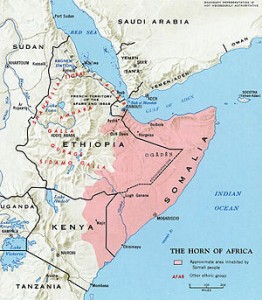
Radio Hargeisa: Somaliland’s new shortwave station

Somaliland is internationally recognised as an autonomous region of Somalia

Thanks to Kim Elliott for the tip:

(Source: Somaliland Sun)

HARGEISA (Somalilandsun) – The installation of the new Radio Hargeisa transmitter is a success.

This was revealed by Mr. Don Jensen who added that Listeners in Japan, India and Europe are beginning To hear Radio Hargeisa on a frequency of 7,120 kHz, with generally good signals For tests noted at various times between 1500 UTC (universal time) and 1900 UTC hours (6 to 10 pm Somaliland time)

[…]The transmissions are possible by a recently installed 100Kw Radio Transmitter, which is currently on test, and accessible at the 7,120 kHz frequency, said Don, “Through this frequency the signal is fairly strong in Japan and the Netherlands”

The American ham radio operator further informed that there is also a considerable interference from ham transmissions since the 7,120 kHz frequency used by Radio Hargeisa is in the middle of the amateur radio (ham radio) band.

As Kim Elliott notes, and I hope they understand, they should not continue to broadcast in this particular chunk of amateur radio spectrum, but above 7,200 kHz.

[…]This transmission confirmation is welcome news for ministry of information engineers who are in-charge of the testing following the departure of the 13 Chinese engineers who were responsible for installing the transmitter and antennae purchased from the China.

It is also welcome news for residents of Somaliland since the new transmitter will certainly enhance Radio Hargeisa broadcast transmissions nationwide as opposed to status where transmissions are audible within a Hargeisa only.

Mr. Don Jensen who has been in constant communication with Somalilandsun since the site posted the first article about the new transmitter is interested in advancing the cause of Somaliland especially in the USA where he reported that most people cannot distinguish between the peaceful Somaliland and the failed state of Somalia.

Said he, “Am sure Radio Hargeisa transmissions worldwide will considerably improve the knowledge of ordinary Americans on your country”

Read the full article at the Somaliland Sun.

Shortwave Radio Recordings: Voice of Greece, Voice of Turkey and Radio Croatia

For your listening enjoyment:  Voice of Greece (9,420 kHz), Radio Croatia (9,925 kHz) and Voice of Turkey (9,830 kHz). The Voice of Greece, in particular, broadcasts an extensive mix of music. These stations were recorded simultaneously, Saturday August 25th, 2012.

In total, there are more than 8 hours of shortwave radio recordings in this set–enough to make it through your work day:

Hurricane Isaac: Hear eyewitness weather reports on shortwave

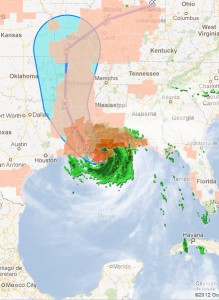
At time of this posting, I’m listening to the Hurricane Watch Net (HWN) on 14,325 kHz.  HWN net control is receiving weather reports as Hurricane Isaac hits Louisiana with 80 mph winds–dumping torrential rain on the area and causing widespread flooding.
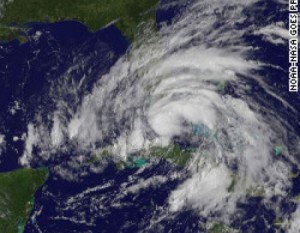
Although Isaac is “only” a Category One hurricane, I suspect damage will exceed similar storms from the past, as the flood waters are rapidly rising, already forcing some people into attics and onto rooftops.

Tuning In

If you have a shortwave radio, even a portable, that can tune in SSB (or Single-Side Band), you can listen to or participate in the Hurricane Watch Net.

In a previous post–almost exactly one year ago when Hurricane Irene was threatening islands and States in the Gulf of Mexico–I described how to listen to the HWN.

Below, is a short audio clip of the Hurricane Watch Net this morning, which includes a few reports and a check-in from the National Hurricane Center’s own ham radio station:

(If  you find this kind of thing exciting, or you’re into weather tracking and would like to become more involved in disaster communications, consider becoming a ham radio operator.)

Severe Weather: Are you prepared?

As I was listening to reports of tropical storm (now hurricane) Isaac this morning on the radio and a lot of emphasis was placed on preparedness for those who lie in his path.

Of course, it’s difficult to prepare this close to a weather event as supplies are typically low and demand is high. We radio enthusiasts are well aware of the importance of radio supplies, but there’s so much more to include to have preparedness basics in place.

Isaac may or may not pan out to be a memorable weather event, but we can take this opportunity as a reminder to be prepared. Indeed, the US National Weather Service predicts that we will have an active hurricane season in here in the states. If weather in Europe follows the same course, it could be bitterly cold and snowy. Typhoons in Asia have also been active most recently.

No matter where you live, spend some time preparing for natural disasters or interruptions to public utilities. We have several helpful posts on the SWLing Post which can help you with this very thing.  Take a look at the following in our archives: