DW: South Sudan blocks access to independent websites

(Source: Deutsche Welle)

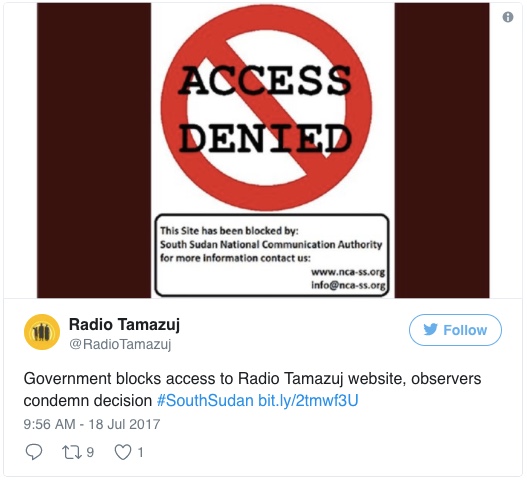
Internet and mobile phone users in South Sudan are not able to access the websites of at least four independent media outlets. The government has grown increasingly hostile to the media since civil war began in 2013.

The South Sudanese government has blocked access to the websites of Dutch-backed Radio Tamazuj, as well as the popular news blogs Nyamilepedia and Paanluel Wel. Internet users said that the website of the Paris-based Sudan Tribune was also affected on some mobile phone and Wi-Fi networks.

Radio Tamazuj and the Sudan Tribune are reputable sites which have been critical in their coverage of South Sudan’s government, which has grown increasingly hostile towards the media since civil war broke out in 2013.

The government is justified in blocking the websites to protect citizens from outlets that “disseminate subversive material,” South Sudan’s Minister of Authorities Michael Makuei Lueth told the US-based Committee to Protect Journalists (CPJ).[…]

Continue reading at Deutsche Welle online.

Fortunately, the South Sudan communities I’ve worked with through Ears To Our World have access to shortwave radio which is not affected by an Internet block.

No doubt, shortwave radio is the ultimate free speech medium, as it has no regard for national borders, nor for whom is in power (or not in power) at any moment.

Shortwave radio may be a sunsetting technology, but it’s also the most accessible and effective vehicle of the free press. What other technology can thoroughly blanket the globe with news and information yet can also be be received with a simple $20 battery-powered portable device?

This photo was taken in South Sudan, after Ears To Our World distributed radios in this rural community for the fourth year running. We’ve been distributing radios in South Sudan through our partners there since 2009.

Check out these recent comments from the head of DW regarding the importance of international broadcasting. Thanks for the tip, Rich!

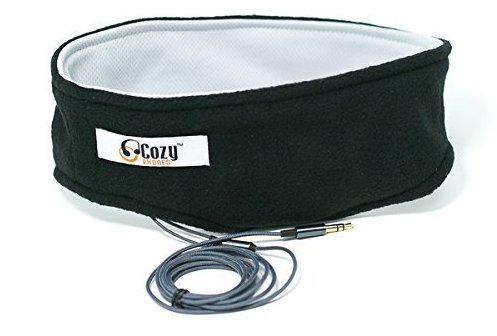
A review of CozyPhones sleep headphones

A few months ago, SWLing Post contributor, Mario Filippi–being both a good friend and an (ahem!) enabler–sent the following note:

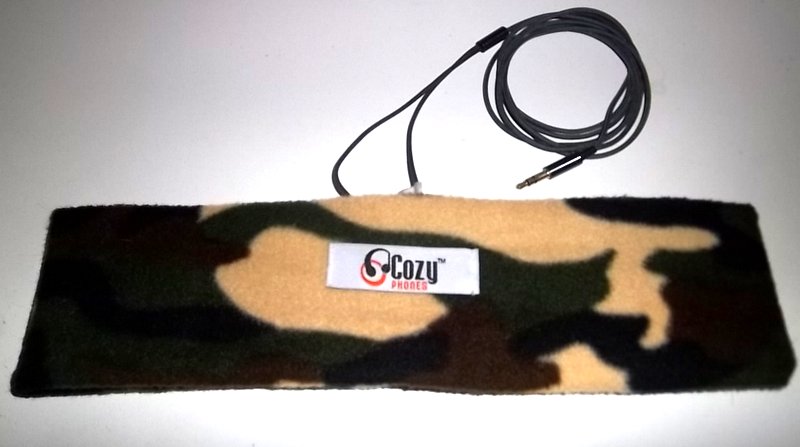
My XYL bought me a set of CozyPhones for Christmas.  If you like listening to the radio, especially at night while in bed, these work great. Speakers are nice and flat.  And if you are outdoors you can listen to shortwave and not suffer from ear frostbite hihi.

https://www.cozyphones.com/

[I’ve attached the photo below of] the one I got.  Absolutely amazing!
Little did Mario know that, back in 2014, I ordered a pair of similar sleep headphones by the company Acoustic Sheep after reading SWLing Post contributor Anil Raj’s brilliant entry in our Virtual Radio Challenge II.

I purchased an open-box pair of the Acoustic Sheep SleepPhones for about $33 and was very pleased with the purchased…initially, at least.

I used the Acoustic Sheep SleepPhones a couple nights a week for several months. I was disappointed, however, when the braided jacketing started coming off of the headphone cord, bunching up, and the rubberized jacketing underneath began staining my pillowcase, so I was no longer able to wear them at home or when traveling. My wife was amused and said it looked as if I had worn mascara to bed.  Well, at least until she attempted to clean the marks off of the pillowcase with limited success.

I feel it’s only fair to state that my SleepPhones were a fairly new product in 2014, thus may have been an early iteration and may not accurately reflect what the product is like currently. I’m guessing that Acoustic Sheep have improved the design and reinforced the jacketing since then, because they seem to enjoy relatively positive reviews on Amazon.
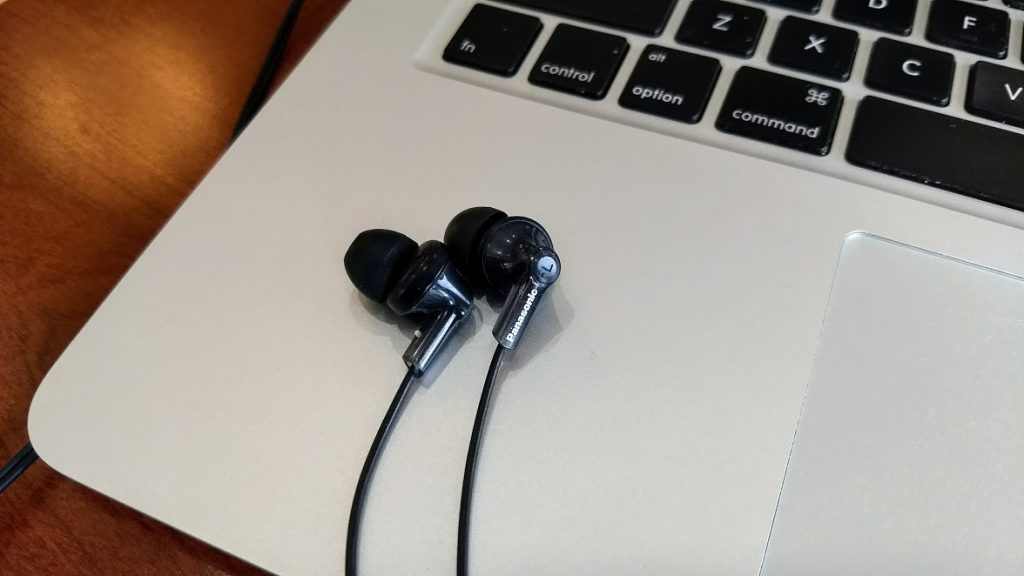
Panasonic Ergo Fit (in-ear) Headphones

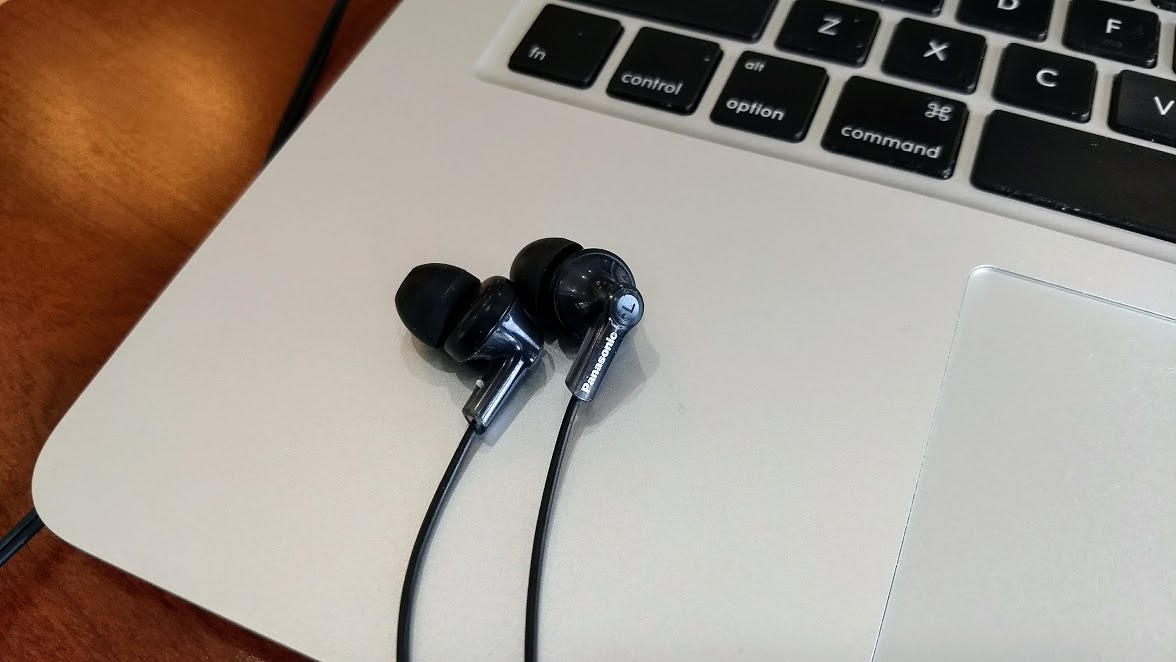
At any rate, I set the troublesome SleepPhones aside and and went back to using my go-to in-ear sleep phones: the Panasonic Ergo Fit Headphones. The Panasonics are the least uncomfortable of all of the in-ear headphones and do a decent job of isolating any environmental noises while you sleep. Still, having something inside your ear while you slumber isn’t exactly the definition of comfort.

Enter CozyPhones

I replied to Mario’s email telling him about my experience with the SleepPhones. He encouraged me to give the CozyPhones a try.

I took a quick glance at Amazon (the only distributor I could find for CozyPhones) and the price for a pair was only $22. Almost $16 cheaper than a pair of new SleepPhones?  I even noticed combo packs with two sets of CozyPhones for $24. My doubts about quality resurfaced.

I decided to contact CozyPhones customer service directly and ask if their headphones were likely to experience the same problem as my SleepPhones–I mentioned my hesitancy and the fact these would likely be mentioned in a frank review (hint, hint: if quality is poor, this will get a negative review).

They promptly addressed my concerns, standing confidently behind their product, and even offered to send a sample. One week later, the CozyPhones arrived.
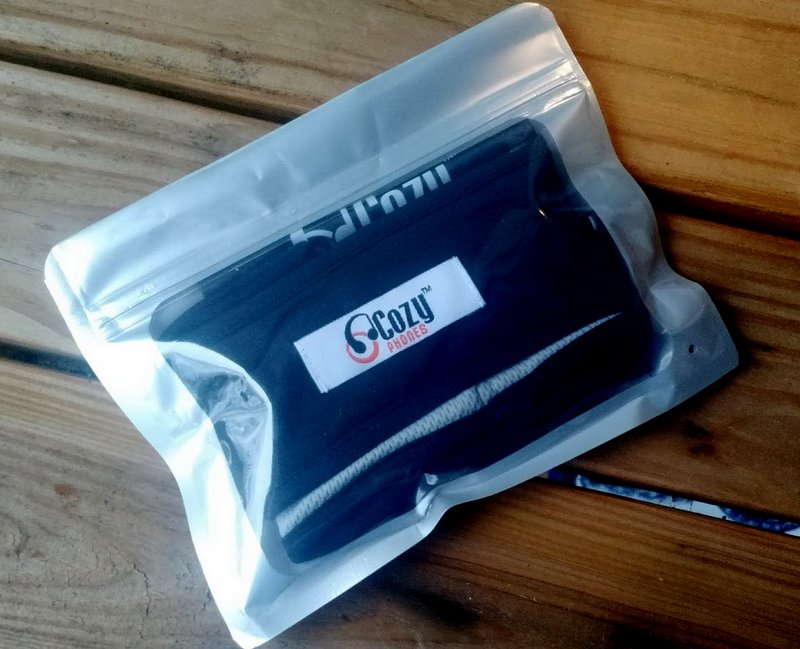
The CozyPhones arrived in a thick plastic re-sealable bag (seen above)–a nice touch! Included in the package were both the headphones and a satin carry bag.

Performance

Let’s be frank here: with sleep phones, I’m not expecting the same audio fidelity I would achieve with my Sennheiser HD558s––which, by the way, would be incredibly uncomfortable as sleep headphone; I simply wanted to be able to listen to my bedside radio as I drifted off.

Here’s what I do expect from a pair of sleep headphones:

  • decent audio fidelity at low volume levels–something suitable for listening to AM or shortwave radio
  • something with enough sound isolation that it won’t keep my wife awake while I listen to the Voice of Greece into the wee hours
  • comfort around my head and against my ears as I lie on a pillow…actually, this might be the #1 priority for me
  • headband’s earphones (speakers) stay in place, don’t shift within the band
  • quality construction and the potential for product longevity
  • no black marks on my pillowcase!

Let’s see how the CozyPhones deliver on my points:

Audio fidelity

The CozyPhones easily pass this test. I’m very pleased with audio fidelity for radio listening. Indeed, the audio response is pretty well tailored for AM/SW broadcast listening. FM and music sounds fine, too; good enough that I would consider wearing these in the winter while hiking. Again, these are not audiophile quality to be sure, but they surpass my needs for this application.

Sound isolation

The CozyPhones do a respectable job in this regard. My wife can’t hear what I’m listening to while lying in bed, not even a hint of what I hear. Now, if I were hard of hearing, listening to music and had the volume cranked up, I’m sure she’d at least hear percussive sounds.
Comfort

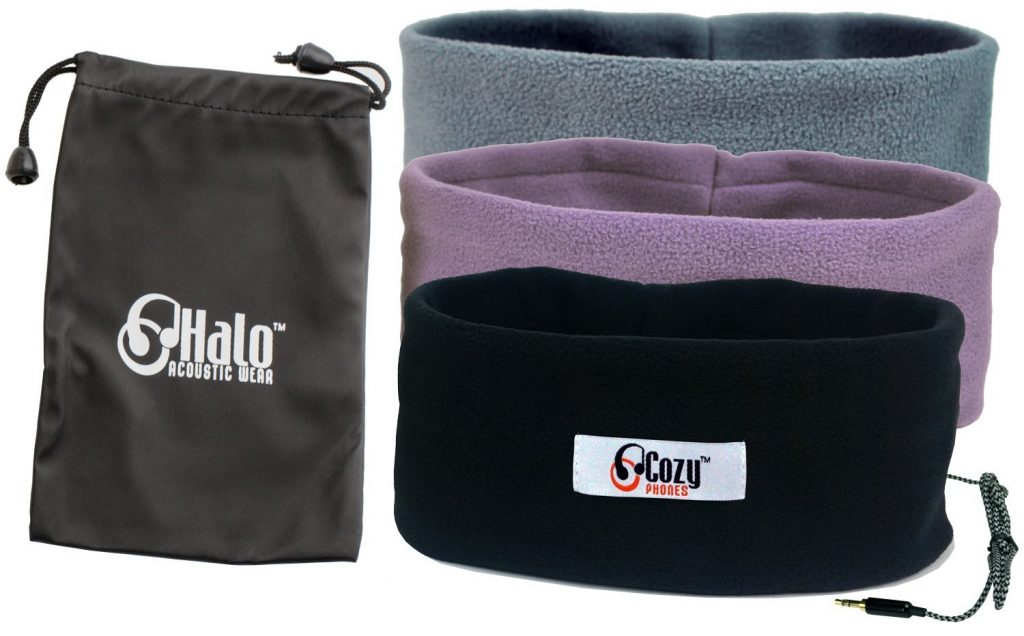
I should note hear that there are essentially four versions of CozyPhones:

CozyPhones sent me the second version mentioned above, the headphones with Cool Mesh lining and a lightweight Lycra-like exterior. I was quite pleased, as it’s what I would have selected. If anything, I tend to generate a lot of heat, so don’t like products that make me feel even warmer at night while I sleep.

After a few months with the CozyPhones I can say that I’m very pleased with how comfortable they are. The material is soft, the headphone speakers are very thin and seem to stay in place even as I move around and adjust my head on the pillow during the night.

Quality

The SleepPhones I purchased in 2014, in contrast, were also comfortable, but the earphones, essentially mini speakers, tended to migrate within the soft headband. I’d often wake up and find the speakers had completely moved within the band away from my ears; it was then a matter of trying to bunch up the headband material and re-position the speakers.

The CozyPhones don’t seem to have this problem. The ear speakers might shift a little some nights, but not enough to be annoying–certainly not as the SleepPhones initially did.

The braided headphones cord is non-obtrusive and comes out the back of the headphones. So far, the CozyPhones haven’t suffered the same fate as the SleepPhones–the braid has remained intact and seems quite sturdy, resilient to light tugging and normal movement.

And as for my pillowcase?  Still clean…no black marks.

Summary

If, like me, you enjoy listening to radio in bed, but don’t want to disturb your partner, CozyPhones really are a fantastic option.

Perhaps as a side effect of my years of SW listening, I find I’m a bit sensitive to environmental noises when I travel; often hallway noises, nearby traffic, children screaming, doors slamming, can disturb me, so I never leave home without earphones in my pack to quiet the noise. Quite often I’ll listen to my radio at bedtime, then, right before nodding off, I tune to a blank spot on the AM dial to the soothing sound of static. This “white noise” tends to drown out other abrupt environmental noises, and I find I drift off peacefully.

I think CozyPhones will serve you well. At $18-22 shipped? I think they’re a good bargain and a great gift. In fact, I intend to buy a pair for my wife!  Shhhh…don’t tell her.

Click here to view CozyPhones on Amazon.

Receive SSTV images from the ISS today

This image from the ISS was received by Kim Elliott at about 0130 UTC on July 20, 145.8 MHz FM.

(Source: Southgate ARC)

The International Space Station is transmitting SSTV pictures to radio amateurs around the world on 145.800 MHz FM

The Slow Scan Television image transmissions are expected to continue until 1800 GMT Sunday, July 23 and can be received on simple equipment such as a handheld radio or scanner with an outside antenna.

Some of the pictures already received can be seen at
http://www.spaceflightsoftware.com/ARISS_SSTV/index.php

Useful links on receiving SSTV from the ISS
https://amsat-uk.org/beginners/iss-sstv/

ARISS Celebrates its 20th Anniversary through SSTV Event
https://amsat-uk.org/2017/07/09/ariss-20th-anniversary-sstv/

If you receive a full or partial picture from the Space Station your Local Newspaper may like to know
http://www.southgatearc.org/news/2016/july/now-is-a-great-time-to-get-ham-radio-publicity.htm

Schematic for the PLL EDUTEC 4-Band Digital Radio Weltempfänger?

Many thanks to SWLing Post contributor, Cezar Vener, who writes with the following inquiry:

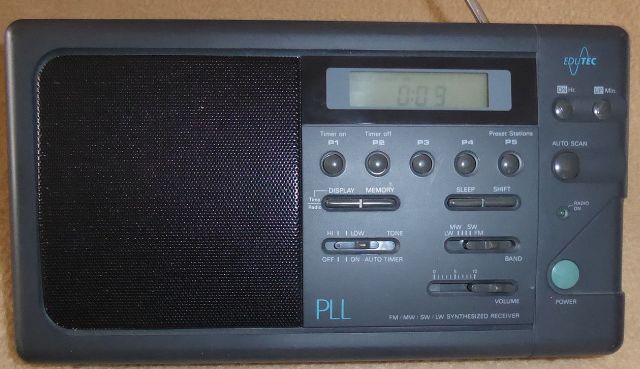
I would like to ask you if you can help me with a schematic diagram for an EDUTEC 4-Band digital radio (PLL EDUTEC 4-Band Digital Radio Weltempfänger). It is not broken, but I would like to modify it. Of course, I could spend some time and manually extract the schematic, but I would lose too much time.

While I know that “EDUTEC” is a registred trade mark for technical (“non-food”) products that was sold by “Eduscho Handelsgesellschaft” in Bremen and also I found that it is now owned by Tchibo, well – I would like to kindly ask you for help in this matter? (course, if you can).

It is an old product, probably made in the 90’s and until now, I didn’t find anything on the net about it. I opened it and I found that its core is TA8132AN, and the FM section is made around TA7358AP. The audio stage is built with C1212C, and there is one more integrated circuit there, TA8148S (no datasheet on the net, but I found that is a DC-DC converter for electric tuning – built-in stabilized supply output for biasing VHF tuner variable capacitor / sine wave oscillation).

BTW, I found it also in SONY CFS-W504L 🙂

The PLL chip is soldered with the unmarked side, so I don’t know what type it is.

[See photo at top of post.]

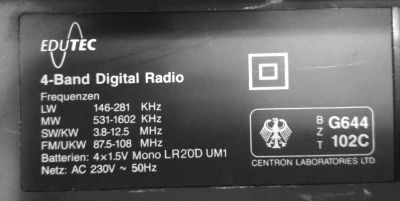
Here is a photo of the rear back stand:

Unfortunately, there is no other model or name written on the radio.

I see there “CENTRON LABORATORIES LTD”, that points to the company with the same name from Gujarat, India. Very interesting :))

In the hope of an answer from you, please allow me to thank you and to congratulate you for the very nice site that you maintain there!

Many thanks, Cezar! It’s readers like you who make this site such a great one!

Post Readers: I hope someone may be able to help Cezar. This radio looks familiar–perhaps I’ve seen it badged with a different company name?  Please comment if you can help Cezar locate a schematic.

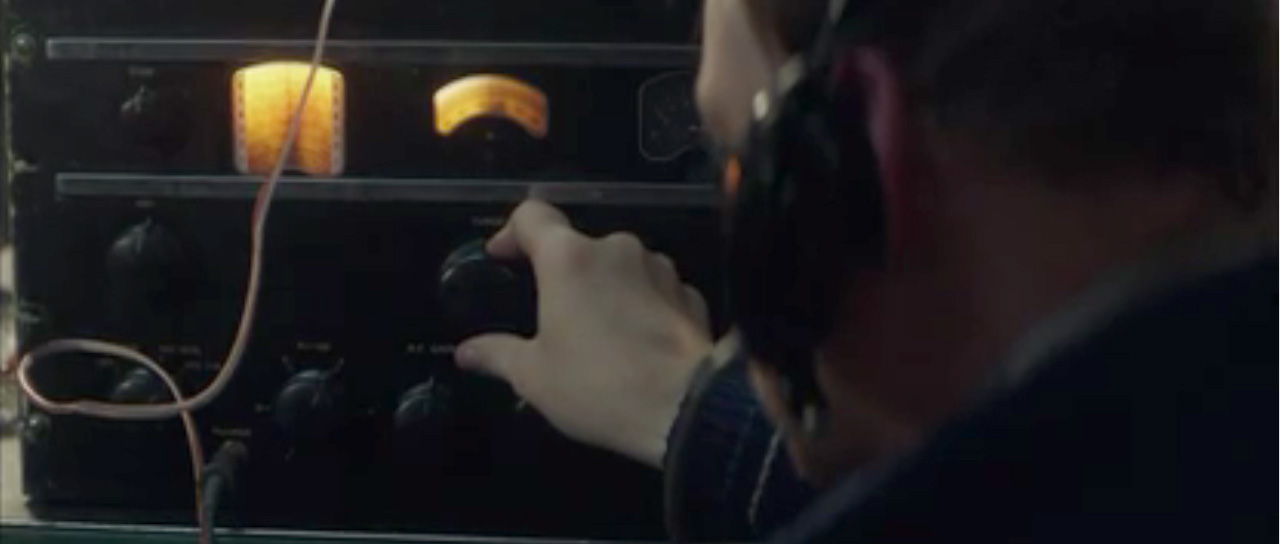
Mike spots the RCA AR-88 in series “Prime Suspect: Tennison”

Many thanks to SWLing Post contributor, Mike Hansgen (K8RAT), who adds the following to our growing archive of radios in film. Mike writes:

Near the end of the current episode of “Prime Suspect: Tennison” [the radio operator mentions] he was listening on “the RCA 88”.

“Tennison” is set around the early ’70’s.

Great catch, Mike (and thanks to Eric WD8RIF for the screen cap).

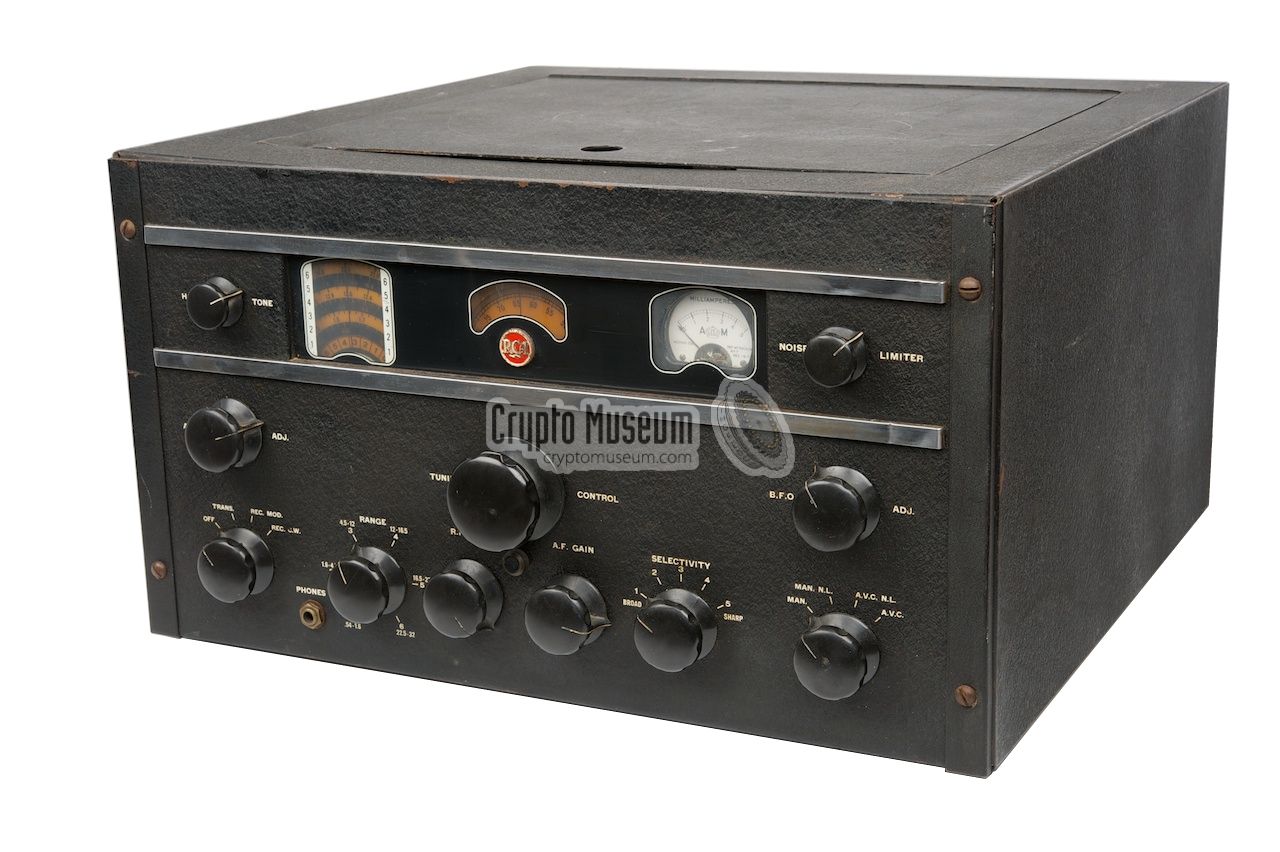
According to the Crypto Museum:

The AR-88 was a valve-based shortwave general coverage communications receiver, developed and built by the Radio Corporation of America (RCA) in the early 1940s. Although the receiver was initially intended as the successor to the AR-77 amateur receiver, the outbreak of WWII made it evolve into a professional high-end military-grade receiver for which cost was no object.

The AR-88 is a 14-valve (tube) receiver, which covers a frequency range of 535 kHz to 32 MHz. Unlike the National HRO receiver, which had pluggable coil packs for each frequency band, the AR-88 uses a six-position band selector. A special version of the receiver, the AR-88LF, was suitable for LF and MF, covering 70 to 550 kHz (continuously) and 1.5 to 30 MHz (continuously).

Continue reading at the Crypto Museum online… 

The Crypto Museum photo of the AR-88 jogged my memory…

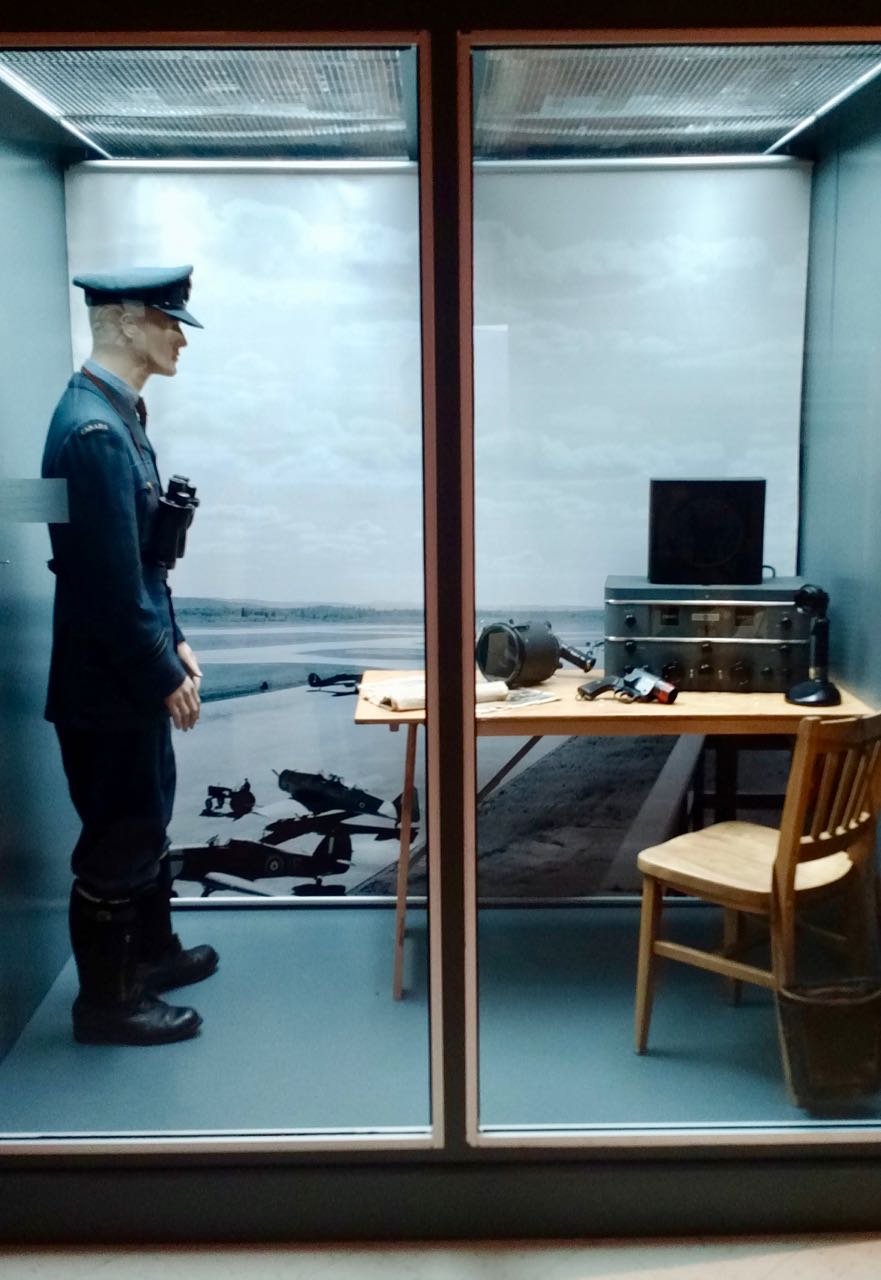
Last year, I visited the Musée de la Défense Aérienne at the Canadian Forces Base (CFB) Bagotville (a museum I wholeheartedly recommend, by the way).

I snapped this shot of this display:

I’m sure I actually have a close up of this receiver somewhere. It also appears to be an RCA AR-88 based on dial and control configuration, though I certainly could be wrong.

Do any SWLing Post readers have an AR-88? Please comment!

From the Isle of Music & Uncle Bill’s Melting Pot, July 23-29


From the Isle of Music, July 23-29
This week, to celebrate the nomination of Abracadabra in the Fusion category of Cubadisco 2017, we are rebroadcasting our interview (with music) with Oriente López. We will also taste a little of Daniel Martin’s new album Distintos.
Four opportunities to listen on shortwave:
1. For Eastern Europe but audible well beyond the target area in all directions with 100Kw, Sunday 1500-1600 UTC on SpaceLine, 9400 KHz, from Kostinbrod, Bulgaria (1800-1900 MSK)
2. For the Americas and parts of Europe, Tuesday 0000-0100 UTC on WBCQ, 7490 KHz from Monticello, ME, USA (Monday 8-9PM EDT in the US)
3 & 4. For Europe and sometimes beyond, Tuesday 1900-2000 UTC and Saturday 1200-1300 on Channel 292, 6070 KHz from Rohrbach, Germany.
From the Isle of Music is not available for listening on demand but some broadcasts can be heard online during the time of the broadcast using Web SDRs or the WBCQ website (during their broadcast) if you are not receiving the radio signal.
Last week, there was fair to good reception of the signal on 9400 in Japan!

Episode 22 of Uncle Bill’s Melting Pot, a musical variety program that features a little bit of everything from around the planet, will air on WBCQ the Planet, 7490 KHz, Thursday, July 27 from 2300-2330 UTC (7:00pm-7:30pm EDT in the Americas). This week some of our stops include Colombia, South Korea and Bosnia.  Lately the WBCQ signal has been punching well into Central Europe as well as the Americas.