Tag Archives: Australia

Western Australia: New low-power shortwave broadcaster seeking listener reports

Many thank to SWLing Post reader, Stefano Mollo–a licensed Australian broadcaster–who shares the following news:

Hi, Thomas,

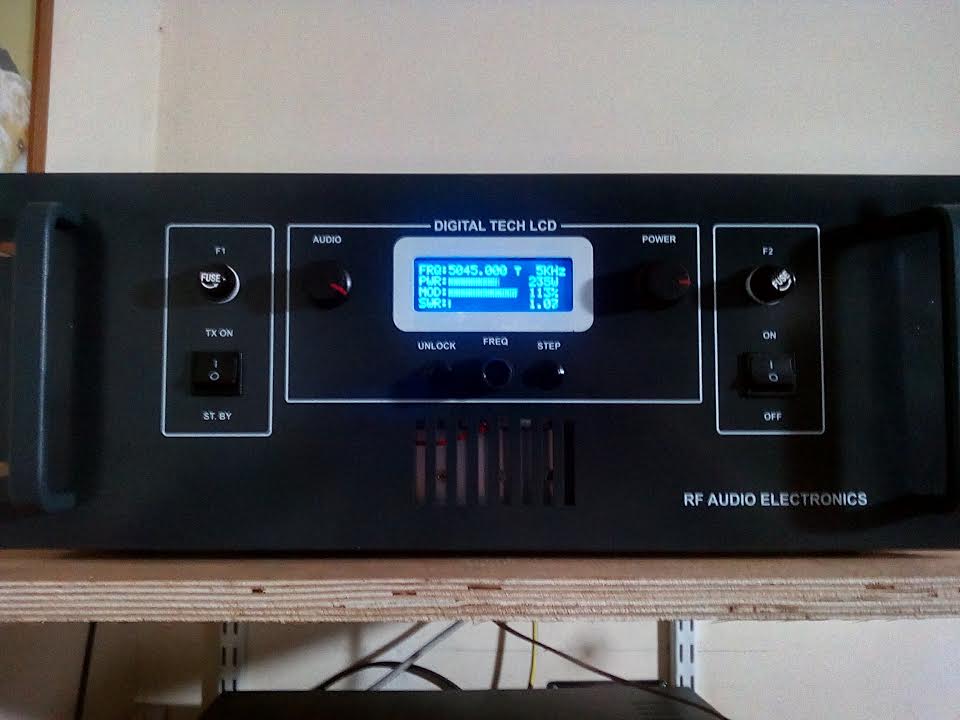
I have started test transmissions from Perth, Western Australia, on 5,045 kHz, at 75 watts (300 PEP).

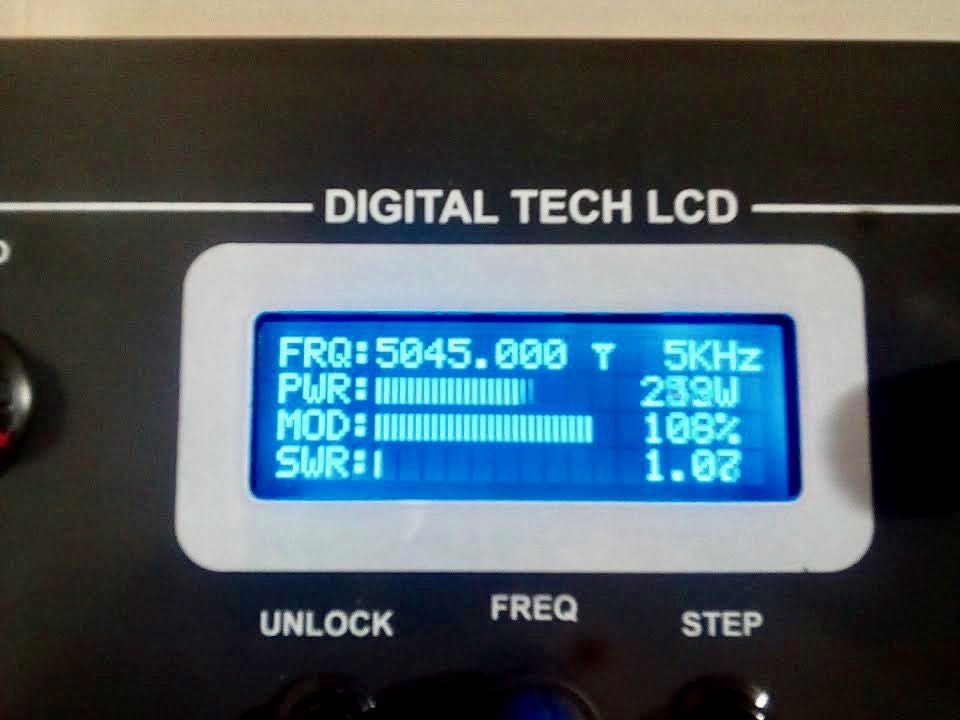
Stefano’s HF transmitter

For the time being, I am using the same audio of my other station–77.4 MHz FM–which you can also find and stream online here: www.77400.fm

My test transmission are on the air from about 7:00 pm to about 10:00 pm every evening, local Perth WA time (11:00 – 14:00 UTC).

Please direct listener reports and any enquiries to [email protected].

Thank you for sharing your news, Stefano!

Post readers: While 300 watts PEP is a modest broadcast signal, no doubt many in Australia, Oceania and Asia will be able to log Stefano’s station when conditions are favorable. During band openings, his signal might travel quite a distance.

Let’s help Stefano by contacting him with detailed listener reports!

The RAAF No. 4 Wireless Unit: Never to march, never to be mentioned

Many thanks to SWLing Post contributor, Neil Bolitho, who shares the following story in reply to our post yesterday Australian Codebreakers in WWII. Neil writes:

Never to march, never to be mentioned.

Since the end of the Second World War, many thousands of returned service personnel have marched at Anzac Day services throughout Australia.

My father never marched.

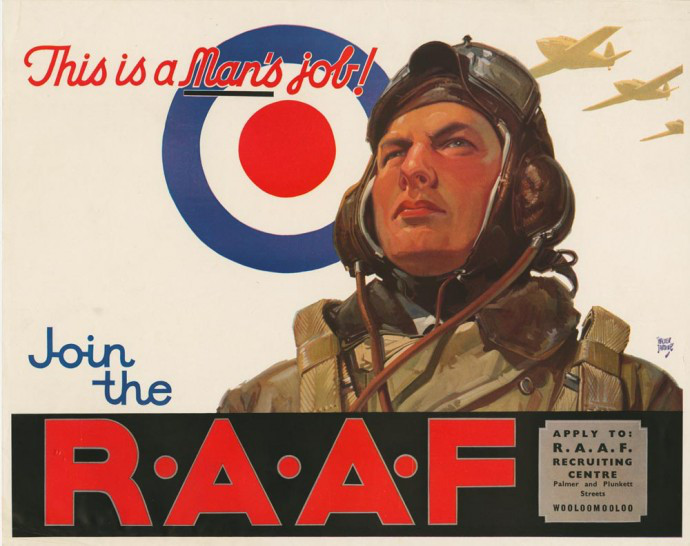
My father served in RAAF No 4 Wireless Unit, Central Bureau.

Central Bureau was under the direct command of General Douglas MacArthur, and was set up to detect, record, and translate all messages transmitted by Japanese forces in the Pacific.

Central Bureau was headquartered in Brisbane, but its Wireless Units worked in the field, moving forward with MacArthur, constantly intercepting and deciphering enemy messages.

As the war progressed, the units became so efficient in their work that they were monitoring all enemy radio traffic, and in fact frequently knew the Japanese intentions before the messages reached their intended destination.

The Wireless Units served throughout the Pacific islands providing vital information about enemy strengths and positions.

RAAF No 4 Wireless Unit was formed as a highly mobile unit, and served at Hollandia, Morotai, Labuan Island, and at Luzon, Philippines.

The U.S. High Command highly praised the Wireless Units of Central Bureau, stating that their work effectively shortened the War in the Pacific by at least two years.

At the end of the war, Central Bureau was dismantled. All personnel signed a lifetime secrecy order to not speak of their wartime activities.

No promotions applied. No evidence of their Central Bureau service was recorded, including overseas service. No medals were struck.

Family members, including children, were not told in any detail, of their father’s war experience.

It was only in the late 1990’s that the Australian government allowed information to be released.

In the early 1960’s, my father mysteriously went on an unexplained visit to Brisbane.
It was not until over thirty years later that I found out that he attended a twenty-year anniversary of his unit’s graduation.

I write this on behalf of the children and grandchildren of those Central Bureau personnel that served diligently and efficiently when called upon, and who, when the job was done, quietly went home. They are our heroes.

Indeed. Thank you so much, Neil, for taking the time to share your father’s story. We’re honored to post it here.

If you’re interested in WWII signal intelligence, here are a few fascinating posts from our archive:

Australian code breakers in World War II

Many thanks to SWLing Post contributor, Ian P, for sharing the following from the radio program, ABC Overnights:

The crucial role of Australian code breakers in World War 2

Thanks to the recent film, The Imitation Game, you may be familiar with the story of how British intelligence, led by mathematician Alan Turing, cracked Nazi codes during WW2. Did you know there were also two secret organisations in Australia working to break Japan’s military codes?

These were staffed with brilliant cryptographers, including some who had studied mathematics and the classics, and others who had lived or grown up in Japan. By patiently and carefully unravelling the codes in Japanese signals, their intelligence played a crucial role in the battles of Midway and the Coral Sea, as well as the push into the Philippines.

Trevor Chappell interviews Craig Collie, author of the book Code Breakers – Inside the Shadow world of Signals Intelligence in Australia’s two Bletchley Parks.

Duration: 36min 36sec
Broadcast: Mon 10 Apr 2017, 1:00am
Published: Mon 10 Apr 2017, 4:43pm

Listen to the full program/interview via the embedded player below:

Click here to download the MP3 or click here to listen on the ABC website.

I’ve also noted that you can pre-order Code Breakers – Inside the Shadow world of Signals Intelligence in Australia’s two Bletchley Parks at Amazon.com. There is no expected delivery time yet, however.

Code Breakers is available directly from the publisher in Australia–click here to view.

4KZ: More info about Australia’s new shortwave broadcaster

Many thanks to Al Kirton, the General Manager at NQ Radio, who has kindly shared a few more details about NQ Radio and, specifically, 4KZ:

Hello Thomas

NQ Radio operates about 20 AM & FM transmitters in North Queensland, Australia. Our stations are 4KZ, 4AM, 4AY, KIK FM & KOOL FM.

In a couple of months or so we will be establishing a 4KZ shortwave service on 5055 kHz with 1 kilowatt.

The antenna is designed to give primary coverage from 200 km to 800 km from Innisfail. We suspect it will be heard with a low quality signal much further away.

Sincerely

Al Kirton
General Manager

Many thanks, Al! We’ll be listening!

RadioWorld: Despite Fears, ABC Shuts Down Shortwave Broadcasts

(Source: RadioWorld)

The ABC has turned off its shortwave radio transmitters, leaving Australians in remote areas without easy access to lifeline radio

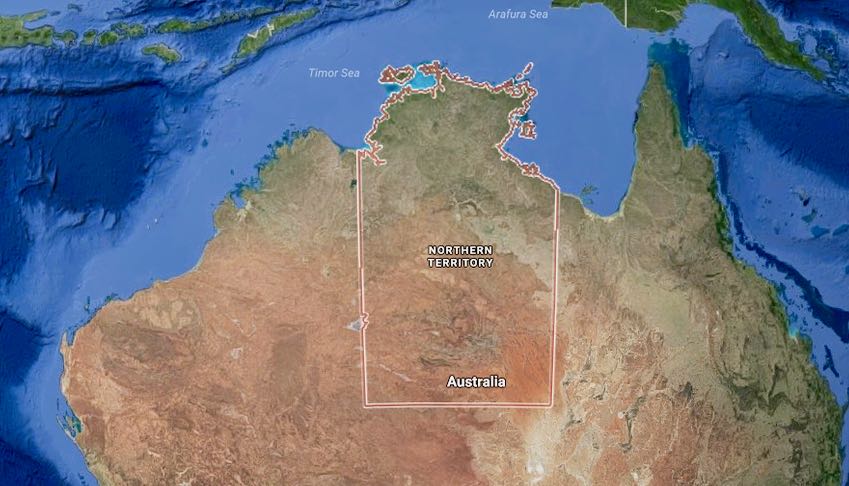
OTTAWA — On Jan. 31, state-owned Australian Broadcasting Corp. shut down its shortwave radio transmitters; ending both international broadcasts of Radio Australia and the ABC’s domestic service in Australia’s Northern Territory. The transmitters were located at ABC broadcasting facilities at Katherine, Tennant Creek, and Roe Creek (Alice Springs).

According to the ABC news release that announced the shutdown on Dec. 6 — less than two months before it took place — “The move is in line with the national broadcaster’s commitment to dispense with outdated technology and to expand its digital content offerings including DAB+ digital radio, online and mobile services, together with FM services for international audiences.”

[…]The majority of ABC audiences in the Northern Territory currently access ABC services via AM and FM and all ABC radio and digital radio services are available on the Viewer Access Satellite Television (VAST) satellite service.”[…]

Click here to continue reading the full article at RadioWorld.

Radio 4KZ in Queensland to begin broadcasting on shortwave

Many thanks to SWLing Post contributor, Paul Walker, who shares the following news from NQ Radio/4KZ:

NEW SHORTWAVE SERVICE:

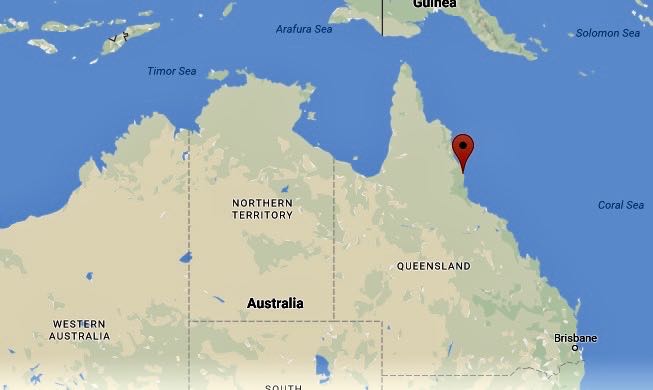
In May 2017 Radio 4KZ Innisfail in far North Queensland will commence transmission on 5055 kHz between 4pm and about 9am seven days a week.

The station will run 1.5kw into an inverted V antenna and will be a full simulcast of 4KZ, 531khz

It expected that the service will provide satisfactory coverage to
remote areas of the Cape where there are no AM or FM services available.

Sincerely
Al Kirton
General manager
NQ Radio

Thank you for the tip,Paul!

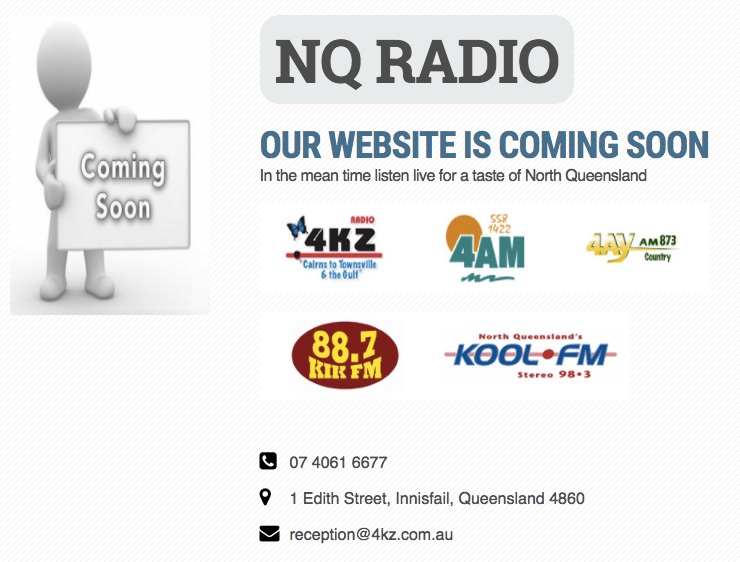
I just checked for the 4KZ website and found the following placeholder page:

Of course, we’ll keep you informed of any updates. Follow the tag: 4KZ

Radio Maubere: clandestine radio in occupied East Timor

Radio-Dial-Blurred-Dark

Many thanks to SWLing Post contributor, Phil Brennan, who writes:

Your readers may be interested in this article detailing a clandestine radio station that was set up between the Fretlin rebels in East Timor (now Timor Leste) and supporters based in Darwin where I live. The Fretlin rebels fought against the Indonesian occupation until the country’s independence in 2002. In the 1970s this was the only method of obtaining information on the brutal repression of the Timorese people by the Indonesian dictatorship

The man featured in the article, Brian Manning Snr., who died a couple years ago was a well known activist and trade unionist in the Northern Territory. He was also very involved in the campaign for Aboriginal workers to receive equal pay and conditions in the 1960s. This campaign was instrumental in raising the profile of the Aboriginal land rights movement in Australia. Brian Manning Jr. Is a good friend of mine.

(Source: ABC News)

If someone was to make an Australian version of Forrest Gump, they might look to Brian Manning’s life story for inspiration.

In 1966, he helped the Gurindji strikers in the Wave Hill walk-off. When Cyclone Tracy hit his hometown of Darwin, police commandeered his truck to collect dead bodies. Months later, he became involved in possibly the most important mission of his life.

That mission was Radio Maubere: an underground radio link that operated between Darwin and occupied East Timor during the 70s and 80s.

For many years, it was the only link the Timorese had with the outside world.

“Dad felt very strongly that these people needed to be supported in their struggle,” his son, Brian Manning Jr, said.

“So with a few other people, they got together and formed this radio operation.

“It was vital. There’s no doubt that the Indonesians were in there to systematically reduce the population by any means necessary.

“So these people were just killing people, and these stories had to get out.”

[…]As the years went on, and the list of confiscated radio transmitters grew longer and Manning’s tricks became more and more creative.

“They had a few decoy vehicles. And they had a few decoy radios. And they had people rendezvous with them in the bush in certain areas,” Brian Manning Jr said.

Often one person would set up the transmitter, another would come along and use it, and a third would arrive to pack it up and transport it out of danger.

[…]The broadcasters even devised their own coded language to communicate top secret information, remembers one of the group’s members, Robert Wesley-Smith.

“They each had a book, and the code would direct them to a page or something. It was very slow … but it was a great adventure,” Mr Wesley-Smith said.

Whatever problems Manning and his crew had in Australia were nothing compared to the dangers faced by those operating on the other end, where gunshots could sometimes be heard in the background.

There was a constant need to get new transmitters into the country, and an engineer from Sydney came up with an ingenious method for avoiding detection.

“It now fell to the resourcefulness of Andrew, who created a transmitter out of a ghetto blaster,” Manning wrote in his book.[…]

Click here to read the full article.