Shortwave listening and everything radio including reviews, broadcasting, ham radio, field operation, DXing, maker kits, travel, emergency gear, events, and more
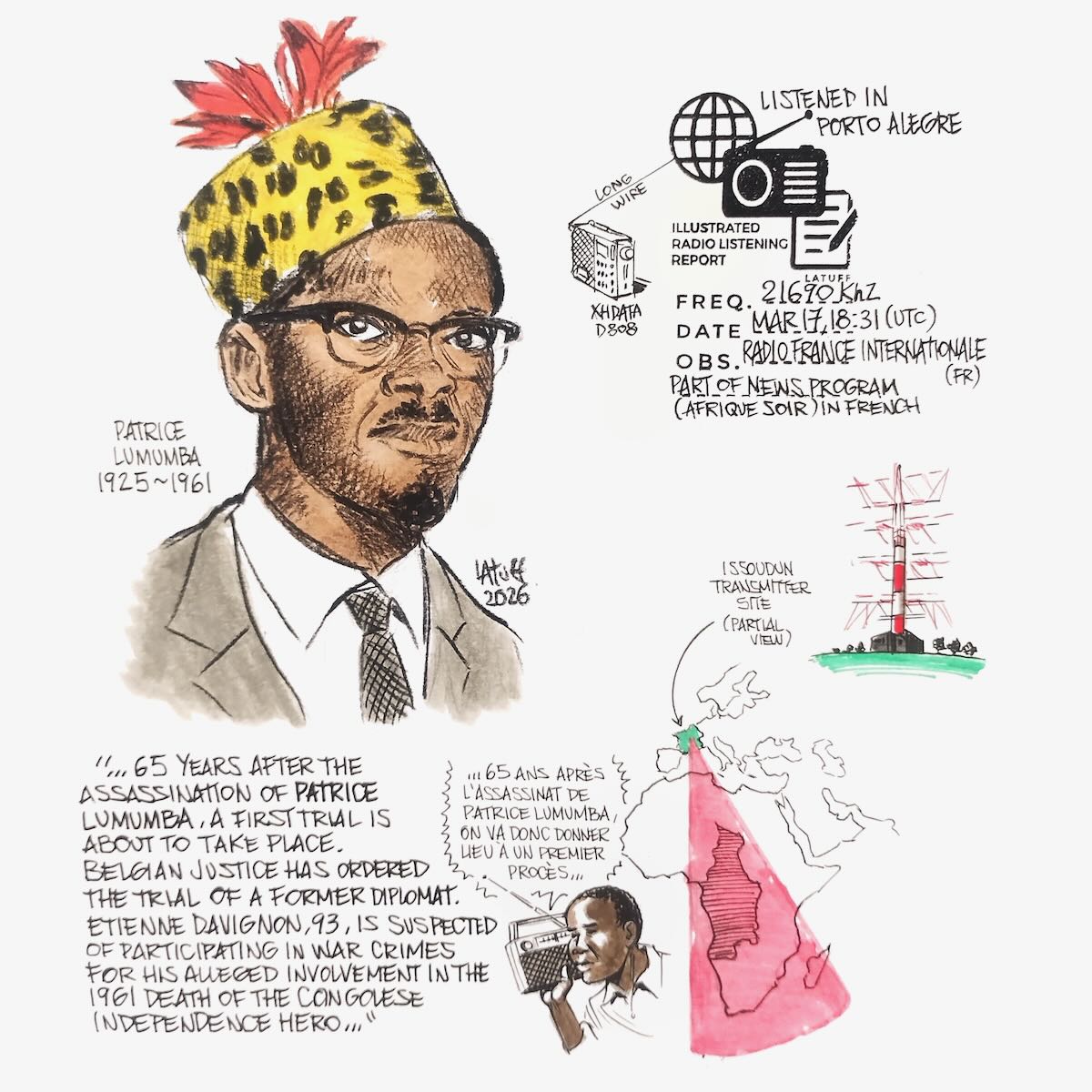
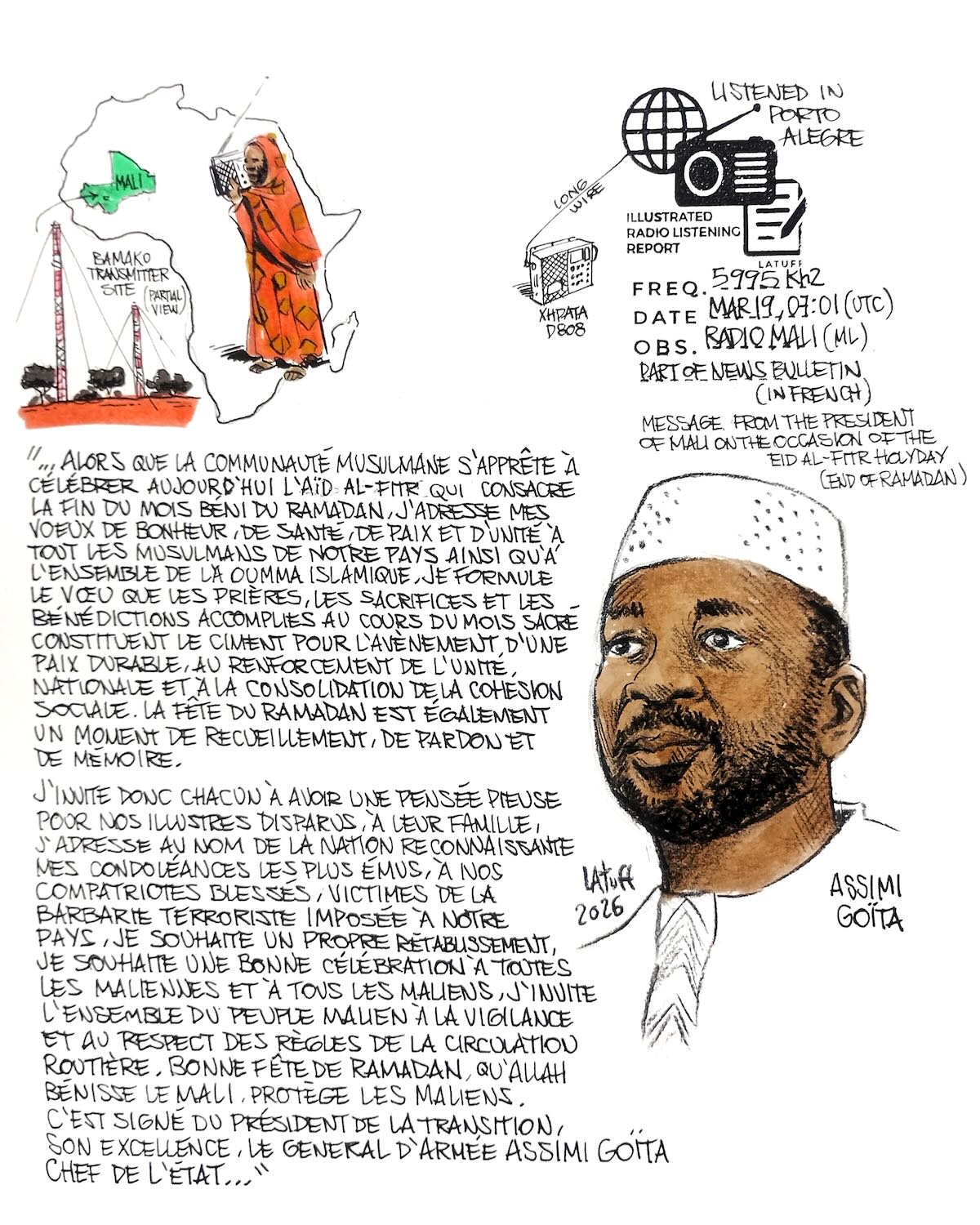
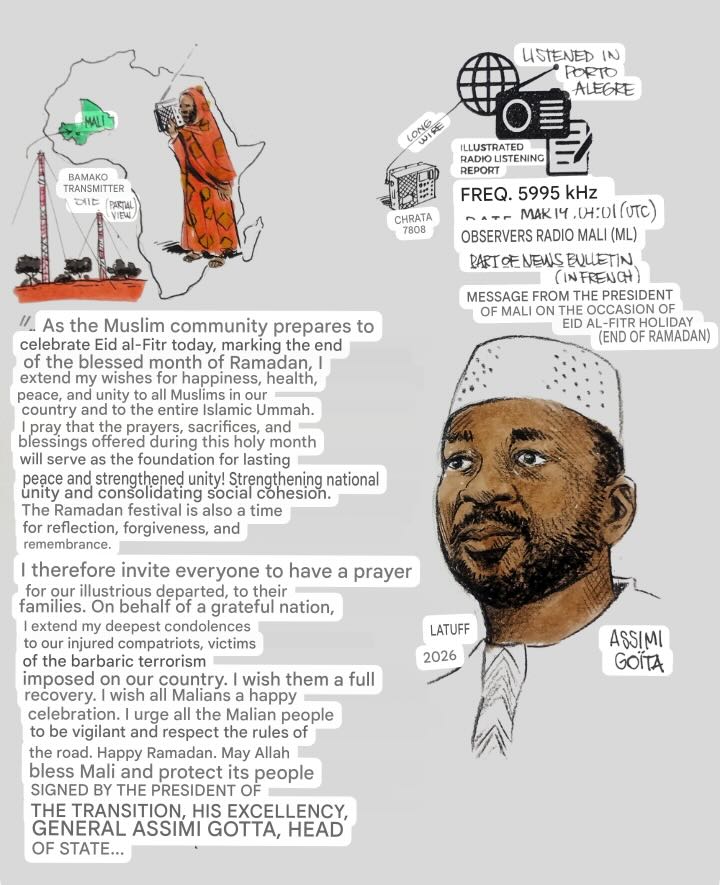
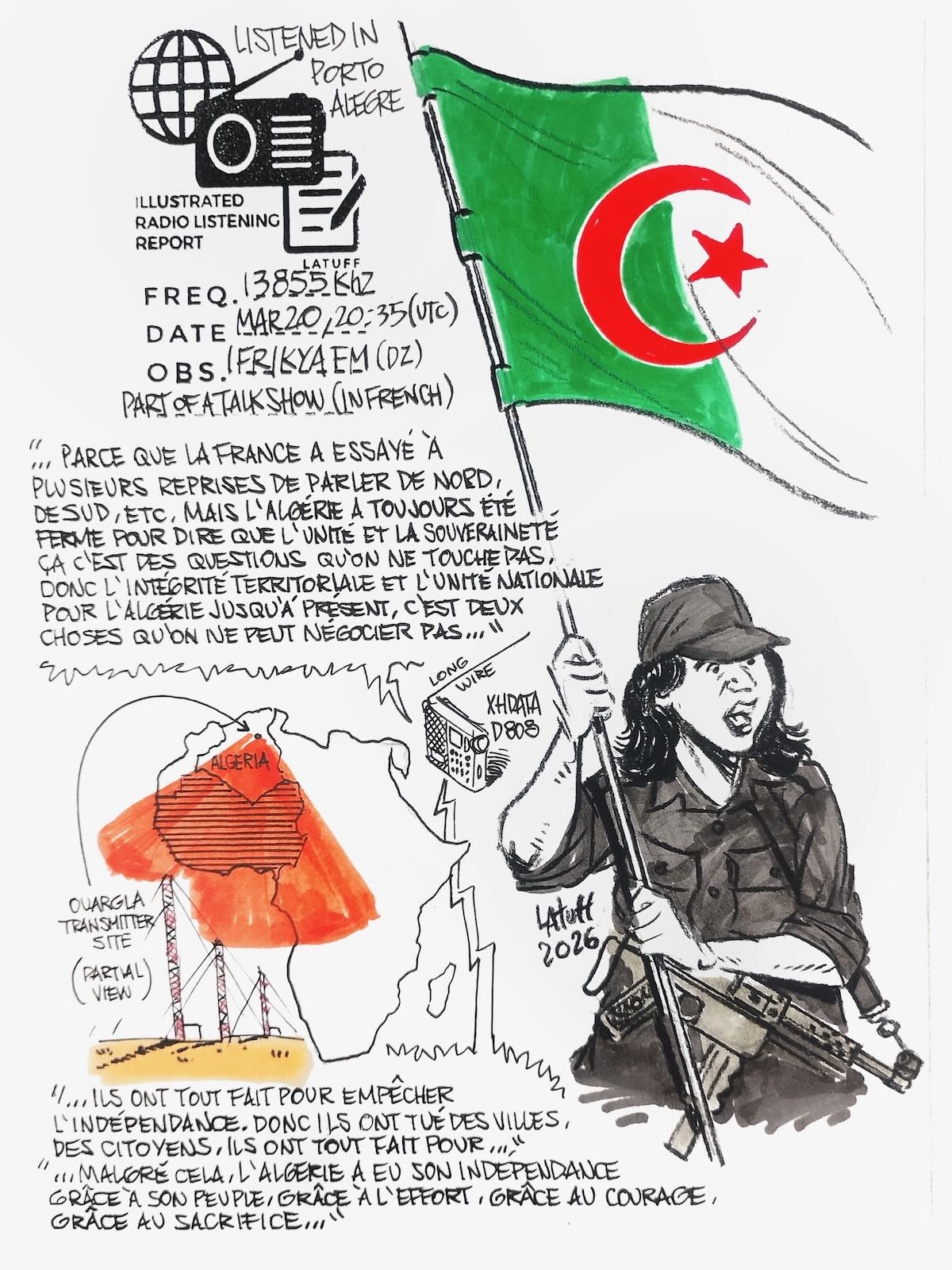
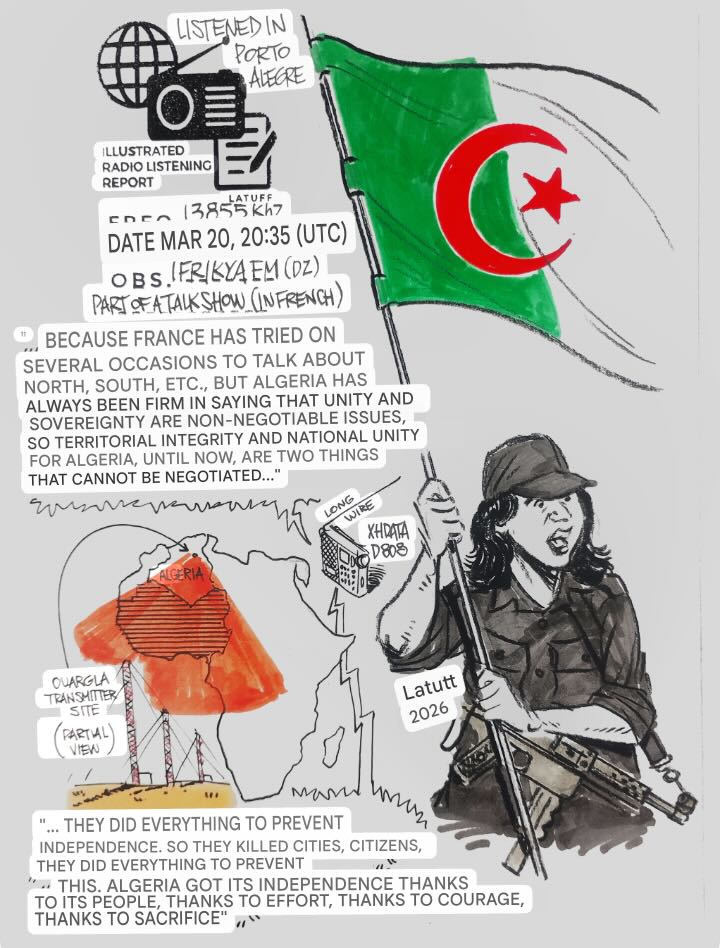
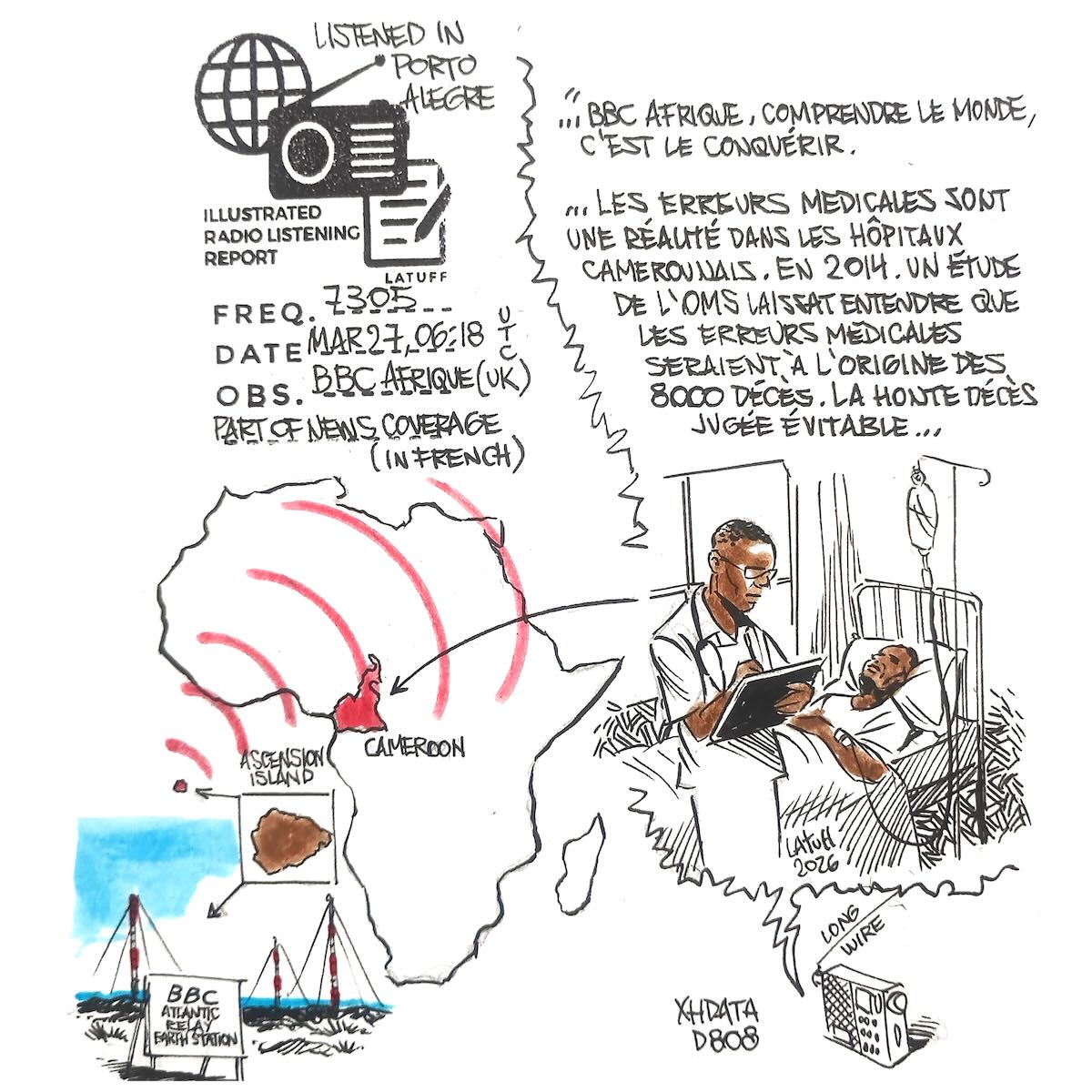
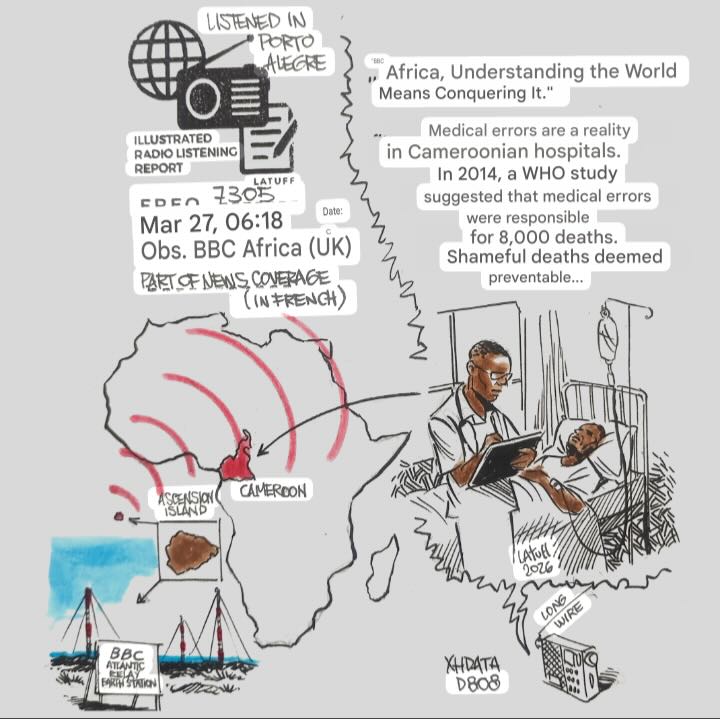
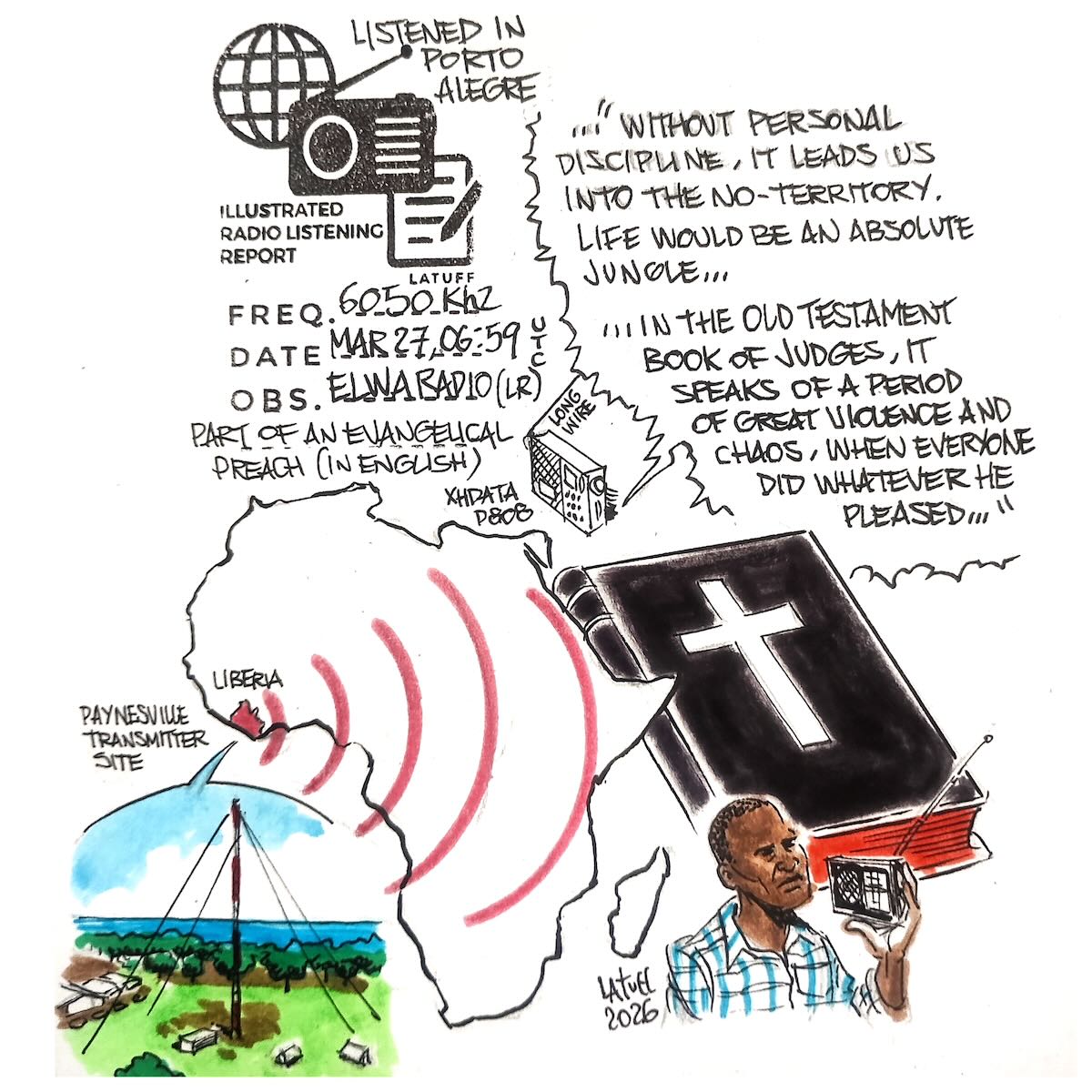
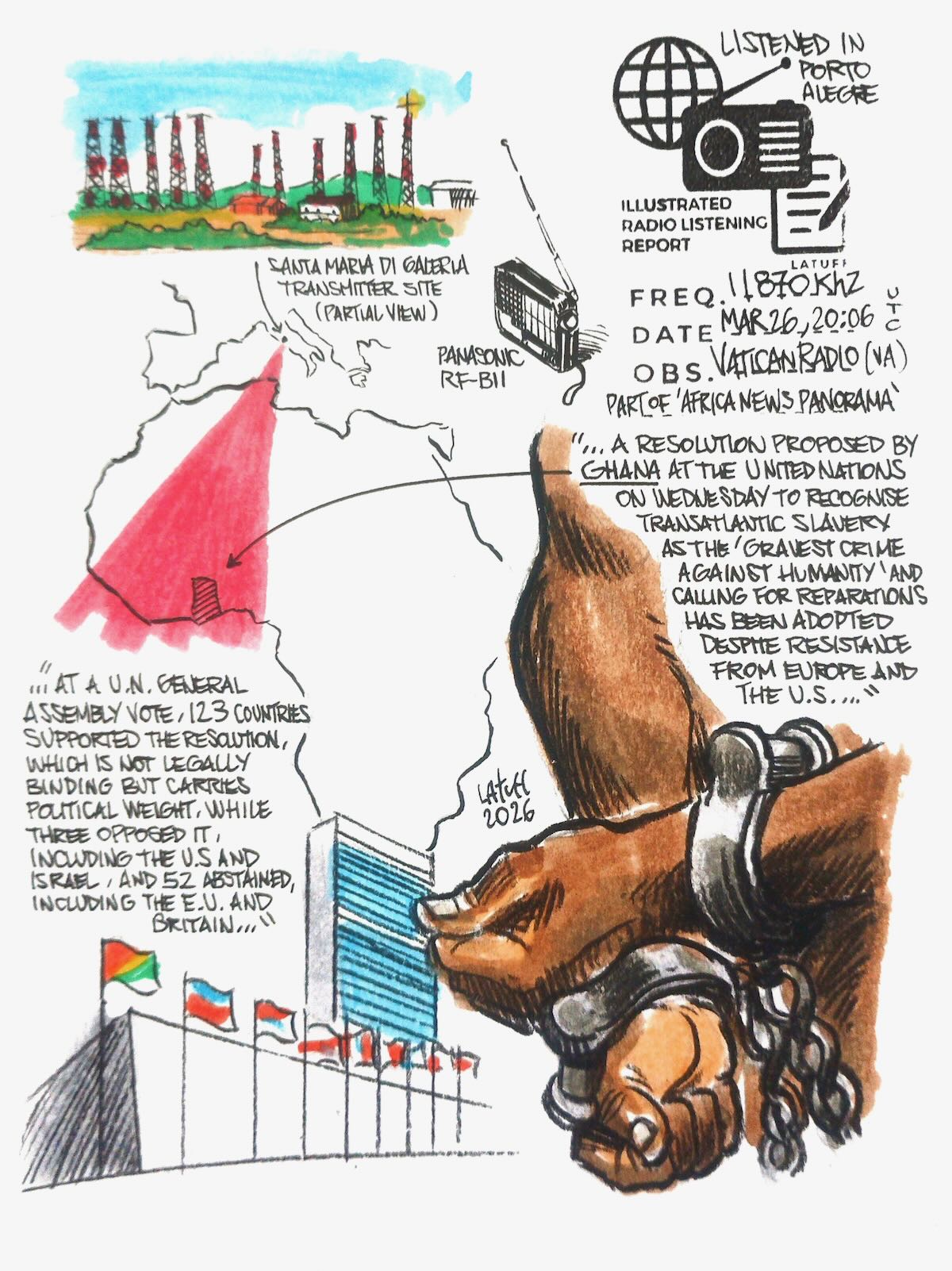
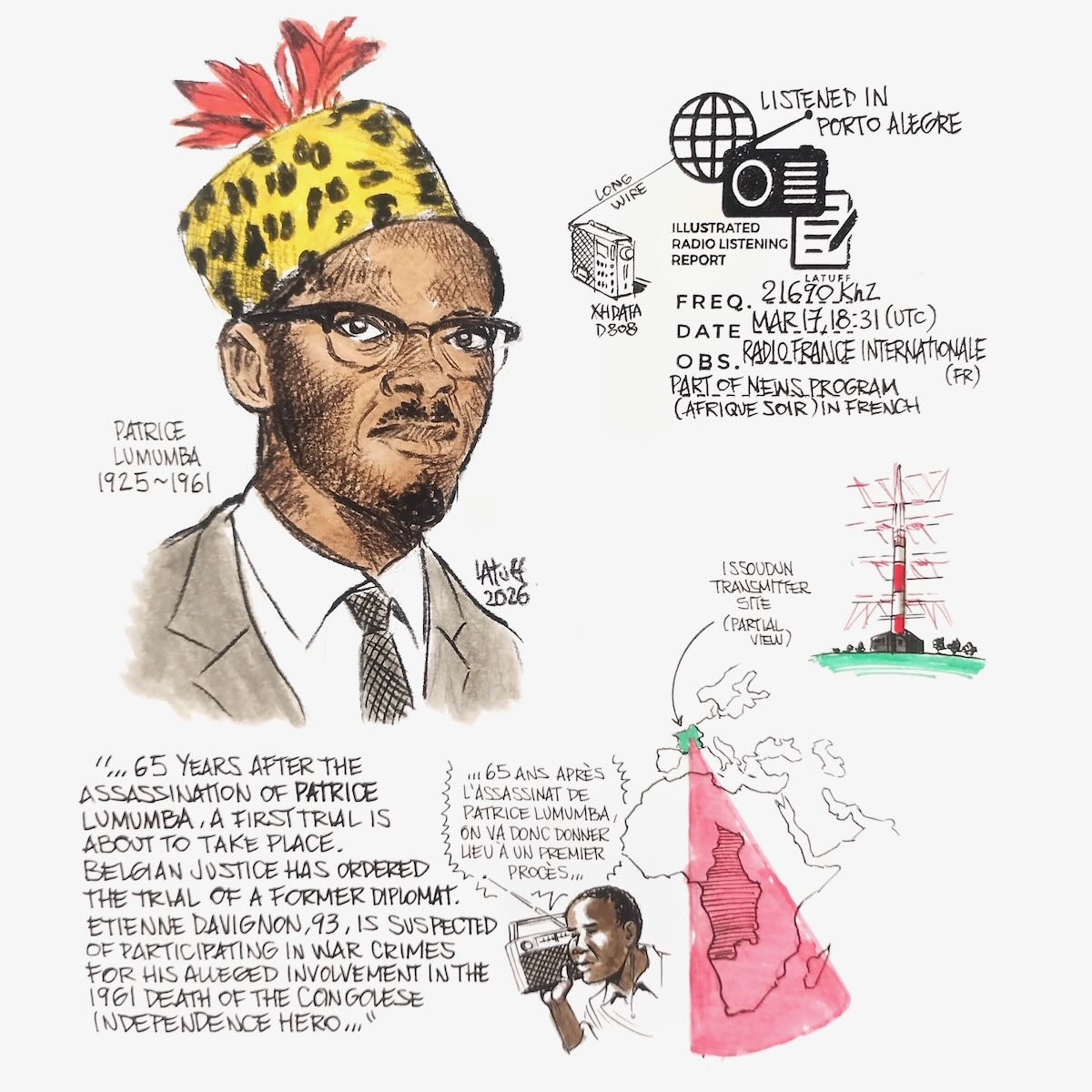
I’m sharing with you now a special edition of my already traditional Illustrated Radio Listening Report about radio stations broadcasting from and to Africa. I’ve compiled the illustrations into a PDF, which I’m making available to all radio lovers worldwide.
Radio Waves: Stories Making Waves in the World of Radio
Because I keep my ear to the waves, as well as receive many tips from others who do the same, I find myself privy to radio-related stories that might interest SWLing Post readers. To that end: Welcome to the SWLing Post’sRadio Waves, a collection of links to interesting stories making waves in the world of radio. Enjoy!
Many thanks to SWLing Post contributors Dan Srebnick, the Southgate ARC and Geneva Witherspoon for the following tips:
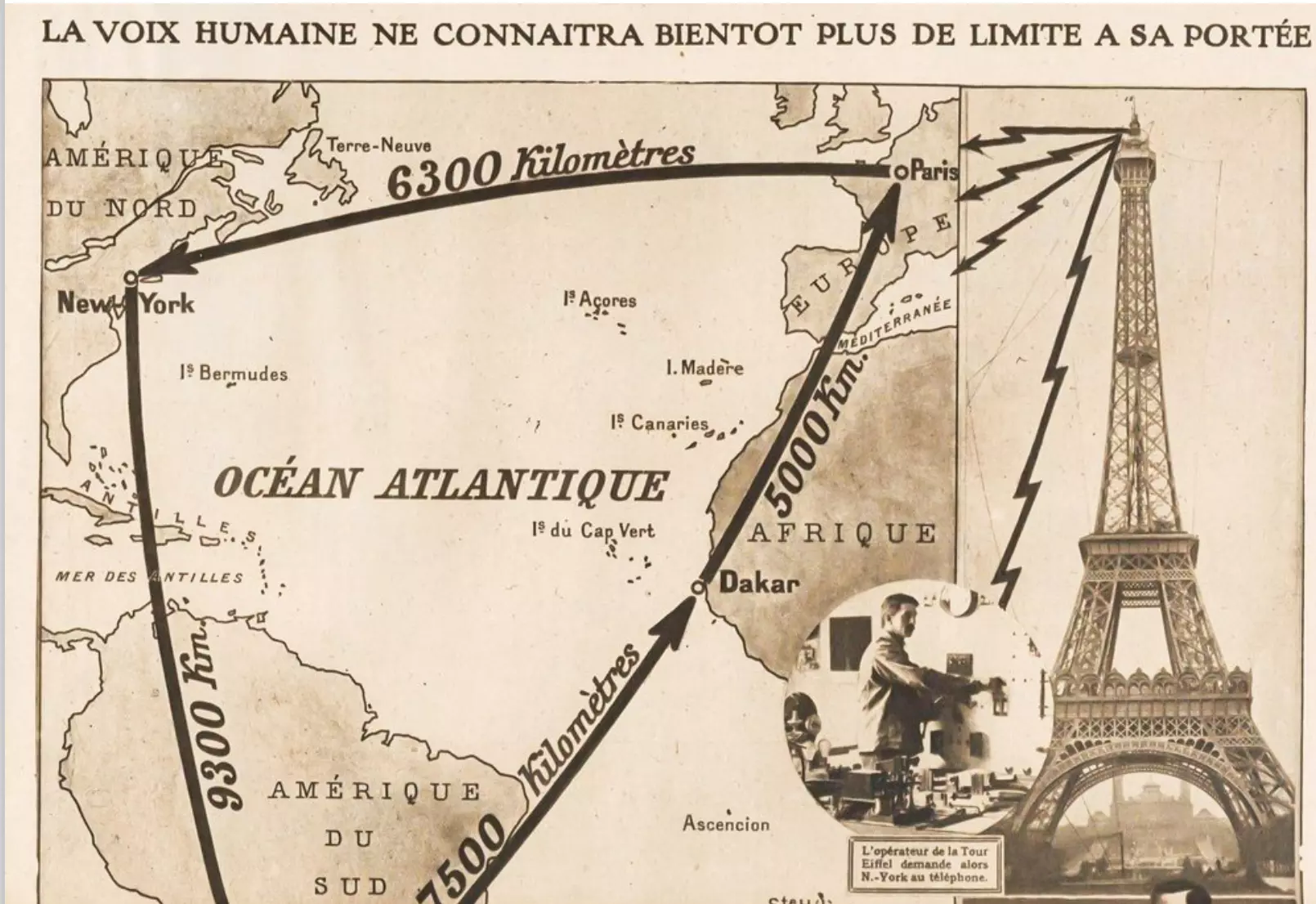
A hundred years ago this week, France’s most famous landmark, the Eiffel Tower, was first used as an antenna for radio programmes. Looming high above the city’s uniform skyline, the tower was an obvious choice to pioneer public radio in France, proving the country’s prowess in broadcast technology.
On 22 December 1921, just three years after the end of WWI, “Radio Tour Eiffel” broadcast its first ever show, a live performance featuring legendary singers.
The trial was the beginning of a long series of broadcasts that continues today, with 45 television stations and 32 FM stations – including RFI – broadcasting from the Eiffel Tower.
According to the Lille-based publication Le Réveil du Nord of 24 December 2021, “a concert by wireless telephony took place at the Lille Theatre”.
Famous artists of that era, the legendary Sacha Guitry, the soprano Jeanne Hatto, the tenor Maurice Dutreix and others sang in a microphone in a room in the Eiffel Tower, from where it was broadcast to a “wireless phone set” in the hall of the Lille theatre.
“A large audience attended this session,” according to the dispatch. [Continue reading…]
The Raspberry Pi makes an excellent gift on its own, but getting one in a custom Time Machine Radio is remarkably fulfilling. This holiday, a maker known as Byte-rider created a custom Raspberry Pi Zero 2 W-powered radio for his father. Continue reading →
Replica of the Titanic’s radio room at the Antique Wireless Museum (Source: Tripadvisor)
Radio Waves: Stories Making Waves in the World of Radio
Because I keep my ear to the waves, as well as receive many tips from others who do the same, I find myself privy to radio-related stories that might interest SWLing Post readers. To that end: Welcome to the SWLing Post’sRadio Waves, a collection of links to interesting stories making waves in the world of radio. Enjoy!
Many thanks to SWLing Post contributors David Iurescia, Dan Robinson, Scott Gamble, and Martin Butera, for the following tips:
Taiwan’s National Education Radio has decided to stop domestic rebroadcasts of Radio France Internationale’s programs. That’s after receiving listener complaints that the station’s news programs repeated Chinese talking points that praised Beijing, belittled Taiwan, and criticized the US.
National Education Radio had rebroadcast Radio France Internationale’s French and Chinese programs for Taiwanese audiences during two daily time slots under an agreement arranged by RTI.
During a meeting of the Legislature’s culture and education committee Wednesday, KMT lawmakers said that the education ministry should investigate whether the listener complaints were justified or not. They also expressed concern about what pulling the plug of the rebroadcasts might mean for freedom of speech and the press in Taiwan.
During the meeting, Education Minister Pan Wen-chung said that the rebroadcasting agreement had been intended to foster exchanges with France. Pan said the programs originally rebroadcast were mainly focused on educational and cultural topics. However, Pan said that RTI and National Education Radio have decided to temporarily stop the rebroadcasts, since the content of the re-broadcasted programs had begun to deviate from these non-political topics.
Pan said that he had not personally listened to the rebroadcast programs. He also said that the education ministry had not been informed about the decision to halt rebroadcasts until RTI and National Education Radio had already decided to do so among themselves. However, he said that the education ministry supports the decision.[…]
There’s one type of travel that’s always ready at the drop of a hat: mental vacations, or, travels of the mind. If that sounds pretty namby-pamby, wait until you see what we mean. Inside this handheld radio are 18 windows into the cityscapes of 18 international locations. Streaming live radio from whichever far-off locale you prefer, The CityRadio is a living, immediate connection to the authentic sounds, music, language, and culture of vibrant cities across the globe. Turn it on, tune in, and let your mind wander while your passport stays stowed in a drawer.
A plan to retrieve the ocean liner’s radio received pushback as archaeologists say human remains could still be there.[…]
Martin visits Radio Globo and Radio CBN Radio studios
I’m sending you a PDF about my visit to the Radio Globo and Radio CBN Radio studios, all with photos, video links, lots of texts, all very complete.
It also contains an interesting interview with a quite famous journalist, here in Brazil, creator of podcast content, who worked for 2 years in international Chinese radio and currently works in CBN Radio.
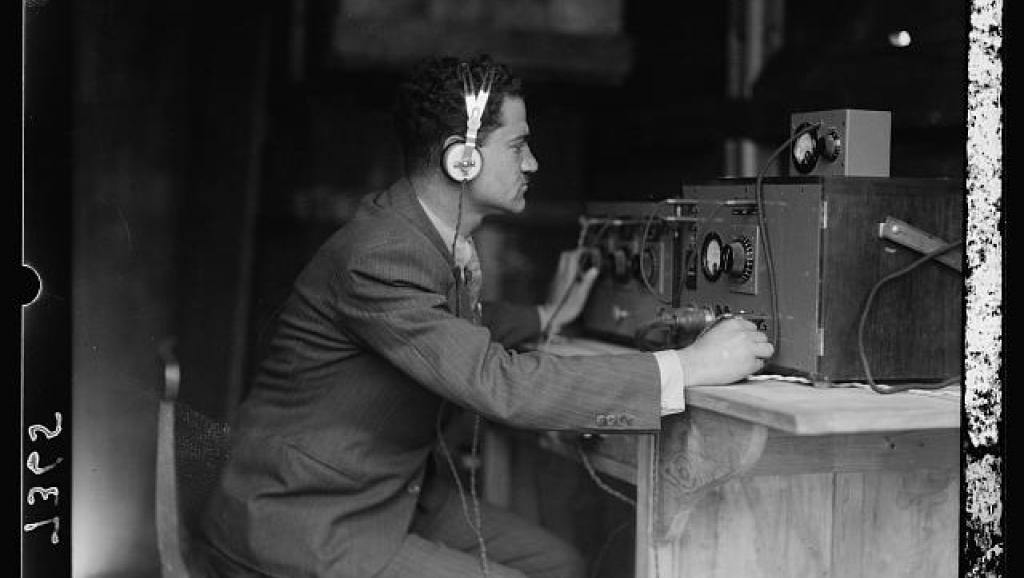
Radio engineer Moshe Rubin transmits the special broadcast during the opening of the Palestine Broadcasting Service, Ramallah, March 30, 1936. Source: Library of Congress Prints and Photographs Division Washington, via RFI
Many thanks to SWLing Post contributor, Alan Roe, who writes:
“On 30 March 1936, the British High Commissioner of Palestine, Arthur Wauchope, inaugurated the Palestinian Broadcasting Service, the PBS. It was the second broadcaster to be established in the Middle East, after Radio Cairo in 1934, and featured programmes in Arabic, Hebrew and English.
It covered the region of Palestine, Jordan, Syria and Lebanon, as well as parts of Egypt. The new transmitter was in Ramallah and the broadcasting offices were in Jerusalem.”
Some of our initial radios received by Radio Taboo.
Readers: what Alan didn’t know is that I’ve been working with Issa via Ears To Our World and can confirm that this station is having a most positive impact on its community!
I was originally introduced to Issa via one of ETOW’s long-time supporters and friends a couple years ago.
At ETOW, we wanted to help establish more Radio Taboo listener groups, so we sent an initial batch of radios to be used in this very rural and remote part of Cameroon.
The radio we sent to Radio Taboo is the Tecsun GR-88 (or “Green-88”). This radio used to be branded by Grundig as the FR200, but Grundig no longer markets this model so we purchase them from Tecsun.
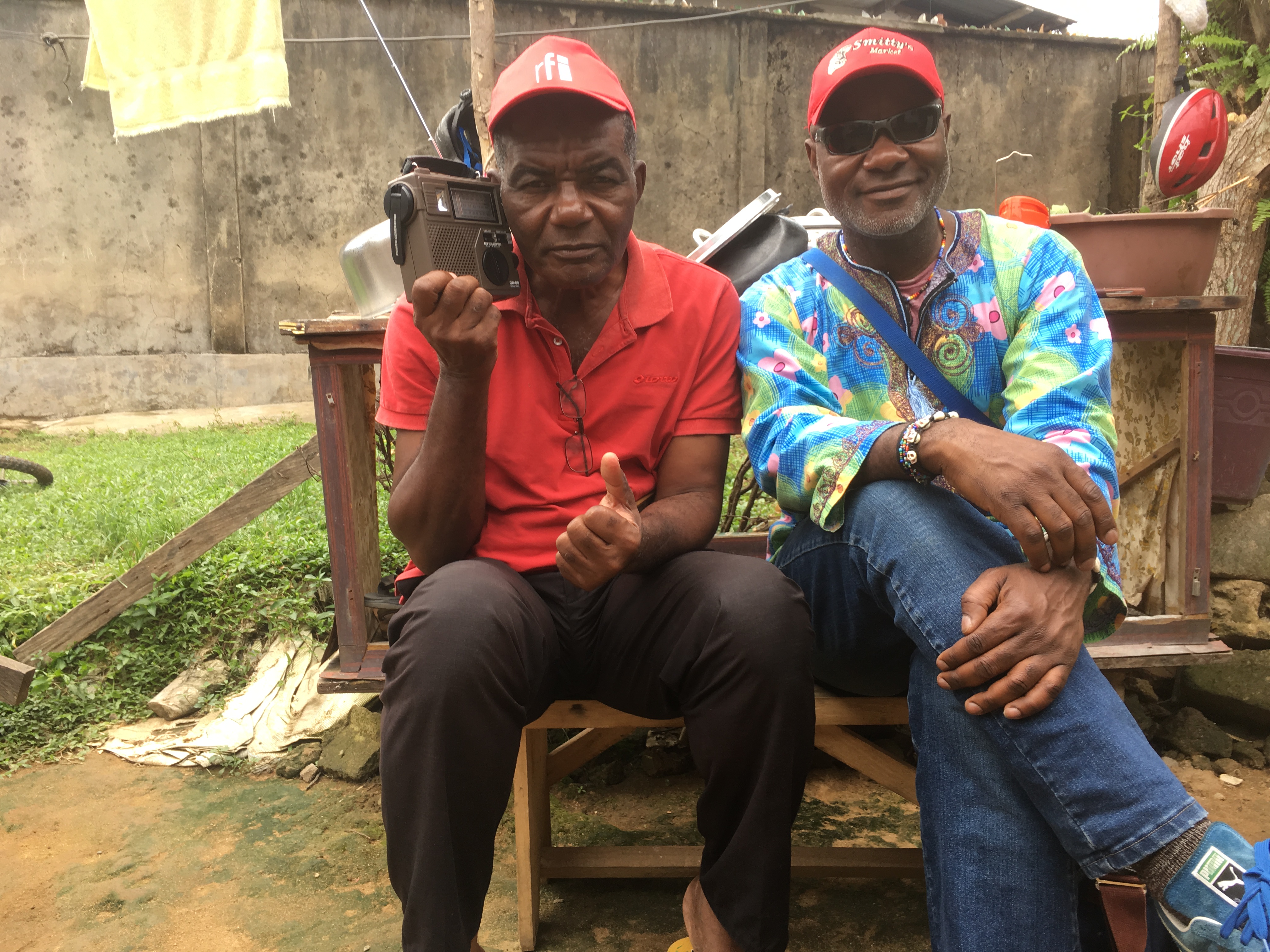
In fact, in a recent email to friends and supporters of Radio Taboo, Issa shared the following photo and noted:
“This man next to me is one of the first beneficiaries of the crank radios donated by Thomas Witherspoon, the founder of “Ears To Our World” a U.S. non-profit. They donated a dozen of these radios to some Radio Taboo’s listers. Radios made it in the Cameroon this week.”
I should mention it’s a logistical challenge to get radios to this part of the world (especially in the summer when the roads are nearly impassable due to rains) but we’re looking into a service that might be able to help in the future with a much larger donation of radios.
Alan, thanks again for sharing this story and giving me an opportunity to tell about our first-hand experience working with Radio Taboo!
For our DX enthusiast and shortwave listener friends: I am sad to announce we no longer have a shortwave frequency; we have severe budget constraints which no longer permit us to broadcast via shortwave.
But you can still hear us on World Radio Network. As you know, we now broadcast only 1 hour per day, Monday – Friday, from 14:00 to 15:00 UTC/GMT.
For North America: WRN broadcasts the quotidian RFI English programme three times a day from Monday to Friday, from 06:00 to 06:59, from 10:00 to 10:59 and from 16:00 to 16h59 UTC/GMT.
For Africa and Asia: WRN broadcasts the quotidian RFI English programme three times a day from Monday to Friday, from 06:00 to 06:59, from 10:00 to 10:59 and from 16:00 to 16h59 UTC/GMT.
For Europe: WRN broadcasts the quotidian RFI English programme three times a day from Monday to Friday, from 07:00 to 07:50, from 12:00 to 12:59 and from 20:00 to 20:59 UTC/GMT.
In Paris, you can hear us on World Radio Paris (http://www.worldradioparis.fr/) on DAB+, Monday to Friday from 15:00 to 15:59 UTC/GMT as well as Tuesday through Saturday from 07:00 to 07:59 UTC/GMT.